

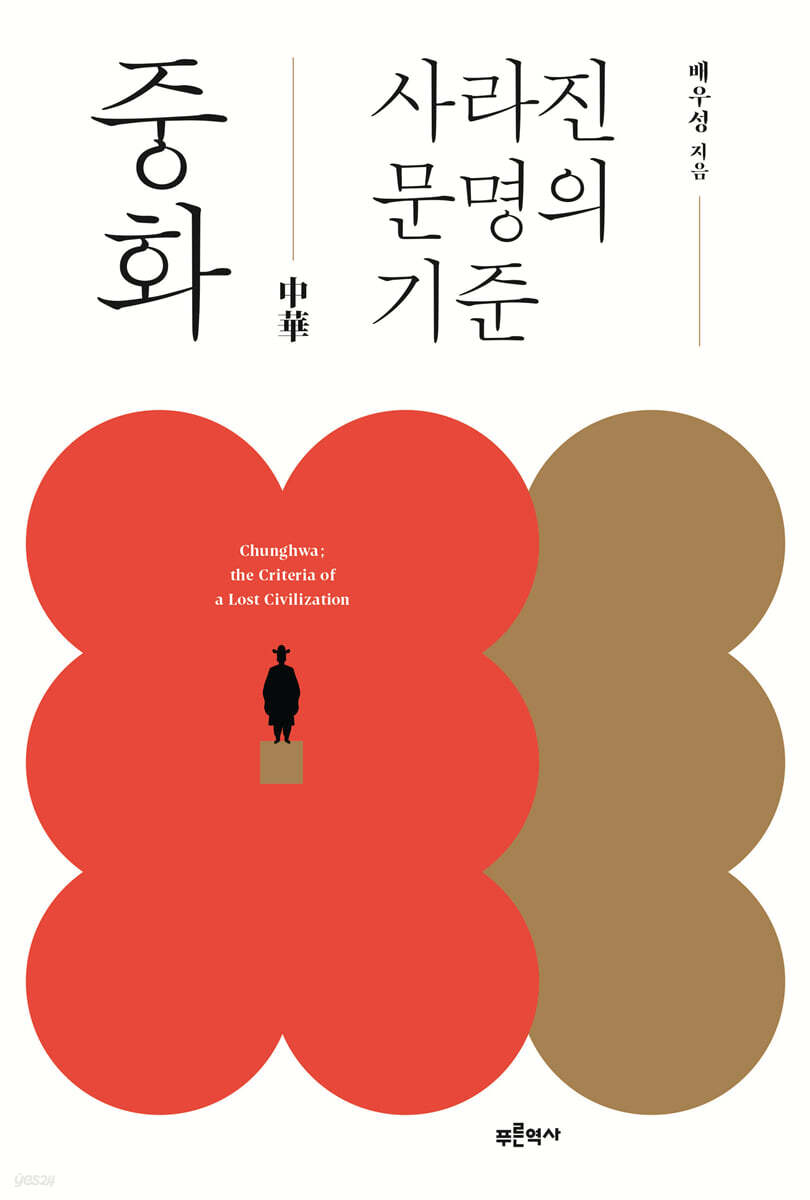
China, the standard of a lost civilization
 |
Description
Book Introduction
Beyond the four great powers and the spirit of the scholar
Another Framework for Reading Korean History: "Sinocentrism"
We read history because we hope that by reflecting on past experiences, we can gain something that will be helpful to our lives today.
Accordingly, history is very interested in how to summon past experiences to the present.
Is that why?
The argument that we must revive the scholarly spirit to overcome individualism and materialism, or that we must eliminate the remnants of the servility that led to the downfall of the nation and design a more independent future, does not feel so unfamiliar.
The two words 'scholarly spirit' and 'servility' do not go together very well.
Because we consider one of them to be reviving and the other to be discarded.
However, looking at it through the eyes of history, it was the scholars who spoke of the four great powers.
This would be impossible without a common abyss running through the two words, scholar and scholar-official.
That is why the author is rereading Zhonghua here and now.
The author uses China as a medium to meticulously interpret its abyssal history and attempts to reveal its current significance in a way different from the spirit of the scholar or Confucianism.
Another Framework for Reading Korean History: "Sinocentrism"
We read history because we hope that by reflecting on past experiences, we can gain something that will be helpful to our lives today.
Accordingly, history is very interested in how to summon past experiences to the present.
Is that why?
The argument that we must revive the scholarly spirit to overcome individualism and materialism, or that we must eliminate the remnants of the servility that led to the downfall of the nation and design a more independent future, does not feel so unfamiliar.
The two words 'scholarly spirit' and 'servility' do not go together very well.
Because we consider one of them to be reviving and the other to be discarded.
However, looking at it through the eyes of history, it was the scholars who spoke of the four great powers.
This would be impossible without a common abyss running through the two words, scholar and scholar-official.
That is why the author is rereading Zhonghua here and now.
The author uses China as a medium to meticulously interpret its abyssal history and attempts to reveal its current significance in a way different from the spirit of the scholar or Confucianism.
- You can preview some of the book's contents.
Preview
index
At the beginning of the book
Why China
Introduction: The Evolution of the Sinocentrism Theory
The Chinese History of the Huaiji Incident and the Great Unification of China│Shi Kai and Ouyang Xiu│Zhu Xi and Chen Liang│Wang Fuzhi│Yu Shibai and Kang Youwei│The Concept of 'Huai' and the 'Nation-State'│Central and Peripheral Agenda and Korean History│Book Structure
Part 1 transfer
Chapter 1: Justifying "Transfer" with Buddhism
East Sea and the West│China and the East│Yi and Buddhism│Hwa and Yi
Chapter 2: Treating Mongolia as a Celestial Empire
The Great State, the Celestial Empire, and China│Clothes and customs│Pro-imperialism and tributary states│Little China and the Yongha incident
Chapter 3: 'Zhong Hua' and 'Lee Jeok' Meet and Match
Buddhism and the Stranger│Gija and Dongju│Su and the Stranger│Hometown, Land, Direction, and Foreign
Part 2 Four Great Powers
Chapter 1: Being knowledgeable about 'loyalty' and knowing 'the times'
Do small things big│Loyalty and interest
Chapter 2 In the name of 'Heaven's Law' and 'Humanity'
Heavenly principles, human relations, Taoism, and right learning│Respect for the Lord
Chapter 3: Can the 'Transfer' Dynasty Be Recognized?
Division and Literature│Self-reliance and Military Preparation│Treason and Subordination│Loyalty and Reality
Part 3 Dongguk
Chapter 1: Is 'Dongguk' 'Junghwa'?
Great China│The Emperor's Rituals│There is a World│Advancement to China and Excellent Fruit
Chapter 2: Inheriting 'China'
China│China and East Asia
Chapter 3: Correcting 'Orthodoxy'
Orthodoxy│Orthodoxy and China
Part 4: Northern Learning
Chapter 1: "China" Revisited
The Land of the Way and the Way│Great Nation and the Righteousness of the Times
Chapter 2: Finding Friends and Learning
Chinese and barbarians│The Spring and Autumn Annals of the Eastern Yi
Chapter 3: How to View Barbarianism
Northern learning and left? │ Heavenly law and heavenly way │ The simplicity and naivety of the bandits │ China and foreign countries
Part 5 Reporter · Jinin · Dongyang
Chapter 1: The Men of Change and the 'Reporter'
'The West' and 'Outer Barbarians'│'The West's Ugliness' and 'Gija'│The Righteous Army and Righteous Men of Pyeongan Province
Chapter 2: The Rebels and the 'True People'
True Man│The Seven Righteous Men Who Disappeared│'Dangbyeong' · 'Hogun' · 'Hobyeong' · 'Hwangmyeong'│'Hyo' and 'Ye'
Chapter 3: From the Empire to the 'Orient'
'Qing Dynasty' and 'China'│'Emperor' and 'Righteous Lord'│'China' and 'Civilization'│'Dongguk' and 'East'│'East' and 'Public'
Conclusion_Zhonghua, Rereading
The Remaining Issues│Reading "Zhong Hua" Here and Now
main
Search
Why China
Introduction: The Evolution of the Sinocentrism Theory
The Chinese History of the Huaiji Incident and the Great Unification of China│Shi Kai and Ouyang Xiu│Zhu Xi and Chen Liang│Wang Fuzhi│Yu Shibai and Kang Youwei│The Concept of 'Huai' and the 'Nation-State'│Central and Peripheral Agenda and Korean History│Book Structure
Part 1 transfer
Chapter 1: Justifying "Transfer" with Buddhism
East Sea and the West│China and the East│Yi and Buddhism│Hwa and Yi
Chapter 2: Treating Mongolia as a Celestial Empire
The Great State, the Celestial Empire, and China│Clothes and customs│Pro-imperialism and tributary states│Little China and the Yongha incident
Chapter 3: 'Zhong Hua' and 'Lee Jeok' Meet and Match
Buddhism and the Stranger│Gija and Dongju│Su and the Stranger│Hometown, Land, Direction, and Foreign
Part 2 Four Great Powers
Chapter 1: Being knowledgeable about 'loyalty' and knowing 'the times'
Do small things big│Loyalty and interest
Chapter 2 In the name of 'Heaven's Law' and 'Humanity'
Heavenly principles, human relations, Taoism, and right learning│Respect for the Lord
Chapter 3: Can the 'Transfer' Dynasty Be Recognized?
Division and Literature│Self-reliance and Military Preparation│Treason and Subordination│Loyalty and Reality
Part 3 Dongguk
Chapter 1: Is 'Dongguk' 'Junghwa'?
Great China│The Emperor's Rituals│There is a World│Advancement to China and Excellent Fruit
Chapter 2: Inheriting 'China'
China│China and East Asia
Chapter 3: Correcting 'Orthodoxy'
Orthodoxy│Orthodoxy and China
Part 4: Northern Learning
Chapter 1: "China" Revisited
The Land of the Way and the Way│Great Nation and the Righteousness of the Times
Chapter 2: Finding Friends and Learning
Chinese and barbarians│The Spring and Autumn Annals of the Eastern Yi
Chapter 3: How to View Barbarianism
Northern learning and left? │ Heavenly law and heavenly way │ The simplicity and naivety of the bandits │ China and foreign countries
Part 5 Reporter · Jinin · Dongyang
Chapter 1: The Men of Change and the 'Reporter'
'The West' and 'Outer Barbarians'│'The West's Ugliness' and 'Gija'│The Righteous Army and Righteous Men of Pyeongan Province
Chapter 2: The Rebels and the 'True People'
True Man│The Seven Righteous Men Who Disappeared│'Dangbyeong' · 'Hogun' · 'Hobyeong' · 'Hwangmyeong'│'Hyo' and 'Ye'
Chapter 3: From the Empire to the 'Orient'
'Qing Dynasty' and 'China'│'Emperor' and 'Righteous Lord'│'China' and 'Civilization'│'Dongguk' and 'East'│'East' and 'Public'
Conclusion_Zhonghua, Rereading
The Remaining Issues│Reading "Zhong Hua" Here and Now
main
Search
Into the book
We cannot help but carefully examine the problematic awareness of Chinese thought regarding 'Sinocentrism' and 'traitors', 'China' and 'traitors'.
The idea begins in the “Chapter on the King’s Regulations” of the “Book of Rites.”
--- p.24
The problem is when China fails to overpower the foreign influence, and the foreign influence overtakes China's territory or contaminates Chinese culture.
In this case, China must cut off the transfer culturally and territorially.
It is called 'the difference between China and the barbarians'.
--- p.25
The historical origin of the word 'China' dates back to the time of King Wu of the Zhou Dynasty.
It was during the Zhou Dynasty that this word began to be paired with the words ‘between’ or ‘transfer.’
The reason why Shi Kai's "On China" is important is because the meaning of the word "China" during the Song Dynasty is presented in the most well-organized form in this essay.
--- p.32
Jinryang distinguished between 'Junghwa' and 'Ijeok' with the terms 'heaven and earth' and 'outside the heaven and earth'.
It seems that the geographical/spatial division has been accepted.
However, those spaces are again modified by ‘Jeonggi’ and ‘Sagi’.
The land of 'Jeonggi' and the land of 'Sagi' are also distinguished by the presence or absence of 'Heaven's Mandate', 'People's Heart', 'Etiquette and Music', and 'Clothes'.
‘Zhonghua’ was justified by such Confucian cultural elements.
--- p.39
The revolutionaries of the late Qing Dynasty adopted Western ideas and promoted nationalism, inheriting the 'Huaiji Incident'.
It meant criticizing the great nationalism advocated by the reformists, or the great unity thought and discussion of 'great unification' of the Jinmun School that formed its theoretical basis.
--- p.45
According to the perspective that defines "Zhonghua" and "Yiji" based on blood, geography, and culture, since ancient times, the Chinese have used three types of words to refer to themselves.
The Xia? Jeha? Zhongxia branch, the Hua? Zhonghua? Huaxia branch, and the Zhongzhou? China? Zhongyuan? Zhongto branch.
--- p.50
In Korean history, 'China' has always been an issue of center and periphery.
The fact that words like ‘Sadae’, ‘Dongguk’, and ‘Bukhak’ were used together with ‘Junghwa’ symbolizes the individuality of the meaning of ‘Junghwa’ in Korean history.
--- p.56
The opposition of Tang officials was also a thorn in his side.
Choi Chi-won believed that the officials' opposition to his appointment was "to prevent the lowly from interfering with the noble" and at the same time "to prevent the barbarians from disturbing the state of China."
--- p.70
Choi Chi-won was a Confucian scholar who did not reject Taoism or Buddhism as heresy, but rather tried to communicate them with Confucianism. He was also a supporter of the Dong-in consciousness based on the idea of Pungryu, and the Dongmun consciousness that assumed the existence of universal civilization.
--- p.71
It is noteworthy that Choi Chi-won, while calling Balhae “a country of gentlemen who practice courtesy” and Silla “a country of gentlemen who practice courtesy,” did not use words like “neutralization” or “disaster” to refer to Silla or himself.
This is surprising given the common belief that Confucianism justifies an international order centered on the emperor.
--- p.80
In the pre-Qin period, 'Dongyi' was a name for groups in the Jiangsu and Shandong provinces, but after the Han Dynasty, 'Dongyi', which appears in history books, was a name referring to groups in the northeast of the continent.
… … As the target of ‘Dong-i’ changed… … the Han people began to think of ‘Dong-i’, who they remembered through images of hair loss and tattoos, as a being who ‘respects’ and ‘protects’.
--- p.90
The logic of a group of scholars, from Lee Je-hyeon to Lee Saek, who acknowledged the ‘Seongwon’ who received the ‘Mandate of Heaven’ is not much different from the ideas of Heo Heung (1209-1281) during the Yuan Dynasty.
Heo Hyeong argued that if he became the subject of 'Daeiltong' and accepted the cultural traditions of 'China', he could be recognized as the legitimate dynasty of 'China'.
--- p.103
Yi Saek simply regarded 'Zhong Hua' as the antonym of 'Bian Yuan'.
Confucianism was not considered the only 'Chinese' religion, nor was Buddhism considered 'foreign'.
--- p.104
It was in the 11th century that Goryeo began to speak of 'small and medium-sized'.
In 1055 (9th year of King Munjong's reign), Goryeo claimed in a letter to the Khitan that it had succeeded the 'country of Gija'.
In 1102 (the 7th year of King Sukjong's reign), a shrine to Gija was built in Pyongyang and his rites were included in the national rites.
--- p.119
The Hongwu Emperor claimed to be the successor to the Liu Song Dynasty, and Goryeo had to face the Ming Dynasty, which said that the Mongols were “not a copycat.”
… … In this way, Goryeo rediscovered ‘small China.’
And they began to use the 'Yongha Byeoni', which had only been passed down in scriptures, to justify the identity of 'Sojunghwa'.
--- p.125
Yi Saek never called the Yuan Dynasty 'Yuan', nor did he call the Ming Dynasty 'Uiju'.
However, even for such a strange person, it was important to accept the system of ‘China’ through the Ming Dynasty.
‘Sojunghwa’ and ‘Yonghabyeoni’ were the two pillars that supported such an unusual idea.
--- p.129
In the month in which the letter was received, Goryeo used the Khitan era name, and two years later, it received investiture from the Khitan.
Their demands were accepted in order to end the war with the Khitans.
… … The Khitans used the expression ‘Iso Sa-dae’ when deciding to end the war.
In 1038 (the 4th year of King Jeongjong's reign), he requested Goryeo not to neglect tribute, saying the following:
“The four great nations are a common rule, and it is the noble lesson of a feudal lord to abandon the old and seek the new.”
--- p.184
The issue of interest and harm and right and wrong was one of the arguments that Choi Myung-gil considered important.
He paid attention to the actions of Seong Hon (1535-1598), who agreed to peace negotiations at the request of a Ming general during the Imjin War.
“There are right and wrong in work, so in general, we should follow right and wrong, that is, righteousness.
But in the case of adjustment, things are different.
If it benefits the adjustment, then it is justice.
There is a way to preserve the balance by strengthening it and a way to perish by upholding righteousness.
The latter is the way to uphold one's integrity as a subject, but the question of whether or not to preserve the ancestral rites is a different matter from the integrity that ordinary people must uphold."
--- p.192
Choi Myeong-gil was undoubtedly a realist in that he considered the preservation of the ancestral shrine and its ancestral temples to be of the utmost importance.
However, he never said anything like, “If I can protect the ancestral shrine and the temple, I don’t need to follow righteousness and morality.”
His idea is closer to “We must find a way to preserve righteousness and morality by protecting the ancestral shrine and temple.”
--- p.194
A situation was created where King Injo came down from Namhansanseong and bowed his head to Emperor Taizong of Qing.
… … “It is an old custom to die for the sake of the living, so I have no regrets even if our country perishes for the sake of the Ming Dynasty” is a choice made for ‘righteousness.’
“I cannot allow a country that has lasted for over 300 years to be destroyed overnight,” he thought, and so he bowed his head and endured the humiliation of being called a subject. This was done for the sake of “interest.”
--- p.202
From the standpoint of a small country, speaking of a small country as a small nation means acknowledging the circumstances and interests that make it inevitable to do so.
Song Si-yeol, who advocated for the Northern Expedition, also acknowledged that small countries had no choice but to submit to large countries.
However, Song Si-yeol never said something like, “Understanding is righteousness.”
--- p.219
He also argued that the sacrifice was justified rather than the benefit.
According to him, the Great Bodhan was a way to repay the favor of the Ming Dynasty.
If it had not been for the help of the new king during the Imjin War, Joseon would not have been able to be 'rebuilt', so... Even though the Ming Dynasty had already fallen, the descendants would have no choice but to perform ancestral rites for their ancestors, so the position of the 'subject' is no different from that of their descendants.
--- p.246
Seong Hon also once said this.
“The most urgent task today is to preserve the country and provide comfort to the people. Therefore, you must consider both interests and harms deeply to achieve this great task.” … … What is needed is “to clarify righteousness, set the people straight, and consider interests.”
In other words, that is the way to achieve self-reliance while maintaining ‘etiquette.’
--- p.291
Yun Gi is also the person who argued that there is no reason to call Joseon a 'small China' any longer.
“In terms of righteousness and courtesy, there is no country greater than the East.” He argued this in the first paragraph of his work, “The East’s Rivers.”
According to him, the people of the 'East' are sad that their territory is small, but they do not know that in the world today, only the 'East' has the largest territory.
--- p.302
In January 1779 (the 3rd year of King Jeongjo's reign), King Jeongjo went to the main altar, knelt down, bowed, and looked around to see if there were any collapsed areas.
In King Jeongjo's eyes, the fact that the king personally performed a ritual at the Daebodan meant that Joseon remembered the Ming emperors.
Joseon, the only country in the world to honor the Ming emperors, is undoubtedly the sole successor to Chinese culture.
--- p.351
Yi Ik's view on orthodoxy is confirmed in the article "Theory of the Three Kingdoms' Orthodoxy."
“The rise and fall of the Eastern Kingdom roughly coincides with the beginning and end of the Middle Kingdom.” Lee Ik said so in the introduction to the article.
As far as the content and flow of 'orthodoxy' are concerned, it is declared that the history of our country is always one set with Chinese history.
… … According to him, Dangun arose at the same time as King Yao, and when King Wu of Zhou received the Mandate of Heaven, Gija was enfeoffed in Joseon.
The reporter's eight-pronged law is the same as the three chapters of the covenant of the Han Dynasty's Gaozu, and... ... the time when Baekje destroyed Mahan was the same as when Wang Mang usurped the Han Dynasty. In the "Samhan Jeongtongnon", 'Dongguk' was always paired with 'Junghwa'.
--- p.360
According to Kim Chang-hyeop, although the world has long followed the customs of barbarians, only 'Adong' (我東) in a remote corner has maintained its clothing and etiquette and music, and has maintained its status as a noble people.
However, it would be excessive to regard the land and people of the old Chihyeon Shenzhou, where Yao, Shun, and the Three Kings ruled and where Confucius, Mencius, Zhengzi, and Zhu Xi taught, as barbarians and a place where no further literature can be found.
--- p.396
Hong Yang-ho sent a letter to Lee Jeong-un, who was heading to Beijing as an envoy in 1784 (the 8th year of King Jeongjo's reign).
… … According to him, the ‘East’ is small and located in a remote place, but because it is polite and values education, the Chinese people have held the East in high regard.
Now, the only place in the world that wears the 'Chinese' clothing and observes the 'Chinese' etiquette of bowing and respect is our 'East'.
--- p.402
What is the Ming Dynasty? What is "China"? What is "Zhonghua"? Kim Jong-hoo... ... didn't take issue with Hong Dae-yong's assertion that "thinking about the Ming Dynasty for 100 years is impossible, both in human nature and in the principles of nature."
… … But we can’t say that about the Ming Dynasty.
No matter how much time passes, the reason we cannot forget the Ming Dynasty is because after the Ming Dynasty, ‘China’ disappeared.
Therefore, “rather than scolding them for not thinking of ‘Ming Dynasty,’ we are rebuking them for not thinking of ‘China.’”
--- p.419
“Although the Manchus are wearing barbarian clothing [left?], the land they occupy has been under the Han, Tang, Song, and Ming dynasties for three generations, and the people living in that land are refugees.
If the laws and systems are good, we should learn from the barbarians, so how can we not learn from the ancient laws of China?” This passage, which argues for the need for Northern learning, is exactly in line with the point that Park Je-ga emphasized in “On the Study of the Capital.”
--- p.443
By placing the language of 'China' and 'foreign', 'Zhonghua' and 'dialect' on opposite sides of a binary opposition and distinguishing them as concepts, he (Hong Hee-jun) affirmed the superiority of 'Zhonghua' and the a priori centrality of the Central Plains, the center that makes dialects into dialects.
Opposite the 'China' or 'Zhonghua' he sees, there is always a 'foreign country'.
… … Even if the Central Plains continent falls under the rule of the Qing Dynasty, its structure will not change.
In this case, the Qing Dynasty was merely a 'foreign country' that had become the master of the Central Plains, and the Manchu language used by the Qing Dynasty could never be the character for 'China.'
--- p.478
In terms of this passage, it is clear that the West is a “misfortune among militaries,” but the culture of “chibal” and “zuorim” left behind by the Qing Dynasty cannot be said to be essentially different from what the interpretation of “the West” symbolizes.
In either case, it means that 'China' has been contaminated or disappeared from the continent.
However, from Park Mun-il's perspective, the extent of the harm inflicted by the Qing Dynasty was not comparable to the negative influence of the 'West'.
It's not that teeth and feet are not variables, but they are much smaller variables compared to the 'West'.
--- p.502
Although the rebel leadership was anti-establishment toward the Joseon Dynasty, they did not necessarily consider Confucianism as something they had to reject.
After the uprising, Hong Gyeong-rae attempted to offer a sacrifice to Seonwoohyeop at Ocheonsa Shrine in Taecheon, but failed.
… … Seonwoohyeop was a man who was renowned for his scholarship and virtue and was considered a ‘rich man of Gwanseo.’
--- p.546
There is no doubt that calling the West 'quantitative' is an extension of traditional fire theory.
… … In comparison, the scene where King Cheoljong and Jo Du-sun casually refer to the Qing Dynasty as ‘China’ is impressive.
Of course… … just because we call the Qing Dynasty that way, the binary opposition between ‘China’ and ‘Treason’ and all the structures built on top of it will not immediately become meaningless.
However, if we consider the fact that Park Ji-won, who advocated for ‘Northern Learning,’ did not call the Qing Dynasty ‘China,’ and even Hong Hee-jun, who affirmed the ‘Yi’ nature of the Qing Dynasty, did not call the Qing Dynasty ‘China,’ its significance cannot be underestimated.
--- p.549
Around the end of the 19th century, as the meaning of 'China' began to change, the way 'Zhonghua' was spoken also began to change.
… … In the fall of 1898, when tensions between King Gojong and the Independence Association were rising, Choi Ik-hyeon was appointed Chanjeong of the State Council.
He submitted a letter of resignation stating his political stance against the reformists and the Independence Association.
In the 12th article of this petition he said:
“Establish a strong defense by strictly distinguishing between the Chinese and the foreign.”
--- p.562
On September 5, 1897 (34th year of King Gojong’s reign), a month before the founding of the Korean Empire, Confucian scholars including Lee Su-byeong submitted a petition… … From Lee Su-byeong’s perspective, Joseon, although small in land, was worthy of becoming a nation of ten thousand victories, and Emperor Gojong’s virtues and achievements were sufficient to “carry on the legacy of the Great Ming Dynasty.”
… … “I respectfully believe that Your Majesty should deeply understand the will of the Mandong and exert great effort to revive the country. He should quickly establish the emperor’s position and quickly issue orders to follow the mandate of Heaven and comply with the will of the people, so that he can continue the lineage of the Ming Dynasty and enjoy endless blessings forever.”
--- p.569
The early 20th century, when translated words were overflowing in Korean history, was also a time when signs of extinction were confirmed in the semantic field of 'Sinocentrism'.
From that perspective, it is noticeable that the Hwangseong Sinmun refers to ‘China’ as ‘Jina’ and denies the central status of ‘Jina’ or ‘Qing Dynasty.’
--- p.571
Hwang Hyeon believed that he was living in an era in which the distinction between 'Chinese' and 'Israeli' had disappeared.
In his writing titled “Yangyeong School Record,” he said this:
“……There is no longer any distinction between the Chinese and the Westerners in the world, so how can one distinguish between the royal way and the way of hegemony?
Compared to the barbarians of the past, such as the Western Rong and Jingman, the various countries outside the sea today are nothing short of 'treasonous.'
… … We are not beings with whom we can sit down and discuss morality.
But the country cannot be left to perish like this, and the people cannot be left to die like this.
… … We must emulate their wealth and strength.
“If you want to become rich, you must learn from them.”
--- p.576
Before the Korean Empire, 'Dongguk' was a synonym for the pre-modern dynasties that came and went on the Korean Peninsula, and it always implied the meaning of 'the eastern country' centered on 'China'.
However, to Shin Chae-ho, ‘Dongguk’ is simply a word that refers to a ‘state’ that is separate from the ‘government.’
This country is no longer a 'country' in relation to 'China', but rather a country in the 'East'.
So, there is no longer any need to define ‘Dongguk’ in relation to ‘Junghwa’.
--- p.579
The Hwangseong Shinmun cited three countries in the ‘Orient’ as examples.
… … The Qing Dynasty … … calls itself a ‘great nation’ or ‘China’ and foreign countries ‘traitors’ or ‘beasts.’
… … The situation in ‘A-guk’ is even more problematic.
They always follow the example of the Qing Dynasty, call foreign countries barbarians, and refer to their own country as ‘Little China.’
In terms of scholarship, the Han, Tang, Song, and Ming dynasties are considered the best, and in terms of extortion, they are not inferior to the Qing dynasty.
… … There is no plan to enlighten the people, understand foreign affairs, or preserve the nation.
The idea begins in the “Chapter on the King’s Regulations” of the “Book of Rites.”
--- p.24
The problem is when China fails to overpower the foreign influence, and the foreign influence overtakes China's territory or contaminates Chinese culture.
In this case, China must cut off the transfer culturally and territorially.
It is called 'the difference between China and the barbarians'.
--- p.25
The historical origin of the word 'China' dates back to the time of King Wu of the Zhou Dynasty.
It was during the Zhou Dynasty that this word began to be paired with the words ‘between’ or ‘transfer.’
The reason why Shi Kai's "On China" is important is because the meaning of the word "China" during the Song Dynasty is presented in the most well-organized form in this essay.
--- p.32
Jinryang distinguished between 'Junghwa' and 'Ijeok' with the terms 'heaven and earth' and 'outside the heaven and earth'.
It seems that the geographical/spatial division has been accepted.
However, those spaces are again modified by ‘Jeonggi’ and ‘Sagi’.
The land of 'Jeonggi' and the land of 'Sagi' are also distinguished by the presence or absence of 'Heaven's Mandate', 'People's Heart', 'Etiquette and Music', and 'Clothes'.
‘Zhonghua’ was justified by such Confucian cultural elements.
--- p.39
The revolutionaries of the late Qing Dynasty adopted Western ideas and promoted nationalism, inheriting the 'Huaiji Incident'.
It meant criticizing the great nationalism advocated by the reformists, or the great unity thought and discussion of 'great unification' of the Jinmun School that formed its theoretical basis.
--- p.45
According to the perspective that defines "Zhonghua" and "Yiji" based on blood, geography, and culture, since ancient times, the Chinese have used three types of words to refer to themselves.
The Xia? Jeha? Zhongxia branch, the Hua? Zhonghua? Huaxia branch, and the Zhongzhou? China? Zhongyuan? Zhongto branch.
--- p.50
In Korean history, 'China' has always been an issue of center and periphery.
The fact that words like ‘Sadae’, ‘Dongguk’, and ‘Bukhak’ were used together with ‘Junghwa’ symbolizes the individuality of the meaning of ‘Junghwa’ in Korean history.
--- p.56
The opposition of Tang officials was also a thorn in his side.
Choi Chi-won believed that the officials' opposition to his appointment was "to prevent the lowly from interfering with the noble" and at the same time "to prevent the barbarians from disturbing the state of China."
--- p.70
Choi Chi-won was a Confucian scholar who did not reject Taoism or Buddhism as heresy, but rather tried to communicate them with Confucianism. He was also a supporter of the Dong-in consciousness based on the idea of Pungryu, and the Dongmun consciousness that assumed the existence of universal civilization.
--- p.71
It is noteworthy that Choi Chi-won, while calling Balhae “a country of gentlemen who practice courtesy” and Silla “a country of gentlemen who practice courtesy,” did not use words like “neutralization” or “disaster” to refer to Silla or himself.
This is surprising given the common belief that Confucianism justifies an international order centered on the emperor.
--- p.80
In the pre-Qin period, 'Dongyi' was a name for groups in the Jiangsu and Shandong provinces, but after the Han Dynasty, 'Dongyi', which appears in history books, was a name referring to groups in the northeast of the continent.
… … As the target of ‘Dong-i’ changed… … the Han people began to think of ‘Dong-i’, who they remembered through images of hair loss and tattoos, as a being who ‘respects’ and ‘protects’.
--- p.90
The logic of a group of scholars, from Lee Je-hyeon to Lee Saek, who acknowledged the ‘Seongwon’ who received the ‘Mandate of Heaven’ is not much different from the ideas of Heo Heung (1209-1281) during the Yuan Dynasty.
Heo Hyeong argued that if he became the subject of 'Daeiltong' and accepted the cultural traditions of 'China', he could be recognized as the legitimate dynasty of 'China'.
--- p.103
Yi Saek simply regarded 'Zhong Hua' as the antonym of 'Bian Yuan'.
Confucianism was not considered the only 'Chinese' religion, nor was Buddhism considered 'foreign'.
--- p.104
It was in the 11th century that Goryeo began to speak of 'small and medium-sized'.
In 1055 (9th year of King Munjong's reign), Goryeo claimed in a letter to the Khitan that it had succeeded the 'country of Gija'.
In 1102 (the 7th year of King Sukjong's reign), a shrine to Gija was built in Pyongyang and his rites were included in the national rites.
--- p.119
The Hongwu Emperor claimed to be the successor to the Liu Song Dynasty, and Goryeo had to face the Ming Dynasty, which said that the Mongols were “not a copycat.”
… … In this way, Goryeo rediscovered ‘small China.’
And they began to use the 'Yongha Byeoni', which had only been passed down in scriptures, to justify the identity of 'Sojunghwa'.
--- p.125
Yi Saek never called the Yuan Dynasty 'Yuan', nor did he call the Ming Dynasty 'Uiju'.
However, even for such a strange person, it was important to accept the system of ‘China’ through the Ming Dynasty.
‘Sojunghwa’ and ‘Yonghabyeoni’ were the two pillars that supported such an unusual idea.
--- p.129
In the month in which the letter was received, Goryeo used the Khitan era name, and two years later, it received investiture from the Khitan.
Their demands were accepted in order to end the war with the Khitans.
… … The Khitans used the expression ‘Iso Sa-dae’ when deciding to end the war.
In 1038 (the 4th year of King Jeongjong's reign), he requested Goryeo not to neglect tribute, saying the following:
“The four great nations are a common rule, and it is the noble lesson of a feudal lord to abandon the old and seek the new.”
--- p.184
The issue of interest and harm and right and wrong was one of the arguments that Choi Myung-gil considered important.
He paid attention to the actions of Seong Hon (1535-1598), who agreed to peace negotiations at the request of a Ming general during the Imjin War.
“There are right and wrong in work, so in general, we should follow right and wrong, that is, righteousness.
But in the case of adjustment, things are different.
If it benefits the adjustment, then it is justice.
There is a way to preserve the balance by strengthening it and a way to perish by upholding righteousness.
The latter is the way to uphold one's integrity as a subject, but the question of whether or not to preserve the ancestral rites is a different matter from the integrity that ordinary people must uphold."
--- p.192
Choi Myeong-gil was undoubtedly a realist in that he considered the preservation of the ancestral shrine and its ancestral temples to be of the utmost importance.
However, he never said anything like, “If I can protect the ancestral shrine and the temple, I don’t need to follow righteousness and morality.”
His idea is closer to “We must find a way to preserve righteousness and morality by protecting the ancestral shrine and temple.”
--- p.194
A situation was created where King Injo came down from Namhansanseong and bowed his head to Emperor Taizong of Qing.
… … “It is an old custom to die for the sake of the living, so I have no regrets even if our country perishes for the sake of the Ming Dynasty” is a choice made for ‘righteousness.’
“I cannot allow a country that has lasted for over 300 years to be destroyed overnight,” he thought, and so he bowed his head and endured the humiliation of being called a subject. This was done for the sake of “interest.”
--- p.202
From the standpoint of a small country, speaking of a small country as a small nation means acknowledging the circumstances and interests that make it inevitable to do so.
Song Si-yeol, who advocated for the Northern Expedition, also acknowledged that small countries had no choice but to submit to large countries.
However, Song Si-yeol never said something like, “Understanding is righteousness.”
--- p.219
He also argued that the sacrifice was justified rather than the benefit.
According to him, the Great Bodhan was a way to repay the favor of the Ming Dynasty.
If it had not been for the help of the new king during the Imjin War, Joseon would not have been able to be 'rebuilt', so... Even though the Ming Dynasty had already fallen, the descendants would have no choice but to perform ancestral rites for their ancestors, so the position of the 'subject' is no different from that of their descendants.
--- p.246
Seong Hon also once said this.
“The most urgent task today is to preserve the country and provide comfort to the people. Therefore, you must consider both interests and harms deeply to achieve this great task.” … … What is needed is “to clarify righteousness, set the people straight, and consider interests.”
In other words, that is the way to achieve self-reliance while maintaining ‘etiquette.’
--- p.291
Yun Gi is also the person who argued that there is no reason to call Joseon a 'small China' any longer.
“In terms of righteousness and courtesy, there is no country greater than the East.” He argued this in the first paragraph of his work, “The East’s Rivers.”
According to him, the people of the 'East' are sad that their territory is small, but they do not know that in the world today, only the 'East' has the largest territory.
--- p.302
In January 1779 (the 3rd year of King Jeongjo's reign), King Jeongjo went to the main altar, knelt down, bowed, and looked around to see if there were any collapsed areas.
In King Jeongjo's eyes, the fact that the king personally performed a ritual at the Daebodan meant that Joseon remembered the Ming emperors.
Joseon, the only country in the world to honor the Ming emperors, is undoubtedly the sole successor to Chinese culture.
--- p.351
Yi Ik's view on orthodoxy is confirmed in the article "Theory of the Three Kingdoms' Orthodoxy."
“The rise and fall of the Eastern Kingdom roughly coincides with the beginning and end of the Middle Kingdom.” Lee Ik said so in the introduction to the article.
As far as the content and flow of 'orthodoxy' are concerned, it is declared that the history of our country is always one set with Chinese history.
… … According to him, Dangun arose at the same time as King Yao, and when King Wu of Zhou received the Mandate of Heaven, Gija was enfeoffed in Joseon.
The reporter's eight-pronged law is the same as the three chapters of the covenant of the Han Dynasty's Gaozu, and... ... the time when Baekje destroyed Mahan was the same as when Wang Mang usurped the Han Dynasty. In the "Samhan Jeongtongnon", 'Dongguk' was always paired with 'Junghwa'.
--- p.360
According to Kim Chang-hyeop, although the world has long followed the customs of barbarians, only 'Adong' (我東) in a remote corner has maintained its clothing and etiquette and music, and has maintained its status as a noble people.
However, it would be excessive to regard the land and people of the old Chihyeon Shenzhou, where Yao, Shun, and the Three Kings ruled and where Confucius, Mencius, Zhengzi, and Zhu Xi taught, as barbarians and a place where no further literature can be found.
--- p.396
Hong Yang-ho sent a letter to Lee Jeong-un, who was heading to Beijing as an envoy in 1784 (the 8th year of King Jeongjo's reign).
… … According to him, the ‘East’ is small and located in a remote place, but because it is polite and values education, the Chinese people have held the East in high regard.
Now, the only place in the world that wears the 'Chinese' clothing and observes the 'Chinese' etiquette of bowing and respect is our 'East'.
--- p.402
What is the Ming Dynasty? What is "China"? What is "Zhonghua"? Kim Jong-hoo... ... didn't take issue with Hong Dae-yong's assertion that "thinking about the Ming Dynasty for 100 years is impossible, both in human nature and in the principles of nature."
… … But we can’t say that about the Ming Dynasty.
No matter how much time passes, the reason we cannot forget the Ming Dynasty is because after the Ming Dynasty, ‘China’ disappeared.
Therefore, “rather than scolding them for not thinking of ‘Ming Dynasty,’ we are rebuking them for not thinking of ‘China.’”
--- p.419
“Although the Manchus are wearing barbarian clothing [left?], the land they occupy has been under the Han, Tang, Song, and Ming dynasties for three generations, and the people living in that land are refugees.
If the laws and systems are good, we should learn from the barbarians, so how can we not learn from the ancient laws of China?” This passage, which argues for the need for Northern learning, is exactly in line with the point that Park Je-ga emphasized in “On the Study of the Capital.”
--- p.443
By placing the language of 'China' and 'foreign', 'Zhonghua' and 'dialect' on opposite sides of a binary opposition and distinguishing them as concepts, he (Hong Hee-jun) affirmed the superiority of 'Zhonghua' and the a priori centrality of the Central Plains, the center that makes dialects into dialects.
Opposite the 'China' or 'Zhonghua' he sees, there is always a 'foreign country'.
… … Even if the Central Plains continent falls under the rule of the Qing Dynasty, its structure will not change.
In this case, the Qing Dynasty was merely a 'foreign country' that had become the master of the Central Plains, and the Manchu language used by the Qing Dynasty could never be the character for 'China.'
--- p.478
In terms of this passage, it is clear that the West is a “misfortune among militaries,” but the culture of “chibal” and “zuorim” left behind by the Qing Dynasty cannot be said to be essentially different from what the interpretation of “the West” symbolizes.
In either case, it means that 'China' has been contaminated or disappeared from the continent.
However, from Park Mun-il's perspective, the extent of the harm inflicted by the Qing Dynasty was not comparable to the negative influence of the 'West'.
It's not that teeth and feet are not variables, but they are much smaller variables compared to the 'West'.
--- p.502
Although the rebel leadership was anti-establishment toward the Joseon Dynasty, they did not necessarily consider Confucianism as something they had to reject.
After the uprising, Hong Gyeong-rae attempted to offer a sacrifice to Seonwoohyeop at Ocheonsa Shrine in Taecheon, but failed.
… … Seonwoohyeop was a man who was renowned for his scholarship and virtue and was considered a ‘rich man of Gwanseo.’
--- p.546
There is no doubt that calling the West 'quantitative' is an extension of traditional fire theory.
… … In comparison, the scene where King Cheoljong and Jo Du-sun casually refer to the Qing Dynasty as ‘China’ is impressive.
Of course… … just because we call the Qing Dynasty that way, the binary opposition between ‘China’ and ‘Treason’ and all the structures built on top of it will not immediately become meaningless.
However, if we consider the fact that Park Ji-won, who advocated for ‘Northern Learning,’ did not call the Qing Dynasty ‘China,’ and even Hong Hee-jun, who affirmed the ‘Yi’ nature of the Qing Dynasty, did not call the Qing Dynasty ‘China,’ its significance cannot be underestimated.
--- p.549
Around the end of the 19th century, as the meaning of 'China' began to change, the way 'Zhonghua' was spoken also began to change.
… … In the fall of 1898, when tensions between King Gojong and the Independence Association were rising, Choi Ik-hyeon was appointed Chanjeong of the State Council.
He submitted a letter of resignation stating his political stance against the reformists and the Independence Association.
In the 12th article of this petition he said:
“Establish a strong defense by strictly distinguishing between the Chinese and the foreign.”
--- p.562
On September 5, 1897 (34th year of King Gojong’s reign), a month before the founding of the Korean Empire, Confucian scholars including Lee Su-byeong submitted a petition… … From Lee Su-byeong’s perspective, Joseon, although small in land, was worthy of becoming a nation of ten thousand victories, and Emperor Gojong’s virtues and achievements were sufficient to “carry on the legacy of the Great Ming Dynasty.”
… … “I respectfully believe that Your Majesty should deeply understand the will of the Mandong and exert great effort to revive the country. He should quickly establish the emperor’s position and quickly issue orders to follow the mandate of Heaven and comply with the will of the people, so that he can continue the lineage of the Ming Dynasty and enjoy endless blessings forever.”
--- p.569
The early 20th century, when translated words were overflowing in Korean history, was also a time when signs of extinction were confirmed in the semantic field of 'Sinocentrism'.
From that perspective, it is noticeable that the Hwangseong Sinmun refers to ‘China’ as ‘Jina’ and denies the central status of ‘Jina’ or ‘Qing Dynasty.’
--- p.571
Hwang Hyeon believed that he was living in an era in which the distinction between 'Chinese' and 'Israeli' had disappeared.
In his writing titled “Yangyeong School Record,” he said this:
“……There is no longer any distinction between the Chinese and the Westerners in the world, so how can one distinguish between the royal way and the way of hegemony?
Compared to the barbarians of the past, such as the Western Rong and Jingman, the various countries outside the sea today are nothing short of 'treasonous.'
… … We are not beings with whom we can sit down and discuss morality.
But the country cannot be left to perish like this, and the people cannot be left to die like this.
… … We must emulate their wealth and strength.
“If you want to become rich, you must learn from them.”
--- p.576
Before the Korean Empire, 'Dongguk' was a synonym for the pre-modern dynasties that came and went on the Korean Peninsula, and it always implied the meaning of 'the eastern country' centered on 'China'.
However, to Shin Chae-ho, ‘Dongguk’ is simply a word that refers to a ‘state’ that is separate from the ‘government.’
This country is no longer a 'country' in relation to 'China', but rather a country in the 'East'.
So, there is no longer any need to define ‘Dongguk’ in relation to ‘Junghwa’.
--- p.579
The Hwangseong Shinmun cited three countries in the ‘Orient’ as examples.
… … The Qing Dynasty … … calls itself a ‘great nation’ or ‘China’ and foreign countries ‘traitors’ or ‘beasts.’
… … The situation in ‘A-guk’ is even more problematic.
They always follow the example of the Qing Dynasty, call foreign countries barbarians, and refer to their own country as ‘Little China.’
In terms of scholarship, the Han, Tang, Song, and Ming dynasties are considered the best, and in terms of extortion, they are not inferior to the Qing dynasty.
… … There is no plan to enlighten the people, understand foreign affairs, or preserve the nation.
--- p.586
Publisher's Review
Reading the Central and Peripheral Agenda
Since ancient times, the Chinese have placed Sino-Japanese and Il-Japanese on opposite sides of a binary opposition.
Zhonghua was redefined in modern China and given new life by combining it with new words.
However, what the author sought to explore was not how the Chinese defined Sino-Korean relations.
It is a semantic field formed by the intersection of Chinese and other words, and we examined how they were dismantled by different social groups at different times.
In Korean history, China has not always been the antithesis of treason.
More often than not, centralization was seen as an agenda about the center and the periphery.
Choi Chi-won discovered the identity of the Silla people in the Yi and introduced Buddhism to justify Silla culture.
The unique aspect of the Mongol subjugation period was that it regarded China as merely the antonym of border and remoteness.
However, the situation became complicated when Goryeo became a tributary state to the Ming Dynasty.
Jeong Do-jeon and his followers used the Chinese characters for Ming Dynasty, Jeonghak, Confucianism, Taoism, orthodoxy, and Cheonri, and the Chinese characters for heresy, private doctrine, and Buddhism.
China came to be regarded as the standard of civilization.
Now, China has become an object of worship for Joseon, a reason for Joseon to become a compatriot, and a subject of learning for Joseon to fill.
The expression "fear the great" in the Mencius was used early on by those who wanted to rationalize small countries bowing down to great powers, but Joseon was now beginning to question whether the great powers were Han Chinese dynasties or not.
The debate between Choi Myeong-gil and his critics around the time of the Byeongja Horan clearly illustrates the nature of the problem.
Song Si-yeol and his scholarly descendants considered righteousness to be following the laws of nature and human relationships, and to be an agenda that upholds Taoism and rejects heresy.
Although Nam-in, including Lee Ik and An Jeong-bok, recognized the division of duty between the ruler and the subject that Goryeo had toward Mongolia, they were no different in that they also considered that duty important.
At the basis of that loyalty was China.
The debate surrounding the four great powers and the division of power deepened concerns about the place of the East in the light of the Chinese in Joseon.
There were also claims that Joseon could be imagined as a popular country or that Joseon could implement the rites of the emperor.
However, to the speakers of Joseon, Joseon was a country that had a reason to be China, and was the only country that preserved a civilization that could be treated as China, but it was never China.
They tried to apply the standard of orthodoxy to the East, rationalizing the East from the perspective of Hua, or to show a history composed by Hua and the East together.
For Joseon's igniters, who were striving to meet the standards of civilization, the Qing Dynasty, which had entered a period of stability, was a problem they could no longer ignore.
Kim Chang-hyeop, Seong Dae-jung, Lee Deok-mu, and Hong Yang-ho were all believers in the righteousness of honoring the name and were interested in the descendants of the Hwangmyeong scholar-officials.
Hong Dae-yong, Park Je-ga, Park Ji-won, and others tried to learn from the Qing Dynasty.
Of course, they never gave up on China and Zhou.
What they sought was not a lord who relied on pride in being the sole successor to China, but a lord who acknowledged Joseon's backwardness and internalized China.
To Park Ji-won of the Northern Learning School, China was the Ming Dynasty and China, and a civilization symbolized by broken roof tiles.
Hong Hee-jun was special in that he fully acknowledged the barbarian nature of the Qing Dynasty.
However, there is no evidence that he did not consider China as the standard of civilization.
Crossing the line between pre-modern and modern times
Since the word "Hwa" became a word paired with "Yi", there has been considerable debate surrounding the Four Great Dynasties, Eastern Kingdoms, and Northern Learning.
The participants competed fiercely, but none of them escaped the meaning of the Chinese character.
However, the speakers of the change were different from those who were at the center of Joseon Confucian culture.
Park Mun-il, from Taechon in Pyeongan Province, and Baek Gyeong-hae, from Jeongju, also spoke of the journalist and the small-scale literati, but they used those words to defend the cultural identity of Pyeongan Province.
Kim Chang-si, who wrote the proclamation during the Hong Gyeong-rae Rebellion, also used words that the central speakers had used within the semantic field of China, but what he justified with those words was not China, but the legitimacy of the uprising led by the true people.
Those who had to live in the era of integration into the capitalist world order after the opening of the country also participated in creating cracks in the meaning of China.
Kim Yun-sik used the word “Bukhak” and spoke of the four great powers, but the meaning had already changed.
To him, the Qing Dynasty was an object of learning itself, and in his critical awareness of the four great powers, there was no thought of the four great powers being outside of the Qing Dynasty.
Before we knew it, Joseon no longer even thought of the word China as having any civilizational significance.
China eventually became a word meaning the Qing Dynasty under the treaty system.
Around that time, cracks in the meaning of China also became clear.
Choi Ik-hyeon argued that Joseon could succeed the 'Imperial Line', and Lee Su-byeong imagined "a vassal state that succeeded the Imperial Line and became the Emperor."
Finally, attempts were made to discard 'Zhonghua' and rationalize the newly discovered substitutes using words that had been used in its meaning.
In this way, China disappeared from the discourse landscape of modern Korea.
Beyond the desire for enlightenment, revealing the complexity and multi-layered nature of history.
The author's critical awareness of history and reality is also worth noting.
The author prefaces the book by stating that he will not privilege any subsequent period, including the modern and contemporary periods.
He also said that he would not use the past as a means to justify the present or future.
It is by no means a declaration to view the relationship between history and the present in a disconnected way.
Anachronism? Teleology? It means going beyond dichotomies and freeing ourselves from the desire for enlightenment.
What the author focused on was the grammar of that era, the variables that constituted that grammar, and the urgency and mentality of the people of that era.
The present is the past of the future, but its outcome cannot be predicted.
History, on the other hand, is a past reality that will never be repeated, but we can review it because we know the outcome.
If we can gain something from the process of looking back on the reality we have passed through, it will become the driving force that allows us to better understand the here and now that will become the past of the future, and ourselves.
That is the author's thought that can be inferred from between the lines.
It is also noticeable that the author attempts to utilize theory and methodology only in a limited way.
The author stated that this book references the history of concepts in Germany and the intellectual history of the Anglo-American world.
However, for the author, theory and methodology are meaningful only to the extent that they help reveal historical reality.
The author considers the most important thing to fully portray the complexity and multi-layered nature of human life and the times it represents.
That may be why the word description appears several times throughout this book.
Encounter historical writing that values context and questions.
The author does not attempt to analyze the Confucianism or the scholarly spirit in China.
It only allows us to speak to speakers throughout history who have internalized the Chinese language or who have brought the Chinese language to life.
This aspect is also confirmed in the author's attitude toward the text.
Throughout this book, which runs over 600 pages, the author maintains a minimal level of intervention, simply addressing the speaker.
And after the speaker has finished speaking, he just explains his intentions and explains the context.
That is the author's way of “relying on the text but not suppressing it.”
The quotation marks found throughout the book clearly demonstrate the author's intention to distinguish the language of the source material from his own.
Unlike typical history books, the author does not favor confident conclusions.
Neither does he claim that his answer is the only correct one, nor does he try to emphasize what might be considered the correct answer.
There is not even much interest in formulating hypotheses or arguing for their validity.
Respect the context and ask questions differently.
That is the message the author really wanted to convey.
It's not that the conclusion isn't important, but I think it's just as important, or even more important, to reflect on what questions you ask, how you read, and how you reach your conclusion.
Because I believe that there is a path that goes beyond chauvinism and scholarly spirit and leads to historical insight.
Since ancient times, the Chinese have placed Sino-Japanese and Il-Japanese on opposite sides of a binary opposition.
Zhonghua was redefined in modern China and given new life by combining it with new words.
However, what the author sought to explore was not how the Chinese defined Sino-Korean relations.
It is a semantic field formed by the intersection of Chinese and other words, and we examined how they were dismantled by different social groups at different times.
In Korean history, China has not always been the antithesis of treason.
More often than not, centralization was seen as an agenda about the center and the periphery.
Choi Chi-won discovered the identity of the Silla people in the Yi and introduced Buddhism to justify Silla culture.
The unique aspect of the Mongol subjugation period was that it regarded China as merely the antonym of border and remoteness.
However, the situation became complicated when Goryeo became a tributary state to the Ming Dynasty.
Jeong Do-jeon and his followers used the Chinese characters for Ming Dynasty, Jeonghak, Confucianism, Taoism, orthodoxy, and Cheonri, and the Chinese characters for heresy, private doctrine, and Buddhism.
China came to be regarded as the standard of civilization.
Now, China has become an object of worship for Joseon, a reason for Joseon to become a compatriot, and a subject of learning for Joseon to fill.
The expression "fear the great" in the Mencius was used early on by those who wanted to rationalize small countries bowing down to great powers, but Joseon was now beginning to question whether the great powers were Han Chinese dynasties or not.
The debate between Choi Myeong-gil and his critics around the time of the Byeongja Horan clearly illustrates the nature of the problem.
Song Si-yeol and his scholarly descendants considered righteousness to be following the laws of nature and human relationships, and to be an agenda that upholds Taoism and rejects heresy.
Although Nam-in, including Lee Ik and An Jeong-bok, recognized the division of duty between the ruler and the subject that Goryeo had toward Mongolia, they were no different in that they also considered that duty important.
At the basis of that loyalty was China.
The debate surrounding the four great powers and the division of power deepened concerns about the place of the East in the light of the Chinese in Joseon.
There were also claims that Joseon could be imagined as a popular country or that Joseon could implement the rites of the emperor.
However, to the speakers of Joseon, Joseon was a country that had a reason to be China, and was the only country that preserved a civilization that could be treated as China, but it was never China.
They tried to apply the standard of orthodoxy to the East, rationalizing the East from the perspective of Hua, or to show a history composed by Hua and the East together.
For Joseon's igniters, who were striving to meet the standards of civilization, the Qing Dynasty, which had entered a period of stability, was a problem they could no longer ignore.
Kim Chang-hyeop, Seong Dae-jung, Lee Deok-mu, and Hong Yang-ho were all believers in the righteousness of honoring the name and were interested in the descendants of the Hwangmyeong scholar-officials.
Hong Dae-yong, Park Je-ga, Park Ji-won, and others tried to learn from the Qing Dynasty.
Of course, they never gave up on China and Zhou.
What they sought was not a lord who relied on pride in being the sole successor to China, but a lord who acknowledged Joseon's backwardness and internalized China.
To Park Ji-won of the Northern Learning School, China was the Ming Dynasty and China, and a civilization symbolized by broken roof tiles.
Hong Hee-jun was special in that he fully acknowledged the barbarian nature of the Qing Dynasty.
However, there is no evidence that he did not consider China as the standard of civilization.
Crossing the line between pre-modern and modern times
Since the word "Hwa" became a word paired with "Yi", there has been considerable debate surrounding the Four Great Dynasties, Eastern Kingdoms, and Northern Learning.
The participants competed fiercely, but none of them escaped the meaning of the Chinese character.
However, the speakers of the change were different from those who were at the center of Joseon Confucian culture.
Park Mun-il, from Taechon in Pyeongan Province, and Baek Gyeong-hae, from Jeongju, also spoke of the journalist and the small-scale literati, but they used those words to defend the cultural identity of Pyeongan Province.
Kim Chang-si, who wrote the proclamation during the Hong Gyeong-rae Rebellion, also used words that the central speakers had used within the semantic field of China, but what he justified with those words was not China, but the legitimacy of the uprising led by the true people.
Those who had to live in the era of integration into the capitalist world order after the opening of the country also participated in creating cracks in the meaning of China.
Kim Yun-sik used the word “Bukhak” and spoke of the four great powers, but the meaning had already changed.
To him, the Qing Dynasty was an object of learning itself, and in his critical awareness of the four great powers, there was no thought of the four great powers being outside of the Qing Dynasty.
Before we knew it, Joseon no longer even thought of the word China as having any civilizational significance.
China eventually became a word meaning the Qing Dynasty under the treaty system.
Around that time, cracks in the meaning of China also became clear.
Choi Ik-hyeon argued that Joseon could succeed the 'Imperial Line', and Lee Su-byeong imagined "a vassal state that succeeded the Imperial Line and became the Emperor."
Finally, attempts were made to discard 'Zhonghua' and rationalize the newly discovered substitutes using words that had been used in its meaning.
In this way, China disappeared from the discourse landscape of modern Korea.
Beyond the desire for enlightenment, revealing the complexity and multi-layered nature of history.
The author's critical awareness of history and reality is also worth noting.
The author prefaces the book by stating that he will not privilege any subsequent period, including the modern and contemporary periods.
He also said that he would not use the past as a means to justify the present or future.
It is by no means a declaration to view the relationship between history and the present in a disconnected way.
Anachronism? Teleology? It means going beyond dichotomies and freeing ourselves from the desire for enlightenment.
What the author focused on was the grammar of that era, the variables that constituted that grammar, and the urgency and mentality of the people of that era.
The present is the past of the future, but its outcome cannot be predicted.
History, on the other hand, is a past reality that will never be repeated, but we can review it because we know the outcome.
If we can gain something from the process of looking back on the reality we have passed through, it will become the driving force that allows us to better understand the here and now that will become the past of the future, and ourselves.
That is the author's thought that can be inferred from between the lines.
It is also noticeable that the author attempts to utilize theory and methodology only in a limited way.
The author stated that this book references the history of concepts in Germany and the intellectual history of the Anglo-American world.
However, for the author, theory and methodology are meaningful only to the extent that they help reveal historical reality.
The author considers the most important thing to fully portray the complexity and multi-layered nature of human life and the times it represents.
That may be why the word description appears several times throughout this book.
Encounter historical writing that values context and questions.
The author does not attempt to analyze the Confucianism or the scholarly spirit in China.
It only allows us to speak to speakers throughout history who have internalized the Chinese language or who have brought the Chinese language to life.
This aspect is also confirmed in the author's attitude toward the text.
Throughout this book, which runs over 600 pages, the author maintains a minimal level of intervention, simply addressing the speaker.
And after the speaker has finished speaking, he just explains his intentions and explains the context.
That is the author's way of “relying on the text but not suppressing it.”
The quotation marks found throughout the book clearly demonstrate the author's intention to distinguish the language of the source material from his own.
Unlike typical history books, the author does not favor confident conclusions.
Neither does he claim that his answer is the only correct one, nor does he try to emphasize what might be considered the correct answer.
There is not even much interest in formulating hypotheses or arguing for their validity.
Respect the context and ask questions differently.
That is the message the author really wanted to convey.
It's not that the conclusion isn't important, but I think it's just as important, or even more important, to reflect on what questions you ask, how you read, and how you reach your conclusion.
Because I believe that there is a path that goes beyond chauvinism and scholarly spirit and leads to historical insight.
GOODS SPECIFICS
- Date of issue: June 29, 2024
- Page count, weight, size: 672 pages | 952g | 152*224*35mm
- ISBN13: 9791156122777
- ISBN10: 1156122775
You may also like
카테고리
korean


korean

![GQ KOREA Mark (Monthly): December [2025]](http://librairie.coreenne.fr/cdn/shop/files/8ef265dbbfbf186523ed75ba7319009d.jpg?v=1765340328&width=3840)


