

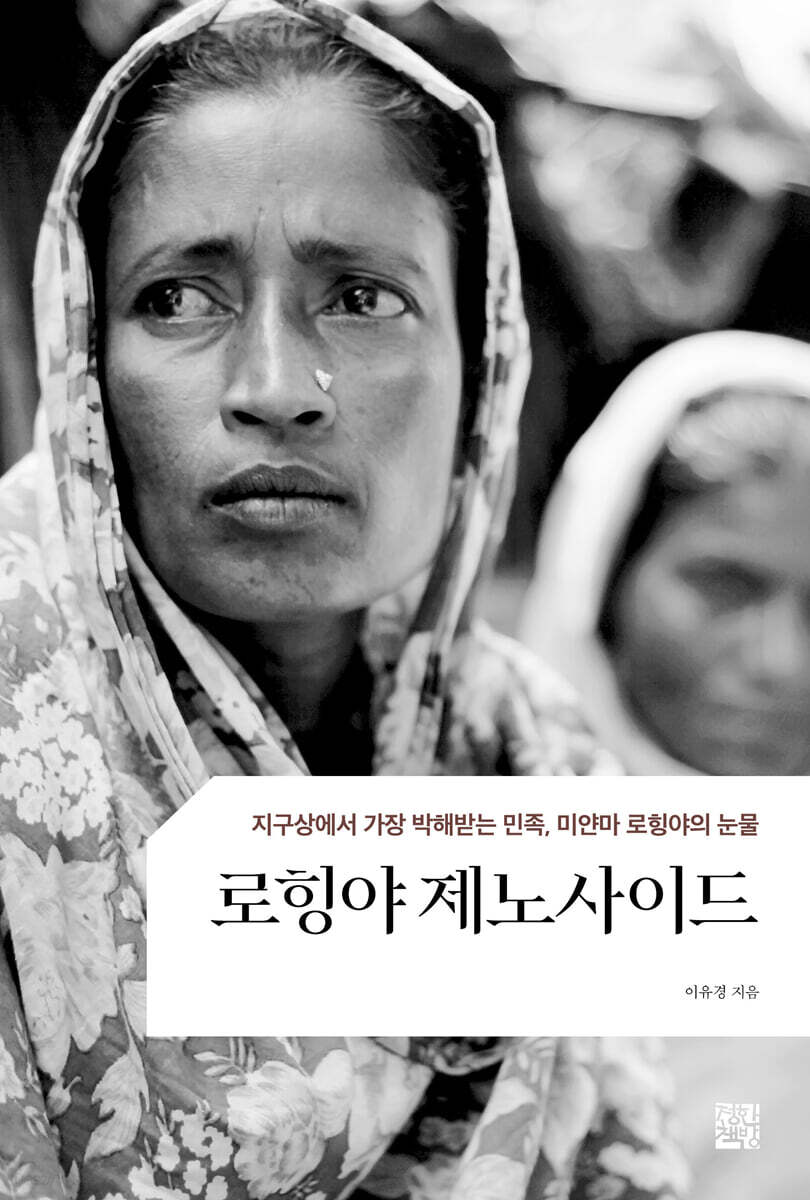
Rohingya genocide
 |
Description
Book Introduction
“A moment to reflect on hatred and discrimination!”
Genocide, an experiment on humanity in this era!
The author's message about the Rohingya crisis is simple.
If we conveniently apply or discard universal human rights and minority rights, the majority will ultimately face the same misfortune.
Hatred and discrimination against minorities ultimately lead to further hatred and discrimination within the majority, and only reinforce the divided rule of the ruling elite.
Myanmar has been in a civil war for three years since a coup in 2021.
In the past, the Myanmar democracy movement was a struggle against the military regime within the Burmese, the majority ethnic group in Myanmar.
That structure was broken after the 2021 coup.
Myanmar's democratization is now possible only through a true federal democracy, one based on solidarity with numerous ethnic minorities, including the Rohingya.
The reason why representative democracy has not been achieved in Myanmar and military dictatorship has persisted is because the issue of ethnic minorities has not been resolved.
The Rohingya crisis in Myanmar is a wake-up call to identity politics.
Race, gender, religion, and ethnicity are convenient tools for mobilizing the masses in the short term.
It is the same for those who want to impose dictatorship and those who oppose dictatorship.
In particular, for those involved in the progressive movement, it is crucial to realize universal values without falling into the trap of identity politics while defending and supporting minorities.
This book makes us reflect on the growing hatred and discrimination based on gender, religion, and region in Korean society.
- From the preface by Jeong Ui-gil (Hankyoreh International Senior Reporter)
Genocide, an experiment on humanity in this era!
The author's message about the Rohingya crisis is simple.
If we conveniently apply or discard universal human rights and minority rights, the majority will ultimately face the same misfortune.
Hatred and discrimination against minorities ultimately lead to further hatred and discrimination within the majority, and only reinforce the divided rule of the ruling elite.
Myanmar has been in a civil war for three years since a coup in 2021.
In the past, the Myanmar democracy movement was a struggle against the military regime within the Burmese, the majority ethnic group in Myanmar.
That structure was broken after the 2021 coup.
Myanmar's democratization is now possible only through a true federal democracy, one based on solidarity with numerous ethnic minorities, including the Rohingya.
The reason why representative democracy has not been achieved in Myanmar and military dictatorship has persisted is because the issue of ethnic minorities has not been resolved.
The Rohingya crisis in Myanmar is a wake-up call to identity politics.
Race, gender, religion, and ethnicity are convenient tools for mobilizing the masses in the short term.
It is the same for those who want to impose dictatorship and those who oppose dictatorship.
In particular, for those involved in the progressive movement, it is crucial to realize universal values without falling into the trap of identity politics while defending and supporting minorities.
This book makes us reflect on the growing hatred and discrimination based on gender, religion, and region in Korean society.
- From the preface by Jeong Ui-gil (Hankyoreh International Senior Reporter)
- You can preview some of the book's contents.
Preview
index
A moment to reflect on hatred and discrimination
Prologue: The Rohingya's Future: A Mass Murder
Glossary of Abbreviations and Terms
Part 1: The Age of Hatred
1.
Cyclones, coups, and genocides
2.
Myanmar's 'Apartheid'
Part 2: Islamic Genocide
1.
The spread of the riots
2.
Buddhist extremism joins hands with military fascism.
Part 3: Are the Rohingya "Bengalis"?
1.
Citizenship Taken Away, 1982
2.
Indigenous people, Rohingya
Part 4: Half a Century of Genocide
1.
The 'intention' to wipe out the race
2.
The unfolding of genocide
Part 5: Their suffering came like a tsunami.
1.
Refugees, Survivors
2.
The brutal history of 'forced repatriation'
Part 6: Dangerous Signals at the Border
1.
People who leave even after death
2.
Fighting against 'Burmanization' and 'Islamization'
Epilogue: The Rohingya's Nakba and the Palestinian Genocide
Appendix: Rohingya Genocide Chronology
Prologue: The Rohingya's Future: A Mass Murder
Glossary of Abbreviations and Terms
Part 1: The Age of Hatred
1.
Cyclones, coups, and genocides
2.
Myanmar's 'Apartheid'
Part 2: Islamic Genocide
1.
The spread of the riots
2.
Buddhist extremism joins hands with military fascism.
Part 3: Are the Rohingya "Bengalis"?
1.
Citizenship Taken Away, 1982
2.
Indigenous people, Rohingya
Part 4: Half a Century of Genocide
1.
The 'intention' to wipe out the race
2.
The unfolding of genocide
Part 5: Their suffering came like a tsunami.
1.
Refugees, Survivors
2.
The brutal history of 'forced repatriation'
Part 6: Dangerous Signals at the Border
1.
People who leave even after death
2.
Fighting against 'Burmanization' and 'Islamization'
Epilogue: The Rohingya's Nakba and the Palestinian Genocide
Appendix: Rohingya Genocide Chronology
Into the book
'Talent' continued.
Local media reports that most people have not received any relief supplies even two weeks after the cyclone.
Compared to 15 years ago, when it took 13 days for the UN to gain access to the Cyclone Nargis site, the current military coup has become more vicious.
Moreover, on June 8, the military government completely suspended relief activities by international NGOs.
The issuance of 'Travel Authorizations' (TA) issued to relief organizations has been suspended, and the validity of permits already issued has also been suspended.
The UN's Office for the Coordination of Humanitarian Affairs said that "even the authorities' TAs for humanitarian agencies that had already been issued have been suspended" and that "plans to distribute relief supplies to townships already affected by the cyclone have also been cancelled."
--- p.60
First, on July 25, 2011, a Sunni Muslim cemetery that had been in the city for over 100 years was bulldozed.
Mektila Muslims repeatedly appealed to the government in 2008 and 2011 to stop destroying the Muslim cemetery, but to no avail.
The construction company that brought in the bulldozer, Sane Lan So Pyay Yay, has claimed ownership of the land, saying they bought it.
The rapid mobilization of bulldozers and the indiscriminate destruction of mosques and other buildings during the 2013 Mektila riots is a kind of 'déjà vu'.
--- p.94
During the process of replacing resident cards that continued from the late 1980s to the early 1990s, many Rohingya returned their NRCs, also known as “green cards,” in response to military officials’ promise that they would “return the old card (NRC) and receive a new card (NSC).”
However, I did not receive the 'pink card' NSC.
It was only after several years that they received a 'white card'.
The White Card was first distributed by authorities in 1994 to register Rohingya refugees who were repatriated from Bangladesh to Myanmar.
Some Rohingya have refused to return their old NRC cards, despite being warned that they would face 10 years in prison if they did not.
The 'green card' they have is evidence that they were once citizens of this country.
--- p.135
However, Myanmar has been relentless in its persecution and violence, mobilizing all kinds of oppressive state apparatus while depriving the Rohingya of their citizenship and refusing to recognize them as citizens.
For example, when Myanmar conducted a 2014 census with the cooperation of the United Nations Population Fund, the Rohingya were excluded entirely.
From a mechanical logic perspective, the relationship between Myanmar and the Rohingya after the revocation of citizenship is a severed one that does not even constitute a “state-to-citizen” relationship.
But that is not the case for the Rohingya.
The country that severed ties with the Rohingya is now bringing back its oppressive and violent state apparatus and harshly targeting the Rohingya.
They control the bodies of Rohingya women, restrict childbirth, restrict movement, and fundamentally block their movements and livelihood activities.
Threats, orders and threats against the 'uncivilized' Rohingya continued.
The situation facing the Rohingya is highly systematic and complex.
The ‘systematic and meticulous’ nature itself can be interpreted as ‘intention’, a central element of genocide.
We will examine three representative policies that correspond to this: birth control, marriage restrictions, and restrictions on freedom of movement.
--- p.189
Maungdaw citizen journalist Abdul (35, pseudonym) said that at around 9:30 p.m. on January 13, not only the police who were trying to crack down on Rohingya, but also a group of Rakhine people led by the 'village administrator' Aung Jan Phyu stormed into the Rohingya village.
They tried to arrest young people sitting at a beetlenut (a tobacco leaf-type snack) stall.
A confidential UN report described the situation as "security forces entering Rohingya villages to detain witnesses who had secretly filmed Rohingya bodies with their phones and confiscate the phones as evidence."
As young people, feeling threatened, cried out for help, Rohingya villagers gathered.
The group of Rakan people who failed to be arrested left the place for the time being.
Local media reports that most people have not received any relief supplies even two weeks after the cyclone.
Compared to 15 years ago, when it took 13 days for the UN to gain access to the Cyclone Nargis site, the current military coup has become more vicious.
Moreover, on June 8, the military government completely suspended relief activities by international NGOs.
The issuance of 'Travel Authorizations' (TA) issued to relief organizations has been suspended, and the validity of permits already issued has also been suspended.
The UN's Office for the Coordination of Humanitarian Affairs said that "even the authorities' TAs for humanitarian agencies that had already been issued have been suspended" and that "plans to distribute relief supplies to townships already affected by the cyclone have also been cancelled."
--- p.60
First, on July 25, 2011, a Sunni Muslim cemetery that had been in the city for over 100 years was bulldozed.
Mektila Muslims repeatedly appealed to the government in 2008 and 2011 to stop destroying the Muslim cemetery, but to no avail.
The construction company that brought in the bulldozer, Sane Lan So Pyay Yay, has claimed ownership of the land, saying they bought it.
The rapid mobilization of bulldozers and the indiscriminate destruction of mosques and other buildings during the 2013 Mektila riots is a kind of 'déjà vu'.
--- p.94
During the process of replacing resident cards that continued from the late 1980s to the early 1990s, many Rohingya returned their NRCs, also known as “green cards,” in response to military officials’ promise that they would “return the old card (NRC) and receive a new card (NSC).”
However, I did not receive the 'pink card' NSC.
It was only after several years that they received a 'white card'.
The White Card was first distributed by authorities in 1994 to register Rohingya refugees who were repatriated from Bangladesh to Myanmar.
Some Rohingya have refused to return their old NRC cards, despite being warned that they would face 10 years in prison if they did not.
The 'green card' they have is evidence that they were once citizens of this country.
--- p.135
However, Myanmar has been relentless in its persecution and violence, mobilizing all kinds of oppressive state apparatus while depriving the Rohingya of their citizenship and refusing to recognize them as citizens.
For example, when Myanmar conducted a 2014 census with the cooperation of the United Nations Population Fund, the Rohingya were excluded entirely.
From a mechanical logic perspective, the relationship between Myanmar and the Rohingya after the revocation of citizenship is a severed one that does not even constitute a “state-to-citizen” relationship.
But that is not the case for the Rohingya.
The country that severed ties with the Rohingya is now bringing back its oppressive and violent state apparatus and harshly targeting the Rohingya.
They control the bodies of Rohingya women, restrict childbirth, restrict movement, and fundamentally block their movements and livelihood activities.
Threats, orders and threats against the 'uncivilized' Rohingya continued.
The situation facing the Rohingya is highly systematic and complex.
The ‘systematic and meticulous’ nature itself can be interpreted as ‘intention’, a central element of genocide.
We will examine three representative policies that correspond to this: birth control, marriage restrictions, and restrictions on freedom of movement.
--- p.189
Maungdaw citizen journalist Abdul (35, pseudonym) said that at around 9:30 p.m. on January 13, not only the police who were trying to crack down on Rohingya, but also a group of Rakhine people led by the 'village administrator' Aung Jan Phyu stormed into the Rohingya village.
They tried to arrest young people sitting at a beetlenut (a tobacco leaf-type snack) stall.
A confidential UN report described the situation as "security forces entering Rohingya villages to detain witnesses who had secretly filmed Rohingya bodies with their phones and confiscate the phones as evidence."
As young people, feeling threatened, cried out for help, Rohingya villagers gathered.
The group of Rakan people who failed to be arrested left the place for the time being.
--- p.273
Publisher's Review
The Rohingya issue is a spring revolution
It will be a litmus test!
This book attempts to cover the Rohingya genocide from a longer and deeper perspective, going beyond the 2016-2017 incident, which is considered the most recent massacre.
Genocide is not a short-term event.
The massacre that occurred in 2017 was diagnosed as the final stage of genocide, an event of 'mass extermination'.
(Some scholars see this as the penultimate stage.) The 'genocide infrastructure' was built and evolved over several decades leading up to that 'final' stage.
The weight of persecution inflicted on the Rohingya will likely weigh on them for decades.
We just didn't know.
I believe it is important to examine the history of the Rohingya genocide up to 2017 and the situation since then to understand the full extent of this horrific crime.
Since this is an uncomfortable and awkward topic and the length of time covered is not short, I thought it might be of some help to readers, so I summarized the flow and background of each chapter.
Part 1 opened with 'The Age of Hatred'.
Here, the 'age of hate' first and foremost refers to the 2010s.
At the same time, it can be seen as a metaphor for the entire Rohingya genocide.
The 2010s was a period when Myanmar was going through the so-called 'democratization transition', and the words 'reform' and 'openness' were used as modifiers to describe the country name 'Myanmar'.
The first half of that decade was filled by the semi-civilian government (2011–2015) of President Thein Sein, a former military officer, and the remaining five years were filled by the National League for Democracy (NLD) government led by Aung San Suu Kyi (2016–2020).
Aung San Suu Kyi's government is very significant as it is the first civilian government to take office since Ne Win's military coup in 1962.
However, one point must be made clear: the NLD government was essentially a "hybrid civilian government" that had to share power with the military under the 2008 military-led constitution.
The 2010s were also a time when the freedom of expression that had permeated the winds of democratization was abused in a very vicious way.
Hatred against the Rohingya and Myanmar's Muslim community has spread across the board and erupted violently.
If we look at it through the lens of the 'Rohingya genocide', that era was an era of hatred.
Although ‘democratization’ and ‘reform’ may have been the dominant discourses, we must not overlook the fact that ‘democratization’ was ‘planned’ by the military and ‘reform’ was ‘reform from above.’
The concrete starting point for all these plans is the 2008 Military Constitution.
That's why this book started in May 2008.
Therefore, the first chapter of Part 1, ‘Cyclone, Coup, and Genocide,’ is a chapter that aims to understand how the 2010s, when the Rohingya genocide occurred, appeared as a preview and flowed before delving into the Rohingya story in earnest.
It also shows how two cyclones, one in May 2008 and one in May 2023, which occurred 15 years apart, continue the era of hatred.
In addition, the issue of 'deprivation of citizenship', which has the greatest institutional symbolism of the Rohingya genocide, is partially covered through on-site reporting.
Part 2 focuses on the 2013 Mektila Massacre, an expanded version of the Rohingya persecution that occurred in Mektila, a small town in north-central Myanmar.
The Mektila massacre was a significant incident that occurred at a time when hate speech and violence against the Rohingya were escalating as hatred against the Muslim community spread.
Part 2 focuses on the issue of "Buddhist extremism," a far-right ideology and a tool of military politicians that endlessly incites all this persecution and violence.
Part 3 delves into the issue of citizenship, an issue that represents the institutional, symbolic, and substantive nature of the Rohingya genocide.
We introduce the argument of those who view the Rohingya as a fake identity and claim that “Rohingya = Bengali,” and examine the Rohingya’s indigenous nature as a counterargument.
This is a must-see for those who claim that 'Rohingya are not Myanmar people.'
Part 4 primarily contains theory and information, including an explanation of the crime of genocide and the contents and background of the Convention against Genocide.
The report then details the persecution the Rohingya have faced over the past half century.
This is an attempt to reconcile the theory of genocide with the reality of the Rohingya genocide.
Due to the nature of the content, it relied heavily on literature research methods.
The purpose of Part 4 is to share that defining the persecution faced by the Rohingya as "genocide" is not simply an emotional outburst of anger and sympathy, but rather a "scientific" judgment based on established international conventions and international law, a process of discussion and deliberation, and an analysis that is accompanied by a solid historical foundation.
Part 5 depicts the lives of Rohingya refugees in Cox's Bazar, southeastern Bangladesh.
It is a passionate attempt to share the fact that the lives of the Rohingya have been enduring there since the late 1970s, long before the 2017 genocide.
This is a chapter that provides an understanding of how the Rohingya genocide crimes have expanded and spread spatially and historically through the reality of their refugee lives.
In addition, the ongoing repatriation issue was examined in detail, starting from the situation in the 1970s.
Finally, Part 6, ‘Dangerous Signals at the Border’, is largely divided into two parts.
One is the story of the Rohingya boat refugees, and the other is the story of the Rakhine, the Rohingya's closest neighbors.
'Boat Refugee Stories' shares the desperate struggle of boat refugees who 'endlessly cross borders in search of a slightly less dangerous space' through the reality of boat refugees crossing borders of various countries such as Myanmar, Bangladesh, Thailand, and Malaysia.
The space they are trying to escape to is not only Myanmar.
The Bangladesh camps, where they have lived for almost two generations since the first mass eviction in 1978, are also places they are trying to escape.
The reality that even refugee camps, which should be a place of refuge, are fenced off and freedom of movement is severely restricted is creating 'another world' for the Rohingya.
And Rohingya who put this into practice are being arrested and detained by the Bangladeshi authorities.
Despite this, the number of Rohingya trying to escape the camps in Bangladesh is increasing.
According to the Arakan Project, which has been tracking Rohingya boat refugees, as of the end of November 2023, 3,572 Rohingya had boarded 34 refugee boats that year.
65% of them originated from Bangladesh.
Until the previous year, the proportion of boat refugees departing from Myanmar's Rakhine State was high, but that trend has reversed.
The majority of boat migrants are women and children.
This is a passage that makes us feel, once again, how far the weight of pain that crime can inflict on a community can extend.
The following story of the armed groups in Rakhine State examines the Rakhine conflict and the dynamics of the "triangular structure" that constitutes it, in order to understand the structural contradictions that sustain the Rohingya genocide.
This topic is based on my concern that the significance of the 'Rakhine variable' is not well known in Korean society.
There is a reason why we focused on the Arakan Army (hereinafter “AA”), an armed group that is currently the most active.
To understand the situation in Rakhine State since the 2017 massacre, and even the situation in Myanmar, it is necessary to understand AA.
The Rohingya genocide in Myanmar remains unresolved in the post-2017 era, and is becoming more complex and entangled in a new situation.
The organization that is emerging as a leading player in this situation is AA.
It is difficult to properly understand the Rohingya issue without understanding Rakhine politics and the AA.
The key players in the long-term policy of genocide against the Rohingya are, of course, the successive Myanmar military rulers.
However, we cannot overlook the fact that the Rakhine community, the majority ethnic group in Rakhine State, the home of the Rohingya, is also a perpetrator group that has directly or indirectly participated in this crime.
The conflict between the two communities often dates back to the British colonial period before Burma's independence in 1948, particularly in the 1940s, when the two empires, Britain and Japan, clashed over Burmese territory, including Arakan (now Rakhine State), at the end of World War II.
However, if we time travel a little further back in time, we can see a time when the two communities coexisted peacefully in the land of Arakan (Rakhine State).
This is why the recent history of Rakhine nationalists, racists, and extremist forces participating in state violence targeting the Rohingya is so sad and deeply regrettable.
For the military, which is well aware of the history of animosity between the two communities, the policy of division has become an effective means of perpetrating the 'Rohingya genocide'.
In this historical context, the AA, which is currently emerging as another ruling power in Rakhine State, is an organization that researchers and journalists who follow Rohingya and Myanmar issues should keep an eye on.
We face important questions such as what stance the AA took 'before and after' the 2017 massacre, and whether the Rakhine community can peacefully coexist with the Rohingya as neighbors under the AA's growing territorial control, or whether the AA itself will 'reign' as another oppressive force.
It will be a litmus test!
This book attempts to cover the Rohingya genocide from a longer and deeper perspective, going beyond the 2016-2017 incident, which is considered the most recent massacre.
Genocide is not a short-term event.
The massacre that occurred in 2017 was diagnosed as the final stage of genocide, an event of 'mass extermination'.
(Some scholars see this as the penultimate stage.) The 'genocide infrastructure' was built and evolved over several decades leading up to that 'final' stage.
The weight of persecution inflicted on the Rohingya will likely weigh on them for decades.
We just didn't know.
I believe it is important to examine the history of the Rohingya genocide up to 2017 and the situation since then to understand the full extent of this horrific crime.
Since this is an uncomfortable and awkward topic and the length of time covered is not short, I thought it might be of some help to readers, so I summarized the flow and background of each chapter.
Part 1 opened with 'The Age of Hatred'.
Here, the 'age of hate' first and foremost refers to the 2010s.
At the same time, it can be seen as a metaphor for the entire Rohingya genocide.
The 2010s was a period when Myanmar was going through the so-called 'democratization transition', and the words 'reform' and 'openness' were used as modifiers to describe the country name 'Myanmar'.
The first half of that decade was filled by the semi-civilian government (2011–2015) of President Thein Sein, a former military officer, and the remaining five years were filled by the National League for Democracy (NLD) government led by Aung San Suu Kyi (2016–2020).
Aung San Suu Kyi's government is very significant as it is the first civilian government to take office since Ne Win's military coup in 1962.
However, one point must be made clear: the NLD government was essentially a "hybrid civilian government" that had to share power with the military under the 2008 military-led constitution.
The 2010s were also a time when the freedom of expression that had permeated the winds of democratization was abused in a very vicious way.
Hatred against the Rohingya and Myanmar's Muslim community has spread across the board and erupted violently.
If we look at it through the lens of the 'Rohingya genocide', that era was an era of hatred.
Although ‘democratization’ and ‘reform’ may have been the dominant discourses, we must not overlook the fact that ‘democratization’ was ‘planned’ by the military and ‘reform’ was ‘reform from above.’
The concrete starting point for all these plans is the 2008 Military Constitution.
That's why this book started in May 2008.
Therefore, the first chapter of Part 1, ‘Cyclone, Coup, and Genocide,’ is a chapter that aims to understand how the 2010s, when the Rohingya genocide occurred, appeared as a preview and flowed before delving into the Rohingya story in earnest.
It also shows how two cyclones, one in May 2008 and one in May 2023, which occurred 15 years apart, continue the era of hatred.
In addition, the issue of 'deprivation of citizenship', which has the greatest institutional symbolism of the Rohingya genocide, is partially covered through on-site reporting.
Part 2 focuses on the 2013 Mektila Massacre, an expanded version of the Rohingya persecution that occurred in Mektila, a small town in north-central Myanmar.
The Mektila massacre was a significant incident that occurred at a time when hate speech and violence against the Rohingya were escalating as hatred against the Muslim community spread.
Part 2 focuses on the issue of "Buddhist extremism," a far-right ideology and a tool of military politicians that endlessly incites all this persecution and violence.
Part 3 delves into the issue of citizenship, an issue that represents the institutional, symbolic, and substantive nature of the Rohingya genocide.
We introduce the argument of those who view the Rohingya as a fake identity and claim that “Rohingya = Bengali,” and examine the Rohingya’s indigenous nature as a counterargument.
This is a must-see for those who claim that 'Rohingya are not Myanmar people.'
Part 4 primarily contains theory and information, including an explanation of the crime of genocide and the contents and background of the Convention against Genocide.
The report then details the persecution the Rohingya have faced over the past half century.
This is an attempt to reconcile the theory of genocide with the reality of the Rohingya genocide.
Due to the nature of the content, it relied heavily on literature research methods.
The purpose of Part 4 is to share that defining the persecution faced by the Rohingya as "genocide" is not simply an emotional outburst of anger and sympathy, but rather a "scientific" judgment based on established international conventions and international law, a process of discussion and deliberation, and an analysis that is accompanied by a solid historical foundation.
Part 5 depicts the lives of Rohingya refugees in Cox's Bazar, southeastern Bangladesh.
It is a passionate attempt to share the fact that the lives of the Rohingya have been enduring there since the late 1970s, long before the 2017 genocide.
This is a chapter that provides an understanding of how the Rohingya genocide crimes have expanded and spread spatially and historically through the reality of their refugee lives.
In addition, the ongoing repatriation issue was examined in detail, starting from the situation in the 1970s.
Finally, Part 6, ‘Dangerous Signals at the Border’, is largely divided into two parts.
One is the story of the Rohingya boat refugees, and the other is the story of the Rakhine, the Rohingya's closest neighbors.
'Boat Refugee Stories' shares the desperate struggle of boat refugees who 'endlessly cross borders in search of a slightly less dangerous space' through the reality of boat refugees crossing borders of various countries such as Myanmar, Bangladesh, Thailand, and Malaysia.
The space they are trying to escape to is not only Myanmar.
The Bangladesh camps, where they have lived for almost two generations since the first mass eviction in 1978, are also places they are trying to escape.
The reality that even refugee camps, which should be a place of refuge, are fenced off and freedom of movement is severely restricted is creating 'another world' for the Rohingya.
And Rohingya who put this into practice are being arrested and detained by the Bangladeshi authorities.
Despite this, the number of Rohingya trying to escape the camps in Bangladesh is increasing.
According to the Arakan Project, which has been tracking Rohingya boat refugees, as of the end of November 2023, 3,572 Rohingya had boarded 34 refugee boats that year.
65% of them originated from Bangladesh.
Until the previous year, the proportion of boat refugees departing from Myanmar's Rakhine State was high, but that trend has reversed.
The majority of boat migrants are women and children.
This is a passage that makes us feel, once again, how far the weight of pain that crime can inflict on a community can extend.
The following story of the armed groups in Rakhine State examines the Rakhine conflict and the dynamics of the "triangular structure" that constitutes it, in order to understand the structural contradictions that sustain the Rohingya genocide.
This topic is based on my concern that the significance of the 'Rakhine variable' is not well known in Korean society.
There is a reason why we focused on the Arakan Army (hereinafter “AA”), an armed group that is currently the most active.
To understand the situation in Rakhine State since the 2017 massacre, and even the situation in Myanmar, it is necessary to understand AA.
The Rohingya genocide in Myanmar remains unresolved in the post-2017 era, and is becoming more complex and entangled in a new situation.
The organization that is emerging as a leading player in this situation is AA.
It is difficult to properly understand the Rohingya issue without understanding Rakhine politics and the AA.
The key players in the long-term policy of genocide against the Rohingya are, of course, the successive Myanmar military rulers.
However, we cannot overlook the fact that the Rakhine community, the majority ethnic group in Rakhine State, the home of the Rohingya, is also a perpetrator group that has directly or indirectly participated in this crime.
The conflict between the two communities often dates back to the British colonial period before Burma's independence in 1948, particularly in the 1940s, when the two empires, Britain and Japan, clashed over Burmese territory, including Arakan (now Rakhine State), at the end of World War II.
However, if we time travel a little further back in time, we can see a time when the two communities coexisted peacefully in the land of Arakan (Rakhine State).
This is why the recent history of Rakhine nationalists, racists, and extremist forces participating in state violence targeting the Rohingya is so sad and deeply regrettable.
For the military, which is well aware of the history of animosity between the two communities, the policy of division has become an effective means of perpetrating the 'Rohingya genocide'.
In this historical context, the AA, which is currently emerging as another ruling power in Rakhine State, is an organization that researchers and journalists who follow Rohingya and Myanmar issues should keep an eye on.
We face important questions such as what stance the AA took 'before and after' the 2017 massacre, and whether the Rakhine community can peacefully coexist with the Rohingya as neighbors under the AA's growing territorial control, or whether the AA itself will 'reign' as another oppressive force.
GOODS SPECIFICS
- Date of issue: February 20, 2024
- Page count, weight, size: 380 pages | 152*225*30mm
- ISBN13: 9791187685791
- ISBN10: 1187685798
You may also like
카테고리
korean


korean

![GQ KOREA Mark (Monthly): December [2025]](http://librairie.coreenne.fr/cdn/shop/files/8ef265dbbfbf186523ed75ba7319009d.jpg?v=1765340328&width=3840)


