

Emil
 |
Description
Book Introduction
An educational book that embodies the central ideas of human revolution!
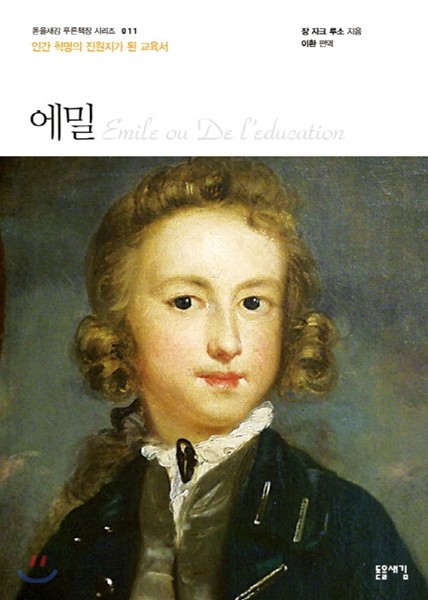
The eleventh book in the 'Blue Bookshelf Series' of embossing is Jean-Jacques Rousseau's [Emile].
This book, which is both a textbook of education and a work of philosophy, is also a report on the inner workings of human growth. Even now, 200 years after its publication, it is still considered the most essential educational guide for our education.
[Emile] contains all the questions and answers about education from the moment a child is born until adulthood, when they find a spouse, start a family, and fulfill their duties as a member of society.
This book embodies Rousseau's central idea of human education: that humans are born free and good, but become corrupted by evil and fall into a state of misery due to the social systems and culture they create, and that only an education close to nature and instinct can form true humanity.
The eleventh book in the 'Blue Bookshelf Series' of embossing is Jean-Jacques Rousseau's [Emile].
This book, which is both a textbook of education and a work of philosophy, is also a report on the inner workings of human growth. Even now, 200 years after its publication, it is still considered the most essential educational guide for our education.
[Emile] contains all the questions and answers about education from the moment a child is born until adulthood, when they find a spouse, start a family, and fulfill their duties as a member of society.
This book embodies Rousseau's central idea of human education: that humans are born free and good, but become corrupted by evil and fall into a state of misery due to the social systems and culture they create, and that only an education close to nature and instinct can form true humanity.
- You can preview some of the book's contents.
Preview
index
Part 1: Infancy (Birth to Age 5)
Part 2┃Childhood (ages five to twelve)
Part 3: Boyhood (ages twelve to fifteen)
Part 4: Adolescence (ages fifteen to twenty)
Part 5: Adulthood (From Age Twenty to Marriage)
supplement
- Rousseau's life and thought
-About Emile (Commentary)
- Rousseau's chronology
Part 2┃Childhood (ages five to twelve)
Part 3: Boyhood (ages twelve to fifteen)
Part 4: Adolescence (ages fifteen to twenty)
Part 5: Adulthood (From Age Twenty to Marriage)
supplement
- Rousseau's life and thought
-About Emile (Commentary)
- Rousseau's chronology
Publisher's Review
Raising Humans to Be Human! Rousseau's Naturalistic Education
[Emile] is a new type of educational book that combines educational theory with a novel.
The protagonist, Emil, is an orphan, but he is educated by a wise tutor to become a natural and independent person.
[Emil], which is divided into five parts according to Emil's growth, shows the form of education at each stage of growth from birth to marriage.
Part 1 discusses development from birth to five years of age.
This period should not suppress or distort the child's development.
The body parts should be free to move, and the baby should not be dressed in underwear that can impede the baby's growth.
In this way, it was emphasized that children should be raised in their natural state.
Part II deals with education from the ages of five to twelve.
This is a time when observation of things and enlightenment through experience are needed rather than hasty knowledge.
What is especially important in education during this period is not to rush.
We often emphasize early education, but it is often said that this only causes children to fall into error more quickly.
Part 3 is the period from twelve to fifteen years of age.
It is a time when we must train our senses with reason, that is, a time when we must teach academics.
Knowledge is important because it is embodied through one's own observations rather than the knowledge or experience of others.
He says we must avoid being swayed by prejudice or stereotypes.
Part 4 is about education during adolescence, and covers the period from fifteen to twenty years of age.
This time can be said to be the second birth period for humans.
Moral and religious feelings sprout.
It is also a time when we open our eyes to sex.
As temperament changes, the body becomes more mature and signs of adulthood appear.
Part 5 depicts Emil's search for a spouse as he reaches adulthood.
Through his relationship with Sophie, he talks about what marriage is, what men and women should do, and their roles and responsibilities.
It also mentions ethics between couples.
A revolutionary educational book containing the ideal human image of a natural person.
How can we raise children with dignity? [Emile], part of the Blue Bookshelf series, summarizes key educational content and arguments for each stage of human development, making it accessible to everyone.
Additionally, new subtitles were added to each section to allow a clear understanding of Rousseau's thoughts hidden within the text.
Additionally, the appendix includes a commentary on Rousseau's life and [Emile].
Through the background of Rousseau's upbringing and the events that influenced his ideas, it helped us better understand the central idea of human education that he sought to reveal in [Emile].
[Emile] is a new type of educational book that combines educational theory with a novel.
The protagonist, Emil, is an orphan, but he is educated by a wise tutor to become a natural and independent person.
[Emil], which is divided into five parts according to Emil's growth, shows the form of education at each stage of growth from birth to marriage.
Part 1 discusses development from birth to five years of age.
This period should not suppress or distort the child's development.
The body parts should be free to move, and the baby should not be dressed in underwear that can impede the baby's growth.
In this way, it was emphasized that children should be raised in their natural state.
Part II deals with education from the ages of five to twelve.
This is a time when observation of things and enlightenment through experience are needed rather than hasty knowledge.
What is especially important in education during this period is not to rush.
We often emphasize early education, but it is often said that this only causes children to fall into error more quickly.
Part 3 is the period from twelve to fifteen years of age.
It is a time when we must train our senses with reason, that is, a time when we must teach academics.
Knowledge is important because it is embodied through one's own observations rather than the knowledge or experience of others.
He says we must avoid being swayed by prejudice or stereotypes.
Part 4 is about education during adolescence, and covers the period from fifteen to twenty years of age.
This time can be said to be the second birth period for humans.
Moral and religious feelings sprout.
It is also a time when we open our eyes to sex.
As temperament changes, the body becomes more mature and signs of adulthood appear.
Part 5 depicts Emil's search for a spouse as he reaches adulthood.
Through his relationship with Sophie, he talks about what marriage is, what men and women should do, and their roles and responsibilities.
It also mentions ethics between couples.
A revolutionary educational book containing the ideal human image of a natural person.
How can we raise children with dignity? [Emile], part of the Blue Bookshelf series, summarizes key educational content and arguments for each stage of human development, making it accessible to everyone.
Additionally, new subtitles were added to each section to allow a clear understanding of Rousseau's thoughts hidden within the text.
Additionally, the appendix includes a commentary on Rousseau's life and [Emile].
Through the background of Rousseau's upbringing and the events that influenced his ideas, it helped us better understand the central idea of human education that he sought to reveal in [Emile].
GOODS SPECIFICS
- Date of issue: January 25, 2015
- Page count, weight, size: 376 pages | 512g | 153*224*30mm
- ISBN13: 9788961671736
- ISBN10: 8961671731
You may also like
카테고리
korean


korean

![GQ KOREA Mark (Monthly): December [2025]](http://librairie.coreenne.fr/cdn/shop/files/8ef265dbbfbf186523ed75ba7319009d.jpg?v=1765340328&width=3840)


