

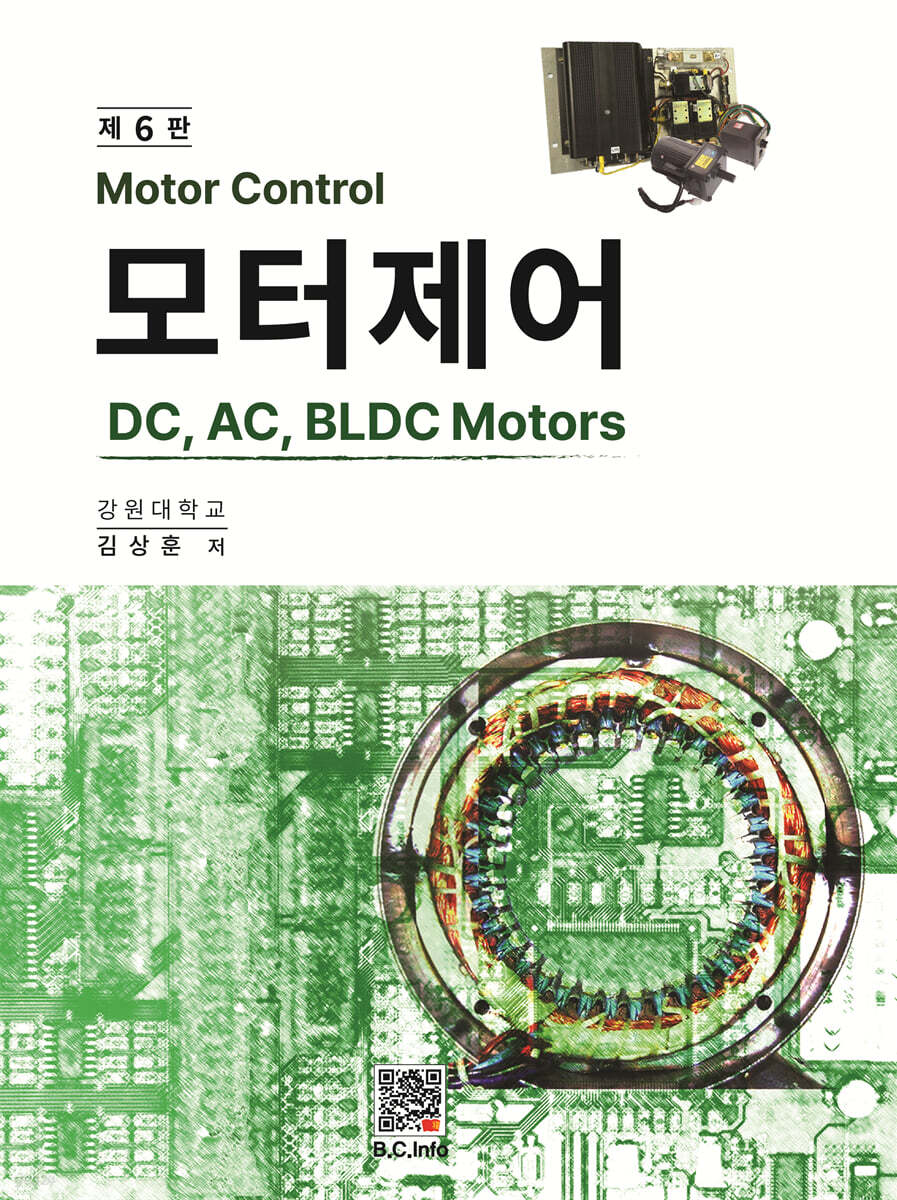
motor control
 |
Description
Book Introduction
As the demand for environmental protection and energy conservation increases, electric motors have become the most important mechanical driving force.
Many mechanical systems that used classic diesel or gasoline engines, hydraulics, etc. are now being replaced by environmentally friendly and easy-to-control electric drive systems.
Today, electric motor drive systems play a vital role in supporting the convenience of our lives, from home appliances and office equipment to transportation and industrial equipment.
The main purpose of this book is to provide motor control technology for stable and efficient control of these systems.
Representative electric motors widely used today include DC motors, AC motors of synchronous motors and induction motors, and BLDC motors.
In order to effectively control these motors, it is necessary to comprehensively acquire various related technologies, including the basic operating principles of the motors themselves, driving methods, control theory, and power conversion devices.
This book covers all of these topics together, and also explains how to simulate these techniques using Matlab/Simulink.
Many mechanical systems that used classic diesel or gasoline engines, hydraulics, etc. are now being replaced by environmentally friendly and easy-to-control electric drive systems.
Today, electric motor drive systems play a vital role in supporting the convenience of our lives, from home appliances and office equipment to transportation and industrial equipment.
The main purpose of this book is to provide motor control technology for stable and efficient control of these systems.
Representative electric motors widely used today include DC motors, AC motors of synchronous motors and induction motors, and BLDC motors.
In order to effectively control these motors, it is necessary to comprehensively acquire various related technologies, including the basic operating principles of the motors themselves, driving methods, control theory, and power conversion devices.
This book covers all of these topics together, and also explains how to simulate these techniques using Matlab/Simulink.
index
CHAPTER 01 Basic Principles of Electric Motors
1.1 Operating Principle of Motor
1.2 Torque generation conditions of the motor
1.3 Load System
1.4 Configuration of the motor drive system
·References
CHAPTER 02 Torque Control of DC Motors
2.1 Structure of a DC motor
2.2 Modeling of DC motors
2.3 Steady-state characteristics of DC motors
2.4 Transient characteristics of DC motors
2.5 Motor control system
2.6 Current controller
2.7 Speed controller
2.8 Power conversion device for driving a DC motor
2.9 Simulation of a Permanent Magnet DC Motor: Matlab Simulink
·References
CHAPTER 03 BLDC Motor
3.1 Structure of BLDC motor
3.2 Basic driving method of a 3-phase BLDC motor
3.3 Modeling of a 3-phase BLDC motor
3.4 3-phase BLDC motor control
3.5 Sensorless control of three-phase BLDC motors
·References
CHAPTER 04 Rotational Principles of AC Motors
4.1 Induction motor
4.2 Synchronous motor
·References
CHAPTER 05 Modeling of AC Motors and Coordinate System Conversion
5.1 Modeling of induction motors
5.2 Modeling of a permanent magnet synchronous motor
5.3 Coordinate System Transformation
5.4 DQ-axis model of induction motor
5.5 DQ-axis model of a permanent magnet synchronous motor
·References
CHAPTER 06 Vector Control of AC Motors
6.1 Instantaneous torque control of motor
6.2 Vector control of induction motors
6.3 Estimation of magnetic flux of induction motor
6.4 Flux controller for induction motors
6.5 Vector control of permanent magnet synchronous motors
·References
CHAPTER 07 Current Controller for AC Motors
7.1 Hysteresis controller
7.2 Triangle Wave Comparison Current Controller
7.3 dq-axis current controller
·References
CHAPTER 08 PWM INVERTER
8.1 Inverter
8.2 PWM inverter
8.3 Discontinuous modulation method
8.4 Modulation method using offset voltage
8.5 Overmodulation
8.6 Dead Time
8.7 Phase current measurement in PWM inverter
·References
CHAPTER 09 High-Speed Operation of AC Motors
9.1 Field-weakening control of induction motors
9.2 Weak flux control of permanent magnet synchronous motors
·References
CHAPTER 10 Speed Measurement and Sensorless Control of AC Motors
10.1 Speed and Position Sensors
10.2 Speed measurement method using incremental encoder
10.3 Sensorless control of AC motors
·References
1.1 Operating Principle of Motor
1.2 Torque generation conditions of the motor
1.3 Load System
1.4 Configuration of the motor drive system
·References
CHAPTER 02 Torque Control of DC Motors
2.1 Structure of a DC motor
2.2 Modeling of DC motors
2.3 Steady-state characteristics of DC motors
2.4 Transient characteristics of DC motors
2.5 Motor control system
2.6 Current controller
2.7 Speed controller
2.8 Power conversion device for driving a DC motor
2.9 Simulation of a Permanent Magnet DC Motor: Matlab Simulink
·References
CHAPTER 03 BLDC Motor
3.1 Structure of BLDC motor
3.2 Basic driving method of a 3-phase BLDC motor
3.3 Modeling of a 3-phase BLDC motor
3.4 3-phase BLDC motor control
3.5 Sensorless control of three-phase BLDC motors
·References
CHAPTER 04 Rotational Principles of AC Motors
4.1 Induction motor
4.2 Synchronous motor
·References
CHAPTER 05 Modeling of AC Motors and Coordinate System Conversion
5.1 Modeling of induction motors
5.2 Modeling of a permanent magnet synchronous motor
5.3 Coordinate System Transformation
5.4 DQ-axis model of induction motor
5.5 DQ-axis model of a permanent magnet synchronous motor
·References
CHAPTER 06 Vector Control of AC Motors
6.1 Instantaneous torque control of motor
6.2 Vector control of induction motors
6.3 Estimation of magnetic flux of induction motor
6.4 Flux controller for induction motors
6.5 Vector control of permanent magnet synchronous motors
·References
CHAPTER 07 Current Controller for AC Motors
7.1 Hysteresis controller
7.2 Triangle Wave Comparison Current Controller
7.3 dq-axis current controller
·References
CHAPTER 08 PWM INVERTER
8.1 Inverter
8.2 PWM inverter
8.3 Discontinuous modulation method
8.4 Modulation method using offset voltage
8.5 Overmodulation
8.6 Dead Time
8.7 Phase current measurement in PWM inverter
·References
CHAPTER 09 High-Speed Operation of AC Motors
9.1 Field-weakening control of induction motors
9.2 Weak flux control of permanent magnet synchronous motors
·References
CHAPTER 10 Speed Measurement and Sensorless Control of AC Motors
10.1 Speed and Position Sensors
10.2 Speed measurement method using incremental encoder
10.3 Sensorless control of AC motors
·References
Publisher's Review
As the demand for environmental protection and energy conservation increases, electric motors have become the most important mechanical driving force.
Many mechanical systems that used classic diesel or gasoline engines, hydraulics, etc. are now being replaced by environmentally friendly and easy-to-control electric drive systems.
Today, electric motor drive systems play a vital role in supporting the convenience of our lives, from home appliances and office equipment to transportation and industrial equipment.
The main purpose of this book is to provide motor control technology for stable and efficient control of these systems.
Representative electric motors widely used today include DC motors, AC motors of synchronous motors and induction motors, and BLDC motors.
In order to effectively control these motors, it is necessary to comprehensively acquire various related technologies, including the basic operating principles of the motors themselves, driving methods, control theory, and power conversion devices.
This book covers all of these topics together, and also explains how to simulate these techniques using Matlab/Simulink.
The structure of this book is as follows.
First, Chapter 1 describes the basic rotational principles of electric motors and the basics of electric motor operation.
Chapter 2 describes the torque control technique for controlling DC motors, which have been widely used as control motors, and explains the design of the current controller and speed controller required for this and the power conversion device that drives them.
Chapter 3 examines BLDC motors, which are not classical motors but are widely used in the field of small motor drives as a replacement for DC motors.
Chapter 4 describes the basics of AC motors, such as induction motors and synchronous motors, which are currently the mainstream industrial motors.
Chapter 5 and onwards describes advanced control of AC motors used in industrial fields.
For high-performance control of AC motors, the basic theory, concept, and implementation method of vector control technique were explained, and the current controller, PWM inverter, field weakening control for high-speed operation, and sensorless control technique required for such control were described.
Chapters 1-4 are suitable for undergraduate students who want to understand the basics of motor control, and Chapters 5 and onwards would be good for engineers who have acquired these basics or for graduate students.
This book does not simply explain the technology of using motors used in simple devices or toys, but rather aims to systematically understand, acquire, and apply the concepts of operation and control based on the formulas describing the electric motor. Therefore, if you are considering choosing this book, please keep this in mind in advance.
The author hopes that this book will help many engineers who deal with electric motors, which provide the main power for modern society, to more easily understand their control methods.
Many mechanical systems that used classic diesel or gasoline engines, hydraulics, etc. are now being replaced by environmentally friendly and easy-to-control electric drive systems.
Today, electric motor drive systems play a vital role in supporting the convenience of our lives, from home appliances and office equipment to transportation and industrial equipment.
The main purpose of this book is to provide motor control technology for stable and efficient control of these systems.
Representative electric motors widely used today include DC motors, AC motors of synchronous motors and induction motors, and BLDC motors.
In order to effectively control these motors, it is necessary to comprehensively acquire various related technologies, including the basic operating principles of the motors themselves, driving methods, control theory, and power conversion devices.
This book covers all of these topics together, and also explains how to simulate these techniques using Matlab/Simulink.
The structure of this book is as follows.
First, Chapter 1 describes the basic rotational principles of electric motors and the basics of electric motor operation.
Chapter 2 describes the torque control technique for controlling DC motors, which have been widely used as control motors, and explains the design of the current controller and speed controller required for this and the power conversion device that drives them.
Chapter 3 examines BLDC motors, which are not classical motors but are widely used in the field of small motor drives as a replacement for DC motors.
Chapter 4 describes the basics of AC motors, such as induction motors and synchronous motors, which are currently the mainstream industrial motors.
Chapter 5 and onwards describes advanced control of AC motors used in industrial fields.
For high-performance control of AC motors, the basic theory, concept, and implementation method of vector control technique were explained, and the current controller, PWM inverter, field weakening control for high-speed operation, and sensorless control technique required for such control were described.
Chapters 1-4 are suitable for undergraduate students who want to understand the basics of motor control, and Chapters 5 and onwards would be good for engineers who have acquired these basics or for graduate students.
This book does not simply explain the technology of using motors used in simple devices or toys, but rather aims to systematically understand, acquire, and apply the concepts of operation and control based on the formulas describing the electric motor. Therefore, if you are considering choosing this book, please keep this in mind in advance.
The author hopes that this book will help many engineers who deal with electric motors, which provide the main power for modern society, to more easily understand their control methods.
GOODS SPECIFICS
- Date of issue: March 4, 2025
- Format: Hardcover book binding method guide
- Page count, weight, size: 544 pages | 188*257*25mm
- ISBN13: 9791166755699
You may also like
카테고리
korean


korean

![GQ KOREA Mark (Monthly): December [2025]](http://librairie.coreenne.fr/cdn/shop/files/8ef265dbbfbf186523ed75ba7319009d.jpg?v=1765340328&width=3840)


