

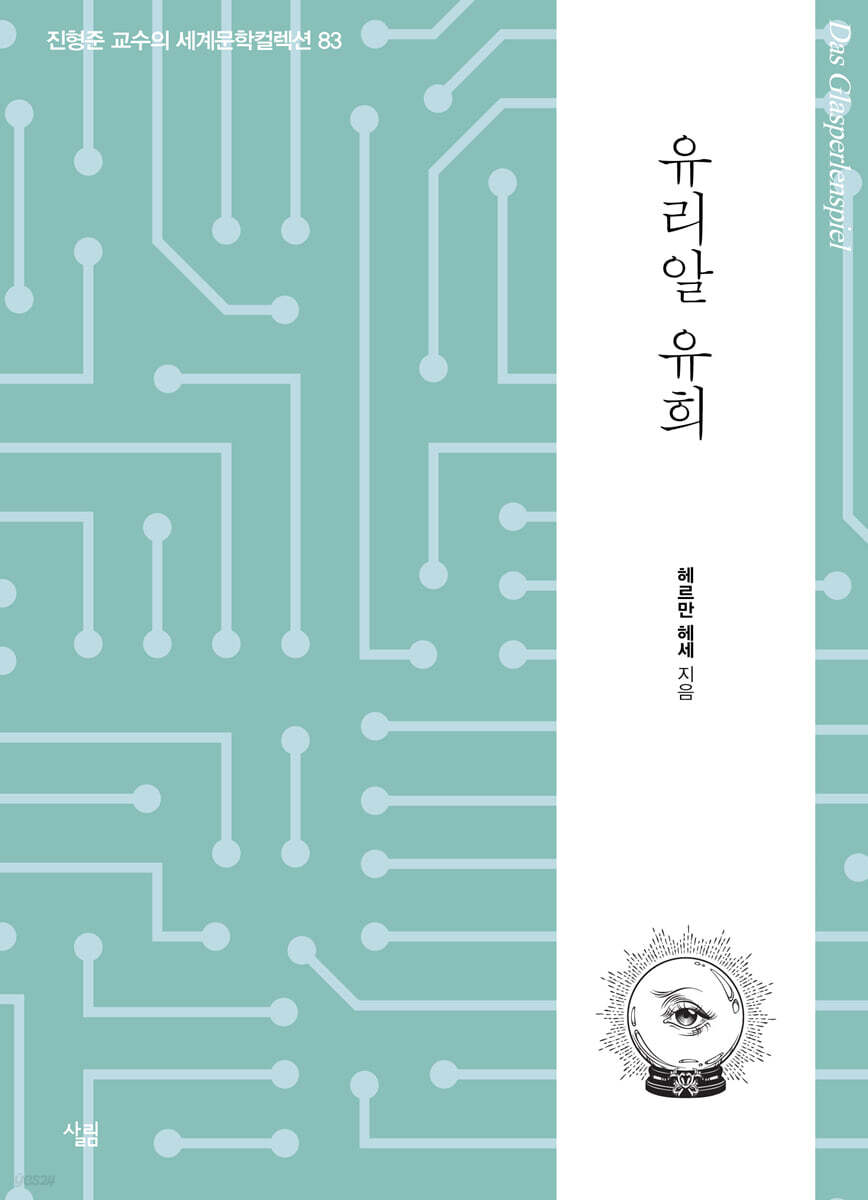
Glass Bead Game
 |
Description
Book Introduction
As an artist and as an intellectual, my struggles and reflections
Hermann Hesse's futuristic novel, which everyone poured out
Glass Bead Play is the fruit of a desire and effort to preserve intact the spiritual and universal values that humanity should strive for through abstract structures and symbols.
In that sense, the glass bead game is complete and pure, and contains within it the spirit of unity or universality.
Hermann Hesse's futuristic novel, which everyone poured out
Glass Bead Play is the fruit of a desire and effort to preserve intact the spiritual and universal values that humanity should strive for through abstract structures and symbols.
In that sense, the glass bead game is complete and pure, and contains within it the spirit of unity or universality.
index
introduction
Biography of the Master of Games, Joseph Knecht
Chapter 1: Calling
Chapter 2: Waldzel
Chapter 3: The Free Study Period
Chapter 4: The Two Orders
Chapter 5 Mission
Chapter 6: The Master of Play
Chapter 7 The Duties of a Master
Chapter 8: Polarity
Chapter 9: Conversation
Chapter 10 Preparation
Chapter 11 Circular
Chapter 12: Legend
Joseph Knecht's posthumous works
Poetry from my student and research days
Three autobiographies
In search of 『Glass Bead Game』
Biography of the Master of Games, Joseph Knecht
Chapter 1: Calling
Chapter 2: Waldzel
Chapter 3: The Free Study Period
Chapter 4: The Two Orders
Chapter 5 Mission
Chapter 6: The Master of Play
Chapter 7 The Duties of a Master
Chapter 8: Polarity
Chapter 9: Conversation
Chapter 10 Preparation
Chapter 11 Circular
Chapter 12: Legend
Joseph Knecht's posthumous works
Poetry from my student and research days
Three autobiographies
In search of 『Glass Bead Game』
Into the book
The glass bead game signified a refined symbolic form that aimed for perfection.
The glass bead play signified a sublime alchemy that approached the spirit that is one in itself beyond all images and diversity, or in other words, God.
The pious thinkers of old described the life of creatures as a movement toward God, and they saw the diversity of the phenomenal world as something that could be completed and understood only within divine unity.
Likewise, the symbols and formulas of play, structurally, musically, and philosophically combined within the framework of a universal language, while receiving nourishment from all disciplines and arts, aimed for perfection and pure existence and pursued the realistic realization of such things.
Therefore, the word 'realize' was a favorite expression among players.
They regarded this play as a journey from 'creation' to 'existence', from 'potentiality' to 'reality'.
--- p.26
Knecht once told his teacher that he wanted to turn the system of adversity into a glass bead game.
Then Jang Hyung answered with a smile.
“Try it somewhere.
Then you will know.
It is possible to build a bamboo garden in the world.
But can a gardener bring this world into his garden?”
--- p.83
The notion that all human cultural activity has an inherent unity, that is, the recognition of universality, is perfectly expressed in our glass bead game.
Physicists, musicologists, or other scholars may sometimes have to abandon the concept of universal culture in order to immerse themselves strictly in their field and achieve great things in it.
But we glass ball players must never allow ourselves such exceptions under any circumstances.
That exception should neither be acknowledged nor implemented.
Because our special mission lies precisely in the ‘universality of learning.’
Our mission is to foster the noble glass bead game, the highest expression of universality, and to rescue individual disciplines from the temptation to become complacent.
--- p.142
Nations and factions, old and young, red and white no longer understood each other.
Only after much bloodshed and corruption could we finally see the end.
Then, more than ever, the yearning for rationality, for the rediscovery of a common language, for order, morality, and universal ethical standards, for things like the alphabet or the multiplication table that were not influenced by power and did not change with the times, arose.
A tremendous desire arose for truth and justice, for reason, and for overcoming chaos.
This vacuum, created by the end of an era of violence that valued only superficiality, and the yearning of many for a new beginning and the restoration of order, gave birth to our Castalia.
--- p.213
Just as the king of Daza himself was once a prince, then a shepherd, then a murderer, then a prince again, driven by an invisible force, and yet, as if the future were uncertain, the path of life was a Maya that simultaneously embraced the noble and the base, eternity and death, greatness and absurdity.
--- p.346
Knecht left Tito behind so that the sacrificial death of a man so superior to himself might serve as an eternal admonition and example to him.
The glass bead play signified a sublime alchemy that approached the spirit that is one in itself beyond all images and diversity, or in other words, God.
The pious thinkers of old described the life of creatures as a movement toward God, and they saw the diversity of the phenomenal world as something that could be completed and understood only within divine unity.
Likewise, the symbols and formulas of play, structurally, musically, and philosophically combined within the framework of a universal language, while receiving nourishment from all disciplines and arts, aimed for perfection and pure existence and pursued the realistic realization of such things.
Therefore, the word 'realize' was a favorite expression among players.
They regarded this play as a journey from 'creation' to 'existence', from 'potentiality' to 'reality'.
--- p.26
Knecht once told his teacher that he wanted to turn the system of adversity into a glass bead game.
Then Jang Hyung answered with a smile.
“Try it somewhere.
Then you will know.
It is possible to build a bamboo garden in the world.
But can a gardener bring this world into his garden?”
--- p.83
The notion that all human cultural activity has an inherent unity, that is, the recognition of universality, is perfectly expressed in our glass bead game.
Physicists, musicologists, or other scholars may sometimes have to abandon the concept of universal culture in order to immerse themselves strictly in their field and achieve great things in it.
But we glass ball players must never allow ourselves such exceptions under any circumstances.
That exception should neither be acknowledged nor implemented.
Because our special mission lies precisely in the ‘universality of learning.’
Our mission is to foster the noble glass bead game, the highest expression of universality, and to rescue individual disciplines from the temptation to become complacent.
--- p.142
Nations and factions, old and young, red and white no longer understood each other.
Only after much bloodshed and corruption could we finally see the end.
Then, more than ever, the yearning for rationality, for the rediscovery of a common language, for order, morality, and universal ethical standards, for things like the alphabet or the multiplication table that were not influenced by power and did not change with the times, arose.
A tremendous desire arose for truth and justice, for reason, and for overcoming chaos.
This vacuum, created by the end of an era of violence that valued only superficiality, and the yearning of many for a new beginning and the restoration of order, gave birth to our Castalia.
--- p.213
Just as the king of Daza himself was once a prince, then a shepherd, then a murderer, then a prince again, driven by an invisible force, and yet, as if the future were uncertain, the path of life was a Maya that simultaneously embraced the noble and the base, eternity and death, greatness and absurdity.
--- p.346
Knecht left Tito behind so that the sacrificial death of a man so superior to himself might serve as an eternal admonition and example to him.
--- p.370
Publisher's Review
Human spiritual values and intellectual
A symbolic space where values are realized in their entirety
The Glass Bead Game is a work that Hermann Hesse began writing in 1931 and completed in 1942.
It is a work that was started when the clouds of war began to gather over Europe and was completed during the height of World War II.
Hesse was born in 1877, so he started at the age of 54 and finished at the age of 65.
It can be seen as a work in which the author, in his old age, poured out all of his anguish and reflection as an artist and intellectual.
In fact, 『Glass Bead Game』 is not a masterpiece in terms of quantity, considering that it took more than 10 years to create.
And it cannot be said that it took Hesse more than ten years to conceive and write this work.
It took the author ten years to fundamentally question and pursue the issues he had been pondering and pursuing throughout his life, to revise and realize his own thoughts, and finally to complete his own 'glass bead game.'
Those 10 years are not the time it took for an author in his old age to express in his work what he had learned during his life.
It is a time of questioning and reflection on the existential meaning of an individual's life as an intellectual, and a time spent asking fierce questions and seeking answers about the meaning and role of intellectuals within a social and historical context.
I am reverent before this work just for that fact alone.
How can someone in the twilight of their life be so intensely serious? How can someone in their later years ask such agonizing questions? And how can they persist for ten years? Because we live in an age where it's difficult to find such a mature person, a true adult, I find myself even more reverent before this work.
This work, "The Glass Bead Game," is a culmination of Hermann Hesse's lifelong struggles and explorations, and is a "glass bead game" of his own creation.
So what is the Glass Bead Game? What makes this work itself worthy of being called a "Glass Bead Game"? The setting of this work is Castalia, an educational institution.
However, Castalia is not a space that exists concretely in reality, but rather a symbolic space where human spiritual and intellectual values are realized in their entirety.
In that symbolic space, all spiritual values are vividly preserved through the glass bead game.
The glass bead game is, in a word, a mental game.
Glass Bead Play is the fruit of a desire and effort to preserve intact the spiritual and universal values that humanity should strive for through abstract structures and symbols.
In that sense, the glass bead game is complete and pure, and contains within it the spirit of unity or universality.
The Power of Thinking: Introducing Professor Jin Hyeong-jun's World Literature Collection Series
"The Power of Thinking: Professor Jin Hyeong-jun's World Literature Collection" is the culmination of a ten-year long-term project by Professor Jin Hyeong-jun, a literary critic and French literature scholar who served as the second director of the Literature Translation Institute of Korea, pouring his lifelong accumulated field experience and affection for future generations into it.
From 『Iliad』 and 『Romance of the Nations』 to 『1984』 and 『The Stranger』, this series, which covers world literature classics from ancient times to the present, has already been published in 81 volumes and has garnered a great response from readers, with subsequent volumes continuing to be published.
"The Power of Thinking: Professor Jin Hyeong-jun's World Literature Collection" is a highly valuable and pioneering work that seeks to suggest a true path to reading.
In our society, there is a widespread belief that we must read the 'classics' and that we must read the 'complete translations'.
But ironically, few people have actually read those works.
In a word, it is a 'dead' classic.
Professor Jin Hyeong-jun has reborn this 'dead' classic of world literature into a trustworthy 'remastered edition' that is easy for anyone to read, tailored to the eye level and depth of the youth.
A new world of reading world literature through Professor Jin Hyeong-jun's World Literature Collection.
〈The Power of Thinking: Professor Jin Hyeong-jun's World Literature Collection〉 aims to be the 'definitive version of the abridged version.'
The rich and enriching content and structure that meet this goal will enhance the pleasure of reading and the joy of learning, and will greatly enhance your thinking skills, creativity, and imagination.
ㆍ Easy and fun reading of classic works
Classics are no longer difficult and boring works, but become like friends.
We kindly guide you through the world of enjoyable reading, through works reborn with sentences and expressions that perfectly match the eye level and depth of the hearts of people living in the present age.
ㆍ Illustrations and descriptions that show the author and his works at a glance
At the beginning of each work, various visual materials and content about the artist and the work are introduced.
It allows us to ponder what kind of person the author is, why he wrote this work, and what meaning and value this work holds.
ㆍ Fascinating materials and reading material that broaden and deepen your understanding.
Throughout the text, various helpful information and explanations about characters, themes, context, and background knowledge are added.
This will help you learn more and think more on your own.
ㆍ Commentary on the work that gives strength and wisdom to live today
The commentary for each work not only provides a diverse and broad perspective on the work's theme, historical background, and the author's worldview and critical awareness, but also on issues closely related to the various things we face in our lives today.
Through this, we are guided to develop the ability and wisdom to live as masters of our own lives and the world.
A symbolic space where values are realized in their entirety
The Glass Bead Game is a work that Hermann Hesse began writing in 1931 and completed in 1942.
It is a work that was started when the clouds of war began to gather over Europe and was completed during the height of World War II.
Hesse was born in 1877, so he started at the age of 54 and finished at the age of 65.
It can be seen as a work in which the author, in his old age, poured out all of his anguish and reflection as an artist and intellectual.
In fact, 『Glass Bead Game』 is not a masterpiece in terms of quantity, considering that it took more than 10 years to create.
And it cannot be said that it took Hesse more than ten years to conceive and write this work.
It took the author ten years to fundamentally question and pursue the issues he had been pondering and pursuing throughout his life, to revise and realize his own thoughts, and finally to complete his own 'glass bead game.'
Those 10 years are not the time it took for an author in his old age to express in his work what he had learned during his life.
It is a time of questioning and reflection on the existential meaning of an individual's life as an intellectual, and a time spent asking fierce questions and seeking answers about the meaning and role of intellectuals within a social and historical context.
I am reverent before this work just for that fact alone.
How can someone in the twilight of their life be so intensely serious? How can someone in their later years ask such agonizing questions? And how can they persist for ten years? Because we live in an age where it's difficult to find such a mature person, a true adult, I find myself even more reverent before this work.
This work, "The Glass Bead Game," is a culmination of Hermann Hesse's lifelong struggles and explorations, and is a "glass bead game" of his own creation.
So what is the Glass Bead Game? What makes this work itself worthy of being called a "Glass Bead Game"? The setting of this work is Castalia, an educational institution.
However, Castalia is not a space that exists concretely in reality, but rather a symbolic space where human spiritual and intellectual values are realized in their entirety.
In that symbolic space, all spiritual values are vividly preserved through the glass bead game.
The glass bead game is, in a word, a mental game.
Glass Bead Play is the fruit of a desire and effort to preserve intact the spiritual and universal values that humanity should strive for through abstract structures and symbols.
In that sense, the glass bead game is complete and pure, and contains within it the spirit of unity or universality.
The Power of Thinking: Introducing Professor Jin Hyeong-jun's World Literature Collection Series
"The Power of Thinking: Professor Jin Hyeong-jun's World Literature Collection" is the culmination of a ten-year long-term project by Professor Jin Hyeong-jun, a literary critic and French literature scholar who served as the second director of the Literature Translation Institute of Korea, pouring his lifelong accumulated field experience and affection for future generations into it.
From 『Iliad』 and 『Romance of the Nations』 to 『1984』 and 『The Stranger』, this series, which covers world literature classics from ancient times to the present, has already been published in 81 volumes and has garnered a great response from readers, with subsequent volumes continuing to be published.
"The Power of Thinking: Professor Jin Hyeong-jun's World Literature Collection" is a highly valuable and pioneering work that seeks to suggest a true path to reading.
In our society, there is a widespread belief that we must read the 'classics' and that we must read the 'complete translations'.
But ironically, few people have actually read those works.
In a word, it is a 'dead' classic.
Professor Jin Hyeong-jun has reborn this 'dead' classic of world literature into a trustworthy 'remastered edition' that is easy for anyone to read, tailored to the eye level and depth of the youth.
A new world of reading world literature through Professor Jin Hyeong-jun's World Literature Collection.
〈The Power of Thinking: Professor Jin Hyeong-jun's World Literature Collection〉 aims to be the 'definitive version of the abridged version.'
The rich and enriching content and structure that meet this goal will enhance the pleasure of reading and the joy of learning, and will greatly enhance your thinking skills, creativity, and imagination.
ㆍ Easy and fun reading of classic works
Classics are no longer difficult and boring works, but become like friends.
We kindly guide you through the world of enjoyable reading, through works reborn with sentences and expressions that perfectly match the eye level and depth of the hearts of people living in the present age.
ㆍ Illustrations and descriptions that show the author and his works at a glance
At the beginning of each work, various visual materials and content about the artist and the work are introduced.
It allows us to ponder what kind of person the author is, why he wrote this work, and what meaning and value this work holds.
ㆍ Fascinating materials and reading material that broaden and deepen your understanding.
Throughout the text, various helpful information and explanations about characters, themes, context, and background knowledge are added.
This will help you learn more and think more on your own.
ㆍ Commentary on the work that gives strength and wisdom to live today
The commentary for each work not only provides a diverse and broad perspective on the work's theme, historical background, and the author's worldview and critical awareness, but also on issues closely related to the various things we face in our lives today.
Through this, we are guided to develop the ability and wisdom to live as masters of our own lives and the world.
GOODS SPECIFICS
- Date of issue: February 24, 2023
- Page count, weight, size: 372 pages | 446g | 152*210*18mm
- ISBN13: 9788952247223
- ISBN10: 8952247221
You may also like
카테고리
korean


korean

![GQ KOREA Mark (Monthly): December [2025]](http://librairie.coreenne.fr/cdn/shop/files/8ef265dbbfbf186523ed75ba7319009d.jpg?v=1765340328&width=3840)


