

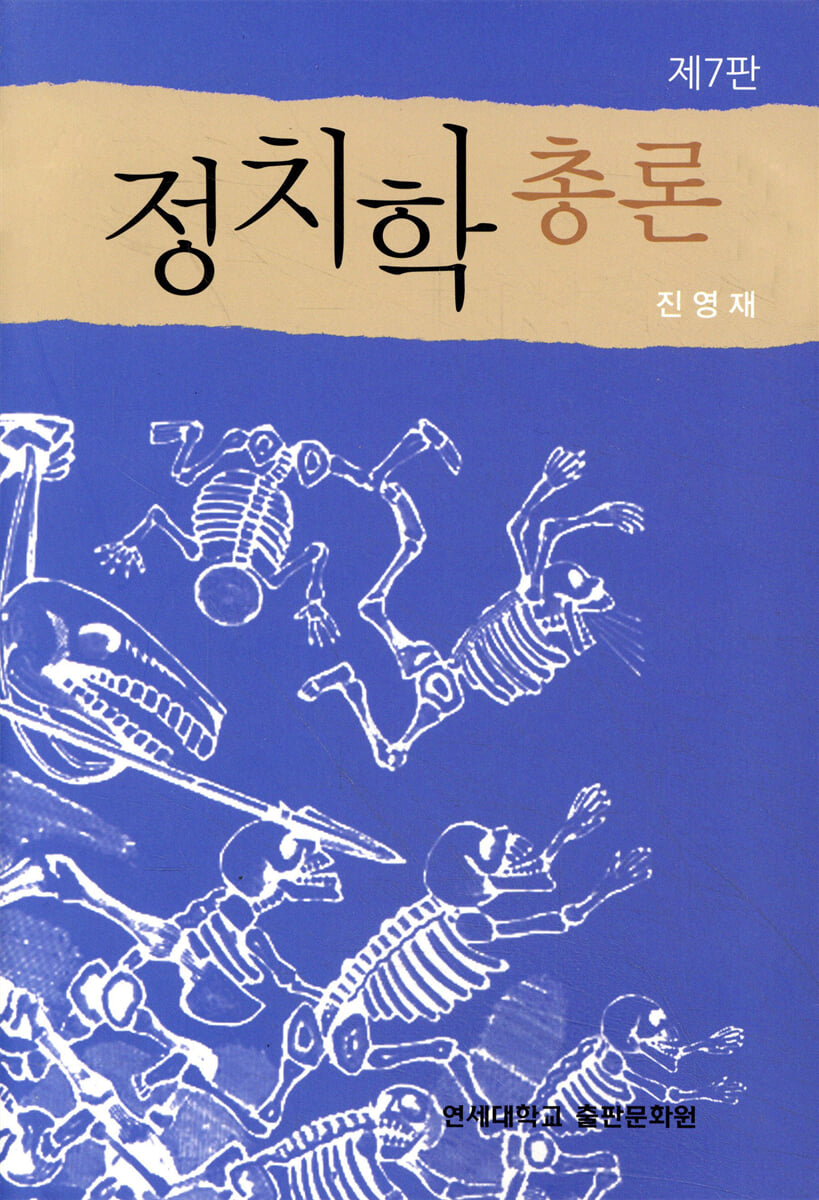
General Political Science
 |
Description
Book Introduction
This book is expected to be of great help to all readers interested in politics, and especially to students preparing for various exams, in establishing their own logic and organizing their thoughts.
The major lecture topics are divided into 10 and detailed topics are covered. These are organized into an index, and all referenced books are listed in the bibliography at the end, so that it can be used as a dictionary for political science.
I dare to expect that if you read this book through, you will achieve remarkable intellectual growth in political science.
In the 7th edition, while maintaining the general narrative level, we added content on various cautions and arguments to address readers' questions at the specific level as much as possible.
In addition, the main background, history, and circumstances related to major political events included in the existing content were explained in more detail.
The major lecture topics are divided into 10 and detailed topics are covered. These are organized into an index, and all referenced books are listed in the bibliography at the end, so that it can be used as a dictionary for political science.
I dare to expect that if you read this book through, you will achieve remarkable intellectual growth in political science.
In the 7th edition, while maintaining the general narrative level, we added content on various cautions and arguments to address readers' questions at the specific level as much as possible.
In addition, the main background, history, and circumstances related to major political events included in the existing content were explained in more detail.
index
Prologue Preface
Chapter 1: The Characteristics of the 'Political'
Definition of 'political science' and understanding of 'state'
State theories
Classical State Theory: Contract Theories, Liberal Doctrine, Marx and Neo-Marxism, Neo-Marxists, Pluralism, Corporatism
Concluding Chapter 1: The State and the 'Right-Left' Problem
Chapter 2: Major 'Duplex Logic and Theories' in Political Science
Inherent comparisons and 'explanations'
Why compare? How? Correlation and causation.
The problem of subjective and objective measurement The main "Daegu logics" of political science Structure and function The state and society
Institution and culture fairness and efficiency
The Problem of Fairness, the Problem of Efficiency, and the Ideal and Reality: Chapter 2
Chapter 3 Constitution and Power Structure
Parliamentary system, presidential system, parliamentary sovereignty, executive system, bicameral executive system
Comparison within Similar Government Forms: Prototypes and Ideal Types Comparing Different Types of Government
Concluding Chapter 3: Key Issues
Chapter 4 Political Process Theory: Parliament, Political Parties, and Elections
parliament
Variables in the Congress's checks and balances on the executive branch
political party
Political party organization elections
Concluding Chapter 4
Chapter 5 Political Communication
public opinion
mass media propaganda
PR
Concluding Chapter 5
Chapter 6 Political Communication
Causes of collective action The process of collective action spreading Outcomes of collective action: Success and failure Concluding chapter 6
Chapter 7 Political Communication
Conditions necessary for democratic functioning, types of political systems, and 'political development'. Chapter 7 of the state in the process of political development is concluded.
Chapter 8 Public Choice Theory
The possibility of cooperation among selfish individuals
Constitutional Economics and Bureaucracy
The importance of agenda setting and policy decision-making
Concluding Chapter 8: The Median Voter Theory and the Problem of Political Cycles
Chapter 9 International Politics
Perspectives on International Politics
realism
Idealism and Liberalism, Neorealism and Neoliberalism, Constructivism
Concluding Chapter 9 of War and Diplomacy: Disarmament Issues
Chapter 10: The Changing World and the Theory of Change: The Logic and Theories of Change: Theory of Evolution
Concluding Chapter 10: Equilibrium Theory, Conflict Theory, and Rise and Fall Theory
Chapter 1: The Characteristics of the 'Political'
Definition of 'political science' and understanding of 'state'
State theories
Classical State Theory: Contract Theories, Liberal Doctrine, Marx and Neo-Marxism, Neo-Marxists, Pluralism, Corporatism
Concluding Chapter 1: The State and the 'Right-Left' Problem
Chapter 2: Major 'Duplex Logic and Theories' in Political Science
Inherent comparisons and 'explanations'
Why compare? How? Correlation and causation.
The problem of subjective and objective measurement The main "Daegu logics" of political science Structure and function The state and society
Institution and culture fairness and efficiency
The Problem of Fairness, the Problem of Efficiency, and the Ideal and Reality: Chapter 2
Chapter 3 Constitution and Power Structure
Parliamentary system, presidential system, parliamentary sovereignty, executive system, bicameral executive system
Comparison within Similar Government Forms: Prototypes and Ideal Types Comparing Different Types of Government
Concluding Chapter 3: Key Issues
Chapter 4 Political Process Theory: Parliament, Political Parties, and Elections
parliament
Variables in the Congress's checks and balances on the executive branch
political party
Political party organization elections
Concluding Chapter 4
Chapter 5 Political Communication
public opinion
mass media propaganda
PR
Concluding Chapter 5
Chapter 6 Political Communication
Causes of collective action The process of collective action spreading Outcomes of collective action: Success and failure Concluding chapter 6
Chapter 7 Political Communication
Conditions necessary for democratic functioning, types of political systems, and 'political development'. Chapter 7 of the state in the process of political development is concluded.
Chapter 8 Public Choice Theory
The possibility of cooperation among selfish individuals
Constitutional Economics and Bureaucracy
The importance of agenda setting and policy decision-making
Concluding Chapter 8: The Median Voter Theory and the Problem of Political Cycles
Chapter 9 International Politics
Perspectives on International Politics
realism
Idealism and Liberalism, Neorealism and Neoliberalism, Constructivism
Concluding Chapter 9 of War and Diplomacy: Disarmament Issues
Chapter 10: The Changing World and the Theory of Change: The Logic and Theories of Change: Theory of Evolution
Concluding Chapter 10: Equilibrium Theory, Conflict Theory, and Rise and Fall Theory
GOODS SPECIFICS
- Date of issue: February 28, 2025
- Page count, weight, size: 714 pages | 153*224*40mm
- ISBN13: 9788968509056
- ISBN10: 8968509050
You may also like
카테고리
korean


korean

![GQ KOREA Mark (Monthly): December [2025]](http://librairie.coreenne.fr/cdn/shop/files/8ef265dbbfbf186523ed75ba7319009d.jpg?v=1765340328&width=3840)


