

Modern Korean Phonology
 |
Description
Book Introduction
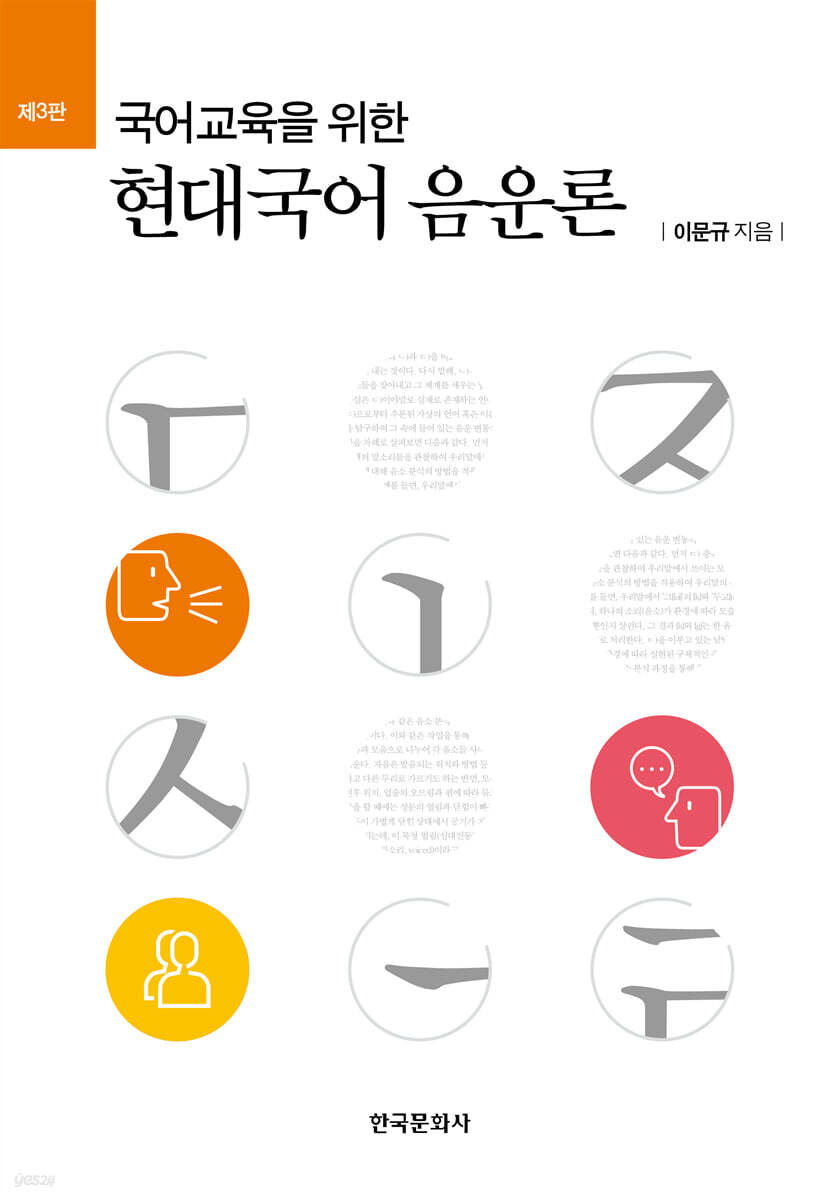
This book is an introductory book on phonology written with Korean language education in mind.
Therefore, the focus was on explaining the Korean phonological system and changing phenomena in an easy and detailed manner using a consistent methodology, while enabling prospective teachers and teachers to explore the rules and principles of speech sound operation on their own and utilize the results in the design and content composition of Korean grammar education.
In particular, in this revision, in order to enhance the educational value of Korean grammar, we supplemented the current phonological education content by emphasizing or adding more content, or by approaching it from a different angle.
We believe that the content of grammar education needs to be selected and reorganized to better demonstrate the essential characteristics of the Korean language and the linguistic abilities of Koreans, and we sought to present such content in the field of phonology.
This is based on the idea that the content of grammar education must be based on academic grammar, but it should not be a summary of it, and therefore it should be restructured in a way that matches the goals of Korean language education and the value of grammar education.
I hope that this book will be of some help to the development of Korean phonology and Korean language education.
Therefore, the focus was on explaining the Korean phonological system and changing phenomena in an easy and detailed manner using a consistent methodology, while enabling prospective teachers and teachers to explore the rules and principles of speech sound operation on their own and utilize the results in the design and content composition of Korean grammar education.
In particular, in this revision, in order to enhance the educational value of Korean grammar, we supplemented the current phonological education content by emphasizing or adding more content, or by approaching it from a different angle.
We believe that the content of grammar education needs to be selected and reorganized to better demonstrate the essential characteristics of the Korean language and the linguistic abilities of Koreans, and we sought to present such content in the field of phonology.
This is based on the idea that the content of grammar education must be based on academic grammar, but it should not be a summary of it, and therefore it should be restructured in a way that matches the goals of Korean language education and the value of grammar education.
I hope that this book will be of some help to the development of Korean phonology and Korean language education.
index
Preface to the Second Revised Edition
Preface to the Revised Edition
introduction
Note
Chapter 1
The meaning and function of phonology
1.
The meaning of phonology
2.
What phonology does
Chapter 2
The appearance of speech
1.
phonetics
2.
The process of making sounds
3.
consonant
4.
gather
5.
Suprasegmental sounds
6.
Voice transcription
Chapter 3
Phonemes and phonological systems
1.
Phoneme meaning and phoneme analysis
2.
Phonetic oppositions
3.
The phonological system of modern Korean
Chapter 4
syllable
1.
Meaning of syllables
2.
Syllable structure and types
3.
Syllable structure
Chapter 5
The meaning and method of research on phonological change
1.
Meaning of phonetic change
2.
Types of phonetic changes
3.
Steps and methods for exploring phonological changes
4.
The problem of synchronicity in phonological change
Chapter 6
Exploration of Korean phonetic changes
1.
Daechi
2.
leaving out
3.
adding
4.
contraction
5.
Changes in the weather
6.
etc
Chapter 7
Phonological Education Theory
1.
Goals of phonological education
2.
Contents, methods, and evaluation of phonological education
3.
Phonological Education and Korean Language Teachers
References
Search
Preface to the Revised Edition
introduction
Note
Chapter 1
The meaning and function of phonology
1.
The meaning of phonology
2.
What phonology does
Chapter 2
The appearance of speech
1.
phonetics
2.
The process of making sounds
3.
consonant
4.
gather
5.
Suprasegmental sounds
6.
Voice transcription
Chapter 3
Phonemes and phonological systems
1.
Phoneme meaning and phoneme analysis
2.
Phonetic oppositions
3.
The phonological system of modern Korean
Chapter 4
syllable
1.
Meaning of syllables
2.
Syllable structure and types
3.
Syllable structure
Chapter 5
The meaning and method of research on phonological change
1.
Meaning of phonetic change
2.
Types of phonetic changes
3.
Steps and methods for exploring phonological changes
4.
The problem of synchronicity in phonological change
Chapter 6
Exploration of Korean phonetic changes
1.
Daechi
2.
leaving out
3.
adding
4.
contraction
5.
Changes in the weather
6.
etc
Chapter 7
Phonological Education Theory
1.
Goals of phonological education
2.
Contents, methods, and evaluation of phonological education
3.
Phonological Education and Korean Language Teachers
References
Search
Publisher's Review
Preface to the Second Revised Edition
The second revised edition is published.
When I published the first revised edition, I kept in mind the parts that I had left untouched, removed or corrected them, and added new content.
The main direction of this revision was set to get closer to the field of Korean language grammar education.
To this end, instead of boldly reducing the portion on phonological theory, we aimed to add content that would be helpful for prospective Korean language teachers and Korean language teachers to explore and teach Korean phonology.
In particular, while explaining the phonological system and change phenomena, we aimed to provide more ideas that can be used when reconstructing phonological unit classes or guiding students to directly confirm the process and method of pronunciation through the vocal organs.
In addition, we have strengthened the content that allows for the study of the phonological phenomena of modern Korean in relation to the history of phonology, and the content that has been emphasized since the first edition to help readers understand grammatical norms in relation to phonological changes.
Phonological education is primarily a field that teaches knowledge about speech sounds.
However, Korean language education should go beyond that and lead learners to take an interest in and explore various linguistic phenomena related to speech sounds, while also encouraging them to reflect on their own linguistic life and that of those around them.
To this end, it is necessary to consider that the content of phonological education is based on linguistic phonological knowledge, but is reconstructed according to the goals and needs of Korean language education.
I hope that this book will be of practical help to prospective Korean language teachers studying at teacher training colleges and to Korean language teachers already in the classroom, in viewing phonological knowledge from the perspective of Korean language education, and in reconstructing valuable and interesting educational content related to speech sounds based on this knowledge.
I would like to express my gratitude to Professor Park So-eun and Professor Eun Dong-hyeon, who read the manuscript of the last revised edition and provided much helpful advice.
February 25, 2025
Lee Moon-kyu
The second revised edition is published.
When I published the first revised edition, I kept in mind the parts that I had left untouched, removed or corrected them, and added new content.
The main direction of this revision was set to get closer to the field of Korean language grammar education.
To this end, instead of boldly reducing the portion on phonological theory, we aimed to add content that would be helpful for prospective Korean language teachers and Korean language teachers to explore and teach Korean phonology.
In particular, while explaining the phonological system and change phenomena, we aimed to provide more ideas that can be used when reconstructing phonological unit classes or guiding students to directly confirm the process and method of pronunciation through the vocal organs.
In addition, we have strengthened the content that allows for the study of the phonological phenomena of modern Korean in relation to the history of phonology, and the content that has been emphasized since the first edition to help readers understand grammatical norms in relation to phonological changes.
Phonological education is primarily a field that teaches knowledge about speech sounds.
However, Korean language education should go beyond that and lead learners to take an interest in and explore various linguistic phenomena related to speech sounds, while also encouraging them to reflect on their own linguistic life and that of those around them.
To this end, it is necessary to consider that the content of phonological education is based on linguistic phonological knowledge, but is reconstructed according to the goals and needs of Korean language education.
I hope that this book will be of practical help to prospective Korean language teachers studying at teacher training colleges and to Korean language teachers already in the classroom, in viewing phonological knowledge from the perspective of Korean language education, and in reconstructing valuable and interesting educational content related to speech sounds based on this knowledge.
I would like to express my gratitude to Professor Park So-eun and Professor Eun Dong-hyeon, who read the manuscript of the last revised edition and provided much helpful advice.
February 25, 2025
Lee Moon-kyu
GOODS SPECIFICS
- Date of issue: February 25, 2025
- Page count, weight, size: 298 pages | 175*250*15mm
- ISBN13: 9791169192941
You may also like
카테고리
korean


korean

![GQ KOREA Mark (Monthly): December [2025]](http://librairie.coreenne.fr/cdn/shop/files/8ef265dbbfbf186523ed75ba7319009d.jpg?v=1765340328&width=3840)


