

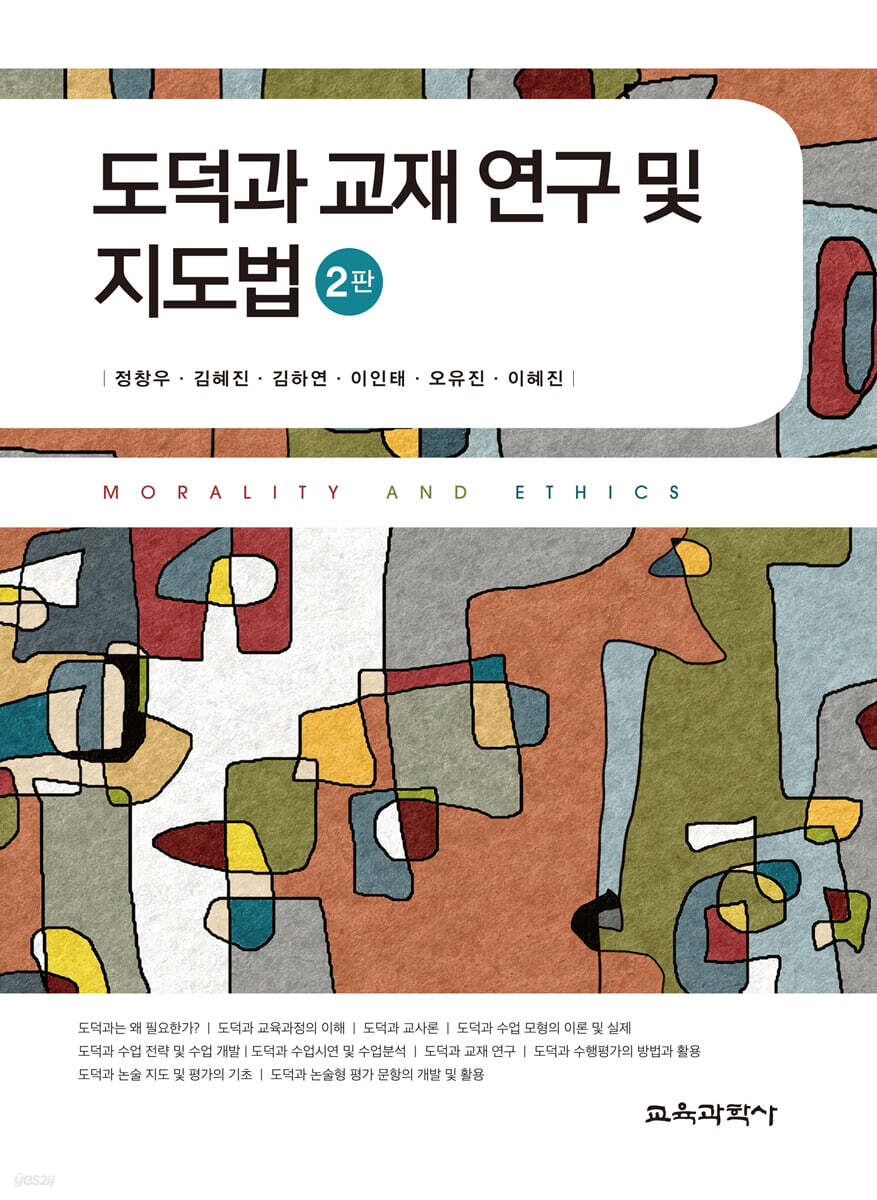
Morality and Teaching Materials Research and Teaching Methods
 |
Description
Book Introduction
『Morality and Textbook Research and Teaching Methods』 is the result of joint research by Professors Jeong Chang-woo (Seoul National University), Kim Hye-jin (Incheon National University), Kim Ha-yeon (Chuncheon National University of Education), and Lee In-tae (Gongju National University of Education), who are currently working in the Department of Ethics Education at colleges of education, and Oh Yu-jin and Lee Hye-jin, who are currently working as ethics teachers at middle and high schools.
Professor Chang-Woo Jeong, the lead author, co-published a book titled "Morality and Teaching/Learning Methods and Evaluation" with several teachers in 2007. However, as the publication date was too long ago, this book was published in 2020 to reflect subsequent academic trends and research achievements.
Subsequently, the 2022 revised curriculum was announced, and with the increasing importance of essay-based assessments (due to the introduction and expansion of the International Baccalaureate curriculum), the need for revision and supplementation of the first edition arose, leading to the publication of this revised edition.
Professor Chang-Woo Jeong, the lead author, co-published a book titled "Morality and Teaching/Learning Methods and Evaluation" with several teachers in 2007. However, as the publication date was too long ago, this book was published in 2020 to reflect subsequent academic trends and research achievements.
Subsequently, the 2022 revised curriculum was announced, and with the increasing importance of essay-based assessments (due to the introduction and expansion of the International Baccalaureate curriculum), the need for revision and supplementation of the first edition arose, leading to the publication of this revised edition.
index
Preface to the 2nd Edition ·············3
Chapter 1: Why is Morality Necessary? ·············15
Chapter 2: Understanding Morality and the Curriculum ·············23
1.
The Concept and Historical Change of Morality and Curriculum ·············25
2.
Recent Understanding of Morality and Curriculum ·············31
Chapter 3: Morality and Teaching: The Role of Moral Teachers in Moral Education for "Living" ·············59
1.
The Meaning of Moral Education as "Living": An Overview of a Humanistic Approach ·············61
2.
The Meaning of Moral Education as "Aliveness": Hermeneutic Interaction with Biological Theory ·············63
3.
The Role of Moral Teachers in Moral Education as "Aliveness" ·············69
4.
A Case Study of Moral Education as "Living" ·············76
Chapter 4: Theory and Practice of Morality and Classroom Models ·············81
| Section 1 | Moral Dilemma Discussion Model 1: Kohlberg's Dilemma Discussion Model ·············83
1.
Concept and Theoretical Background ·············83
2.
The significance and usefulness of using it in moral education classes ·············84
3.
Model Structure ·············85
4.
Practical Use of Models ·············86
5.
Considerations for Use and the Teacher's Role ·············89
| Section 2 | Moral Dilemma Discussion Model 2: The Constance Dilemma Discussion Model ·············92
1.
Concept and Theoretical Background ·············92
2.
The significance and usefulness of using it in moral education classes ·············93
3.
Model Structure ·············94
4.
Practical Use of Models ·············95
5.
Notes on Use ·············99
| Section 3 | Role-Playing Model ·············102
1.
Concept and Theoretical Background ·············102
2.
The significance and usefulness of using it in moral education classes ·············103
3.
Model Structure ·············105
4.
Practical Use of Models ·············106
5.
Considerations for Use and the Teacher's Role ·············108
| Section 4 | Narrative Teaching Model ·············112
1.
Concept and Theoretical Background ·············112
2.
The significance and usefulness of using it in moral education classes ·············113
3.
Model Structure ·············115
4.
Practical Use of Models ·············116
5.
Considerations for Use and the Teacher's Role ·············118
| Section 5 | Value Analysis Model ·············121
1.
Concept and Theoretical Background ·············121
2.
The significance and usefulness of using it in moral education classes ·············122
3.
Model Structure ·············123
4.
Practical Use of Models ·············125
5.
Considerations for Use and the Teacher's Role ·············128
| Section 6 | Value Conflict Model ·············131
1.
Concept and Theoretical Background ·············131
2.
The significance and usefulness of using it in moral education classes ·············133
3.
Model Structure ·············134
4.
Practical Use of Models ·············136
5.
Considerations for Use and the Teacher's Role ·············138
| Section 7 | Value Clarification Model ·············140
1.
Concept and Theoretical Background ·············140
2.
The significance and usefulness of using it in moral education classes ·············142
3.
Model Structure ·············144
4.
Practical Use of Models ·············145
5.
Considerations for Use and the Teacher's Role ·············146
| Section 8 | Debate Class Model ·············151
1.
Concept and Theoretical Background ·············151
2.
The significance and usefulness of using it in moral education classes ·············152
3.
Model Structure ············· 154
4.
Practical Use of Models ·············155
5.
Considerations for Use and the Teacher's Role ·············156
| Section 9 | Project-Based Learning Model ·············159
1.
Concept and Theoretical Background ·············159
2.
The significance and usefulness of using it in moral education classes ·············161
3.
Model Structure ·············164
4.
Practical Use of Models (Content Structure by Lesson) ·············165
5.
Considerations for Use and the Teacher's Role ·············172
| Section 10 | Cooperative Learning Model ·············176
1.
Concept and Theoretical Background ·············176
2.
The significance and usefulness of using it in moral education classes ·············180
3.
Model Structure ·············182
4.
Practical Use of Models ·············185
5.
Considerations for Use and the Teacher's Role ·············211
Chapter 5: Morality and Teaching Strategies and Lesson Development ·············215
| Section 1 | Strategies for Creating a Democratic and Caring Classroom Atmosphere ·············217
1.
The Importance of Class Atmosphere ·············217
2.
Democratic Community Building Strategies ·············219
3.
Teaching Strategies for Building Caring Relationships ·············229
4.
Coming out ·············240
| Section 2 | Morality and Questioning Strategy ①: Based on Rest and Narvaez's "Four-Component Model of Morality" ··243
1.
The Importance and General Criteria of Effective Questioning Strategies in Moral Education Classes ·············243
2.
Rest and Narvaez: A Four-Component Model-Based Narrative Strategy ·············246
3.
Extracting sub-constructs and constructing questions for each of the four components of morality ·············248
4.
A Lesson Model and Questionnaire Using the "Four-Component Model" of Morality ·············256
| Section 3 | Morality and Interpellation Strategy ②: Husserl, Based on the 'Epoche' ·············266
1.
Husserl, Theoretical Background of the 'Epoché' ·············266
2.
The significance and usefulness of using it in moral education classes ·············268
3.
The Structure and Application of Morality and Classroom Instruction Using Phenomenological Reduction Methodology ·············269
| Section 4 | Development of Newspaper Education (NIE) Lessons in Moral Education ·············290
1.
The Meaning and Purpose of Newspaper Education (NIE) ·············290
2.
The Usefulness of Newspaper Education (NIE) Classes in Moral Education ·············291
3.
Moral and Newspaper Education (NIE) Classroom Practice ·············295
| Section 5 | Developing Moral Education Using Media and Images ·············308
1.
The Meaning of Media Literacy Education (MIE) ·············308
2.
Principles and Methods of Media Education ·············309
3.
Significance and Usefulness in Moral Studies ·············313
4.
Moral and Media Education (MIE) Classroom Practices ·············316
| Section 6 | Development of Morality and the 6Cs Debate Class ·············342
1.
Concept and Theoretical Background ·············342
2.
The Significance and Usefulness of Morality in Classrooms ·············344
3.
The Structure and Development of Classes in Practice ·············346
Chapter 6: Morality and Classroom Demonstration and Class Analysis ·············363
| Section 1 | Morality and Lesson Design and Instructional Plan ·············365
1.
Characteristics of Morality and Instructional Design ·············365
2.
Guidelines for Writing Moral Teaching and Learning Plans ·············366
3.
Examples of Moral Education and Teaching and Learning Plans ·············372
| Section 2 | Classroom Demonstration Methods and Instructional Precautions ·············382
1.
How to Demonstrate Classroom Skills ·············382
2.
Notes on the map ·············385
| Section 3 | Class Analysis and Reflection ·············387
Chapter 7: Morality and Textbook Studies ·············391
| Section 1 | Understanding and Using Moral Education Books ·············393
1.
The Concept and Scope of Moral Education Textbooks ·············393
2.
The Structure of Moral Education Textbooks ·············394
3.
The Role and Use of Moral Education Textbooks ·············396
| Section 2 | Methods of Analyzing Moral Textbooks: Appearance and Content ·············399
| Section 3 | Comparative Analysis of Morality and Gender Equality Textbooks: Focusing on Gender Equality Education ·············401
1.
Analysis target ·············401
2.
Analysis criteria ·············402
3.
Analysis results ·············403
| Section 4 | Design and Use of Moral Education and Teaching Materials ·············415
1.
Definition of Morality and Teaching and Learning Materials ·············415
2.
Classification Criteria for Moral Education and Teaching and Learning Materials ·············418
3.
Fundamental Principles and Procedures for Designing Moral and Teaching Materials ·············423
4.
The Practice of Morality and Teaching and Learning Materials Design ·············427
Chapter 8: Methods and Applications of Morality and Performance Evaluation ·············439
| Section 1 | Introduction ·············441
| Section 2 | The Necessity and Significance of Performance Evaluation ·············444
1.
The Need for Performance Evaluation ·············444
2.
The Concept and Significance of Performance Evaluation ·············445
3.
The Significance of Morality and Performance Evaluation ·············447
| Section 3 | Various Methods of Morality and Performance Evaluation ·············450
1.
Descriptive and essay-type tests ·············450
2.
Debate Law ·············452
3.
Observation Method ·············453
4.
Research Report Act ·············454
5.
Portfolio Law ·············456
6.
Project Law ·············457
| Section 4 | Conclusion ·············459
Chapter 9: Foundations of Moral and Argumentative Instruction and Evaluation ·············461
| Section 1 | The Purpose of Using Arguments in Moral Studies ·············463
| Section 2 | Content and Guidance Direction of Morality and Argumentation ·············467
| Section 3 | Teaching and Learning Methods in Morality and Argumentation ·············473
1.
Hypothetical Value Choices: What Would I Do? ·············473
2.
Mind Map ·············474
3.
Moral Dilemma Discussion ·············475
4. NIE Activities ·············476
5.
Media Utilization ·············477
6.
Continuum Strategy ·············478
| Section 4 | Morality and Essay Writing and Evaluation Perspectives ·············480
1.
Outline ·············480
2.
Essay Case: Moral Man ·············481
3.
Types and Evaluation Perspectives of Moral and Argumentative Problems ·············484
Chapter 10: Development and Use of Moral and Essay-Type Assessment Items ·············495
| Section 1 | Introduction ·············497
| Section 2 | Analysis of the Characteristics of Existing Moral and Essay-Type Assessments ·············499
1.
Characteristics of Essay-Based Assessments in Morality and Curriculum ·············499
2.
Characteristics of Previous Research on Morality and Argumentative Assessment ·············501
| Section 3 | Direction and Principles for Developing Moral and Essay-Type Assessment Items ·············509
1.
Development of Essay-Based Assessment Questions Based on the 2022 Revised Moral Education Curriculum ·············509
2.
Principles for Developing Moral and Essay-Type Assessment Items ·············512
| Section 4 | Conclusion ·············520
Chapter 1: Why is Morality Necessary? ·············15
Chapter 2: Understanding Morality and the Curriculum ·············23
1.
The Concept and Historical Change of Morality and Curriculum ·············25
2.
Recent Understanding of Morality and Curriculum ·············31
Chapter 3: Morality and Teaching: The Role of Moral Teachers in Moral Education for "Living" ·············59
1.
The Meaning of Moral Education as "Living": An Overview of a Humanistic Approach ·············61
2.
The Meaning of Moral Education as "Aliveness": Hermeneutic Interaction with Biological Theory ·············63
3.
The Role of Moral Teachers in Moral Education as "Aliveness" ·············69
4.
A Case Study of Moral Education as "Living" ·············76
Chapter 4: Theory and Practice of Morality and Classroom Models ·············81
| Section 1 | Moral Dilemma Discussion Model 1: Kohlberg's Dilemma Discussion Model ·············83
1.
Concept and Theoretical Background ·············83
2.
The significance and usefulness of using it in moral education classes ·············84
3.
Model Structure ·············85
4.
Practical Use of Models ·············86
5.
Considerations for Use and the Teacher's Role ·············89
| Section 2 | Moral Dilemma Discussion Model 2: The Constance Dilemma Discussion Model ·············92
1.
Concept and Theoretical Background ·············92
2.
The significance and usefulness of using it in moral education classes ·············93
3.
Model Structure ·············94
4.
Practical Use of Models ·············95
5.
Notes on Use ·············99
| Section 3 | Role-Playing Model ·············102
1.
Concept and Theoretical Background ·············102
2.
The significance and usefulness of using it in moral education classes ·············103
3.
Model Structure ·············105
4.
Practical Use of Models ·············106
5.
Considerations for Use and the Teacher's Role ·············108
| Section 4 | Narrative Teaching Model ·············112
1.
Concept and Theoretical Background ·············112
2.
The significance and usefulness of using it in moral education classes ·············113
3.
Model Structure ·············115
4.
Practical Use of Models ·············116
5.
Considerations for Use and the Teacher's Role ·············118
| Section 5 | Value Analysis Model ·············121
1.
Concept and Theoretical Background ·············121
2.
The significance and usefulness of using it in moral education classes ·············122
3.
Model Structure ·············123
4.
Practical Use of Models ·············125
5.
Considerations for Use and the Teacher's Role ·············128
| Section 6 | Value Conflict Model ·············131
1.
Concept and Theoretical Background ·············131
2.
The significance and usefulness of using it in moral education classes ·············133
3.
Model Structure ·············134
4.
Practical Use of Models ·············136
5.
Considerations for Use and the Teacher's Role ·············138
| Section 7 | Value Clarification Model ·············140
1.
Concept and Theoretical Background ·············140
2.
The significance and usefulness of using it in moral education classes ·············142
3.
Model Structure ·············144
4.
Practical Use of Models ·············145
5.
Considerations for Use and the Teacher's Role ·············146
| Section 8 | Debate Class Model ·············151
1.
Concept and Theoretical Background ·············151
2.
The significance and usefulness of using it in moral education classes ·············152
3.
Model Structure ············· 154
4.
Practical Use of Models ·············155
5.
Considerations for Use and the Teacher's Role ·············156
| Section 9 | Project-Based Learning Model ·············159
1.
Concept and Theoretical Background ·············159
2.
The significance and usefulness of using it in moral education classes ·············161
3.
Model Structure ·············164
4.
Practical Use of Models (Content Structure by Lesson) ·············165
5.
Considerations for Use and the Teacher's Role ·············172
| Section 10 | Cooperative Learning Model ·············176
1.
Concept and Theoretical Background ·············176
2.
The significance and usefulness of using it in moral education classes ·············180
3.
Model Structure ·············182
4.
Practical Use of Models ·············185
5.
Considerations for Use and the Teacher's Role ·············211
Chapter 5: Morality and Teaching Strategies and Lesson Development ·············215
| Section 1 | Strategies for Creating a Democratic and Caring Classroom Atmosphere ·············217
1.
The Importance of Class Atmosphere ·············217
2.
Democratic Community Building Strategies ·············219
3.
Teaching Strategies for Building Caring Relationships ·············229
4.
Coming out ·············240
| Section 2 | Morality and Questioning Strategy ①: Based on Rest and Narvaez's "Four-Component Model of Morality" ··243
1.
The Importance and General Criteria of Effective Questioning Strategies in Moral Education Classes ·············243
2.
Rest and Narvaez: A Four-Component Model-Based Narrative Strategy ·············246
3.
Extracting sub-constructs and constructing questions for each of the four components of morality ·············248
4.
A Lesson Model and Questionnaire Using the "Four-Component Model" of Morality ·············256
| Section 3 | Morality and Interpellation Strategy ②: Husserl, Based on the 'Epoche' ·············266
1.
Husserl, Theoretical Background of the 'Epoché' ·············266
2.
The significance and usefulness of using it in moral education classes ·············268
3.
The Structure and Application of Morality and Classroom Instruction Using Phenomenological Reduction Methodology ·············269
| Section 4 | Development of Newspaper Education (NIE) Lessons in Moral Education ·············290
1.
The Meaning and Purpose of Newspaper Education (NIE) ·············290
2.
The Usefulness of Newspaper Education (NIE) Classes in Moral Education ·············291
3.
Moral and Newspaper Education (NIE) Classroom Practice ·············295
| Section 5 | Developing Moral Education Using Media and Images ·············308
1.
The Meaning of Media Literacy Education (MIE) ·············308
2.
Principles and Methods of Media Education ·············309
3.
Significance and Usefulness in Moral Studies ·············313
4.
Moral and Media Education (MIE) Classroom Practices ·············316
| Section 6 | Development of Morality and the 6Cs Debate Class ·············342
1.
Concept and Theoretical Background ·············342
2.
The Significance and Usefulness of Morality in Classrooms ·············344
3.
The Structure and Development of Classes in Practice ·············346
Chapter 6: Morality and Classroom Demonstration and Class Analysis ·············363
| Section 1 | Morality and Lesson Design and Instructional Plan ·············365
1.
Characteristics of Morality and Instructional Design ·············365
2.
Guidelines for Writing Moral Teaching and Learning Plans ·············366
3.
Examples of Moral Education and Teaching and Learning Plans ·············372
| Section 2 | Classroom Demonstration Methods and Instructional Precautions ·············382
1.
How to Demonstrate Classroom Skills ·············382
2.
Notes on the map ·············385
| Section 3 | Class Analysis and Reflection ·············387
Chapter 7: Morality and Textbook Studies ·············391
| Section 1 | Understanding and Using Moral Education Books ·············393
1.
The Concept and Scope of Moral Education Textbooks ·············393
2.
The Structure of Moral Education Textbooks ·············394
3.
The Role and Use of Moral Education Textbooks ·············396
| Section 2 | Methods of Analyzing Moral Textbooks: Appearance and Content ·············399
| Section 3 | Comparative Analysis of Morality and Gender Equality Textbooks: Focusing on Gender Equality Education ·············401
1.
Analysis target ·············401
2.
Analysis criteria ·············402
3.
Analysis results ·············403
| Section 4 | Design and Use of Moral Education and Teaching Materials ·············415
1.
Definition of Morality and Teaching and Learning Materials ·············415
2.
Classification Criteria for Moral Education and Teaching and Learning Materials ·············418
3.
Fundamental Principles and Procedures for Designing Moral and Teaching Materials ·············423
4.
The Practice of Morality and Teaching and Learning Materials Design ·············427
Chapter 8: Methods and Applications of Morality and Performance Evaluation ·············439
| Section 1 | Introduction ·············441
| Section 2 | The Necessity and Significance of Performance Evaluation ·············444
1.
The Need for Performance Evaluation ·············444
2.
The Concept and Significance of Performance Evaluation ·············445
3.
The Significance of Morality and Performance Evaluation ·············447
| Section 3 | Various Methods of Morality and Performance Evaluation ·············450
1.
Descriptive and essay-type tests ·············450
2.
Debate Law ·············452
3.
Observation Method ·············453
4.
Research Report Act ·············454
5.
Portfolio Law ·············456
6.
Project Law ·············457
| Section 4 | Conclusion ·············459
Chapter 9: Foundations of Moral and Argumentative Instruction and Evaluation ·············461
| Section 1 | The Purpose of Using Arguments in Moral Studies ·············463
| Section 2 | Content and Guidance Direction of Morality and Argumentation ·············467
| Section 3 | Teaching and Learning Methods in Morality and Argumentation ·············473
1.
Hypothetical Value Choices: What Would I Do? ·············473
2.
Mind Map ·············474
3.
Moral Dilemma Discussion ·············475
4. NIE Activities ·············476
5.
Media Utilization ·············477
6.
Continuum Strategy ·············478
| Section 4 | Morality and Essay Writing and Evaluation Perspectives ·············480
1.
Outline ·············480
2.
Essay Case: Moral Man ·············481
3.
Types and Evaluation Perspectives of Moral and Argumentative Problems ·············484
Chapter 10: Development and Use of Moral and Essay-Type Assessment Items ·············495
| Section 1 | Introduction ·············497
| Section 2 | Analysis of the Characteristics of Existing Moral and Essay-Type Assessments ·············499
1.
Characteristics of Essay-Based Assessments in Morality and Curriculum ·············499
2.
Characteristics of Previous Research on Morality and Argumentative Assessment ·············501
| Section 3 | Direction and Principles for Developing Moral and Essay-Type Assessment Items ·············509
1.
Development of Essay-Based Assessment Questions Based on the 2022 Revised Moral Education Curriculum ·············509
2.
Principles for Developing Moral and Essay-Type Assessment Items ·············512
| Section 4 | Conclusion ·············520
GOODS SPECIFICS
- Date of issue: February 25, 2025
- Page count, weight, size: 526 pages | 188*257*35mm
- ISBN13: 9788925420059
- ISBN10: 8925420058
You may also like
카테고리
korean


korean

![GQ KOREA Mark (Monthly): December [2025]](http://librairie.coreenne.fr/cdn/shop/files/8ef265dbbfbf186523ed75ba7319009d.jpg?v=1765340328&width=3840)


