

Ecological organic farming
 |
Description
Book Introduction
Reflecting the latest systems and laws
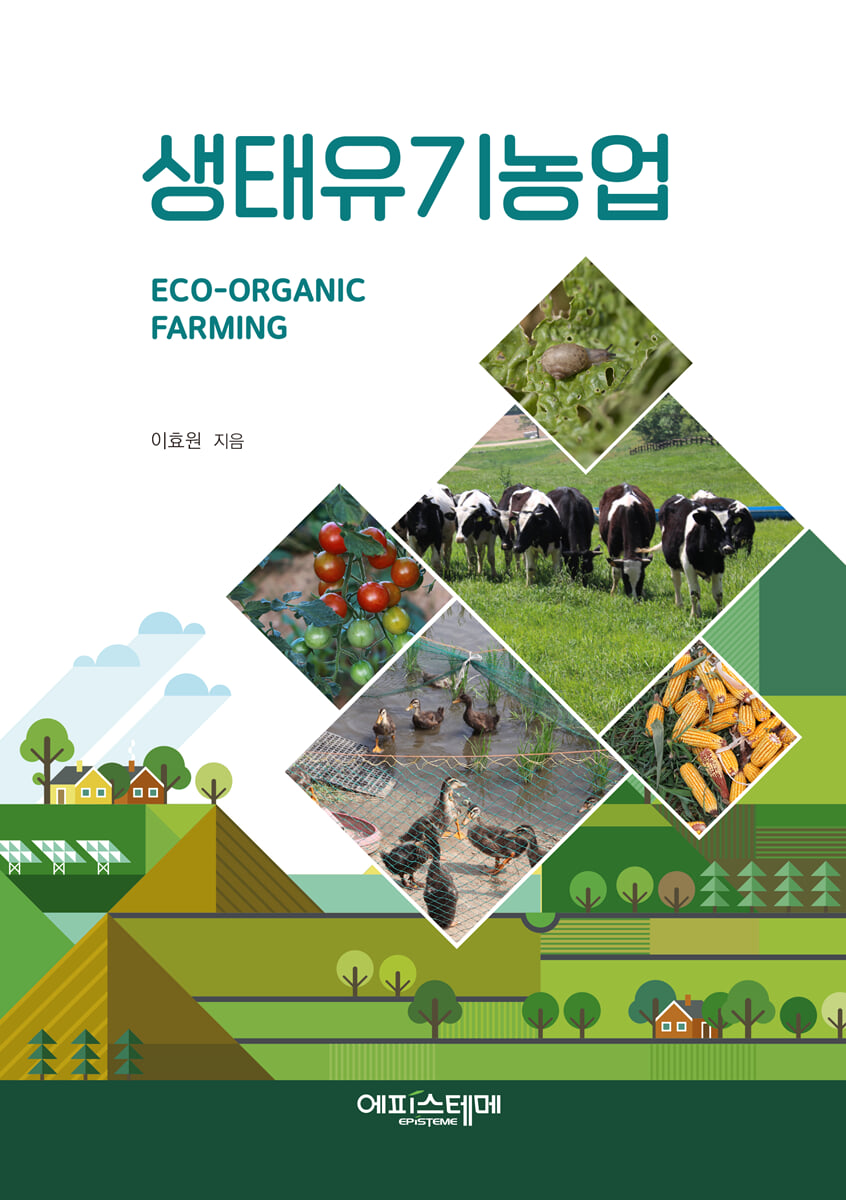
[Ecological Organic Farming] Completely Revised Edition
A completely revised edition of [Ecological Organic Farming], which has been consistently sold as a textbook for agricultural departments since its first publication in 2004, has been published.
Reflecting the changes in laws and systems over time, it describes the current status and prospects of organic farming, methods for transitioning to organic farming, the organic farming certification system, and the reality of organic farming, as well as other aspects of organic farming.
The author, Professor Lee Hyo-won, is an honorary professor of agriculture at Korea National Open University. He taught grassland science and forage science at the university and served as president of the Korean Society of Organic Agriculture, leaving behind many active activities and research achievements.
This book contains essential information for those who want to move beyond the stereotype that organic farming is simply agricultural products that do not use pesticides, chemicals, or genetically modified seeds and view it as an axis of the natural cycle and put it into practice.
This is a must-read for farmers who want to view agriculture from an ecological perspective and break away from the framework of conventional agriculture to look at it from a new angle.
[Ecological Organic Farming] Completely Revised Edition
A completely revised edition of [Ecological Organic Farming], which has been consistently sold as a textbook for agricultural departments since its first publication in 2004, has been published.
Reflecting the changes in laws and systems over time, it describes the current status and prospects of organic farming, methods for transitioning to organic farming, the organic farming certification system, and the reality of organic farming, as well as other aspects of organic farming.
The author, Professor Lee Hyo-won, is an honorary professor of agriculture at Korea National Open University. He taught grassland science and forage science at the university and served as president of the Korean Society of Organic Agriculture, leaving behind many active activities and research achievements.
This book contains essential information for those who want to move beyond the stereotype that organic farming is simply agricultural products that do not use pesticides, chemicals, or genetically modified seeds and view it as an axis of the natural cycle and put it into practice.
This is a must-read for farmers who want to view agriculture from an ecological perspective and break away from the framework of conventional agriculture to look at it from a new angle.
- You can preview some of the book's contents.
Preview
index
Chapter 1: Problems with Conventional Agriculture and the Emergence of Alternative Agriculture
1.
Characteristics of Conventional Agriculture_12
2.
Limitations of Maintaining Conventional Agriculture_20
3.
The Need for Alternative Agriculture Emerges_31
Chapter 2 Agricultural Ecosystems and Organic Farming
1.
Concept of Ecology_40
2.
Differences by Type in Natural and Various Agricultural Ecosystems_46
3.
Material Flow in Agroecosystems_53
4.
Material Cycle in Agricultural Ecosystems_58
Chapter 3: Current Status and Prospects of Organic Agriculture
1.
Past and Present of Organic Agriculture_72
2.
The Prospects for Organic Agriculture_87
3.
Estimation of development area_91
4.
Limiting Factors in the Expansion of Organic Agriculture_96
5.
Organic Agriculture Policy_99
Chapter 4: The Basics of Organic Farming
1.
Understanding Organic Farming_108
2.
Reasons for Choosing Organic Farming_114
3.
Organic Farming and Crop Rotation_120
4.
Crop Rotation for Organic Farming_126
5.
Green manure and cover crop cultivation for organic matter_135
6.
Use of Livestock Manure_141
7.
Weed Control_144
8.
Pest Control_151
9.
Health and Disease Management of Organic Livestock_168
10.
Organic Agriculture and Forestry_171
Chapter 5: Transition to Organic Agriculture
1.
Transition Preparation_182
2.
The Reality of Transition_184
3.
Organic conversion of livestock_202
4.
Expected Problems During Transition_207
5.
Expected Questions for Farmers Interested in Organic Farming_217
6.
Organic Farming Experience_222
Chapter 6 Authentication
1.
Types of Authentication_230
2.
Eco-friendly certification type labeling method_231
3.
Foreign Organic Product Certification_232
Chapter 7: Organic Farming in Practice
1.
Organic Rice Cultivation_254
2.
Challenges of Organic Livestock Farming_279
3.
Breeding of Organochlorines_287
1.
Characteristics of Conventional Agriculture_12
2.
Limitations of Maintaining Conventional Agriculture_20
3.
The Need for Alternative Agriculture Emerges_31
Chapter 2 Agricultural Ecosystems and Organic Farming
1.
Concept of Ecology_40
2.
Differences by Type in Natural and Various Agricultural Ecosystems_46
3.
Material Flow in Agroecosystems_53
4.
Material Cycle in Agricultural Ecosystems_58
Chapter 3: Current Status and Prospects of Organic Agriculture
1.
Past and Present of Organic Agriculture_72
2.
The Prospects for Organic Agriculture_87
3.
Estimation of development area_91
4.
Limiting Factors in the Expansion of Organic Agriculture_96
5.
Organic Agriculture Policy_99
Chapter 4: The Basics of Organic Farming
1.
Understanding Organic Farming_108
2.
Reasons for Choosing Organic Farming_114
3.
Organic Farming and Crop Rotation_120
4.
Crop Rotation for Organic Farming_126
5.
Green manure and cover crop cultivation for organic matter_135
6.
Use of Livestock Manure_141
7.
Weed Control_144
8.
Pest Control_151
9.
Health and Disease Management of Organic Livestock_168
10.
Organic Agriculture and Forestry_171
Chapter 5: Transition to Organic Agriculture
1.
Transition Preparation_182
2.
The Reality of Transition_184
3.
Organic conversion of livestock_202
4.
Expected Problems During Transition_207
5.
Expected Questions for Farmers Interested in Organic Farming_217
6.
Organic Farming Experience_222
Chapter 6 Authentication
1.
Types of Authentication_230
2.
Eco-friendly certification type labeling method_231
3.
Foreign Organic Product Certification_232
Chapter 7: Organic Farming in Practice
1.
Organic Rice Cultivation_254
2.
Challenges of Organic Livestock Farming_279
3.
Breeding of Organochlorines_287
Into the book
Conventional farming methods have been pursued to maximize production and profits, ignoring the ecological dynamics of agriculture, and this method of farming has continued for the past half century.
The representative methods of modern agriculture can be summarized into the following six characteristics.
These include intensive farming, short-wave farming, irrigation, overuse of chemical fertilizers, overuse of pesticides, and genetic modification.
Modern agriculture has evolved to produce goods in miniature factories, producing plants and animals.
In the name of increasing productivity, appropriate investments and genetically modified seeds were developed, and the soil came to be viewed as a mere incubator for plant roots.
--- p.12
The area of organic farmland reached 74.9 million hectares, or 1.6% of the world's agricultural land, a fivefold increase compared to 1999, and the market size in US dollars was $137.2 billion, a 7.6% increase compared to the previous year (2020).
The current state of organic farming in the world is as shown in [Table 3-6].
Organic farming is practiced in 190 countries, with Australia, Argentina, and Uruguay being the major organic farming countries.
It increased from 4 million hectares in 1999 to 28.5 million hectares in 2020, a sevenfold increase over 20 years.
Countries with large organic farming markets include the United States, Germany, and France, while the countries with the highest per capita consumption are Switzerland, Denmark, and Luxembourg.
Switzerland spent about $475 on organic produce.
In Korea, the proportion of organic land in the total agricultural land has decreased from around 7% to around 4.9%, stabilizing at around 5%.
Although this can be considered a significant improvement compared to the initial 0.1%, it is a low figure compared to advanced organic farming countries.
--- p.87
There are many obstacles that conventional farmers, who have traditionally relied on multiple pesticides and chemical fertilizers, must overcome when trying to implement organic farming, a completely new concept in farming.
The so-called environmentally friendly farming method, which uses less chemical fertilizers and pesticides, can be understood as the initial stage of organic farming and a transition to the level described later.
From now on, I would like to describe various problems that can be expected when starting organic farming, which is fundamentally different in ideas and philosophy from conventional farming that has been practiced up to now.
--- p.182
The National Agricultural Products Quality Management Service's March 2021 notice on organic food and pesticide-free certification also includes certification information for organic bees.
According to this, the regulations for producing organic honey are stipulated in six items.
The key is an animal welfare approach, the transition period is one year, and the beeswax used in the hives must in principle be organically produced.
It is suggested that permitted products such as lactic acid, oxalic acid, acetic acid, formic acid, and sulfur can be used to prevent pests and diseases.
From an animal welfare perspective, killing bees or cutting the wings of queen bees is prohibited.
The representative methods of modern agriculture can be summarized into the following six characteristics.
These include intensive farming, short-wave farming, irrigation, overuse of chemical fertilizers, overuse of pesticides, and genetic modification.
Modern agriculture has evolved to produce goods in miniature factories, producing plants and animals.
In the name of increasing productivity, appropriate investments and genetically modified seeds were developed, and the soil came to be viewed as a mere incubator for plant roots.
--- p.12
The area of organic farmland reached 74.9 million hectares, or 1.6% of the world's agricultural land, a fivefold increase compared to 1999, and the market size in US dollars was $137.2 billion, a 7.6% increase compared to the previous year (2020).
The current state of organic farming in the world is as shown in [Table 3-6].
Organic farming is practiced in 190 countries, with Australia, Argentina, and Uruguay being the major organic farming countries.
It increased from 4 million hectares in 1999 to 28.5 million hectares in 2020, a sevenfold increase over 20 years.
Countries with large organic farming markets include the United States, Germany, and France, while the countries with the highest per capita consumption are Switzerland, Denmark, and Luxembourg.
Switzerland spent about $475 on organic produce.
In Korea, the proportion of organic land in the total agricultural land has decreased from around 7% to around 4.9%, stabilizing at around 5%.
Although this can be considered a significant improvement compared to the initial 0.1%, it is a low figure compared to advanced organic farming countries.
--- p.87
There are many obstacles that conventional farmers, who have traditionally relied on multiple pesticides and chemical fertilizers, must overcome when trying to implement organic farming, a completely new concept in farming.
The so-called environmentally friendly farming method, which uses less chemical fertilizers and pesticides, can be understood as the initial stage of organic farming and a transition to the level described later.
From now on, I would like to describe various problems that can be expected when starting organic farming, which is fundamentally different in ideas and philosophy from conventional farming that has been practiced up to now.
--- p.182
The National Agricultural Products Quality Management Service's March 2021 notice on organic food and pesticide-free certification also includes certification information for organic bees.
According to this, the regulations for producing organic honey are stipulated in six items.
The key is an animal welfare approach, the transition period is one year, and the beeswax used in the hives must in principle be organically produced.
It is suggested that permitted products such as lactic acid, oxalic acid, acetic acid, formic acid, and sulfur can be used to prevent pests and diseases.
From an animal welfare perspective, killing bees or cutting the wings of queen bees is prohibited.
--- p..244-245
GOODS SPECIFICS
- Date of issue: July 31, 2022
- Page count, weight, size: 308 pages | 584g | 176*248*30mm
- ISBN13: 9788920043864
- ISBN10: 8920043868
You may also like
카테고리
korean


korean

![GQ KOREA Mark (Monthly): December [2025]](http://librairie.coreenne.fr/cdn/shop/files/8ef265dbbfbf186523ed75ba7319009d.jpg?v=1765340328&width=3840)


