

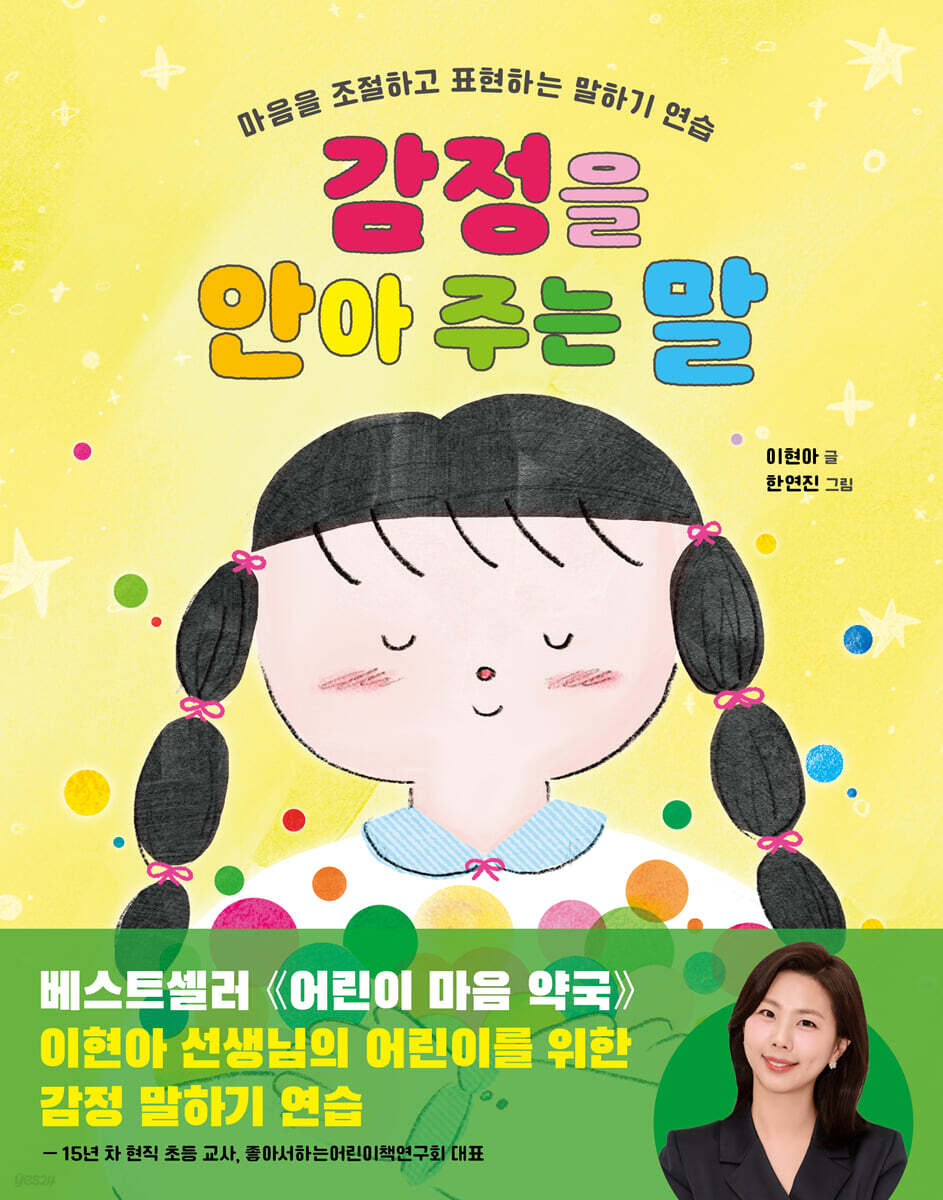
Words that embrace emotions
 |
Description
Book Introduction
Bestseller 『Children's Mind Pharmacy』 author Lee Hyeon-a Emotional Coaching Speaking Practice for Your Child's Healthy Growth 『Words that Embrace Emotions』 is based on the emotional coaching tool, “Mood Meter for Children.” This book presents speaking exercises to express and control your emotions. When anxiety strikes and you don't know what to do, When anger suddenly rises, The emotional language that allows me to hug myself tightly How great would it be if it were firmly secured within us? So that children can embrace their own emotions, Give the gift of nutritious emotional language. |
- You can preview some of the book's contents.
Preview
index
To the children reading this book
Mood Meter Red Area
When you hear hurtful words and your anger rises to the top of your head
When you worry, your worries keep coming back to you
When you are suffering from hatred towards a friend
When you are anxious and frozen because you are afraid of making a mistake and failing to do something
When you use the word 'annoying' often without thinking
Mood Meter Yellow Area
Be brave when you feel intimidated because you feel like you lack courage.
When you're happy but you're so ordinary that you don't seem very happy
I'm proud of myself for being a little better than I was yesterday.
When you want to find joy in everyday life
Mood Meter Blue Area
When you feel lonely and anxious about feeling left out, loneliness creeps in.
When I'm jealous and my heart feels sharp because of jealousy
When you're sad and you hold it in so you don't cry
When you're depressed because you can't take the test
I feel sad when I wish my mom was on my side, but she doesn't understand my feelings.
Mood Meter Green Area
Thank you When you want to find gratitude
I'm sorry, I'm sorry, but I couldn't apologize properly.
When you want to give and receive comfort and consideration
When I miss my mom who goes to work and keeps missing her
Mood Meter Red Area
When you hear hurtful words and your anger rises to the top of your head
When you worry, your worries keep coming back to you
When you are suffering from hatred towards a friend
When you are anxious and frozen because you are afraid of making a mistake and failing to do something
When you use the word 'annoying' often without thinking
Mood Meter Yellow Area
Be brave when you feel intimidated because you feel like you lack courage.
When you're happy but you're so ordinary that you don't seem very happy
I'm proud of myself for being a little better than I was yesterday.
When you want to find joy in everyday life
Mood Meter Blue Area
When you feel lonely and anxious about feeling left out, loneliness creeps in.
When I'm jealous and my heart feels sharp because of jealousy
When you're sad and you hold it in so you don't cry
When you're depressed because you can't take the test
I feel sad when I wish my mom was on my side, but she doesn't understand my feelings.
Mood Meter Green Area
Thank you When you want to find gratitude
I'm sorry, I'm sorry, but I couldn't apologize properly.
When you want to give and receive comfort and consideration
When I miss my mom who goes to work and keeps missing her
Detailed image

Publisher's Review
I'll give you a map of emotions
Teacher Lee Hyeon-a, author of "Words that Embrace Emotions," has long been a "mental pharmacist" in the classroom, listening to children's concerns and comforting their hearts.
In the process, I learned that many children have difficulty expressing and regulating their emotions.
Most children express their emotions with limited language, saying things like, “Oh, that’s annoying!” when they feel wronged, or “I’m really annoyed!” when they feel upset.
Especially these days, children who are exposed to social media from an early age express their emotions simply by clicking 'like' and 'heart'.
As a result, we often lose the opportunity to express in words the subtle and profound emotions that lie beyond.
Teacher Lee Hyeon-a wrote this book with a loving and strong heart to help such children express and control their emotions.
A child with healthy emotional language
You have the power to express and control your mind wisely.
So that children can become masters of their own minds and walk boldly into the world,
Keep clear, strong emotional language with you.
-Lee Hyeon-a (15 years of experience as an elementary school teacher, representative of the Children's Book Research Association)
Why is it important to express and regulate emotions?
Expressing and regulating emotions is essential because it is linked to important interpersonal relationships, academic achievement, and mental health in children's healthy growth.
For example, if you are unable to properly understand and express your feelings of sadness, you may have difficulty attending school, concentrating on your studies, and communicating with friends due to an inexplicable sense of helplessness and overwhelming sadness.
In times like these, if the child clearly recognizes that his or her current emotions are sadness and receives help and comfort from those around him or her, the child can live a healthy and wise life on his or her own.
Also, in Inside Out 2, various emotions such as anxiety, envy, boredom, and confusion appear, and anxiety in particular drives the story.
In today's competitive and comparative world, when children are overcome with anxiety, they often feel frustrated and push themselves to the limit, not knowing how to deal with the feeling.
How wonderful would it be if I had an "emotional language" that could embrace me in times like these? This book provides children with a nutritious emotional language.
Features of this book
1.
Explore 18 emotions across four areas with a mood meter based on expert research.
The Mood Meter is a tool created by the Yale Center for Emotional Intelligence to help people recognize and regulate their emotions.
Emotions are divided into four color spectrums based on the 'level of comfort' on the horizontal axis and the 'energy state' on the vertical axis.
It has the advantage of being able to intuitively see the distribution of emotions at a glance and to examine similar emotions across areas.
"Words that Embrace Emotions" explores 18 emotions in four areas through the "Mood Meter for Children," which teacher Lee Hyeon-ah reconstructed to fit children's eye level.
By examining the color and location of my emotions through the 'Mood Meter for Children' like this, I can clearly identify my emotions and give them specific names, as if I were holding a 'map of emotions' in my hand.
2.
You can understand emotions through the vivid concerns of real children in the classroom.
Because "Words that Embrace Emotions" begins with the vivid concerns children share in the classroom, all children who read this book will nod in agreement and empathize.
Also, the illustrations of author Han Yeon-jin, who creates books with sensual pictures and unique ideas, vividly express the facial expressions and gestures that appear when emotions arise, allowing us to better connect with the signals our bodies display according to our emotions.
3.
We offer situation-specific solutions based on the experience of current elementary school teachers.
Teacher Lee Hyeon-a, who has observed children more closely than anyone else for a long time, presents clear, situation-specific solutions based on her experience, with a spoonful of affection and empathy.
In addition, we provide the exact meaning of each emotion and various examples so that children can explore their emotions in depth by talking with their caregivers or teachers in the classroom and at home.
Finally, this book provides practical guidance on words and actions that can be applied directly to real life, making it even more useful.
4.
The emotion cards provided as an appendix allow for a wealth of activities.
In addition to the 18 emotions included in the book, we provide 36 emotion cards containing a wider range of emotions and solutions as an appendix.
Spread the cards face-down with your child and listen to your heart.
Then, choose a card that resonates with you, identify the emotion it represents, and turn it over.
On the back of the emotion card, there are words that embrace the emotion.
Practice expressing your emotions in a healthy way by following the emotional solutions anytime, anywhere, at home or in the classroom.
Teacher Lee Hyeon-a, author of "Words that Embrace Emotions," has long been a "mental pharmacist" in the classroom, listening to children's concerns and comforting their hearts.
In the process, I learned that many children have difficulty expressing and regulating their emotions.
Most children express their emotions with limited language, saying things like, “Oh, that’s annoying!” when they feel wronged, or “I’m really annoyed!” when they feel upset.
Especially these days, children who are exposed to social media from an early age express their emotions simply by clicking 'like' and 'heart'.
As a result, we often lose the opportunity to express in words the subtle and profound emotions that lie beyond.
Teacher Lee Hyeon-a wrote this book with a loving and strong heart to help such children express and control their emotions.
A child with healthy emotional language
You have the power to express and control your mind wisely.
So that children can become masters of their own minds and walk boldly into the world,
Keep clear, strong emotional language with you.
-Lee Hyeon-a (15 years of experience as an elementary school teacher, representative of the Children's Book Research Association)
Why is it important to express and regulate emotions?
Expressing and regulating emotions is essential because it is linked to important interpersonal relationships, academic achievement, and mental health in children's healthy growth.
For example, if you are unable to properly understand and express your feelings of sadness, you may have difficulty attending school, concentrating on your studies, and communicating with friends due to an inexplicable sense of helplessness and overwhelming sadness.
In times like these, if the child clearly recognizes that his or her current emotions are sadness and receives help and comfort from those around him or her, the child can live a healthy and wise life on his or her own.
Also, in Inside Out 2, various emotions such as anxiety, envy, boredom, and confusion appear, and anxiety in particular drives the story.
In today's competitive and comparative world, when children are overcome with anxiety, they often feel frustrated and push themselves to the limit, not knowing how to deal with the feeling.
How wonderful would it be if I had an "emotional language" that could embrace me in times like these? This book provides children with a nutritious emotional language.
Features of this book
1.
Explore 18 emotions across four areas with a mood meter based on expert research.
The Mood Meter is a tool created by the Yale Center for Emotional Intelligence to help people recognize and regulate their emotions.
Emotions are divided into four color spectrums based on the 'level of comfort' on the horizontal axis and the 'energy state' on the vertical axis.
It has the advantage of being able to intuitively see the distribution of emotions at a glance and to examine similar emotions across areas.
"Words that Embrace Emotions" explores 18 emotions in four areas through the "Mood Meter for Children," which teacher Lee Hyeon-ah reconstructed to fit children's eye level.
By examining the color and location of my emotions through the 'Mood Meter for Children' like this, I can clearly identify my emotions and give them specific names, as if I were holding a 'map of emotions' in my hand.
2.
You can understand emotions through the vivid concerns of real children in the classroom.
Because "Words that Embrace Emotions" begins with the vivid concerns children share in the classroom, all children who read this book will nod in agreement and empathize.
Also, the illustrations of author Han Yeon-jin, who creates books with sensual pictures and unique ideas, vividly express the facial expressions and gestures that appear when emotions arise, allowing us to better connect with the signals our bodies display according to our emotions.
3.
We offer situation-specific solutions based on the experience of current elementary school teachers.
Teacher Lee Hyeon-a, who has observed children more closely than anyone else for a long time, presents clear, situation-specific solutions based on her experience, with a spoonful of affection and empathy.
In addition, we provide the exact meaning of each emotion and various examples so that children can explore their emotions in depth by talking with their caregivers or teachers in the classroom and at home.
Finally, this book provides practical guidance on words and actions that can be applied directly to real life, making it even more useful.
4.
The emotion cards provided as an appendix allow for a wealth of activities.
In addition to the 18 emotions included in the book, we provide 36 emotion cards containing a wider range of emotions and solutions as an appendix.
Spread the cards face-down with your child and listen to your heart.
Then, choose a card that resonates with you, identify the emotion it represents, and turn it over.
On the back of the emotion card, there are words that embrace the emotion.
Practice expressing your emotions in a healthy way by following the emotional solutions anytime, anywhere, at home or in the classroom.
GOODS SPECIFICS
- Date of issue: September 5, 2024
- Page count, weight, size: 96 pages | 538g | 180*230*16mm
- ISBN13: 9791169212724
- ISBN10: 1169212727
- KC Certification: Certification Type: Conformity Confirmation
You may also like
카테고리
korean


korean

![GQ KOREA Mark (Monthly): December [2025]](http://librairie.coreenne.fr/cdn/shop/files/8ef265dbbfbf186523ed75ba7319009d.jpg?v=1765340328&width=3840)


