

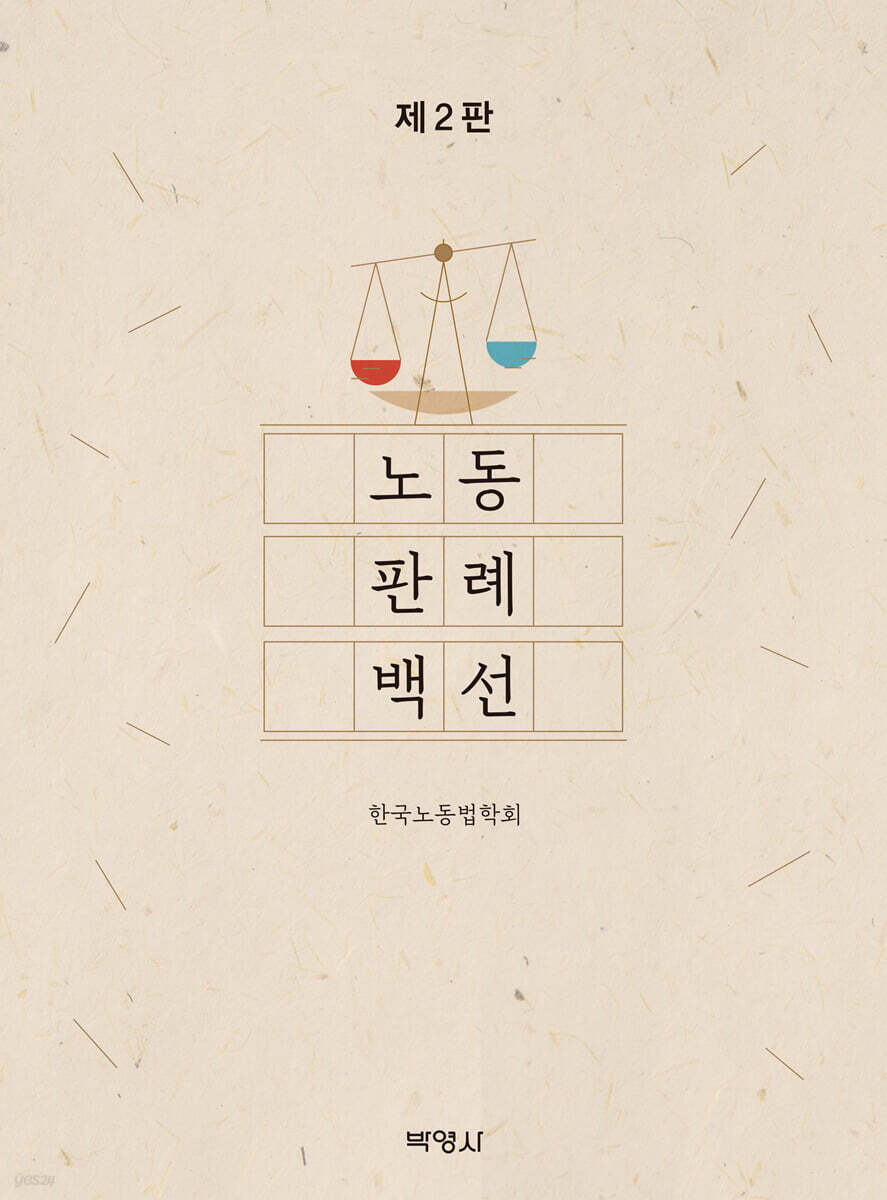
100 Best Labor Cases
 |
Description
Book Introduction
In preparation for the publication of the second edition, the working committee first collected candidate labor precedents related to important new topics in the fields of individual and collective labor-management relations since the publication of the first edition. Furthermore, the committee held its first meeting of the second edition preparatory committee at Hanyang University on December 27, 2019, to select precedents to replace and add to the first edition. Since then, serious and passionate discussions have been held leading up to the publication.
The first edition included a total of 100 case laws, but the second edition covers a total of 106 decisions.
Through discussions for the publication of the second edition, the existing target judgments and commentaries were maintained for 51 topics, taking into account factors such as historicity, timeliness, and importance.
However, it was decided to add 30 new judgments to be included in the second edition and write new commentaries for 25 cases, maintain the existing topics but replace the judgments, and rewrite the commentaries for 24 cases. It was also decided not to include them in the second edition.
In addition, with regard to the authors, the first edition was limited to those who were full-time professors of labor law at law schools or law colleges, but in the second edition, the scope was broadened to include many law doctors who are actively conducting research in various fields of society based on academic papers and other research achievements on the subject.
The first edition included a total of 100 case laws, but the second edition covers a total of 106 decisions.
Through discussions for the publication of the second edition, the existing target judgments and commentaries were maintained for 51 topics, taking into account factors such as historicity, timeliness, and importance.
However, it was decided to add 30 new judgments to be included in the second edition and write new commentaries for 25 cases, maintain the existing topics but replace the judgments, and rewrite the commentaries for 24 cases. It was also decided not to include them in the second edition.
In addition, with regard to the authors, the first edition was limited to those who were full-time professors of labor law at law schools or law colleges, but in the second edition, the scope was broadened to include many law doctors who are actively conducting research in various fields of society based on academic papers and other research achievements on the subject.
index
Chapter 1 Courts and Interpretation of Labor Law
Chapter 2 Basic Labor Rights
Chapter 3 Parties to the Labor Relationship
Chapter 4 Prohibition of Discrimination and Harassment
Chapter 5 Employment Contract
Chapter 6 Wages
Chapter 7 Working Hours and Rest
Chapter 8 Employment Rules
Chapter 9 Personnel and Disciplinary Action
Chapter 10 Termination of Employment Relationship
Chapter 11 Remedies for Unfair Dismissal
Chapter 12 Protection after termination of employment relationship
Chapter 13 Corporate Changes and Labor Relations
Chapter 14 Non-regular Workers
Chapter 15 Safety and Disaster Compensation
Chapter 16: Formation of a Labor Union
Chapter 17 Labor Union Operation
Chapter 18 Collective Bargaining
Chapter 19 Collective Agreements
Chapter 20 Dispute Action
Chapter 21 Unfair Labor Practices
Chapter 22 Labor-Management Council
Chapter 2 Basic Labor Rights
Chapter 3 Parties to the Labor Relationship
Chapter 4 Prohibition of Discrimination and Harassment
Chapter 5 Employment Contract
Chapter 6 Wages
Chapter 7 Working Hours and Rest
Chapter 8 Employment Rules
Chapter 9 Personnel and Disciplinary Action
Chapter 10 Termination of Employment Relationship
Chapter 11 Remedies for Unfair Dismissal
Chapter 12 Protection after termination of employment relationship
Chapter 13 Corporate Changes and Labor Relations
Chapter 14 Non-regular Workers
Chapter 15 Safety and Disaster Compensation
Chapter 16: Formation of a Labor Union
Chapter 17 Labor Union Operation
Chapter 18 Collective Bargaining
Chapter 19 Collective Agreements
Chapter 20 Dispute Action
Chapter 21 Unfair Labor Practices
Chapter 22 Labor-Management Council
Publisher's Review
[ Preface ]
It has already been five years since the first edition of the 100 Selected Labor Cases was published (January 2015).
Since the publication of the first edition, many Supreme Court decisions have presented new legal principles, many of which are decisions by a full bench.
In particular, new legal developments are becoming more prominent in key areas such as working conditions, multiple unions, and non-regular workers, making it necessary to add or replace relevant decisions or supplement existing case law commentaries.
With this in mind, the second edition preparatory committee (advisors, executive committee, working committee) was formed in the second half of 2019, and after about one year and six months of work, the second edition of the 100 Labor Cases was finally published.
In preparation for the publication of the second edition, the working committee first collected candidate labor precedents related to important new topics in the fields of individual and collective labor-management relations since the publication of the first edition. Furthermore, the committee held its first meeting of the second edition preparatory committee at Hanyang University on December 27, 2019, to select precedents to replace and add to the first edition. Since then, serious and passionate discussions have been held leading up to the publication.
The first edition included a total of 100 case laws, but the second edition covers a total of 106 decisions.
Through discussions for the publication of the second edition, the existing target judgments and commentaries were maintained for 51 topics, taking into account factors such as historicity, timeliness, and importance.
However, it was decided to add 30 new judgments to be included in the second edition and write new commentaries for 25 cases, maintain the existing topics but replace the judgments, and rewrite the commentaries for 24 cases. It was also decided not to include them in the second edition.
In addition, with regard to the authors, the first edition was limited to those who were full-time professors of labor law at law schools or law colleges, but in the second edition, the scope was broadened to include many law doctors who are actively conducting research in various fields of society based on academic papers and other research achievements on the subject.
The following are the key points that were highlighted in the publication of the second edition of the 100 Labor Cases.
First, like the first edition, this book is composed of a general introduction to labor law, individual laws, and case law commentaries related to collective law.
However, we made some classifications by major topic and ensured accountability by listing the target judgment and commentary writer for each subtopic.
Regarding the writing style, the format was unified by writing in the same order as the first edition: facts, content of the judgment, and commentary.
However, due to circumstances that required a limit on the amount of writing in consideration of formal consistency and the overall volume of the book, there may be limitations in providing sufficient explanations for some topics compared to the issues that need to be addressed.
Second, while the first edition emphasized the historical nature of precedents in selecting the subject judgments, the second edition also actively considered the novelty of the topic and the impact of the judgment on reality in selecting the subject judgments, including maintenance, replacement, and addition.
Third, the second edition preparatory committee requested that the authors write about important issues and general contents related to 'newly added judgments in the second edition' as well as 'topics for which the subject judgment was replaced,' but left the specific direction and content of the writing up to each author.
Therefore, the legal structure, content, and style of the commentary may differ slightly for each judgment.
Fourth, labor case law informs us of what problems arise in the workplace and how courts interpret and judge labor law issues.
Recognizing this, we have strived to ensure that the commentaries in this second edition, like those in the first edition, are written from a universal perspective, with the aim of making this book as helpful as possible to those who teach or study labor law.
Finally, I would like to express my gratitude to the members of the Second Edition Preparatory Committee (whose list is listed in alphabetical order on the back cover of this book) and all the authors for their hard work in making this book possible.
In particular, I would like to express my gratitude to Professor Kang Seong-tae (26th President, 2020), who spared no effort in supporting the planning and launch of the second edition of the 100 Labor Cases Collection, and to Professor Kim Hong-young, who oversaw the publication of the second edition, as well as the executive and working members of the preparatory committee for their dedicated efforts.
Moon Moo-ki, President of the Korean Labor Law Association, January 2021
It has already been five years since the first edition of the 100 Selected Labor Cases was published (January 2015).
Since the publication of the first edition, many Supreme Court decisions have presented new legal principles, many of which are decisions by a full bench.
In particular, new legal developments are becoming more prominent in key areas such as working conditions, multiple unions, and non-regular workers, making it necessary to add or replace relevant decisions or supplement existing case law commentaries.
With this in mind, the second edition preparatory committee (advisors, executive committee, working committee) was formed in the second half of 2019, and after about one year and six months of work, the second edition of the 100 Labor Cases was finally published.
In preparation for the publication of the second edition, the working committee first collected candidate labor precedents related to important new topics in the fields of individual and collective labor-management relations since the publication of the first edition. Furthermore, the committee held its first meeting of the second edition preparatory committee at Hanyang University on December 27, 2019, to select precedents to replace and add to the first edition. Since then, serious and passionate discussions have been held leading up to the publication.
The first edition included a total of 100 case laws, but the second edition covers a total of 106 decisions.
Through discussions for the publication of the second edition, the existing target judgments and commentaries were maintained for 51 topics, taking into account factors such as historicity, timeliness, and importance.
However, it was decided to add 30 new judgments to be included in the second edition and write new commentaries for 25 cases, maintain the existing topics but replace the judgments, and rewrite the commentaries for 24 cases. It was also decided not to include them in the second edition.
In addition, with regard to the authors, the first edition was limited to those who were full-time professors of labor law at law schools or law colleges, but in the second edition, the scope was broadened to include many law doctors who are actively conducting research in various fields of society based on academic papers and other research achievements on the subject.
The following are the key points that were highlighted in the publication of the second edition of the 100 Labor Cases.
First, like the first edition, this book is composed of a general introduction to labor law, individual laws, and case law commentaries related to collective law.
However, we made some classifications by major topic and ensured accountability by listing the target judgment and commentary writer for each subtopic.
Regarding the writing style, the format was unified by writing in the same order as the first edition: facts, content of the judgment, and commentary.
However, due to circumstances that required a limit on the amount of writing in consideration of formal consistency and the overall volume of the book, there may be limitations in providing sufficient explanations for some topics compared to the issues that need to be addressed.
Second, while the first edition emphasized the historical nature of precedents in selecting the subject judgments, the second edition also actively considered the novelty of the topic and the impact of the judgment on reality in selecting the subject judgments, including maintenance, replacement, and addition.
Third, the second edition preparatory committee requested that the authors write about important issues and general contents related to 'newly added judgments in the second edition' as well as 'topics for which the subject judgment was replaced,' but left the specific direction and content of the writing up to each author.
Therefore, the legal structure, content, and style of the commentary may differ slightly for each judgment.
Fourth, labor case law informs us of what problems arise in the workplace and how courts interpret and judge labor law issues.
Recognizing this, we have strived to ensure that the commentaries in this second edition, like those in the first edition, are written from a universal perspective, with the aim of making this book as helpful as possible to those who teach or study labor law.
Finally, I would like to express my gratitude to the members of the Second Edition Preparatory Committee (whose list is listed in alphabetical order on the back cover of this book) and all the authors for their hard work in making this book possible.
In particular, I would like to express my gratitude to Professor Kang Seong-tae (26th President, 2020), who spared no effort in supporting the planning and launch of the second edition of the 100 Labor Cases Collection, and to Professor Kim Hong-young, who oversaw the publication of the second edition, as well as the executive and working members of the preparatory committee for their dedicated efforts.
Moon Moo-ki, President of the Korean Labor Law Association, January 2021
GOODS SPECIFICS
- Publication date: February 20, 2021
- Page count, weight, size: 442 pages | 786g | 188*254*20mm
- ISBN13: 9791130337623
- ISBN10: 1130337626
You may also like
카테고리
korean


korean

![GQ KOREA Mark (Monthly): December [2025]](http://librairie.coreenne.fr/cdn/shop/files/8ef265dbbfbf186523ed75ba7319009d.jpg?v=1765340328&width=3840)


