

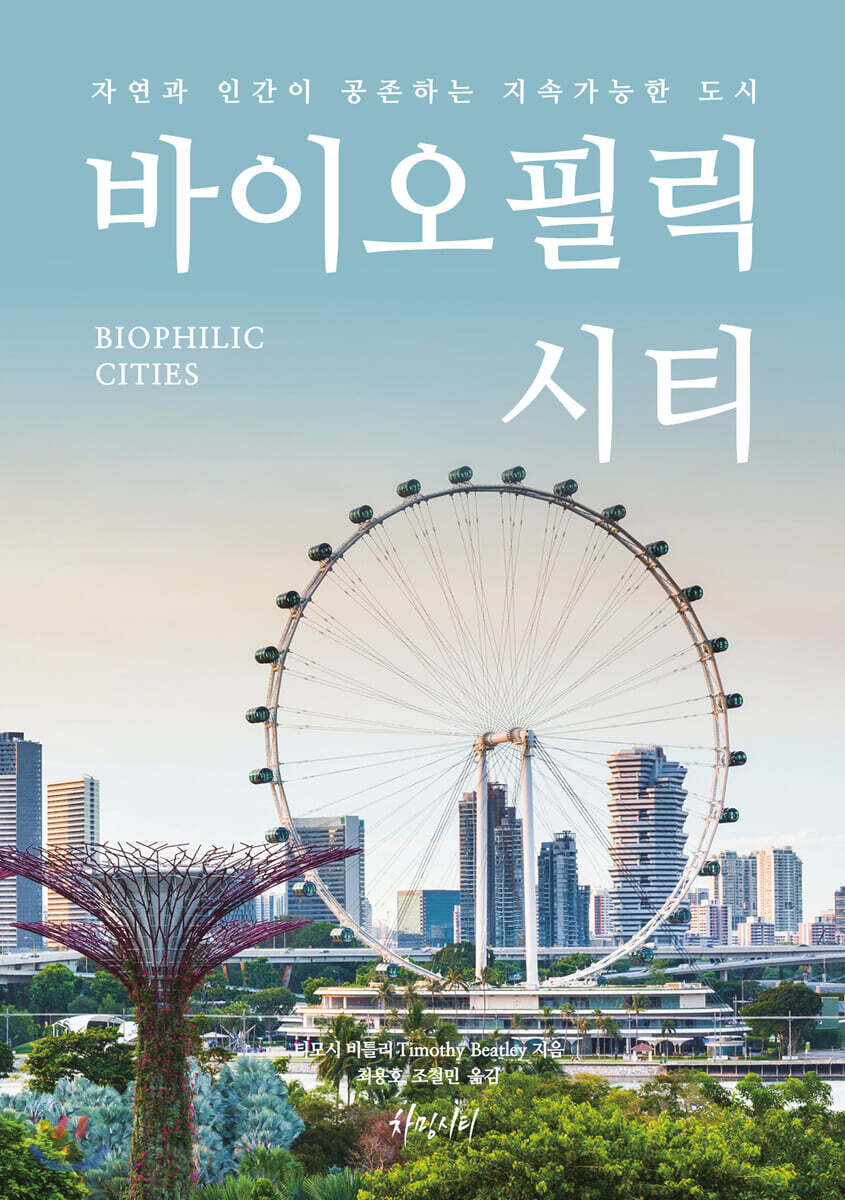
Biophilic City
 |
Description
Book Introduction
A book that compiles the new model of the future city: the biophilic city.
Biophilic Cities contains the past, present, and future of major biophilic cities around the world.
Biophilic City is an urban planning concept based on the theory of biophilia, which aims to bring nature into the daily lives of city dwellers under the belief that 'humans are naturally physically healthy and emotionally stable when in a natural environment.'
The nature created in biophilic cities has a positive impact on everything in the city: people's health, environmental restoration, the survival of other species, economic revitalization, urban agriculture, poverty relief, and disaster recovery.
Currently, about 54 percent of the world's population lives in cities, and this number is expected to reach 70 percent by 2050.
When we build cities that are not simply parks but biophilic, taking into account all members of the city, the future of humanity will be transformed into a new world.
This book is a guide for all those who wish to journey into this future world.
Biophilic Cities contains the past, present, and future of major biophilic cities around the world.
Biophilic City is an urban planning concept based on the theory of biophilia, which aims to bring nature into the daily lives of city dwellers under the belief that 'humans are naturally physically healthy and emotionally stable when in a natural environment.'
The nature created in biophilic cities has a positive impact on everything in the city: people's health, environmental restoration, the survival of other species, economic revitalization, urban agriculture, poverty relief, and disaster recovery.
Currently, about 54 percent of the world's population lives in cities, and this number is expected to reach 70 percent by 2050.
When we build cities that are not simply parks but biophilic, taking into account all members of the city, the future of humanity will be transformed into a new world.
This book is a guide for all those who wish to journey into this future world.
- You can preview some of the book's contents.
Preview
index
Author's Preface
Acknowledgements
Translator's Preface
With the publication of 'Biophilic City'
Part 1: Background and Theory of Biophilic Cities
Chapter 1: The Power of Urban Nature - The Essential Benefits of Biophilic Urbanization
Chapter 2: Understanding Nature in Biophilic Cities
Chapter 3: The Urban Natural Diet - Nature Enriches City Life
Chapter 4: Biophilic Cities and Resilience
Part 2: Creating Biophilic Cities - Global Case Studies
Chapter 5: Singapore - A City in a Garden
Chapter 6: Milwaukee, Wisconsin - From Cream City to Green City
Chapter 7 Wellington, New Zealand - From Town Belt to Blue Belt
Chapter 8: Birmingham, England - Health, Nature, and the Urban Economy
Chapter 9: Portland, Oregon - A Green Street in a River City
Chapter 10: San Francisco, California - Biophilic City by the Bay
Chapter 11: Oslo, Norway - The City of Fjords and Forests
Chapter 12: Vitoria, Spain - Nature in a Compressed City
Part 3: Innovative Cases and Projects from Around the World
- Toronto, Ontario, Canada: Green Roof Bylaw
Vancouver, British Columbia, Canada: Greenest City Action Plan
New York City, New York: Camping in City Parks
Bangalore, India: Urban Slender Loris Project
- Chicago, Illinois: Aqua Tower
Neemrana, India: Hero MotoCorp's garden factory and global parts center.
- Amsterdam, Netherlands: Park 20|20
- Chicago, Illinois: Green Roofs
- Mexico City, Mexico: Azotea Verde
Fremantle and Perth, Western Australia: Greenskins
- Sydney, Australia: One Central Park
- Ho Chi Minh City, Vietnam: Stacking Green House
- Mexico City, Mexico: Vertical Park
- New York City SOHO: 300 Lafayette Street
- The Bronx, New York City: Via Verde
- Milan, Italy: Bosco Verticale
Boston, Massachusetts: Spalding Rehabilitation Hospital
- Mississauga, Ontario, Canada: Carlo Fidanzi Peel Regional Cancer Centre, Credit Valley Hospital
- Washington DC
Georgetown University: Healy Family Student Center
Pittsburgh, Pennsylvania: Phipps Botanical Gardens & Conservatory
- Los Angeles, California: Los Angeles River Revitalization
Richmond, Virginia: James River Riverfront Plan
- Seoul, South Korea: Cheonggyecheon Restoration Project
- St. Louis, Missouri: River Ring in the Great River Greenway District
- Zaragoza, Spain: Luis Bunuel Water Park
- London, UK: RE:LEAF Program
Melbourne, Australia: Urban Forest Strategy
Anchorage, Alaska: Urban Trail Network
Chengdu, China: Chengdu's Ecological Belt and Garden City Vision
- Rio de Janeiro, Brazil: Trilha Transcarioca
Austin, Texas: Green Alley Program
- Montreal, Quebec, Canada: Green Alley
- Buenos Aires, Argentina: Costanera Norte
- Chicago, Illinois: Chicago Wilderness
- Houston, Texas: Houston Wilderness
- London, England: Green Grid
- Phoenix and Scottsdale, Arizona: McDowell Sonoran Reservation
- London, England: Small Park Program
- Berlin, Germany: Sugeland Nature Park
- Brooklyn, New York City, New York: Gowanus Canal Sponge Park
- Tianjin, China: Chaoyuan Park
Baltimore, Maryland: Healthy Harbors Initiative
- Houston, Texas: Buffalo Bayou
Philadelphia, Pennsylvania: Green Cities, Clean Waters Program
- New York, New York: Palais Park
Cape Town, South Africa: Urban Biodiversity
- Edmonton, Alberta, Canada: Wildlife Corridor
Nairobi, Kenya: Urban Nature Park Plan
- St. Louis, Missouri: Milk Whiz for Monarch
- Philadelphia, Pennsylvania: POP
- Seattle, Washington: Beacon Food Press
Rio de Janeiro, Brazil: City Ecological Park
- Port-au-Prince, Haiti: Mathisan Park
- Chicago, Illinois: Eden Place Nature Center
Part 4: Success and Future Directions
Chapter 13: Lessons from Emerging Biophilic Cities
Chapter 14: Overcoming Remaining Obstacles and Challenges
Chapter 15: Conclusion - Reimagining the City of the Future
Appendix A Reference Materials
Appendix B References
Appendix C: People, Place Names, and Others
Acknowledgements
Translator's Preface
With the publication of 'Biophilic City'
Part 1: Background and Theory of Biophilic Cities
Chapter 1: The Power of Urban Nature - The Essential Benefits of Biophilic Urbanization
Chapter 2: Understanding Nature in Biophilic Cities
Chapter 3: The Urban Natural Diet - Nature Enriches City Life
Chapter 4: Biophilic Cities and Resilience
Part 2: Creating Biophilic Cities - Global Case Studies
Chapter 5: Singapore - A City in a Garden
Chapter 6: Milwaukee, Wisconsin - From Cream City to Green City
Chapter 7 Wellington, New Zealand - From Town Belt to Blue Belt
Chapter 8: Birmingham, England - Health, Nature, and the Urban Economy
Chapter 9: Portland, Oregon - A Green Street in a River City
Chapter 10: San Francisco, California - Biophilic City by the Bay
Chapter 11: Oslo, Norway - The City of Fjords and Forests
Chapter 12: Vitoria, Spain - Nature in a Compressed City
Part 3: Innovative Cases and Projects from Around the World
- Toronto, Ontario, Canada: Green Roof Bylaw
Vancouver, British Columbia, Canada: Greenest City Action Plan
New York City, New York: Camping in City Parks
Bangalore, India: Urban Slender Loris Project
- Chicago, Illinois: Aqua Tower
Neemrana, India: Hero MotoCorp's garden factory and global parts center.
- Amsterdam, Netherlands: Park 20|20
- Chicago, Illinois: Green Roofs
- Mexico City, Mexico: Azotea Verde
Fremantle and Perth, Western Australia: Greenskins
- Sydney, Australia: One Central Park
- Ho Chi Minh City, Vietnam: Stacking Green House
- Mexico City, Mexico: Vertical Park
- New York City SOHO: 300 Lafayette Street
- The Bronx, New York City: Via Verde
- Milan, Italy: Bosco Verticale
Boston, Massachusetts: Spalding Rehabilitation Hospital
- Mississauga, Ontario, Canada: Carlo Fidanzi Peel Regional Cancer Centre, Credit Valley Hospital
- Washington DC
Georgetown University: Healy Family Student Center
Pittsburgh, Pennsylvania: Phipps Botanical Gardens & Conservatory
- Los Angeles, California: Los Angeles River Revitalization
Richmond, Virginia: James River Riverfront Plan
- Seoul, South Korea: Cheonggyecheon Restoration Project
- St. Louis, Missouri: River Ring in the Great River Greenway District
- Zaragoza, Spain: Luis Bunuel Water Park
- London, UK: RE:LEAF Program
Melbourne, Australia: Urban Forest Strategy
Anchorage, Alaska: Urban Trail Network
Chengdu, China: Chengdu's Ecological Belt and Garden City Vision
- Rio de Janeiro, Brazil: Trilha Transcarioca
Austin, Texas: Green Alley Program
- Montreal, Quebec, Canada: Green Alley
- Buenos Aires, Argentina: Costanera Norte
- Chicago, Illinois: Chicago Wilderness
- Houston, Texas: Houston Wilderness
- London, England: Green Grid
- Phoenix and Scottsdale, Arizona: McDowell Sonoran Reservation
- London, England: Small Park Program
- Berlin, Germany: Sugeland Nature Park
- Brooklyn, New York City, New York: Gowanus Canal Sponge Park
- Tianjin, China: Chaoyuan Park
Baltimore, Maryland: Healthy Harbors Initiative
- Houston, Texas: Buffalo Bayou
Philadelphia, Pennsylvania: Green Cities, Clean Waters Program
- New York, New York: Palais Park
Cape Town, South Africa: Urban Biodiversity
- Edmonton, Alberta, Canada: Wildlife Corridor
Nairobi, Kenya: Urban Nature Park Plan
- St. Louis, Missouri: Milk Whiz for Monarch
- Philadelphia, Pennsylvania: POP
- Seattle, Washington: Beacon Food Press
Rio de Janeiro, Brazil: City Ecological Park
- Port-au-Prince, Haiti: Mathisan Park
- Chicago, Illinois: Eden Place Nature Center
Part 4: Success and Future Directions
Chapter 13: Lessons from Emerging Biophilic Cities
Chapter 14: Overcoming Remaining Obstacles and Challenges
Chapter 15: Conclusion - Reimagining the City of the Future
Appendix A Reference Materials
Appendix B References
Appendix C: People, Place Names, and Others
Into the book
Creating sustainable and resilient cities requires design that embraces simplicity and density.
To create cities that are walkable, accessible by public transportation, and reduce overall energy and greenhouse gas emissions, cities need to be denser and more compact.
It is possible to create a city in this state.
However, creating biophilic cities like the ones mentioned above, by integrating cities and nature and finding ways for everyone living in the city to have daily or hourly access to the nature they need, is a challenge we must tackle.
--- p.
31
In cities, nature exists in many different forms and can be experienced in many different ways.
But to some extent, nature is a social product.
All around us are visible birds and mammals, a vast number of invertebrates, and other life forms that are barely visible to the human eye.
The city and its surrounding nature are made up of such diverse organisms and survival systems, and this book aims to discuss this nature.
--- p.
49
Different people living in cities can understand nature in the city in different ways.
In this regard, several questions can be asked:
How much time do we need to be exposed to nature to feel healthier and happier, and what types of nature do we need to experience to trigger positive responses? We call this the "urban nature diet."
--- p.
85
In recent months, Oslo has been in the global environmental news for creating a "pollen highway" for bees across the city.
The basic idea is to have 'feeding stations' for the bees every 24 metres, planting vegetation to provide resting places for the bees and other pollinators.
The project was led by the non-profit organization Viewbee.
To find out where feeding stations are located and where new plantings are needed, visit http://www.pollinatorpassasjen.no/intro.
There is an online map here.
--- p.
258
The policy and urban planning debate surrounding the potential positive economic benefits of biophilic urbanization appears to be reaching a conclusion that the benefits outweigh the negative ones.
The numerous pieces of evidence from the example of Birmingham, UK, are sufficient to understand and confirm the economic value of the ecological services provided by biophilic cities.
Urban ecological strategy or urban nature strategy is the most cost-effective way to achieve the urban or social goals being pursued.
--- p.
423
Globally, we are going through challenging times, but looking at it another way, it is also an exciting time.
Because we are reimagining city life as deeply connected to the natural world.
We hope you'll join us on this journey, bringing your energy, compassion, and ingenuity to your cities and nature to help shape the future of biophilic cities.
You are invited!
To create cities that are walkable, accessible by public transportation, and reduce overall energy and greenhouse gas emissions, cities need to be denser and more compact.
It is possible to create a city in this state.
However, creating biophilic cities like the ones mentioned above, by integrating cities and nature and finding ways for everyone living in the city to have daily or hourly access to the nature they need, is a challenge we must tackle.
--- p.
31
In cities, nature exists in many different forms and can be experienced in many different ways.
But to some extent, nature is a social product.
All around us are visible birds and mammals, a vast number of invertebrates, and other life forms that are barely visible to the human eye.
The city and its surrounding nature are made up of such diverse organisms and survival systems, and this book aims to discuss this nature.
--- p.
49
Different people living in cities can understand nature in the city in different ways.
In this regard, several questions can be asked:
How much time do we need to be exposed to nature to feel healthier and happier, and what types of nature do we need to experience to trigger positive responses? We call this the "urban nature diet."
--- p.
85
In recent months, Oslo has been in the global environmental news for creating a "pollen highway" for bees across the city.
The basic idea is to have 'feeding stations' for the bees every 24 metres, planting vegetation to provide resting places for the bees and other pollinators.
The project was led by the non-profit organization Viewbee.
To find out where feeding stations are located and where new plantings are needed, visit http://www.pollinatorpassasjen.no/intro.
There is an online map here.
--- p.
258
The policy and urban planning debate surrounding the potential positive economic benefits of biophilic urbanization appears to be reaching a conclusion that the benefits outweigh the negative ones.
The numerous pieces of evidence from the example of Birmingham, UK, are sufficient to understand and confirm the economic value of the ecological services provided by biophilic cities.
Urban ecological strategy or urban nature strategy is the most cost-effective way to achieve the urban or social goals being pursued.
--- p.
423
Globally, we are going through challenging times, but looking at it another way, it is also an exciting time.
Because we are reimagining city life as deeply connected to the natural world.
We hope you'll join us on this journey, bringing your energy, compassion, and ingenuity to your cities and nature to help shape the future of biophilic cities.
You are invited!
--- p.
473
473
Publisher's Review
This is a comprehensive compilation of research on biophilic cities. All claims presented in this text were directly verified and interviewed by the author and his team while traveling to cities around the world. This verification was also supported by research and verification of relevant research findings.
In other words, it combined actual results with theory.
This includes researchers, civil servants, volunteers, architecture firms, and activists leading biophilic cities.
Insights from biophilic city pioneers. There are people leading the way in biophilic cities.
Many people are working hard to connect cities, nature, and people, and you can explore their delicate insights, including Zara McDonald, who seeks coexistence between cities and pumas, Amy Savage, who studies ants on the streets of New York, Williams, who runs Alice's Garden urban farm, Natalie Jeremichenko, who leads an environmental health clinic, Lena Chan, who creates and disseminates biodiversity indicators in cities, and Liat Tengrit, who brought nature to Khoo Teck Puat Hospital.
You can see representative biophilic cities from around the world. As the industrial era progressed, nature gradually disappeared from cities around the world, and humans became an integral part of the city.
Wild animals were allowed to roam outside the city.
At some point, cities began to draw nature into their cities and began to protect and nurture the remaining nature.
In the process, cities, nature, and wildlife gradually became closer.
This book contains case studies from each city.
Some cities are leading the way in biophilic cities, while others are just getting started.
Through various examples, we can look back on the past and present of biophilic cities and examine the future they aim for.
I hope every city in South Korea becomes a biophilic city. This book also features Cheonggyecheon Stream in Seoul.
In our country, too, nature is incorporated into the design of cities.
All of this has been promoted by the government so far.
However, to become a truly biophilic city, there must be voluntary participation from citizens.
There must be a shift in perception that will lead to voluntary participation.
Our country has the potential and conditions to become a biophilic city.
I hope that South Korea's cities will become biophilic cities, coexisting with nature, achieving economic prosperity, improving citizens' health, and enabling them to live more emotionally and psychologically relaxed lives.
In other words, it combined actual results with theory.
This includes researchers, civil servants, volunteers, architecture firms, and activists leading biophilic cities.
Insights from biophilic city pioneers. There are people leading the way in biophilic cities.
Many people are working hard to connect cities, nature, and people, and you can explore their delicate insights, including Zara McDonald, who seeks coexistence between cities and pumas, Amy Savage, who studies ants on the streets of New York, Williams, who runs Alice's Garden urban farm, Natalie Jeremichenko, who leads an environmental health clinic, Lena Chan, who creates and disseminates biodiversity indicators in cities, and Liat Tengrit, who brought nature to Khoo Teck Puat Hospital.
You can see representative biophilic cities from around the world. As the industrial era progressed, nature gradually disappeared from cities around the world, and humans became an integral part of the city.
Wild animals were allowed to roam outside the city.
At some point, cities began to draw nature into their cities and began to protect and nurture the remaining nature.
In the process, cities, nature, and wildlife gradually became closer.
This book contains case studies from each city.
Some cities are leading the way in biophilic cities, while others are just getting started.
Through various examples, we can look back on the past and present of biophilic cities and examine the future they aim for.
I hope every city in South Korea becomes a biophilic city. This book also features Cheonggyecheon Stream in Seoul.
In our country, too, nature is incorporated into the design of cities.
All of this has been promoted by the government so far.
However, to become a truly biophilic city, there must be voluntary participation from citizens.
There must be a shift in perception that will lead to voluntary participation.
Our country has the potential and conditions to become a biophilic city.
I hope that South Korea's cities will become biophilic cities, coexisting with nature, achieving economic prosperity, improving citizens' health, and enabling them to live more emotionally and psychologically relaxed lives.
GOODS SPECIFICS
- Publication date: March 25, 2020
- Page count, weight, size: 544 pages | 726g | 148*210*35mm
- ISBN13: 9791196531119
- ISBN10: 1196531110
You may also like
카테고리
korean


korean

![GQ KOREA Mark (Monthly): December [2025]](http://librairie.coreenne.fr/cdn/shop/files/8ef265dbbfbf186523ed75ba7319009d.jpg?v=1765340328&width=3840)


