

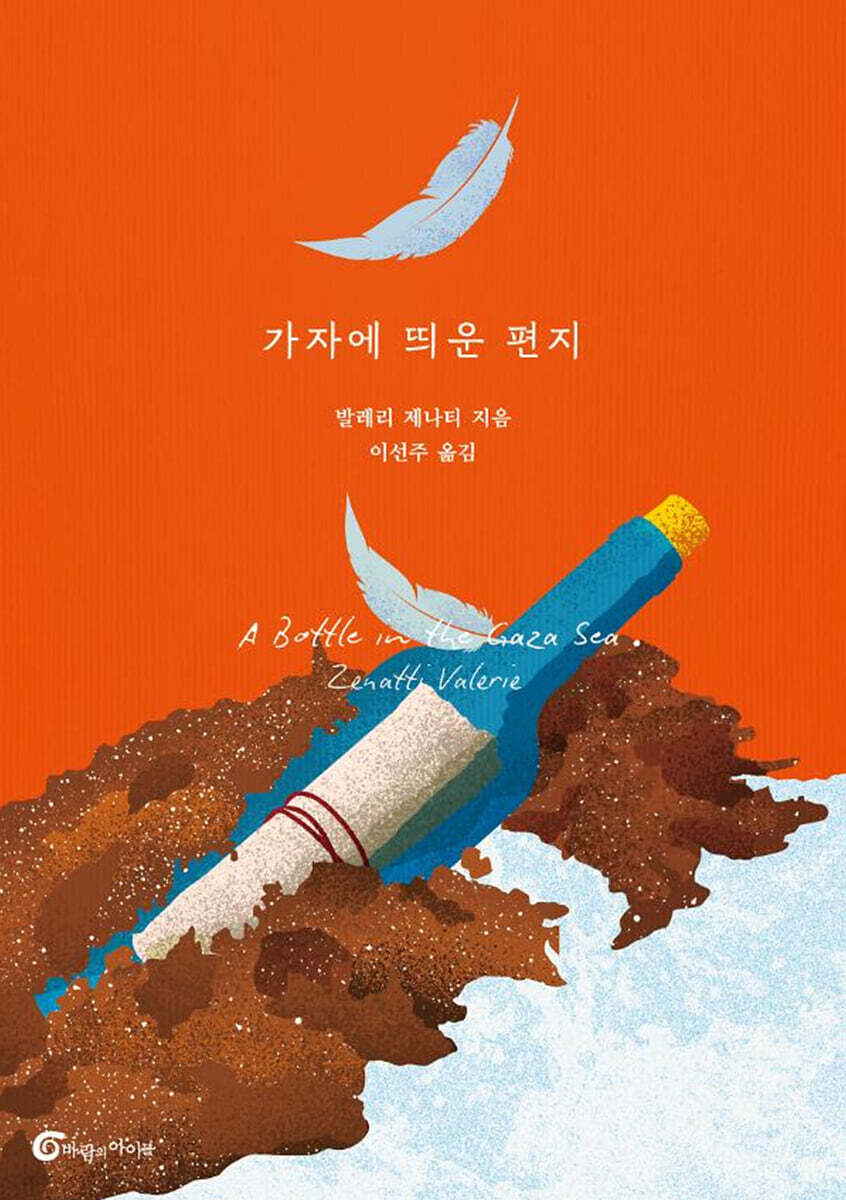
A letter to Gaza
 |
Description
Book Introduction
Let's go now. What is happening on Earth?
A letter in a bottle arrives in Gaza, the land of violence and hatred.
"Letters to Gaza" is a novel by French Jewish author Valerie Zenati that takes a close look at the Middle Eastern issues surrounding the Gaza Strip.
Gaza, seen from the other side of the globe, is a place of military tension and bloodshed, but of course it is not only populated by extremists who hate each other.
There are probably many more ordinary people who believe that we can accept each other and coexist peacefully.
The land of Palestine has always been a powder keg since the establishment of Israel in 1948.
There was a time when the Oslo Peace Accords were signed between Israel and the PLO (Palestinian Liberation Organization), raising expectations for coexistence and peace.
But even today, the peaceful daily life that everyone longed for has not come.
The story of "Letters to Gaza" revolves around letters exchanged between Tal, an Israeli, and Naim, a Palestinian, across the Gaza Strip barrier.
One day, Tal, a pacifist Israeli girl, asks her older brother, who is serving in the military, to send a letter in a bottle to the Gaza Strip.
“If by any chance you find this letter and read it to the end, and if you think, as I do, that there are a thousand reasons why we should know each other, and above all, that we are young and should build our lives in peace…then write back.” All Tal wants is one thing: to talk to each other.
Because grand goals like ending conflict and achieving peace will only become possible after dialogue.
But the twenty-year-old Palestinian youth who found the letter is not impressed by the Israeli girl's attempts at romantic conversation.
Naim sent an email saying, “Okay.
“I won’t tell you about my life. (…) I’m not a monkey that people watch to see how much I resemble a human,” he says, expressing his displeasure.
Because for Naim, who lives in the Gaza Strip, a place without “functioning traffic lights, local movie stars, a national soccer team, military service, and schools open all day for everyone,” where no dreams can be made to fulfill one’s potential, the very conversation is meaningless.
A letter in a bottle arrives in Gaza, the land of violence and hatred.
"Letters to Gaza" is a novel by French Jewish author Valerie Zenati that takes a close look at the Middle Eastern issues surrounding the Gaza Strip.
Gaza, seen from the other side of the globe, is a place of military tension and bloodshed, but of course it is not only populated by extremists who hate each other.
There are probably many more ordinary people who believe that we can accept each other and coexist peacefully.
The land of Palestine has always been a powder keg since the establishment of Israel in 1948.
There was a time when the Oslo Peace Accords were signed between Israel and the PLO (Palestinian Liberation Organization), raising expectations for coexistence and peace.
But even today, the peaceful daily life that everyone longed for has not come.
The story of "Letters to Gaza" revolves around letters exchanged between Tal, an Israeli, and Naim, a Palestinian, across the Gaza Strip barrier.
One day, Tal, a pacifist Israeli girl, asks her older brother, who is serving in the military, to send a letter in a bottle to the Gaza Strip.
“If by any chance you find this letter and read it to the end, and if you think, as I do, that there are a thousand reasons why we should know each other, and above all, that we are young and should build our lives in peace…then write back.” All Tal wants is one thing: to talk to each other.
Because grand goals like ending conflict and achieving peace will only become possible after dialogue.
But the twenty-year-old Palestinian youth who found the letter is not impressed by the Israeli girl's attempts at romantic conversation.
Naim sent an email saying, “Okay.
“I won’t tell you about my life. (…) I’m not a monkey that people watch to see how much I resemble a human,” he says, expressing his displeasure.
Because for Naim, who lives in the Gaza Strip, a place without “functioning traffic lights, local movie stars, a national soccer team, military service, and schools open all day for everyone,” where no dreams can be made to fulfill one’s potential, the very conversation is meaningless.
- You can preview some of the book's contents.
Preview
index
Jerusalem, September 9, 2003
Watching the flying pigeons 17
A Bottle of Hope, A Letter 24
Reply 34
Arguing with yourself 42
Three gunshots rang out in the Kings' Square 49
And then the train suddenly stopped 56
Fighting Boredom 64
Cyberfriend? 72
Episode 81
90 from Jerusalem to Hollywood via Gaza
Gajaman 96
Who knew someone's name could be a gift? 103
Naim 113
I can't tell you everything 119
shattered 128
There are no squirrels in Gaza 136
146 Spinning around in a big figure 8 and then coming down
Peace to the Mad 155
Ethan's Confession 162
Warm Jumper 170
Now I see everything 177
Translator's Note 193
To the readers of the 2024 revised edition 204
Watching the flying pigeons 17
A Bottle of Hope, A Letter 24
Reply 34
Arguing with yourself 42
Three gunshots rang out in the Kings' Square 49
And then the train suddenly stopped 56
Fighting Boredom 64
Cyberfriend? 72
Episode 81
90 from Jerusalem to Hollywood via Gaza
Gajaman 96
Who knew someone's name could be a gift? 103
Naim 113
I can't tell you everything 119
shattered 128
There are no squirrels in Gaza 136
146 Spinning around in a big figure 8 and then coming down
Peace to the Mad 155
Ethan's Confession 162
Warm Jumper 170
Now I see everything 177
Translator's Note 193
To the readers of the 2024 revised edition 204
Into the book
These are dark, gloomy, and fearful days.
Fear came again.
--- p.10
But if by any chance this letter has found you and you have read it to the end, and if you, like me, believe that there are a thousand reasons why we should know each other, and above all, because we are young, we should build our lives in peace… …then please write back.
--- p.29
You could have thrown away my bottle, or used it as a candlestick, as you said.
But since you replied to me, I'm going to put meaning into it right away.
Please give me and us a chance.
--- p.40
I was embarrassed.
The things they said shook me to my core.
Their words, that “if you listen carefully” to the stories of people who “exist as individuals,” “your wounds may heal,” each and every one of those words melted the ice cubes inside me.
The waves of sobs that had been surging inside me rose up to my throat and turned into waterfalls at the corners of my eyes.
I tried to hold back, but it was too hard.
I had become completely liquid inside me and could no longer control the waves.
Fear came again.
--- p.10
But if by any chance this letter has found you and you have read it to the end, and if you, like me, believe that there are a thousand reasons why we should know each other, and above all, because we are young, we should build our lives in peace… …then please write back.
--- p.29
You could have thrown away my bottle, or used it as a candlestick, as you said.
But since you replied to me, I'm going to put meaning into it right away.
Please give me and us a chance.
--- p.40
I was embarrassed.
The things they said shook me to my core.
Their words, that “if you listen carefully” to the stories of people who “exist as individuals,” “your wounds may heal,” each and every one of those words melted the ice cubes inside me.
The waves of sobs that had been surging inside me rose up to my throat and turned into waterfalls at the corners of my eyes.
I tried to hold back, but it was too hard.
I had become completely liquid inside me and could no longer control the waves.
--- p.147
Publisher's Review
A Thousand Reasons Why We Should Know Each Other
“Please give me and us a chance.”
The Gaza Strip is not just a place of indiscriminate terrorism and bombing, destroyed schools and hospitals, and wailing wounded people.
There are people there too who live their daily lives enjoying the present and dreaming of the future.
Aren't the attachment to life and the yearning for peace the same for Israelis and Palestinians? So, Tal, unwavering in his commitment, recounts the 1995 peace demonstrations in Israel and the faith and hopes those who participated in them displayed for Palestine.
“You sent me a reply, so I’m going to put meaning into it right away.
“Please give me and us a chance.” After many twists and turns, they begin exchanging letters, and Tal comes to understand the sadness and despair of Naim, a young Palestinian man living in the blockade area, while Naim worries about Tal’s safety after being caught up in the bombing.
“Please listen to my request.
Stay alive.
“Be safe.” Hatred and violence cannot exist between people who care for each other and support each other’s lives.
"A Letter to Gaza" proposes the only way to break the vicious cycle of violence.
Young people in Israel and Palestine are putting aside their old hatreds and engaging in genuine dialogue.
Through exchanging letters, Tal and Naim overcome their own wounds and anxieties, demonstrating the possibility of deeper solidarity.
At the end, they promise to meet again in Rome in three years, hinting at the possibility of romance, but what's more important is that Tal and Naim's conversation allowed them to solidify their respective lives.
What will happen next?
Valery Zenati was inspired to write this book by the bombings that took place on September 9, 2003, the tenth anniversary of the Oslo Accords.
This piece was written after hearing an explosion while talking on the phone with a friend living in Israel and realizing that war is never far away.
The author, who spent his youth in Israel, says, “If you listen to the stories of people who exist as individual beings, wounds can be healed.”
The author's note in this revised edition also warns that if young people on both sides do not understand each other, the worst-case scenario could arise.
“This book was written 20 years ago, but I still see the world through the aspirations of young Tal and Naim.
With a deep desire that each person can exist as a free individual, and with respect for their expressions, their history, and their dreams.
The characters you meet in this book have only one possible solution.
It's a conversation.
Even if it seems impossible.
“With humanitarianism for all.”
A good book is timeless, but there are some books that you just have to read.
Even though it seems like there is no way out, there are still Palestinians who believe that terrorism against Israeli civilians is wrong and Israelis who believe that Palestinians have the right to their own state.
Ordinary people who want to love rather than hate, and who want peace rather than war.
To truly understand their yearning for peace, we need to listen to their voices.
This is why we must read 『Letter to Gaza』 now.
“Please give me and us a chance.”
The Gaza Strip is not just a place of indiscriminate terrorism and bombing, destroyed schools and hospitals, and wailing wounded people.
There are people there too who live their daily lives enjoying the present and dreaming of the future.
Aren't the attachment to life and the yearning for peace the same for Israelis and Palestinians? So, Tal, unwavering in his commitment, recounts the 1995 peace demonstrations in Israel and the faith and hopes those who participated in them displayed for Palestine.
“You sent me a reply, so I’m going to put meaning into it right away.
“Please give me and us a chance.” After many twists and turns, they begin exchanging letters, and Tal comes to understand the sadness and despair of Naim, a young Palestinian man living in the blockade area, while Naim worries about Tal’s safety after being caught up in the bombing.
“Please listen to my request.
Stay alive.
“Be safe.” Hatred and violence cannot exist between people who care for each other and support each other’s lives.
"A Letter to Gaza" proposes the only way to break the vicious cycle of violence.
Young people in Israel and Palestine are putting aside their old hatreds and engaging in genuine dialogue.
Through exchanging letters, Tal and Naim overcome their own wounds and anxieties, demonstrating the possibility of deeper solidarity.
At the end, they promise to meet again in Rome in three years, hinting at the possibility of romance, but what's more important is that Tal and Naim's conversation allowed them to solidify their respective lives.
What will happen next?
Valery Zenati was inspired to write this book by the bombings that took place on September 9, 2003, the tenth anniversary of the Oslo Accords.
This piece was written after hearing an explosion while talking on the phone with a friend living in Israel and realizing that war is never far away.
The author, who spent his youth in Israel, says, “If you listen to the stories of people who exist as individual beings, wounds can be healed.”
The author's note in this revised edition also warns that if young people on both sides do not understand each other, the worst-case scenario could arise.
“This book was written 20 years ago, but I still see the world through the aspirations of young Tal and Naim.
With a deep desire that each person can exist as a free individual, and with respect for their expressions, their history, and their dreams.
The characters you meet in this book have only one possible solution.
It's a conversation.
Even if it seems impossible.
“With humanitarianism for all.”
A good book is timeless, but there are some books that you just have to read.
Even though it seems like there is no way out, there are still Palestinians who believe that terrorism against Israeli civilians is wrong and Israelis who believe that Palestinians have the right to their own state.
Ordinary people who want to love rather than hate, and who want peace rather than war.
To truly understand their yearning for peace, we need to listen to their voices.
This is why we must read 『Letter to Gaza』 now.
GOODS SPECIFICS
- Date of issue: July 10, 2024
- Page count, weight, size: 208 pages | 366g | 148*210*14mm
- ISBN13: 9791162102268
- ISBN10: 1162102268
You may also like
카테고리
korean


korean

![GQ KOREA Mark (Monthly): December [2025]](http://librairie.coreenne.fr/cdn/shop/files/8ef265dbbfbf186523ed75ba7319009d.jpg?v=1765340328&width=3840)


