

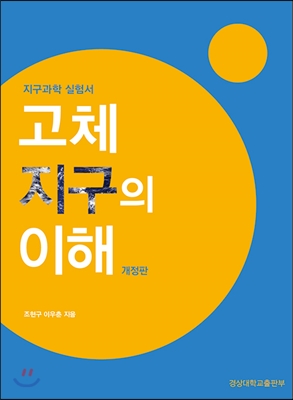
Understanding the Solid Earth
 |
Description
Book Introduction
This book is an experimental book on the solid Earth.
It consists of three parts and describes 15 experiments that can actually be used in Earth science experiments.
Learning objectives are presented at the beginning of each experiment so that learners can approach the experiment with specific goals.
Additionally, the preparation materials, process, precautions, and discussion points are presented in detail to enable systematic experiments.
Additionally, high-quality photos, maps, and diagrams are included to help you understand the experiment.
It consists of three parts and describes 15 experiments that can actually be used in Earth science experiments.
Learning objectives are presented at the beginning of each experiment so that learners can approach the experiment with specific goals.
Additionally, the preparation materials, process, precautions, and discussion points are presented in detail to enable systematic experiments.
Additionally, high-quality photos, maps, and diagrams are included to help you understand the experiment.
index
Author's Note
Part 1: Understanding the Earth's Surface and the Earth
Experiment 1.
Determining the epicenter using earthquake records
Experiment 2.
Distribution of earthquakes and volcanoes and plate tectonic movement
Experiment 3.
Plate tectonics and evidence of plate movement
Part 2: Understanding Earth's Materials
Experiment 4.
Visual observation and chemical classification of minerals
Experiment 5.
Symmetry and crystal systems of mineral crystals
Experiment 6.
Basic structure of silicate minerals
Experiment 7.
Formation and classification of igneous rocks
Experiment 8.
Types of weathering
Experiment 9.
Formation and classification of sedimentary rocks
Experiment 10.
Types and classification of metamorphic rocks
Experiment 11.
Soil formation and properties
Experiment 12.
underground water
Part 3: Understanding Geologic Time
Experiment 13.
Stratigraphic classification using fossils
Experiment 14.
Geologic time - (1) relative time
Experiment 15.
Geologic Time - (2) Absolute Time
Part 1: Understanding the Earth's Surface and the Earth
Experiment 1.
Determining the epicenter using earthquake records
Experiment 2.
Distribution of earthquakes and volcanoes and plate tectonic movement
Experiment 3.
Plate tectonics and evidence of plate movement
Part 2: Understanding Earth's Materials
Experiment 4.
Visual observation and chemical classification of minerals
Experiment 5.
Symmetry and crystal systems of mineral crystals
Experiment 6.
Basic structure of silicate minerals
Experiment 7.
Formation and classification of igneous rocks
Experiment 8.
Types of weathering
Experiment 9.
Formation and classification of sedimentary rocks
Experiment 10.
Types and classification of metamorphic rocks
Experiment 11.
Soil formation and properties
Experiment 12.
underground water
Part 3: Understanding Geologic Time
Experiment 13.
Stratigraphic classification using fossils
Experiment 14.
Geologic time - (1) relative time
Experiment 15.
Geologic Time - (2) Absolute Time
Publisher's Review
This book is an experimental book on the solid Earth.
It consists of three parts and describes 15 experiments that can actually be used in Earth science experiments.
Learning objectives are presented at the beginning of each experiment so that learners can approach the experiment with specific goals.
Additionally, the preparation materials, process, precautions, and discussion points are presented in detail to enable systematic experiments.
Additionally, high-quality photos, maps, and diagrams are included to help you understand the experiment.
In Part 1, we look at experiments using earthquakes.
This helps us understand changes in the Earth's surface, such as earthquakes and volcanoes, and gain a deeper understanding of the Earth's interior.
Part 2 covers experiments on minerals, rocks, and soil, the basic units of the solid Earth.
In particular, a model making page has been provided so that you can make your own crystal models of minerals, such as cubes, octahedrons, tetrahedrons, and pentagonal dodecahedrons.
Part 3 consists of experiments describing the history of the Earth through fossils and strata.
At this time, the Earth's geologic time is analyzed into two types: relative time and absolute time.
It consists of three parts and describes 15 experiments that can actually be used in Earth science experiments.
Learning objectives are presented at the beginning of each experiment so that learners can approach the experiment with specific goals.
Additionally, the preparation materials, process, precautions, and discussion points are presented in detail to enable systematic experiments.
Additionally, high-quality photos, maps, and diagrams are included to help you understand the experiment.
In Part 1, we look at experiments using earthquakes.
This helps us understand changes in the Earth's surface, such as earthquakes and volcanoes, and gain a deeper understanding of the Earth's interior.
Part 2 covers experiments on minerals, rocks, and soil, the basic units of the solid Earth.
In particular, a model making page has been provided so that you can make your own crystal models of minerals, such as cubes, octahedrons, tetrahedrons, and pentagonal dodecahedrons.
Part 3 consists of experiments describing the history of the Earth through fossils and strata.
At this time, the Earth's geologic time is analyzed into two types: relative time and absolute time.
GOODS SPECIFICS
- Date of issue: February 5, 2016
- Page count, weight, size: 166 pages | 188*257mm
- ISBN13: 9788962571103
- ISBN10: 8962571102
You may also like
카테고리
korean


korean

![GQ KOREA Mark (Monthly): December [2025]](http://librairie.coreenne.fr/cdn/shop/files/8ef265dbbfbf186523ed75ba7319009d.jpg?v=1765340328&width=3840)


