

Our neighborhood leader Nagiho goes here and there!
 |
Description
Book Introduction
Map Experience Picture Book for Elementary School Students
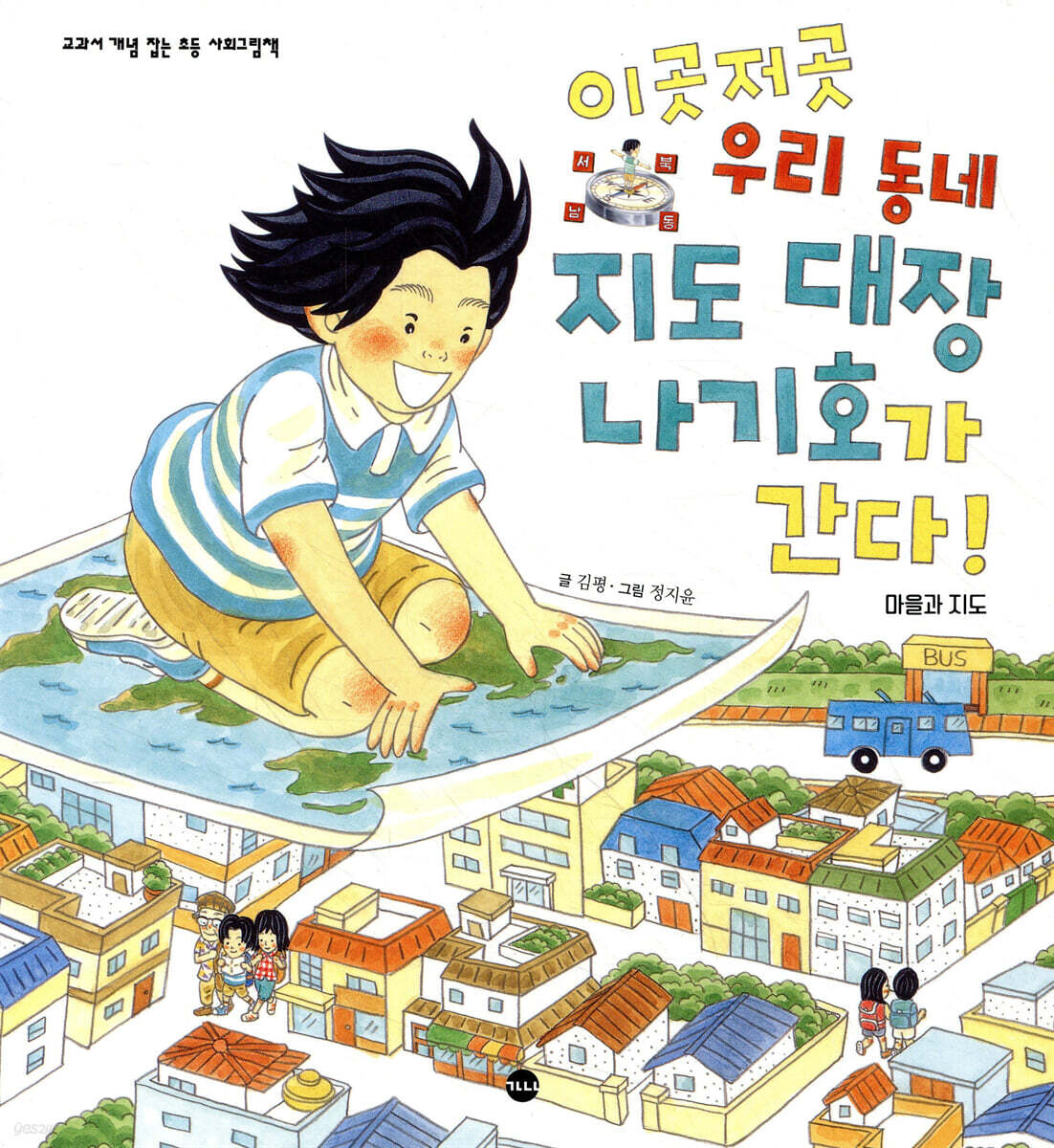
Kiho is shy about talking to people.
It's like my mouth gets locked when I stand in front of people.
On the way home after school, a strange old man handed Kiho a map and asked for directions.
Kiho couldn't talk to his grandfather.
Although I guided my grandfather with my older sister's help, I was worried that my grandfather would get lost again after moving to an unfamiliar town.
So I decided to draw a map of the village myself to give to my grandfather.
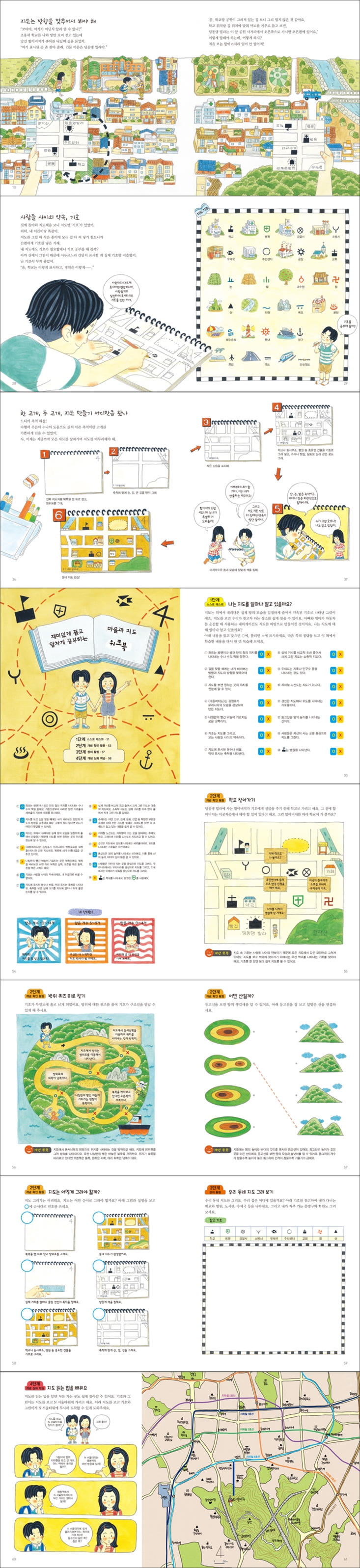
Symbols, compass, scale, contour lines… … .
The symbol is drawn on the map with great care.
Would you like to draw a village map with symbols? Children who read this book can experience viewing and drawing maps with symbols.
Kiho is shy about talking to people.
It's like my mouth gets locked when I stand in front of people.
On the way home after school, a strange old man handed Kiho a map and asked for directions.
Kiho couldn't talk to his grandfather.
Although I guided my grandfather with my older sister's help, I was worried that my grandfather would get lost again after moving to an unfamiliar town.
So I decided to draw a map of the village myself to give to my grandfather.
Symbols, compass, scale, contour lines… … .
The symbol is drawn on the map with great care.
Would you like to draw a village map with symbols? Children who read this book can experience viewing and drawing maps with symbols.
- You can preview some of the book's contents.
Preview
index
Nagiho, the semi-silent water gunner
I know the coordinates too!
You have to look at the map with the right direction in mind.
Let's find our way with a map
Let's draw a neighborhood map with our hearts!
How should a map be drawn?
How did our ancestors draw maps?
Directions that indicate east, west, south, and north
The map is a view of the land from above.
Promises and symbols between people
Let's measure the distance
How to draw a large land on a small piece of paper?
Our country's maps are small-scale maps, and our symbolic maps are often large-scale maps!
One Pass, Two Passes, How Far Have We Come in Mapmaking?
A topic that only shows special things
Cooking report, cooking report, various topics
Need a line on the map?
Contour lines indicating the height of the land
Latitude and longitude established on Earth
We are the center of the world
Anywhere in the world is no problem as long as you have a map!
A fun and informative village and map workbook
Workbook Answers
I know the coordinates too!
You have to look at the map with the right direction in mind.
Let's find our way with a map
Let's draw a neighborhood map with our hearts!
How should a map be drawn?
How did our ancestors draw maps?
Directions that indicate east, west, south, and north
The map is a view of the land from above.
Promises and symbols between people
Let's measure the distance
How to draw a large land on a small piece of paper?
Our country's maps are small-scale maps, and our symbolic maps are often large-scale maps!
One Pass, Two Passes, How Far Have We Come in Mapmaking?
A topic that only shows special things
Cooking report, cooking report, various topics
Need a line on the map?
Contour lines indicating the height of the land
Latitude and longitude established on Earth
We are the center of the world
Anywhere in the world is no problem as long as you have a map!
A fun and informative village and map workbook
Workbook Answers
Detailed image
Publisher's Review
[Elementary Social Studies Picture Books to Understand Textbook Concepts] series
This is a series of social picture books that allow students to vividly experience and understand the core concepts of textbooks.
Is society difficult?
The most fundamental reason children have difficulty in society is that they lack experience and thus cannot understand the content of the curriculum.
Social studies is common sense that is readily apparent to experienced adults, but for children, it is a painful subject that requires them to memorize things without thinking.
Even first graders can easily understand it if they experience it firsthand.
This series is designed to allow readers to vividly experience and understand social studies content by traveling with the protagonist, an elementary school student of the same age, through home, school, village, and various places around the country.
Because it realistically tells the story of various things that elementary school students may experience around them, the reader feels as if they have experienced it themselves.
Additionally, students gain a sense of the various social aspects of the story through their own experiences, which allows them to naturally understand the curriculum content.
Social Studies Textbook Concepts in Pictures
This series depicts various aspects of society and the stories of people, from the small society around me, my family, to the largest society, our country, and the world, through illustrations that are familiar to children.
Children observe pictures more intently than text, and do not miss even the smallest details.
We've included information in the pictures to suit the characteristics of these children, and we've also added some fun to them.
Just as studies show that humans understand visual information more intuitively than written information, children can simultaneously understand various learning information by looking at scenes and pictures of scenes.
Therefore, this series covers everything from the integrated textbooks for grades 1 and 2 to the social studies textbooks for grades 3, 4, 5, and 6, naturally explaining the core concepts of the textbooks through stories and pictures, so that children can easily understand them.
Strengthen your subject concepts with step-by-step workbooks!
Children enjoy activities such as writing, drawing, and creating.
These activities remain in children's memories for a long time and have a positive learning effect on children.
So, to help children enjoy studying society, we've put together a step-by-step workbook with a variety of fun activities for them to solve, draw, and play with.
Step 1: Diagnose your common sense and attitudes with a self-test; Step 2: Confirm the concepts of the curriculum with various post-reading activities such as finding mazes, climbing ladders, and crossword quizzes; Step 3: Enhance creativity with various crafts and activity sheets such as making our family law and book art; Step 4: Includes step-by-step workbooks for studying in-depth information from upper-grade textbooks.
This is a series of social picture books that allow students to vividly experience and understand the core concepts of textbooks.
Is society difficult?
The most fundamental reason children have difficulty in society is that they lack experience and thus cannot understand the content of the curriculum.
Social studies is common sense that is readily apparent to experienced adults, but for children, it is a painful subject that requires them to memorize things without thinking.
Even first graders can easily understand it if they experience it firsthand.
This series is designed to allow readers to vividly experience and understand social studies content by traveling with the protagonist, an elementary school student of the same age, through home, school, village, and various places around the country.
Because it realistically tells the story of various things that elementary school students may experience around them, the reader feels as if they have experienced it themselves.
Additionally, students gain a sense of the various social aspects of the story through their own experiences, which allows them to naturally understand the curriculum content.
Social Studies Textbook Concepts in Pictures
This series depicts various aspects of society and the stories of people, from the small society around me, my family, to the largest society, our country, and the world, through illustrations that are familiar to children.
Children observe pictures more intently than text, and do not miss even the smallest details.
We've included information in the pictures to suit the characteristics of these children, and we've also added some fun to them.
Just as studies show that humans understand visual information more intuitively than written information, children can simultaneously understand various learning information by looking at scenes and pictures of scenes.
Therefore, this series covers everything from the integrated textbooks for grades 1 and 2 to the social studies textbooks for grades 3, 4, 5, and 6, naturally explaining the core concepts of the textbooks through stories and pictures, so that children can easily understand them.
Strengthen your subject concepts with step-by-step workbooks!
Children enjoy activities such as writing, drawing, and creating.
These activities remain in children's memories for a long time and have a positive learning effect on children.
So, to help children enjoy studying society, we've put together a step-by-step workbook with a variety of fun activities for them to solve, draw, and play with.
Step 1: Diagnose your common sense and attitudes with a self-test; Step 2: Confirm the concepts of the curriculum with various post-reading activities such as finding mazes, climbing ladders, and crossword quizzes; Step 3: Enhance creativity with various crafts and activity sheets such as making our family law and book art; Step 4: Includes step-by-step workbooks for studying in-depth information from upper-grade textbooks.
GOODS SPECIFICS
- Date of issue: October 10, 2016
- Page count, weight, size: 64 pages | 368g | 220*240*15mm
- ISBN13: 9788957368503
- ISBN10: 8957368507
- KC Certification: Certification Type: Conformity Confirmation
You may also like
카테고리
korean


korean

![GQ KOREA Mark (Monthly): December [2025]](http://librairie.coreenne.fr/cdn/shop/files/8ef265dbbfbf186523ed75ba7319009d.jpg?v=1765340328&width=3840)


