

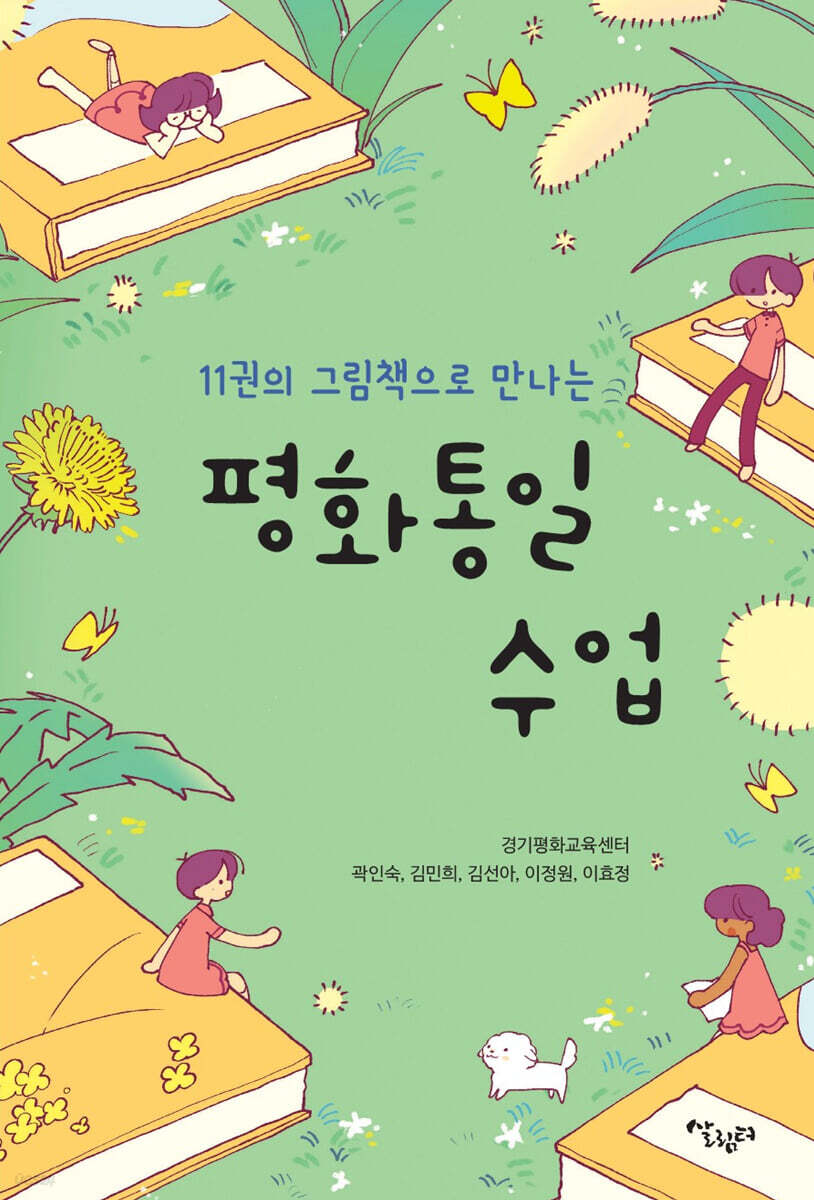
A Peaceful Unification Class Through 11 Picture Books
 |
Description
Book Introduction
Peace and unification classes with picture books,
I hope that the doors of the heart and the iron gates of division will open.
Since some time ago, 'picture books' have transcended genres and have become a medium of everyday enjoyment and communication for people of all ages.
“A book that tells a story through the combination of pictures and text” has the power to “move a person’s heart and move their mind, even though it cannot change the world immediately” (Picture book author Lee Eok-bae, “Recommendation”).
Couldn't the power of picture books, gathered together, spread through empathy and understanding, become the cornerstone for overcoming the barriers of division and realizing the small aspiration for unification?
The Gyeonggi Peace Education Center's picture book team members have been fiercely debating this issue, down to the smallest details, to find a desirable direction.
The resulting book contains the intention to share experiences with those contemplating peace education and unification education and to move forward together toward a better education.
This book contains stories from field classes centered around 11 carefully selected books.
Many existing activity books only describe the teacher's perspective, but this book is very vivid as it tells the story of children and adolescents' class activities step by step, based on text and pictures.
Each and every process in which the teachers' consideration and love for their students unfold into a hope for peace is deeply moving.
I hope that the doors of the heart and the iron gates of division will open.
Since some time ago, 'picture books' have transcended genres and have become a medium of everyday enjoyment and communication for people of all ages.
“A book that tells a story through the combination of pictures and text” has the power to “move a person’s heart and move their mind, even though it cannot change the world immediately” (Picture book author Lee Eok-bae, “Recommendation”).
Couldn't the power of picture books, gathered together, spread through empathy and understanding, become the cornerstone for overcoming the barriers of division and realizing the small aspiration for unification?
The Gyeonggi Peace Education Center's picture book team members have been fiercely debating this issue, down to the smallest details, to find a desirable direction.
The resulting book contains the intention to share experiences with those contemplating peace education and unification education and to move forward together toward a better education.
This book contains stories from field classes centered around 11 carefully selected books.
Many existing activity books only describe the teacher's perspective, but this book is very vivid as it tells the story of children and adolescents' class activities step by step, based on text and pictures.
Each and every process in which the teachers' consideration and love for their students unfold into a hope for peace is deeply moving.
- You can preview some of the book's contents.
Preview
index
Opening Remarks | Yang Hoon-do (Director, Gyeonggi Peace Education Center)
Kim Min-hee (Education Committee Member, Gyeonggi Peace Education Center)
1 "When Spring Comes to the DMZ" - Feeling the Division and Imagining Peace _ Lee Hyo-jeong
2 "Train" - A train journey that draws peace across the division line _ Kim Sun-ah
3 "To Mom" - A Boy's Longing for His Mother in the North _ Kim Sun-ah
4 "Six People" - Why Do Wars Happen? _Kwak In-sook
5 "Hide and Seek" - Everyday Peace, the Anti-Peace of War _Kim Min-hee
6 "My grandfather was a fifteen-year-old boy soldier" - Comforting the pain of the unending war _ Kwak In-sook
7 "Onyangi" - A 1950s Family Story in Picture Book form _ Kim Min-hee
8 "Grandfather's Persimmon Tree" - How to Heal Each Other's Wounds _Lee Jeong-won
9 "Seeing the Sun in Pyongyang" - People Live in Both the South and the North of the Korean Peninsula _ Kim Min-hee
10 "Jemusi"--Resistant Peace _ Lee Hyo-jeong
11 "Enemy" - The Power to Find the Truth _Lee Jeong-won
Recommendation | In Kyeong-hwa (Deokjang Elementary School teacher)
Lee Eok-bae (picture book author)
Hwang Su-gyeong (Director of the Peace Library, Peace Embracing House)
Park Mi-ja (Research Professor, Sungkonghoe University)
Kim Min-hee (Education Committee Member, Gyeonggi Peace Education Center)
1 "When Spring Comes to the DMZ" - Feeling the Division and Imagining Peace _ Lee Hyo-jeong
2 "Train" - A train journey that draws peace across the division line _ Kim Sun-ah
3 "To Mom" - A Boy's Longing for His Mother in the North _ Kim Sun-ah
4 "Six People" - Why Do Wars Happen? _Kwak In-sook
5 "Hide and Seek" - Everyday Peace, the Anti-Peace of War _Kim Min-hee
6 "My grandfather was a fifteen-year-old boy soldier" - Comforting the pain of the unending war _ Kwak In-sook
7 "Onyangi" - A 1950s Family Story in Picture Book form _ Kim Min-hee
8 "Grandfather's Persimmon Tree" - How to Heal Each Other's Wounds _Lee Jeong-won
9 "Seeing the Sun in Pyongyang" - People Live in Both the South and the North of the Korean Peninsula _ Kim Min-hee
10 "Jemusi"--Resistant Peace _ Lee Hyo-jeong
11 "Enemy" - The Power to Find the Truth _Lee Jeong-won
Recommendation | In Kyeong-hwa (Deokjang Elementary School teacher)
Lee Eok-bae (picture book author)
Hwang Su-gyeong (Director of the Peace Library, Peace Embracing House)
Park Mi-ja (Research Professor, Sungkonghoe University)
Into the book
Over the years, unification education has represented the social atmosphere of the time under various names such as security education, anti-communist education, and peaceful unification education.
In terms of method, most classes were lecture-style or spoon-fed, rather than interactive classes between teachers and students.
However, if peace unification education is aimed at peaceful inter-Korean relations, its methods must also be changed to peaceful ones.
We need peace and unification education that discusses diverse topics, including what a peaceful relationship between the South and the North is and why the division persists.
One alternative is “Peace Unification Education Using Picture Books.”
--- From the "Opening Remarks"
Peaceful unification education must begin with a sense of division.
We desperately need time and space to recognize that the world we live in is abnormally divided and to consider the impact it has on us and our lives.
If you experience the division situation in a place where you can see it with your own eyes, you can feel the reality of it.
The best place would be a border area like the Military Demarcation Line.
When it's difficult to find a place to experience the division, how can we teach in the classroom? How about using picture books to recognize the reality of the impassable border between the South and the North and imagine the peace that can be created there?
--- From "When Spring Comes to the Demilitarized Zone"
The picture book "Hide and Seek" is a story about two friends who were living a peaceful life but are separated by war.
Looking at the war that 'Sunduk' experienced in the picture book, we are reminded that the 'division' of the Korean Peninsula is a state in which the war has not ended.
Being alert to the threat of war, which could disrupt the peace of our daily lives at any time, and pondering how to create peace are closely related to our safety.
I hope this will be an opportunity to appreciate the peace in everyday life.
--- From "Hide and Seek"
Asking young learners, who want to show only the good, to think about the hardest thing they would do if there was a war might seem a bit violent.
However, I believe that only by properly understanding the present situation in a divided nation can we move toward a hopeful future, and this is a necessary process.
This is because we do not fully understand the true nature of the ‘war’ that still remains with us under the name of division.
Because after understanding the essence of war, even if only a little, through picture books, they will come to oppose war and love peace.
--- From "Onyangi"
You see words like "mate," "cooperation," and "brother," but you also see the word "severance."
Although we teach peace and unification through picture books, it seems that the path to peaceful relations with North Korea or unification still seems far away in the minds of learners.
However, sharing these honest reactions and discussing the possibility of South and North Korea living in peace is one of the strengths of this class.
--- From "Seeing the Sun in Pyongyang"
What students found most surprising was that, in addition to the things described above, they could play games on their smartphones.
When I found out that North Korea also has a game called "Pyongyang Racing," which is similar to our "Kartwright," I was excited to meet my friends in the North and play with them.
--- Among the "enemies"
A single picture book may not change the world immediately, but it has the power to touch and move a person's heart.
If one heart that is moved in this way meets another heart that makes eyes sparkle and hearts beat, and if a greater solidarity of hearts is formed, we will be able to change the world little by little.
Only when the door of the heart is opened can the iron gate of division be opened.
In terms of method, most classes were lecture-style or spoon-fed, rather than interactive classes between teachers and students.
However, if peace unification education is aimed at peaceful inter-Korean relations, its methods must also be changed to peaceful ones.
We need peace and unification education that discusses diverse topics, including what a peaceful relationship between the South and the North is and why the division persists.
One alternative is “Peace Unification Education Using Picture Books.”
--- From the "Opening Remarks"
Peaceful unification education must begin with a sense of division.
We desperately need time and space to recognize that the world we live in is abnormally divided and to consider the impact it has on us and our lives.
If you experience the division situation in a place where you can see it with your own eyes, you can feel the reality of it.
The best place would be a border area like the Military Demarcation Line.
When it's difficult to find a place to experience the division, how can we teach in the classroom? How about using picture books to recognize the reality of the impassable border between the South and the North and imagine the peace that can be created there?
--- From "When Spring Comes to the Demilitarized Zone"
The picture book "Hide and Seek" is a story about two friends who were living a peaceful life but are separated by war.
Looking at the war that 'Sunduk' experienced in the picture book, we are reminded that the 'division' of the Korean Peninsula is a state in which the war has not ended.
Being alert to the threat of war, which could disrupt the peace of our daily lives at any time, and pondering how to create peace are closely related to our safety.
I hope this will be an opportunity to appreciate the peace in everyday life.
--- From "Hide and Seek"
Asking young learners, who want to show only the good, to think about the hardest thing they would do if there was a war might seem a bit violent.
However, I believe that only by properly understanding the present situation in a divided nation can we move toward a hopeful future, and this is a necessary process.
This is because we do not fully understand the true nature of the ‘war’ that still remains with us under the name of division.
Because after understanding the essence of war, even if only a little, through picture books, they will come to oppose war and love peace.
--- From "Onyangi"
You see words like "mate," "cooperation," and "brother," but you also see the word "severance."
Although we teach peace and unification through picture books, it seems that the path to peaceful relations with North Korea or unification still seems far away in the minds of learners.
However, sharing these honest reactions and discussing the possibility of South and North Korea living in peace is one of the strengths of this class.
--- From "Seeing the Sun in Pyongyang"
What students found most surprising was that, in addition to the things described above, they could play games on their smartphones.
When I found out that North Korea also has a game called "Pyongyang Racing," which is similar to our "Kartwright," I was excited to meet my friends in the North and play with them.
--- Among the "enemies"
A single picture book may not change the world immediately, but it has the power to touch and move a person's heart.
If one heart that is moved in this way meets another heart that makes eyes sparkle and hearts beat, and if a greater solidarity of hearts is formed, we will be able to change the world little by little.
Only when the door of the heart is opened can the iron gate of division be opened.
--- From the "Recommendation"
Publisher's Review
The power of storytelling, the charm of illustrations, fun and emotion all together!
A Guide to Rich Classes Desiring Peace and Unification
This book introduces lessons using picture books selected based on the concepts of division, war, unification, and peace, as well as grade level and age, divided into two sessions per chapter.
The entire process, from pre-reading activities to the meaning of the text and pictures, the content of the introduction, and the results of the activities, is included, giving the feeling of continuous participation in an on-site class.
In addition to the 11 picture books, various related picture books are introduced at each chapter, and related video materials are introduced through QR codes along with background knowledge that enriches the lessons, so it can be called a 'comprehensive guide to peace unification classes.'
A special strength of this book is that it provides many excellent examples of what is necessary for unification education and how to approach and develop topics and materials close to everyday life, through stories and dialogues that capture the vivid reactions of children participating in classes.
For teachers in the field, peace and unification education can be more difficult and burdensome than other topics.
However, the picture books, related background knowledge, video materials, and teaching methods introduced in this book will enable more dense, rich, and diverse unification-related classes in the future.
This book, aimed at a wide range of audiences, from elementary school students to middle and high school students and adults, poses a profound question about what war and peace are, saying, "When everyone can become a protagonist, sense the unfinished war and division, and freely express their concerns about the uneasy peace, we can move toward a better society."
Considering the difficulties of peace and unification education, teachers' intense passion and concern about what to say and what to discuss with children are evident everywhere.
A Guide to Rich Classes Desiring Peace and Unification
This book introduces lessons using picture books selected based on the concepts of division, war, unification, and peace, as well as grade level and age, divided into two sessions per chapter.
The entire process, from pre-reading activities to the meaning of the text and pictures, the content of the introduction, and the results of the activities, is included, giving the feeling of continuous participation in an on-site class.
In addition to the 11 picture books, various related picture books are introduced at each chapter, and related video materials are introduced through QR codes along with background knowledge that enriches the lessons, so it can be called a 'comprehensive guide to peace unification classes.'
A special strength of this book is that it provides many excellent examples of what is necessary for unification education and how to approach and develop topics and materials close to everyday life, through stories and dialogues that capture the vivid reactions of children participating in classes.
For teachers in the field, peace and unification education can be more difficult and burdensome than other topics.
However, the picture books, related background knowledge, video materials, and teaching methods introduced in this book will enable more dense, rich, and diverse unification-related classes in the future.
This book, aimed at a wide range of audiences, from elementary school students to middle and high school students and adults, poses a profound question about what war and peace are, saying, "When everyone can become a protagonist, sense the unfinished war and division, and freely express their concerns about the uneasy peace, we can move toward a better society."
Considering the difficulties of peace and unification education, teachers' intense passion and concern about what to say and what to discuss with children are evident everywhere.
GOODS SPECIFICS
- Date of issue: August 8, 2024
- Page count, weight, size: 304 pages | 153*224*30mm
- ISBN13: 9791159302862
- ISBN10: 1159302863
You may also like
카테고리
korean


korean

![GQ KOREA Mark (Monthly): December [2025]](http://librairie.coreenne.fr/cdn/shop/files/8ef265dbbfbf186523ed75ba7319009d.jpg?v=1765340328&width=3840)


