

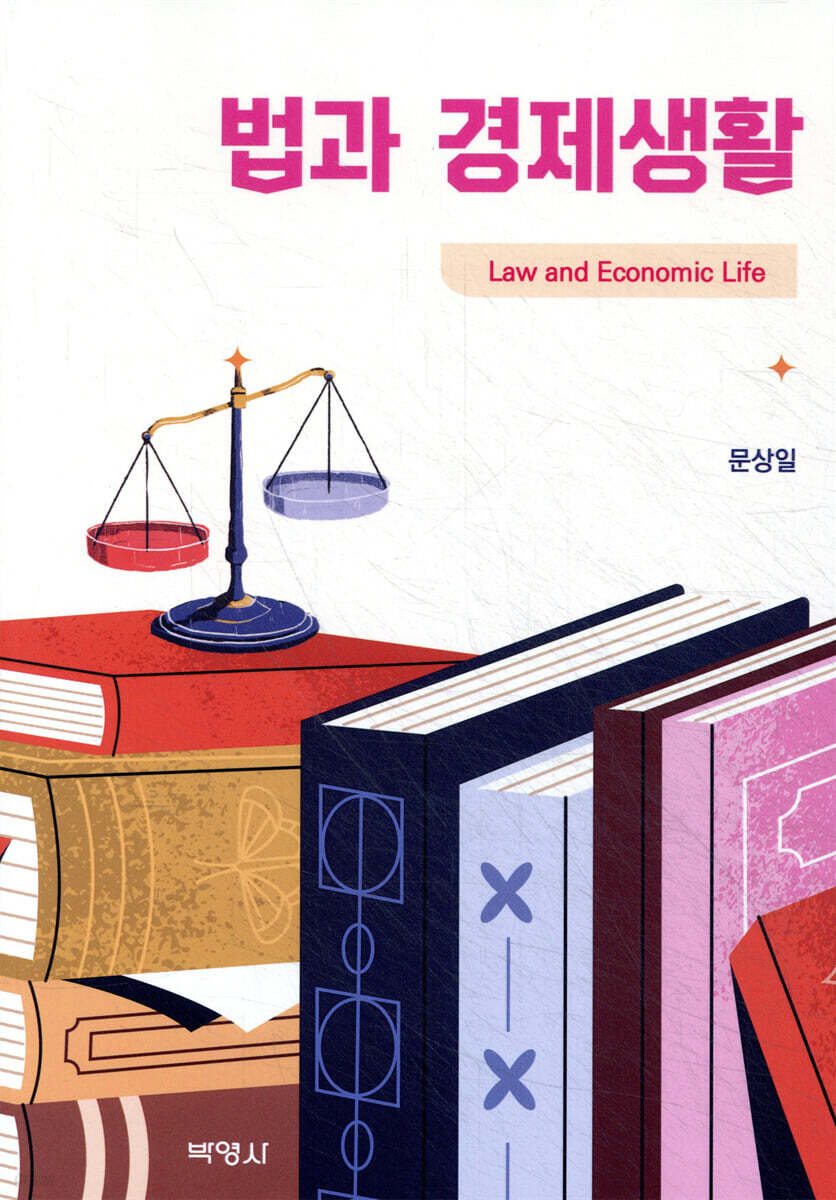
Law and Economic Life
 |
Description
index
Chapter 1 The Concept of Law
Section 1 Functions of Law 2
Ⅰ.
Society and Norms 2
Ⅱ.
Function of Law 3
Section 2 Legal System 4
Ⅰ.
Written Law 4
Ⅱ.
Unwritten Law 5
Section 3 Basic Legal Theory 7
Ⅰ.
Purpose of the Law 7
Ⅱ.
Effect of Law 8
1.
Temporal Effect 8
2.
Spatial Effect 9
3.
Human effectiveness 10
Ⅲ.
Classification of Laws 11
1.
Distinction between public and private law 11
2.
Substantive and Procedural Law 11
3.
Domestic and International Law 12
4.
Mandatory and Optional Laws 12
Ⅳ.
Application and Interpretation of the Law 13
1.
Application of the Law 13
2.
Interpretation of the Law 14
V.
The Ideal and Reality of Law 16
1.
The Ideals of Law: Justice, Purposiveness, and Legal Certainty 16
2.
The Reality of Law: Political, Economic, and Social Impacts 17
Chapter 2 Civil Legal Relations
Section 1: Basic Theory of Civil Law 20
Ⅰ.
Legal Relationships and Rights 20
Ⅱ.
Legal Act 22
Ⅲ.
Invalidity and Cancellation of Legal Acts 23
1.
Reason for invalidation 25
2.
Reason for cancellation 27
Ⅳ.
Guardianship System 33
1.
Minor Guardianship System 34
2.
Adult Guardianship System 34
V.
Right of rescission and right of termination 36
1.
Termination of Contract 36
2.
Termination of Contract 38
Ⅵ.
Agency in Legal Acts 38
1.
The Meaning of Agency 38
2.
Types and Scope of Power of Attorney 39
3.
Limitation of Power of Attorney 40
4.
Agency Act 41
5.
Representation without authority 42
Ⅶ.
Illegal Act 46
1.
The Meaning of Illegal Acts 46
2.
Establishment Requirement 47
3.
Type 48 of Tort
4.
Types of Damages and Compensation for Torts 52
5.
Burden of Proof in Torts 53
6.
Negligence and Strict Liability 55
Section 2 Marriage and Divorce 56
Ⅰ.
Kinship System 56
1.
The Concept of Kinship 57
2.
57th degree of kinship
3.
Obligations between relatives 58
Ⅱ.
Marriage System 58
1.
Establishment of Marriage 58
2.
The Effects of Marriage 61
3.
Bigamy 64
4.
Common-law marriage 65
Ⅲ.
Divorce System 67
1.
Overview of the Divorce System 67
2.
Divorce by Agreement 72
3.
Divorce in court 75
4.
The Effects of Divorce 82
5.
Parental Rights and Custody of Children in Divorce 83
Section 3 Inheritance 91
Ⅰ.
Inheritance System Overview 91
1.
Commencement of Inheritance 92
2.
Inheritance and Legacy 92
Ⅱ.
Heir 93
Ⅲ.
94th in line of succession
Ⅳ.
Inheritance by Substitution 96
V.
Inheritance share 98
1.
Designated inheritance share 98
2.
Statutory inheritance share 98
3.
The heir's share of inheritance 98
4.
Share of inheritance of joint heirs 99
5.
Special beneficiary's inheritance share 100
6.
Contributor's share 102
Ⅵ.
Disqualification from inheritance 105
Ⅶ.
Effects of Inheritance 106
1.
Inheritance of Life Insurance Claims 107
2.
Inheritance of claims for damages resulting from illegal acts 108
3.
Inheritance of retirement pay, survivors' pension, and condolence money 109
Ⅷ.
Claim for Recovery of Inheritance 109
Ⅸ.
Acceptance and Waiver of Inheritance 110
1.
Inheritance Investigation and Approval Decision 111
2.
Simple approval 111
3.
Limited approval 112
4.
Renunciation of Inheritance 116
Ⅹ.
Claim for return of reserved portion 119
1.
Calculation of oil content 121
2.
Claim for return of reserved portion 122
3.
Claim for return of reserved portion of heir and special beneficiary 123
Section 4 Laws Related to Financial Transactions 124
Ⅰ.
Loan Agreement 125
1.
Loans and Interest 125
2.
The Effect of Money Loans 125
3.
Financial Transactions Act 126
4.
Agreement on Interest and Interest Rates 127
5.
Deadline 128
6.
Estimated amount of damages 128
7.
Bond Collateral System 129
Ⅱ.
Payment of Monetary Debts 135
1.
Compensation in kind 135
2.
Settlement 136
3.
Exemption 136
4.
Confusion 136
5.
Statute of limitations on bonds 136
Section 5 Housing Lease 137
Ⅰ.
Overview of the Housing Lease Protection Act 137
Ⅱ.
Leasehold and Leasehold Rights 140
1.
The Difference Between a Lease and a Lease 140
2.
Jeonsewon 140
3.
Lease of Housing 142
Ⅲ.
Renewal of the Apocalypse 155
Ⅳ.
Termination of housing lease 156
V.
Leasehold Registration Order System 158
Ⅵ.
Priority payment of small deposits 160
1.
Requirements for Priority Payment for Small Tenants 161
2.
Effect of Preferential Payment Rights 162
Section 6 Commercial Building Lease 163
Ⅰ.
Scope of Application of the Commercial Building Lease Protection Act 163
Ⅱ.
Key Contents of the Commercial Building Lease Protection Act 165
1.
Resistance 165
2.
Guarantee of Lease Duration 165
3.
Tenant's Request for Contract Renewal 166
4.
Right to request increase or decrease in deposit and increase limit 166
5.
Preferential payment right 167
6.
Priority payment rights of small tenants 167
7.
Leasehold Registration Order System 168
Ⅲ.
Commercial Tenant's Opposition and Preferential Payment Rights 168
1.
Resistance 168
2.
Preferential payment right 169
Ⅳ.
Rights and Obligations of Commercial Lease Parties 170
V.
Transfer of Commercial Lease Rights 171
Ⅵ.
Effects of Transfer of Commercial Building 172
Chapter 3 Criminal Law Relations
Section 1: Foundations of Criminal Law 176
Ⅰ.
The composition of the criminal code and the components of the legal text 176
Ⅱ.
Punishment 177
1.
Types of Punishment 178
Ⅲ.
Criminology System 181
1.
Act 181
2.
Component Requirements Applicability 182
3.
Illegality 182
4.
Accountability 183
5.
Special Punishment Requirements 184
Ⅳ.
Intention and Negligence 185
V.
Constitutive error 187
Ⅵ.
Attempted Criminal 187
Ⅶ.
Reason for illegality 188
1.
Self-defense (Article 21 of the Criminal Act) 188
2.
Emergency Evacuation (Article 22 of the Criminal Act) 190
3.
Self-help (Article 23 of the Criminal Act) 190
4.
Victim's consent (Article 24 of the Criminal Act) 190
5.
Legitimate Acts (Article 20 of the Criminal Act) 191
Section 2: Major Criminal Acts 191
Ⅰ.
Assault 191
Ⅱ.
Rape 193
Ⅲ.
Defamation and Insult 195
Ⅳ.
Embezzlement 198
V.
Breach of Trust 199
Ⅵ.
Fraud 201
Section 3 Laws Related to Automobile Driving 202
Ⅰ.
Driver's Duties and Responsibilities 203
1.
Mandatory Driver's License and Aptitude Test 203
2.
No drinking or drug driving 204
3.
No speeding, no running red lights, no crossing the center line 205
4.
Safe Driving and Forward Watching Obligation 205
5.
Special Protection for Children's School Buses 205
6.
Insurance Obligation 206
Ⅱ.
Actions to take in case of a traffic accident 207
Ⅲ.
Driver's Responsibility 208
1.
Criminal Punishment of Accident Driver 208
2.
Hit-and-run accident (hit-and-run) 211
3.
Compensation for damages resulting from traffic accidents 212
4.
Bicycle Accident 213
Chapter 4 Insurance Legal Relations
Section 1: Basics of Insurance 216
Ⅰ.
The Meaning of Insurance 216
1.
Insurance-related terms 217
2.
Principle of Prohibition of Unfavorable Changes (Article 663 of the Commercial Act) 217
Ⅱ.
Establishment of an Insurance Contract 218
1.
Subscription and Acceptance 218
2.
Duty to notify of failure, consent agenda 219
3.
Compensation before consent 219
Ⅲ.
Insurer's Duty to Provide and Explain Terms and Conditions 220
Ⅳ.
Duty of Notification 222
Section 2 Effects of Insurance Contracts 226
Ⅰ.
Overview 226
Ⅱ.
Insurer's Obligations 227
1.
Compensation Obligation 227
2.
Disclaimer 228
3.
Insurance Premium Refund Obligation 230
Ⅲ.
Obligations of the policyholder 230
1.
Insurance Premium Payment Obligation 230
2.
Duty to Maintain Risk 231
3.
Obligation to notify of changes or increases in risk 231
4.
Obligation to notify of insurance accidents 232
Section 3 Life Insurance and Fire Insurance 232
Ⅰ.
Life Insurance 232
1.
Meaning and Types 232
2.
Elements of a Life Insurance Contract 233
Ⅱ.
Fire Insurance 234
Chapter 5 Commercial Legal Relations
Section 1: Basics of Commercial Law 238
Ⅰ.
The Significance of Commercial Law 238
1.
Commercial Law 238 of Formal Significance
2.
Commercial Law 239 of Substantive Significance
Ⅱ.
Status of Commercial Law 240
1.
Commercial and Civil Law 240
2.
Commercial and Labor Law 240
3.
Commercial and Economic Law 240
4.
Commercial Law and Bills and Checks Act 241
Ⅲ.
Characteristics and Trends of Commercial Law 241
1.
Characteristics of Corporate Law 241
2.
Characteristics of Corporate Organization 241
3.
Characteristics of Corporate Activities 243
4.
Trends in Commercial Law 244
Ⅳ.
Commercial Court 245
1.
Commercial Law 245
2.
Commercial Law 246
3.
Commercial Autonomy Act 246
4.
General Terms and Conditions 247
5.
Order of Application of Laws 248
6.
Scope of Application of Commercial Act 249
Section 2: Human Resources of a Company 251
Ⅰ.
Merchant: The Entrepreneur 251
1.
The Meaning and Types of Merchants 251
Ⅱ.
Merchant Qualification 255
1.
Merchant qualifications of natural persons 256
2.
Merchant qualifications of a corporation 257
Ⅲ.
Merchant's Sales Ability 258
1.
The Meaning of Sales Ability 258
2.
Special Provisions of the Commercial Act 259
Ⅳ.
Commercial Employee: Corporate Assistant 260
1.
Business Activity Assistant 260
2.
Commercial use 260
3.
Manager 262
4.
Co-manager 266
5.
Expression Manager 267
6.
270 Commercial Employers with Partial Comprehensive Power of Attorney
7.
272 store employees
8.
Obligations of Commercial Employers 273
Section 3: The Physical Organization of a Corporation 276
Ⅰ.
Sales Office 277
1.
Meaning 277
2.
Types of Business Offices 278
3.
Legal Effect 279
Ⅱ.
Mutual 279
1.
Meaning 279
2.
Mutual Selection 281
3.
Registration of Mutual 284
Section 4 Main Contents of the Corporate Law 286
Ⅰ.
The Significance of Corporate Law 286
Ⅱ.
Corporate Form 286
1.
General Partnership 287
2.
Limited partnership 287
3.
Stock Company 287
4.
Limited Company 288
5.
Limited Liability Company (LLC) 288
6.
Limited Partnership (LP) 289
Ⅲ.
Corporation's Institution 289
1.
Shareholders' Meeting 289
2.
Board of Directors, Directors, and CEO 301
3.
Executive Officer System 322
4.
Derivative Action 326
5.
Merger 330
Chapter 6 Consumer Protection
Section 1: The Meaning of Consumers and the Need for Protection 342
Ⅰ.
Consumer Issues and Consumer Protection 342
Section 2 Consumer Rights and Obligations 343
Ⅰ.
Consumer Rights 343
1.
Right to Safety (Right to be Protected from Harm) 343
2.
Right to Know (Right to Knowledge and Information) 343
3.
Right to Choose 344
4.
Right to be heard 344
5.
Right to Compensation 344
6.
Right to Education 344
7.
Right to organize and participate in groups 344
8.
The Right to Environmentally Friendly Consumption 345
Ⅱ.
Consumer Obligations 345
Section 3 Consumer Protection Related Legal System 345
Ⅰ.
Overview of Consumer Protection Laws 345
1.
General Law on Consumer Protection: Consumer Basic Law 345
2.
Original Consumer Protection Act and Functional Consumer Protection Act 346
Ⅱ.
Consumer Protection Act 346
1.
Act on Regulation of Terms and Conditions 346
2.
Installment Transaction Act 346
3.
Act on Consumer Protection in E-Commerce, etc. Article 347
4.
Door-to-Door Sales Act 347
5.
Product Liability Act 347
Ⅲ.
Establishment and Terms of General Transactions 347
1.
Contract by Terms and Conditions 348
Section 4 Installment Transactions, E-Commerce, and Mail Order Sales 351
Ⅰ.
Installment and Prepaid Installment Transactions 351
1.
Legal Protection for Installment Transactions, etc. 352
2.
Consumer's right to cancel subscription 352
3.
Consumers' right to cancel installment purchases 352
Ⅱ.
E-commerce and Mail Order 354
1.
The Significance of E-Commerce and Mail Order Sales 355
2.
Legal Protection for E-Commerce and Mail Order Sales 355
Section 5 Consumer Dispute Resolution 356
Ⅰ.
Sales and Transaction Types and Related Laws 356
1.
Door-to-door sales 357
2.
Telemarketing 357
3.
Multi-level marketing 357
4.
Business Solicitation Transaction 358
5.
Installment Transaction 358
Ⅱ.
Consumer Dispute Resolution Standards 359
1.
General Consumer Dispute Resolution Standards 359
2.
Consumer Dispute Resolution Standards by Product 360
Section 6: Internet Advertising and Consumer Protection 361
Ⅰ.
Characteristics of Internet Advertising 361
Ⅱ.
Types of Unfair Internet Advertising 362
1.
Advertising practices that unfairly lead people to visit Internet advertisements 362
2.
Advertising that Distributes Important Information 362
3.
Advertising practices that utilize visual and auditory distortions 362
4.
Advertising practices that unfairly lead to purchases, etc. 363
Ⅲ.
Regulation 363 on Internet Advertising
1.
Prohibition of Unfair Labeling and Advertising 364
2.
Sanctions for Violation of the Advertising Act 366
Chapter 7 Distribution Market Status and Regulations
Section 1: Concept and Operating Principles of Distribution Markets 370
Ⅰ.
Concept 370
Ⅱ.
Distribution Channel Structure 370
Ⅲ.
Operating Principles of the Modern Distribution Market 371
1.
Market Competition Principles 371
2.
Resolving Information Asymmetry 371
3.
Revenue Structure and Fee Model 372
4.
Consumer-Centric Operations Strategy 372
Ⅳ.
Digital Transformation and Distribution Innovation 373
1.
The Rise of E-Commerce 373
2.
Omnichannel Strategy 373
3.
The Expansion of Live Commerce and SNS Commerce 374
V.
Legal and Economic Challenges Arising from Changes in Distribution Structure 374
1.
Small and Medium-Sized Supplier Protection Issue 374
2.
Platform Exclusivity and Vendor Dependency Issues 374
3.
Inadequate consumer protection system 375
Section 2: Current Status and Regulations of the Online Shopping Market 375
Ⅰ.
Online Shopping Market and Regulation Status 375
Ⅱ.
Consumer Protection and Dispute Resolution 376
Section 3: Operating Structure and Regulation of the TV Home Shopping Market 378
I. Overview of the TV Home Shopping Market 378
II. Operating Structure of the TV Home Shopping Market 380
Ⅲ.
Status of domestic TV home shopping and T-commerce operators 380
Ⅳ. TV Home Shopping Market Sales and Market Share Status 381
V.
Market Status and Outlook 383
Ⅵ. Regulation of the TV Home Shopping Market 383
Section 4: Current Status and Legal Issues of Multi-Level Marketing 384
Ⅰ.
The Concept of Multi-Level Marketing 384
Ⅱ.
Market Status 385
Ⅲ.
Legal Regulations and Issues 385
Section 5: Current Status and Regulations of the Franchise Market 386
Ⅰ.
The Concept and Current Status of Franchising 386
Ⅱ.
Legal Regulations and Issues 387
Section 1 Functions of Law 2
Ⅰ.
Society and Norms 2
Ⅱ.
Function of Law 3
Section 2 Legal System 4
Ⅰ.
Written Law 4
Ⅱ.
Unwritten Law 5
Section 3 Basic Legal Theory 7
Ⅰ.
Purpose of the Law 7
Ⅱ.
Effect of Law 8
1.
Temporal Effect 8
2.
Spatial Effect 9
3.
Human effectiveness 10
Ⅲ.
Classification of Laws 11
1.
Distinction between public and private law 11
2.
Substantive and Procedural Law 11
3.
Domestic and International Law 12
4.
Mandatory and Optional Laws 12
Ⅳ.
Application and Interpretation of the Law 13
1.
Application of the Law 13
2.
Interpretation of the Law 14
V.
The Ideal and Reality of Law 16
1.
The Ideals of Law: Justice, Purposiveness, and Legal Certainty 16
2.
The Reality of Law: Political, Economic, and Social Impacts 17
Chapter 2 Civil Legal Relations
Section 1: Basic Theory of Civil Law 20
Ⅰ.
Legal Relationships and Rights 20
Ⅱ.
Legal Act 22
Ⅲ.
Invalidity and Cancellation of Legal Acts 23
1.
Reason for invalidation 25
2.
Reason for cancellation 27
Ⅳ.
Guardianship System 33
1.
Minor Guardianship System 34
2.
Adult Guardianship System 34
V.
Right of rescission and right of termination 36
1.
Termination of Contract 36
2.
Termination of Contract 38
Ⅵ.
Agency in Legal Acts 38
1.
The Meaning of Agency 38
2.
Types and Scope of Power of Attorney 39
3.
Limitation of Power of Attorney 40
4.
Agency Act 41
5.
Representation without authority 42
Ⅶ.
Illegal Act 46
1.
The Meaning of Illegal Acts 46
2.
Establishment Requirement 47
3.
Type 48 of Tort
4.
Types of Damages and Compensation for Torts 52
5.
Burden of Proof in Torts 53
6.
Negligence and Strict Liability 55
Section 2 Marriage and Divorce 56
Ⅰ.
Kinship System 56
1.
The Concept of Kinship 57
2.
57th degree of kinship
3.
Obligations between relatives 58
Ⅱ.
Marriage System 58
1.
Establishment of Marriage 58
2.
The Effects of Marriage 61
3.
Bigamy 64
4.
Common-law marriage 65
Ⅲ.
Divorce System 67
1.
Overview of the Divorce System 67
2.
Divorce by Agreement 72
3.
Divorce in court 75
4.
The Effects of Divorce 82
5.
Parental Rights and Custody of Children in Divorce 83
Section 3 Inheritance 91
Ⅰ.
Inheritance System Overview 91
1.
Commencement of Inheritance 92
2.
Inheritance and Legacy 92
Ⅱ.
Heir 93
Ⅲ.
94th in line of succession
Ⅳ.
Inheritance by Substitution 96
V.
Inheritance share 98
1.
Designated inheritance share 98
2.
Statutory inheritance share 98
3.
The heir's share of inheritance 98
4.
Share of inheritance of joint heirs 99
5.
Special beneficiary's inheritance share 100
6.
Contributor's share 102
Ⅵ.
Disqualification from inheritance 105
Ⅶ.
Effects of Inheritance 106
1.
Inheritance of Life Insurance Claims 107
2.
Inheritance of claims for damages resulting from illegal acts 108
3.
Inheritance of retirement pay, survivors' pension, and condolence money 109
Ⅷ.
Claim for Recovery of Inheritance 109
Ⅸ.
Acceptance and Waiver of Inheritance 110
1.
Inheritance Investigation and Approval Decision 111
2.
Simple approval 111
3.
Limited approval 112
4.
Renunciation of Inheritance 116
Ⅹ.
Claim for return of reserved portion 119
1.
Calculation of oil content 121
2.
Claim for return of reserved portion 122
3.
Claim for return of reserved portion of heir and special beneficiary 123
Section 4 Laws Related to Financial Transactions 124
Ⅰ.
Loan Agreement 125
1.
Loans and Interest 125
2.
The Effect of Money Loans 125
3.
Financial Transactions Act 126
4.
Agreement on Interest and Interest Rates 127
5.
Deadline 128
6.
Estimated amount of damages 128
7.
Bond Collateral System 129
Ⅱ.
Payment of Monetary Debts 135
1.
Compensation in kind 135
2.
Settlement 136
3.
Exemption 136
4.
Confusion 136
5.
Statute of limitations on bonds 136
Section 5 Housing Lease 137
Ⅰ.
Overview of the Housing Lease Protection Act 137
Ⅱ.
Leasehold and Leasehold Rights 140
1.
The Difference Between a Lease and a Lease 140
2.
Jeonsewon 140
3.
Lease of Housing 142
Ⅲ.
Renewal of the Apocalypse 155
Ⅳ.
Termination of housing lease 156
V.
Leasehold Registration Order System 158
Ⅵ.
Priority payment of small deposits 160
1.
Requirements for Priority Payment for Small Tenants 161
2.
Effect of Preferential Payment Rights 162
Section 6 Commercial Building Lease 163
Ⅰ.
Scope of Application of the Commercial Building Lease Protection Act 163
Ⅱ.
Key Contents of the Commercial Building Lease Protection Act 165
1.
Resistance 165
2.
Guarantee of Lease Duration 165
3.
Tenant's Request for Contract Renewal 166
4.
Right to request increase or decrease in deposit and increase limit 166
5.
Preferential payment right 167
6.
Priority payment rights of small tenants 167
7.
Leasehold Registration Order System 168
Ⅲ.
Commercial Tenant's Opposition and Preferential Payment Rights 168
1.
Resistance 168
2.
Preferential payment right 169
Ⅳ.
Rights and Obligations of Commercial Lease Parties 170
V.
Transfer of Commercial Lease Rights 171
Ⅵ.
Effects of Transfer of Commercial Building 172
Chapter 3 Criminal Law Relations
Section 1: Foundations of Criminal Law 176
Ⅰ.
The composition of the criminal code and the components of the legal text 176
Ⅱ.
Punishment 177
1.
Types of Punishment 178
Ⅲ.
Criminology System 181
1.
Act 181
2.
Component Requirements Applicability 182
3.
Illegality 182
4.
Accountability 183
5.
Special Punishment Requirements 184
Ⅳ.
Intention and Negligence 185
V.
Constitutive error 187
Ⅵ.
Attempted Criminal 187
Ⅶ.
Reason for illegality 188
1.
Self-defense (Article 21 of the Criminal Act) 188
2.
Emergency Evacuation (Article 22 of the Criminal Act) 190
3.
Self-help (Article 23 of the Criminal Act) 190
4.
Victim's consent (Article 24 of the Criminal Act) 190
5.
Legitimate Acts (Article 20 of the Criminal Act) 191
Section 2: Major Criminal Acts 191
Ⅰ.
Assault 191
Ⅱ.
Rape 193
Ⅲ.
Defamation and Insult 195
Ⅳ.
Embezzlement 198
V.
Breach of Trust 199
Ⅵ.
Fraud 201
Section 3 Laws Related to Automobile Driving 202
Ⅰ.
Driver's Duties and Responsibilities 203
1.
Mandatory Driver's License and Aptitude Test 203
2.
No drinking or drug driving 204
3.
No speeding, no running red lights, no crossing the center line 205
4.
Safe Driving and Forward Watching Obligation 205
5.
Special Protection for Children's School Buses 205
6.
Insurance Obligation 206
Ⅱ.
Actions to take in case of a traffic accident 207
Ⅲ.
Driver's Responsibility 208
1.
Criminal Punishment of Accident Driver 208
2.
Hit-and-run accident (hit-and-run) 211
3.
Compensation for damages resulting from traffic accidents 212
4.
Bicycle Accident 213
Chapter 4 Insurance Legal Relations
Section 1: Basics of Insurance 216
Ⅰ.
The Meaning of Insurance 216
1.
Insurance-related terms 217
2.
Principle of Prohibition of Unfavorable Changes (Article 663 of the Commercial Act) 217
Ⅱ.
Establishment of an Insurance Contract 218
1.
Subscription and Acceptance 218
2.
Duty to notify of failure, consent agenda 219
3.
Compensation before consent 219
Ⅲ.
Insurer's Duty to Provide and Explain Terms and Conditions 220
Ⅳ.
Duty of Notification 222
Section 2 Effects of Insurance Contracts 226
Ⅰ.
Overview 226
Ⅱ.
Insurer's Obligations 227
1.
Compensation Obligation 227
2.
Disclaimer 228
3.
Insurance Premium Refund Obligation 230
Ⅲ.
Obligations of the policyholder 230
1.
Insurance Premium Payment Obligation 230
2.
Duty to Maintain Risk 231
3.
Obligation to notify of changes or increases in risk 231
4.
Obligation to notify of insurance accidents 232
Section 3 Life Insurance and Fire Insurance 232
Ⅰ.
Life Insurance 232
1.
Meaning and Types 232
2.
Elements of a Life Insurance Contract 233
Ⅱ.
Fire Insurance 234
Chapter 5 Commercial Legal Relations
Section 1: Basics of Commercial Law 238
Ⅰ.
The Significance of Commercial Law 238
1.
Commercial Law 238 of Formal Significance
2.
Commercial Law 239 of Substantive Significance
Ⅱ.
Status of Commercial Law 240
1.
Commercial and Civil Law 240
2.
Commercial and Labor Law 240
3.
Commercial and Economic Law 240
4.
Commercial Law and Bills and Checks Act 241
Ⅲ.
Characteristics and Trends of Commercial Law 241
1.
Characteristics of Corporate Law 241
2.
Characteristics of Corporate Organization 241
3.
Characteristics of Corporate Activities 243
4.
Trends in Commercial Law 244
Ⅳ.
Commercial Court 245
1.
Commercial Law 245
2.
Commercial Law 246
3.
Commercial Autonomy Act 246
4.
General Terms and Conditions 247
5.
Order of Application of Laws 248
6.
Scope of Application of Commercial Act 249
Section 2: Human Resources of a Company 251
Ⅰ.
Merchant: The Entrepreneur 251
1.
The Meaning and Types of Merchants 251
Ⅱ.
Merchant Qualification 255
1.
Merchant qualifications of natural persons 256
2.
Merchant qualifications of a corporation 257
Ⅲ.
Merchant's Sales Ability 258
1.
The Meaning of Sales Ability 258
2.
Special Provisions of the Commercial Act 259
Ⅳ.
Commercial Employee: Corporate Assistant 260
1.
Business Activity Assistant 260
2.
Commercial use 260
3.
Manager 262
4.
Co-manager 266
5.
Expression Manager 267
6.
270 Commercial Employers with Partial Comprehensive Power of Attorney
7.
272 store employees
8.
Obligations of Commercial Employers 273
Section 3: The Physical Organization of a Corporation 276
Ⅰ.
Sales Office 277
1.
Meaning 277
2.
Types of Business Offices 278
3.
Legal Effect 279
Ⅱ.
Mutual 279
1.
Meaning 279
2.
Mutual Selection 281
3.
Registration of Mutual 284
Section 4 Main Contents of the Corporate Law 286
Ⅰ.
The Significance of Corporate Law 286
Ⅱ.
Corporate Form 286
1.
General Partnership 287
2.
Limited partnership 287
3.
Stock Company 287
4.
Limited Company 288
5.
Limited Liability Company (LLC) 288
6.
Limited Partnership (LP) 289
Ⅲ.
Corporation's Institution 289
1.
Shareholders' Meeting 289
2.
Board of Directors, Directors, and CEO 301
3.
Executive Officer System 322
4.
Derivative Action 326
5.
Merger 330
Chapter 6 Consumer Protection
Section 1: The Meaning of Consumers and the Need for Protection 342
Ⅰ.
Consumer Issues and Consumer Protection 342
Section 2 Consumer Rights and Obligations 343
Ⅰ.
Consumer Rights 343
1.
Right to Safety (Right to be Protected from Harm) 343
2.
Right to Know (Right to Knowledge and Information) 343
3.
Right to Choose 344
4.
Right to be heard 344
5.
Right to Compensation 344
6.
Right to Education 344
7.
Right to organize and participate in groups 344
8.
The Right to Environmentally Friendly Consumption 345
Ⅱ.
Consumer Obligations 345
Section 3 Consumer Protection Related Legal System 345
Ⅰ.
Overview of Consumer Protection Laws 345
1.
General Law on Consumer Protection: Consumer Basic Law 345
2.
Original Consumer Protection Act and Functional Consumer Protection Act 346
Ⅱ.
Consumer Protection Act 346
1.
Act on Regulation of Terms and Conditions 346
2.
Installment Transaction Act 346
3.
Act on Consumer Protection in E-Commerce, etc. Article 347
4.
Door-to-Door Sales Act 347
5.
Product Liability Act 347
Ⅲ.
Establishment and Terms of General Transactions 347
1.
Contract by Terms and Conditions 348
Section 4 Installment Transactions, E-Commerce, and Mail Order Sales 351
Ⅰ.
Installment and Prepaid Installment Transactions 351
1.
Legal Protection for Installment Transactions, etc. 352
2.
Consumer's right to cancel subscription 352
3.
Consumers' right to cancel installment purchases 352
Ⅱ.
E-commerce and Mail Order 354
1.
The Significance of E-Commerce and Mail Order Sales 355
2.
Legal Protection for E-Commerce and Mail Order Sales 355
Section 5 Consumer Dispute Resolution 356
Ⅰ.
Sales and Transaction Types and Related Laws 356
1.
Door-to-door sales 357
2.
Telemarketing 357
3.
Multi-level marketing 357
4.
Business Solicitation Transaction 358
5.
Installment Transaction 358
Ⅱ.
Consumer Dispute Resolution Standards 359
1.
General Consumer Dispute Resolution Standards 359
2.
Consumer Dispute Resolution Standards by Product 360
Section 6: Internet Advertising and Consumer Protection 361
Ⅰ.
Characteristics of Internet Advertising 361
Ⅱ.
Types of Unfair Internet Advertising 362
1.
Advertising practices that unfairly lead people to visit Internet advertisements 362
2.
Advertising that Distributes Important Information 362
3.
Advertising practices that utilize visual and auditory distortions 362
4.
Advertising practices that unfairly lead to purchases, etc. 363
Ⅲ.
Regulation 363 on Internet Advertising
1.
Prohibition of Unfair Labeling and Advertising 364
2.
Sanctions for Violation of the Advertising Act 366
Chapter 7 Distribution Market Status and Regulations
Section 1: Concept and Operating Principles of Distribution Markets 370
Ⅰ.
Concept 370
Ⅱ.
Distribution Channel Structure 370
Ⅲ.
Operating Principles of the Modern Distribution Market 371
1.
Market Competition Principles 371
2.
Resolving Information Asymmetry 371
3.
Revenue Structure and Fee Model 372
4.
Consumer-Centric Operations Strategy 372
Ⅳ.
Digital Transformation and Distribution Innovation 373
1.
The Rise of E-Commerce 373
2.
Omnichannel Strategy 373
3.
The Expansion of Live Commerce and SNS Commerce 374
V.
Legal and Economic Challenges Arising from Changes in Distribution Structure 374
1.
Small and Medium-Sized Supplier Protection Issue 374
2.
Platform Exclusivity and Vendor Dependency Issues 374
3.
Inadequate consumer protection system 375
Section 2: Current Status and Regulations of the Online Shopping Market 375
Ⅰ.
Online Shopping Market and Regulation Status 375
Ⅱ.
Consumer Protection and Dispute Resolution 376
Section 3: Operating Structure and Regulation of the TV Home Shopping Market 378
I. Overview of the TV Home Shopping Market 378
II. Operating Structure of the TV Home Shopping Market 380
Ⅲ.
Status of domestic TV home shopping and T-commerce operators 380
Ⅳ. TV Home Shopping Market Sales and Market Share Status 381
V.
Market Status and Outlook 383
Ⅵ. Regulation of the TV Home Shopping Market 383
Section 4: Current Status and Legal Issues of Multi-Level Marketing 384
Ⅰ.
The Concept of Multi-Level Marketing 384
Ⅱ.
Market Status 385
Ⅲ.
Legal Regulations and Issues 385
Section 5: Current Status and Regulations of the Franchise Market 386
Ⅰ.
The Concept and Current Status of Franchising 386
Ⅱ.
Legal Regulations and Issues 387
Publisher's Review
preface
As we go through life, we make countless choices and form relationships with various people as we go through each day.
From keeping promises with friends, buying or selling things, renting a house or lending money, to deciding where to turn when you've been wronged—the law is deeply ingrained in all of these things.
However, many people feel that the law is difficult, rigid, and far from them.
??Law and Economic Life?? was written for those people.
The primary goal of this book is to help you naturally understand and independently make judgments about various legal issues encountered in daily life, even without majoring in law or memorizing case law or articles.
Since returning from my studies in the United States in 2010, and teaching a general education course titled "Law and Economic Life" at Yonsei University, I've been constantly thinking about this.
"How should we explain the law to the general public who doesn't know the law?", "How can we explain the complex system of law in the language of everyday life?" The foundation of this book is the result of years of interacting with students, answering their questions, and repeatedly explaining things.
This book covers not only fundamental areas of law, such as civil, criminal, and commercial law, but also topics that have become particularly important in today's world, such as transactions on online platforms, conflicts between franchisees and headquarters, and consumer damage cases on TV home shopping channels.
Rather than simply introducing the legal text, we will examine, one by one, “why such a thing happened” and “what should be done in such a case” based on vivid examples that occurred in real life.
Rather than being a textbook that provides the answers, this book is a legal guide that helps readers think and make their own decisions at various crossroads in life.
I hope this book will provide some small strength to help you make calmer and wiser decisions when faced with questions like, "What does the law say in this situation?", "Did I do something wrong?", and "What rights does the other party have?"
What I am most pleased about is that many students who have taken this course have developed an interest in law and have gone on to pursue careers in the legal profession.
Even now, I have many students who are actively working in various fields, and their growth and passion have been a great motivation and driving force that allowed me to finish writing this book.
I hope that this book will continue to provide students new to law with more than just general knowledge, and serve as a meaningful catalyst for nurturing their dreams of becoming legal professionals in the future.
Finally, I sincerely hope that this textbook will serve as a small but solid guide for readers, whether in class or in their daily lives.
I would also like to express my deepest gratitude to all the staff at Park Young-sa who worked hard for the publication.
Moon Sang-il at the Songdo Research Center in July 2025
As we go through life, we make countless choices and form relationships with various people as we go through each day.
From keeping promises with friends, buying or selling things, renting a house or lending money, to deciding where to turn when you've been wronged—the law is deeply ingrained in all of these things.
However, many people feel that the law is difficult, rigid, and far from them.
??Law and Economic Life?? was written for those people.
The primary goal of this book is to help you naturally understand and independently make judgments about various legal issues encountered in daily life, even without majoring in law or memorizing case law or articles.
Since returning from my studies in the United States in 2010, and teaching a general education course titled "Law and Economic Life" at Yonsei University, I've been constantly thinking about this.
"How should we explain the law to the general public who doesn't know the law?", "How can we explain the complex system of law in the language of everyday life?" The foundation of this book is the result of years of interacting with students, answering their questions, and repeatedly explaining things.
This book covers not only fundamental areas of law, such as civil, criminal, and commercial law, but also topics that have become particularly important in today's world, such as transactions on online platforms, conflicts between franchisees and headquarters, and consumer damage cases on TV home shopping channels.
Rather than simply introducing the legal text, we will examine, one by one, “why such a thing happened” and “what should be done in such a case” based on vivid examples that occurred in real life.
Rather than being a textbook that provides the answers, this book is a legal guide that helps readers think and make their own decisions at various crossroads in life.
I hope this book will provide some small strength to help you make calmer and wiser decisions when faced with questions like, "What does the law say in this situation?", "Did I do something wrong?", and "What rights does the other party have?"
What I am most pleased about is that many students who have taken this course have developed an interest in law and have gone on to pursue careers in the legal profession.
Even now, I have many students who are actively working in various fields, and their growth and passion have been a great motivation and driving force that allowed me to finish writing this book.
I hope that this book will continue to provide students new to law with more than just general knowledge, and serve as a meaningful catalyst for nurturing their dreams of becoming legal professionals in the future.
Finally, I sincerely hope that this textbook will serve as a small but solid guide for readers, whether in class or in their daily lives.
I would also like to express my deepest gratitude to all the staff at Park Young-sa who worked hard for the publication.
Moon Sang-il at the Songdo Research Center in July 2025
GOODS SPECIFICS
- Date of issue: September 30, 2025
- Page count, weight, size: 408 pages | 176*248*30mm
- ISBN13: 9791130324593
- ISBN10: 1130324591
You may also like
카테고리
korean


korean

![GQ KOREA Mark (Monthly): December [2025]](http://librairie.coreenne.fr/cdn/shop/files/8ef265dbbfbf186523ed75ba7319009d.jpg?v=1765340328&width=3840)


