

Flowers of the Day, Memories of the Day
 |
Description
Book Introduction
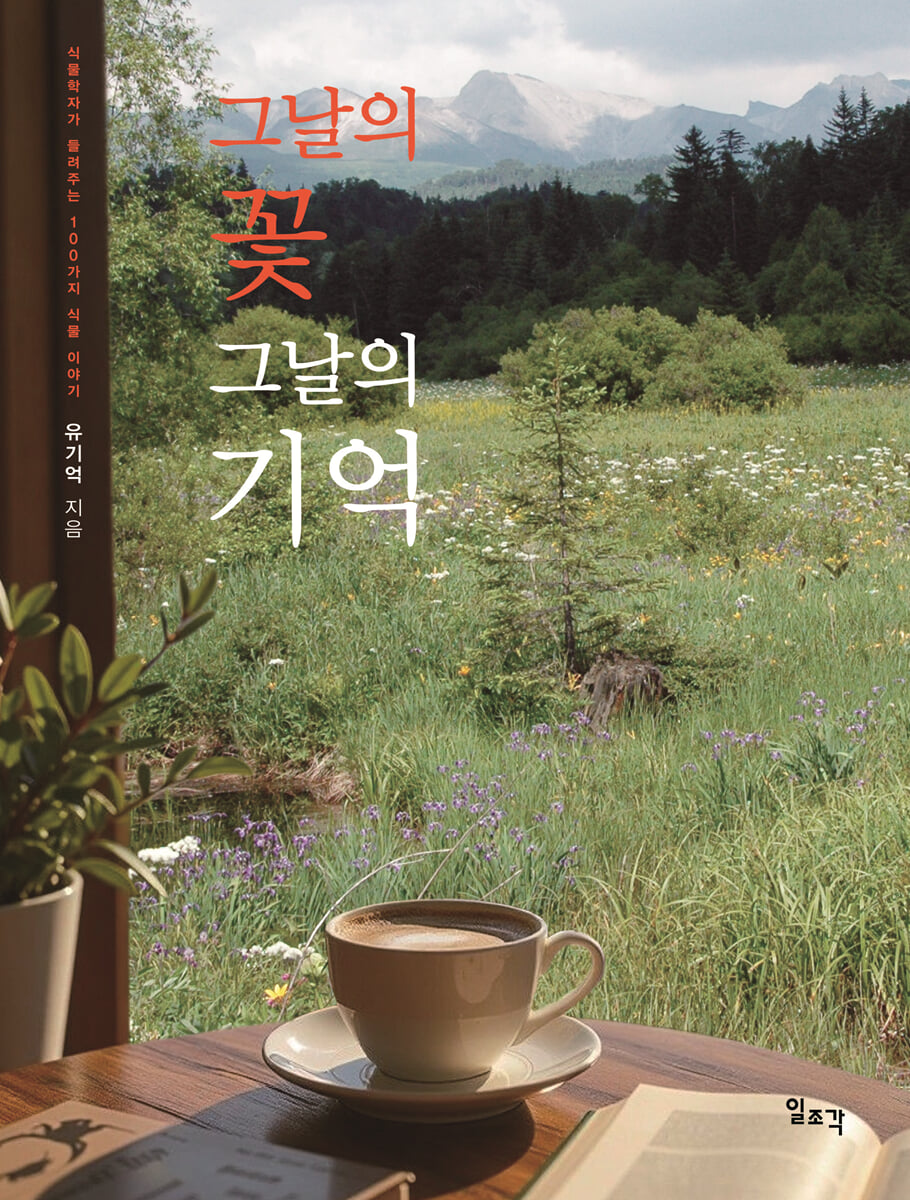
"Flowers of the Day, Memories of the Day" is a storybook about the grasses and trees we commonly encounter around us.
The author, a botanist, has encountered plants for over 40 years and each plant has its own story.
The author, who says that 'plants are always like friends', selected 100 of them and told various plant stories, including their names, why they have those names, what they look like, where they come from and grow, and how they are passed down to the next generation, as well as episodes related to the plants and the author's memories and experiences.
As readers follow the expert explanations of a botanist and the affectionate gaze of a plant lover, their hearts will soon be filled with peace, like the fragrance of flowers, and they will come to accept plants as close friends.
The author, a botanist, has encountered plants for over 40 years and each plant has its own story.
The author, who says that 'plants are always like friends', selected 100 of them and told various plant stories, including their names, why they have those names, what they look like, where they come from and grow, and how they are passed down to the next generation, as well as episodes related to the plants and the author's memories and experiences.
As readers follow the expert explanations of a botanist and the affectionate gaze of a plant lover, their hearts will soon be filled with peace, like the fragrance of flowers, and they will come to accept plants as close friends.
- You can preview some of the book's contents.
Preview
index
preface
Understanding Plants
Terminology
ferns
1 Buddha's hand and sarira
2. Ferns of the family Bracken
3. Bracken of the family Brackeniaceae
4 Spectators and Spectators
5. Four-leafed fern, family Four-leafed fern
6. Gorancho and Kongjjagae vine
gymnosperms
7. Pinus pine
8. Pine tree
9. Cupressaceae family, Japanese juniper
10. Thuja family, snow thuja
11 Attention and Attention
12 Attention and Visakha
angiosperms
dicotyledons
13. Phellodendron amurense
14 Willow tree
15 Birch and hazel trees
16 Oak tree
17 Quercus amurensis
18 Mulberry tree
19 Mulberry family, Mulberry
20 Samgwa Hwansamdenggul
21 Nettle and nettle
22 knotweed and buckwheat
23 Purslane and Purslane
24 Magnolia and White Magnolia
25. Ranunculaceae, Snowdrop
26 Ranunculaceae Son-in-law's Bread
27 Ranunculaceae, Hepatica
28 Ranunculaceae, mountain peony
29 Ranunculaceae, Donggang Halmi Flower
30 Ranunculaceae Purple Pheasant's Leg
31. The family Magnolia japonica, Han-Gyeong-Ryeong
32. The family of celandine flowers and the family of celandine flowers
33 Cabbage flower
34 Sedum and Rock Pine
35 Sedum and Stonecrop
36 Hydrangea of the family Hydrangea
37 Rosaceae, Azalea
38 Rose family Hawthorn
39 Plum tree of the Rosaceae family
40 Beans and Goji Berry
41 Beans and the Thief's Hook
42 Beans and Ginseng
43 Leather tree of the Pine family
44 Pine tree of the Pine family
45. Rhus verniciflua
46 Maple family, sugar maple
47 Maple family, Bokjagi
48. Old-growth vines and maple trees
49. Old-growth vines and evergreen trees
50 Boxwood and Boxwood
51. The family of buckthorn and the family of hazelnut
52 Violet and Namsan Violet
53 Buddha's Flower and Crape Myrtle Tree
54 Cornus officinalis
55. Aralia elata, Aralia elata
56 Araliaceae family
57 Ginseng of the Araliaceae family
58 Mountain and water parsley
59 Rhododendron
60 Primrose family, Primulaceae
61 Persimmon tree of the persimmon family
62 Stink bug tree of the Stink bug family
63. Wild chives and lotus
64. Asteraceae family, white clover
65. Asteraceae family, Asteraceae
66 Meadow and Meadow
67 Morning glory and trumpet flower
68 Honey and Honeysuckle
69 Honey and Flower Oil
70 Scrophulariaceae and Wrinkled Leaves
71. Heat and the life of a branch
72 Indong and Olgoebul tree
73 Indong and Bottleflower
74 Indong and Daenggang Tree
75 Lanterns and Rosehips
76. Lantern and baby's breath
77. Bellflower and Diamond Bellflower
78 Lanterns and White Bellflowers
79 Asteraceae Western Echinococcus
80 Asteraceae Artemisia
81 Asteraceae family, Aster
82 Asteraceae family, sea chrysanthemum
83 Asteraceae Mountain Chrysanthemum
84 Asteraceae, Korean thistle
85 Asteraceae, mountain ash
86 Asteraceae family
87 Asteraceae Red Wildflower
88 Asteraceae family, forget-me-not
89 Asteraceae Western dandelion
monocotyledons
90 Lilies and all
91 Lilies and Allergies
92 Lilies and Lilies
93 Lilies and Bluebells
94 Lilies and Lilies
95 Gramineae barley
96 Gramineae Sukryong
97 Grass family, dog's-foot-grass
98 Aster and Banana
99 Buddleia and Buddleia
100 Cyperaceae Cyperus chinensis
References
Search
Understanding Plants
Terminology
ferns
1 Buddha's hand and sarira
2. Ferns of the family Bracken
3. Bracken of the family Brackeniaceae
4 Spectators and Spectators
5. Four-leafed fern, family Four-leafed fern
6. Gorancho and Kongjjagae vine
gymnosperms
7. Pinus pine
8. Pine tree
9. Cupressaceae family, Japanese juniper
10. Thuja family, snow thuja
11 Attention and Attention
12 Attention and Visakha
angiosperms
dicotyledons
13. Phellodendron amurense
14 Willow tree
15 Birch and hazel trees
16 Oak tree
17 Quercus amurensis
18 Mulberry tree
19 Mulberry family, Mulberry
20 Samgwa Hwansamdenggul
21 Nettle and nettle
22 knotweed and buckwheat
23 Purslane and Purslane
24 Magnolia and White Magnolia
25. Ranunculaceae, Snowdrop
26 Ranunculaceae Son-in-law's Bread
27 Ranunculaceae, Hepatica
28 Ranunculaceae, mountain peony
29 Ranunculaceae, Donggang Halmi Flower
30 Ranunculaceae Purple Pheasant's Leg
31. The family Magnolia japonica, Han-Gyeong-Ryeong
32. The family of celandine flowers and the family of celandine flowers
33 Cabbage flower
34 Sedum and Rock Pine
35 Sedum and Stonecrop
36 Hydrangea of the family Hydrangea
37 Rosaceae, Azalea
38 Rose family Hawthorn
39 Plum tree of the Rosaceae family
40 Beans and Goji Berry
41 Beans and the Thief's Hook
42 Beans and Ginseng
43 Leather tree of the Pine family
44 Pine tree of the Pine family
45. Rhus verniciflua
46 Maple family, sugar maple
47 Maple family, Bokjagi
48. Old-growth vines and maple trees
49. Old-growth vines and evergreen trees
50 Boxwood and Boxwood
51. The family of buckthorn and the family of hazelnut
52 Violet and Namsan Violet
53 Buddha's Flower and Crape Myrtle Tree
54 Cornus officinalis
55. Aralia elata, Aralia elata
56 Araliaceae family
57 Ginseng of the Araliaceae family
58 Mountain and water parsley
59 Rhododendron
60 Primrose family, Primulaceae
61 Persimmon tree of the persimmon family
62 Stink bug tree of the Stink bug family
63. Wild chives and lotus
64. Asteraceae family, white clover
65. Asteraceae family, Asteraceae
66 Meadow and Meadow
67 Morning glory and trumpet flower
68 Honey and Honeysuckle
69 Honey and Flower Oil
70 Scrophulariaceae and Wrinkled Leaves
71. Heat and the life of a branch
72 Indong and Olgoebul tree
73 Indong and Bottleflower
74 Indong and Daenggang Tree
75 Lanterns and Rosehips
76. Lantern and baby's breath
77. Bellflower and Diamond Bellflower
78 Lanterns and White Bellflowers
79 Asteraceae Western Echinococcus
80 Asteraceae Artemisia
81 Asteraceae family, Aster
82 Asteraceae family, sea chrysanthemum
83 Asteraceae Mountain Chrysanthemum
84 Asteraceae, Korean thistle
85 Asteraceae, mountain ash
86 Asteraceae family
87 Asteraceae Red Wildflower
88 Asteraceae family, forget-me-not
89 Asteraceae Western dandelion
monocotyledons
90 Lilies and all
91 Lilies and Allergies
92 Lilies and Lilies
93 Lilies and Bluebells
94 Lilies and Lilies
95 Gramineae barley
96 Gramineae Sukryong
97 Grass family, dog's-foot-grass
98 Aster and Banana
99 Buddleia and Buddleia
100 Cyperaceae Cyperus chinensis
References
Search
Into the book
The earliest known terrestrial vascular plant is known as Rhyniophytes, a fossil plant that appeared between 416 million and 360 million years ago during the Early Devonian Period of the Paleozoic Era.
After that, the still-living, leafless or underdeveloped Lycopodiophytes flourished, and subsequently differentiated into species with distinct leaves.
These species flourished during the Carboniferous period of the Paleozoic Era (about 345 million years ago), and are characterized by reproduction through spores. They include a type of fern called Pteridophytes.
Between about 350 million and 310 million years ago, seed plants that produce seeds as a method of reproduction appeared, and are largely divided into gymnosperms and angiosperms.
Gymnosperms appeared in the early Carboniferous period of the Paleozoic Era (about 350 million years ago) and spread widely, and many fossils have been found in Mesozoic strata.
Gymnosperms are plants that have the characteristic of having the ovule exposed on the outside rather than being enclosed in the ovary when pollination occurs, and are therefore also called gymnosperms. These include ginkgo trees and pine trees.
Angiosperms, which appeared in the early Cretaceous period of the Mesozoic Era (about 140 to 130 million years ago), are a type of flowering plant that has distinct flowers and in which the ovule is completely surrounded by the ovary during pollination. They currently account for 95% of the world's terrestrial plants, so it is no exaggeration to say that they are the masters of the Earth.
Angiosperms are sometimes further divided into dicotyledons (dicots) and monocotyledons (monocotyledons) based on the number of cotyledons from which seeds germinate. However, in the APG classification system, which was recently created based on DNA data, they are divided into three groups: basal angiosperms, monocotyledons, and true dicots, which are different.
--- p.12~13 "Understanding Plants"
When you open an illustrated guide listing all of Korea's plants, what plants come up first? Most likely, they're from the Lycopodium, the Sorbus, the Equisetum, and the Orchidaceae.
Although the order varies slightly depending on the book, what these species have in common is that they are the first group of extant vascular plants with xylem and phloem that adapted to come up on land.
There are about 34 species included here, and looking at their shape, you can't find the typical plant form, but they look like long stems that grow sideways or straight with small leaf-like appendages attached, so they look so strange that children who see them might ask if they are plants, and if they are not careful, they can easily be confused with a type of moss.
However, since it is included in higher plants, it cannot be ignored.
If I had to give an example of the most unique type of snail in terms of shape and living form, I would say the snail.
(Omitted) There was a tavern near my boarding house when I was in college. There was a small tree planted in the tavern's garden, and there were sashimi on the pebbles around it.
The owner called it moss.
I told him the correct name and checked it several times, but it wasn't easy to change the name once it was engraved in my head.
Eventually, the first greeting I gave every time I visited became 'Gusilsari', and later the owner became interested in other plants, which was rewarding in its own way.
I still remember the name of that house.
‘A glass of wine, a glass of life, and a chat’, this is the place of memories where my relationship with Gusilsari began.
--- p.26~28 「Ferns|Guseolsari」
The first time I encountered the snow arborvitae was on the hiking trail from the Hangyeryeong Rest Area to the peak of Daecheongbong.
It is found in abundance in the slightly humid areas around the 5.4 km ridge road of the northwestern ridge that connects the Hankeumryeong intersection to Jungcheongbong. The reason I remember this tree is because of a special story I heard from my advisor.
To cut to the chase, bears live where arborvitae grows.
The scent of bear bile, or gall, is similar to that of the cypress tree, as bears eat plenty of leaves and fruits before hibernating.
The villagers kept an eye on the places where the snow arborvitae grew, and when it was time for the bears to hibernate, they went there to hunt them.
When I hit a large tree stump nearby with a hammer, the bear, half-asleep, came out, and when I thought it was time to throw a spear, the bear shook it off as if nothing had happened.
As time went on, the bear got angry and said that he would catch him that way, but he foolishly chose to kill himself by stabbing himself in the vital spot with a spear.
It is said that from then on, the expression 'a foolish bear-like guy' came into being.
Believe it or not, it was a story that sounded really plausible when I heard it directly from the professor.
In fact, when I tell the same story to students or forest interpreters during field trips to places where cypress trees are planted, the response is relatively good.
Since there is cypress, there must be cypress trees.
The first two species were included in the same genus, Platycladus, but the cypress tree has vertically developed branches, the fruit is composed of 6-8 thick stipules when it opens, the seeds are wingless, and there is no development of protrusions around the stomata on the leaf surface, so it was separated into the genus Platycladus and continues to this day.
Although their names are similar, their affiliations have changed and they are now separated for life.
--- p.64~66 「Gymnosperms|Thuja japonica」
The scientific name of the Donggang Halmi Flower is Pulsatilla tongkangensis.
The genus name 'Pulsatilla' is derived from the Latin word pulso (to strike, to strike) and refers to the bell-shaped flower, and the specific epithet 'tongkangensis' means that it grows in the Donggang region.
Our name was given to us with the meaning of a grandmother flower living in the Donggang region.
Some scholars have classified the species into white Donggang Halmi Flower, double Donggang Halmi Flower, long Donggang Halmi Flower, and pink Donggang Halmi Flower based on the characteristics of the Donggang Halmi Flower and treated them as cultivars, but now they are all considered to be continuous mutations and are integrated into the parent species.
There are seven species of Pulsatilla plants that grow in Korea, and all of them have the word "halmi-kkot" in their names.
Morphologically, the Donggang Halmi Flower is similar to the Pink Halmi Flower, but the Pink Halmi Flower has light pink flowers, a curved style attached to the fruit, and is distributed in the northern region, making it distinguishable.
Its uses in oriental medicine are unknown.
Unlike the halmi flower, most of the Donggang halmi flowers face the sky.
When I see them coming up one at a time, I am reminded of chicks waiting anxiously for their mother bird to come with food.
The vitality of the creature breaking through the rock is so amazing that it will make you stick out your tongue.
In March, we prepare to welcome festival participants, and I hope that those who come every year, expecting a wonderful sight, will also feel this strength.
This is a plant that I would like to show and explain to young people these days, who are especially lacking in patience.
--- p.143~144 「Angiosperms|Dicotyledons|Donggang Halmi Flower」
Although it has changed a lot now, the image of the country house in my memory is still vivid in my mind.
There is a place I often visit when I miss this feeling.
It is around the 'Kim Yu-jeong Literature Village' in Chuncheon, Gangwon-do.
This is because this is the setting for Kim Yu-jeong's novels "Jeomsooni" and "Camellia" and the Geumbyeongsan Mountain connected to the back can be used as a walking path.
These mountain trails are named after novels, such as Camellia Flower Road, Manmubang Road, Geumttaenuk Field Road, and Bom Bom Road, which make your heart flutter just by hearing them.
(Omitted) The flat ridge paths you encounter on a hike, the occasional shelter, the wildflowers around the valley, and the well-grown pine forests are all nice, but the place where you can see the countryside of your memories is the village of Jeungni in Sindong-myeon, which you come across when you come down the mountain.
From the end of the mountain road to the village, about 400 meters down, the area still retains its rural appearance.
(Omitted) The old tiled roofs that can be seen occasionally, lettuce and peppers growing in the fields, stone walls built along the road along the river in the center of the village, and sedums growing in the crevices of the rocks or covering them are typical scenes of old villages.
Sedum is a familiar plant that has been used as an ingredient in water kimchi since it was young, and it also makes a great side dish when eaten raw with gochujang, but now it is more attractive to see the stems growing together like vines along a stone wall rather than for that purpose, and the star-shaped flowers that bloom in May are as beautiful as any other.
Also, when I see that even if the stem is cut, new shoots continue to grow and that it can withstand the scorching midsummer sun when the temperature is close to 40 degrees, I am often surprised at where this survival ability comes from.
It is so representative of our country's succulent plants that it is no exaggeration to say that it is.
--- p.166~167 「Angiosperms|Dicotyledons|Sedums」
When I was in college, my advisor said that there is a certain order to eating the plants in our country that are used as vegetables.
At first, the best is the elm tree shoots.
It's nice to see the leaf buds at the end of the stem or branch peeling off their skin and growing, but the taste of lightly blanching them and dipping them in gochujang (hot pepper paste) will definitely bring back your lost appetite.
After the season for eating the burdock shoots has passed, the second thing to look for is the burdock shoots called dog burdock, which have a slightly stronger bitter taste.
The real name of the oak tree is the eunamu tree.
When fully grown, it has split leaves like maple leaves, but when new shoots emerge, they are similar to elm shoots and have a glossy sheen.
The third most delicious is the lacquer tree shoot.
In the countryside, it is called lacquer tree and has an excellent, mild and savory taste.
Sensitive people may have a hard time with the poison ivy, but it is the best in terms of taste.
If you eat these three things, spring will pass by.
There is also a story that it prevents bad luck from coming.
There is a legend that has been passed down for a long time that if you plant this tree at the entrance to a village or cut a branch and hang it on the front door of a house, it will prevent ghosts and diseases and epidemics from entering.
(Omitted) Although the quince tree can be easily found on spring tables, there were no photos of its flowers.
It's not that I couldn't see the flowers, it's just that the trees were too tall to take pictures.
One windy summer day, I was walking along a mountain path when I got the chance.
I came across a branch with flowers that had broken in the wind and fallen to the ground.
The sight of the inflorescence, densely packed with flower buds, each with a pointed stigma sticking out as if it had something to say, was completely different from what it looked like from afar.
It was a flower that was much more beautiful and magnificent.
It felt like a harmony of fate between two extremes, as it was the opposite of the stem with its fierce-looking thorns.
--- p.251~252 「Angiosperms|Dicotyledons|Yin trees」
Western sedge is a naturalized plant introduced from North America and was designated as an ecologically hazardous plant in 2002.
It can grow even in places where sunlight does not reach, so it can easily penetrate deep into forests, and its reproduction rate is good, so its area is increasing every year, and now its seeds are even growing in flower beds and flower pots in the middle of the city, so it seems that it could give up all the space for other plants to live.
It was first discovered and recorded in Namsan, Seoul in 1978, and is now widely distributed, including Incheon, Gyeonggi-do, Gangwon-do, Chungcheongbuk-do, and Jeollabuk-do.
Western sedge not only causes ecological problems, but also causes milk sickness.
For a while, people who drank milk produced in Kentucky, USA, experienced vomiting, tremors, drooling, and eventually death.
After investigating from various angles to determine the cause, it was discovered that the milk of cows, horses, and goats that ate Western sedge plants contained a toxic substance that caused the deaths.
(Omitted) One day, a forest interpreter trainee sent me a picture of a vase of Western sedge flowers, saying that they were pretty but that he didn't know the name.
If you only look at the white flowers, they look like unstained purity, but he explained that they contain a powerful poison.
It is a plant with two sides, like the wild chives or wild chives that bloom in the spring and are misused as wild vegetables.
This is the kind of thing you always have to be careful of.
--- p.342~344 「Angiosperms|Dicotyledons|Western Echinopsis」
The dogtooth violet is native to North America and is one of the early naturalized plants that arrived in Korea before 1921. It is now widespread throughout the country.
Dogtooth violet is popular as a vegetable in spring.
The leaves that grow from the root are shaped like a rosette, and like evening primroses, they spread out on the ground like a cushion and spend the winter there. When spring comes, the frozen ground thaws and the temperature begins to rise, new leaves grow between the old leaves.
For those who like the fragrance of spring greens, they will first look for water parsley or wild chives, but for those who prefer a mild and plain taste, I would recommend the newly released leaves of the wild chives.
If you cut off the new growth with a knife as if you were thinning out turnips and remove the old surrounding leaves that came with it, only the soft, egg-shaped green leaves will remain.
If you blanch this in boiling water and then season it like spinach, it becomes an excellent spring vegetable.
It's perfect for the season when you have no appetite.
Summer's forget-me-nots are welcomed as beautiful flowers.
When you look down at the flower from above, it looks like a fried egg, so it is called egg flower, which seems like an interesting name.
If you are in a wide open area, you can find a large colony full of wild chrysanthemum flowers. If you look at it from the side at eye level, the flower buds look like they are floating on the water, which is quite a breathtaking sight.
But the autumn appearance of the dogtooth violet is just desolate.
After the flowers bloom and the fruit bursts to release its seeds, the stem turns yellow and dries up.
The spongy, fluffy layer inside the stem helps it withstand the autumn wind, but there are limits.
This is how a generation ends.
--- p.378~379 「Angiosperms|Dicotyledons|Diamond Toadstool」
The area around the river is bare ground without forests, so it is easy for alien plants to invade, but they are also extremely vigorous.
Also, plants that are harmful to the ecosystem, such as American wormwood, maple leaf ragweed, ragweed, and Japanese vine, are forming colonies here and there.
During my 30-minute walk to work, I encountered approximately 50 species of alien plants.
But there was one thing that stood out in the midst of it all.
I saw the dandelion growing vigorously among the foreign plants, as if competing with them.
From experience, this plant has a habit of growing around valleys or in slightly damp places, and the long bracts below the inflorescence are a significant characteristic, so it is an easily distinguishable species. However, it was quite surprising to see it growing in a place where naturalized plants along the river were spread out like a stream.
I stared at it for a while, wondering what its survival strategy was and how it got here, but I also thought that this kind of plant might be our true home.
The scientific name of Carex neurocarpa is Carex neurocarpa.
The genus name 'Carex' is derived from the ancient Latin name carex, meaning reed or rush, and the specific epithet 'neurocarpa' refers to the veins on the fruit.
Our name is said to have been created by combining the word 'Gwangi', which means cat, and 'Sacho', and it is said that the name was given because the shape of the flower at the end of the stem and the long bracts resemble a cat.
In the provinces, it is called beard sachet or barley sachet.
(syncopation)
Cyperaceae plants may not have showy flowers or beautiful colors, but they play an important role in maintaining wetland areas.
Although their characteristics are sometimes similar and it can be difficult to identify their names, they are attractive plants.
After that, the still-living, leafless or underdeveloped Lycopodiophytes flourished, and subsequently differentiated into species with distinct leaves.
These species flourished during the Carboniferous period of the Paleozoic Era (about 345 million years ago), and are characterized by reproduction through spores. They include a type of fern called Pteridophytes.
Between about 350 million and 310 million years ago, seed plants that produce seeds as a method of reproduction appeared, and are largely divided into gymnosperms and angiosperms.
Gymnosperms appeared in the early Carboniferous period of the Paleozoic Era (about 350 million years ago) and spread widely, and many fossils have been found in Mesozoic strata.
Gymnosperms are plants that have the characteristic of having the ovule exposed on the outside rather than being enclosed in the ovary when pollination occurs, and are therefore also called gymnosperms. These include ginkgo trees and pine trees.
Angiosperms, which appeared in the early Cretaceous period of the Mesozoic Era (about 140 to 130 million years ago), are a type of flowering plant that has distinct flowers and in which the ovule is completely surrounded by the ovary during pollination. They currently account for 95% of the world's terrestrial plants, so it is no exaggeration to say that they are the masters of the Earth.
Angiosperms are sometimes further divided into dicotyledons (dicots) and monocotyledons (monocotyledons) based on the number of cotyledons from which seeds germinate. However, in the APG classification system, which was recently created based on DNA data, they are divided into three groups: basal angiosperms, monocotyledons, and true dicots, which are different.
--- p.12~13 "Understanding Plants"
When you open an illustrated guide listing all of Korea's plants, what plants come up first? Most likely, they're from the Lycopodium, the Sorbus, the Equisetum, and the Orchidaceae.
Although the order varies slightly depending on the book, what these species have in common is that they are the first group of extant vascular plants with xylem and phloem that adapted to come up on land.
There are about 34 species included here, and looking at their shape, you can't find the typical plant form, but they look like long stems that grow sideways or straight with small leaf-like appendages attached, so they look so strange that children who see them might ask if they are plants, and if they are not careful, they can easily be confused with a type of moss.
However, since it is included in higher plants, it cannot be ignored.
If I had to give an example of the most unique type of snail in terms of shape and living form, I would say the snail.
(Omitted) There was a tavern near my boarding house when I was in college. There was a small tree planted in the tavern's garden, and there were sashimi on the pebbles around it.
The owner called it moss.
I told him the correct name and checked it several times, but it wasn't easy to change the name once it was engraved in my head.
Eventually, the first greeting I gave every time I visited became 'Gusilsari', and later the owner became interested in other plants, which was rewarding in its own way.
I still remember the name of that house.
‘A glass of wine, a glass of life, and a chat’, this is the place of memories where my relationship with Gusilsari began.
--- p.26~28 「Ferns|Guseolsari」
The first time I encountered the snow arborvitae was on the hiking trail from the Hangyeryeong Rest Area to the peak of Daecheongbong.
It is found in abundance in the slightly humid areas around the 5.4 km ridge road of the northwestern ridge that connects the Hankeumryeong intersection to Jungcheongbong. The reason I remember this tree is because of a special story I heard from my advisor.
To cut to the chase, bears live where arborvitae grows.
The scent of bear bile, or gall, is similar to that of the cypress tree, as bears eat plenty of leaves and fruits before hibernating.
The villagers kept an eye on the places where the snow arborvitae grew, and when it was time for the bears to hibernate, they went there to hunt them.
When I hit a large tree stump nearby with a hammer, the bear, half-asleep, came out, and when I thought it was time to throw a spear, the bear shook it off as if nothing had happened.
As time went on, the bear got angry and said that he would catch him that way, but he foolishly chose to kill himself by stabbing himself in the vital spot with a spear.
It is said that from then on, the expression 'a foolish bear-like guy' came into being.
Believe it or not, it was a story that sounded really plausible when I heard it directly from the professor.
In fact, when I tell the same story to students or forest interpreters during field trips to places where cypress trees are planted, the response is relatively good.
Since there is cypress, there must be cypress trees.
The first two species were included in the same genus, Platycladus, but the cypress tree has vertically developed branches, the fruit is composed of 6-8 thick stipules when it opens, the seeds are wingless, and there is no development of protrusions around the stomata on the leaf surface, so it was separated into the genus Platycladus and continues to this day.
Although their names are similar, their affiliations have changed and they are now separated for life.
--- p.64~66 「Gymnosperms|Thuja japonica」
The scientific name of the Donggang Halmi Flower is Pulsatilla tongkangensis.
The genus name 'Pulsatilla' is derived from the Latin word pulso (to strike, to strike) and refers to the bell-shaped flower, and the specific epithet 'tongkangensis' means that it grows in the Donggang region.
Our name was given to us with the meaning of a grandmother flower living in the Donggang region.
Some scholars have classified the species into white Donggang Halmi Flower, double Donggang Halmi Flower, long Donggang Halmi Flower, and pink Donggang Halmi Flower based on the characteristics of the Donggang Halmi Flower and treated them as cultivars, but now they are all considered to be continuous mutations and are integrated into the parent species.
There are seven species of Pulsatilla plants that grow in Korea, and all of them have the word "halmi-kkot" in their names.
Morphologically, the Donggang Halmi Flower is similar to the Pink Halmi Flower, but the Pink Halmi Flower has light pink flowers, a curved style attached to the fruit, and is distributed in the northern region, making it distinguishable.
Its uses in oriental medicine are unknown.
Unlike the halmi flower, most of the Donggang halmi flowers face the sky.
When I see them coming up one at a time, I am reminded of chicks waiting anxiously for their mother bird to come with food.
The vitality of the creature breaking through the rock is so amazing that it will make you stick out your tongue.
In March, we prepare to welcome festival participants, and I hope that those who come every year, expecting a wonderful sight, will also feel this strength.
This is a plant that I would like to show and explain to young people these days, who are especially lacking in patience.
--- p.143~144 「Angiosperms|Dicotyledons|Donggang Halmi Flower」
Although it has changed a lot now, the image of the country house in my memory is still vivid in my mind.
There is a place I often visit when I miss this feeling.
It is around the 'Kim Yu-jeong Literature Village' in Chuncheon, Gangwon-do.
This is because this is the setting for Kim Yu-jeong's novels "Jeomsooni" and "Camellia" and the Geumbyeongsan Mountain connected to the back can be used as a walking path.
These mountain trails are named after novels, such as Camellia Flower Road, Manmubang Road, Geumttaenuk Field Road, and Bom Bom Road, which make your heart flutter just by hearing them.
(Omitted) The flat ridge paths you encounter on a hike, the occasional shelter, the wildflowers around the valley, and the well-grown pine forests are all nice, but the place where you can see the countryside of your memories is the village of Jeungni in Sindong-myeon, which you come across when you come down the mountain.
From the end of the mountain road to the village, about 400 meters down, the area still retains its rural appearance.
(Omitted) The old tiled roofs that can be seen occasionally, lettuce and peppers growing in the fields, stone walls built along the road along the river in the center of the village, and sedums growing in the crevices of the rocks or covering them are typical scenes of old villages.
Sedum is a familiar plant that has been used as an ingredient in water kimchi since it was young, and it also makes a great side dish when eaten raw with gochujang, but now it is more attractive to see the stems growing together like vines along a stone wall rather than for that purpose, and the star-shaped flowers that bloom in May are as beautiful as any other.
Also, when I see that even if the stem is cut, new shoots continue to grow and that it can withstand the scorching midsummer sun when the temperature is close to 40 degrees, I am often surprised at where this survival ability comes from.
It is so representative of our country's succulent plants that it is no exaggeration to say that it is.
--- p.166~167 「Angiosperms|Dicotyledons|Sedums」
When I was in college, my advisor said that there is a certain order to eating the plants in our country that are used as vegetables.
At first, the best is the elm tree shoots.
It's nice to see the leaf buds at the end of the stem or branch peeling off their skin and growing, but the taste of lightly blanching them and dipping them in gochujang (hot pepper paste) will definitely bring back your lost appetite.
After the season for eating the burdock shoots has passed, the second thing to look for is the burdock shoots called dog burdock, which have a slightly stronger bitter taste.
The real name of the oak tree is the eunamu tree.
When fully grown, it has split leaves like maple leaves, but when new shoots emerge, they are similar to elm shoots and have a glossy sheen.
The third most delicious is the lacquer tree shoot.
In the countryside, it is called lacquer tree and has an excellent, mild and savory taste.
Sensitive people may have a hard time with the poison ivy, but it is the best in terms of taste.
If you eat these three things, spring will pass by.
There is also a story that it prevents bad luck from coming.
There is a legend that has been passed down for a long time that if you plant this tree at the entrance to a village or cut a branch and hang it on the front door of a house, it will prevent ghosts and diseases and epidemics from entering.
(Omitted) Although the quince tree can be easily found on spring tables, there were no photos of its flowers.
It's not that I couldn't see the flowers, it's just that the trees were too tall to take pictures.
One windy summer day, I was walking along a mountain path when I got the chance.
I came across a branch with flowers that had broken in the wind and fallen to the ground.
The sight of the inflorescence, densely packed with flower buds, each with a pointed stigma sticking out as if it had something to say, was completely different from what it looked like from afar.
It was a flower that was much more beautiful and magnificent.
It felt like a harmony of fate between two extremes, as it was the opposite of the stem with its fierce-looking thorns.
--- p.251~252 「Angiosperms|Dicotyledons|Yin trees」
Western sedge is a naturalized plant introduced from North America and was designated as an ecologically hazardous plant in 2002.
It can grow even in places where sunlight does not reach, so it can easily penetrate deep into forests, and its reproduction rate is good, so its area is increasing every year, and now its seeds are even growing in flower beds and flower pots in the middle of the city, so it seems that it could give up all the space for other plants to live.
It was first discovered and recorded in Namsan, Seoul in 1978, and is now widely distributed, including Incheon, Gyeonggi-do, Gangwon-do, Chungcheongbuk-do, and Jeollabuk-do.
Western sedge not only causes ecological problems, but also causes milk sickness.
For a while, people who drank milk produced in Kentucky, USA, experienced vomiting, tremors, drooling, and eventually death.
After investigating from various angles to determine the cause, it was discovered that the milk of cows, horses, and goats that ate Western sedge plants contained a toxic substance that caused the deaths.
(Omitted) One day, a forest interpreter trainee sent me a picture of a vase of Western sedge flowers, saying that they were pretty but that he didn't know the name.
If you only look at the white flowers, they look like unstained purity, but he explained that they contain a powerful poison.
It is a plant with two sides, like the wild chives or wild chives that bloom in the spring and are misused as wild vegetables.
This is the kind of thing you always have to be careful of.
--- p.342~344 「Angiosperms|Dicotyledons|Western Echinopsis」
The dogtooth violet is native to North America and is one of the early naturalized plants that arrived in Korea before 1921. It is now widespread throughout the country.
Dogtooth violet is popular as a vegetable in spring.
The leaves that grow from the root are shaped like a rosette, and like evening primroses, they spread out on the ground like a cushion and spend the winter there. When spring comes, the frozen ground thaws and the temperature begins to rise, new leaves grow between the old leaves.
For those who like the fragrance of spring greens, they will first look for water parsley or wild chives, but for those who prefer a mild and plain taste, I would recommend the newly released leaves of the wild chives.
If you cut off the new growth with a knife as if you were thinning out turnips and remove the old surrounding leaves that came with it, only the soft, egg-shaped green leaves will remain.
If you blanch this in boiling water and then season it like spinach, it becomes an excellent spring vegetable.
It's perfect for the season when you have no appetite.
Summer's forget-me-nots are welcomed as beautiful flowers.
When you look down at the flower from above, it looks like a fried egg, so it is called egg flower, which seems like an interesting name.
If you are in a wide open area, you can find a large colony full of wild chrysanthemum flowers. If you look at it from the side at eye level, the flower buds look like they are floating on the water, which is quite a breathtaking sight.
But the autumn appearance of the dogtooth violet is just desolate.
After the flowers bloom and the fruit bursts to release its seeds, the stem turns yellow and dries up.
The spongy, fluffy layer inside the stem helps it withstand the autumn wind, but there are limits.
This is how a generation ends.
--- p.378~379 「Angiosperms|Dicotyledons|Diamond Toadstool」
The area around the river is bare ground without forests, so it is easy for alien plants to invade, but they are also extremely vigorous.
Also, plants that are harmful to the ecosystem, such as American wormwood, maple leaf ragweed, ragweed, and Japanese vine, are forming colonies here and there.
During my 30-minute walk to work, I encountered approximately 50 species of alien plants.
But there was one thing that stood out in the midst of it all.
I saw the dandelion growing vigorously among the foreign plants, as if competing with them.
From experience, this plant has a habit of growing around valleys or in slightly damp places, and the long bracts below the inflorescence are a significant characteristic, so it is an easily distinguishable species. However, it was quite surprising to see it growing in a place where naturalized plants along the river were spread out like a stream.
I stared at it for a while, wondering what its survival strategy was and how it got here, but I also thought that this kind of plant might be our true home.
The scientific name of Carex neurocarpa is Carex neurocarpa.
The genus name 'Carex' is derived from the ancient Latin name carex, meaning reed or rush, and the specific epithet 'neurocarpa' refers to the veins on the fruit.
Our name is said to have been created by combining the word 'Gwangi', which means cat, and 'Sacho', and it is said that the name was given because the shape of the flower at the end of the stem and the long bracts resemble a cat.
In the provinces, it is called beard sachet or barley sachet.
(syncopation)
Cyperaceae plants may not have showy flowers or beautiful colors, but they play an important role in maintaining wetland areas.
Although their characteristics are sometimes similar and it can be difficult to identify their names, they are attractive plants.
--- p.428~430 「Angiosperms|Monocots|Sedge」
Publisher's Review
Selection and composition of 100 plants
The author, a botanist, was born and raised in Gangwon-do, where he grew up in nature, naturally exposed to plants.
I began studying plants in earnest when I entered university, and I started working in a plant taxonomy laboratory early on, and have been educating my students for over 40 years now.
It is only natural that countless plants have been observed, collected, analyzed, and identified in school laboratories and in the fields and mountains.
If you include the plants he has been exposed to since childhood, plants cannot be left out of the author's life.
None of them have a story and none of them can be thrown away.
However, it would be impossible to introduce all of them, so we selected 100 species from a wide range of plants, including native plants, foreign plants, and horticultural plants.
Herbs and woody plants were selected in a ratio of 59:41, with 6 ferns, 6 gymnosperms, 77 dicotyledons, and 11 monocotyledons.
These were organized in the form of a small plant guide, based on the Engler classification system according to the 'National Standard Plant List', arranged by family (ferns, gymnosperms, angiosperms (dicots, monocots), and genera) and alphabetically by scientific name.
Once you know each other, you become closer and understand each other
It is relatively easy to distinguish between azaleas and rhododendrons.
But how many people can tell the difference between morning glory and evening primrose, water lily and lotus, sea squirt, Chinese chive and mugwort when they see them one by one?
There are many different trees that produce acorns.
Among them, which tree's fruit is the most delicious when made into jelly?
There are also many plants that are commonly called moss, but in fact, each is a different plant and has its own name.
The author clearly states the name of each plant.
It introduces scientific names, their etymologies and meanings, Korean names, and names that vary by region, and clearly distinguishes which family and genus they belong to in the classification system.
Next, the author provides a detailed description of the morphological characteristics of the roots, stems, leaves, flowers, fruits, and seeds, along with images taken by the author himself.
Detailed descriptions and photos are provided of the area where each plant grows, the process by which it gets there, and the appearance of the colony.
It also introduces cases of its use in the private sector for food, medicine, and ornamental purposes, as well as its use as a medicinal herb in oriental medicine.
In this way, it provides specific information on the specialized knowledge and overall use of the plant, thereby deepening the understanding of the plant.
Happy together, healing
The author, who has now reached his 60th birthday, always has plants in his life, from the memories of his childhood when he caught sparrows hiding in a juniper tree and roasted them to the recent memories of making chicken soup with dried zelkova branches brought to his seniors' housewarming party, to his memories of going back to his hometown to see his father alone and taking the shack road instead of the shortcut, to looking at the surrounding plants and being intoxicated by the scenery of the dogtooth violets, to reminiscing about his mother pulling out weeds with him in the perilla field and his grandmother who enjoyed going to the water parsley field, to his grandfather boiling mulberry leaves, to his memories of his childhood when he caught sparrows hiding in juniper trees and roasted them to eat, to his recent memories of making chicken stew with them.
He also shares stories of hardships he experienced while conducting field research on plants, as well as happy moments that come from accomplishment and reward.
Joyful moments with friends, family, professors, and students permeate every corner of my life.
On the other hand, you can also get a glimpse of the professional side of a botanist who is completely immersed in encounters with plants.
Even on the way to and from work, the habit of not taking the surrounding plants for granted and observing them bloom, change color and fall, and bear fruit can be read between the lines of the writing.
As I read the story of checking occasionally for sprouts to emerge from seeds planted in a flower pot, I feel my heart pounding with tension.
100 Stories About Plants by a Botanist, "Flowers of the Day, Memories of the Day" is a story about living with people and plants, so you can read them one by one without worrying about the order.
Many new flowers and trees you like may appear.
This book is like a gift that purifies the mind through anecdotes related to plants.
The author, a botanist, was born and raised in Gangwon-do, where he grew up in nature, naturally exposed to plants.
I began studying plants in earnest when I entered university, and I started working in a plant taxonomy laboratory early on, and have been educating my students for over 40 years now.
It is only natural that countless plants have been observed, collected, analyzed, and identified in school laboratories and in the fields and mountains.
If you include the plants he has been exposed to since childhood, plants cannot be left out of the author's life.
None of them have a story and none of them can be thrown away.
However, it would be impossible to introduce all of them, so we selected 100 species from a wide range of plants, including native plants, foreign plants, and horticultural plants.
Herbs and woody plants were selected in a ratio of 59:41, with 6 ferns, 6 gymnosperms, 77 dicotyledons, and 11 monocotyledons.
These were organized in the form of a small plant guide, based on the Engler classification system according to the 'National Standard Plant List', arranged by family (ferns, gymnosperms, angiosperms (dicots, monocots), and genera) and alphabetically by scientific name.
Once you know each other, you become closer and understand each other
It is relatively easy to distinguish between azaleas and rhododendrons.
But how many people can tell the difference between morning glory and evening primrose, water lily and lotus, sea squirt, Chinese chive and mugwort when they see them one by one?
There are many different trees that produce acorns.
Among them, which tree's fruit is the most delicious when made into jelly?
There are also many plants that are commonly called moss, but in fact, each is a different plant and has its own name.
The author clearly states the name of each plant.
It introduces scientific names, their etymologies and meanings, Korean names, and names that vary by region, and clearly distinguishes which family and genus they belong to in the classification system.
Next, the author provides a detailed description of the morphological characteristics of the roots, stems, leaves, flowers, fruits, and seeds, along with images taken by the author himself.
Detailed descriptions and photos are provided of the area where each plant grows, the process by which it gets there, and the appearance of the colony.
It also introduces cases of its use in the private sector for food, medicine, and ornamental purposes, as well as its use as a medicinal herb in oriental medicine.
In this way, it provides specific information on the specialized knowledge and overall use of the plant, thereby deepening the understanding of the plant.
Happy together, healing
The author, who has now reached his 60th birthday, always has plants in his life, from the memories of his childhood when he caught sparrows hiding in a juniper tree and roasted them to the recent memories of making chicken soup with dried zelkova branches brought to his seniors' housewarming party, to his memories of going back to his hometown to see his father alone and taking the shack road instead of the shortcut, to looking at the surrounding plants and being intoxicated by the scenery of the dogtooth violets, to reminiscing about his mother pulling out weeds with him in the perilla field and his grandmother who enjoyed going to the water parsley field, to his grandfather boiling mulberry leaves, to his memories of his childhood when he caught sparrows hiding in juniper trees and roasted them to eat, to his recent memories of making chicken stew with them.
He also shares stories of hardships he experienced while conducting field research on plants, as well as happy moments that come from accomplishment and reward.
Joyful moments with friends, family, professors, and students permeate every corner of my life.
On the other hand, you can also get a glimpse of the professional side of a botanist who is completely immersed in encounters with plants.
Even on the way to and from work, the habit of not taking the surrounding plants for granted and observing them bloom, change color and fall, and bear fruit can be read between the lines of the writing.
As I read the story of checking occasionally for sprouts to emerge from seeds planted in a flower pot, I feel my heart pounding with tension.
100 Stories About Plants by a Botanist, "Flowers of the Day, Memories of the Day" is a story about living with people and plants, so you can read them one by one without worrying about the order.
Many new flowers and trees you like may appear.
This book is like a gift that purifies the mind through anecdotes related to plants.
GOODS SPECIFICS
- Date of issue: November 10, 2025
- Page count, weight, size: 440 pages | 175*230*30mm
- ISBN13: 9788933708545
- ISBN10: 8933708545
You may also like
카테고리
korean


korean

![GQ KOREA Mark (Monthly): December [2025]](http://librairie.coreenne.fr/cdn/shop/files/8ef265dbbfbf186523ed75ba7319009d.jpg?v=1765340328&width=3840)


