

 |
Book Introduction
Woo Jin-young proved that proposition in writing.” _Choi Yeol, art historian
★“If you follow the lives of our writers in this book,
“I realize why the word beauty aligns with art.” _Jang Myeong-suk, ‘Milanonna’
“What if two artists from different eras met?”
The breath of modernity and contemporary gestures intertwine
Our Picture Story
At the 'Star Auction' held in New York, USA on the 17th, Kim Hwan-ki's 1971 work 'Blue Ignition' was sold for approximately 12.3 billion won.
It broke the second-highest price in the history of Korean art auctions, and served as an opportunity to once again make the presence and status of Korean art known to the world.
Public interest in Korean art is growing increasingly heated.
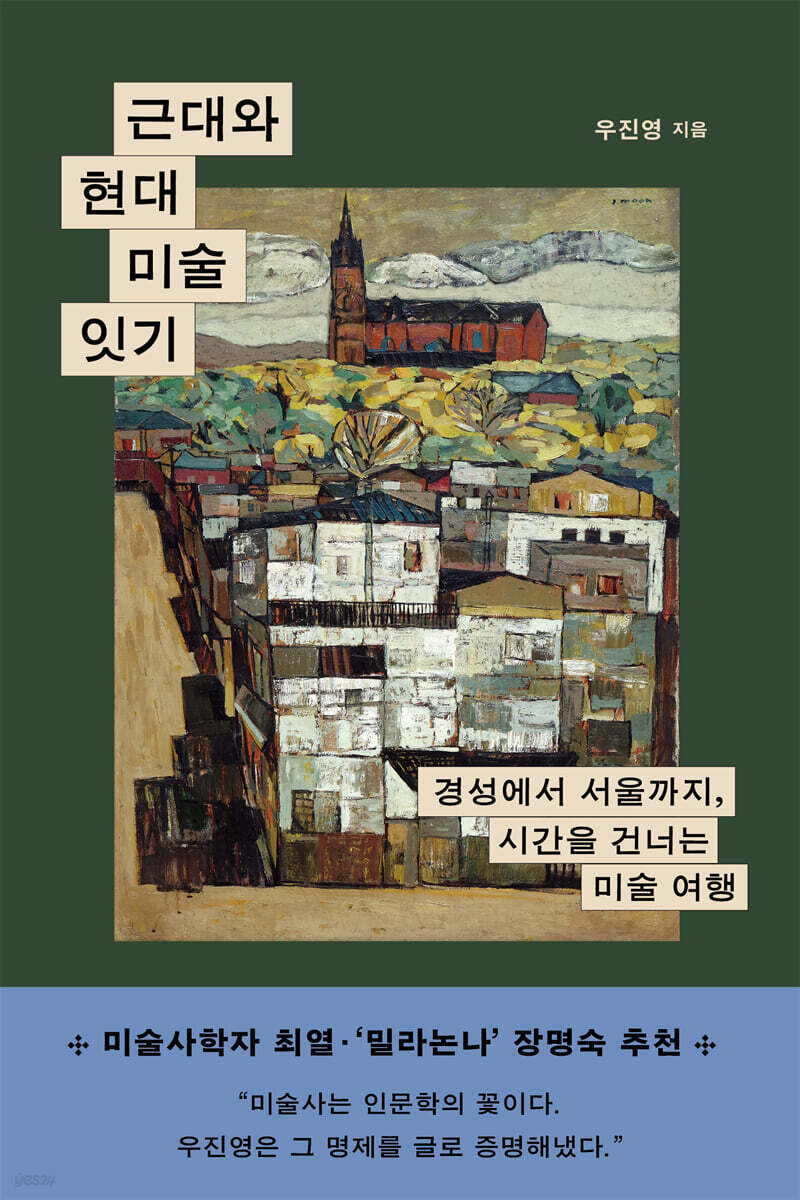
Woo Jin-young, who majored in modern and contemporary Korean art history at Hongik University Graduate School and works as a curatorial researcher at the National Museum of Modern and Contemporary Art, has published his brilliant first book, "Connecting Modern and Contemporary Art."
This book delicately captures the intersection between the breath of modernity and contemporary gestures within the flow of art history.
The struggles of artists who endured the hardships of the times, such as the Japanese colonial period, liberation, and the Korean War, are connected to the struggles of artists living in the breathless city of Seoul in the 21st century.
Modern writers Na Hye-seok and Lee Jae-heon, who confronted social prejudice against women through art, Kim Hwan-gi and Son Seung-beom, who pursued unchanging values even in finite lives, and Koo Bon-woong and Lee Woo-seong, who captured their desire to share warmth with others in their paintings, meet across time.
The artists' aspirations to express the essence and value of life overlap over a period of over 100 years.
The author connects 47 modern and contemporary artists across five parts, taking readers on a unique art journey that spans time from Gyeongseong to Seoul.
Written out of a love for modern art and curiosity about contemporary art, this book comprehensively supplements columns and other articles serialized in the Saturday edition of The Hankyoreh, and adds intimate interviews with contemporary Korean artists who are attracting attention in the global art world.
It is richly filled with over 100 plates, including modern and contemporary masterpieces such as Kim Hwan-ki's representative works "Rondo" and "Eternal Song," Koo Bon-woong's "Portrait of a Friend" and "Woman," and Jang Wook-jin's "Village."
The text, which vividly conveys the brushwork, colors, and texture of the work, and the illustrations that smoothly connect with it, provide a sensory reading experience as if listening to a docent directly.
This museum, where tradition and modernism intersect, invites you to a rare moment when works of art speak across time.
- You can preview some of the book's contents.
Preview
index
Prologue: When a work speaks across time
Part 1: My City and Yours
Strolling through Gyeongseong and Seoul: Kim Ju-kyung and Jeong Yeong-ju
[Appendix] "Ultimately a Story About People": An Interview with Author Jeong Yeong-ju
Between Coolness and Passion: Ju-kyung and Noh Eun-joo
[Appendix] "Still Still, Still Changing": An Interview with Author Eunju Noh
In the Struggling City: Moon Woo-sik and Min Jun-hong
[Appendix] "Without Exaggeration or Lies": An Interview with Author Min Jun-hong
Stories Beyond the Landscape: Lee Sang-beom and Kwon Se-jin
[Appendix] "Work that Circulates with Nature": An Interview with Artist Kwon Se-jin
Part 2: Beings on the Borderline
The Perspectives of Those Who Left: Elizabeth Keith and Kim Hyun-chul
[Appendix] "Toward the True Face of the Object": An Interview with Author Kim Hyun-chul
The Voices of Women in Our Time: Lee In-seong and Jeong Su-jeong
[Appendix] "Free and Courageous Women": An Interview with Author Jeong Su-jeong
Blessings on Your Cross: Im Yong-ryeon and Seo Min-jeong
[Appendix] "Simultaneous Life Experiences": An Interview with Writer Seo Min-jeong
Beyond Disability and Wounds: Kim Ki-chang and Hyun Deok-sik
Gestures of Floating Beings: Song Hye-soo and Lee Hyuk
[Appendix] "Beauty from Conflict and Chaos": An Interview with Author Lee Hyuk
Part 3: A Sense of Passing Through the Seasons
Seasons Painted in Color: Oh Ji-ho and Kim Hyun-soo
With a heart that awaits spring: Jang Woo-sung and Bin Woo-hyuk
[Appendix] "Drawing is an Extension of Life": An Interview with Artist Bin Woo-hyuk
A Midsummer Day's Dream: Baek Yeong-su and Lee Nae
[Appendix] "Following the Process of Memory Transformation": An Interview with the Author
A Snowy Landscape from a Winter Fairy Tale: Lee Seong-ja and Lee Chae-won
[Appendix] "I hope you don't lose the warmth that lies beneath": An interview with author Lee Chae-won.
Part 4: The Inner Vortex
Anxiety in the Neatness: Lee Hyeong-rok and Lee Don-ah
[Appendix] "Human Desire Transcends Time": An Interview with Author Lee Don-ah
Fragments of Self-Consciousness: Kwon Jin-gyu and Kwon Oh-sang
[Appendix] "Unconventionality and Plausibility Go Together": An Interview with Author Kwon Oh-sang
Vomit or Empty: Park Seo-bo
Dream Scene: Jang Wook-jin and Choi Min-young
[Appendix] "A Moment from Nature": An Interview with Author Minyoung Choi
A Private Record of the Body: Tattoos and Kang Cheol-gyu
[Appendix] "The Interplay of Weakness and Strength": An Interview with Author Kang Cheol-gyu
Part 5: Stories Flowing Through Life
Dreaming of Eternity and Embracing Disappearance: Kim Hwan-ki and Son Seung-beom
[Appendix] "With a Perspective on Small Things": An Interview with Author Seungbeom Son
Their Faces Speak: Park Soo-geun and Kim Jung-wook
The Flowing Narrative of a Family: Lee Jung-seob and Ryu No-ah
[Appendix] "A Work That Speaks More": An Interview with Artist Noah Ryu
Others' Pain and My Pain: Im Gun-hong and Woo Jeong-su
[Appendix] "Finding Form in the Process": An Interview with Artist Woo Jeong-su
If You Can Share Warmth: Koo Bon-woong and Lee Woo-sung
Americas
References
Detailed image

Into the book
In Korean cities in 2023, it is a familiar reality that can be seen everywhere.
Contemporary artist Jeong Yeong-ju depicts shacks nestled hidden among mountain villages, rather than the typical high-rise buildings of the city that stretch out as if boasting their grandeur.
Kim Joo-kyung revealed the vivid changes in the modern city that occurred during that era.
Kim Ju-kyung, a modernist who experienced the special period of Japanese colonial rule, was fascinated by the newness of the changing city of Gyeongseong and vividly expressed it.
Jeong Yeong-ju, on the other hand, turned back the pendulum of the city's clock and soothed his own wounds.
Something new happens.
Change and move.
It passes and flows.
Stay and leave.
I forget and miss you.
That's what life is like in the city.
--- p.26
The transparency brought about by the achromatic colors of “Still Light 2” approaches us indifferently.
no.
I can't believe it.
If you stay by Noh Eun-ju's paintings, you will know.
It may look fragile, but there is strength within it.
The soft things are taking shape on their own.
“I don’t immediately throw away the objects or materials I’ve drawn, but keep them in my studio for a long time and observe them.” This is Noh Eun-ju’s confession.
Take your time and ask yourself some sophisticated questions.
The thin branches in the picture are no longer in danger.
Flowers speak.
It's okay if it doesn't bloom.
A light was turned on in his cold still life.
--- p.40-41
1957 was a year of progress.
I had to move on.
The devastation left by the war was being pushed away.
Myeongdong was the center of change.
Wounds heal slowly.
Even if you try to hide it, it will be revealed.
Without any notice.
A clue is found.
About the reason why the hardship is seen in the sophistication of the form embodied in “The Way to the Cathedral.”
It captures the emotions quietly entangled in the city.
My heart races with excitement at his agility.
Moon Woo-sik proves that he is a writer who breathes with the times.
He was an unconstrained artist.
He joined the Namgwan Art Research Institute in 1948.
I learned how to draw.
In 1952, he studied at the Department of Fine Arts at Hongik University, which set up a temporary school in a refugee camp in Busan.
He absorbed the latest abstract trends of the time from Kim Hwan-ki, and developed an expressionist aesthetic sensibility through his friendship with Lee Jung-seob.
Moon Woo-sik's unique writing style blossomed.
Leaving behind the scars of war.
--- p.47-48
Na Hye-seok was an artist who encompassed both literature and art.
Compared to the groundbreaking and progressive writing, the evaluation of the drawings is mixed.
The criticism is that it is “an imitation of Japanese impressionism” and that “feminist ideas did not reach the painting.”
I nod my head to some extent, but I don't want to agree 100 percent.
The women in “Spring Comes” (1922) are busy doing laundry.
I feel the coldness from the position where my back is to the screen.
The spring scenery soon becomes the background and we get closer to the women's inner thoughts.
The nudity in “Naboo” (1928) is abundant.
It's neither white nor smooth.
Shaded skin stands out.
It's realistic.
We see boldness in the outstretched hand gestures in “The Dancer” (1940).
It's refreshing.
I don't want to turn a blind eye to that reality anymore.
Na Hye-seok's paintings express.
“I am speaking out here.”
--- p.110
Everyone has times when they burn out.
It's easy to get drunk on yourself.
The year 1929 was like that for Im Yong-ryeon.
“The Cross” is a work from that time.
Let out your pain.
Despair flows.
Those must have been days when he was able to fully blossom with his talents, so why did he portray his suffering?
I want to ask the people in the painting who are praying without losing their colors.
Do you know Im Yong-ryeon's mind?
Was it an expression of the sorrow of a fallen nation, or was it a variation of traditional sacred painting accompanied by the artist's greed?
sad.
He has a future
Did you have a premonition?
--- p.123
“I explored the human being returning to his essence as ice melts and turns into water.” This is Hyun Deok-sik’s explanation of “Yushido.”
The thick, flowing substances were ice.
He answers again.
I wanted to portray the inner desires of humans.
I knew the answer, but the questions inside me continued.
My desire is darkness, but why does the ice shine so transparently?
I keep having to lower my head.
It's hard to see the ice chunks that are distorted in shape.
My heart is breaking.
We often
Hate someone.
Either by force or by choice.
Emotional violence, big and small, exists everywhere.
There is no one who is at peace with this.
It just hides the crushed insides.
I see the scars condensed in the transparent ice.
The dark desire cries out, saying that it does not want to be forced to hide.
Publisher's Review
Whenever I read Woo Jin-young's writing, a sentence that I have kept in mind while living as an art historian comes to mind.
'Art history is the flower of the humanities.' Woo Jin-young proved this proposition in his own writing.
“Please read my writing.
“It’s a column that connects the modern and contemporary eras.” “Bridging two eras?” I was puzzled and curious.
Woo Jin-young's writing is a sophisticated blend of descriptive sensibility and depth of thought.
In a narrative that connects the modern and contemporary eras, readers encounter the Gyeongseong modernists who heated up the Myeongdong teahouses of the 1930s, and experience today's writers who burn with passion, following in their footsteps.
Woo Jin-young's writing style vividly brings scenes from the past to life, while also allowing us to breathe new life into them with today's sensibilities.
Woo Jin-young does not stop at simply interpreting the world in his work.
He overlaps his art with his life, reflecting on himself with an honest gaze and looking at the world and his neighbors with pure eyes.
And look at all things with a warm heart.
His delicate sensibility and profound scholarship combine to create a writing that always delivers a gift of sincerity and resonance.
Reading the writings of art columnist Woo Jin-young is not just about learning about art history.
It is a journey to think together about the essence of life and art.
If you want to experience the joy of reading a picture and the emotion that connects the ages, I recommend opening this book.
The breath of modernity and contemporary gestures will bloom again in the hearts of readers.
- Choi Yeol, art historian
Here is art that blossomed while protecting life.
I remember the first time I read Woo Jin-young's art column.
Whenever I meet our modern artists who lived through difficult times, I often find myself turning back the clock.
Because I want to hug their shoulders quietly.
When I see contemporary artists constantly moving forward with their feet firmly on the ground, I want to give them a big push and cheer them on.
You will find out when you read her writing.
How noble, yet also how difficult, is the life of an artist who is honest with himself.
I appreciate Woo Jin-young's affection for our art history, not Western art history.
That deep love overflows into each and every piece of work.
Each sentence and paragraph is densely filled with the breath of art.
As we follow the lives of our artists in "Connecting Modern and Contemporary Art," we come to understand why the word "beauty" aligns with art.
I hope you too will have that moment.
We invite you to join us on an art journey that transcends time.
Sometimes you will empathize with the pain deeply imprinted on the canvas, and at other times you will give your heart to the landscape bathed in light, and at some point you will find yourself walking along that path.
Suddenly, a passage from the speech of Joseph Brodsky, winner of the 1987 Nobel Prize in Literature, which had long ago sunk deep into my heart, comes to mind.
Those who know beauty are not easily polluted, and those who admire beauty try to somehow escape from the mud of ugliness.
This is the true meaning of Dostoevsky's proposition that 'beauty saves the world'.
- Jang Myeong-suk, YouTuber 'Milanonna'
You may also like
카테고리

korean

![GQ KOREA Mark (Monthly): December [2025]](http://librairie.coreenne.fr/cdn/shop/files/8ef265dbbfbf186523ed75ba7319009d.jpg?v=1765340328&width=3840)


