

Drawing the Time of Seoul
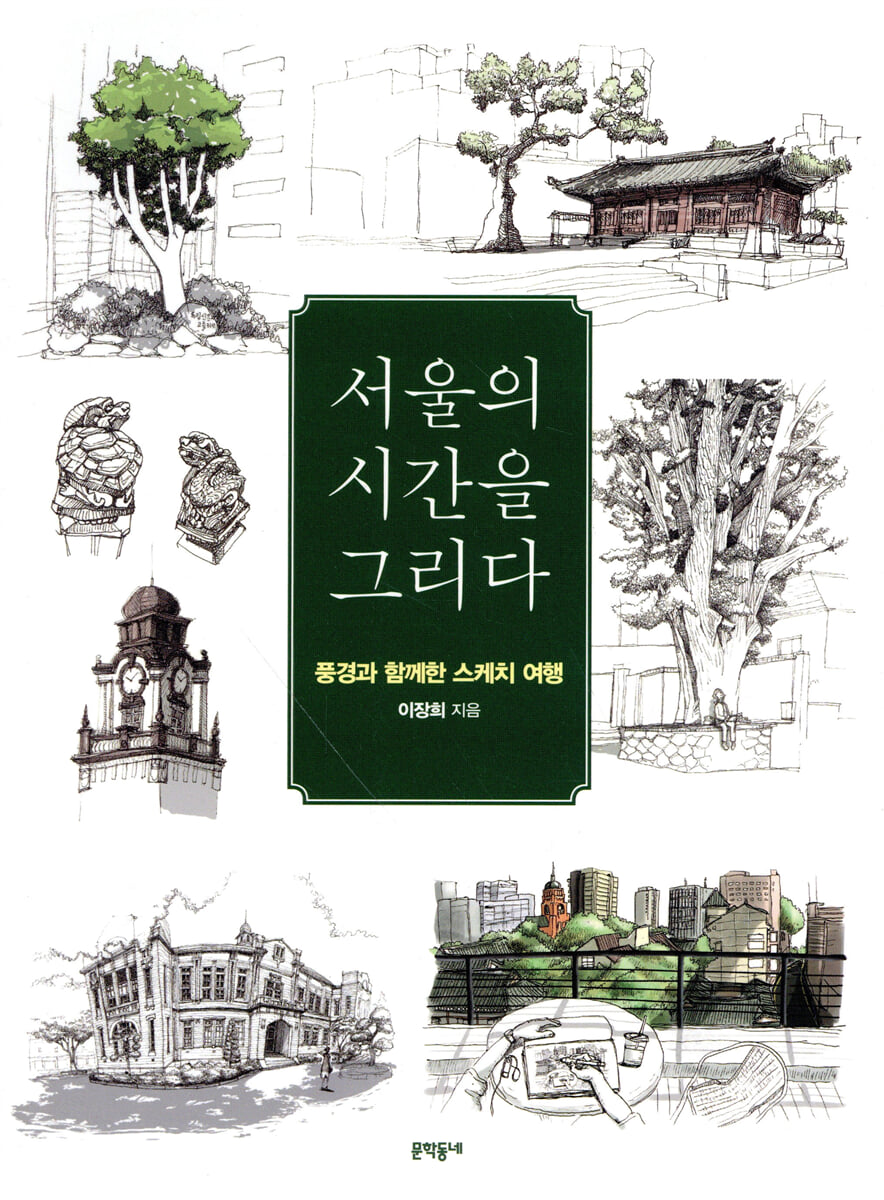 |
Description
Book Introduction
What color is your Seoul?
Seoul, a colorless city
Coloring with time and people
Since its publication in 2011, "Drawing Seoul's Time," which has been selected as an excellent liberal arts book by the Ministry of Culture, Sports and Tourism and has been loved by people from all walks of life, with numerous reviews from readers on online bookstores, has been republished with a new cover.
Artist Jang-hee Lee has contributed illustrations and columns to various media outlets including the Dong-A Ilbo, Buddhist Newspaper, and JoongAng Sunday, and has consistently communicated with the public through solo exhibitions such as ‘Seoul Story’ and ‘Jang-hee Lee’s Sketch Travel Exhibition.’ Through ‘Drawing the Time of Seoul,’ he introduces both the now-disappeared and newly-emerging landscapes of Seoul, showing that Seoul is not a bleak and chaotic city, but a city that lives and breathes alongside our lives like an organism.
Seoul, a colorless city
Coloring with time and people
Since its publication in 2011, "Drawing Seoul's Time," which has been selected as an excellent liberal arts book by the Ministry of Culture, Sports and Tourism and has been loved by people from all walks of life, with numerous reviews from readers on online bookstores, has been republished with a new cover.
Artist Jang-hee Lee has contributed illustrations and columns to various media outlets including the Dong-A Ilbo, Buddhist Newspaper, and JoongAng Sunday, and has consistently communicated with the public through solo exhibitions such as ‘Seoul Story’ and ‘Jang-hee Lee’s Sketch Travel Exhibition.’ Through ‘Drawing the Time of Seoul,’ he introduces both the now-disappeared and newly-emerging landscapes of Seoul, showing that Seoul is not a bleak and chaotic city, but a city that lives and breathes alongside our lives like an organism.
- You can preview some of the book's contents.
Preview
index
Publishing a revised and expanded edition
Opening Note_Pick up the pen
Chapter 1.
Gyeongbokgung Palace
Chapter 2.
Myeongdong
Chapter 3.
Sujin Palace
Chapter 4.
Hyoja-dong
Chapter 5.
Gwanghwamun Square
Chapter 6.
Jongno
Chapter 7.
Cheonggyecheon
Chapter 8.
Postal Service
Chapter 9.
Jeongdong
Chapter 10.
Hyehwa-dong
Chapter 11.
Gyeonggyojang
Chapter 12.
Dilkusha
Chapter 13.
Insa-dong
Chapter 14.
Sungnyemun
Chapter 15.
Hwangudan
Chapter 16.
Seoul City Wall
Scenes that I couldn't capture
Closing Notes_ Folding the Sketchnote
Opening Note_Pick up the pen
Chapter 1.
Gyeongbokgung Palace
Chapter 2.
Myeongdong
Chapter 3.
Sujin Palace
Chapter 4.
Hyoja-dong
Chapter 5.
Gwanghwamun Square
Chapter 6.
Jongno
Chapter 7.
Cheonggyecheon
Chapter 8.
Postal Service
Chapter 9.
Jeongdong
Chapter 10.
Hyehwa-dong
Chapter 11.
Gyeonggyojang
Chapter 12.
Dilkusha
Chapter 13.
Insa-dong
Chapter 14.
Sungnyemun
Chapter 15.
Hwangudan
Chapter 16.
Seoul City Wall
Scenes that I couldn't capture
Closing Notes_ Folding the Sketchnote
Publisher's Review
Meet Seoul here, now
Seoul is changing at a pace that rivals any other city in the world, keeping pace with the times.
However, Seoul cannot be seen as a city that is at the forefront of trends.
This is because it is a city that has been firmly established as the capital of our country for over 600 years, from the Joseon Dynasty to the present, at least half a millennium.
But it's not easy to find a place that resembles a long-standing center of power, history, and culture in downtown Seoul.
As Seoul went through turbulent times, such as the Japanese colonial period, the Korean War, and the post-war industrialization period, its links with the past gradually weakened, and the city became filled with high-rise buildings and apartments to the point where the term "historic city" became meaningless.
But the stories of old buildings and old people are hidden in the scenery we pass by without noticing.
This book brings to life, through delicate sketches, aspects of Seoul that we had not known about, a place that had been slightly hidden from our attention and had been covered in dust.
Lee Jang-hee searches for traces of the past, such as the birthplaces of people who cannot be left out of our history, such as Kwon Yul, Kim Jong-seo, Son Sun-hyo, Yi Hwang, and Jeong Do-jeon; the Dilkusha ginkgo tree that has been in the same place for hundreds of years but whose existence is unknown even to the local residents; and the Ungangdae engravings that are obscured by bushes and difficult to see. He laments the reality of historical sites silently disappearing due to development.
But I don't just indulge in sentimentality and say, 'Old Seoul was great.'
It also opens up expectations for the future of Seoul by covering things that are filling up the spaces of Seoul with new things, such as the Sejong-ro crosswalk, Gwanghwamun Square, the Seoul City Wall gradually regaining its old appearance, the Peace Monument in front of the Japanese Embassy, and the sculptures like the dasulgi (a type of tea tree) 'Spring' erected in Cheonggye Plaza.
Seoul is not an antique.
Because it is an organism that is constantly changing, car navigation companies are busy revising maps even today.
Many old buildings have disappeared in the name of development.
Looking around, the appearance after the Korean War and the appearance of a well-maintained new city are the main features.
It's shabby for a historical city.
So I became more curious about the things that had disappeared.
Now, I wanted to meet the old story that was hidden and out of sight because of the newly built high-rise buildings.
That's how I wanted to portray the past and present of Seoul.
I know full well that the Seoul in my sketch will continue to change with the passage of time.
So my Seoul sketching journey is also ongoing as long as I live.
_From the text (page 420)
Walking through Seoul's history
In 『Drawing the Time of Seoul』, Lee Jang-hee sketches the inside of the four great gates that formed the border of Hanyang, the capital of the Joseon Dynasty.
There is probably no one who has not heard of the places featured in this book, such as Gyeongbokgung Palace, Myeongdong, Sungnyemun, Insadong, Jeongdong, and Cheonggyecheon.
Because it is a familiar place, it is easy to think that everyone 'knows' this place.
But how many people truly understand the historical events that took place there or the significance of those places? Lee Jang-hee said, "As I traveled around capturing the scenery of Seoul, I gently layered history on the places I visited, and many new meanings emerged.
Since people began living on this land, there has been a cycle of birth and death, so there must be something that doesn't have a story. However, Seoul, the capital city where wars, coups, and revolutions have constantly occurred, has many strange and unfair stories," he said, adding colorful colors to Seoul through stories of history and people.
There is a hipped-and-gabled tile-roofed house on a main road less than five minutes away from Jonggak Station.
This is the Post Office, a post office with one of the longest histories in the world.
The Post Office began its postal service in 1884, but was closed after only about 20 days due to the Gapsin Coup and was used as a school.
It was almost used as material for the repair of Heunginjimun, but was purchased by the Ministry of Posts and Telecommunications just before it was to be dismantled and operated as a museum until it resumed its original function in 2012 after 128 years.
The Post Office was fortunate enough to survive, but unfortunately, many places have lost their original appearance.
It also conveys the sad sight of places struggling to survive in Seoul, such as Gyeonggyojang, where Baekbeom Kim Gu was assassinated, which is now located on one side of a modern hospital, Daehanmun, which was isolated on a traffic island during the expansion of Taepyeong-ro and then moved back from its original location, Dongsipjagak, which was left alone on the road without its mate, and Sungnyemun, which was lost in the flames.
As I wandered around capturing the scenery of Seoul and sprinkled history into the places I stayed, many new meanings were born.
Since people began living on this land, there must be a story behind the repeated cycle of birth and death. However, in the capital city of Seoul, where wars, coups, and revolutions have constantly occurred, there have been many strange and unfair stories.
_From the text (page 78)
When you change your mind, your trip to Seoul begins!
Traveling around Seoul is not difficult.
A journey begins with one step or one turn of mind from everyday life.
You don't have to pack extravagantly and plan your itinerary.
Seoul seen from a car is different from Seoul seen while walking.
Seoul, which you pass by, is different from Seoul, which you stop and look at for a moment.
Your trip to Seoul begins just by stepping into a place you might have passed by without a second thought.
Many Koreans and foreigners visit Myeongdong for shopping.
However, there are many other attractions here, including the Korea Electric Power Corporation building, the first in Korea to be designed to be earthquake- and fire-resistant, the Myeongdong Arts Theater, which symbolizes the city's past as a cultural center, the UNESCO Center, the first building to use glass as its exterior material, and the Small Nuri Ecological Park located on its rooftop.
Jeongdong-gil, which is always included in the list of Seoul streets worth walking, has a variety of hidden charms, including the old Shin-A Ilbo annex built with bricks imported directly from Shanghai, sculptures like [Jangdokdae] and [Rosy Life], Baejae School, now a history museum, the first broadcasting station located on the grounds of Deoksu Elementary School, and Sontag Hotel, Korea's first Western-style hotel.
You don't have to sketch Seoul like Lee Jang-hee.
It's okay to just stare blankly.
A trip to Seoul is enough if you just stay there and spend time watching people passing by and birds flying in the sky.
Although I lived in Seoul for a long time, I didn't know much about it, so I started a Seoul sketching trip with Lee Jang-hee. As I travel around Seoul, I'm sure Seoul will take on a different meaning than before.
The first reason I wanted to capture Seoul through sketches was because I wanted to ‘get to know Seoul better.’
Going back and forth between sketchbook and object countless times to complete a single drawing is the best way to get a feel for its outline, if not its inner workings.
How could you not grow closer to an object (or person) as you follow each line and learn about it? Through a series of actions, even an ordinary alleyway transforms into "the alleyway in my sketch."
But one of the great charms of sketching, the 'aesthetics of slowness', offers something even more special.
_From the text (page 419)
Seoul is changing at a pace that rivals any other city in the world, keeping pace with the times.
However, Seoul cannot be seen as a city that is at the forefront of trends.
This is because it is a city that has been firmly established as the capital of our country for over 600 years, from the Joseon Dynasty to the present, at least half a millennium.
But it's not easy to find a place that resembles a long-standing center of power, history, and culture in downtown Seoul.
As Seoul went through turbulent times, such as the Japanese colonial period, the Korean War, and the post-war industrialization period, its links with the past gradually weakened, and the city became filled with high-rise buildings and apartments to the point where the term "historic city" became meaningless.
But the stories of old buildings and old people are hidden in the scenery we pass by without noticing.
This book brings to life, through delicate sketches, aspects of Seoul that we had not known about, a place that had been slightly hidden from our attention and had been covered in dust.
Lee Jang-hee searches for traces of the past, such as the birthplaces of people who cannot be left out of our history, such as Kwon Yul, Kim Jong-seo, Son Sun-hyo, Yi Hwang, and Jeong Do-jeon; the Dilkusha ginkgo tree that has been in the same place for hundreds of years but whose existence is unknown even to the local residents; and the Ungangdae engravings that are obscured by bushes and difficult to see. He laments the reality of historical sites silently disappearing due to development.
But I don't just indulge in sentimentality and say, 'Old Seoul was great.'
It also opens up expectations for the future of Seoul by covering things that are filling up the spaces of Seoul with new things, such as the Sejong-ro crosswalk, Gwanghwamun Square, the Seoul City Wall gradually regaining its old appearance, the Peace Monument in front of the Japanese Embassy, and the sculptures like the dasulgi (a type of tea tree) 'Spring' erected in Cheonggye Plaza.
Seoul is not an antique.
Because it is an organism that is constantly changing, car navigation companies are busy revising maps even today.
Many old buildings have disappeared in the name of development.
Looking around, the appearance after the Korean War and the appearance of a well-maintained new city are the main features.
It's shabby for a historical city.
So I became more curious about the things that had disappeared.
Now, I wanted to meet the old story that was hidden and out of sight because of the newly built high-rise buildings.
That's how I wanted to portray the past and present of Seoul.
I know full well that the Seoul in my sketch will continue to change with the passage of time.
So my Seoul sketching journey is also ongoing as long as I live.
_From the text (page 420)
Walking through Seoul's history
In 『Drawing the Time of Seoul』, Lee Jang-hee sketches the inside of the four great gates that formed the border of Hanyang, the capital of the Joseon Dynasty.
There is probably no one who has not heard of the places featured in this book, such as Gyeongbokgung Palace, Myeongdong, Sungnyemun, Insadong, Jeongdong, and Cheonggyecheon.
Because it is a familiar place, it is easy to think that everyone 'knows' this place.
But how many people truly understand the historical events that took place there or the significance of those places? Lee Jang-hee said, "As I traveled around capturing the scenery of Seoul, I gently layered history on the places I visited, and many new meanings emerged.
Since people began living on this land, there has been a cycle of birth and death, so there must be something that doesn't have a story. However, Seoul, the capital city where wars, coups, and revolutions have constantly occurred, has many strange and unfair stories," he said, adding colorful colors to Seoul through stories of history and people.
There is a hipped-and-gabled tile-roofed house on a main road less than five minutes away from Jonggak Station.
This is the Post Office, a post office with one of the longest histories in the world.
The Post Office began its postal service in 1884, but was closed after only about 20 days due to the Gapsin Coup and was used as a school.
It was almost used as material for the repair of Heunginjimun, but was purchased by the Ministry of Posts and Telecommunications just before it was to be dismantled and operated as a museum until it resumed its original function in 2012 after 128 years.
The Post Office was fortunate enough to survive, but unfortunately, many places have lost their original appearance.
It also conveys the sad sight of places struggling to survive in Seoul, such as Gyeonggyojang, where Baekbeom Kim Gu was assassinated, which is now located on one side of a modern hospital, Daehanmun, which was isolated on a traffic island during the expansion of Taepyeong-ro and then moved back from its original location, Dongsipjagak, which was left alone on the road without its mate, and Sungnyemun, which was lost in the flames.
As I wandered around capturing the scenery of Seoul and sprinkled history into the places I stayed, many new meanings were born.
Since people began living on this land, there must be a story behind the repeated cycle of birth and death. However, in the capital city of Seoul, where wars, coups, and revolutions have constantly occurred, there have been many strange and unfair stories.
_From the text (page 78)
When you change your mind, your trip to Seoul begins!
Traveling around Seoul is not difficult.
A journey begins with one step or one turn of mind from everyday life.
You don't have to pack extravagantly and plan your itinerary.
Seoul seen from a car is different from Seoul seen while walking.
Seoul, which you pass by, is different from Seoul, which you stop and look at for a moment.
Your trip to Seoul begins just by stepping into a place you might have passed by without a second thought.
Many Koreans and foreigners visit Myeongdong for shopping.
However, there are many other attractions here, including the Korea Electric Power Corporation building, the first in Korea to be designed to be earthquake- and fire-resistant, the Myeongdong Arts Theater, which symbolizes the city's past as a cultural center, the UNESCO Center, the first building to use glass as its exterior material, and the Small Nuri Ecological Park located on its rooftop.
Jeongdong-gil, which is always included in the list of Seoul streets worth walking, has a variety of hidden charms, including the old Shin-A Ilbo annex built with bricks imported directly from Shanghai, sculptures like [Jangdokdae] and [Rosy Life], Baejae School, now a history museum, the first broadcasting station located on the grounds of Deoksu Elementary School, and Sontag Hotel, Korea's first Western-style hotel.
You don't have to sketch Seoul like Lee Jang-hee.
It's okay to just stare blankly.
A trip to Seoul is enough if you just stay there and spend time watching people passing by and birds flying in the sky.
Although I lived in Seoul for a long time, I didn't know much about it, so I started a Seoul sketching trip with Lee Jang-hee. As I travel around Seoul, I'm sure Seoul will take on a different meaning than before.
The first reason I wanted to capture Seoul through sketches was because I wanted to ‘get to know Seoul better.’
Going back and forth between sketchbook and object countless times to complete a single drawing is the best way to get a feel for its outline, if not its inner workings.
How could you not grow closer to an object (or person) as you follow each line and learn about it? Through a series of actions, even an ordinary alleyway transforms into "the alleyway in my sketch."
But one of the great charms of sketching, the 'aesthetics of slowness', offers something even more special.
_From the text (page 419)
GOODS SPECIFICS
- Date of issue: July 19, 2019
- Page count, weight, size: 424 pages | 734g | 173*235*30mm
- ISBN13: 9788954657044
- ISBN10: 8954657044
You may also like
카테고리
korean


korean

![GQ KOREA Mark (Monthly): December [2025]](http://librairie.coreenne.fr/cdn/shop/files/8ef265dbbfbf186523ed75ba7319009d.jpg?v=1765340328&width=3840)


