

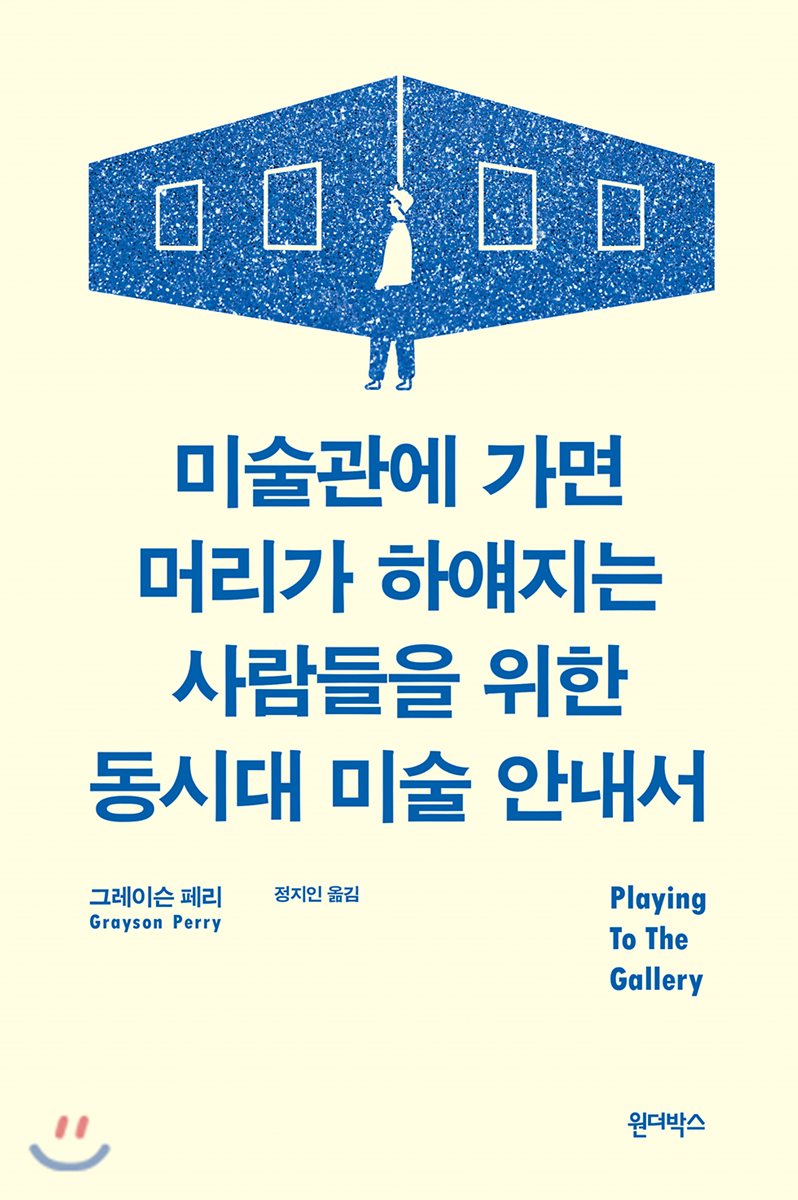
A Guide to Contemporary Art for Those Who Go Gray When They Visit Art Museums
 |
Description
Book Introduction
A compact introduction to contemporary art by Grayson Perry, a world-renowned ceramicist, Turner Prize winner, OBE, Fellow of the Royal Academy of Arts, and crossdresser. In this book, he delves into the workings of the world of contemporary art, mixing in his signature black humor. He also shares the artist's innermost thoughts honestly based on his own experiences. For the average art lover, this book will provide an insight into the ambiguous and esoteric world of contemporary art, allowing them to grasp its essence. And if you're a working artist, you'll find in this book not only warm comfort and a sense of solidarity, but also powerful and ingenious tips for building your career. In 2013, Grayson Perry became the first visual artist to tell the story of contemporary art in his BBC Rees Lectures. The annual Rees Lectures, held on BBC Radio since 1948, have featured leading intellectuals such as Stephen Hawking, Bertrand Russell, and Michael Sandel, and Grayson Perry's lectures were among the most popular. This book is based on this lecture. Source: Art critic Ban I-jeong's YouTube channel |
- You can preview some of the book's contents.
Preview
index
Prologue_Welcome to Art World!
Chapter 1: Democracy is a matter of taste.
Things to keep in mind when talking about aesthetic value
How much is the art?
Who proves the value of art?
What is this 'saying'?
Is there even such a thing as a standard?
Chapter 2: Pushing the Boundaries of Art
When he called it art, it became art.
Sitting down and doing art
What on earth is art?
Eight Boundaries That Distinguish Art from Non-Art
The Crisis of Art vs.
The possibilities of art
Chapter 3: Come on in, cool rebellion!
Welcome to Art World, it's going to be awesome!
The artist's illusions, anxieties, and reality
Bring revolution, I'll give you money
The artist's last weapon
Moments from 8-track tape
I am a serious artist
Chapter 4 I Discovered Myself in the World of Art
A work of art that is not shown to anyone
What You Really Get Out of Art College
How Artists Build Their Careers
Everyone needs their own escape.
Epilogue_The book ends, but
thank you
Chapter 1: Democracy is a matter of taste.
Things to keep in mind when talking about aesthetic value
How much is the art?
Who proves the value of art?
What is this 'saying'?
Is there even such a thing as a standard?
Chapter 2: Pushing the Boundaries of Art
When he called it art, it became art.
Sitting down and doing art
What on earth is art?
Eight Boundaries That Distinguish Art from Non-Art
The Crisis of Art vs.
The possibilities of art
Chapter 3: Come on in, cool rebellion!
Welcome to Art World, it's going to be awesome!
The artist's illusions, anxieties, and reality
Bring revolution, I'll give you money
The artist's last weapon
Moments from 8-track tape
I am a serious artist
Chapter 4 I Discovered Myself in the World of Art
A work of art that is not shown to anyone
What You Really Get Out of Art College
How Artists Build Their Careers
Everyone needs their own escape.
Epilogue_The book ends, but
thank you
Detailed image

Into the book
“One day I created a jar called ‘Affectionate Agreement.’
At that time, I received a list of the top 50 people and institutions that would be good candidates for my work from the dealer, and wrote their names on the jar as decoration.
The jar was exhibited at the Turner Prize exhibition, and one of the names on the jar, a major collector named Dakis Joannou, saw it at the Tate Gallery and phoned to buy it.
As a side note, this is a little tip for artists.” _Pages 38-39
There is something I have learned through my experience with the definition of art.
The point is that art revolves around boundaries of taste, not formal boundaries such as what an artist should do.
I think that's an example of vulgarity.
Beneath the seemingly sophisticated and tolerant attitude of “Yes, anyone can make art and everything they do can be art,” there is, interestingly, a kind of class snobbery.
Page 80
Tattoos, piercings, drugs, interracial sex and fetishism were once considered subversive and dangerous, tools used by artists to show their freedom and uniqueness, but now all of this can be easily seen on Saturday night family-watched reality music audition show "The X Factor."
So now the last truly dangerous thing left, the one thing you'll never see, is armpit hair! _Pages 124-125
When creating a work, the meaning contained in the children's work, the message they want to convey, and the emotions they express all spill out without the children even realizing it.
I'm sure the art teacher who told me I would do well in art school saw traces of my unconsciousness that had seeped into my paintings and stained them like stains.
The teacher noticed that while I was very awkward expressing myself verbally as a teenager, I expressed myself much more through my drawings.
Page 158
A friend asked the children, “What do you think contemporary artists do?”
Then one kid raised his hand quite precociously and said, “I sit at Starbucks and just laze around and eat an organic salad.”
I thought that was a pretty accurate description of what many artists do in the city's glamorous districts.
After the children had spent some time learning about what contemporary artists were doing, at the end of the program, my friend asked again.
“What do you think contemporary artists are doing these days?” Then the same kid spoke again.
“They know things,” I thought.
'Wow, this is a really short and sharp definition of what an artist does!' _pp. 162-163
Finnish photographer Arno Minkinen came up with the 'Helsinki Bus Terminal Theory' in 2004.
Leaving art school and choosing your own style and path in the art world is a bit like getting on a bus at the Helsinki bus terminal.
There are about 20 platforms, and each platform has about 10 types of buses.
An ambitious young man, a graduate of art college, chooses a bus and boards it.
After about three stops (each stop representing a year in his career), he gets off the bus and goes into a gallery to show his work.
People who saw it said, “Oh, it’s very good, it’s very good.
“But it reminds me of Martin Parr,” he says.
Then he says, “Ugh!! I’m not original.
“I’m not unique!” he says, feeling very discouraged.
So I catch a taxi, go back to the bus terminal, and get on another bus.
And of course… the same thing happens again.
Minkinen says:
“All you have to do is stay on that damn bus!” _Page 171
The art world is a place where sarcasm often runs rampant, and such sarcasm has the quality of corroding delicate organisms like creative impulses.
I protect my bundle of creative energy.
He protects it with a shield of irony of hypocritical indifference, a helmet of mischief, and a breastplate of wit.
And he wields the carefully sharpened blade of cynicism.
Because the part of me that keeps me going as the sun goes down is too vulnerable to be completely exposed to the world's harsh eyes.
Page 178
If you're still unsure how to react when encountering a contemporary work of art, try a thought exercise I often use.
Imagine what kind of conversation would take place a century later when someone were to put that piece up for appraisal on a 22nd-century edition of "Authentic Masterpieces."
I have seen great results with this method.
Page 186
At that time, I received a list of the top 50 people and institutions that would be good candidates for my work from the dealer, and wrote their names on the jar as decoration.
The jar was exhibited at the Turner Prize exhibition, and one of the names on the jar, a major collector named Dakis Joannou, saw it at the Tate Gallery and phoned to buy it.
As a side note, this is a little tip for artists.” _Pages 38-39
There is something I have learned through my experience with the definition of art.
The point is that art revolves around boundaries of taste, not formal boundaries such as what an artist should do.
I think that's an example of vulgarity.
Beneath the seemingly sophisticated and tolerant attitude of “Yes, anyone can make art and everything they do can be art,” there is, interestingly, a kind of class snobbery.
Page 80
Tattoos, piercings, drugs, interracial sex and fetishism were once considered subversive and dangerous, tools used by artists to show their freedom and uniqueness, but now all of this can be easily seen on Saturday night family-watched reality music audition show "The X Factor."
So now the last truly dangerous thing left, the one thing you'll never see, is armpit hair! _Pages 124-125
When creating a work, the meaning contained in the children's work, the message they want to convey, and the emotions they express all spill out without the children even realizing it.
I'm sure the art teacher who told me I would do well in art school saw traces of my unconsciousness that had seeped into my paintings and stained them like stains.
The teacher noticed that while I was very awkward expressing myself verbally as a teenager, I expressed myself much more through my drawings.
Page 158
A friend asked the children, “What do you think contemporary artists do?”
Then one kid raised his hand quite precociously and said, “I sit at Starbucks and just laze around and eat an organic salad.”
I thought that was a pretty accurate description of what many artists do in the city's glamorous districts.
After the children had spent some time learning about what contemporary artists were doing, at the end of the program, my friend asked again.
“What do you think contemporary artists are doing these days?” Then the same kid spoke again.
“They know things,” I thought.
'Wow, this is a really short and sharp definition of what an artist does!' _pp. 162-163
Finnish photographer Arno Minkinen came up with the 'Helsinki Bus Terminal Theory' in 2004.
Leaving art school and choosing your own style and path in the art world is a bit like getting on a bus at the Helsinki bus terminal.
There are about 20 platforms, and each platform has about 10 types of buses.
An ambitious young man, a graduate of art college, chooses a bus and boards it.
After about three stops (each stop representing a year in his career), he gets off the bus and goes into a gallery to show his work.
People who saw it said, “Oh, it’s very good, it’s very good.
“But it reminds me of Martin Parr,” he says.
Then he says, “Ugh!! I’m not original.
“I’m not unique!” he says, feeling very discouraged.
So I catch a taxi, go back to the bus terminal, and get on another bus.
And of course… the same thing happens again.
Minkinen says:
“All you have to do is stay on that damn bus!” _Page 171
The art world is a place where sarcasm often runs rampant, and such sarcasm has the quality of corroding delicate organisms like creative impulses.
I protect my bundle of creative energy.
He protects it with a shield of irony of hypocritical indifference, a helmet of mischief, and a breastplate of wit.
And he wields the carefully sharpened blade of cynicism.
Because the part of me that keeps me going as the sun goes down is too vulnerable to be completely exposed to the world's harsh eyes.
Page 178
If you're still unsure how to react when encountering a contemporary work of art, try a thought exercise I often use.
Imagine what kind of conversation would take place a century later when someone were to put that piece up for appraisal on a 22nd-century edition of "Authentic Masterpieces."
I have seen great results with this method.
Page 186
--- From the text
Publisher's Review
“In this book, I want to pose and answer the basic questions that people might have when they visit an art museum, questions that they usually avoid asking for fear of appearing too ignorant.” (p. 12)
'This is a work of art?'
It's been 100 years since urinals became works of art.
After that, there was an artist who replaced portraits with telegrams and sold his own excrement in cans for the equivalent weight of gold.
It happened about 50 years ago.
These days, some artists "recommercialize" Duchamp's famous urinal by pouring real urine into it, others place famous actors in glass cases for audiences to admire, and others create virtual situations in exhibition halls, where the viewer's interactions within those situations create a new, fresh work of art each time (meaning even the viewer's interactions are considered elements of the work).
In this flow, artists may have enjoyed the freedom to create, but viewers' minds have become increasingly gray.
"Is this a work of art?" Ordinary viewers are perplexed when faced with contemporary art exhibited in an art museum.
But did you know that so-called experts aren't all that different from ordinary viewers?
So there's no need to be discouraged.
Even I still find commercial galleries, especially, quite intimidating.
The front desk is manned by gallery ladies who are so chic they're almost daunting, and the atmosphere of hushed praise for mysterious and incomprehensible objects in this expensive and stylish concrete building that occupies an enormous lot is also uncomfortable.
Not to mention the often overblown, over-the-top terminology of the art world, which often lacks clarity (p. 14).
This is the confession of Grayson Perry, a full member of the art world (world-renowned ceramic artist, Turner Prize winner, OBE, Fellow of the Royal Academy of Arts) and author of the book, "A Guide to Contemporary Art for People Who Go Gray When They Go to Art Museums."
What is contemporary art?
'Contemporary art' literally means art of the present era (this also means that in the distant future, today's contemporary art will be called by a different name).
In art history, it refers to art after 1978, but in Korea, the term 'contemporary art' is not often used and is often lumped together as 'modern art'.
Why does this term, which simply distinguishes a period, feel so difficult? It's because contemporary art is an extension of modern art.
In the era of modern art, the scope of art has expanded explosively, no longer remaining limited to traditional forms such as drawing, painting, and sculpture.
As I said before, even poop became art 50 years ago, and now even computer programs are becoming art.
So, contemporary art is bound to seem increasingly unfamiliar to the average viewer.
Fujida talks about innovation
In an era where everything can become art, or in other words, an era where the boundaries of what constitutes art have disappeared, paradoxically, this is an era where works that “cross the boundaries of what can be art” no longer emerge.
This means that fundamental innovations like those that have occurred in contemporary art are no longer possible, as the boundaries of art have disappeared.
Even if a new idea pops into your head, don't expect it to be new, because if you search the Internet, there's a good chance that someone else has already done it.
In this day and age, “originality” is something that people forget or don’t search on the internet!
If someone were to ask artists what the cutting edge idea of today is, they would probably chuckle.
Because they think that a new idea is just a slight twist on the current trend.
Aesthetic upheaval and cultural upheaval are relatively commonplace concepts in today's art. (p. 113)
So, now, the only thing that can be new is the ‘meaning’ and ‘energy’ that the artist is trying to convey.
This is why the artist's self-consciousness is so strongly interfering with art today.
Artists must “reflect, based on self-consciousness, not only on ‘what to create and how to create,’ but also on ‘what exactly is this thing called art?’”
How to distinguish between art and non-art
Because the artist's self-consciousness has become so strongly embedded and the limitations of expression have disappeared, contemporary art has become an object of mystery (unless the self-consciousness of the artist and the viewer is highly synchronized).
This is why it is said that contemporary art is not an object of understanding, but an object of appreciation.
Maybe that's why.
In this book, Grayson Perry focuses on explaining the workings of the contemporary art world and the inner thoughts of artists, rather than going into individual works to explain them.
'This is how the world works.
When you realize, 'This is what artists are like!', it becomes easier to approach the work with an open mind (the most essential quality for appreciating it).
Even so, shouldn't there be some minimum standard by which we can determine what is art and what is not art?
There is a clear difference between a kindergartener's drawing and an artist's work.
Grayson Perry introduces eight testing techniques he calls “border-pushing art.”
To name just three, the first is, 'Is it just a boring version of something else?'
What is defined as art has neither entertainment value nor pleasure.
Next up is something called the 'Handbag and Hipster Test'.
“If you see people with beards, glasses, and single-speed bicycles, or privileged ladies carrying big, fancy handbags, looking at something and looking bewildered or confused by what they’re seeing,” then it’s likely a work of art.
Finally, there is also the 'garbage dump test'.
“If a work of art is placed in a garbage dump, it qualifies as a work of art only if someone passing by sees it and wonders why it was thrown away.”
Come! Into the wide and warm embrace of contemporary art.
We can easily become timid when it comes to art and art appreciation.
It's like saying that you can't enjoy a work of art without a lot of academic and historical knowledge.
But if there's one message I hope readers take away from this book, it's that anyone can enjoy art and anyone can live a life of art.
Even I, a cross-dressing potter from Essex, was accepted into the mafia of the art world. (p. 10) So even making traditional pottery was ultimately welcomed and accepted. (p. 118)
This hospitality from the art world isn't limited to those we call "artists."
As viewers, we can all experience freedom of spirit by observing the various attempts at contemporary art and make it our own.
Moreover, as German artist Joseph Beuys said, "Everyone can be an artist," we can express ourselves more truthfully through artistic activities (where formal limitations disappear and, in essence, the need for evaluation disappears).
Grayson Perry says this is the essence of art.
Whether through appreciation or expression, art ultimately enriches and fulfills our lives.
He wrote the book, he said, "to help people like the Scarecrow, the Tin Woodman, and the Cowardly Lion enter the Emerald City of the art world a little smarter, a little braver, and a little more kindly."
In short, this book is an invitation to contemporary art.
It flew to me and you.
'This is a work of art?'
It's been 100 years since urinals became works of art.
After that, there was an artist who replaced portraits with telegrams and sold his own excrement in cans for the equivalent weight of gold.
It happened about 50 years ago.
These days, some artists "recommercialize" Duchamp's famous urinal by pouring real urine into it, others place famous actors in glass cases for audiences to admire, and others create virtual situations in exhibition halls, where the viewer's interactions within those situations create a new, fresh work of art each time (meaning even the viewer's interactions are considered elements of the work).
In this flow, artists may have enjoyed the freedom to create, but viewers' minds have become increasingly gray.
"Is this a work of art?" Ordinary viewers are perplexed when faced with contemporary art exhibited in an art museum.
But did you know that so-called experts aren't all that different from ordinary viewers?
So there's no need to be discouraged.
Even I still find commercial galleries, especially, quite intimidating.
The front desk is manned by gallery ladies who are so chic they're almost daunting, and the atmosphere of hushed praise for mysterious and incomprehensible objects in this expensive and stylish concrete building that occupies an enormous lot is also uncomfortable.
Not to mention the often overblown, over-the-top terminology of the art world, which often lacks clarity (p. 14).
This is the confession of Grayson Perry, a full member of the art world (world-renowned ceramic artist, Turner Prize winner, OBE, Fellow of the Royal Academy of Arts) and author of the book, "A Guide to Contemporary Art for People Who Go Gray When They Go to Art Museums."
What is contemporary art?
'Contemporary art' literally means art of the present era (this also means that in the distant future, today's contemporary art will be called by a different name).
In art history, it refers to art after 1978, but in Korea, the term 'contemporary art' is not often used and is often lumped together as 'modern art'.
Why does this term, which simply distinguishes a period, feel so difficult? It's because contemporary art is an extension of modern art.
In the era of modern art, the scope of art has expanded explosively, no longer remaining limited to traditional forms such as drawing, painting, and sculpture.
As I said before, even poop became art 50 years ago, and now even computer programs are becoming art.
So, contemporary art is bound to seem increasingly unfamiliar to the average viewer.
Fujida talks about innovation
In an era where everything can become art, or in other words, an era where the boundaries of what constitutes art have disappeared, paradoxically, this is an era where works that “cross the boundaries of what can be art” no longer emerge.
This means that fundamental innovations like those that have occurred in contemporary art are no longer possible, as the boundaries of art have disappeared.
Even if a new idea pops into your head, don't expect it to be new, because if you search the Internet, there's a good chance that someone else has already done it.
In this day and age, “originality” is something that people forget or don’t search on the internet!
If someone were to ask artists what the cutting edge idea of today is, they would probably chuckle.
Because they think that a new idea is just a slight twist on the current trend.
Aesthetic upheaval and cultural upheaval are relatively commonplace concepts in today's art. (p. 113)
So, now, the only thing that can be new is the ‘meaning’ and ‘energy’ that the artist is trying to convey.
This is why the artist's self-consciousness is so strongly interfering with art today.
Artists must “reflect, based on self-consciousness, not only on ‘what to create and how to create,’ but also on ‘what exactly is this thing called art?’”
How to distinguish between art and non-art
Because the artist's self-consciousness has become so strongly embedded and the limitations of expression have disappeared, contemporary art has become an object of mystery (unless the self-consciousness of the artist and the viewer is highly synchronized).
This is why it is said that contemporary art is not an object of understanding, but an object of appreciation.
Maybe that's why.
In this book, Grayson Perry focuses on explaining the workings of the contemporary art world and the inner thoughts of artists, rather than going into individual works to explain them.
'This is how the world works.
When you realize, 'This is what artists are like!', it becomes easier to approach the work with an open mind (the most essential quality for appreciating it).
Even so, shouldn't there be some minimum standard by which we can determine what is art and what is not art?
There is a clear difference between a kindergartener's drawing and an artist's work.
Grayson Perry introduces eight testing techniques he calls “border-pushing art.”
To name just three, the first is, 'Is it just a boring version of something else?'
What is defined as art has neither entertainment value nor pleasure.
Next up is something called the 'Handbag and Hipster Test'.
“If you see people with beards, glasses, and single-speed bicycles, or privileged ladies carrying big, fancy handbags, looking at something and looking bewildered or confused by what they’re seeing,” then it’s likely a work of art.
Finally, there is also the 'garbage dump test'.
“If a work of art is placed in a garbage dump, it qualifies as a work of art only if someone passing by sees it and wonders why it was thrown away.”
Come! Into the wide and warm embrace of contemporary art.
We can easily become timid when it comes to art and art appreciation.
It's like saying that you can't enjoy a work of art without a lot of academic and historical knowledge.
But if there's one message I hope readers take away from this book, it's that anyone can enjoy art and anyone can live a life of art.
Even I, a cross-dressing potter from Essex, was accepted into the mafia of the art world. (p. 10) So even making traditional pottery was ultimately welcomed and accepted. (p. 118)
This hospitality from the art world isn't limited to those we call "artists."
As viewers, we can all experience freedom of spirit by observing the various attempts at contemporary art and make it our own.
Moreover, as German artist Joseph Beuys said, "Everyone can be an artist," we can express ourselves more truthfully through artistic activities (where formal limitations disappear and, in essence, the need for evaluation disappears).
Grayson Perry says this is the essence of art.
Whether through appreciation or expression, art ultimately enriches and fulfills our lives.
He wrote the book, he said, "to help people like the Scarecrow, the Tin Woodman, and the Cowardly Lion enter the Emerald City of the art world a little smarter, a little braver, and a little more kindly."
In short, this book is an invitation to contemporary art.
It flew to me and you.
GOODS SPECIFICS
- Date of issue: April 11, 2019
- Page count, weight, size: 189 pages | 189g | 125*188*20mm
- ISBN13: 9788998602901
- ISBN10: 8998602903
You may also like
카테고리
korean


korean

![GQ KOREA Mark (Monthly): December [2025]](http://librairie.coreenne.fr/cdn/shop/files/8ef265dbbfbf186523ed75ba7319009d.jpg?v=1765340328&width=3840)


