

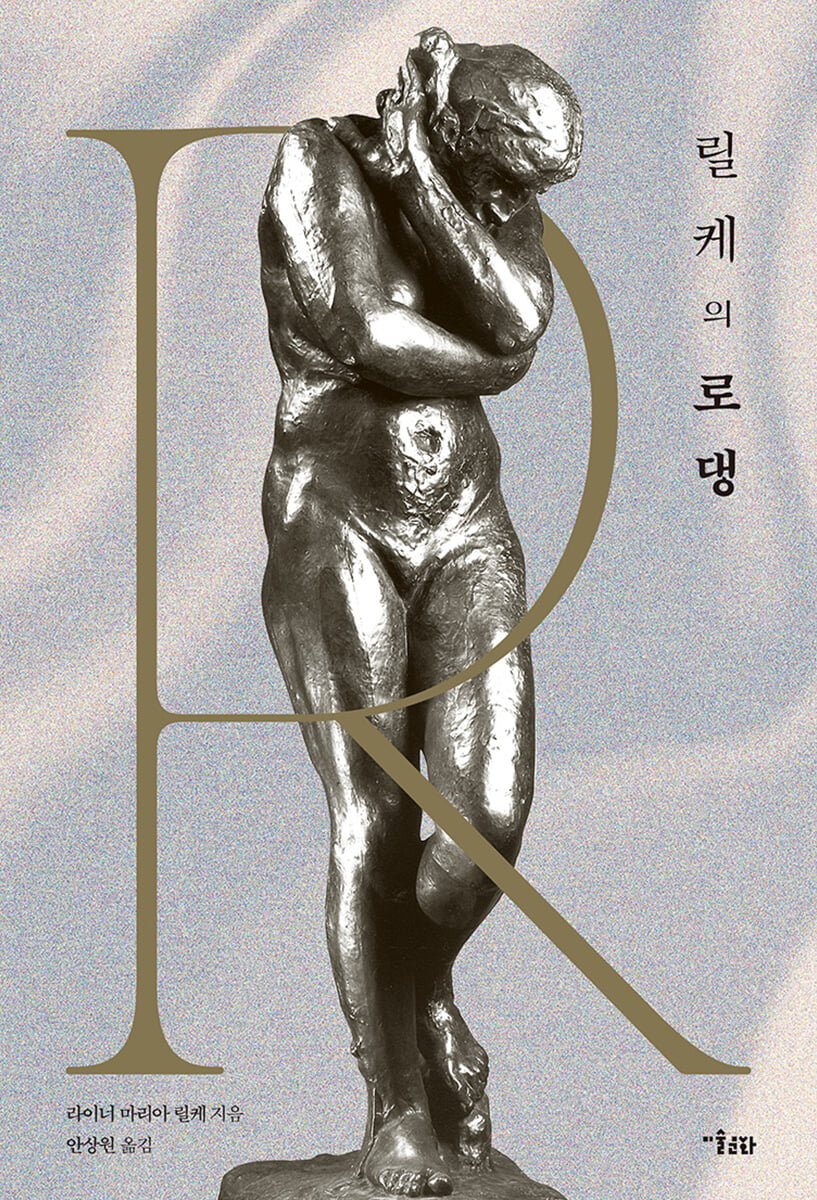
Rilke's Rodin
 |
Description
Book Introduction
Rodin and Rilke: A Meeting of Two Art Masters
Documenting Rodin's life and art through Rilke's lyrical language.
Rainer Maria Rilke, a young poet at the age of 27, met the great sculptor Auguste Rodin in Paris in 1902 and perfected his own artistic vision.
"Rilke's Rodin" is a record of Rilke's thoughts, expressed in his own beautiful style, about his attitude as an artist, which he realized through constant observation and study of Rodin.
Rilke does not simply describe the sculpture.
It captures the patience, the joy of creation, and the artist's attitude toward the world.
As you read about the process of a human being perfecting himself through art, you will realize that looking at a sculpture is like looking at life.
KBS Radio's "Small Bookstore" "Jang Kang-myeong's Book of Life"
Recommended by Kim So-young, author of "The World of Children"!
“Rilke’s writing style immediately captivates the reader.
Even if you have no background in sculpture or art, or are unfamiliar with Rilke or Rodin, you will be drawn into the book as soon as you open the first chapter.
And maybe, like me, you'll keep it around for a long time.”
Documenting Rodin's life and art through Rilke's lyrical language.
Rainer Maria Rilke, a young poet at the age of 27, met the great sculptor Auguste Rodin in Paris in 1902 and perfected his own artistic vision.
"Rilke's Rodin" is a record of Rilke's thoughts, expressed in his own beautiful style, about his attitude as an artist, which he realized through constant observation and study of Rodin.
Rilke does not simply describe the sculpture.
It captures the patience, the joy of creation, and the artist's attitude toward the world.
As you read about the process of a human being perfecting himself through art, you will realize that looking at a sculpture is like looking at life.
KBS Radio's "Small Bookstore" "Jang Kang-myeong's Book of Life"
Recommended by Kim So-young, author of "The World of Children"!
“Rilke’s writing style immediately captivates the reader.
Even if you have no background in sculpture or art, or are unfamiliar with Rilke or Rodin, you will be drawn into the book as soon as you open the first chapter.
And maybe, like me, you'll keep it around for a long time.”
- You can preview some of the book's contents.
Preview
index
Recommendation
Part 1: Life, This Surprise - To a Young Woman Sculptor, Paris, December 1902
Part 2: The Forces of Nature - Lecture, 1907
Addendum_ About the Labor Tower
Translator's Note: Rodin and Rilke's Literature
Rodin Chronology
List of plates
Part 1: Life, This Surprise - To a Young Woman Sculptor, Paris, December 1902
Part 2: The Forces of Nature - Lecture, 1907
Addendum_ About the Labor Tower
Translator's Note: Rodin and Rilke's Literature
Rodin Chronology
List of plates
Detailed image

Into the book
Before he achieved fame, Rodin was lonely.
And the fame that followed probably made him even more lonely.
Because fame is ultimately nothing more than the sum of all the misunderstandings that surround a new name.
--- p.11
There was a task here, a task as great as the world.
And the person who stood before this task and saw it was an unknown man who was groping in the darkness for something to eat.
He was completely alone, and if he were truly a dreamer, he must have had beautiful and deep dreams.
You must have had one of those long, long dreams that no one can understand, one that makes your whole life seem like a day.
This young man, who worked in a factory in Sevres, was a dreamer whose dream was within his grasp, and he immediately set about making it come true.
He knew where to begin, for the stillness within him showed him the wise path.
--- p.24
He read Dante's Divine Comedy for the first time.
It was a kind of revelation.
He saw vividly the suffering bodies of other races, he saw a century of torn garments, and he saw the great and unforgettable judgment of a poet upon his own age.
The awards that appeared there acknowledged Rodin's legitimacy.
So when Rodin read that Nicholas III's feet were crying, he already knew.
That there are crying feet, that crying is everywhere, beyond the perfect human being, that there are enormous tears welling up from every pore.
--- p.33
This serious and calm worker, who never went out to find materials and who wanted no other accomplishment than what he could do with his maturing tools, followed this path through all the dramas of life.
Now before him lay the nights of profound love, the wide world, dark and full of pleasure and sorrow.
In this world, as in the heroic world, there were no clothes, faces were erased, and bodies were important.
He entered into the great chaos of this struggle with a burning sense of purpose as a man in pursuit of life.
--- p.66
He spreads his hands in the air, releasing something as if giving freedom to a bird.
It's a breakup.
A farewell to all that is uncertain, a farewell to the happiness I have yet to taste, a farewell to the agony of the wait now in vain, a farewell to people who live somewhere and who I might meet someday, a farewell to all the possibilities of tomorrow and the day after, and it is also a farewell to death, which I thought would remain far away, that I would meet gently and quietly at the end of a long, long time.
--- p.118
One day we will recognize what it was that made this great artist so great, what made him want nothing more than to become a workman, to immerse himself with all his might in the low, rough presence of his tool.
There was also a kind of resignation to life.
But through this perseverance he eventually gained life.
Because the world has come to his tools.
--- p.135
But who can stem the tide of lovers rising out there, in the sea of art? With these mercilessly interwoven figures, fates, sweet yet desperate names, approach.
But then suddenly they disappear like a fading light.
So we see the remaining floor.
We see men and women.
Again we see men and women, again and again men and women.
And the longer we look at it, the simpler its content becomes, until in the end, what remains before our eyes are objects.
--- p.157
Patience was in the love of the one who worked, and because of love his patience was constantly renewed.
Perhaps the secret of this price is that he was the one she loved and nothing could resist him.
His demands were so long, so passionate, and so constant that all things yielded to him.
--- p.160
It is predictable that artists would eventually accept this war that is constantly being declared.
Depending on the person, this person or that person may have been gripped by discomfort and anxiety.
But in that case, the artist going out to the battlefield cannot help but be completely separated from his work.
Rodin's triumph lies in his tenacity in his work, in his response to destruction in a natural way: with a new beginning and a tenfold increase in fruition.
--- p.183
There are countless writings and new writings about Rodin today.
Although Rilke's "On Rodin" is only a small part of this, Rilke's exceptional ability to interpret individual sculptures in a unique way, and his ability to grasp the essence of Rodin's art and focus his entire work on it, still maintains a secure place in the Rodin study catalogue today.
--- p.217
Just as art is a confrontation with the existing reality, the life of an artist is also bound to ultimately experience discord with the life of a citizen.
Rilke recognized that great artists had no choice but to give up everyday happiness for the sake of their art, and his idealized great artists included Rodin, Cézanne, and Tolstoy.
Rilke, who confirmed this in his first meeting with Rodin, came to the conclusion in a letter written on September 5th that life (civic daily life) and art were a matter of choosing between the two.
--- p.221
Rilke's repeated statements prove that Rodin's great art was born from such constant physical effort.
Rilke, observing Rodin's immersion in his work, realized that he himself was woefully lacking in such intensity.
It is said that Rilke once complained to Rodin about the anxiety he felt as he adjusted to his new life in Paris, to which Rodin replied, “Toujours trayailler” (Keep working).
Afterwards, Rodin's one-liner reply was deeply imprinted on Rilke as a principle of life.
And the fame that followed probably made him even more lonely.
Because fame is ultimately nothing more than the sum of all the misunderstandings that surround a new name.
--- p.11
There was a task here, a task as great as the world.
And the person who stood before this task and saw it was an unknown man who was groping in the darkness for something to eat.
He was completely alone, and if he were truly a dreamer, he must have had beautiful and deep dreams.
You must have had one of those long, long dreams that no one can understand, one that makes your whole life seem like a day.
This young man, who worked in a factory in Sevres, was a dreamer whose dream was within his grasp, and he immediately set about making it come true.
He knew where to begin, for the stillness within him showed him the wise path.
--- p.24
He read Dante's Divine Comedy for the first time.
It was a kind of revelation.
He saw vividly the suffering bodies of other races, he saw a century of torn garments, and he saw the great and unforgettable judgment of a poet upon his own age.
The awards that appeared there acknowledged Rodin's legitimacy.
So when Rodin read that Nicholas III's feet were crying, he already knew.
That there are crying feet, that crying is everywhere, beyond the perfect human being, that there are enormous tears welling up from every pore.
--- p.33
This serious and calm worker, who never went out to find materials and who wanted no other accomplishment than what he could do with his maturing tools, followed this path through all the dramas of life.
Now before him lay the nights of profound love, the wide world, dark and full of pleasure and sorrow.
In this world, as in the heroic world, there were no clothes, faces were erased, and bodies were important.
He entered into the great chaos of this struggle with a burning sense of purpose as a man in pursuit of life.
--- p.66
He spreads his hands in the air, releasing something as if giving freedom to a bird.
It's a breakup.
A farewell to all that is uncertain, a farewell to the happiness I have yet to taste, a farewell to the agony of the wait now in vain, a farewell to people who live somewhere and who I might meet someday, a farewell to all the possibilities of tomorrow and the day after, and it is also a farewell to death, which I thought would remain far away, that I would meet gently and quietly at the end of a long, long time.
--- p.118
One day we will recognize what it was that made this great artist so great, what made him want nothing more than to become a workman, to immerse himself with all his might in the low, rough presence of his tool.
There was also a kind of resignation to life.
But through this perseverance he eventually gained life.
Because the world has come to his tools.
--- p.135
But who can stem the tide of lovers rising out there, in the sea of art? With these mercilessly interwoven figures, fates, sweet yet desperate names, approach.
But then suddenly they disappear like a fading light.
So we see the remaining floor.
We see men and women.
Again we see men and women, again and again men and women.
And the longer we look at it, the simpler its content becomes, until in the end, what remains before our eyes are objects.
--- p.157
Patience was in the love of the one who worked, and because of love his patience was constantly renewed.
Perhaps the secret of this price is that he was the one she loved and nothing could resist him.
His demands were so long, so passionate, and so constant that all things yielded to him.
--- p.160
It is predictable that artists would eventually accept this war that is constantly being declared.
Depending on the person, this person or that person may have been gripped by discomfort and anxiety.
But in that case, the artist going out to the battlefield cannot help but be completely separated from his work.
Rodin's triumph lies in his tenacity in his work, in his response to destruction in a natural way: with a new beginning and a tenfold increase in fruition.
--- p.183
There are countless writings and new writings about Rodin today.
Although Rilke's "On Rodin" is only a small part of this, Rilke's exceptional ability to interpret individual sculptures in a unique way, and his ability to grasp the essence of Rodin's art and focus his entire work on it, still maintains a secure place in the Rodin study catalogue today.
--- p.217
Just as art is a confrontation with the existing reality, the life of an artist is also bound to ultimately experience discord with the life of a citizen.
Rilke recognized that great artists had no choice but to give up everyday happiness for the sake of their art, and his idealized great artists included Rodin, Cézanne, and Tolstoy.
Rilke, who confirmed this in his first meeting with Rodin, came to the conclusion in a letter written on September 5th that life (civic daily life) and art were a matter of choosing between the two.
--- p.221
Rilke's repeated statements prove that Rodin's great art was born from such constant physical effort.
Rilke, observing Rodin's immersion in his work, realized that he himself was woefully lacking in such intensity.
It is said that Rilke once complained to Rodin about the anxiety he felt as he adjusted to his new life in Paris, to which Rodin replied, “Toujours trayailler” (Keep working).
Afterwards, Rodin's one-liner reply was deeply imprinted on Rilke as a principle of life.
--- p.222
Publisher's Review
What did the poet see in the fingertips of the great sculptor?
Rodin's life and work, as recorded by Rilke, and the secrets of his profound gaze.
Rodin's studio was not just a space filled with clay, plaster, and marble, but a place of life where forms were born.
Rilke spent his daily life there and recorded in detail the process by which Rodin's hands groped for the essence of things and followed light to find surfaces.
To him, Rodin's hands were hands with listening ears, and Rilke listened to Rodin's life.
"Rilke's Rodin" is a record of Rilke's thoughts, expressed in his characteristically lyrical style, about the greatness he felt while observing Rodin's work.
When he arrived in Paris on August 28, 1902, commissioned to write a biography of Rodin, Rilke was virtually unknown in the metropolis.
On the other hand, Rodin, at the age of 62, was already a master sculptor who had been gaining fame for a long time.
This is how the exchange between the great sculptor and the great poet began.
By the end of that year, Rilke had completed his manuscript of Rodin (Auguste Rodin), which was published in late March of the following year as part of the "Die Kunst" series.
This is Part 1 of this book.
Rilke gave lectures on Rodin in Dresden and Prague in 1905, the contents of which are included in Part 2 of the book.
It contains a chronology of Rodin's life, including Rilke's activities, and the translator's commentary by a Rilke specialist serves as a good guide to understanding Rilke and Rodin.
The aesthetics of immersion and contemplation as discussed by two artists
The greatest lesson Rilke discovered from Rodin was 'sincerity without rushing.'
Rodin spent his entire life perfecting his forms, knowing that a single stroke of the chisel could change the life of an entire work.
In the midst of the endless cycle of failure and trial and error, he never became impatient.
Rilke saw this attitude not as a virtue exclusive to sculptors, but as a mental muscle necessary for all artists.
However, this book is not an art book only for artists.
A guide for everyone who is creating their lives.
When we read Rodin's works and Rilke's sentences together, each piece asks us a question.
What are you creating? What time do you endure to perfect its form? This book is a luminous journey chronicled by a poet alongside an artist, answering these questions.
A special record created by the meeting of artists.
Rilke and Rodin were mirrors reflecting each other's artistic views, and this book is a portrait of the two artists reflected in that mirror.
Rilke redefined his literary methodology by observing Rodin, and Rodin rediscovered how his own work could be read through Rilke's eyes.
The exchange between artists of different genres goes beyond commentary on the work and shows how art nurtures art.
As readers follow this special tension that flows through each page, they will come to realize what the greatest gift an artist can give another artist.
Rodin's life and work, as recorded by Rilke, and the secrets of his profound gaze.
Rodin's studio was not just a space filled with clay, plaster, and marble, but a place of life where forms were born.
Rilke spent his daily life there and recorded in detail the process by which Rodin's hands groped for the essence of things and followed light to find surfaces.
To him, Rodin's hands were hands with listening ears, and Rilke listened to Rodin's life.
"Rilke's Rodin" is a record of Rilke's thoughts, expressed in his characteristically lyrical style, about the greatness he felt while observing Rodin's work.
When he arrived in Paris on August 28, 1902, commissioned to write a biography of Rodin, Rilke was virtually unknown in the metropolis.
On the other hand, Rodin, at the age of 62, was already a master sculptor who had been gaining fame for a long time.
This is how the exchange between the great sculptor and the great poet began.
By the end of that year, Rilke had completed his manuscript of Rodin (Auguste Rodin), which was published in late March of the following year as part of the "Die Kunst" series.
This is Part 1 of this book.
Rilke gave lectures on Rodin in Dresden and Prague in 1905, the contents of which are included in Part 2 of the book.
It contains a chronology of Rodin's life, including Rilke's activities, and the translator's commentary by a Rilke specialist serves as a good guide to understanding Rilke and Rodin.
The aesthetics of immersion and contemplation as discussed by two artists
The greatest lesson Rilke discovered from Rodin was 'sincerity without rushing.'
Rodin spent his entire life perfecting his forms, knowing that a single stroke of the chisel could change the life of an entire work.
In the midst of the endless cycle of failure and trial and error, he never became impatient.
Rilke saw this attitude not as a virtue exclusive to sculptors, but as a mental muscle necessary for all artists.
However, this book is not an art book only for artists.
A guide for everyone who is creating their lives.
When we read Rodin's works and Rilke's sentences together, each piece asks us a question.
What are you creating? What time do you endure to perfect its form? This book is a luminous journey chronicled by a poet alongside an artist, answering these questions.
A special record created by the meeting of artists.
Rilke and Rodin were mirrors reflecting each other's artistic views, and this book is a portrait of the two artists reflected in that mirror.
Rilke redefined his literary methodology by observing Rodin, and Rodin rediscovered how his own work could be read through Rilke's eyes.
The exchange between artists of different genres goes beyond commentary on the work and shows how art nurtures art.
As readers follow this special tension that flows through each page, they will come to realize what the greatest gift an artist can give another artist.
GOODS SPECIFICS
- Date of issue: August 27, 2025
- Page count, weight, size: 240 pages | 318g | 128*188*16mm
- ISBN13: 9791192768403
- ISBN10: 119276840X
You may also like
카테고리
korean


korean

![GQ KOREA Mark (Monthly): December [2025]](http://librairie.coreenne.fr/cdn/shop/files/8ef265dbbfbf186523ed75ba7319009d.jpg?v=1765340328&width=3840)


