

Trouble Dictionary
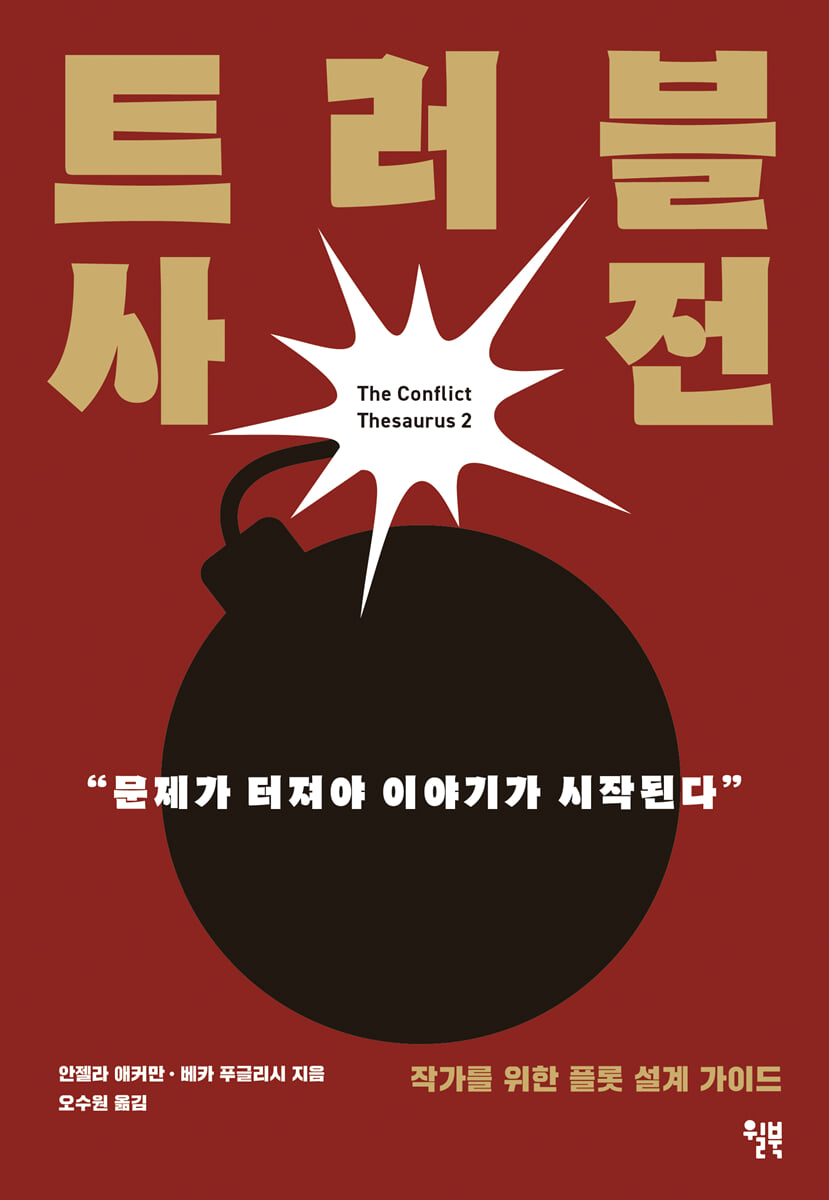 |
Description
Book Introduction
Trouble is essential to engaging storytelling! "A problem must arise" for the story to begin.
A plot design guide that turns dull ideas into compelling stories.
New releases in the bestselling "Trauma Dictionary" and "Dilemma Dictionary" series
Recommended by novelist Lee Kyung-hee and drama writer Lee Na-eun
"It presents a variety of choices that open up new avenues for the plot." _Lee Kyung-hee (novelist)
"This is a wonderful book that serves as a reliable companion for writers." _Lee Na-eun (drama writer)
An interesting writing guide has been published that contains all sorts of troubles and conflicts that characters can experience.
This is the newest installment in the "Dictionary Series for Writers," which has established itself as a proven creative partner among aspiring and working writers alike. Following "Trauma Dictionary," "Detail Dictionary," and "Dilemma Dictionary," which are helpful for character setting and background direction, "Trouble Dictionary" is packed with ideas that will add realism to your stories.
Whether it's a novel, a drama, or a movie, interesting characters always have 'trouble'.
There is nothing interesting or moving about a story where a character achieves his goal easily without facing any problems.
A skilled writer should create appropriate conflict situations for each scene, naturally portray the character's actions and emotional changes, and increase the persuasiveness and immersion of the narrative.
"Trouble Dictionary" presents a variety of internal and external problem situations that are difficult for people to control.
It lays the foundation for plot design that will solidify the story structure and provides specific writing materials.
You can encounter 115 different types of troubles that can drive a character, ranging from worries about the ego or relationships to sudden events or accidents ('suffering a panic attack', 'losing a friend', 'having something important stolen', 'being injured', 'being unfairly accused', 'having a house fire', 'being invaded by uninvited guests'...), and for each type, the character's likely attitude, psychological changes, and emotional line items are included.
The introduction also provides useful writing tips that will help you transform vague ideas into compelling stories, such as how to effectively build a central plot and subplots, how to build tension in a story, and how to properly direct a climax scene.
When the scene you're writing feels a bit bland, doesn't tie in closely with the overall story, or you want to describe a character's emotional line in more detail, open up the "Trouble Dictionary" and check the structure of the story.
Great material to fill in the gaps in the story will stimulate the hidden imagination in your head.
A plot design guide that turns dull ideas into compelling stories.
New releases in the bestselling "Trauma Dictionary" and "Dilemma Dictionary" series
Recommended by novelist Lee Kyung-hee and drama writer Lee Na-eun
"It presents a variety of choices that open up new avenues for the plot." _Lee Kyung-hee (novelist)
"This is a wonderful book that serves as a reliable companion for writers." _Lee Na-eun (drama writer)
An interesting writing guide has been published that contains all sorts of troubles and conflicts that characters can experience.
This is the newest installment in the "Dictionary Series for Writers," which has established itself as a proven creative partner among aspiring and working writers alike. Following "Trauma Dictionary," "Detail Dictionary," and "Dilemma Dictionary," which are helpful for character setting and background direction, "Trouble Dictionary" is packed with ideas that will add realism to your stories.
Whether it's a novel, a drama, or a movie, interesting characters always have 'trouble'.
There is nothing interesting or moving about a story where a character achieves his goal easily without facing any problems.
A skilled writer should create appropriate conflict situations for each scene, naturally portray the character's actions and emotional changes, and increase the persuasiveness and immersion of the narrative.
"Trouble Dictionary" presents a variety of internal and external problem situations that are difficult for people to control.
It lays the foundation for plot design that will solidify the story structure and provides specific writing materials.
You can encounter 115 different types of troubles that can drive a character, ranging from worries about the ego or relationships to sudden events or accidents ('suffering a panic attack', 'losing a friend', 'having something important stolen', 'being injured', 'being unfairly accused', 'having a house fire', 'being invaded by uninvited guests'...), and for each type, the character's likely attitude, psychological changes, and emotional line items are included.
The introduction also provides useful writing tips that will help you transform vague ideas into compelling stories, such as how to effectively build a central plot and subplots, how to build tension in a story, and how to properly direct a climax scene.
When the scene you're writing feels a bit bland, doesn't tie in closely with the overall story, or you want to describe a character's emotional line in more detail, open up the "Trouble Dictionary" and check the structure of the story.
Great material to fill in the gaps in the story will stimulate the hidden imagination in your head.
- You can preview some of the book's contents.
Preview
index
Recommendation
introduction
Conflict shapes plot
Four Levels of Conflict
The central conflict should always be placed at center stage.
How the golden thread of conflict powers the story
How to escalate conflict
Room with the Villain: Creating Powerful Conflicts
Climax: The culmination of the conflict
Don't rush to resolve relationship conflicts.
Give the character the initiative
Common challenges regarding conflict elements
Final advice for writers
1.
Out of control
Death of a family member/Become an orphan/Losing a child in a public place/Having a panic attack/Having a car accident/Learning bad news/Leaving someone behind/Being falsely accused/Trespassing/A pet dying/Being stranded/Being injured/A recession or economic downturn/Being scammed/Being interrogated/Severe weather/Being driven to a certain fate/Being detained/An unexpected pregnancy/Failing to achieve a desired goal/Having a miscarriage/Having to move/The rent goes up/Finding out that you have a child/Being evicted/Your partner gets into debt
2.
Power struggle
Be pressured by family/Be harassed/Have conflicting goals/Be sabotaged/Be sued/Be pressured to conform/Be in conflict with beliefs/Be unfairly accused/Be forced to attend/Be treated as favoritism/Be discriminated against/Be subject to harassment or bullying/Be arrested
3.
lose the high ground
Lose your allies/A competitor appears/The rules change to your disadvantage/Your safe space becomes dangerous/You suffer financial loss/You lose access to something important/You have something important stolen/You lose something important/You run out of important supplies/You lose relationships with important people/You run out of important resources
be kicked out of a group/have to leave home or one's hometown/lose a key witness
4.
Conflicts about the self
Be publicly humiliated/Have your authority threatened/Be forced to rely on others/Have to borrow money/Be left behind/Suddenly lose your reputation or wealth/Be excluded/Not believed even when you tell the truth/Be deceived by someone/Be interfered with even in trivial matters/Loss trust/Find out that you are adopted/Go through a crisis of self-doubt/Face a challenge that is beyond your skills or knowledge/Be physically challenged before an important event/Fail to be seriously considered/Be excluded from the team
5.
Risks and Threats
Be trapped/Be targeted by monsters or supernatural forces/A machine malfunctions/Your life is in jeopardy/Be assaulted by a stranger/Be denied help/Be poisoned/A witness is threatened/Be the target of revenge/Face a threat while unarmed/Be recognized/A loved one is in danger/Have to hide or avoid detection/Have to disperse for safety/Be exposed to an allergen/Cross a dangerous area/A dangerous criminal is released/Go on a dangerous mission/A natural disaster occurs/War breaks out/Your house catches fire/Have to the end
6.
Various challenges
Have to make someone believe a lie/Have health problems/Suffer from memory loss/Be mistaken for someone else/Fears or phobias arise/Become a leader/Become under a spell/Evade security/Become intrusive/Believe someone blindly/Discover a dead body/Have a crisis of faith/Repressed memories resurface/Be in the wrong place at the wrong time/Unexpected changes in plans/Cancellation of a scheduled event/Experience unwanted powers/Contemplate suicide/Cannot forgive yourself/Not know what you want/Become cursed/Drain your stamina/Have to infiltrate a certain group
supplement
introduction
Conflict shapes plot
Four Levels of Conflict
The central conflict should always be placed at center stage.
How the golden thread of conflict powers the story
How to escalate conflict
Room with the Villain: Creating Powerful Conflicts
Climax: The culmination of the conflict
Don't rush to resolve relationship conflicts.
Give the character the initiative
Common challenges regarding conflict elements
Final advice for writers
1.
Out of control
Death of a family member/Become an orphan/Losing a child in a public place/Having a panic attack/Having a car accident/Learning bad news/Leaving someone behind/Being falsely accused/Trespassing/A pet dying/Being stranded/Being injured/A recession or economic downturn/Being scammed/Being interrogated/Severe weather/Being driven to a certain fate/Being detained/An unexpected pregnancy/Failing to achieve a desired goal/Having a miscarriage/Having to move/The rent goes up/Finding out that you have a child/Being evicted/Your partner gets into debt
2.
Power struggle
Be pressured by family/Be harassed/Have conflicting goals/Be sabotaged/Be sued/Be pressured to conform/Be in conflict with beliefs/Be unfairly accused/Be forced to attend/Be treated as favoritism/Be discriminated against/Be subject to harassment or bullying/Be arrested
3.
lose the high ground
Lose your allies/A competitor appears/The rules change to your disadvantage/Your safe space becomes dangerous/You suffer financial loss/You lose access to something important/You have something important stolen/You lose something important/You run out of important supplies/You lose relationships with important people/You run out of important resources
be kicked out of a group/have to leave home or one's hometown/lose a key witness
4.
Conflicts about the self
Be publicly humiliated/Have your authority threatened/Be forced to rely on others/Have to borrow money/Be left behind/Suddenly lose your reputation or wealth/Be excluded/Not believed even when you tell the truth/Be deceived by someone/Be interfered with even in trivial matters/Loss trust/Find out that you are adopted/Go through a crisis of self-doubt/Face a challenge that is beyond your skills or knowledge/Be physically challenged before an important event/Fail to be seriously considered/Be excluded from the team
5.
Risks and Threats
Be trapped/Be targeted by monsters or supernatural forces/A machine malfunctions/Your life is in jeopardy/Be assaulted by a stranger/Be denied help/Be poisoned/A witness is threatened/Be the target of revenge/Face a threat while unarmed/Be recognized/A loved one is in danger/Have to hide or avoid detection/Have to disperse for safety/Be exposed to an allergen/Cross a dangerous area/A dangerous criminal is released/Go on a dangerous mission/A natural disaster occurs/War breaks out/Your house catches fire/Have to the end
6.
Various challenges
Have to make someone believe a lie/Have health problems/Suffer from memory loss/Be mistaken for someone else/Fears or phobias arise/Become a leader/Become under a spell/Evade security/Become intrusive/Believe someone blindly/Discover a dead body/Have a crisis of faith/Repressed memories resurface/Be in the wrong place at the wrong time/Unexpected changes in plans/Cancellation of a scheduled event/Experience unwanted powers/Contemplate suicide/Cannot forgive yourself/Not know what you want/Become cursed/Drain your stamina/Have to infiltrate a certain group
supplement
Detailed image

Into the book
An interesting story that instantly captures attention is like fishing.
A skilled storyteller, like a skilled fisherman, catches the listener's heart with a hidden bait.
Therefore, to draw the reader into the story without them noticing, you need a goal, a motivation, and an exciting conflict as a secret bait.
You should remember that if you keep coming up with useful incidents and writing without a specific conflict, the plot of the story will just wander in the air, and the reader's interest will quickly disappear.
---From "Page 19, Conflict Forms the Plot"
What's the greatest sin in storytelling? It's leaving out conflict.
Elements like challenges, obstacles, and internal conflicts in a story capture the reader's attention by making them question the character's ability to move toward their goals.
Meanwhile, readers tend to focus on the events that occur in a story scene by scene.
Therefore, conflict may seem to occur scene by scene, but in reality, conflict exists in various and complex layers that go beyond the scene and span the entire structure of the story.
Therefore, maximizing the ways in which various obstacles and challenges interact is key to telling a rich and powerful story.
---From "Page 22, Four Levels of Conflict"
By now you've probably realized that there are countless conflict scenarios your character could face as the story progresses.
But as the story progresses and the protagonist faces increasing difficulties, the central conflict risks becoming overshadowed by the surrounding noise, diminishing its presence or disappearing altogether.
When too many or too trivial issues take up too much time, conflicts can lose their momentum and become disjointed, leaving readers confused as to where the characters are headed.
When you focus as much as possible on the central conflict and plot, the elements you've placed in your story can progress steadily toward the final climax.
---「Page 40, The central conflict should always be placed at the center of the stage.]
When do characters feel the most heartbreaking? When they have to make decisions in situations where someone has to pay the price for their choice.
These moments in a story can be pushed forward boldly because no matter what decision the character makes, there will be a bad outcome.
In a perilous moment, will the character save her daughter, even if it means sacrificing her son? Will the character remain in their current position, even at the risk of capture, or will they flee and risk exposure and death? This hopeless scenario creates tension not only for the character, but also for the reader, who, recognizing the impossible situation, wonders what choice the character will make.
---From "How to Increase Conflict" on page 65
Your protagonist will encounter numerous conflicts throughout the story, many of which arise from various antagonists.
Romantic rivals, well-meaning meddlers, frenemies, and intruders can provide valuable opportunities for the protagonist to learn how to respond to attacks.
This conflict is especially important when the story includes a villain.
Because through the villain, the protagonist can train himself and prepare for the final confrontation with him at the climax.
Since immoral villain characters are a fixture in many stories, let's take the time to thoroughly discuss how to write them well.
---From "In a Room with the Villain: Creating Powerful Conflicts" on page 71
The purpose of the climax is to give the protagonist a chance to succeed and achieve his or her goals.
Countless conflict scenarios have tested the protagonist's resolve and abilities.
The protagonist is not always successful, but as the conflict and danger increase, the protagonist steadily moves toward his external goals (or internal goals, if the protagonist undergoes a transformation).
And now comes the greatest test of all.
It is the final battle against the enemy.
This is the protagonist's last chance to prove himself.
If you fail here, you fail forever.
Therefore, the climax must show a clear winner and loser.
---From "Page 80, Climax: The Peak of Conflict"
Everyone is uncomfortable with conflict.
It is human nature to do anything to avoid conflict, and when conflict is unavoidable, it is also human nature to try to resolve it quickly and move on to the next step.
Your characters might try to avoid conflict in this way, but if you force them to overcome conflict too quickly, the story can fall flat and fizzle out.
A skilled storyteller, like a skilled fisherman, catches the listener's heart with a hidden bait.
Therefore, to draw the reader into the story without them noticing, you need a goal, a motivation, and an exciting conflict as a secret bait.
You should remember that if you keep coming up with useful incidents and writing without a specific conflict, the plot of the story will just wander in the air, and the reader's interest will quickly disappear.
---From "Page 19, Conflict Forms the Plot"
What's the greatest sin in storytelling? It's leaving out conflict.
Elements like challenges, obstacles, and internal conflicts in a story capture the reader's attention by making them question the character's ability to move toward their goals.
Meanwhile, readers tend to focus on the events that occur in a story scene by scene.
Therefore, conflict may seem to occur scene by scene, but in reality, conflict exists in various and complex layers that go beyond the scene and span the entire structure of the story.
Therefore, maximizing the ways in which various obstacles and challenges interact is key to telling a rich and powerful story.
---From "Page 22, Four Levels of Conflict"
By now you've probably realized that there are countless conflict scenarios your character could face as the story progresses.
But as the story progresses and the protagonist faces increasing difficulties, the central conflict risks becoming overshadowed by the surrounding noise, diminishing its presence or disappearing altogether.
When too many or too trivial issues take up too much time, conflicts can lose their momentum and become disjointed, leaving readers confused as to where the characters are headed.
When you focus as much as possible on the central conflict and plot, the elements you've placed in your story can progress steadily toward the final climax.
---「Page 40, The central conflict should always be placed at the center of the stage.]
When do characters feel the most heartbreaking? When they have to make decisions in situations where someone has to pay the price for their choice.
These moments in a story can be pushed forward boldly because no matter what decision the character makes, there will be a bad outcome.
In a perilous moment, will the character save her daughter, even if it means sacrificing her son? Will the character remain in their current position, even at the risk of capture, or will they flee and risk exposure and death? This hopeless scenario creates tension not only for the character, but also for the reader, who, recognizing the impossible situation, wonders what choice the character will make.
---From "How to Increase Conflict" on page 65
Your protagonist will encounter numerous conflicts throughout the story, many of which arise from various antagonists.
Romantic rivals, well-meaning meddlers, frenemies, and intruders can provide valuable opportunities for the protagonist to learn how to respond to attacks.
This conflict is especially important when the story includes a villain.
Because through the villain, the protagonist can train himself and prepare for the final confrontation with him at the climax.
Since immoral villain characters are a fixture in many stories, let's take the time to thoroughly discuss how to write them well.
---From "In a Room with the Villain: Creating Powerful Conflicts" on page 71
The purpose of the climax is to give the protagonist a chance to succeed and achieve his or her goals.
Countless conflict scenarios have tested the protagonist's resolve and abilities.
The protagonist is not always successful, but as the conflict and danger increase, the protagonist steadily moves toward his external goals (or internal goals, if the protagonist undergoes a transformation).
And now comes the greatest test of all.
It is the final battle against the enemy.
This is the protagonist's last chance to prove himself.
If you fail here, you fail forever.
Therefore, the climax must show a clear winner and loser.
---From "Page 80, Climax: The Peak of Conflict"
Everyone is uncomfortable with conflict.
It is human nature to do anything to avoid conflict, and when conflict is unavoidable, it is also human nature to try to resolve it quickly and move on to the next step.
Your characters might try to avoid conflict in this way, but if you force them to overcome conflict too quickly, the story can fall flat and fizzle out.
---From "Page 93, Relationship Conflicts, Don't Resolve Them in a Haste"
Publisher's Review
“A writer must be a skilled fisherman.”
How to Hook Readers with the Tricky Bait of a "Problem Situation"
In "Squid Game," Seong Ki-hoon participates in a game full of sadism because he needs money to pay off his debt.
In The Lord of the Rings, Aragorn decides to stand against Sauron to restore peace to Middle-earth.
If there were no debts to repay or chaos in Middle-earth, neither Seong Gi-hun nor Aragorn would have any reason to move.
Just as a skilled fisherman has a secret bait to lure readers into the world of the story, the two authors of "Trouble Dictionary" say that a skilled writer has a secret bait to lure readers into the world of the story.
What's the ultimate lure for a writer? A compelling character? A well-crafted setting? More important than that, a well-crafted "trouble" is the story.
It's hard to have a story without characters getting into trouble.
Like Seong Gi-hun and Aragorn, the characters capture the reader's attention as they face conflicts and various troublesome situations, such as unfavorable opponents, conditions, and environments, on their journey toward their goals.
"Trouble Dictionary" is a secret book that presents such "problem situations" persuasively and covers the methods to deal with them.
This book meticulously organizes practical writing tips for effectively utilizing the role of "problems" and "conflicts" in helping characters grow, highlighting their values and beliefs, revealing their pasts, and, above all, advancing the story.
The latest installment in the "Dictionary for Writers" series, beloved by working writers.
A treasure trove of "trouble" material for creating fun and engaging stories.
Whether it's science fiction, romance, or fantasy (regardless of genre), or novels, movies, or dramas (regardless of medium), countless writers have testified to and unanimously recommended this "Dictionary for Writers" series, saying how useful it is for their actual creative work.
“This is a practical guide to writing that helps you learn and write elaborately designed stories, rather than relying solely on your innate imagination and talent.” The newly published 『Trouble Dictionary』 is another must-have treasure trove that will shine brightly on any writer’s desk.
What if a character experiences a panic attack? What if they lose a loved one? What if they're unfairly accused? What if they're suddenly sued? What if they discover one day they're adopted? It covers a wide range of situations, from internal conflicts that lead to stress and dilemmas to uncontrollable external events, various problematic situations, and even handicaps, making it ideal for creating realistic characters and stories.
Science fiction writer Lee Kyung-hee, who revealed that she has actually used this series to help with her creative work, and writer Lee Na-eun of the drama “That Year, Us” added their recommendations.
"This book opens up new paths for you when you're stuck writing, and it becomes a reliable partner that transforms anxiety and doubt into confidence and courage during the creative process."
All kinds of stress, dilemmas, incidents, accidents, handicaps…
115 types of conflicts a character can experience, along with key theories on story design.
Each of the 115 'trouble' items in the book contains useful details.
If you want to make your character lose control and feel embarrassed, check out the "Out of Control" and "Ego Conflict" sections. If you want to make your character suffer from pressure and bullying, check out the "Power Struggle" section. If you want to make your character suffer by taking something important away from them, check out the "Losing the High Ground" section.
"Trouble Dictionary" not only presents a clear overview of the various types of trouble, but also provides tips for weaving them together into compelling plots.
A story or plot where everything simply progresses in chronological order is unlikely to be entertaining.
From how to properly write a climax where the protagonist achieves inner growth and change through will and strength, to the difference between conflict and tension, to how to create a compelling villain character.
The book is a practical and engaging storytelling bible, rich with the tools and devices needed to create cohesive narratives.
How to Hook Readers with the Tricky Bait of a "Problem Situation"
In "Squid Game," Seong Ki-hoon participates in a game full of sadism because he needs money to pay off his debt.
In The Lord of the Rings, Aragorn decides to stand against Sauron to restore peace to Middle-earth.
If there were no debts to repay or chaos in Middle-earth, neither Seong Gi-hun nor Aragorn would have any reason to move.
Just as a skilled fisherman has a secret bait to lure readers into the world of the story, the two authors of "Trouble Dictionary" say that a skilled writer has a secret bait to lure readers into the world of the story.
What's the ultimate lure for a writer? A compelling character? A well-crafted setting? More important than that, a well-crafted "trouble" is the story.
It's hard to have a story without characters getting into trouble.
Like Seong Gi-hun and Aragorn, the characters capture the reader's attention as they face conflicts and various troublesome situations, such as unfavorable opponents, conditions, and environments, on their journey toward their goals.
"Trouble Dictionary" is a secret book that presents such "problem situations" persuasively and covers the methods to deal with them.
This book meticulously organizes practical writing tips for effectively utilizing the role of "problems" and "conflicts" in helping characters grow, highlighting their values and beliefs, revealing their pasts, and, above all, advancing the story.
The latest installment in the "Dictionary for Writers" series, beloved by working writers.
A treasure trove of "trouble" material for creating fun and engaging stories.
Whether it's science fiction, romance, or fantasy (regardless of genre), or novels, movies, or dramas (regardless of medium), countless writers have testified to and unanimously recommended this "Dictionary for Writers" series, saying how useful it is for their actual creative work.
“This is a practical guide to writing that helps you learn and write elaborately designed stories, rather than relying solely on your innate imagination and talent.” The newly published 『Trouble Dictionary』 is another must-have treasure trove that will shine brightly on any writer’s desk.
What if a character experiences a panic attack? What if they lose a loved one? What if they're unfairly accused? What if they're suddenly sued? What if they discover one day they're adopted? It covers a wide range of situations, from internal conflicts that lead to stress and dilemmas to uncontrollable external events, various problematic situations, and even handicaps, making it ideal for creating realistic characters and stories.
Science fiction writer Lee Kyung-hee, who revealed that she has actually used this series to help with her creative work, and writer Lee Na-eun of the drama “That Year, Us” added their recommendations.
"This book opens up new paths for you when you're stuck writing, and it becomes a reliable partner that transforms anxiety and doubt into confidence and courage during the creative process."
All kinds of stress, dilemmas, incidents, accidents, handicaps…
115 types of conflicts a character can experience, along with key theories on story design.
Each of the 115 'trouble' items in the book contains useful details.
If you want to make your character lose control and feel embarrassed, check out the "Out of Control" and "Ego Conflict" sections. If you want to make your character suffer from pressure and bullying, check out the "Power Struggle" section. If you want to make your character suffer by taking something important away from them, check out the "Losing the High Ground" section.
"Trouble Dictionary" not only presents a clear overview of the various types of trouble, but also provides tips for weaving them together into compelling plots.
A story or plot where everything simply progresses in chronological order is unlikely to be entertaining.
From how to properly write a climax where the protagonist achieves inner growth and change through will and strength, to the difference between conflict and tension, to how to create a compelling villain character.
The book is a practical and engaging storytelling bible, rich with the tools and devices needed to create cohesive narratives.
GOODS SPECIFICS
- Date of issue: July 10, 2023
- Page count, weight, size: 592 pages | 838g | 152*220*35mm
- ISBN13: 9791155816257
- ISBN10: 1155816250
You may also like
카테고리
korean


korean

![GQ KOREA Mark (Monthly): December [2025]](http://librairie.coreenne.fr/cdn/shop/files/8ef265dbbfbf186523ed75ba7319009d.jpg?v=1765340328&width=3840)


