

One Drop of Murder
 |
Description
Book Introduction
All the Science on Poisoning: A Crime That Betrays Trust
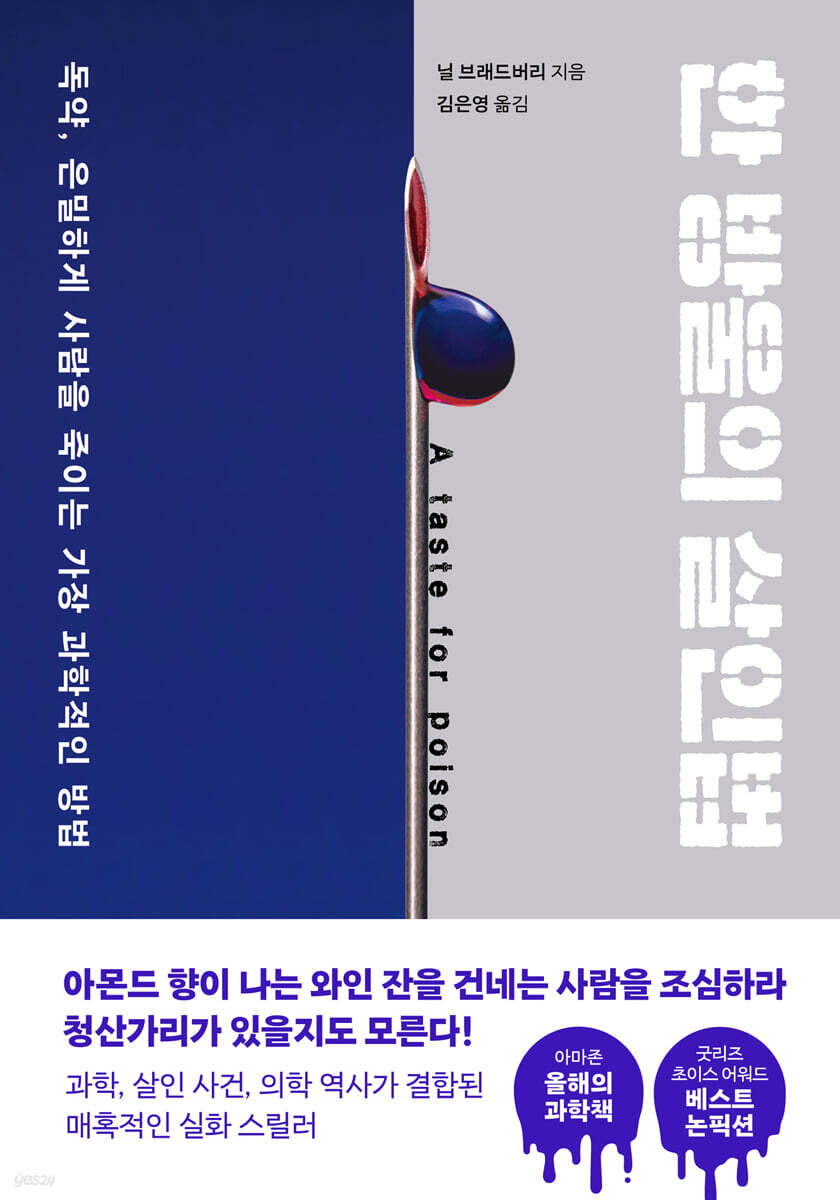
The author, a physiologist and mystery enthusiast, selects 11 of the most commonly used chemicals in history and tells the full story of the poisoning incidents in which they were used.
It reveals the scientific principles behind the lethality of poisons and also provides detailed examples of how each substance has been medically beneficial through the efforts of many people.
Based on a real-life murder case, this book explains science in an accessible way, even exploring the history of medicine along the way, providing engaging and informative "science entertainment."
The author, a physiologist and mystery enthusiast, selects 11 of the most commonly used chemicals in history and tells the full story of the poisoning incidents in which they were used.
It reveals the scientific principles behind the lethality of poisons and also provides detailed examples of how each substance has been medically beneficial through the efforts of many people.
Based on a real-life murder case, this book explains science in an accessible way, even exploring the history of medicine along the way, providing engaging and informative "science entertainment."
- You can preview some of the book's contents.
Preview
index
Entering
Part I: Biomolecules That Induce Death
Case 01 Mrs. Valo's Bathtub x Insulin
From Miracle Drug to Murder Weapon in 30 Years│Mrs. Ballo's Bath│Just a Spoonful of Sugar│Insulin and Blood Sugar Levels│Words Suggested by Ballo's Symptoms│Home Search│Mice and Guinea Pigs Catch the Culprit│Insulin Murder
Case 02 Alexandra's Tonic Water x Atropine
Medicinal Plants│Soup and Sparks│Gin and Tonic and a Murder Plan│A 'Random Crime' at a Supermarket│How Atropine Kills│Dr. Buchanan, Madame, and the Dead Cat│The Attempted Assassination of a Soviet Spy in Salisbury│Once a Poison, Now an Antidote
Case 03 Lambus' Poisoner x Strychnine
The Invisible Man, Psycho, Sherlock Holmes | The History of Strychnine | The Lambeth Poisoner | How Strychnine Kills | Treatment for Strychnine Poisoning
Case 04 Mrs. Singh's Curry x Aconite
A Short History of Aconite│Perfect Murder│Mr. Lamson's Dundee Cakes│The Alkaloid Debate│How Does Aconite Kill People│Aconite and Mrs. Singh's Curry
Case 05 Sunset at Waterloo Station x Lisin
Rap Number One│The Castor Bean Story│The Murdered Truth│Operation Markov Elimination│Death in a Pellet│How Ricin Kills People│Who Killed Markov│Death's Retirement Plan│Ricin as a Cure
Case 06 Angel of Death x Digoxin
The Story of Digoxin and Digitalis│The Angel of Death│Hacking the Prescription Register│Getting Trapped│When the Heart Is Broken│Digoxin: Life or Death│Digoxin and the Hundred Million Dollar Painting│Anti-Digoxin Poisoning
Case 07 Professor from Pittsburgh x Cyanide
The most famous poison│Your precious body, cyanide│Cyanide in food│Hanging with a telegraph cord│How cyanide kills│Allegheny's death│Treatment for cyanide poisoning│Cyanide and arsonists
Part II Molecules of Death from the Earth
Case 08 Nightmare Nurse x Potassium
Indispensable, but dangerous│Grantham's Nightmare Nurse│How Potassium Kills People│Sherwood Massacre│Our bodies are radioactive
Case 09 Sasha's Indiscriminate Collection x Polonium
Are You Getting Enough Metals? A Brief History of Polonium | The Edwin Carter Case | Sasha's Indiscriminate Collection | The Mayfair Murders | A Barely Detectable Poison | Radiation and the Collection | Who Killed Litvinenko?
Case 10 Monsieur Langelier's Cocoa x Arsenic
A Brief History of Arsenic│People Who Eat Arsenic│Arsenic and Langelier's Cocoa│How Arsenic Kills│Drinking and Arsenic Detection│Arsenic as a Medicine
Case 11 Texas Murder Nurse x Goat
Chemical Warfare of the 20th Century│Why Chlorine Is Toxic│Chlorine Saves Lives│Bleach Murders│Intravenous Bleach│Death Lemonade
Going Out _ The Garden of Death
Appendix _ Choose your favorite poison
Part I: Biomolecules That Induce Death
Case 01 Mrs. Valo's Bathtub x Insulin
From Miracle Drug to Murder Weapon in 30 Years│Mrs. Ballo's Bath│Just a Spoonful of Sugar│Insulin and Blood Sugar Levels│Words Suggested by Ballo's Symptoms│Home Search│Mice and Guinea Pigs Catch the Culprit│Insulin Murder
Case 02 Alexandra's Tonic Water x Atropine
Medicinal Plants│Soup and Sparks│Gin and Tonic and a Murder Plan│A 'Random Crime' at a Supermarket│How Atropine Kills│Dr. Buchanan, Madame, and the Dead Cat│The Attempted Assassination of a Soviet Spy in Salisbury│Once a Poison, Now an Antidote
Case 03 Lambus' Poisoner x Strychnine
The Invisible Man, Psycho, Sherlock Holmes | The History of Strychnine | The Lambeth Poisoner | How Strychnine Kills | Treatment for Strychnine Poisoning
Case 04 Mrs. Singh's Curry x Aconite
A Short History of Aconite│Perfect Murder│Mr. Lamson's Dundee Cakes│The Alkaloid Debate│How Does Aconite Kill People│Aconite and Mrs. Singh's Curry
Case 05 Sunset at Waterloo Station x Lisin
Rap Number One│The Castor Bean Story│The Murdered Truth│Operation Markov Elimination│Death in a Pellet│How Ricin Kills People│Who Killed Markov│Death's Retirement Plan│Ricin as a Cure
Case 06 Angel of Death x Digoxin
The Story of Digoxin and Digitalis│The Angel of Death│Hacking the Prescription Register│Getting Trapped│When the Heart Is Broken│Digoxin: Life or Death│Digoxin and the Hundred Million Dollar Painting│Anti-Digoxin Poisoning
Case 07 Professor from Pittsburgh x Cyanide
The most famous poison│Your precious body, cyanide│Cyanide in food│Hanging with a telegraph cord│How cyanide kills│Allegheny's death│Treatment for cyanide poisoning│Cyanide and arsonists
Part II Molecules of Death from the Earth
Case 08 Nightmare Nurse x Potassium
Indispensable, but dangerous│Grantham's Nightmare Nurse│How Potassium Kills People│Sherwood Massacre│Our bodies are radioactive
Case 09 Sasha's Indiscriminate Collection x Polonium
Are You Getting Enough Metals? A Brief History of Polonium | The Edwin Carter Case | Sasha's Indiscriminate Collection | The Mayfair Murders | A Barely Detectable Poison | Radiation and the Collection | Who Killed Litvinenko?
Case 10 Monsieur Langelier's Cocoa x Arsenic
A Brief History of Arsenic│People Who Eat Arsenic│Arsenic and Langelier's Cocoa│How Arsenic Kills│Drinking and Arsenic Detection│Arsenic as a Medicine
Case 11 Texas Murder Nurse x Goat
Chemical Warfare of the 20th Century│Why Chlorine Is Toxic│Chlorine Saves Lives│Bleach Murders│Intravenous Bleach│Death Lemonade
Going Out _ The Garden of Death
Appendix _ Choose your favorite poison
Detailed image

Into the book
Poisoning, committed with meticulous premeditation and cold-blooded calculation, fits perfectly into the legal term "criminal intent."
Poisoning requires not only premeditation but also information about the victim's usual habits.
You also have to calculate how much poison you will use as a tool for the crime.
Some poisons kill people instantly, but some poisons take life slowly over a long period of time.
--- p.11
It seems impossible to categorize any chemical as inherently good or bad.
It's just a chemical.
If there is a difference, it will be in the intention of those using the chemical.
The only difference is whether the intention is to save life or to take life.
--- p.17
It was during the medical revolution of the Renaissance that people first noticed this seemingly contradictory phenomenon: a single chemical substance could be both poison and medicine.
The 16th-century alchemist and physician Philip Aureolus Theophrastus Bombastus von Hohenheim (fortunately better known by his much shorter name, Paracelsus) warned:
“It is the dose that makes a drug poison.”
--- p.21
Atropine is attracting attention for new uses in modern medicine.
It's surprising that it cured spies exposed to a neurotoxin, but atropine is commonly used in hospitals as a drug to control heart rate.
It is effective even for patients with slow heartbeats or even those whose hearts have stopped.
Additionally, atropine is administered to patients awaiting surgery to prevent saliva or body fluids from accumulating in the lungs during surgery and causing pneumonia.
A substance once used to kill people has been reborn as a cure.
--- p.95
It is well known that Van Gogh suffered from depression and epilepsy, and that there was a widespread belief among doctors at the time that a drug that worked well for one type of condition would work well for others.
There is no documentary evidence that van Gogh was prescribed digitalis, but in one of his two portraits of his physician, Portrait of Dr. Gasset, the doctor is shown holding a digitalis stick.
--- p.209
Let's say it's rush hour, a time when traffic is congested.
It is very difficult to get off the train because the platform is full of commuters.
Likewise, if a large amount of potassium is already present outside the cell, it becomes difficult for the potassium inside the cell to come out and reset the system.
Once the heart cells contract, potassium cannot escape from the cells, meaning the heart cannot reset and relax.
A heart that is tired from not being able to rest eventually cannot beat any longer, and cardiac arrest occurs.
--- p.257
Phosphate is a component of ATP, our body's energy source.
Arsenate kills people by binding to ATP instead of phosphate.
It is similar to phosphate, but unlike phosphate, arsenate cannot produce the energy that cells need.
This is easy to understand if you think about children's battery-operated toys.
A dead battery looks just like a new battery, but the toy it's in won't work.
Similarly, when arsenate enters the cell, the energy supply of ATP is cut off and the cell's energy is soon depleted.
Without the energy needed to carry out the various processes and reactions that cells are responsible for, cellular activity would eventually cease completely.
--- p.310
Nowadays, it is almost impossible for a poisoner to get away with it.
Despite the potentially lethal toxicity of some of these plant-derived chemicals, these chemicals themselves are not inherently bad or good.
Depending on how you use it, it can be either medicine or poison.
Poisoning requires not only premeditation but also information about the victim's usual habits.
You also have to calculate how much poison you will use as a tool for the crime.
Some poisons kill people instantly, but some poisons take life slowly over a long period of time.
--- p.11
It seems impossible to categorize any chemical as inherently good or bad.
It's just a chemical.
If there is a difference, it will be in the intention of those using the chemical.
The only difference is whether the intention is to save life or to take life.
--- p.17
It was during the medical revolution of the Renaissance that people first noticed this seemingly contradictory phenomenon: a single chemical substance could be both poison and medicine.
The 16th-century alchemist and physician Philip Aureolus Theophrastus Bombastus von Hohenheim (fortunately better known by his much shorter name, Paracelsus) warned:
“It is the dose that makes a drug poison.”
--- p.21
Atropine is attracting attention for new uses in modern medicine.
It's surprising that it cured spies exposed to a neurotoxin, but atropine is commonly used in hospitals as a drug to control heart rate.
It is effective even for patients with slow heartbeats or even those whose hearts have stopped.
Additionally, atropine is administered to patients awaiting surgery to prevent saliva or body fluids from accumulating in the lungs during surgery and causing pneumonia.
A substance once used to kill people has been reborn as a cure.
--- p.95
It is well known that Van Gogh suffered from depression and epilepsy, and that there was a widespread belief among doctors at the time that a drug that worked well for one type of condition would work well for others.
There is no documentary evidence that van Gogh was prescribed digitalis, but in one of his two portraits of his physician, Portrait of Dr. Gasset, the doctor is shown holding a digitalis stick.
--- p.209
Let's say it's rush hour, a time when traffic is congested.
It is very difficult to get off the train because the platform is full of commuters.
Likewise, if a large amount of potassium is already present outside the cell, it becomes difficult for the potassium inside the cell to come out and reset the system.
Once the heart cells contract, potassium cannot escape from the cells, meaning the heart cannot reset and relax.
A heart that is tired from not being able to rest eventually cannot beat any longer, and cardiac arrest occurs.
--- p.257
Phosphate is a component of ATP, our body's energy source.
Arsenate kills people by binding to ATP instead of phosphate.
It is similar to phosphate, but unlike phosphate, arsenate cannot produce the energy that cells need.
This is easy to understand if you think about children's battery-operated toys.
A dead battery looks just like a new battery, but the toy it's in won't work.
Similarly, when arsenate enters the cell, the energy supply of ATP is cut off and the cell's energy is soon depleted.
Without the energy needed to carry out the various processes and reactions that cells are responsible for, cellular activity would eventually cease completely.
--- p.310
Nowadays, it is almost impossible for a poisoner to get away with it.
Despite the potentially lethal toxicity of some of these plant-derived chemicals, these chemicals themselves are not inherently bad or good.
Depending on how you use it, it can be either medicine or poison.
--- p.344
Publisher's Review
No matter how hard they try to deceive, criminals leave traces!
Deadly chemistry learned while chasing criminals
Solving the Mystery of Poisoning in History Through the Eyes of Science
If we were to examine the history of murder, poisoning would be the method of murder with the longest history.
Poisons have been around since the time of Cleopatra, and it was not unusual for ancient Romans to poison their enemies or political rivals.
Many mystery novelists, including the master Agatha Christie, have often used poisoning as a subject in their works.
This is because poisoning is a type of murder that can be carried out by even a powerless, ordinary person if there is thorough prior planning and investigation.
Author Neil Bradbury, a mystery nerd since childhood, explores historical poisoning cases from a scientist's perspective in 'The One Drop Method of Murder'.
We select 11 chemicals, including arsenic, cyanide, strychnine, and ricin, which have long been used as poisons, and introduce their origins, characteristics, and representative actual poisoning incidents.
It also shows the chemical principles by which each substance acts as a poison in the body, along with examples of substances currently being used as medicines rather than poisons based on those principles.
As the old saying goes, "If used well, it's medicine, if used wrong, it's poison," "A Drop of Murder" emphasizes that the problem is not the substance used as poison, but the intention and purpose of the person who used it as poison.
As always, things are not problematic in themselves.
The problem is the people who exploit it.
Mystery Mania Professor of Physiology
A tour of poisoning incidents in history
There is no such thing as accidental or impulsive poisoning.
Meticulous advance planning, cool-headed judgment, and gathering information about the victim's habits and movements are essential.
Therefore, because poisoning is a crime that betrays trust at such a close distance, even the process itself becomes a 'story'.
The author, a professor of physiology, has loved mysteries since childhood and became interested in poisons after taking a biochemistry class in college.
He combined two of his favorite things, mystery and poison, into "A Drop of Murder."
It's like a mystery novel, telling the true stories of past poisoning incidents.
You can learn about the story of arsenic in wine that caused a rift in the Borgia family that ruled Europe, and the full story of the crimes of the 'Digoxin Murder Nurse', which was made into a movie and sparked public outrage, and was sentenced to 397 years in prison.
In addition to these relatively well-known cases, the book also presents examples of poisonings that are less familiar to domestic readers, such as the case of a man who intentionally injected atropine into all the tonic water in a local supermarket to kill his wife and escape investigation, and the case of a man who secretly entered his lover's house and poisoned his curry with poison out of resentment for his betrayal.
This is where the author's talent as a brilliant storyteller comes into play.
By leveraging his long-time mystery enthusiast experience before becoming a physiologist, he makes readers feel as if they are reading a novel.
Through the process of observing the corpse and taking statements from witnesses, the police find the criminal's weaknesses and clues to the case, and the decisive twist revealed at the end of the trial of the doctor who killed the prostitutes with strychnine makes the trial immersive on the spot.
As the New York Times described the author as a "delightful travel guide," he soon takes readers on a "tour of the poisoning case."
Things you can't learn in school
Easy-to-understand 'Poisoning Culture Science'
Poisoning is a crime that can only be committed when the perpetrator is physically close to the victim.
Poison can only be administered by swallowing it, inhaling it through the windpipe, absorbing it through the skin, or directly injecting it by the perpetrator.
In "A Drop of Murder," the process by which poison enters the human body and becomes poison is explained based on chemical principles.
However, there is no complex chemical formula.
The author, who has delivered numerous public lectures to make science accessible to non-specialists, explains the science of poisons with easy-to-understand analogies and detailed explanations.
The relationship between acetylcholine and atropine can be explained using the analogy of a real key and a fake key.
When atropine, a fake key that looks similar to the real key, enters the body, the real key, acetylcholine, which cannot fit into the keyhole, does not function properly, causing abnormal symptoms in the body and ultimately leading to death.
The working system of sodium and potassium involved in heartbeat is also explained using an analogy to a platform during rush hour when there are many people.
This is very similar to the process that occurs when large amounts of potassium are intentionally injected, preventing the potassium from leaving the body, leading to cardiac arrest.
The author also explains in a simple and clear manner how well-known poisons such as cyanide, arsenic, and insulin destroy our bodies.
The author, a physiologist, brings up the poisoning incident and tells the story to convey the scientific mechanisms behind it in an easy and interesting way to people.
"The One Drop Murder Method" speaks to people who have no interest in chemistry or science.
“Science can be fun, too.”
From deadly to beneficial
Science that benefits humanity
Looking at the various murder cases that appear in "A Drop of Murder," they occurred as far back as 1,000 years ago, and as recently as less than 20 years ago.
Nowadays, with the advancement of science, it is almost impossible for a criminal to escape without being caught, but poisonings are still happening, although they have become significantly less common than in the past.
We also know that some chemicals, when used as poisons, have no antidote and are therefore incurable.
But the author does not stop there.
Just as chemicals themselves are not inherently bad or good, we continually cite examples of how they have been used with good intentions to help humanity advance.
The drug used to prevent surgical complications was developed when the toxic component of the plant called kamajung was properly understood, and atropine was further developed from this and is currently used as an antidote to neurotoxins.
A broader understanding of the heart's electrical signals was made possible by digoxin.
Rather than ending a poisoning incident with someone's death, scientists are studying the poisonous substance and developing new drugs based on information obtained by analyzing the molecular structure of cells and tissues.
Substances that were once poisonous due to misuse are now being turned into life-saving medicines by scientists who dedicate their entire research careers to detecting poisons.
There is no more perfect ending to a heinous crime.
Deadly chemistry learned while chasing criminals
Solving the Mystery of Poisoning in History Through the Eyes of Science
If we were to examine the history of murder, poisoning would be the method of murder with the longest history.
Poisons have been around since the time of Cleopatra, and it was not unusual for ancient Romans to poison their enemies or political rivals.
Many mystery novelists, including the master Agatha Christie, have often used poisoning as a subject in their works.
This is because poisoning is a type of murder that can be carried out by even a powerless, ordinary person if there is thorough prior planning and investigation.
Author Neil Bradbury, a mystery nerd since childhood, explores historical poisoning cases from a scientist's perspective in 'The One Drop Method of Murder'.
We select 11 chemicals, including arsenic, cyanide, strychnine, and ricin, which have long been used as poisons, and introduce their origins, characteristics, and representative actual poisoning incidents.
It also shows the chemical principles by which each substance acts as a poison in the body, along with examples of substances currently being used as medicines rather than poisons based on those principles.
As the old saying goes, "If used well, it's medicine, if used wrong, it's poison," "A Drop of Murder" emphasizes that the problem is not the substance used as poison, but the intention and purpose of the person who used it as poison.
As always, things are not problematic in themselves.
The problem is the people who exploit it.
Mystery Mania Professor of Physiology
A tour of poisoning incidents in history
There is no such thing as accidental or impulsive poisoning.
Meticulous advance planning, cool-headed judgment, and gathering information about the victim's habits and movements are essential.
Therefore, because poisoning is a crime that betrays trust at such a close distance, even the process itself becomes a 'story'.
The author, a professor of physiology, has loved mysteries since childhood and became interested in poisons after taking a biochemistry class in college.
He combined two of his favorite things, mystery and poison, into "A Drop of Murder."
It's like a mystery novel, telling the true stories of past poisoning incidents.
You can learn about the story of arsenic in wine that caused a rift in the Borgia family that ruled Europe, and the full story of the crimes of the 'Digoxin Murder Nurse', which was made into a movie and sparked public outrage, and was sentenced to 397 years in prison.
In addition to these relatively well-known cases, the book also presents examples of poisonings that are less familiar to domestic readers, such as the case of a man who intentionally injected atropine into all the tonic water in a local supermarket to kill his wife and escape investigation, and the case of a man who secretly entered his lover's house and poisoned his curry with poison out of resentment for his betrayal.
This is where the author's talent as a brilliant storyteller comes into play.
By leveraging his long-time mystery enthusiast experience before becoming a physiologist, he makes readers feel as if they are reading a novel.
Through the process of observing the corpse and taking statements from witnesses, the police find the criminal's weaknesses and clues to the case, and the decisive twist revealed at the end of the trial of the doctor who killed the prostitutes with strychnine makes the trial immersive on the spot.
As the New York Times described the author as a "delightful travel guide," he soon takes readers on a "tour of the poisoning case."
Things you can't learn in school
Easy-to-understand 'Poisoning Culture Science'
Poisoning is a crime that can only be committed when the perpetrator is physically close to the victim.
Poison can only be administered by swallowing it, inhaling it through the windpipe, absorbing it through the skin, or directly injecting it by the perpetrator.
In "A Drop of Murder," the process by which poison enters the human body and becomes poison is explained based on chemical principles.
However, there is no complex chemical formula.
The author, who has delivered numerous public lectures to make science accessible to non-specialists, explains the science of poisons with easy-to-understand analogies and detailed explanations.
The relationship between acetylcholine and atropine can be explained using the analogy of a real key and a fake key.
When atropine, a fake key that looks similar to the real key, enters the body, the real key, acetylcholine, which cannot fit into the keyhole, does not function properly, causing abnormal symptoms in the body and ultimately leading to death.
The working system of sodium and potassium involved in heartbeat is also explained using an analogy to a platform during rush hour when there are many people.
This is very similar to the process that occurs when large amounts of potassium are intentionally injected, preventing the potassium from leaving the body, leading to cardiac arrest.
The author also explains in a simple and clear manner how well-known poisons such as cyanide, arsenic, and insulin destroy our bodies.
The author, a physiologist, brings up the poisoning incident and tells the story to convey the scientific mechanisms behind it in an easy and interesting way to people.
"The One Drop Murder Method" speaks to people who have no interest in chemistry or science.
“Science can be fun, too.”
From deadly to beneficial
Science that benefits humanity
Looking at the various murder cases that appear in "A Drop of Murder," they occurred as far back as 1,000 years ago, and as recently as less than 20 years ago.
Nowadays, with the advancement of science, it is almost impossible for a criminal to escape without being caught, but poisonings are still happening, although they have become significantly less common than in the past.
We also know that some chemicals, when used as poisons, have no antidote and are therefore incurable.
But the author does not stop there.
Just as chemicals themselves are not inherently bad or good, we continually cite examples of how they have been used with good intentions to help humanity advance.
The drug used to prevent surgical complications was developed when the toxic component of the plant called kamajung was properly understood, and atropine was further developed from this and is currently used as an antidote to neurotoxins.
A broader understanding of the heart's electrical signals was made possible by digoxin.
Rather than ending a poisoning incident with someone's death, scientists are studying the poisonous substance and developing new drugs based on information obtained by analyzing the molecular structure of cells and tissues.
Substances that were once poisonous due to misuse are now being turned into life-saving medicines by scientists who dedicate their entire research careers to detecting poisons.
There is no more perfect ending to a heinous crime.
GOODS SPECIFICS
- Date of issue: June 28, 2023
- Page count, weight, size: 376 pages | 466g | 140*200*25mm
- ISBN13: 9791168126510
- ISBN10: 1168126517
You may also like
카테고리
korean


korean

![ELLE 엘르 스페셜 에디션 A형 : 12월 [2025]](http://librairie.coreenne.fr/cdn/shop/files/b8e27a3de6c9538896439686c6b0e8fb.jpg?v=1766436872&width=3840)


