

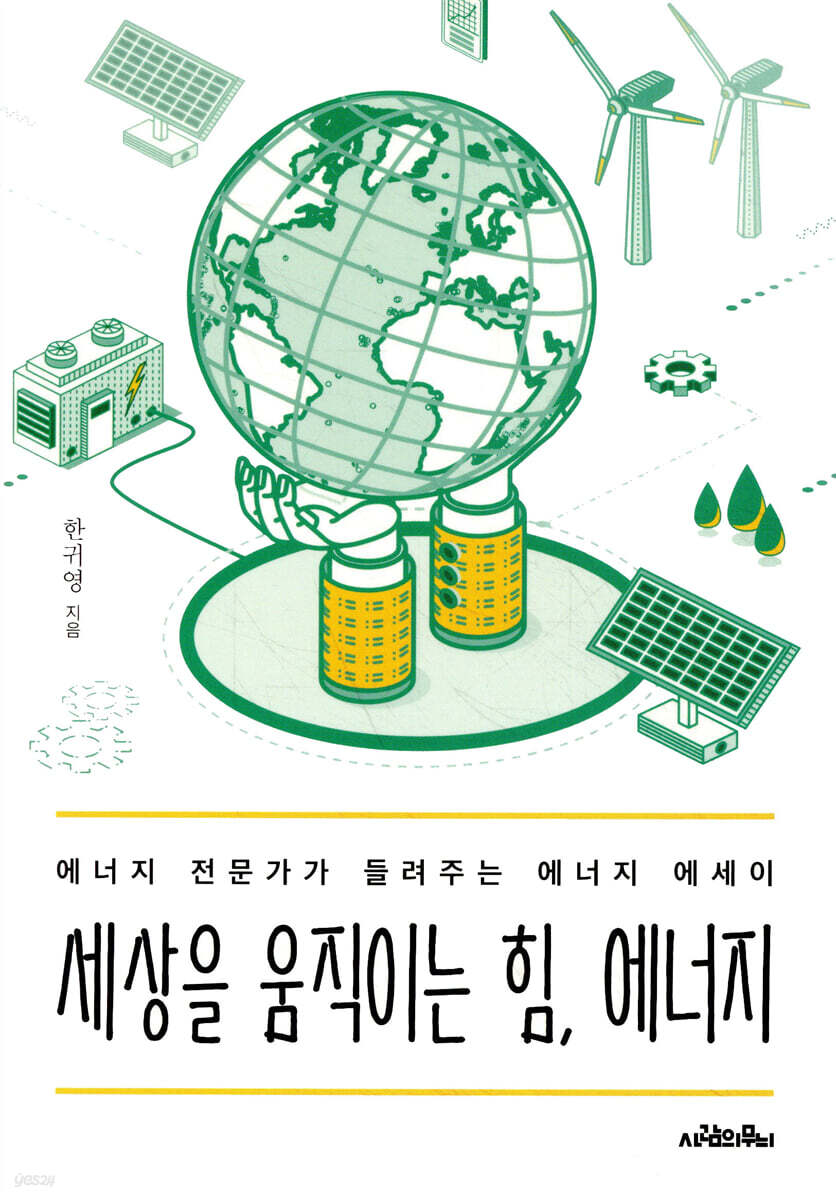
Energy, the force that moves the world
 |
Description
Book Introduction
Energy Workbook for Everyone
“The bottom line is energy!”
A must-read for everyone: Energy Essay
Although most energy today is designed and produced by professional engineers, the main consumers of energy are the general public.
Therefore, the purpose of this book is to bridge this gap and encourage greater interest in energy by helping everyone who consumes energy to have a correct understanding of energy.
Rather than an 'energy textbook' that can be easily accessed by all energy consumers, it can be considered an 'energy essay' that provides easy explanations based on the author's personal opinions and limited professional knowledge.
If we were to acquire an adequate level of energy knowledge, this knowledge would help us make economic and political choices about how we consume energy, which can be considered a kind of public good.
This is especially true in times of severe climate crisis, such as today.
For example, when choosing between nuclear power and renewable energy, between centralized and distributed power generation systems, or between internal combustion engine vehicles, electric vehicles, or hydrogen fuel cell vehicles, we would be able to make wiser choices if we had more accurate and correct basic information.
“The bottom line is energy!”
A must-read for everyone: Energy Essay
Although most energy today is designed and produced by professional engineers, the main consumers of energy are the general public.
Therefore, the purpose of this book is to bridge this gap and encourage greater interest in energy by helping everyone who consumes energy to have a correct understanding of energy.
Rather than an 'energy textbook' that can be easily accessed by all energy consumers, it can be considered an 'energy essay' that provides easy explanations based on the author's personal opinions and limited professional knowledge.
If we were to acquire an adequate level of energy knowledge, this knowledge would help us make economic and political choices about how we consume energy, which can be considered a kind of public good.
This is especially true in times of severe climate crisis, such as today.
For example, when choosing between nuclear power and renewable energy, between centralized and distributed power generation systems, or between internal combustion engine vehicles, electric vehicles, or hydrogen fuel cell vehicles, we would be able to make wiser choices if we had more accurate and correct basic information.
index
Introduction
1.
The most amazing invention in human history
The Story of the Steam Engine │ Coal and Coal Miners │ The Birth of Thermodynamics
2.
Devil's Tears, Oil Story
The Tale of the Seven Sisters │ Oil, the Most Perfect Fossil Fuel │ The Many Faces of Oil │ Large Tankers and Our Country │ Internal Combustion Engine Cars and Oil │ Rockefeller, the Oil King
3.
Milk and cheese, energy-intensive industries
Oil refining and petrochemicals | steel, cement, fertilizer, aluminum, and plastics industries
4.
The power of electricity
Edison and Tesla's Current War │ Current Status and Future of Thermal Power Plants │ Transformers │ Generators │ Electric Motors │ Battery Powerhouses
5.
The future of automobiles
From Carriages to Automobiles | Automobile Emission Regulations | Electric and Hydrogen Fuel Cell Vehicles | Tesla's Strategy | The Shadow of Electric Vehicles | Electric Vehicles and Renewable Energy
6.
shale revolution
Shale, America's Savior │ Securing Mining Technology and Economics │ Shale Mining and Environmental Pollution │ Geopolitical Change │ The Future of Shale Gas │ The Shale Revolution and Us
7.
Hydrogen and fuel cells
The Hydrogen Revolution | The Downsides of Hydrogen Energy | The Present and Future of Fuel Cells
8.
The future of renewable energy
Solar cells │ Wind power │ Bioenergy │ Power storage devices
9.
Energy of the future
Transition from fossil fuels to renewable energy │ Greenhouse gases and global warming │ Key issues related to global warming │ The future of global warming │ Considerations on nuclear power │ Energy of the future
Going out words
Acknowledgements
1.
The most amazing invention in human history
The Story of the Steam Engine │ Coal and Coal Miners │ The Birth of Thermodynamics
2.
Devil's Tears, Oil Story
The Tale of the Seven Sisters │ Oil, the Most Perfect Fossil Fuel │ The Many Faces of Oil │ Large Tankers and Our Country │ Internal Combustion Engine Cars and Oil │ Rockefeller, the Oil King
3.
Milk and cheese, energy-intensive industries
Oil refining and petrochemicals | steel, cement, fertilizer, aluminum, and plastics industries
4.
The power of electricity
Edison and Tesla's Current War │ Current Status and Future of Thermal Power Plants │ Transformers │ Generators │ Electric Motors │ Battery Powerhouses
5.
The future of automobiles
From Carriages to Automobiles | Automobile Emission Regulations | Electric and Hydrogen Fuel Cell Vehicles | Tesla's Strategy | The Shadow of Electric Vehicles | Electric Vehicles and Renewable Energy
6.
shale revolution
Shale, America's Savior │ Securing Mining Technology and Economics │ Shale Mining and Environmental Pollution │ Geopolitical Change │ The Future of Shale Gas │ The Shale Revolution and Us
7.
Hydrogen and fuel cells
The Hydrogen Revolution | The Downsides of Hydrogen Energy | The Present and Future of Fuel Cells
8.
The future of renewable energy
Solar cells │ Wind power │ Bioenergy │ Power storage devices
9.
Energy of the future
Transition from fossil fuels to renewable energy │ Greenhouse gases and global warming │ Key issues related to global warming │ The future of global warming │ Considerations on nuclear power │ Energy of the future
Going out words
Acknowledgements
Publisher's Review
Energy Workbook for Everyone
“The bottom line is energy!”
___Energy makes our lives more comfortable and convenient, but its excessive use as our standard of living improves is now bringing us new problems.
Light and shadow always coexist in energy use.
The bigger the light, the bigger the shadow.
● Can you imagine a world without energy?
It is no exaggeration to say that everything about humanity, from the past to the present, including our daily lives, the operation of society and the state, has been driven by energy.
As we all know, energy is the force that moves the world, from the invention of the steam engine, the development of large-scale coal mines, the popularization of petroleum, the emergence of electric cars, and even renewable energy sources like solar and wind power.
Without energy we can do nothing.
Therefore, if we do not properly understand energy, we will not be able to properly understand the past, present, or even the future.
In this way, energy is the driving force that makes all organizations in our society run smoothly.
Energy is broadly categorized into industrial, household, transportation, and commercial uses. People are generally interested in household energy, such as gas or electricity, which they pay monthly bills for, and transportation energy, such as gasoline or diesel, used in vehicles such as automobiles, but they are not very interested in industrial and commercial uses.
However, because energy has a huge ripple effect in all areas of our society, including politics, economy, and environment, it is very important to understand the basics of all energy consumption areas.
A must-read for everyone: Energy Essay
Although most energy today is designed and produced by professional engineers, the main consumers of energy are the general public.
Therefore, the purpose of this book is to bridge this gap and encourage greater interest in energy by helping everyone who consumes energy to have a correct understanding of energy.
Rather than an 'energy textbook' that can be easily accessed by all energy consumers, it can be considered an 'energy essay' that provides easy explanations based on the author's personal opinions and limited professional knowledge.
If we were to acquire an adequate level of energy knowledge, this knowledge would help us make economic and political choices about how we consume energy, which can be considered a kind of public good.
This is especially true in times of severe climate crisis, such as today.
For example, when choosing between nuclear power and renewable energy, between centralized and distributed power generation systems, or between internal combustion engine vehicles, electric vehicles, or hydrogen fuel cell vehicles, we would be able to make wiser choices if we had more accurate and correct basic information.
● A major shift in the energy paradigm
Professor Han Gwi-young of the Department of Chemical Engineering at Sungkyunkwan University, who wrote this book, is one of the leading experts in this field, having conducted energy-related research at the university for approximately 30 years.
One professor strongly felt that the past few years have been a period of 'changing energy paradigms.'
That is because we have come to recognize that the rise of electric vehicles, interest in hydrogen fuel cell vehicles, the global expansion of renewable energy, fuel switching to reduce carbon dioxide, and the expansion of small, distributed power plants from centralized power systems – the global effort to save energy and improve efficiency is happening at a much greater scale and with greater intensity than ever before.
In particular, it was expected that this would be a significant turning point for the energy system, as everyone's interest and concern about global warming and climate change has increased significantly compared to the past.
Therefore, we need accurate information about energy.
It refers to the correct use of energy, the right choice of energy products, and the right knowledge about global warming.
This kind of energy knowledge is the wisest means of coping with climate change in the 21st century.
Through this book, we can all acquire this knowledge.
___With the recent increase in awareness of global warming and the resulting climate change, energy use is changing in a desirable and positive direction, such as the expansion of renewable energy sources like solar and wind power and the rapid transition to electric vehicles.
Unfortunately, however, the problem remains that key industries that produce necessities such as steel, cement, plastics, and fertilizers must use fossil fuels rather than electricity in their production processes.
In other words, it is an industry that requires fossil fuels such as coal, oil, and natural gas to be supplied in the production process.
Therefore, when we look at the characteristics of these industries, the seriousness of the problem lies in the fact that efforts to prevent global warming by banning the use of fossil fuels and preventing the release of carbon dioxide into the atmosphere are not feasible in all industrial sectors.
It seems as if generating enough electricity from renewable energy will solve all the problems of global warming, but the reality is not that simple.
Excluding power generation and transportation, all other industries require fossil fuels.
Yet another mountain stands in the way of efforts to stop global warming.
● Energy-intensive industries, such as oil refining and petrochemical industries
The petrochemical-related companies we know are broadly divided into the 'oil refining industry' and the 'petrochemical industry'.
Both process crude oil to create high value-added petrochemical products.
Simply put, the petroleum refining industry is an industry that produces gasoline and diesel, which are mainly raw materials for transportation, by decomposing crude oil using a catalyst.
Petrochemicals is an industry that produces not only plastics but also intermediate substances for synthetic fibers, pharmaceuticals, food, and materials, as well as various basic materials needed in daily life, such as acetone, alcohol, dyes, and adhesives.
But what we need to understand from an energy perspective is that the oil refining and petrochemical industries are industries that provide people around the world with the necessities of life, so their demand is very large, and therefore the energy demand for those industries is also large.
And the problem is that the energy used is oil, which cannot be replaced by other forms of fossil fuel.
While the oil industry may decline as the transition from internal combustion engines to electric vehicles takes place, the petrochemical industry is a bit different.
As people's standards of living rise, the demand for various chemical substances that bring convenience to life also increases.
However, demand will continue to grow because there is currently no substitute material produced by the petrochemical industry.
This is because there are no cheap products that can replace the convenient chemical products (detergents, solvents, etc.) we currently use.
Why are the oil refining and petrochemical industries energy-intensive? Both oil refining and petrochemicals boil crude oil at high temperatures to convert it into gas.
And in the case of the petrochemical process, thermal cracking is used, and in the refining process, catalytic cracking is used to change it into the necessary substances, which are then separated by use and subjected to additional chemical reactions, refining, or processing.
All these chemical transformation processes require a lot of heat energy.
In particular, a lot of heat energy is consumed during the process of boiling crude oil at high temperatures for thermal decomposition.
Because the amount of crude oil handled in refining and petrochemical industries is enormous, the petroleum industry is bound to be an energy-intensive industry.
● Electric vehicles and renewable energy
Electric cars operate by turning an electric motor powered by a battery built into the car.
The automobile has the advantage of having a simple structure, fewer parts, easier maintenance, and lower costs.
It is also noiseless and, above all, does not emit pollutants (sulfur oxides, nitrogen compounds, fine dust, etc.).
More importantly, it produces no carbon dioxide emissions.
But the problem lies in battery production and the nature of the electricity stored in the batteries.
This means that the advantages of electric vehicles can change depending on the energy source from which the electricity used to charge the batteries at electric vehicle charging stations is generated.
If the electricity for electric vehicle charging stations is generated from coal- or natural gas-fired power plants, this would negate the advantages of electric vehicles.
In other words, the source of environmental pollutants and carbon dioxide emissions from internal combustion engines has simply changed from car exhaust pipes to the chimneys of power plants.
This is because exhaust fumes from thermal power plants emit the same gases as pollutants from automobiles, and carbon dioxide will also be emitted in the same amount.
Therefore, for electric vehicles to be 'truly' environmentally friendly, they must use electricity generated from renewable energy sources or nuclear power plants.
This is because renewable energy and nuclear power generation do not emit carbon dioxide or other pollutants during the process of producing electricity.
The electric vehicle industry is rapidly expanding globally, led by Tesla, and investment in related industries, including batteries, is also increasing explosively.
Nonetheless, the current share of the automobile market occupied by electric vehicles is around 1-3%.
But once electric vehicles account for around 15% of the overall automobile market, serious concerns will arise about the amount of electricity that will be supplied to electric vehicles.
This will leave us with a new challenge: how much renewable energy can supply electricity to keep pace with the growing number of electric vehicles.
Because although renewable energy is growing at a very fast rate, it has many spatial and temporal constraints.
In other words, if the growth rate of electric vehicles is 20% per year, the growth rate of renewable energy (solar power, wind power, etc.) should also be 20% per year.
“The bottom line is energy!”
___Energy makes our lives more comfortable and convenient, but its excessive use as our standard of living improves is now bringing us new problems.
Light and shadow always coexist in energy use.
The bigger the light, the bigger the shadow.
● Can you imagine a world without energy?
It is no exaggeration to say that everything about humanity, from the past to the present, including our daily lives, the operation of society and the state, has been driven by energy.
As we all know, energy is the force that moves the world, from the invention of the steam engine, the development of large-scale coal mines, the popularization of petroleum, the emergence of electric cars, and even renewable energy sources like solar and wind power.
Without energy we can do nothing.
Therefore, if we do not properly understand energy, we will not be able to properly understand the past, present, or even the future.
In this way, energy is the driving force that makes all organizations in our society run smoothly.
Energy is broadly categorized into industrial, household, transportation, and commercial uses. People are generally interested in household energy, such as gas or electricity, which they pay monthly bills for, and transportation energy, such as gasoline or diesel, used in vehicles such as automobiles, but they are not very interested in industrial and commercial uses.
However, because energy has a huge ripple effect in all areas of our society, including politics, economy, and environment, it is very important to understand the basics of all energy consumption areas.
A must-read for everyone: Energy Essay
Although most energy today is designed and produced by professional engineers, the main consumers of energy are the general public.
Therefore, the purpose of this book is to bridge this gap and encourage greater interest in energy by helping everyone who consumes energy to have a correct understanding of energy.
Rather than an 'energy textbook' that can be easily accessed by all energy consumers, it can be considered an 'energy essay' that provides easy explanations based on the author's personal opinions and limited professional knowledge.
If we were to acquire an adequate level of energy knowledge, this knowledge would help us make economic and political choices about how we consume energy, which can be considered a kind of public good.
This is especially true in times of severe climate crisis, such as today.
For example, when choosing between nuclear power and renewable energy, between centralized and distributed power generation systems, or between internal combustion engine vehicles, electric vehicles, or hydrogen fuel cell vehicles, we would be able to make wiser choices if we had more accurate and correct basic information.
● A major shift in the energy paradigm
Professor Han Gwi-young of the Department of Chemical Engineering at Sungkyunkwan University, who wrote this book, is one of the leading experts in this field, having conducted energy-related research at the university for approximately 30 years.
One professor strongly felt that the past few years have been a period of 'changing energy paradigms.'
That is because we have come to recognize that the rise of electric vehicles, interest in hydrogen fuel cell vehicles, the global expansion of renewable energy, fuel switching to reduce carbon dioxide, and the expansion of small, distributed power plants from centralized power systems – the global effort to save energy and improve efficiency is happening at a much greater scale and with greater intensity than ever before.
In particular, it was expected that this would be a significant turning point for the energy system, as everyone's interest and concern about global warming and climate change has increased significantly compared to the past.
Therefore, we need accurate information about energy.
It refers to the correct use of energy, the right choice of energy products, and the right knowledge about global warming.
This kind of energy knowledge is the wisest means of coping with climate change in the 21st century.
Through this book, we can all acquire this knowledge.
___With the recent increase in awareness of global warming and the resulting climate change, energy use is changing in a desirable and positive direction, such as the expansion of renewable energy sources like solar and wind power and the rapid transition to electric vehicles.
Unfortunately, however, the problem remains that key industries that produce necessities such as steel, cement, plastics, and fertilizers must use fossil fuels rather than electricity in their production processes.
In other words, it is an industry that requires fossil fuels such as coal, oil, and natural gas to be supplied in the production process.
Therefore, when we look at the characteristics of these industries, the seriousness of the problem lies in the fact that efforts to prevent global warming by banning the use of fossil fuels and preventing the release of carbon dioxide into the atmosphere are not feasible in all industrial sectors.
It seems as if generating enough electricity from renewable energy will solve all the problems of global warming, but the reality is not that simple.
Excluding power generation and transportation, all other industries require fossil fuels.
Yet another mountain stands in the way of efforts to stop global warming.
● Energy-intensive industries, such as oil refining and petrochemical industries
The petrochemical-related companies we know are broadly divided into the 'oil refining industry' and the 'petrochemical industry'.
Both process crude oil to create high value-added petrochemical products.
Simply put, the petroleum refining industry is an industry that produces gasoline and diesel, which are mainly raw materials for transportation, by decomposing crude oil using a catalyst.
Petrochemicals is an industry that produces not only plastics but also intermediate substances for synthetic fibers, pharmaceuticals, food, and materials, as well as various basic materials needed in daily life, such as acetone, alcohol, dyes, and adhesives.
But what we need to understand from an energy perspective is that the oil refining and petrochemical industries are industries that provide people around the world with the necessities of life, so their demand is very large, and therefore the energy demand for those industries is also large.
And the problem is that the energy used is oil, which cannot be replaced by other forms of fossil fuel.
While the oil industry may decline as the transition from internal combustion engines to electric vehicles takes place, the petrochemical industry is a bit different.
As people's standards of living rise, the demand for various chemical substances that bring convenience to life also increases.
However, demand will continue to grow because there is currently no substitute material produced by the petrochemical industry.
This is because there are no cheap products that can replace the convenient chemical products (detergents, solvents, etc.) we currently use.
Why are the oil refining and petrochemical industries energy-intensive? Both oil refining and petrochemicals boil crude oil at high temperatures to convert it into gas.
And in the case of the petrochemical process, thermal cracking is used, and in the refining process, catalytic cracking is used to change it into the necessary substances, which are then separated by use and subjected to additional chemical reactions, refining, or processing.
All these chemical transformation processes require a lot of heat energy.
In particular, a lot of heat energy is consumed during the process of boiling crude oil at high temperatures for thermal decomposition.
Because the amount of crude oil handled in refining and petrochemical industries is enormous, the petroleum industry is bound to be an energy-intensive industry.
● Electric vehicles and renewable energy
Electric cars operate by turning an electric motor powered by a battery built into the car.
The automobile has the advantage of having a simple structure, fewer parts, easier maintenance, and lower costs.
It is also noiseless and, above all, does not emit pollutants (sulfur oxides, nitrogen compounds, fine dust, etc.).
More importantly, it produces no carbon dioxide emissions.
But the problem lies in battery production and the nature of the electricity stored in the batteries.
This means that the advantages of electric vehicles can change depending on the energy source from which the electricity used to charge the batteries at electric vehicle charging stations is generated.
If the electricity for electric vehicle charging stations is generated from coal- or natural gas-fired power plants, this would negate the advantages of electric vehicles.
In other words, the source of environmental pollutants and carbon dioxide emissions from internal combustion engines has simply changed from car exhaust pipes to the chimneys of power plants.
This is because exhaust fumes from thermal power plants emit the same gases as pollutants from automobiles, and carbon dioxide will also be emitted in the same amount.
Therefore, for electric vehicles to be 'truly' environmentally friendly, they must use electricity generated from renewable energy sources or nuclear power plants.
This is because renewable energy and nuclear power generation do not emit carbon dioxide or other pollutants during the process of producing electricity.
The electric vehicle industry is rapidly expanding globally, led by Tesla, and investment in related industries, including batteries, is also increasing explosively.
Nonetheless, the current share of the automobile market occupied by electric vehicles is around 1-3%.
But once electric vehicles account for around 15% of the overall automobile market, serious concerns will arise about the amount of electricity that will be supplied to electric vehicles.
This will leave us with a new challenge: how much renewable energy can supply electricity to keep pace with the growing number of electric vehicles.
Because although renewable energy is growing at a very fast rate, it has many spatial and temporal constraints.
In other words, if the growth rate of electric vehicles is 20% per year, the growth rate of renewable energy (solar power, wind power, etc.) should also be 20% per year.
GOODS SPECIFICS
- Date of issue: April 28, 2023
- Page count, weight, size: 256 pages | 140*200*20mm
- ISBN13: 9791155505915
- ISBN10: 1155505913
You may also like
카테고리
korean


korean

![GQ KOREA Mark (Monthly): December [2025]](http://librairie.coreenne.fr/cdn/shop/files/8ef265dbbfbf186523ed75ba7319009d.jpg?v=1765340328&width=3840)


