

Practical music harmony
 |
Description
Book Introduction
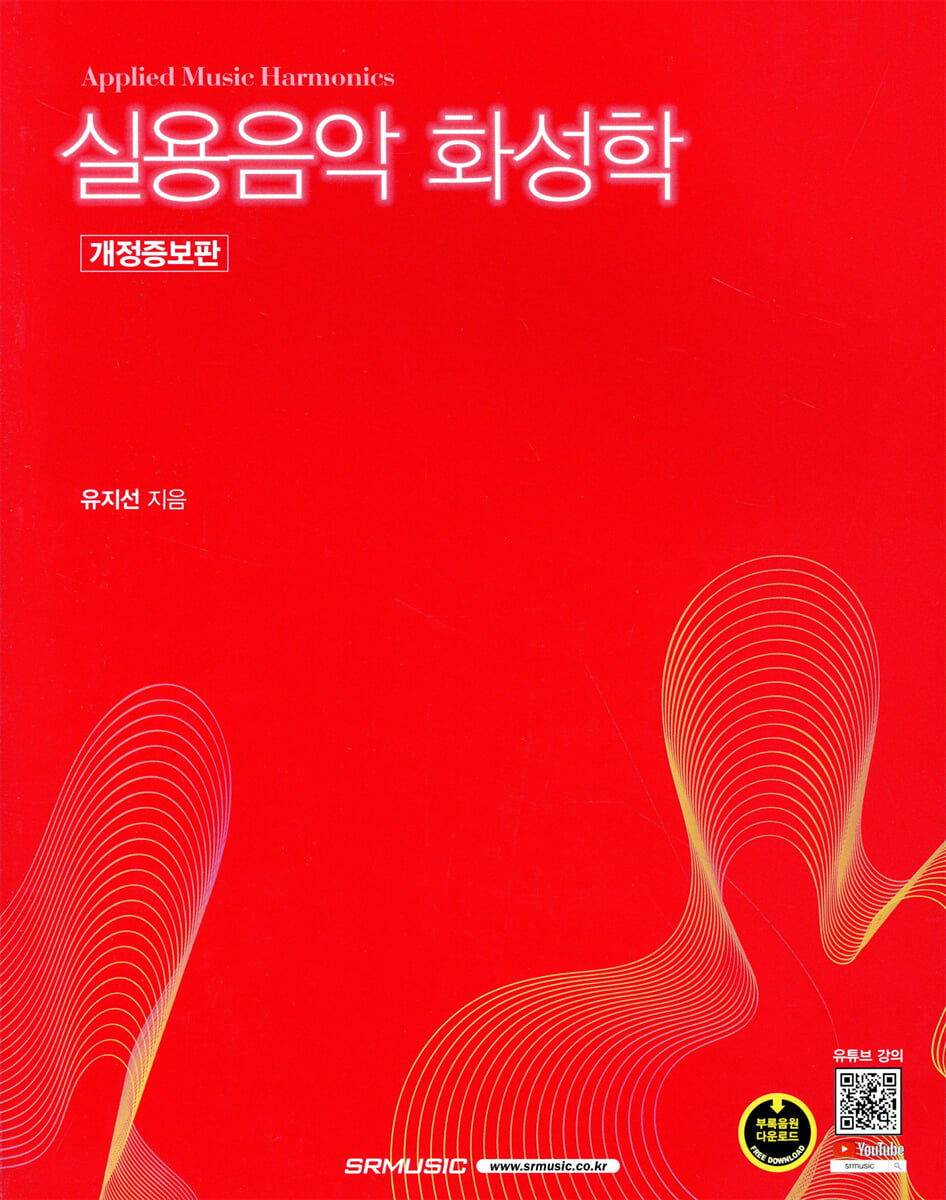
An introductory book to practical music harmony that allows you to learn practical music theory easily and systematically.
This book is a revised and expanded edition of [Practical Music Harmony], which was published in 2013 and was a great help in learning practical music theory, containing the author's know-how from teaching many students in the field of practical music education for many years. It is a book that allows you to learn the harmony theory necessary for practical music education in an easy and practical way.
As many as 160 pages were added to the revised and expanded edition.
The biggest difference is that it has been made more practical by adding 10 mock exams so that it can be used from the introduction to practical music harmony to the ability test after entering the practical music department.
You can evaluate your skills through the 'mini test' and 'STEP TEST' of each unit, so you can prepare for entrance exams and tests after entering university.
This book is a revised and expanded edition of [Practical Music Harmony], which was published in 2013 and was a great help in learning practical music theory, containing the author's know-how from teaching many students in the field of practical music education for many years. It is a book that allows you to learn the harmony theory necessary for practical music education in an easy and practical way.
As many as 160 pages were added to the revised and expanded edition.
The biggest difference is that it has been made more practical by adding 10 mock exams so that it can be used from the introduction to practical music harmony to the ability test after entering the practical music department.
You can evaluate your skills through the 'mini test' and 'STEP TEST' of each unit, so you can prepare for entrance exams and tests after entering university.
- You can preview some of the book's contents.
Preview
index
STEP 01 Basics
1.
Basic Music Theory
1) Staff
2) Clef
3) Type of vote
4) Tone Name
5) Whole/Half
6) Another name Hansori (same name)
7) Accidentals
8) Octave
2.
Rhythm
1) Notes and rests
2) Time Signature
3) Measure
4) Tie/Slur
5) Notation
6) Metronome
3.
musical symbol
1) Dynamic Mark
2) Fermata
3) Repeat Mark
TEST
STEP 02 Interval
1.
Diatonic Interval
2.
Chromatic Interval
3.
Inversion
4.
Compound Interval
5.
harmony of pitch
TEST
STEP 03 Composition (Key)
1.
Key Signature
2.
furtherance
1) Major
2) minor
3.
Related Key
1) Relative Key
2) Dominant Key
3) Sub-Dominant Key
4) Parallel Key
5) Enharmonic Key
4.
Circle of Fifth
5.
Diatonic Scale
6.
Transposition
TEST
STEP 04 Chord
1.
Code structure
2.
Triad chord
1) Major triad chord
2) Minor triad chord
3) Augmented Triad Chord
4) Diminished Triad Chord
3.
7th Chord
1) Major seventh chord
2) Minor seventh chord
3) Dominant Seventh Chord
4) Minor seventh flat fifth chord
5) Diminished Seventh Chord
6) Minor major seventh chord
7) Major Sixth Chord
8) Minor Sixth Chord
9) Dominant Seventh Flat Fifth Chord
10) Dominant Seventh Augmented Fifth Chord
11) Major Seventh Augmented Fifth Chord
12) Dominant Seventh Suspension Chord
4.
Inversion of code
5.
Properties of the Diminished Seventh Chord
6.
Tension Note
TEST
STEP 05 Relationship between code and scale
1.
Types of minor scales
1) Natural minor scale
2) Harmonic minor scale
3) Melodic minor scale (melody/melody minor scale)
2.
Diatonic Scale Chord-Major Key
3.
Diatonic Scale Chord-minor Key
4.
The role of major chords
5.
Dominant Motion
6.
Cadence and Mars Connection
TEST
STEP 06 Substitute Chord
1.
diatonic subsidiary (diatonic substituent)
2.
Primary, Secondary Dominant
3. IIm7 - V7 - IM7 progress
4.
Related Ⅱm7-Ⅴ7
5.
Extended Dominant
TEST
STEP 07 Advanced Proxy Code
1.
Tritone Substitute Chord
2.
Subdominant minor and its surrogate chords
3.
Non-diatonic subsidiary chord of the tonic
4.
Use Diminished Code as a proxy code
TEST
STEP 08 Code Pattern
1.
Patterns that can emerge from the progression of IV
2.
Patterns that can emerge from the progression of I-IV
TEST
STEP 09 Scale
1.
Church Mode Scale
2.
Other scales
1) Pentatonic scale
2) Whole Tone Scale
3) Altered Dominant Scale
4) Diminished Scale
5) Combination of Diminished Scale
6) Lydian flat seventh scale (Lydian ♭7 scale)
7) Harmonic minor perfect fifth downscale
8) Jazz minor scale
9) Blues Scale
TEST
STEP 10 Available Note Scale
1.
Chord Scale
2.
avoid note
3. Exceptional chord scales of IM7, IIIm7, VIIm7♭5
4.
Classification of code scales
5.
Non Diatonic Chord Scale
1) The M7 scale used as a non-diatonic subsidiary chord
2) Scale of the dominant 7th chord
3) The scale of m7 used as a non-diatonic subsidiary chord or Rel. II?m7
4) Scale in the secondary dominant 7th
5) Scale in diminished 7th chord
6) Scale of Sub V7 chord (V7's tritone substitute chord)
6.
Chord scales in minor keys
1) Chord scale of diatonic scale chords in minor keys
2) Scales that can be used in the V7 of a minor key
TEST
STEP 11 Modal Interchange
1.
Modal Interchange
2.
Code scale in modal interchange
1) Code scale in SDm
2) Chord scale in tonic minor
3) Code scale in dominant minor
3.
Modal interchange with modal scale codes
1) Modal Harmony
TEST
STEP 12 Applications of Mars
1.
Modulation
1) Prelude without preparation
2) Prelude to V7
3) The prelude that divides the reserved V7 into Ⅱm7-V7
4) Pivot Chord
2.
Cliche
3.
Blues
TEST
STEP 13 On Chord
1.
Upper Structure Triad Chord
2.
Synthetic Chord
TEST
STEP 14 Deceptive Cadence
1. IIIm7, VIm7
2.
#IVm7♭5
3. IIIm7♭5
4. III7
5.
♭IIIM7, ♭VIM7
TEST
STEP 15 Non-Chord Tones
1.
Passing Note
2.
Neighboring Note
3.
Suspension Note
4.
Anticipation Note
5.
Appoggiatura Note
6.
Melody Fake using non-harmonic sounds
TEST
STEP 16 Melody Composition
1.
Musical form
1) Limit block format
2) Two-part format
3) Three-part format
4) Small three-part format
2.
Melody composition
TEST
STEP 17 Reharmonization
Step-by-step problem book
Mock Exam Collection (1-10)
Summary
1.
Basic Music Theory
1) Staff
2) Clef
3) Type of vote
4) Tone Name
5) Whole/Half
6) Another name Hansori (same name)
7) Accidentals
8) Octave
2.
Rhythm
1) Notes and rests
2) Time Signature
3) Measure
4) Tie/Slur
5) Notation
6) Metronome
3.
musical symbol
1) Dynamic Mark
2) Fermata
3) Repeat Mark
TEST
STEP 02 Interval
1.
Diatonic Interval
2.
Chromatic Interval
3.
Inversion
4.
Compound Interval
5.
harmony of pitch
TEST
STEP 03 Composition (Key)
1.
Key Signature
2.
furtherance
1) Major
2) minor
3.
Related Key
1) Relative Key
2) Dominant Key
3) Sub-Dominant Key
4) Parallel Key
5) Enharmonic Key
4.
Circle of Fifth
5.
Diatonic Scale
6.
Transposition
TEST
STEP 04 Chord
1.
Code structure
2.
Triad chord
1) Major triad chord
2) Minor triad chord
3) Augmented Triad Chord
4) Diminished Triad Chord
3.
7th Chord
1) Major seventh chord
2) Minor seventh chord
3) Dominant Seventh Chord
4) Minor seventh flat fifth chord
5) Diminished Seventh Chord
6) Minor major seventh chord
7) Major Sixth Chord
8) Minor Sixth Chord
9) Dominant Seventh Flat Fifth Chord
10) Dominant Seventh Augmented Fifth Chord
11) Major Seventh Augmented Fifth Chord
12) Dominant Seventh Suspension Chord
4.
Inversion of code
5.
Properties of the Diminished Seventh Chord
6.
Tension Note
TEST
STEP 05 Relationship between code and scale
1.
Types of minor scales
1) Natural minor scale
2) Harmonic minor scale
3) Melodic minor scale (melody/melody minor scale)
2.
Diatonic Scale Chord-Major Key
3.
Diatonic Scale Chord-minor Key
4.
The role of major chords
5.
Dominant Motion
6.
Cadence and Mars Connection
TEST
STEP 06 Substitute Chord
1.
diatonic subsidiary (diatonic substituent)
2.
Primary, Secondary Dominant
3. IIm7 - V7 - IM7 progress
4.
Related Ⅱm7-Ⅴ7
5.
Extended Dominant
TEST
STEP 07 Advanced Proxy Code
1.
Tritone Substitute Chord
2.
Subdominant minor and its surrogate chords
3.
Non-diatonic subsidiary chord of the tonic
4.
Use Diminished Code as a proxy code
TEST
STEP 08 Code Pattern
1.
Patterns that can emerge from the progression of IV
2.
Patterns that can emerge from the progression of I-IV
TEST
STEP 09 Scale
1.
Church Mode Scale
2.
Other scales
1) Pentatonic scale
2) Whole Tone Scale
3) Altered Dominant Scale
4) Diminished Scale
5) Combination of Diminished Scale
6) Lydian flat seventh scale (Lydian ♭7 scale)
7) Harmonic minor perfect fifth downscale
8) Jazz minor scale
9) Blues Scale
TEST
STEP 10 Available Note Scale
1.
Chord Scale
2.
avoid note
3. Exceptional chord scales of IM7, IIIm7, VIIm7♭5
4.
Classification of code scales
5.
Non Diatonic Chord Scale
1) The M7 scale used as a non-diatonic subsidiary chord
2) Scale of the dominant 7th chord
3) The scale of m7 used as a non-diatonic subsidiary chord or Rel. II?m7
4) Scale in the secondary dominant 7th
5) Scale in diminished 7th chord
6) Scale of Sub V7 chord (V7's tritone substitute chord)
6.
Chord scales in minor keys
1) Chord scale of diatonic scale chords in minor keys
2) Scales that can be used in the V7 of a minor key
TEST
STEP 11 Modal Interchange
1.
Modal Interchange
2.
Code scale in modal interchange
1) Code scale in SDm
2) Chord scale in tonic minor
3) Code scale in dominant minor
3.
Modal interchange with modal scale codes
1) Modal Harmony
TEST
STEP 12 Applications of Mars
1.
Modulation
1) Prelude without preparation
2) Prelude to V7
3) The prelude that divides the reserved V7 into Ⅱm7-V7
4) Pivot Chord
2.
Cliche
3.
Blues
TEST
STEP 13 On Chord
1.
Upper Structure Triad Chord
2.
Synthetic Chord
TEST
STEP 14 Deceptive Cadence
1. IIIm7, VIm7
2.
#IVm7♭5
3. IIIm7♭5
4. III7
5.
♭IIIM7, ♭VIM7
TEST
STEP 15 Non-Chord Tones
1.
Passing Note
2.
Neighboring Note
3.
Suspension Note
4.
Anticipation Note
5.
Appoggiatura Note
6.
Melody Fake using non-harmonic sounds
TEST
STEP 16 Melody Composition
1.
Musical form
1) Limit block format
2) Two-part format
3) Three-part format
4) Small three-part format
2.
Melody composition
TEST
STEP 17 Reharmonization
Step-by-step problem book
Mock Exam Collection (1-10)
Summary
GOODS SPECIFICS
- Date of issue: September 9, 2019
- Page count, weight, size: 480 pages | 848g | 182*230*30mm
- ISBN13: 9791189865160
- ISBN10: 1189865165
You may also like
카테고리
korean


korean

![GQ KOREA Mark (Monthly): December [2025]](http://librairie.coreenne.fr/cdn/shop/files/8ef265dbbfbf186523ed75ba7319009d.jpg?v=1765340328&width=3840)


