

Garden of Life
 |
Description
Book Introduction
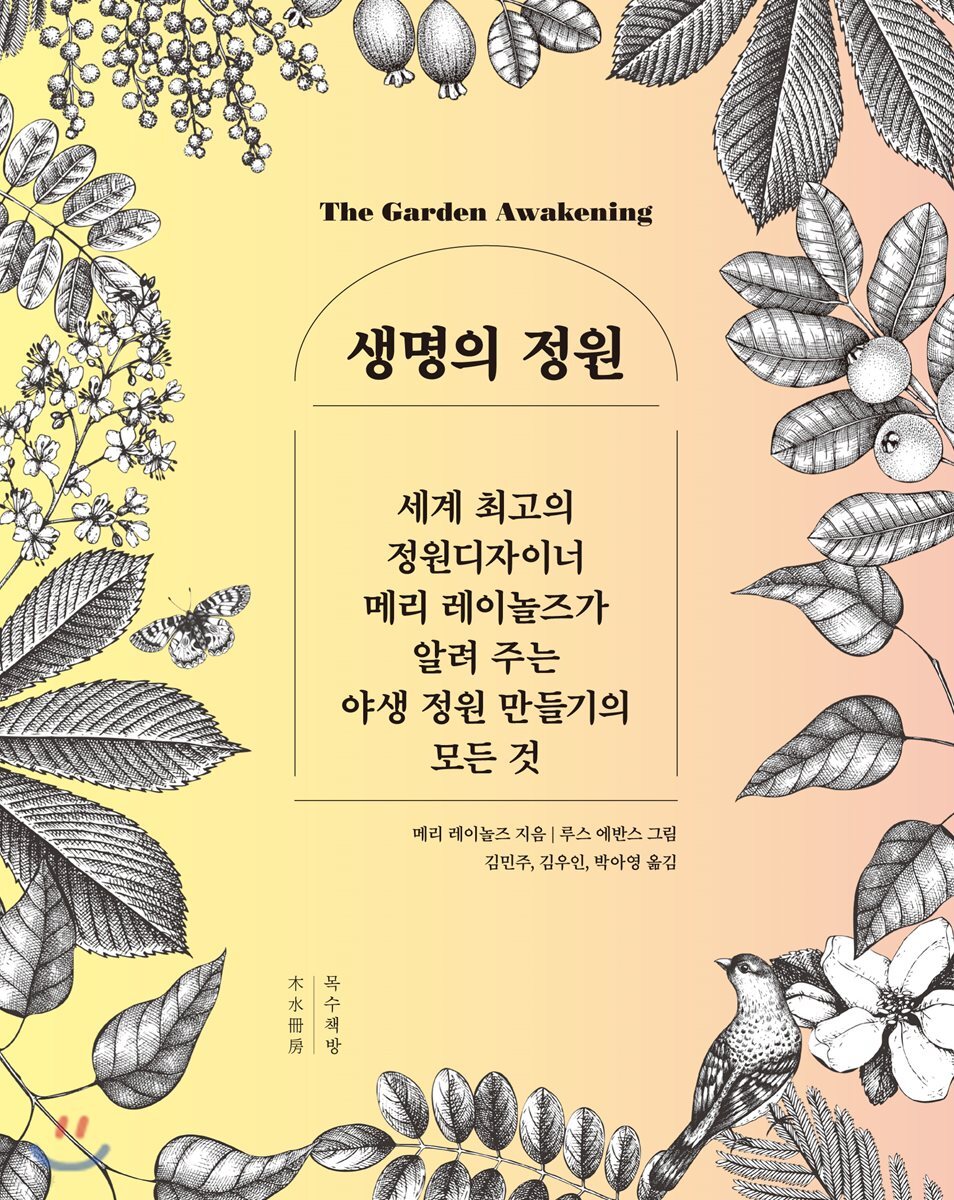
This book contains everything you need to know about creating a wild garden, as told by garden designer Mary Reynolds, the youngest gold medalist in the history of the Chelsea Flower Show in the UK.
Mary Reynolds defines a garden designer as someone who creates places where nature can reveal its true beauty and vitality.
This book begins with ways to restore the health of the land and explains how the land and humans can reconnect and work together to create a 'forest garden' of life.
"The Garden of Life" emphasizes that gardening is an intimate relationship with nature, and leads us into a world of "new" garden design that awakens our lives and the land.
Mary Reynolds defines a garden designer as someone who creates places where nature can reveal its true beauty and vitality.
This book begins with ways to restore the health of the land and explains how the land and humans can reconnect and work together to create a 'forest garden' of life.
"The Garden of Life" emphasizes that gardening is an intimate relationship with nature, and leads us into a world of "new" garden design that awakens our lives and the land.
- You can preview some of the book's contents.
Preview
index
A word of gratitude to Ireland
Recommendation
Starting the article
1.
Restore vitality
sacred place
Nature is stronger than the garden
Finding Roots
Restoring the vitality of the land
Resetting the Earth's "Energy Body" | Working with the Earth's "Emotional Body" | Restoring the Earth's "Physical Body"
2.
garden design
A garden expressing beauty
Five Elements of Garden Design That Collaborate with Nature
Design Element 1.
Tools for Containing Intention: Uncovering the Secrets of Magic
Design Element 2.
Designating an area to contain a specific intent
Design Element 3.
Designs using natural shapes and patterns
Design Element 4.
The power of symbols and imagery
Design Element 5.
Transfer my design to paper
3.
Forest Garden
Building alliances
Listen carefully
I don't like food planning
Growing your own food
Forest Gardening
Planting according to the forest transition process
Short-Term Gardening for Those on a Budget | Long-Term Gardening
Forest Gardening Steps
Planning according to the flow of time
Seven Floors of the Forest Garden
Designing the Layers of a Forest Garden | First Layer: Trees Suitable for Temperate Climates |
Second tier: Medium-height trees, suitable for small gardens |
Designing the Largest Tree Layer | Third Layer: Shrubs | Fourth Layer: Herbs |
Fifth layer: Ground cover plants | Sixth layer: Underground plants | Seventh layer: Vines
hard-working bee
The Story of a Farmer
4.
Alternative management methods
Mulching
How to cultivate the land
Pigs | Goats | Chickens | Sheet Mulching
Lawn and Lawn Care
Easy-to-maintain alternatives and lawns that require meticulous care |
A variety of non-traditional and very diverse styles of lawns
Pest control
Intentional Method | Snail Management
Natural remedies
Colloidal Silver, the All-Purpose Superhero | Natural Fungicide | Natural Insecticide | Natural Herbicide
Nutrients, fertilizers, planting mixes and tree protection
Nutrients and Fertilizers | Protecting Tree Bark from Deer and Other Grazing Livestock
Tree cultivation and care
Hungry Gap | Pollinating Flowers: A Surefire Way to Turn Flowers into Fruit |
Grafting | Grafting a tree yourself or growing it from seed |
Plants for low-growing and top-growing work |
References
Search
Translator's Note
Recommendation
Starting the article
1.
Restore vitality
sacred place
Nature is stronger than the garden
Finding Roots
Restoring the vitality of the land
Resetting the Earth's "Energy Body" | Working with the Earth's "Emotional Body" | Restoring the Earth's "Physical Body"
2.
garden design
A garden expressing beauty
Five Elements of Garden Design That Collaborate with Nature
Design Element 1.
Tools for Containing Intention: Uncovering the Secrets of Magic
Design Element 2.
Designating an area to contain a specific intent
Design Element 3.
Designs using natural shapes and patterns
Design Element 4.
The power of symbols and imagery
Design Element 5.
Transfer my design to paper
3.
Forest Garden
Building alliances
Listen carefully
I don't like food planning
Growing your own food
Forest Gardening
Planting according to the forest transition process
Short-Term Gardening for Those on a Budget | Long-Term Gardening
Forest Gardening Steps
Planning according to the flow of time
Seven Floors of the Forest Garden
Designing the Layers of a Forest Garden | First Layer: Trees Suitable for Temperate Climates |
Second tier: Medium-height trees, suitable for small gardens |
Designing the Largest Tree Layer | Third Layer: Shrubs | Fourth Layer: Herbs |
Fifth layer: Ground cover plants | Sixth layer: Underground plants | Seventh layer: Vines
hard-working bee
The Story of a Farmer
4.
Alternative management methods
Mulching
How to cultivate the land
Pigs | Goats | Chickens | Sheet Mulching
Lawn and Lawn Care
Easy-to-maintain alternatives and lawns that require meticulous care |
A variety of non-traditional and very diverse styles of lawns
Pest control
Intentional Method | Snail Management
Natural remedies
Colloidal Silver, the All-Purpose Superhero | Natural Fungicide | Natural Insecticide | Natural Herbicide
Nutrients, fertilizers, planting mixes and tree protection
Nutrients and Fertilizers | Protecting Tree Bark from Deer and Other Grazing Livestock
Tree cultivation and care
Hungry Gap | Pollinating Flowers: A Surefire Way to Turn Flowers into Fruit |
Grafting | Grafting a tree yourself or growing it from seed |
Plants for low-growing and top-growing work |
References
Search
Translator's Note
Into the book
My garden was a beautiful space where energy flowed freely, but the land didn't want to remain the way I had designed it.
People kept their gardens under constant control, preventing new plants from growing.
But the land has its own unique intentions.
Nature had a plan, and I had to learn what it was.
Gardening is a battle against Mother Nature's will to be herself.
I had to understand how to work with Mother Nature's energy instead of against it.
We need a revolution of 'green-fingered' people who can bring nature's vitality to life in our gardens.
The revolution begins by encouraging people to love and respect the land they live on.
The garden is a part of nature, not the other way around.
People are like that too.
The first step to co-creating a garden with nature involves healing the land.
People and the land are mirrors that reflect each other.
Therefore, the work of healing the land leads to a path of regeneration that brings people back to their true selves.
Forest gardening is based on observing and imitating nature.
This design approach creates a balanced environment and an integrated ecosystem that enables people to live happy and productive lives.
Of course, in the beginning, you have to plant carefully and work hard.
A minimal amount of labor is required to complete a forest garden.
To develop a new relationship with your garden and become a co-creating partner with nature, you must first stop the destructive practices that caused the problem in the first place you chose.
We must put a stop to violent behavior.
Then, we must find ways that only humans can do, and help gardens build their own resilience to create places full of abundance.
Then we can escape the nightmare of man-made management methods.
You can create a beautiful garden with design and cultivation methods that reflect respect for nature and intelligence.
Forest gardening is a method of restoring the state of the forest and producing food.
Rather than cultivating a garden in a natural forest, you grow your garden into a multi-layered forest.
At first, this method sounded unrealistic, especially for people with small gardens.
As I continued my research and investigation, I discovered that this method is a simple, gentle, and productive, ingenious system that works for any size garden.
Creating a forest garden requires dedicated effort and a sense of responsibility to help the land grow, develop strength, and become independent.
…you can grow a variety of plants while imitating a natural forest.
This method involves planting plants so that they form a network that allows them to grow sustainably while forming beneficial relationships with each other.
People kept their gardens under constant control, preventing new plants from growing.
But the land has its own unique intentions.
Nature had a plan, and I had to learn what it was.
Gardening is a battle against Mother Nature's will to be herself.
I had to understand how to work with Mother Nature's energy instead of against it.
We need a revolution of 'green-fingered' people who can bring nature's vitality to life in our gardens.
The revolution begins by encouraging people to love and respect the land they live on.
The garden is a part of nature, not the other way around.
People are like that too.
The first step to co-creating a garden with nature involves healing the land.
People and the land are mirrors that reflect each other.
Therefore, the work of healing the land leads to a path of regeneration that brings people back to their true selves.
Forest gardening is based on observing and imitating nature.
This design approach creates a balanced environment and an integrated ecosystem that enables people to live happy and productive lives.
Of course, in the beginning, you have to plant carefully and work hard.
A minimal amount of labor is required to complete a forest garden.
To develop a new relationship with your garden and become a co-creating partner with nature, you must first stop the destructive practices that caused the problem in the first place you chose.
We must put a stop to violent behavior.
Then, we must find ways that only humans can do, and help gardens build their own resilience to create places full of abundance.
Then we can escape the nightmare of man-made management methods.
You can create a beautiful garden with design and cultivation methods that reflect respect for nature and intelligence.
Forest gardening is a method of restoring the state of the forest and producing food.
Rather than cultivating a garden in a natural forest, you grow your garden into a multi-layered forest.
At first, this method sounded unrealistic, especially for people with small gardens.
As I continued my research and investigation, I discovered that this method is a simple, gentle, and productive, ingenious system that works for any size garden.
Creating a forest garden requires dedicated effort and a sense of responsibility to help the land grow, develop strength, and become independent.
…you can grow a variety of plants while imitating a natural forest.
This method involves planting plants so that they form a network that allows them to grow sustainably while forming beneficial relationships with each other.
--- From the text
Publisher's Review
“People travel all over the world to see nature untouched by human hands.
On the other hand, gardens no longer focus on the simple beauty of nature.
Now is the time to protect and preserve this special, beautiful natural landscape.”
- From the application form for the Chelsea Flower Show submitted by Mary Reynolds in November 2001.
Mary Reynolds compares city parks to people wearing heavy makeup.
It may look good now, but it is said that the appearance is different from the 'real thing' and therefore does not shine with vitality.
People travel around the world saying that 'nature' is good, but they don't try to decorate the gardens around us like that.
They 'decorate' the land by selecting only things that are pleasing to the human eye, and they strive to create a garden that requires as little maintenance as possible and is 'neatly managed' by using herbicides and pesticides.
Even just like buying new clothes every season, we repeatedly cut down 'living things' and plant new plants.
Mary Reynolds poses a fundamental question to anyone interested in gardening.
Why do you want to create a garden?
What does a garden mean to you?
The author says that gardening is fundamentally “a fight against Mother Nature’s will to be herself.”
The earth always has its own unique purpose and tries to realize that purpose in the earth, but people always spend almost all the energy needed to cultivate a garden on preventing the earth from naturally expressing its own unique purpose.
Mary Reynolds points out that we have forgotten the important fact that gardens are a part of nature and that humans are also a part of nature, and she raises her voice saying that we must learn to 'work with' nature rather than fight it.
The beginning of garden creation suggested in 『Garden of Life』 is to restore the vitality of the land.
A gardener's core mission is to listen to the "land's intention" and help the soil ecosystem recover its health and achieve harmony and balance on its own.
After completing this step-by-step process of healing the soil to some extent, the gardener can begin the actual garden design.
Mary Reynolds, who designs gardens freely based on intuition rather than following a specific method, explains 'Five Elements of Garden Design that Collaborates with Nature' in Chapter 2 of her book.
The author shares his experience of applying methods based on Ireland's long-standing traditional culture and various methods that emphasize spirituality in the process of realizing the gardener's 'intention' of creating a garden close to the wild in a specific place.
Chapters 3 and 4 introduce methods for cultivating a 'forest garden' that restores the forest to its original state and produces food.
Forest gardening is not about creating a garden in a natural forest, but rather about growing the garden into a multi-layered forest.
During the first few years, you can plant plants that will protect the soil, heal the soil, and lay the foundation, while also planting the first layer of plants that will form the forest garden.
This period is important because it is a time when living creatures form networks by intertwining with each other above and below the ground.
Mary Reynolds divides the forest garden into seven tiers: tall trees, medium-sized trees or trees suitable for small gardens, shrubs, herbs, ground covers, terrestrial plants, and vines, and provides practical information on design methods, plant selection, and precautions for growing them.
Chapter 4 covers mulching, a key task in managing and maintaining the overall garden system, as well as how to utilize animals, our friends, and 'harmless' strategies and techniques for maintaining and managing the garden and preventing disease and insect damage.
It also guides you through the different ways to grow trees and harvest abundant food from your garden.
For readers who want more detailed information, the carefully compiled bibliography is also very useful.
This book is practical, philosophical and spiritual.
Mary Reynolds dreams of a revolution where those with "green fingers" (the term "green-fingered" refers to someone who is good at growing plants) can experience the wild side of nature in city parks, rooftops and backyards.
Above all, I hope that through this process, gardeners will be able to heal themselves and return to their true selves.
On the other hand, gardens no longer focus on the simple beauty of nature.
Now is the time to protect and preserve this special, beautiful natural landscape.”
- From the application form for the Chelsea Flower Show submitted by Mary Reynolds in November 2001.
Mary Reynolds compares city parks to people wearing heavy makeup.
It may look good now, but it is said that the appearance is different from the 'real thing' and therefore does not shine with vitality.
People travel around the world saying that 'nature' is good, but they don't try to decorate the gardens around us like that.
They 'decorate' the land by selecting only things that are pleasing to the human eye, and they strive to create a garden that requires as little maintenance as possible and is 'neatly managed' by using herbicides and pesticides.
Even just like buying new clothes every season, we repeatedly cut down 'living things' and plant new plants.
Mary Reynolds poses a fundamental question to anyone interested in gardening.
Why do you want to create a garden?
What does a garden mean to you?
The author says that gardening is fundamentally “a fight against Mother Nature’s will to be herself.”
The earth always has its own unique purpose and tries to realize that purpose in the earth, but people always spend almost all the energy needed to cultivate a garden on preventing the earth from naturally expressing its own unique purpose.
Mary Reynolds points out that we have forgotten the important fact that gardens are a part of nature and that humans are also a part of nature, and she raises her voice saying that we must learn to 'work with' nature rather than fight it.
The beginning of garden creation suggested in 『Garden of Life』 is to restore the vitality of the land.
A gardener's core mission is to listen to the "land's intention" and help the soil ecosystem recover its health and achieve harmony and balance on its own.
After completing this step-by-step process of healing the soil to some extent, the gardener can begin the actual garden design.
Mary Reynolds, who designs gardens freely based on intuition rather than following a specific method, explains 'Five Elements of Garden Design that Collaborates with Nature' in Chapter 2 of her book.
The author shares his experience of applying methods based on Ireland's long-standing traditional culture and various methods that emphasize spirituality in the process of realizing the gardener's 'intention' of creating a garden close to the wild in a specific place.
Chapters 3 and 4 introduce methods for cultivating a 'forest garden' that restores the forest to its original state and produces food.
Forest gardening is not about creating a garden in a natural forest, but rather about growing the garden into a multi-layered forest.
During the first few years, you can plant plants that will protect the soil, heal the soil, and lay the foundation, while also planting the first layer of plants that will form the forest garden.
This period is important because it is a time when living creatures form networks by intertwining with each other above and below the ground.
Mary Reynolds divides the forest garden into seven tiers: tall trees, medium-sized trees or trees suitable for small gardens, shrubs, herbs, ground covers, terrestrial plants, and vines, and provides practical information on design methods, plant selection, and precautions for growing them.
Chapter 4 covers mulching, a key task in managing and maintaining the overall garden system, as well as how to utilize animals, our friends, and 'harmless' strategies and techniques for maintaining and managing the garden and preventing disease and insect damage.
It also guides you through the different ways to grow trees and harvest abundant food from your garden.
For readers who want more detailed information, the carefully compiled bibliography is also very useful.
This book is practical, philosophical and spiritual.
Mary Reynolds dreams of a revolution where those with "green fingers" (the term "green-fingered" refers to someone who is good at growing plants) can experience the wild side of nature in city parks, rooftops and backyards.
Above all, I hope that through this process, gardeners will be able to heal themselves and return to their true selves.
GOODS SPECIFICS
- Date of issue: July 15, 2018
- Format: Hardcover book binding method guide
- Page count, weight, size: 408 pages | 600g | 152*195*30mm
- ISBN13: 9791188806034
- ISBN10: 1188806033
You may also like
카테고리
korean


korean

![ELLE 엘르 스페셜 에디션 A형 : 12월 [2025]](http://librairie.coreenne.fr/cdn/shop/files/b8e27a3de6c9538896439686c6b0e8fb.jpg?v=1766436872&width=3840)


