

Yoshikazu Kawaguchi's Natural Farming Classroom
 |
Description
Book Introduction
Natural farming is a groundbreaking farming method that goes far beyond the simple perspective of organic farming, which does not use chemical fertilizers or pesticides.
Akame Natural Farming School, led by Yoshikazu Kawaguchi, adheres to three principles: not tilling the land, not using fertilizers or pesticides, and not regarding weeds and insects as enemies.
“How can you farm like that?” However, those who have experience say that by using the power of nature on your side, the work is easier, it costs less, and the harvest is full of vitality.
"Yoshikazu Kawaguchi's Natural Farming Classroom" is a book on authentic natural farming practice by Yoshikazu Kawaguchi, who is considered the godfather of natural farming practitioners around the world, with over 40 years of experience and philosophy.
Chapter 1 explains the basics that you must know when practicing natural farming.
From preliminary preparation and crop selection, to sowing and management, harvesting, and seed collection, the tasks that natural farmers must actually carry out each year are meticulously organized in chronological order.
Chapter 2 contains 'Field Know-How' to ensure a good harvest for each of the 23 popular vegetables, and Chapter 3 contains 'Rice Field Know-How' to double-crop rice and barley, the flowers of farming.
Akame Natural Farming School, led by Yoshikazu Kawaguchi, adheres to three principles: not tilling the land, not using fertilizers or pesticides, and not regarding weeds and insects as enemies.
“How can you farm like that?” However, those who have experience say that by using the power of nature on your side, the work is easier, it costs less, and the harvest is full of vitality.
"Yoshikazu Kawaguchi's Natural Farming Classroom" is a book on authentic natural farming practice by Yoshikazu Kawaguchi, who is considered the godfather of natural farming practitioners around the world, with over 40 years of experience and philosophy.
Chapter 1 explains the basics that you must know when practicing natural farming.
From preliminary preparation and crop selection, to sowing and management, harvesting, and seed collection, the tasks that natural farmers must actually carry out each year are meticulously organized in chronological order.
Chapter 2 contains 'Field Know-How' to ensure a good harvest for each of the 23 popular vegetables, and Chapter 3 contains 'Rice Field Know-How' to double-crop rice and barley, the flowers of farming.
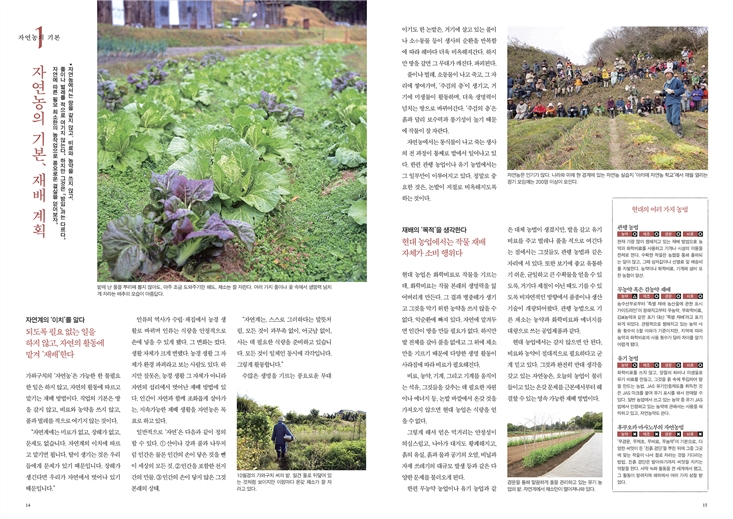
- You can preview some of the book's contents.
Preview
index
Preface (Yoshikazu Kawaguchi)
Chapter 1: The Basics of Natural Farming
1.
The Basics of Natural Farming: Cultivation Plans
2.
Field clearing and furrow making, farm tools
3.
Key points in crop selection, cultivation in suitable areas and at the right time, and obstacles to continuous cropping
4.
Basics of Sowing Seeds ① Dot Sowing
5.
The Basics of Sowing Seeds ② Row Sowing, Scatter Sowing
6.
Grass care, thinning
7.
How to grow seedlings, how to make a greenhouse
8.
The basics of seedling cultivation: dividing seedlings, seed potatoes, and plants
9.
Setting up supports, watering, pruning, and drumming
10.
Layers of Corpse: How to Help Growth
11.
Disease, insect damage, bird and animal damage
12.
Self-collection, seed preservation
Chapter 2: A Sure Harvest with Natural Farming
1.
egg plant
2.
cucumber
3.
pumpkin
4.
Dong-A
5.
tomato
6.
green onion
7.
cabbage
8.
lettuce, lettuce
9.
lawsuit
10.
chives
11.
Broccoli, cauliflower
12.
Tea tree oil
13.
Toran
14.
sweet potato
15.
potato
16.
onion
17.
radish
18.
carrot
19.
ginger
20.
kidney beans, soybeans
21.
green beans, soybeans
22.
pea
23.
silkworm beans
Chapter 3: Natural Farming: Rice and Barley Cultivation
1.
Rice and barley are grown in the fields.
2.
Make a rice seedbed
3.
Barley harvesting, threshing, and milling
4.
Repairing rice ridges, transplanting rice seedlings, and planting rice ridge beans
5.
Kimmaegi, water management, and growth assistance
6.
Harvesting rice, hanging it on a rice straw
7.
Sowing barley, threshing rice
Please tell me about natural farming Q&A, Mr. Kawaguchi.
① Establishment of natural farming
② For a better future
Finally (Yoshimi Arai)
Yoshikazu Kawaguchi's Seed Sowing Calendar
Translator's Note (Choi Seong-hyeon)
Chapter 1: The Basics of Natural Farming
1.
The Basics of Natural Farming: Cultivation Plans
2.
Field clearing and furrow making, farm tools
3.
Key points in crop selection, cultivation in suitable areas and at the right time, and obstacles to continuous cropping
4.
Basics of Sowing Seeds ① Dot Sowing
5.
The Basics of Sowing Seeds ② Row Sowing, Scatter Sowing
6.
Grass care, thinning
7.
How to grow seedlings, how to make a greenhouse
8.
The basics of seedling cultivation: dividing seedlings, seed potatoes, and plants
9.
Setting up supports, watering, pruning, and drumming
10.
Layers of Corpse: How to Help Growth
11.
Disease, insect damage, bird and animal damage
12.
Self-collection, seed preservation
Chapter 2: A Sure Harvest with Natural Farming
1.
egg plant
2.
cucumber
3.
pumpkin
4.
Dong-A
5.
tomato
6.
green onion
7.
cabbage
8.
lettuce, lettuce
9.
lawsuit
10.
chives
11.
Broccoli, cauliflower
12.
Tea tree oil
13.
Toran
14.
sweet potato
15.
potato
16.
onion
17.
radish
18.
carrot
19.
ginger
20.
kidney beans, soybeans
21.
green beans, soybeans
22.
pea
23.
silkworm beans
Chapter 3: Natural Farming: Rice and Barley Cultivation
1.
Rice and barley are grown in the fields.
2.
Make a rice seedbed
3.
Barley harvesting, threshing, and milling
4.
Repairing rice ridges, transplanting rice seedlings, and planting rice ridge beans
5.
Kimmaegi, water management, and growth assistance
6.
Harvesting rice, hanging it on a rice straw
7.
Sowing barley, threshing rice
Please tell me about natural farming Q&A, Mr. Kawaguchi.
① Establishment of natural farming
② For a better future
Finally (Yoshimi Arai)
Yoshikazu Kawaguchi's Seed Sowing Calendar
Translator's Note (Choi Seong-hyeon)
Detailed image


Publisher's Review
With over 40 years of experience and philosophy
He is considered the godfather of natural farmers around the world.
Yoshikazu Kawaguchi's authentic natural farming practice book!
From the basics of natural farming to reduce trial and error
23 kinds of popular vegetables, rice, and barley farming
Natural farming is farming that uses the power of nature on your side.
Natural farming is a groundbreaking farming method that goes far beyond the simple perspective of organic farming, which does not use chemical fertilizers or pesticides.
It is also a wonderful space for experimentation and discussion, created by people who are trying to rethink all elements of rural life from scratch, except for the premise of "farming," and who are not simply returning to the rough farming methods of the past, but are seeking to simultaneously coexist with nature and meet the demands of the present age.
Akame Natural Farming School, led by Yoshikazu Kawaguchi, adheres to three principles: not tilling the land, not using fertilizers or pesticides, and not regarding weeds and insects as enemies.
“How can you farm like that?” However, those who have experience say that by using the power of nature on your side, the work is easier, it costs less, and the harvest is full of vitality.
Advantages of Natural Farming
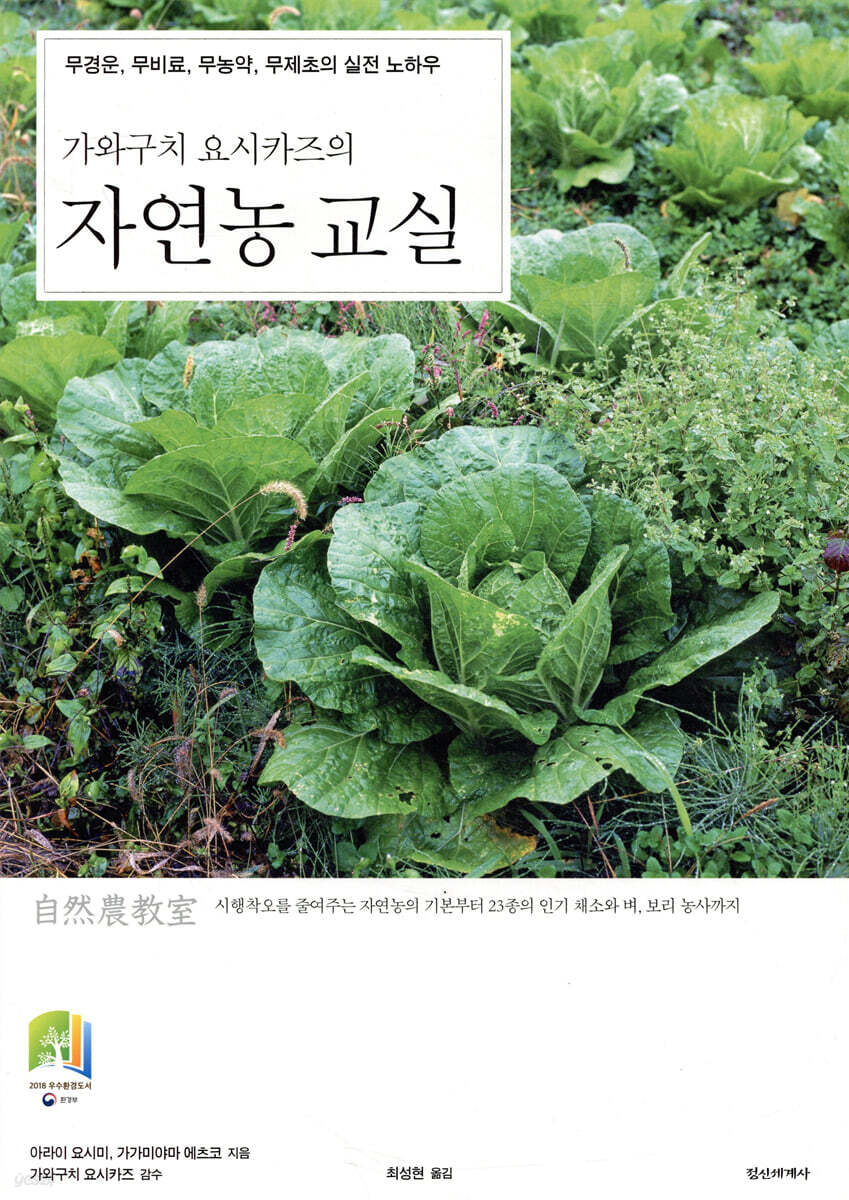
If you look at the cover photo of this book, cabbage is growing well among lush grass.
This is the natural scenery of a field cultivated through natural farming.
The soil is fertile and soft because the land is not plowed.
It is safe because no fertilizers or pesticides are used.
Since grass and bugs are not considered enemies, there is less hassle.
In addition, the specific advantages of natural farming are as follows:
Free from weeding / Free from watering / No need for machines / Easy for women to do / Low cost / Good for health and the environment / Less pests and diseases / Countless living things coexist in the fields / Life is overflowing in the harvest
What to grow and how to grow it
Chapter 1 of this book explains the basics you must know when practicing natural farming.
From preliminary preparation and crop selection, to sowing and management, harvesting, and seed collection, the tasks that natural farmers must actually carry out each year are meticulously organized in chronological order.
Chapter 2 contains 'Field Know-How' to ensure a good harvest for each of the 23 popular vegetables, and Chapter 3 contains 'Rice Field Know-How' to double-crop rice and barley, the flowers of farming.
Natural farming is not only convenient and desirable, but also enjoyable.
Living in harmony with nature, caring for the future of this land and future generations, and obtaining healthy food ingredients.
This book covers the theory and practice of natural farming in its entirety, and has been translated into detail to best suit our circumstances, making it a must-read for "conscious farmers."
He is considered the godfather of natural farmers around the world.
Yoshikazu Kawaguchi's authentic natural farming practice book!
From the basics of natural farming to reduce trial and error
23 kinds of popular vegetables, rice, and barley farming
Natural farming is farming that uses the power of nature on your side.
Natural farming is a groundbreaking farming method that goes far beyond the simple perspective of organic farming, which does not use chemical fertilizers or pesticides.
It is also a wonderful space for experimentation and discussion, created by people who are trying to rethink all elements of rural life from scratch, except for the premise of "farming," and who are not simply returning to the rough farming methods of the past, but are seeking to simultaneously coexist with nature and meet the demands of the present age.
Akame Natural Farming School, led by Yoshikazu Kawaguchi, adheres to three principles: not tilling the land, not using fertilizers or pesticides, and not regarding weeds and insects as enemies.
“How can you farm like that?” However, those who have experience say that by using the power of nature on your side, the work is easier, it costs less, and the harvest is full of vitality.
Advantages of Natural Farming
If you look at the cover photo of this book, cabbage is growing well among lush grass.
This is the natural scenery of a field cultivated through natural farming.
The soil is fertile and soft because the land is not plowed.
It is safe because no fertilizers or pesticides are used.
Since grass and bugs are not considered enemies, there is less hassle.
In addition, the specific advantages of natural farming are as follows:
Free from weeding / Free from watering / No need for machines / Easy for women to do / Low cost / Good for health and the environment / Less pests and diseases / Countless living things coexist in the fields / Life is overflowing in the harvest
What to grow and how to grow it
Chapter 1 of this book explains the basics you must know when practicing natural farming.
From preliminary preparation and crop selection, to sowing and management, harvesting, and seed collection, the tasks that natural farmers must actually carry out each year are meticulously organized in chronological order.
Chapter 2 contains 'Field Know-How' to ensure a good harvest for each of the 23 popular vegetables, and Chapter 3 contains 'Rice Field Know-How' to double-crop rice and barley, the flowers of farming.
Natural farming is not only convenient and desirable, but also enjoyable.
Living in harmony with nature, caring for the future of this land and future generations, and obtaining healthy food ingredients.
This book covers the theory and practice of natural farming in its entirety, and has been translated into detail to best suit our circumstances, making it a must-read for "conscious farmers."
GOODS SPECIFICS
- Date of publication: January 23, 2017
- Page count, weight, size: 132 pages | 544g | 210*297*20mm
- ISBN13: 9788935704057
- ISBN10: 8935704059
You may also like
카테고리
korean


korean

![GQ KOREA Mark (Monthly): December [2025]](http://librairie.coreenne.fr/cdn/shop/files/8ef265dbbfbf186523ed75ba7319009d.jpg?v=1765340328&width=3840)


