

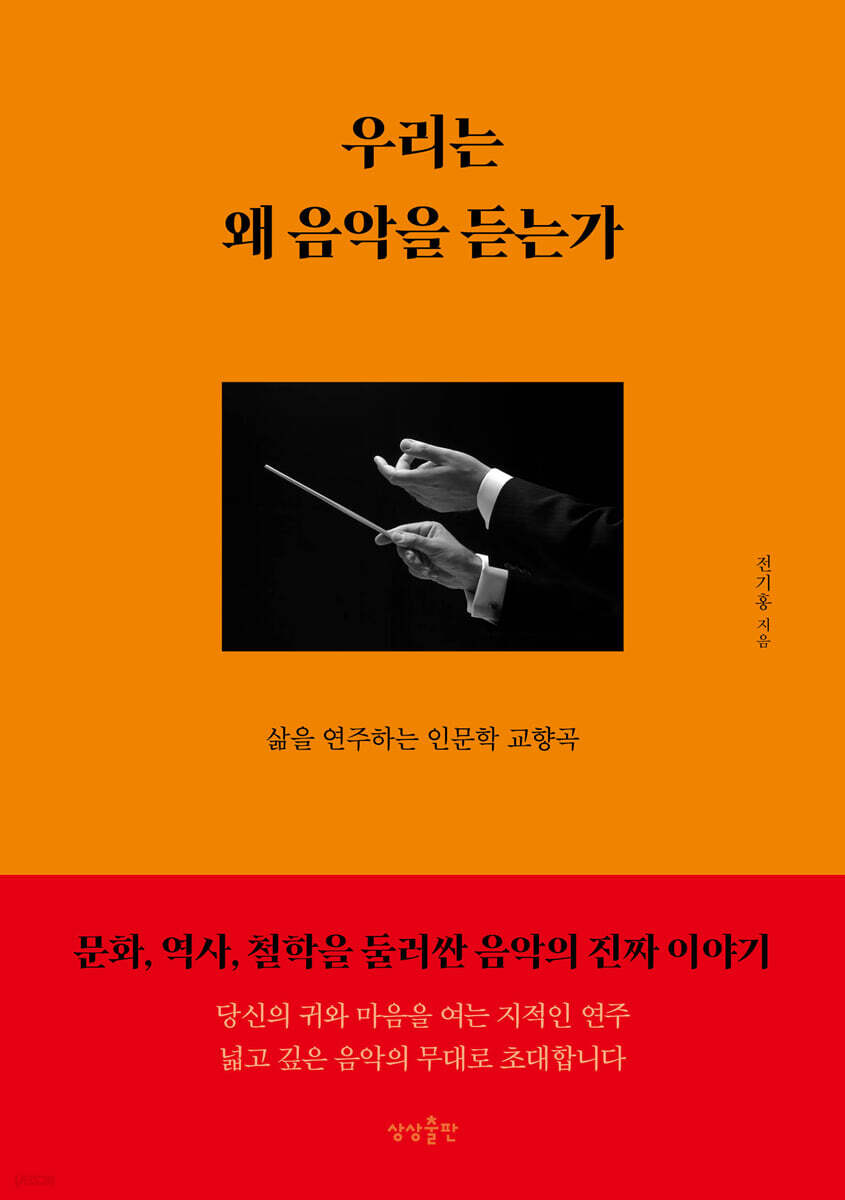
Why do we listen to music?
 |
Description
Book Introduction
Meeting at the border of music and humanities
The most intelligent journey
"Why We Listen to Music" is a humanistic journey that looks into human life through the window of music.
It covers almost everything about music surrounding the humanities, from the history, culture, and philosophy of music to the impact of music on humanity.
Why are we so drawn to music? Whether we're sad or happy, we often seek out music to listen to.
Music is at the heart of our lives and has been a part of human history for a very long time.
"Why We Listen to Music" awakens us to the mysterious power of music, which is so closely connected to us and sometimes so powerfully draws us in, and explores its principles together.
This book is structured to flow organically, like a symphony.
The content flows naturally, like a symphony being played, from the influence of music on human emotions, to the order and form of sound, to the diversity of music across cultures, to the essence of life.
Basically, it introduces background knowledge about music and classical masterpieces, but above all, the essence of this book is to deal with the human being who listens to music and his or her life.
While existing music education books mainly introduce classic masterpieces or cover background knowledge and theory of music, "Why We Listen to Music" stands out in that it focuses on the humanities surrounding music.
Reading this book will be an intellectual journey that explores the meaning of life at the intersection of music and the humanities.
Let's enjoy and savor the moment when the pleasure of listening changes to the pleasure of understanding.
The most intelligent journey
"Why We Listen to Music" is a humanistic journey that looks into human life through the window of music.
It covers almost everything about music surrounding the humanities, from the history, culture, and philosophy of music to the impact of music on humanity.
Why are we so drawn to music? Whether we're sad or happy, we often seek out music to listen to.
Music is at the heart of our lives and has been a part of human history for a very long time.
"Why We Listen to Music" awakens us to the mysterious power of music, which is so closely connected to us and sometimes so powerfully draws us in, and explores its principles together.
This book is structured to flow organically, like a symphony.
The content flows naturally, like a symphony being played, from the influence of music on human emotions, to the order and form of sound, to the diversity of music across cultures, to the essence of life.
Basically, it introduces background knowledge about music and classical masterpieces, but above all, the essence of this book is to deal with the human being who listens to music and his or her life.
While existing music education books mainly introduce classic masterpieces or cover background knowledge and theory of music, "Why We Listen to Music" stands out in that it focuses on the humanities surrounding music.
Reading this book will be an intellectual journey that explores the meaning of life at the intersection of music and the humanities.
Let's enjoy and savor the moment when the pleasure of listening changes to the pleasure of understanding.
- You can preview some of the book's contents.
Preview
index
Prologue | Starting the Performance
1st Movement | Music is Emotion
Lecture 1.
Why do we like music?
Lecture 2.
How does music move emotions?
3rd lecture.
Why is song special to humans?
Semifinals.
How much can music change your life?
Lecture 5.
What's the difference between classical music and popular music?
2nd Movement | Music is Language
Lecture 6.
Why are overtones the root of music?
Lesson 7.
What is music made of?
Quarterfinals.
Why does music need form?
Lesson 9.
An orchestra, how do dozens of instruments create one piece of music?
Lecture 10. Can AI-generated music be considered art?
3rd Movement | Music is Diversity
Lesson 11.
Why is music different in each country?
Lecture 12.
Why was music dedicated to God?
Lesson 13.
What does the music mean?
Lesson 14.
Why are there no female composers in Western music history?
Lesson 15.
How did music become a weapon of resistance?
4th Movement | Music is Life
Round of 16.
Are geniuses made?
Lesson 17.
Is suffering a gift or a curse for an artist?
Round of 18.
Can art compromise with power?
Lesson 19.
Should an artist's life and work be viewed separately?
Lesson 20.
How does art sustain life?
Epilogue | Concluding the Performance
References
1st Movement | Music is Emotion
Lecture 1.
Why do we like music?
Lecture 2.
How does music move emotions?
3rd lecture.
Why is song special to humans?
Semifinals.
How much can music change your life?
Lecture 5.
What's the difference between classical music and popular music?
2nd Movement | Music is Language
Lecture 6.
Why are overtones the root of music?
Lesson 7.
What is music made of?
Quarterfinals.
Why does music need form?
Lesson 9.
An orchestra, how do dozens of instruments create one piece of music?
Lecture 10. Can AI-generated music be considered art?
3rd Movement | Music is Diversity
Lesson 11.
Why is music different in each country?
Lecture 12.
Why was music dedicated to God?
Lesson 13.
What does the music mean?
Lesson 14.
Why are there no female composers in Western music history?
Lesson 15.
How did music become a weapon of resistance?
4th Movement | Music is Life
Round of 16.
Are geniuses made?
Lesson 17.
Is suffering a gift or a curse for an artist?
Round of 18.
Can art compromise with power?
Lesson 19.
Should an artist's life and work be viewed separately?
Lesson 20.
How does art sustain life?
Epilogue | Concluding the Performance
References
Detailed image

Into the book
Music isn't just for the ears.
The moment we listen to music, a wonderful phenomenon unfolds in our brain.
When a melody begins, the brain begins to move like an elaborate orchestra.
Sound first stimulates the eardrum, and the vibrations of the eardrum are transmitted through three small bones (ossicles) to the cochlea.
Mechanical vibrations are converted into electrical signals that travel to the brain via the auditory nerve, activating multiple areas of the brain simultaneously.
--- p.26 From “How does music move emotions?”
Classical music is essentially the art of time.
It naturally draws out the audience's breathing and emotions through an organic flow of strength and speed.
It is far from the mechanical repetition of rhythm.
The tempo slows down and then accelerates.
The rhythm varies unpredictably, creating countless layers of time-lapse within a single song.
--- p.66 From “What is the difference between classical music and popular music?”
The music flows continuously.
It changes every moment and never goes back.
But in it we remember certain sounds and follow certain structures.
Form is the framework that gives order to the flow.
Form is the invisible framework that makes up music and the point where it meets the listener's memory.
The reason you can feel where the melody repeats, where the tension builds, and when it releases is because music has structure.
--- p.
115 From “Why Does Music Need Form?”
Music is invisible.
It cannot be grasped in one's hand, nor does it remain anywhere.
Music is an art that exists only when it flows.
The music we listen to requires that moment to pass before the next sound arrives, and that the next sound must continue to flow to create a melody.
--- p.207 From “What Does Music Want to Say?”
In Symphony No. 9, 'Choral', Beethoven undertook an experiment that went beyond the conventions of the time.
The last movement introduces a 'chorus'.
It was unprecedented for human voices to be added to a symphony that had previously been composed solely of orchestral music.
The passage Beethoven chose was Friedrich Schiller's poem An die Freude.
The phrase “All men shall be brothers” was a symbol of freedom, solidarity, and universal humanity that Schiller defended throughout his life.
--- p.274 From “Is pain a gift or a curse for artists?”
Some art continues to move us through the ages.
Some art, no matter how beautiful, leaves us with a sense of distance.
Art cannot be completely free from ethics, nor can ethics completely dominate art.
It is up to the viewer to ponder the subtle boundaries between them.
The moment we listen to music, a wonderful phenomenon unfolds in our brain.
When a melody begins, the brain begins to move like an elaborate orchestra.
Sound first stimulates the eardrum, and the vibrations of the eardrum are transmitted through three small bones (ossicles) to the cochlea.
Mechanical vibrations are converted into electrical signals that travel to the brain via the auditory nerve, activating multiple areas of the brain simultaneously.
--- p.26 From “How does music move emotions?”
Classical music is essentially the art of time.
It naturally draws out the audience's breathing and emotions through an organic flow of strength and speed.
It is far from the mechanical repetition of rhythm.
The tempo slows down and then accelerates.
The rhythm varies unpredictably, creating countless layers of time-lapse within a single song.
--- p.66 From “What is the difference between classical music and popular music?”
The music flows continuously.
It changes every moment and never goes back.
But in it we remember certain sounds and follow certain structures.
Form is the framework that gives order to the flow.
Form is the invisible framework that makes up music and the point where it meets the listener's memory.
The reason you can feel where the melody repeats, where the tension builds, and when it releases is because music has structure.
--- p.
115 From “Why Does Music Need Form?”
Music is invisible.
It cannot be grasped in one's hand, nor does it remain anywhere.
Music is an art that exists only when it flows.
The music we listen to requires that moment to pass before the next sound arrives, and that the next sound must continue to flow to create a melody.
--- p.207 From “What Does Music Want to Say?”
In Symphony No. 9, 'Choral', Beethoven undertook an experiment that went beyond the conventions of the time.
The last movement introduces a 'chorus'.
It was unprecedented for human voices to be added to a symphony that had previously been composed solely of orchestral music.
The passage Beethoven chose was Friedrich Schiller's poem An die Freude.
The phrase “All men shall be brothers” was a symbol of freedom, solidarity, and universal humanity that Schiller defended throughout his life.
--- p.274 From “Is pain a gift or a curse for artists?”
Some art continues to move us through the ages.
Some art, no matter how beautiful, leaves us with a sense of distance.
Art cannot be completely free from ethics, nor can ethics completely dominate art.
It is up to the viewer to ponder the subtle boundaries between them.
--- p.304 From “Should an artist’s life and work be viewed separately?”
Publisher's Review
Introduction to classic masterpieces, music history, culture, and philosophy
And the influence of music on humans
Music is not just sound.
It stirs emotions, replaces language, illuminates the times and culture, and becomes a force that sustains life.
"Why We Listen to Music" guides readers through four movements to understand music.
The first movement explores the relationship between music and emotions.
We explore why we are drawn to music, what makes songs so special to us as humans, and how music can change our lives.
The second movement looks at music as a language.
Beginning with overtones, the root of music, we explore the universal principles that make up music, from form and structure to orchestral harmony and even music created by artificial intelligence.
The third movement deals with the diversity of music.
It illuminates the meaning of music in the context of nations, cultures, religions, history, gender, and society, and how it sometimes resonates as a voice of resistance.
The final movement questions the relationship between music and life.
It calmly reflects on genius and suffering, art and power, the boundaries between life and work, and the power that art gives to human existence.
"Why We Listen to Music" presents music as a mirror that reflects human nature, transcending mere art, in a flow that extends from emotion to language, from diversity to life.
This book will serve as a solid guide for readers who wish to deeply understand music and for all those who seek to find meaning in life through art.
“Together, we asked questions about music, and through those questions, we looked little by little into the human mind, society, culture, philosophy, and even the meaning of existence.
Perhaps this book, while dealing with music, ultimately unfolds a story about humanity.”
- From the epilogue
And the influence of music on humans
Music is not just sound.
It stirs emotions, replaces language, illuminates the times and culture, and becomes a force that sustains life.
"Why We Listen to Music" guides readers through four movements to understand music.
The first movement explores the relationship between music and emotions.
We explore why we are drawn to music, what makes songs so special to us as humans, and how music can change our lives.
The second movement looks at music as a language.
Beginning with overtones, the root of music, we explore the universal principles that make up music, from form and structure to orchestral harmony and even music created by artificial intelligence.
The third movement deals with the diversity of music.
It illuminates the meaning of music in the context of nations, cultures, religions, history, gender, and society, and how it sometimes resonates as a voice of resistance.
The final movement questions the relationship between music and life.
It calmly reflects on genius and suffering, art and power, the boundaries between life and work, and the power that art gives to human existence.
"Why We Listen to Music" presents music as a mirror that reflects human nature, transcending mere art, in a flow that extends from emotion to language, from diversity to life.
This book will serve as a solid guide for readers who wish to deeply understand music and for all those who seek to find meaning in life through art.
“Together, we asked questions about music, and through those questions, we looked little by little into the human mind, society, culture, philosophy, and even the meaning of existence.
Perhaps this book, while dealing with music, ultimately unfolds a story about humanity.”
- From the epilogue
GOODS SPECIFICS
- Date of issue: October 29, 2025
- Page count, weight, size: 328 pages | 534g | 148*210*20mm
- ISBN13: 9791167822253
- ISBN10: 1167822250
You may also like
카테고리
korean


korean

![GQ KOREA Mark (Monthly): December [2025]](http://librairie.coreenne.fr/cdn/shop/files/8ef265dbbfbf186523ed75ba7319009d.jpg?v=1765340328&width=3840)


