

Constellation Story
 |
Description
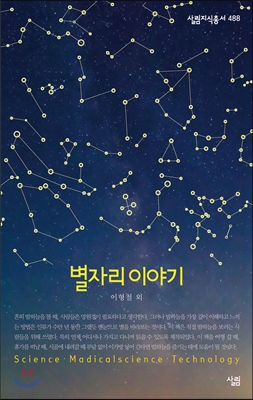
Book Introduction
This book was written for people who want to see the night sky for themselves.
In particular, it is a book that fully utilizes the portability of a knowledge encyclopedia, designed so that you can carry it with you and check the constellations anytime, anywhere.
This book first introduces how to begin observing the night sky by season, then explains how to find constellations and important observation targets. In addition to scientific facts about celestial bodies, it also covers human stories such as legends and myths related to constellations.
At the end of the book, a list of monthly night sky stars and meteor showers for each of the twelve months of the year is included to ensure that you will have plenty to enjoy in the night sky.
In particular, it is a book that fully utilizes the portability of a knowledge encyclopedia, designed so that you can carry it with you and check the constellations anytime, anywhere.
This book first introduces how to begin observing the night sky by season, then explains how to find constellations and important observation targets. In addition to scientific facts about celestial bodies, it also covers human stories such as legends and myths related to constellations.
At the end of the book, a list of monthly night sky stars and meteor showers for each of the twelve months of the year is included to ensure that you will have plenty to enjoy in the night sky.
index
Entering
Note
Part 1: Northern Constellations
Getting Started with the Night Sky / Ursa Major, UMa / Ursa Minor, UMi / Draco, Dra / Cassiopeia, Cas / Cepheus, Cep
Part 2: Winter Constellations
Starting the Night Sky / Orion, Ori / Taurus, Tau / Auriga, Aur / Gemini, Gem / Canis Minor, CMi / Canis Major, CMa
Part 3: Spring Constellations
Starting the Night Sky / Leo, Leo / Cancer, Cnc / Virgo, Vir / Bootes, Boo
Part 4: Summer Constellations
Starting the Night Sky / Cygnus, Cyg / Lyra, Lyr / Aquila, Aql / Scorpius, Sco / Sagittarius, Sgr
Part 5: Autumn Constellations
Starting the Night Sky / Pegasus, Peg / Perseus, Per / Andromeda, And
Monthly night sky
List of famous meteor showers
List of bright stars
Note
Part 1: Northern Constellations
Getting Started with the Night Sky / Ursa Major, UMa / Ursa Minor, UMi / Draco, Dra / Cassiopeia, Cas / Cepheus, Cep
Part 2: Winter Constellations
Starting the Night Sky / Orion, Ori / Taurus, Tau / Auriga, Aur / Gemini, Gem / Canis Minor, CMi / Canis Major, CMa
Part 3: Spring Constellations
Starting the Night Sky / Leo, Leo / Cancer, Cnc / Virgo, Vir / Bootes, Boo
Part 4: Summer Constellations
Starting the Night Sky / Cygnus, Cyg / Lyra, Lyr / Aquila, Aql / Scorpius, Sco / Sagittarius, Sgr
Part 5: Autumn Constellations
Starting the Night Sky / Pegasus, Peg / Perseus, Per / Andromeda, And
Monthly night sky
List of famous meteor showers
List of bright stars
Into the book
Let's take the Big Dipper, also known as Ursa Major, as an example.
In summer, Ursa Major is easy to find because it rises high between 9 p.m. and 12 a.m., but in winter, it is difficult to find.
However, Cassiopeia, famous for its 'W' shape, is the opposite.
Except for Ursa Major and Cassiopeia, the other constellations are difficult to find because they are made up of faint stars of magnitude 3 to 5.
It is often said that on a clear day without light pollution, stars up to magnitude 6 can be seen with the naked eye, but in reality, it is often difficult to see dim stars due to conditions such as lights or weather around the observation location, so stars below magnitude 4 are usually difficult to see.
Still, there is a star that must be found.
It's the North Star.
Polaris is a bright star of the second magnitude and is always in the same position in the northern sky, so it can be seen most of the time unless the weather is very bad.
Therefore, when observing, first find the North Star and determine the north, south, east, and west, and then look for other constellations.
_p.14
In the constellation Cassiopeia, there is a star called 'SN1572', which means supernova, and it appeared in 1572.
When this star was first discovered, it was said to be so bright that it could be seen even during the day.
Although its bright light cannot be seen now, it still emits strong radio waves, and remnants of that time can be detected with radio telescopes.
Now let's look around.
If Cassiopeia is high up, you can see the constellations Cepheus, Andromeda, and Perseus around the 'W' shape.
As we will discuss in the autumn constellations, Cassiopeia, Cepheus, Andromeda, and Perseus are all family in mythology.
Another sight to see is the family gathered together in the night sky.
_pp.31~32
Castor and Pollux are the twin sons of Zeus and the brother of Helen, the beautiful woman who caused the Trojan War.
The twin brothers loved their uncle Leucippus' daughters, but they were already engaged.
Eventually, the twin brothers kidnapped the two daughters and took them as wives, but were forced to fight with their two enraged fiancés.
In the end, three men died in this fight, except for Pollux, who had an immortal body, and Pollux, who had lost his brother, begged Zeus for death, saying that he could not live alone.
Zeus, moved by the brotherly love, made them demigods and allowed them to travel alternately between Olympus, the land of the gods, and the underworld, and placed them as constellations in the night sky.
Peter Paul Rubens (1577-1640), a Flemish painter from Belgium, left behind a painting titled 'The Rape of the Daughters of Leucippus', which depicts the twin brothers abducting the two daughters.
_p.65
Just as there are winter diamonds in the winter night sky, there are also guiding stars in the spring night sky called the 'Spring Triangle' and the 'Spring Curve', both of which begin with the Big Dipper.
If you extend the line from the Gamma (γ) star and Delta star in the handle of the Big Dipper to the south, you will reach Regulus, the alpha star of Leo.
A large trapezoid is visible around Regulus, which is the lion's body.
Let's go back to the Big Dipper and extend the curve of the handle south.
There is a bright orange star in the middle of the extension line and a bright white star at the end of the extension line.
The orange star is Arcturus in the constellation Boötes, and the white star is Spica in the constellation Virgo.
This curve is called the 'Great Curve of Spring'.
And in the tail of the lion is Denebola, the beta star of Leo.
The triangle formed by Arcturus, Spica, and Denebola is the 'Spring Triangle'.
In summer, Ursa Major is easy to find because it rises high between 9 p.m. and 12 a.m., but in winter, it is difficult to find.
However, Cassiopeia, famous for its 'W' shape, is the opposite.
Except for Ursa Major and Cassiopeia, the other constellations are difficult to find because they are made up of faint stars of magnitude 3 to 5.
It is often said that on a clear day without light pollution, stars up to magnitude 6 can be seen with the naked eye, but in reality, it is often difficult to see dim stars due to conditions such as lights or weather around the observation location, so stars below magnitude 4 are usually difficult to see.
Still, there is a star that must be found.
It's the North Star.
Polaris is a bright star of the second magnitude and is always in the same position in the northern sky, so it can be seen most of the time unless the weather is very bad.
Therefore, when observing, first find the North Star and determine the north, south, east, and west, and then look for other constellations.
_p.14
In the constellation Cassiopeia, there is a star called 'SN1572', which means supernova, and it appeared in 1572.
When this star was first discovered, it was said to be so bright that it could be seen even during the day.
Although its bright light cannot be seen now, it still emits strong radio waves, and remnants of that time can be detected with radio telescopes.
Now let's look around.
If Cassiopeia is high up, you can see the constellations Cepheus, Andromeda, and Perseus around the 'W' shape.
As we will discuss in the autumn constellations, Cassiopeia, Cepheus, Andromeda, and Perseus are all family in mythology.
Another sight to see is the family gathered together in the night sky.
_pp.31~32
Castor and Pollux are the twin sons of Zeus and the brother of Helen, the beautiful woman who caused the Trojan War.
The twin brothers loved their uncle Leucippus' daughters, but they were already engaged.
Eventually, the twin brothers kidnapped the two daughters and took them as wives, but were forced to fight with their two enraged fiancés.
In the end, three men died in this fight, except for Pollux, who had an immortal body, and Pollux, who had lost his brother, begged Zeus for death, saying that he could not live alone.
Zeus, moved by the brotherly love, made them demigods and allowed them to travel alternately between Olympus, the land of the gods, and the underworld, and placed them as constellations in the night sky.
Peter Paul Rubens (1577-1640), a Flemish painter from Belgium, left behind a painting titled 'The Rape of the Daughters of Leucippus', which depicts the twin brothers abducting the two daughters.
_p.65
Just as there are winter diamonds in the winter night sky, there are also guiding stars in the spring night sky called the 'Spring Triangle' and the 'Spring Curve', both of which begin with the Big Dipper.
If you extend the line from the Gamma (γ) star and Delta star in the handle of the Big Dipper to the south, you will reach Regulus, the alpha star of Leo.
A large trapezoid is visible around Regulus, which is the lion's body.
Let's go back to the Big Dipper and extend the curve of the handle south.
There is a bright orange star in the middle of the extension line and a bright white star at the end of the extension line.
The orange star is Arcturus in the constellation Boötes, and the white star is Spica in the constellation Virgo.
This curve is called the 'Great Curve of Spring'.
And in the tail of the lion is Denebola, the beta star of Leo.
The triangle formed by Arcturus, Spica, and Denebola is the 'Spring Triangle'.
---p.76
GOODS SPECIFICS
- Date of issue: June 30, 2014
- Page count, weight, size: 159 pages | 213g | 120*190*10mm
- ISBN13: 9788952228970
- ISBN10: 8952228979
You may also like
카테고리
korean


korean

![GQ KOREA Mark (Monthly): December [2025]](http://librairie.coreenne.fr/cdn/shop/files/8ef265dbbfbf186523ed75ba7319009d.jpg?v=1765340328&width=3840)


