

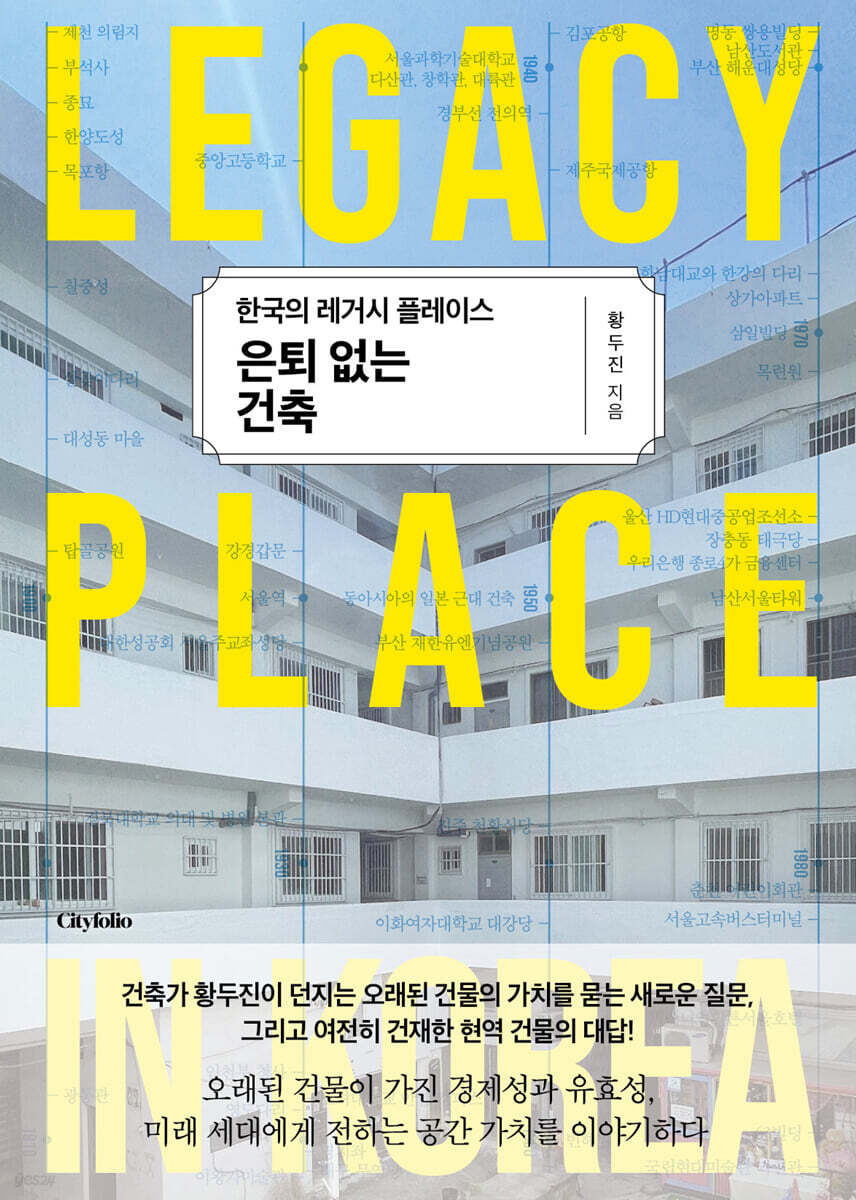
Architecture without retirement
 |
Description
Book Introduction
“Why should we know and experience architecture without retirement?”
Because you can find answers to the questions of what to remember, where to stay, and what space to leave behind.
"Architecture Without Retirement: Korea's Legacy Places" goes beyond simply preserving old buildings and poses a fundamental question: how can we reinterpret and revitalize them in our contemporary lives?
In a city built on the past, this will provide an opportunity to explore the economic effectiveness and social value of existing buildings without retirement, as well as the meaning of urban space passed on to future generations.
I hope that through buildings we can embark on a profound journey to reflect on the values and efficiency of our lives.
Because you can find answers to the questions of what to remember, where to stay, and what space to leave behind.
"Architecture Without Retirement: Korea's Legacy Places" goes beyond simply preserving old buildings and poses a fundamental question: how can we reinterpret and revitalize them in our contemporary lives?
In a city built on the past, this will provide an opportunity to explore the economic effectiveness and social value of existing buildings without retirement, as well as the meaning of urban space passed on to future generations.
I hope that through buildings we can embark on a profound journey to reflect on the values and efficiency of our lives.
- You can preview some of the book's contents.
Preview
index
Introduction
Legacy Place
Interview
01 Millennium Hilton Hotel, showcasing Korean elegance and formality
02 Maintaining the purpose and respecting the original form, Jangchung-dong Taegeukdang
03 Samil Building, a modern architectural space that has emerged in the city's daily life
04 Gwangtonggwan, the Lady of the City (now Woori Bank Jongno Financial Center)
05 The still-shining Han River watchtower, 63 Building (now Hanwha Financial Center 63)
06 Gyeongseong Electric Building, an electric company building in the heart of the financial district (currently the Korea Electric Power Corporation building on Namdaemun-ro)
07 Myeongdong Ssangyong Building: A Combination of Architecture and Terracotta Murals
08 Woori Bank Jongno 4-ga Financial Center, a Financial Institution Becoming One with Art
09 Namsan Seoul Tower, still a symbol of Seoul
10. Busan Commodore Hotel: The Obsession of a Foreign Architect
11 Binhaewon, a living witness to the history of Chinese communities in Korea
12 Buildings and Menus: Legacy Pearl Emperor Restaurant
13. Chuncheon Children's Center (now KT&G Sangsang Madang Chuncheon) with wings spread out toward the lake
14 Daegu Muyeongdang survived demolition
15. Ulsan HD Hyundai Heavy Industries Shipyard, the site of Korea's rapid growth myth
Gimpo Airport, from a bridgehead for invasion of the 16 continents to a gateway to the nation
17 Hanyangdoseong, a historical heritage site still in operation
18 Dreaming of the day when it will be connected to the continent again Seoul Station (now Culture Station Seoul 284)
Tapgol Park is not just for the elderly.
20 The Seoul Express Bus Terminal, which is so well located that it is actually a problem
21 540-year-old active bridge, Salgot Bridge
22 Why are there so many bridges on the Han River? Hannam Bridge and the Han River Bridges
23 Noryangjin Underground Drainage Channel, a Modern Heritage Discovered Underground
24 Don't ask about age anymore, Jecheon Uirimji
25 The 'true' history of this building must now be revealed: Hadong Youth Center (now Hadong Regional Self-Reliance Center)
26 The UN Memorial Cemetery in Busan, a world-renowned landmark bearing witness to the Korean War
27 Once a battlefield, always a battlefield, Seven Stars
28 Mokpo Port, smaller and more charming
29 A lonely crescent moon floating on the railing of Yeongdo Bridge (now Yeongdo Bridge)
30 Ganggyeong Lock Gate, a local specialty that rivals salted seafood
31 The picturesque village left behind by missionaries: Tiger Thorn Tree Hill in Yangnim-dong, Gwangju
32 Daeseong-dong Village, right in front of North Korea
33 The old commercial-residential complex, Uil Mansion, facing the city
34 Now, the Incheon Office Building (currently the first building of the Incheon Jung-gu Office) is a building strictly for Koreans.
35 A lump of emotion discovered in a corner of Sejong City: Jeonui Station on the Gyeongbu Line
36 The world's busiest regional airport, Jeju International Airport
37 Korea University Anam Campus, a representative modern higher education institution designed by Koreans
38 Korea University and its brother Jungang High School
39 Dasan Hall, Changhak Hall, and Continental Hall, the cradle of Korean science and engineering studies at Seoul National University of Science and Technology
Ewha Womans University's Grand Auditorium, a masterpiece designed by 40 independent architects
41. The main building of Kyungpook National University Medical School and Hospital, a representative modern building in Daegu's old downtown area.
42 The Anglican Cathedral of Seoul, started by a British person and completed by a Korean person
43 The Central Cathedral of Cheondoism designed by a Japanese architect
The Yi Royal Family Art Museum (now the Deoksugung branch of the National Museum of Modern and Contemporary Art), where you can see the architectural power that spans 44 eras.
45 The National Museum of Modern and Contemporary Art, Gwacheon Branch, a granite castle gently perched on the slopes of Cheonggyesan Mountain
46 The still-vibrant home of the Korean theater scene, Myeongchi-za (now Myeongdong Arts Theater)
47 Namsan Library, a restaurant with a view facing Namsan
48 The vitality of space for the soul Seed
49 Haeundae Cathedral in Busan, a legacy left behind by a German priest and architect
50 The pinnacle of Buddhist interpretation of nature: Buseoksa Temple
51. Daejeon's Old City's Hidden Gem: Daejeon Holy Word Convent Cathedral
52 The prototype of a universal urban residence, a commercial apartment, that emerged during the period of rapid economic growth
53 Different Approaches to Imperial Legacy: Modern Japanese Architecture in East Asia
54 Magnolia Garden, a Legacy Place Spirit Practiced Self-Directedly
Legacy Place
Interview
01 Millennium Hilton Hotel, showcasing Korean elegance and formality
02 Maintaining the purpose and respecting the original form, Jangchung-dong Taegeukdang
03 Samil Building, a modern architectural space that has emerged in the city's daily life
04 Gwangtonggwan, the Lady of the City (now Woori Bank Jongno Financial Center)
05 The still-shining Han River watchtower, 63 Building (now Hanwha Financial Center 63)
06 Gyeongseong Electric Building, an electric company building in the heart of the financial district (currently the Korea Electric Power Corporation building on Namdaemun-ro)
07 Myeongdong Ssangyong Building: A Combination of Architecture and Terracotta Murals
08 Woori Bank Jongno 4-ga Financial Center, a Financial Institution Becoming One with Art
09 Namsan Seoul Tower, still a symbol of Seoul
10. Busan Commodore Hotel: The Obsession of a Foreign Architect
11 Binhaewon, a living witness to the history of Chinese communities in Korea
12 Buildings and Menus: Legacy Pearl Emperor Restaurant
13. Chuncheon Children's Center (now KT&G Sangsang Madang Chuncheon) with wings spread out toward the lake
14 Daegu Muyeongdang survived demolition
15. Ulsan HD Hyundai Heavy Industries Shipyard, the site of Korea's rapid growth myth
Gimpo Airport, from a bridgehead for invasion of the 16 continents to a gateway to the nation
17 Hanyangdoseong, a historical heritage site still in operation
18 Dreaming of the day when it will be connected to the continent again Seoul Station (now Culture Station Seoul 284)
Tapgol Park is not just for the elderly.
20 The Seoul Express Bus Terminal, which is so well located that it is actually a problem
21 540-year-old active bridge, Salgot Bridge
22 Why are there so many bridges on the Han River? Hannam Bridge and the Han River Bridges
23 Noryangjin Underground Drainage Channel, a Modern Heritage Discovered Underground
24 Don't ask about age anymore, Jecheon Uirimji
25 The 'true' history of this building must now be revealed: Hadong Youth Center (now Hadong Regional Self-Reliance Center)
26 The UN Memorial Cemetery in Busan, a world-renowned landmark bearing witness to the Korean War
27 Once a battlefield, always a battlefield, Seven Stars
28 Mokpo Port, smaller and more charming
29 A lonely crescent moon floating on the railing of Yeongdo Bridge (now Yeongdo Bridge)
30 Ganggyeong Lock Gate, a local specialty that rivals salted seafood
31 The picturesque village left behind by missionaries: Tiger Thorn Tree Hill in Yangnim-dong, Gwangju
32 Daeseong-dong Village, right in front of North Korea
33 The old commercial-residential complex, Uil Mansion, facing the city
34 Now, the Incheon Office Building (currently the first building of the Incheon Jung-gu Office) is a building strictly for Koreans.
35 A lump of emotion discovered in a corner of Sejong City: Jeonui Station on the Gyeongbu Line
36 The world's busiest regional airport, Jeju International Airport
37 Korea University Anam Campus, a representative modern higher education institution designed by Koreans
38 Korea University and its brother Jungang High School
39 Dasan Hall, Changhak Hall, and Continental Hall, the cradle of Korean science and engineering studies at Seoul National University of Science and Technology
Ewha Womans University's Grand Auditorium, a masterpiece designed by 40 independent architects
41. The main building of Kyungpook National University Medical School and Hospital, a representative modern building in Daegu's old downtown area.
42 The Anglican Cathedral of Seoul, started by a British person and completed by a Korean person
43 The Central Cathedral of Cheondoism designed by a Japanese architect
The Yi Royal Family Art Museum (now the Deoksugung branch of the National Museum of Modern and Contemporary Art), where you can see the architectural power that spans 44 eras.
45 The National Museum of Modern and Contemporary Art, Gwacheon Branch, a granite castle gently perched on the slopes of Cheonggyesan Mountain
46 The still-vibrant home of the Korean theater scene, Myeongchi-za (now Myeongdong Arts Theater)
47 Namsan Library, a restaurant with a view facing Namsan
48 The vitality of space for the soul Seed
49 Haeundae Cathedral in Busan, a legacy left behind by a German priest and architect
50 The pinnacle of Buddhist interpretation of nature: Buseoksa Temple
51. Daejeon's Old City's Hidden Gem: Daejeon Holy Word Convent Cathedral
52 The prototype of a universal urban residence, a commercial apartment, that emerged during the period of rapid economic growth
53 Different Approaches to Imperial Legacy: Modern Japanese Architecture in East Asia
54 Magnolia Garden, a Legacy Place Spirit Practiced Self-Directedly
Detailed image

Into the book
Here, 'legacy' has not only its own positive meaning of 'heritage', but also another meaning of 'something that is out of date' as explained above.
'Place' means 'place', but it can literally mean a geographical point or the result of something intentionally constructed by humans, such as a building or structure.
To cut to the chase, nothing better exemplifies the complex nature of architecture in modern society than the combination of these two words.
Despite the numerous rhetoric about it being a 'monument to the times', the vast majority of buildings lose most of their practical raison d'être after an era or so.
--- p.9-10
I believe that every era has a responsibility to pass something on to the next era.
Because we have inherited the heritage of our times, such as Seokguram Grotto from the Unified Silla period and palaces from the Joseon Dynasty, Korean society has also been able to build up cultural knowledge and values.
So, it is time for us to think about what we will pass on to the next generation.
In particular, architecture is considered suitable as a legacy of its time from the perspective that it is a social outcome that transcends the standards of time.
Therefore, the process of preemptively examining and managing modern and contemporary architecture and passing it on to the next generation will also be the reason for the existence of this book.
--- p.13
Europe, which had already ceded global dominance to the United States, and other minor peripheral countries were not of interest to Kim Jong-seong at the time.
I aimed for the best and jumped straight into the tiger's den.
The Hilton Hotel is a masterpiece created by Kim Jong-seong, who studied under the world-renowned master Mies van der Rohe (1886-1969), who was in exile in the United States to escape the Nazis, worked in his office, acquired the essence of modern architecture, and returned to Korea, elevating Korean architecture to a world-class level.
It was a precious legacy of Korean architecture and a symbol of the growth model of the Republic of Korea, which desperately wanted to become a proud member of the world.
--- p.32
However, just because a store is old or has been around for a long time does not mean it can immediately become a legacy place.
This is because legacy places presuppose the existence of architecture with a certain degree of formality and character.
No matter how long the history is, it is unfortunately difficult to deal with if the original building is gone.
The original building of Imun Seolleongtang, a two-story hanok, would have been a good source of material if it had remained, but it disappeared due to redevelopment.
So, what examples might meet these criteria? There are several candidates, including Binhaewon, a Chinese restaurant in Gunsan, and a long-established restaurant in the Incheon Port area. This time, I'd like to focus on Taegeukdang in Jangchung-dong.
--- p.42
This book talks about Korea's legacy places, but there is a group of buildings that are completely missing from it.
These are none other than commercial apartments across the country.
Most of them were built in the late 1960s and early 1970s, some dating back to the Japanese colonial period and others dating back to the 1980s.
It has a long history, and although it is old, it retains most of its original form. Due to the nature of residential architecture, it is difficult to convert it to other uses, so in most cases it continues to maintain its original purpose.
Since it is a combination of residential and commercial space, it has sufficient public nature in that respect.
In other words, it meets all the conditions of a legacy place, and therefore, several of them deserve to be covered as independent articles.
--- p.501
Broadly speaking, the interest in legacy places is also a fundamental rethinking of human endeavors in the built environment, including architecture.
That is, I wanted to think about the ultimate question, 'Why do we build?'
Perhaps the answer was 'because I wanted to leave it behind.'
And I believe that this is where the common interests of architects and real estate professionals can intersect.
'Place' means 'place', but it can literally mean a geographical point or the result of something intentionally constructed by humans, such as a building or structure.
To cut to the chase, nothing better exemplifies the complex nature of architecture in modern society than the combination of these two words.
Despite the numerous rhetoric about it being a 'monument to the times', the vast majority of buildings lose most of their practical raison d'être after an era or so.
--- p.9-10
I believe that every era has a responsibility to pass something on to the next era.
Because we have inherited the heritage of our times, such as Seokguram Grotto from the Unified Silla period and palaces from the Joseon Dynasty, Korean society has also been able to build up cultural knowledge and values.
So, it is time for us to think about what we will pass on to the next generation.
In particular, architecture is considered suitable as a legacy of its time from the perspective that it is a social outcome that transcends the standards of time.
Therefore, the process of preemptively examining and managing modern and contemporary architecture and passing it on to the next generation will also be the reason for the existence of this book.
--- p.13
Europe, which had already ceded global dominance to the United States, and other minor peripheral countries were not of interest to Kim Jong-seong at the time.
I aimed for the best and jumped straight into the tiger's den.
The Hilton Hotel is a masterpiece created by Kim Jong-seong, who studied under the world-renowned master Mies van der Rohe (1886-1969), who was in exile in the United States to escape the Nazis, worked in his office, acquired the essence of modern architecture, and returned to Korea, elevating Korean architecture to a world-class level.
It was a precious legacy of Korean architecture and a symbol of the growth model of the Republic of Korea, which desperately wanted to become a proud member of the world.
--- p.32
However, just because a store is old or has been around for a long time does not mean it can immediately become a legacy place.
This is because legacy places presuppose the existence of architecture with a certain degree of formality and character.
No matter how long the history is, it is unfortunately difficult to deal with if the original building is gone.
The original building of Imun Seolleongtang, a two-story hanok, would have been a good source of material if it had remained, but it disappeared due to redevelopment.
So, what examples might meet these criteria? There are several candidates, including Binhaewon, a Chinese restaurant in Gunsan, and a long-established restaurant in the Incheon Port area. This time, I'd like to focus on Taegeukdang in Jangchung-dong.
--- p.42
This book talks about Korea's legacy places, but there is a group of buildings that are completely missing from it.
These are none other than commercial apartments across the country.
Most of them were built in the late 1960s and early 1970s, some dating back to the Japanese colonial period and others dating back to the 1980s.
It has a long history, and although it is old, it retains most of its original form. Due to the nature of residential architecture, it is difficult to convert it to other uses, so in most cases it continues to maintain its original purpose.
Since it is a combination of residential and commercial space, it has sufficient public nature in that respect.
In other words, it meets all the conditions of a legacy place, and therefore, several of them deserve to be covered as independent articles.
--- p.501
Broadly speaking, the interest in legacy places is also a fundamental rethinking of human endeavors in the built environment, including architecture.
That is, I wanted to think about the ultimate question, 'Why do we build?'
Perhaps the answer was 'because I wanted to leave it behind.'
And I believe that this is where the common interests of architects and real estate professionals can intersect.
--- p.536
Publisher's Review
How long has it been?
Does it retain its original function?
Is there respect for the original?
How much publicness does it have?
We personally visited various buildings in Korea to determine the four criteria for determining a legacy place.
This process is not limited to preserving old buildings, but rather reinterpreting and activating the accumulated time of those spaces in today's life.
It is also an attempt to interpret what is ‘left behind’ not as something old, but as a valuable asset combined with the current urbanity.
Now, we must read the social context and historical sentiment of the building together and ultimately choose what to leave behind and how.
Without retirement, interpreting the meaning of the buildings that still represent the face of Korea and passing it on to the next generation will be the first step toward creating new future values.
“Cities and architecture are for the present, but the present always stands on the past.
“Depending on how the past is remembered, our present can also change.”
I hope that 『Architecture Without Retirement: Korea's Legacy Places』 will serve as an opportunity to discover the value that connects the past, present, and future within the stories of old buildings.
Does it retain its original function?
Is there respect for the original?
How much publicness does it have?
We personally visited various buildings in Korea to determine the four criteria for determining a legacy place.
This process is not limited to preserving old buildings, but rather reinterpreting and activating the accumulated time of those spaces in today's life.
It is also an attempt to interpret what is ‘left behind’ not as something old, but as a valuable asset combined with the current urbanity.
Now, we must read the social context and historical sentiment of the building together and ultimately choose what to leave behind and how.
Without retirement, interpreting the meaning of the buildings that still represent the face of Korea and passing it on to the next generation will be the first step toward creating new future values.
“Cities and architecture are for the present, but the present always stands on the past.
“Depending on how the past is remembered, our present can also change.”
I hope that 『Architecture Without Retirement: Korea's Legacy Places』 will serve as an opportunity to discover the value that connects the past, present, and future within the stories of old buildings.
GOODS SPECIFICS
- Date of issue: September 18, 2025
- Page count, weight, size: 544 pages | 150*210*35mm
- ISBN13: 9791197996689
- ISBN10: 1197996680
You may also like
카테고리
korean


korean

![GQ KOREA Mark (Monthly): December [2025]](http://librairie.coreenne.fr/cdn/shop/files/8ef265dbbfbf186523ed75ba7319009d.jpg?v=1765340328&width=3840)


