

Dream plants for your natural garden
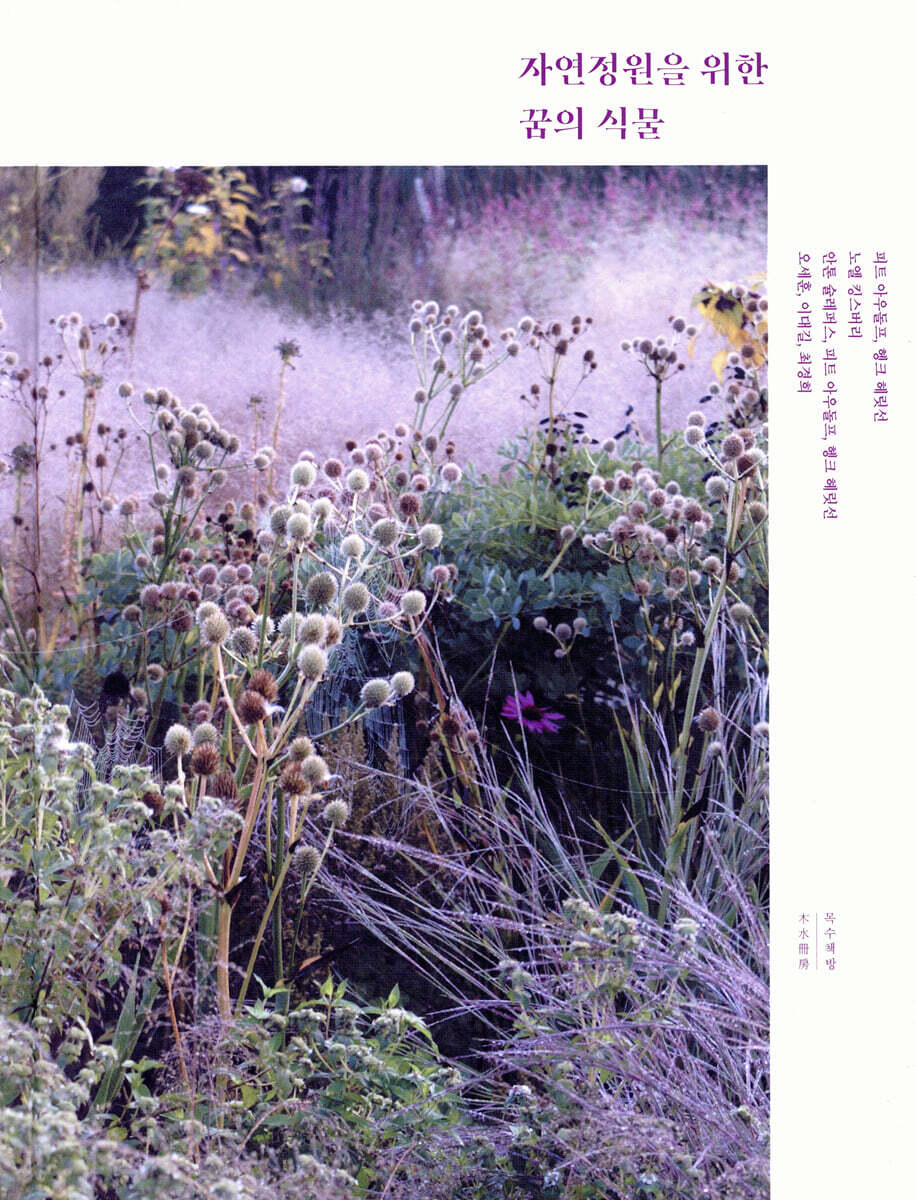 |
Description
Book Introduction
This book was co-written by Pete Oudolf, a world-renowned garden designer who designed the plantings for New York's 'High Line' and Chicago's 'Luri Gardens', and Henk Herritsen, an environmental activist and garden designer who pondered the 'naturalness of gardens' throughout his life.
These two people, who created a new trend in plant design by focusing on the beauty and value of perennials, have selected a list of 'dream plants' and how to use them. This list will be of great inspiration and help to gardeners and plant lovers who want to realize a 'natural garden' by considering both aesthetic and ecological values.
These two people, who created a new trend in plant design by focusing on the beauty and value of perennials, have selected a list of 'dream plants' and how to use them. This list will be of great inspiration and help to gardeners and plant lovers who want to realize a 'natural garden' by considering both aesthetic and ecological values.
- You can preview some of the book's contents.
Preview
index
Before reading the book, let's know
Translator's Preface
Starting the book
Chapter 1: List of Plants
perennial herb
Ornamental grass
Chapter 2 How to Use
Starting the article
scorching - plants that are resistant to high temperatures and drought
Lush - Plants that thrive in partial shade with plenty of nutrients and moisture
Sky Blue - Plants that add architectural elements
Serenity - Plant combinations that add a calming atmosphere
Lively - A plant combination that creates a lively atmosphere
Silver - Things to keep in mind when using a single color
Meadow Grass - How to Use Ornamental Grass
Lonely? - Plants with beautiful autumn foliage or charming winter silhouettes
Fall - Plants that make fall stand out
structural plants
Dispersed plants
Plants by other characteristics
Chapter 3 Planting Drawings and Plant Combinations
Planting drawings by Piet Oudolf and Henk Herritsen
good neighbor
Number of plants per square meter
Search
nursery
References
Translator's Preface
Starting the book
Chapter 1: List of Plants
perennial herb
Ornamental grass
Chapter 2 How to Use
Starting the article
scorching - plants that are resistant to high temperatures and drought
Lush - Plants that thrive in partial shade with plenty of nutrients and moisture
Sky Blue - Plants that add architectural elements
Serenity - Plant combinations that add a calming atmosphere
Lively - A plant combination that creates a lively atmosphere
Silver - Things to keep in mind when using a single color
Meadow Grass - How to Use Ornamental Grass
Lonely? - Plants with beautiful autumn foliage or charming winter silhouettes
Fall - Plants that make fall stand out
structural plants
Dispersed plants
Plants by other characteristics
Chapter 3 Planting Drawings and Plant Combinations
Planting drawings by Piet Oudolf and Henk Herritsen
good neighbor
Number of plants per square meter
Search
nursery
References
Into the book
If you look closely at the image that usually comes to mind when you think of a garden, you will see colorful flowers and grass there.
You realize that you are in a position.
We enjoy a sense of abundance and health as we look at the perennials in full bloom in the garden.
You can feel the change of seasons and even feel the wonders of nature.
If the core properties of nature are 'diversity' and 'dynamism,' then the medium that best captures these qualities is perennial plants.
Unlike the domestic situation where the use of perennials is somewhat limited, there are those who have noticed their beauty and value early on, raised planting design to the level of art, and are leading the trend in garden design.
This is Piet Oudolf, a Dutch garden designer and co-author of this book.
--- From the translator's preface
I believe that perennials are a kind of language that connects us with nature and allows us to communicate again.
Thanks to the plants discovered by Oudolf and Herritsen in many countries, we can hear more intimate stories of nature in our daily lives.
Nature tells its story through plants, and I believe that when we listen to those stories, the world becomes more beautiful in many ways.
--- From the translator's preface
“I learned that planting a plant isn’t just about the plant.
The fact that plants can create mood, seasonality, and even emotions.
Rather, that point became more important to me.
Henke also said so much that it was painful to the ears that the plant was beautiful even without flowers.
So, together with Henk, I would look more closely at plants that were past their peak.”
There are several reasons why perennials have become so popular.
Examining these reasons will help us understand why we grow perennials and what we expect from plants worth growing.
First of all, this is because a new field of gardening that takes wild life into consideration, such as gardening that coexists with nature or gardens that serve as nature reserves, has emerged.
…
To the ancients, perennials were nothing more than a mass of color, but from the perspective of a garden that embraces wild life, they serve as a habitat for all living things and as food.
Leaving the dried berries for birds to peck at, as Henk did, really shows off the beauty of perennials and how they can be used in the garden.
You realize that you are in a position.
We enjoy a sense of abundance and health as we look at the perennials in full bloom in the garden.
You can feel the change of seasons and even feel the wonders of nature.
If the core properties of nature are 'diversity' and 'dynamism,' then the medium that best captures these qualities is perennial plants.
Unlike the domestic situation where the use of perennials is somewhat limited, there are those who have noticed their beauty and value early on, raised planting design to the level of art, and are leading the trend in garden design.
This is Piet Oudolf, a Dutch garden designer and co-author of this book.
--- From the translator's preface
I believe that perennials are a kind of language that connects us with nature and allows us to communicate again.
Thanks to the plants discovered by Oudolf and Herritsen in many countries, we can hear more intimate stories of nature in our daily lives.
Nature tells its story through plants, and I believe that when we listen to those stories, the world becomes more beautiful in many ways.
--- From the translator's preface
“I learned that planting a plant isn’t just about the plant.
The fact that plants can create mood, seasonality, and even emotions.
Rather, that point became more important to me.
Henke also said so much that it was painful to the ears that the plant was beautiful even without flowers.
So, together with Henk, I would look more closely at plants that were past their peak.”
There are several reasons why perennials have become so popular.
Examining these reasons will help us understand why we grow perennials and what we expect from plants worth growing.
First of all, this is because a new field of gardening that takes wild life into consideration, such as gardening that coexists with nature or gardens that serve as nature reserves, has emerged.
…
To the ancients, perennials were nothing more than a mass of color, but from the perspective of a garden that embraces wild life, they serve as a habitat for all living things and as food.
Leaving the dried berries for birds to peck at, as Henk did, really shows off the beauty of perennials and how they can be used in the garden.
---From the text
Publisher's Review
Why do we feel beauty and wonder when we look at wild nature?
Perhaps it is because of the diversity and dynamism that exists there.
The fact that the 'harmony' created by the various living things 'changes' from moment to moment is also the reason why the natural scenery is always new and impressive.
It would be nice to always be able to capture these scenes in the wild, but many people's daily lives are far from nature.
For these people, the garden serves as an oasis, allowing them to enjoy the rich sense of nature in their daily lives, even as they live with the instinct of biophilia (love of life).
These days, gardens that are aesthetically and ecologically close to wild nature are attracting attention.
Rather than artificial gardens that are easily created and then quickly destroyed, or gardens that are overly showy and require a lot of care or are filled with a single species, so-called "natural gardens" that are created by blending various plant species to create harmony and allow people to enjoy the changing seasons and the sensations of wild nature in the garden are becoming the trend.
There is a pioneer who created this trend of garden design.
They are Pete Oudolf, who designed the plantings for New York's 'High Line' and Chicago's 'Luri Gardens', and Henk Herritsen, an environmental activist and garden designer who pondered deeply about the 'naturalness of gardens' throughout his life.
They began to actively utilize perennials in their planting designs, noticing the beauty and value of perennials that no one had previously noticed.
And, while allowing you to feel the atmosphere of wild nature, we selected perennial plants that can live beautifully and robustly in the garden for many years and called them 'dream plants'.
These two people hoped that gardens and landscaped spaces would become more natural, both aesthetically and ecologically, and that those who enjoy these spaces would contribute to restoring ecological sensitivity.
The history of how this perennial came to be known is described in detail in the preface by British garden designer and author Noel Kingsbury.
This book is a guide to perennials written by two pioneering garden designers who started the 'New Perennial Movement' and completely changed the way we look at gardens and plants.
This is a translation of the 2019 revised edition of the first edition published in 1990.
The book consists of three chapters.
Chapter 1 introduces approximately 750 species of perennial herbs and ornamental grasses from 180 genera, selected based on the authors' experience accumulated over 20 years.
Particularly impressive are Anton Schleppers' beautiful plant photographs and Henk Herritsen's witty plant introductions.
Chapter 2, “How to Use,” covers twelve planting design topics that will inspire and assist those who want to create a vibrant and beautiful “natural garden” using the perennials introduced in Chapter 1, and suggests plant combinations appropriate for each topic.
Chapter 3, 'Planting Drawings and Plant Combinations', contains examples of planting design drawings by Oudolf and Herritsen, and introduces plant combinations that can grow harmoniously together so that anyone can easily apply them.
Perhaps it is because of the diversity and dynamism that exists there.
The fact that the 'harmony' created by the various living things 'changes' from moment to moment is also the reason why the natural scenery is always new and impressive.
It would be nice to always be able to capture these scenes in the wild, but many people's daily lives are far from nature.
For these people, the garden serves as an oasis, allowing them to enjoy the rich sense of nature in their daily lives, even as they live with the instinct of biophilia (love of life).
These days, gardens that are aesthetically and ecologically close to wild nature are attracting attention.
Rather than artificial gardens that are easily created and then quickly destroyed, or gardens that are overly showy and require a lot of care or are filled with a single species, so-called "natural gardens" that are created by blending various plant species to create harmony and allow people to enjoy the changing seasons and the sensations of wild nature in the garden are becoming the trend.
There is a pioneer who created this trend of garden design.
They are Pete Oudolf, who designed the plantings for New York's 'High Line' and Chicago's 'Luri Gardens', and Henk Herritsen, an environmental activist and garden designer who pondered deeply about the 'naturalness of gardens' throughout his life.
They began to actively utilize perennials in their planting designs, noticing the beauty and value of perennials that no one had previously noticed.
And, while allowing you to feel the atmosphere of wild nature, we selected perennial plants that can live beautifully and robustly in the garden for many years and called them 'dream plants'.
These two people hoped that gardens and landscaped spaces would become more natural, both aesthetically and ecologically, and that those who enjoy these spaces would contribute to restoring ecological sensitivity.
The history of how this perennial came to be known is described in detail in the preface by British garden designer and author Noel Kingsbury.
This book is a guide to perennials written by two pioneering garden designers who started the 'New Perennial Movement' and completely changed the way we look at gardens and plants.
This is a translation of the 2019 revised edition of the first edition published in 1990.
The book consists of three chapters.
Chapter 1 introduces approximately 750 species of perennial herbs and ornamental grasses from 180 genera, selected based on the authors' experience accumulated over 20 years.
Particularly impressive are Anton Schleppers' beautiful plant photographs and Henk Herritsen's witty plant introductions.
Chapter 2, “How to Use,” covers twelve planting design topics that will inspire and assist those who want to create a vibrant and beautiful “natural garden” using the perennials introduced in Chapter 1, and suggests plant combinations appropriate for each topic.
Chapter 3, 'Planting Drawings and Plant Combinations', contains examples of planting design drawings by Oudolf and Herritsen, and introduces plant combinations that can grow harmoniously together so that anyone can easily apply them.
GOODS SPECIFICS
- Date of issue: June 15, 2020
- Format: Hardcover book binding method guide
- Page count, weight, size: 324 pages | 190*250*20mm
- ISBN13: 9791188806140
- ISBN10: 1188806149
You may also like
카테고리
korean


korean

![GQ KOREA Mark (Monthly): December [2025]](http://librairie.coreenne.fr/cdn/shop/files/8ef265dbbfbf186523ed75ba7319009d.jpg?v=1765340328&width=3840)


