

Great human body
 |
Description
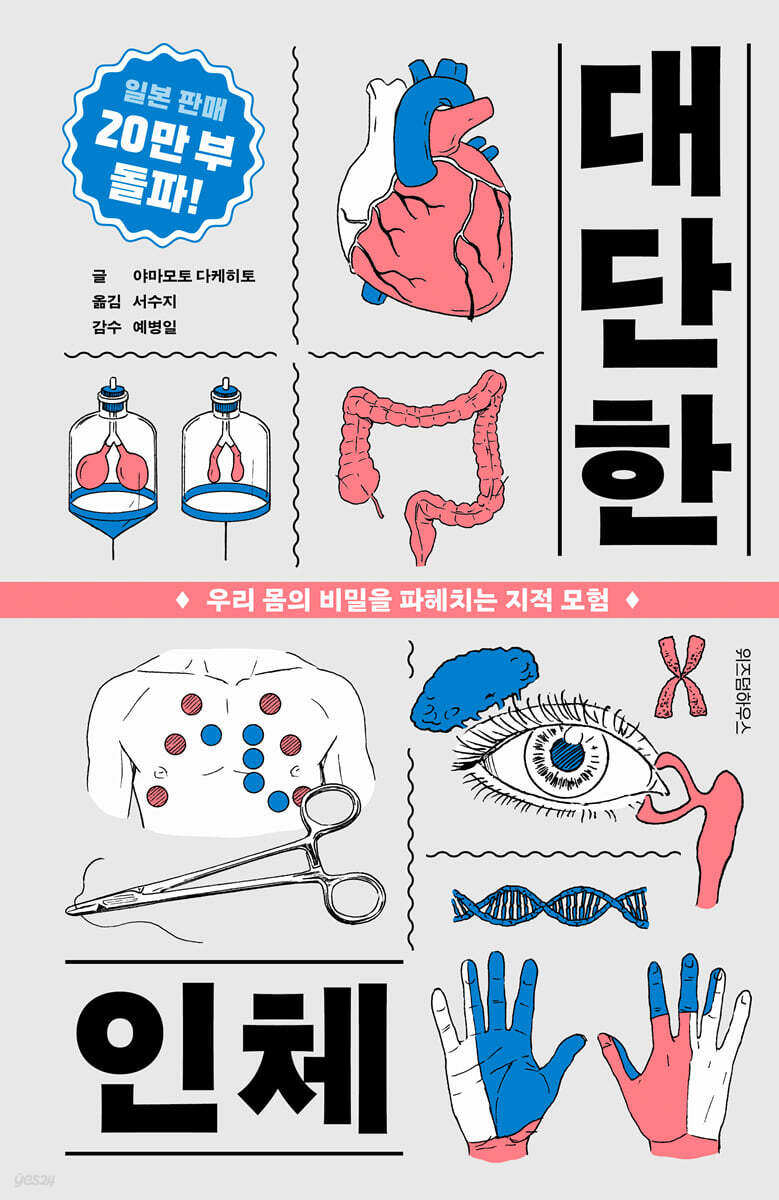
Book Introduction
A Japanese bestseller chosen by 200,000 readers
The minimum human body knowledge you need to know to use it for the rest of your life!
How much do we truly understand about the body we spend our entire lives with? Where is the line between healthy and diseased bodies, and what causes people to lose their lives? "The Amazing Human Body" tackles these profound questions, from why we sniffle when we cry to the incredible function of the anus, which so effectively separates poop from farts, to revealing intriguing secrets of the body often overlooked in everyday life.
As you examine the human body through the eyes of a doctor, your understanding of the body will deepen, and you will be able to scientifically address the pain of yourself, your family, and your friends.
The minimum human body knowledge you need to know to use it for the rest of your life!
How much do we truly understand about the body we spend our entire lives with? Where is the line between healthy and diseased bodies, and what causes people to lose their lives? "The Amazing Human Body" tackles these profound questions, from why we sniffle when we cry to the incredible function of the anus, which so effectively separates poop from farts, to revealing intriguing secrets of the body often overlooked in everyday life.
As you examine the human body through the eyes of a doctor, your understanding of the body will deepen, and you will be able to scientifically address the pain of yourself, your family, and your friends.
- You can preview some of the book's contents.
Preview
index
preface
Chapter 1: The Truly Intricate Human Body
Our bodies are heavy
The surprisingly unknown role of the eyes
The ears are the hidden helpers of the eyes.
Why do tears and a runny nose come out together?
The tongue's diverse functions
Mumps and salivary glands
If blood is pouring from the head, is it a serious injury?
The principle of heartbeat
The brain controls breathing
The above spiral fungus and the Nobel Prize
Why is stool brown?
Really scary interest and trauma
Longitudinal length and the play of the human body
What are farts made of?
Anal Superpowers
There are different organs to which cancer metastasizes.
How does the penis grow and shrink?
A deep sensation that can be felt even with eyes closed
Why does it feel tingly when I bump my elbow?
Chapter 2: Why People Get Sick
How does a person lose his life?
How to live without eating or drinking
Where is the line between health and illness?
How does immunity distinguish between friend and foe?
Why do allergies occur?
Unraveling the Secrets of Genes
Evolution in a small world
Chapter 3: The History of Great Medical Discoveries
Origins of Medicine
Blood circulates
The cause of infectious diseases revealed by a microscope
All cells come from cells
The surgeon who established the concept of disinfection
A great discovery born of chance
Pathogens that cannot be seen even under a microscope
Diseases that destroy the immune system
The world's first general anesthesia
scary diabetes
Painkillers listed in the Guinness Book of World Records
Chapter 4: Health Facts You May Not Know
You don't need to know your blood type
Dangerous parasites on the table
The most potent botulism poison
Misconceptions about raw meat
Don't let your guard down: Economy Class Syndrome
Proper treatment for abrasions
General anesthesia in medical dramas
Chapter 5: Modern Medicine as a Liberal Arts
The body temperature is great
Techniques for looking inside the body
Two sounds heard with a stethoscope
A device that measures oxygen in the body
Oxygen tank and ventilator
Drill a hole instead of cutting open the stomach
Amazingly evolved surgical instruments
Why are scrubs turquoise?
Why is blood red?
Conclusion
Work Recommendation
Chapter 1: The Truly Intricate Human Body
Our bodies are heavy
The surprisingly unknown role of the eyes
The ears are the hidden helpers of the eyes.
Why do tears and a runny nose come out together?
The tongue's diverse functions
Mumps and salivary glands
If blood is pouring from the head, is it a serious injury?
The principle of heartbeat
The brain controls breathing
The above spiral fungus and the Nobel Prize
Why is stool brown?
Really scary interest and trauma
Longitudinal length and the play of the human body
What are farts made of?
Anal Superpowers
There are different organs to which cancer metastasizes.
How does the penis grow and shrink?
A deep sensation that can be felt even with eyes closed
Why does it feel tingly when I bump my elbow?
Chapter 2: Why People Get Sick
How does a person lose his life?
How to live without eating or drinking
Where is the line between health and illness?
How does immunity distinguish between friend and foe?
Why do allergies occur?
Unraveling the Secrets of Genes
Evolution in a small world
Chapter 3: The History of Great Medical Discoveries
Origins of Medicine
Blood circulates
The cause of infectious diseases revealed by a microscope
All cells come from cells
The surgeon who established the concept of disinfection
A great discovery born of chance
Pathogens that cannot be seen even under a microscope
Diseases that destroy the immune system
The world's first general anesthesia
scary diabetes
Painkillers listed in the Guinness Book of World Records
Chapter 4: Health Facts You May Not Know
You don't need to know your blood type
Dangerous parasites on the table
The most potent botulism poison
Misconceptions about raw meat
Don't let your guard down: Economy Class Syndrome
Proper treatment for abrasions
General anesthesia in medical dramas
Chapter 5: Modern Medicine as a Liberal Arts
The body temperature is great
Techniques for looking inside the body
Two sounds heard with a stethoscope
A device that measures oxygen in the body
Oxygen tank and ventilator
Drill a hole instead of cutting open the stomach
Amazingly evolved surgical instruments
Why are scrubs turquoise?
Why is blood red?
Conclusion
Work Recommendation
Detailed image

Into the book
As a doctor, I studied medicine and was fascinated by the beautiful structure and functions of the human body.
At the same time, I vividly felt the presence of a 'disease' that was tarnishing such a wonderful structure.
Because the mission of medicine is to understand the process of how people become ill, become sick, and recover, and to help them regain the abilities they have lost due to illness.
--- p.6
As such, stool contains all kinds of information, from diseases in our body to medications taken.
There is a story that says that by looking at someone's discarded trash bag, you can roughly figure out their hobbies, preferences, age, and even gender.
Our excrement also vividly tells the story of what's going on inside our bodies.
--- p.85
We usually don't realize the importance of health.
But when we become sick and can no longer do things we used to do without any problems, we finally realize how intricate and precious our body's functions are.
The ability to sit comfortably without thinking is a privilege that only healthy people can enjoy.
--- p.127
In 2013, Hollywood actress Angelina Jolie announced that she had undergone a double mastectomy to prevent breast cancer.
And two years later, I had surgery to remove my ovaries to prevent ovarian cancer.
At the time of the surgery, I did not have breast or ovarian cancer, but it was a choice made because I was judged to have a high risk of developing cancer.
So how did you know you were at high risk for cancer?
--- p.175
To make a protein, we also need to tell it where to start and stop translating the long RNA.
This is also determined by codons.
The start codon is 'AUG', and the stop codons are 'UAA', 'UAG', and 'UGA'.
The start codon also specifies an amino acid called methionine.
In other words, translation starts at methionine.
This is a common rule that applies widely to everything from microorganisms like bacteria and fungi to plants, insects, and even humans, with some exceptions.
--- p.183
The microscope was the first to illuminate the microscopic world invisible to the naked eye.
However, it took a considerable amount of time for humanity to accept that the cause of disease existed in that small world.
Unfortunately, the words of the geniuses who first arrived at the truth were sometimes ignored, and countless lives were lost until the world accepted their ideas.
Page 221
By the way, there is also a method of using botulinum toxin for treatment.
It's botox treatment.
In cases of facial or eyelid spasms, or limb stiffness (a condition in which the limbs become stiff due to excessive muscle contraction and cannot be moved well) caused by cerebral infarction, botox is prescribed to suppress nerve activity.
Botox is also used for cosmetic purposes, such as wrinkle removal.
--- p.312
Economy class syndrome is a disease that occurs when sitting for a long time in a narrow airplane seat, for example, causes stagnation of blood flow in the leg veins, causing blood clots to form, and when standing up, the clots move and block the pulmonary blood vessels.
A condition in which a blood clot forms in a leg vein is called 'deep vein thrombosis', and a condition in which this blood clot travels to the lungs and blocks a blood vessel is called 'pulmonary embolism'.
--- p.323
Plants absorb light energy as chlorophyll and produce oxygen.
This is the photosynthesis process we are all familiar with.
In contrast, animals have heme, a structure similar to chlorophyll, which transports oxygen in their bodies.
When we keep the evolutionary process in mind, the breathtaking beauty of nature comes into view.
--- p.401
The human body is truly well-made, beautiful and mysterious.
At the same time, all of these phenomena are also a chain reaction of chemical reactions that occur universally in nature.
When we examine our bodies, we are amazed by their intricate structure, almost to the point of wanting to believe in some special, supernatural power. However, all of these processes can be explained by the laws of chemistry and physics.
The discipline of medicine has played a central role in science for a long time, unraveling the mysteries of the body.
At the same time, I vividly felt the presence of a 'disease' that was tarnishing such a wonderful structure.
Because the mission of medicine is to understand the process of how people become ill, become sick, and recover, and to help them regain the abilities they have lost due to illness.
--- p.6
As such, stool contains all kinds of information, from diseases in our body to medications taken.
There is a story that says that by looking at someone's discarded trash bag, you can roughly figure out their hobbies, preferences, age, and even gender.
Our excrement also vividly tells the story of what's going on inside our bodies.
--- p.85
We usually don't realize the importance of health.
But when we become sick and can no longer do things we used to do without any problems, we finally realize how intricate and precious our body's functions are.
The ability to sit comfortably without thinking is a privilege that only healthy people can enjoy.
--- p.127
In 2013, Hollywood actress Angelina Jolie announced that she had undergone a double mastectomy to prevent breast cancer.
And two years later, I had surgery to remove my ovaries to prevent ovarian cancer.
At the time of the surgery, I did not have breast or ovarian cancer, but it was a choice made because I was judged to have a high risk of developing cancer.
So how did you know you were at high risk for cancer?
--- p.175
To make a protein, we also need to tell it where to start and stop translating the long RNA.
This is also determined by codons.
The start codon is 'AUG', and the stop codons are 'UAA', 'UAG', and 'UGA'.
The start codon also specifies an amino acid called methionine.
In other words, translation starts at methionine.
This is a common rule that applies widely to everything from microorganisms like bacteria and fungi to plants, insects, and even humans, with some exceptions.
--- p.183
The microscope was the first to illuminate the microscopic world invisible to the naked eye.
However, it took a considerable amount of time for humanity to accept that the cause of disease existed in that small world.
Unfortunately, the words of the geniuses who first arrived at the truth were sometimes ignored, and countless lives were lost until the world accepted their ideas.
Page 221
By the way, there is also a method of using botulinum toxin for treatment.
It's botox treatment.
In cases of facial or eyelid spasms, or limb stiffness (a condition in which the limbs become stiff due to excessive muscle contraction and cannot be moved well) caused by cerebral infarction, botox is prescribed to suppress nerve activity.
Botox is also used for cosmetic purposes, such as wrinkle removal.
--- p.312
Economy class syndrome is a disease that occurs when sitting for a long time in a narrow airplane seat, for example, causes stagnation of blood flow in the leg veins, causing blood clots to form, and when standing up, the clots move and block the pulmonary blood vessels.
A condition in which a blood clot forms in a leg vein is called 'deep vein thrombosis', and a condition in which this blood clot travels to the lungs and blocks a blood vessel is called 'pulmonary embolism'.
--- p.323
Plants absorb light energy as chlorophyll and produce oxygen.
This is the photosynthesis process we are all familiar with.
In contrast, animals have heme, a structure similar to chlorophyll, which transports oxygen in their bodies.
When we keep the evolutionary process in mind, the breathtaking beauty of nature comes into view.
--- p.401
The human body is truly well-made, beautiful and mysterious.
At the same time, all of these phenomena are also a chain reaction of chemical reactions that occur universally in nature.
When we examine our bodies, we are amazed by their intricate structure, almost to the point of wanting to believe in some special, supernatural power. However, all of these processes can be explained by the laws of chemistry and physics.
The discipline of medicine has played a central role in science for a long time, unraveling the mysteries of the body.
--- p.404
Publisher's Review
“I recommend it to everyone alive.”
“It’s refreshing to know my body.”
“It’s fascinating and a smooth read no matter where you open it.”
A human body textbook raved about by first-time readers
An intellectual exploration that deeply understands your body and surroundings and enhances the resolution of your life!
Sobbing while watching a sad movie, reading signs while jogging, farting in secret…
How many of us have ever immersed ourselves in the seemingly insignificant moments of everyday life? Yet, "The Amazing Human Body" questions these actions, so ordinary they're often taken for granted.
“Why do we sniffle when we cry?”, “Why are running videos shaky, but our vision is stable?”, “How does the anus distinguish between solids and gases and tighten its muscles?”
These seemingly trivial questions are the most interesting starting points for understanding our bodies.
The author, a practicing physician, skillfully navigates between everyday life and medicine, explaining the human body using scientific principles and revealing the "most interesting parts of the human body" that cannot be learned in textbooks.
And the moment we delve into the secrets of phenomena we had passed by without a second thought, our understanding of the body deepens and the phenomena become clearer.
The intellectual excitement of seeing my familiar body and world approach me as a new and wondrous object.
As the reader comment, “I feel relieved to know my body,” says, getting to know the human body is getting to know myself.
Although written by an expert, it is a friendly human body education book that anyone from a teenager can enjoy, which is probably the secret to its popularity with 200,000 readers in Japan.
It's okay to eat fresh raw meat (X)
If blood rushes from the head, it is very dangerous (X)
Disinfection is important for abrasions (X)
Correcting the Errors Called Common Sense with Science
《The Amazing Human Body》 verifies each and every commonly believed 'health common sense'.
He explains with real-life examples that no matter how fresh the raw meat is, the risk of bacteria and parasites does not disappear, and also that the head has a dense network of blood vessels, so even small wounds can cause bleeding.
We also don't forget the life knowledge that a clean wash is more effective than a disinfectant for abrasions.
Furthermore, it humorously explains how baseless the personality types based on blood type are through the story of Landsteiner, who first discovered blood types.
Not only does it correct misconceptions, it also teaches us how to scientifically explore and verify them.
Knowledge that is relevant to life goes beyond simply satisfying curiosity and helps us in real life.
By reading this book, readers will be able to reflect on their bad habits and deal with health issues of themselves, their families, and their friends more rationally and wisely.
As the saying goes, knowledge is power, and a proper understanding of the human body is the most reliable weapon to protect it and an asset that will last a lifetime.
A medical drama unfolding on the stage of the human body
A glance at modern medicine and the great discoveries in medical history
Why do people get sick? How do we get better? How far has medical technology advanced, and where is it headed? The author answers these questions, exploring the mysteries of the human body and the great discoveries of medical history.
It vividly shows how the discoveries of great figures, from Hippocrates to Robert Koch and Alexander Fleming, have led to today's medicine.
Modern medicine, which now performs surgeries that required cutting open the abdomen through a hole in the navel and measures oxygen saturation with a simple device attached to the finger, may at first glance seem like technological advancements, but the author does not view medicine solely on the level of technological innovation.
Rather, it introduces medicine as a field of science that stands shoulder to shoulder with physics, chemistry, and biology, and as an intellectual heritage accumulated by mankind, leading readers into the wonderful world of medicine.
While the previous work, "Amazing Medicine," depicted humanity's challenges in the face of death, this "Amazing Human Body" examines the human body from head to toe, discussing medicine as it unfolds on the body, from everyday curiosities to cutting-edge medical care.
So that readers can encounter medicine as a science that is relevant to their lives.
Understanding the human body is the same as understanding myself.
As we uncover the secrets of our bodies one by one, our daily actions and sensations become new.
The joy of learning the principles of the body goes beyond simply acquiring knowledge; it changes your attitude and perspective on life.
For those who want to understand themselves better, "The Amazing Human Body" will be a "guide to my body" that they will want to keep by their side for a lifetime and revisit.
“It’s refreshing to know my body.”
“It’s fascinating and a smooth read no matter where you open it.”
A human body textbook raved about by first-time readers
An intellectual exploration that deeply understands your body and surroundings and enhances the resolution of your life!
Sobbing while watching a sad movie, reading signs while jogging, farting in secret…
How many of us have ever immersed ourselves in the seemingly insignificant moments of everyday life? Yet, "The Amazing Human Body" questions these actions, so ordinary they're often taken for granted.
“Why do we sniffle when we cry?”, “Why are running videos shaky, but our vision is stable?”, “How does the anus distinguish between solids and gases and tighten its muscles?”
These seemingly trivial questions are the most interesting starting points for understanding our bodies.
The author, a practicing physician, skillfully navigates between everyday life and medicine, explaining the human body using scientific principles and revealing the "most interesting parts of the human body" that cannot be learned in textbooks.
And the moment we delve into the secrets of phenomena we had passed by without a second thought, our understanding of the body deepens and the phenomena become clearer.
The intellectual excitement of seeing my familiar body and world approach me as a new and wondrous object.
As the reader comment, “I feel relieved to know my body,” says, getting to know the human body is getting to know myself.
Although written by an expert, it is a friendly human body education book that anyone from a teenager can enjoy, which is probably the secret to its popularity with 200,000 readers in Japan.
It's okay to eat fresh raw meat (X)
If blood rushes from the head, it is very dangerous (X)
Disinfection is important for abrasions (X)
Correcting the Errors Called Common Sense with Science
《The Amazing Human Body》 verifies each and every commonly believed 'health common sense'.
He explains with real-life examples that no matter how fresh the raw meat is, the risk of bacteria and parasites does not disappear, and also that the head has a dense network of blood vessels, so even small wounds can cause bleeding.
We also don't forget the life knowledge that a clean wash is more effective than a disinfectant for abrasions.
Furthermore, it humorously explains how baseless the personality types based on blood type are through the story of Landsteiner, who first discovered blood types.
Not only does it correct misconceptions, it also teaches us how to scientifically explore and verify them.
Knowledge that is relevant to life goes beyond simply satisfying curiosity and helps us in real life.
By reading this book, readers will be able to reflect on their bad habits and deal with health issues of themselves, their families, and their friends more rationally and wisely.
As the saying goes, knowledge is power, and a proper understanding of the human body is the most reliable weapon to protect it and an asset that will last a lifetime.
A medical drama unfolding on the stage of the human body
A glance at modern medicine and the great discoveries in medical history
Why do people get sick? How do we get better? How far has medical technology advanced, and where is it headed? The author answers these questions, exploring the mysteries of the human body and the great discoveries of medical history.
It vividly shows how the discoveries of great figures, from Hippocrates to Robert Koch and Alexander Fleming, have led to today's medicine.
Modern medicine, which now performs surgeries that required cutting open the abdomen through a hole in the navel and measures oxygen saturation with a simple device attached to the finger, may at first glance seem like technological advancements, but the author does not view medicine solely on the level of technological innovation.
Rather, it introduces medicine as a field of science that stands shoulder to shoulder with physics, chemistry, and biology, and as an intellectual heritage accumulated by mankind, leading readers into the wonderful world of medicine.
While the previous work, "Amazing Medicine," depicted humanity's challenges in the face of death, this "Amazing Human Body" examines the human body from head to toe, discussing medicine as it unfolds on the body, from everyday curiosities to cutting-edge medical care.
So that readers can encounter medicine as a science that is relevant to their lives.
Understanding the human body is the same as understanding myself.
As we uncover the secrets of our bodies one by one, our daily actions and sensations become new.
The joy of learning the principles of the body goes beyond simply acquiring knowledge; it changes your attitude and perspective on life.
For those who want to understand themselves better, "The Amazing Human Body" will be a "guide to my body" that they will want to keep by their side for a lifetime and revisit.
GOODS SPECIFICS
- Date of issue: September 30, 2025
- Page count, weight, size: 416 pages | 130*200*30mm
- ISBN13: 9791171714872
- ISBN10: 1171714874
You may also like
카테고리
korean


korean

![GQ KOREA Mark (Monthly): December [2025]](http://librairie.coreenne.fr/cdn/shop/files/8ef265dbbfbf186523ed75ba7319009d.jpg?v=1765340328&width=3840)


