

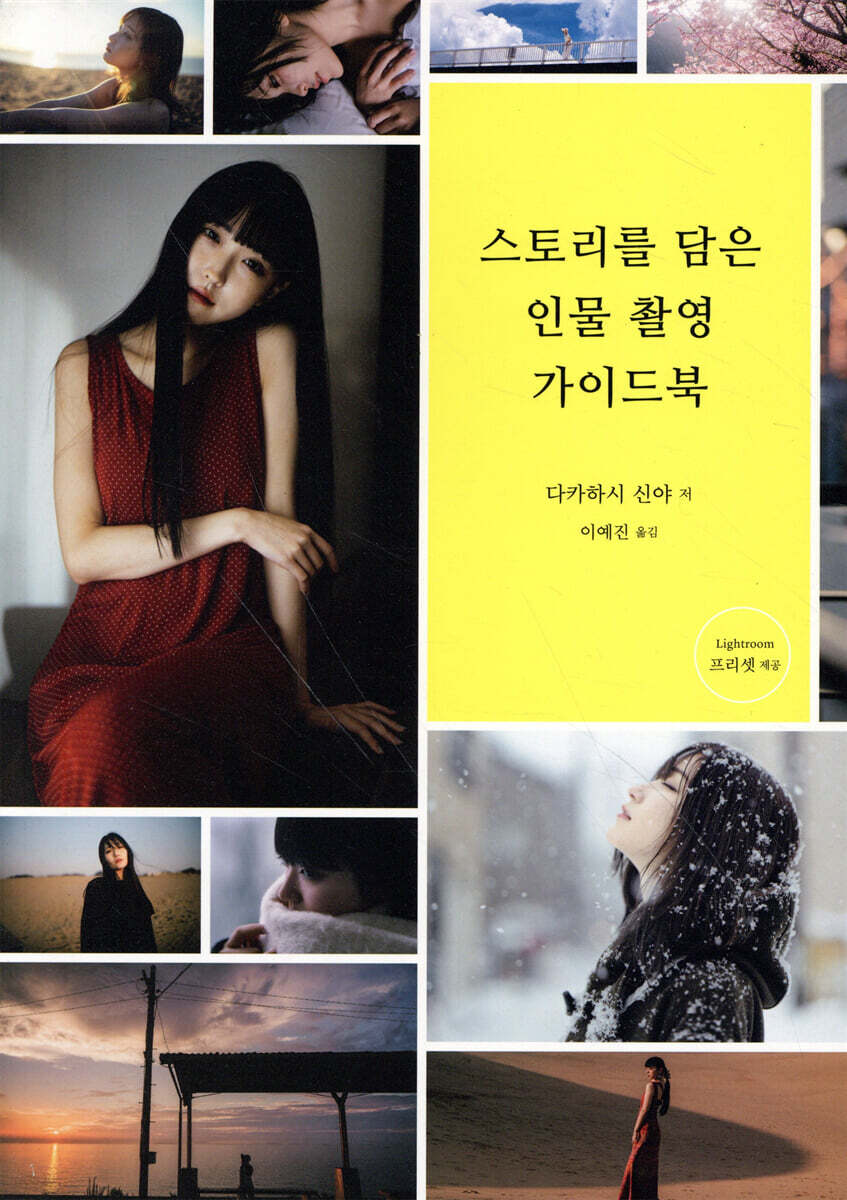
A guidebook for photographing people with a story
 |
Description
Book Introduction
How to take portraits that look like a scene from a movie.
This book contains techniques for taking emotional portraits that are reminiscent of a scene from a movie.
How to take moving portraits.
Author Shinya Takahashi, a photographer and photography instructor, has systematically organized the portrait photography techniques he introduces in his actual lectures.
This book contains techniques for taking emotional portraits that are reminiscent of a scene from a movie.
How to take moving portraits.
Author Shinya Takahashi, a photographer and photography instructor, has systematically organized the portrait photography techniques he introduces in his actual lectures.
index
· GALLERY
· PROLOGUE A story that brings back memories of people and scenes
CHAPTER 1.
A pose that appeals to allure - femininity lies in curves.
Create a curve in an S-line
Reduces the area where the whites of the eyes are visible
Cover the inner cheek with the bridge of the nose
Let your hair down to make your face smaller
Beautifully expressing legs with light outlines
Change the mood with your hands or props
Lean back and strike a natural pose, creating tension in your spine.
Shoot multiple times from the same location and angle
CHAPTER 2.
Lenses and Composition that Capture Emotion in Photography - White Space Evokes Emotion
Two composition techniques for incorporating a landscape into a portrait
① Composition like a landscape photo - Set the background and then place the person.
②Composition that closes the distance and eliminates blank space - Expresses the character's facial expressions as the center
Long shots taken with wide-angle and telephoto lenses
Use your hands and feet to adjust the composition
To capture emotion in portraits, shoot with a 24-50mm lens.
24mm, which can shoot both close-ups and long shots
35mm that turns blank space into a work of art
50mm that can boldly approach the face
Take photos of body parts for a series of photos
Frontal photo of the face expressing a strong impression
Zoom lens for flexible shooting
Create a story using props
Composition based on the street
CHAPTER 3.
Lighting Techniques for Creating Scenes - Memories Are Made of Light and Shadow
Finding the dim light between day and night
Don't make a dark room bright.
Place the person in the spotlight
Use indoor diffuse reflection as a focal point
Use mixed light
Create transparency with ghosts
Taken in the refreshing morning sunlight
Evening light expressing the agitation of the heart
Contains the colors and light of spring, summer, fall, and winter
CHAPTER 4.
Exposure, Focus, and Equipment Selection - The Art of Conveying Scenery
Choose an F-number that creates soft out-of-focus effects.
Adjust the focal plane toward the face
Adjust dark indoor exposure with SS
The focus position is determined according to the shooting intention.
Choose your shooting equipment to match the image you want to express.
CHAPTER 5.
6 Tips for Connecting with Models - Ultimately, your rapport with your model will show in your photos.
① Building trust - A humble attitude increases likability.
② Recruiting a model - Finding a model is like casting the female lead.
③ Observation - Filming begins before shooting.
④ Giving Pose Instructions - Give clear instructions for poses.
⑤ Praise - Praise generously.
⑥ Find hidden filming locations - Connect with fellow photographers living in the countryside.
· COLUMN
Film photography that leaves memories and records
Experience and choose from a variety of equipment
Cameras also have their own 'meeting timing'
Create your own emotional photos with presets
· PROLOGUE A story that brings back memories of people and scenes
CHAPTER 1.
A pose that appeals to allure - femininity lies in curves.
Create a curve in an S-line
Reduces the area where the whites of the eyes are visible
Cover the inner cheek with the bridge of the nose
Let your hair down to make your face smaller
Beautifully expressing legs with light outlines
Change the mood with your hands or props
Lean back and strike a natural pose, creating tension in your spine.
Shoot multiple times from the same location and angle
CHAPTER 2.
Lenses and Composition that Capture Emotion in Photography - White Space Evokes Emotion
Two composition techniques for incorporating a landscape into a portrait
① Composition like a landscape photo - Set the background and then place the person.
②Composition that closes the distance and eliminates blank space - Expresses the character's facial expressions as the center
Long shots taken with wide-angle and telephoto lenses
Use your hands and feet to adjust the composition
To capture emotion in portraits, shoot with a 24-50mm lens.
24mm, which can shoot both close-ups and long shots
35mm that turns blank space into a work of art
50mm that can boldly approach the face
Take photos of body parts for a series of photos
Frontal photo of the face expressing a strong impression
Zoom lens for flexible shooting
Create a story using props
Composition based on the street
CHAPTER 3.
Lighting Techniques for Creating Scenes - Memories Are Made of Light and Shadow
Finding the dim light between day and night
Don't make a dark room bright.
Place the person in the spotlight
Use indoor diffuse reflection as a focal point
Use mixed light
Create transparency with ghosts
Taken in the refreshing morning sunlight
Evening light expressing the agitation of the heart
Contains the colors and light of spring, summer, fall, and winter
CHAPTER 4.
Exposure, Focus, and Equipment Selection - The Art of Conveying Scenery
Choose an F-number that creates soft out-of-focus effects.
Adjust the focal plane toward the face
Adjust dark indoor exposure with SS
The focus position is determined according to the shooting intention.
Choose your shooting equipment to match the image you want to express.
CHAPTER 5.
6 Tips for Connecting with Models - Ultimately, your rapport with your model will show in your photos.
① Building trust - A humble attitude increases likability.
② Recruiting a model - Finding a model is like casting the female lead.
③ Observation - Filming begins before shooting.
④ Giving Pose Instructions - Give clear instructions for poses.
⑤ Praise - Praise generously.
⑥ Find hidden filming locations - Connect with fellow photographers living in the countryside.
· COLUMN
Film photography that leaves memories and records
Experience and choose from a variety of equipment
Cameras also have their own 'meeting timing'
Create your own emotional photos with presets
Detailed image

Into the book
The photo repeats growth and failure.
Information and practical books that could be found in textbooks are already abundant on the Internet, and anyone can obtain them if they put their mind to it.
But why do the photos differ depending on who's taking them? Is it a difference in stamina or honesty?
Or is it a difference in personal feelings or life experiences?
There is no clear answer.
Many people who like photography take photography classes or study on their own because they want to get better at it.
I, too, am still struggling and spending every day with photos.
Sometimes I express my individuality to the fullest extent, and sometimes I lose my individuality and blend in with my surroundings.
I've recently come to realize more and more that by consistently challenging myself with various expressions through trial and error, I can develop my own originality.
This book is a rich and informative collection of what I teach my photography students.
Of course, the fastest way to acquire it is to experience and feel it firsthand.
Feeling light, communicating with it, and operating the camera.
The photo is what brings these together to create the 'output'.
This book will serve as an 'input' that will help you make quick and accurate decisions during actual filming.
For those of you who love photography but have many concerns, I hope this book can provide a hint for output.
Information and practical books that could be found in textbooks are already abundant on the Internet, and anyone can obtain them if they put their mind to it.
But why do the photos differ depending on who's taking them? Is it a difference in stamina or honesty?
Or is it a difference in personal feelings or life experiences?
There is no clear answer.
Many people who like photography take photography classes or study on their own because they want to get better at it.
I, too, am still struggling and spending every day with photos.
Sometimes I express my individuality to the fullest extent, and sometimes I lose my individuality and blend in with my surroundings.
I've recently come to realize more and more that by consistently challenging myself with various expressions through trial and error, I can develop my own originality.
This book is a rich and informative collection of what I teach my photography students.
Of course, the fastest way to acquire it is to experience and feel it firsthand.
Feeling light, communicating with it, and operating the camera.
The photo is what brings these together to create the 'output'.
This book will serve as an 'input' that will help you make quick and accurate decisions during actual filming.
For those of you who love photography but have many concerns, I hope this book can provide a hint for output.
--- From the text
Publisher's Review
A book recommended to those who want to take portraits with their own unique sensibility.
If you want to take portraits that evoke a memorable scene, rather than just being “pretty” or “cool,” this book will give you some hints.
It's packed with information, from the definition of "emotional portrait photography" to suggestions for various photo poses, foolproof shooting equipment and setup methods, and even tips for communicating with models.
I hope you'll take on the challenge of capturing emotional portraits that touch your heart with this book.
If you want to take portraits that evoke a memorable scene, rather than just being “pretty” or “cool,” this book will give you some hints.
It's packed with information, from the definition of "emotional portrait photography" to suggestions for various photo poses, foolproof shooting equipment and setup methods, and even tips for communicating with models.
I hope you'll take on the challenge of capturing emotional portraits that touch your heart with this book.
GOODS SPECIFICS
- Date of issue: August 30, 2024
- Page count, weight, size: 172 pages | 182*257*20mm
- ISBN13: 9791191254051
- ISBN10: 1191254054
You may also like
카테고리
korean


korean

![GQ KOREA Mark (Monthly): December [2025]](http://librairie.coreenne.fr/cdn/shop/files/8ef265dbbfbf186523ed75ba7319009d.jpg?v=1765340328&width=3840)


