

Your taste in music is
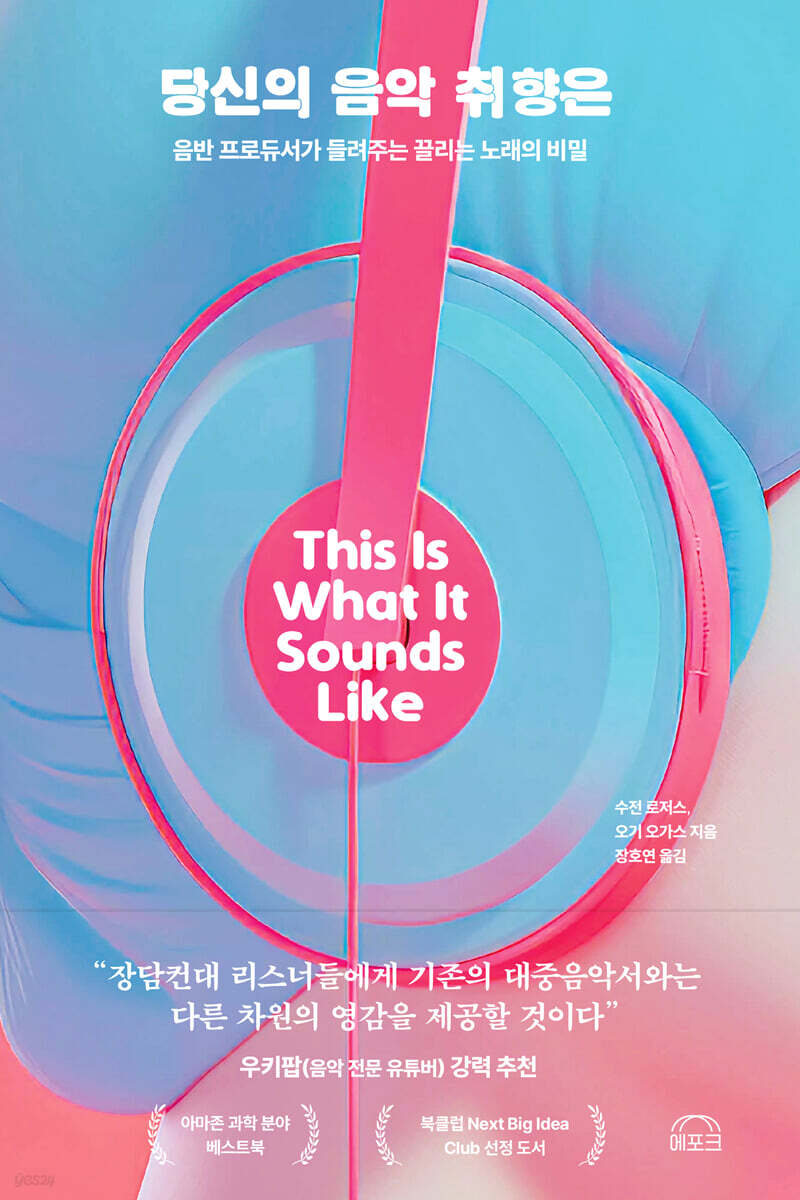 |
Description
Book Introduction
What kind of music are you listening to these days? What kind of music do you like? Think of a song you recently listened to and liked. Why did I love that song? Was it the compelling vocals? The band's vibrant performance, as if they were playing right before your eyes? Did the lyrics, which expressed my heart, resonate so deeply? Was it the rhythmic groove that made it easy to follow? Did the exhilarating, exhilarating chorus captivate you? This world is overflowing with music. There is no bad music. There's just music I like and music I don't like. Why do some people prefer rock, others jazz, others pop, others hip-hop, and still others classical? Musical tastes can't be defined solely by genre. While some people only sell one genre of music, there are many more people who enjoy various genres of music. Tastes definitely exist, but they are difficult to describe in words. |
- You can preview some of the book's contents.
Preview
index
Translator's Note
Entering
Chapter 1: Authenticity: Sources of Expression
You're invited to the album launch party | Shags, from hopeless to legendary | Below the Neck Music vs.
Music on the Neck | My Listening Profile
Musical common sense, oh really?! Musical anhedonia
Chapter 2: Reality: The Canon of Sound
What do you see when you listen to music? | The musical illusion of realistic sound | You can even tell the color of the drummer's socks | From realism to abstract art | The DAW revolution | Win with ideas and philosophy
Music common sense, oh really?! Absolute pitch
Chapter 3 Novelty: The Size of the Adventure
Three Students at Berkeley | Familiar, yet Thrilling! | Hit Songs Happen for a Reason | Incubator of New Music | We Were So Hip Back Then | What's the Price of Novelty? | My Adventurousness Score...
Music common sense, oh really?! Tone-deaf
Chapter 4 Melody: The Breadth of Emotions
The Musical Dimension of Listening Profiles | Frank Sinatra, the Melodic Genius | The Emotions Created by Rising and Falling Notes | Does Speaking Always Turn into Song? | Why Do French Instrumental Music Sound French? | Finding the Melodic Sweet Spot in Film Scores
Musical common sense, oh really?! Synesthesia
Chapter 5 Lyrics: The Foundation of Identity
Be-bop-a-roola | Strange... Sad but exciting | The trade secrets of a seasoned lyricist | The artist's fake persona | Meaningless lyrics have meaning | Themes that will repeat forever | Why does it all feel like my story?
Music knowledge, oh really?! Goosebumps reaction
Chapter 6 Rhythm: Shapes of Movement
The Taktus that suits my body best | Techno is fine, Latin music is not | The world's most famous parrot dancer, Snowball | The reason Mathieu became a beat maker | I can't stop shaking | Rhythm within rhythm, syncopation | The reason I feel pleasure watching a sharp group dance
Musical knowledge, oh really?! Musical development
Chapter 7: Tone: The Color of Enchantment
Why Are Stradivarius So Expensive? | Reznor's "Hurt" vs.
Cassie's "Hurt" | How Our Brains Process All Kinds of Sound | ASMR Soothes the Mind | Which Singer's Voice Is the Most Captivating?
Musical common sense, oh really?! Music and memory
Chapter 8: Form and Function: The Music a Record Producer Listens to
What Great Record Producers Were Listening to | The Age of Music as Background | Prince's "Triple Crown" Strategy | Pre-Production: A Time of Diverse Possibilities | Choose the Right Performance, Not the Best | The Making of the Bare Naked Ladies Album
Music common sense, oh really?! The future of music
Chapter 9 Falling in Love: Only Your Music
Love at First Sight | Listening Profile Analysis of "Old Town Road" | The Network of Dazed Connections and Aesthetic Pleasure | Our Brains When We Listen to Our Favorite Songs | The Neighborhood Where My Music Lives | Nine Love Memories at First Hear
Going out
Acknowledgements
main
References
Entering
Chapter 1: Authenticity: Sources of Expression
You're invited to the album launch party | Shags, from hopeless to legendary | Below the Neck Music vs.
Music on the Neck | My Listening Profile
Musical common sense, oh really?! Musical anhedonia
Chapter 2: Reality: The Canon of Sound
What do you see when you listen to music? | The musical illusion of realistic sound | You can even tell the color of the drummer's socks | From realism to abstract art | The DAW revolution | Win with ideas and philosophy
Music common sense, oh really?! Absolute pitch
Chapter 3 Novelty: The Size of the Adventure
Three Students at Berkeley | Familiar, yet Thrilling! | Hit Songs Happen for a Reason | Incubator of New Music | We Were So Hip Back Then | What's the Price of Novelty? | My Adventurousness Score...
Music common sense, oh really?! Tone-deaf
Chapter 4 Melody: The Breadth of Emotions
The Musical Dimension of Listening Profiles | Frank Sinatra, the Melodic Genius | The Emotions Created by Rising and Falling Notes | Does Speaking Always Turn into Song? | Why Do French Instrumental Music Sound French? | Finding the Melodic Sweet Spot in Film Scores
Musical common sense, oh really?! Synesthesia
Chapter 5 Lyrics: The Foundation of Identity
Be-bop-a-roola | Strange... Sad but exciting | The trade secrets of a seasoned lyricist | The artist's fake persona | Meaningless lyrics have meaning | Themes that will repeat forever | Why does it all feel like my story?
Music knowledge, oh really?! Goosebumps reaction
Chapter 6 Rhythm: Shapes of Movement
The Taktus that suits my body best | Techno is fine, Latin music is not | The world's most famous parrot dancer, Snowball | The reason Mathieu became a beat maker | I can't stop shaking | Rhythm within rhythm, syncopation | The reason I feel pleasure watching a sharp group dance
Musical knowledge, oh really?! Musical development
Chapter 7: Tone: The Color of Enchantment
Why Are Stradivarius So Expensive? | Reznor's "Hurt" vs.
Cassie's "Hurt" | How Our Brains Process All Kinds of Sound | ASMR Soothes the Mind | Which Singer's Voice Is the Most Captivating?
Musical common sense, oh really?! Music and memory
Chapter 8: Form and Function: The Music a Record Producer Listens to
What Great Record Producers Were Listening to | The Age of Music as Background | Prince's "Triple Crown" Strategy | Pre-Production: A Time of Diverse Possibilities | Choose the Right Performance, Not the Best | The Making of the Bare Naked Ladies Album
Music common sense, oh really?! The future of music
Chapter 9 Falling in Love: Only Your Music
Love at First Sight | Listening Profile Analysis of "Old Town Road" | The Network of Dazed Connections and Aesthetic Pleasure | Our Brains When We Listen to Our Favorite Songs | The Neighborhood Where My Music Lives | Nine Love Memories at First Hear
Going out
Acknowledgements
main
References
Detailed image

Into the book
As he liked to say, we “lived on the same street.”
Perhaps that was why he suddenly gave me the position of recording engineer after I had finished setting up the equipment.
Audio technicians and recording engineers are two completely different things.
To use a film industry analogy, a sound engineer is like a cinematographer, while an audio technician is like a camera repairman.
But Prince didn't know that I had no experience in manipulating sounds.
Or maybe he knew but didn't care.
He trusted my technical knowledge and, quite boldly, was willing to trust my listening skills.
There's no better opportunity for anyone looking to make a name for themselves in the music industry.
--- p.27~28
The music I respond to most strongly can reveal where I feel most 'me'.
This is the place where my heart inevitably heads when I am lost in daydreams or letting my dreams run wild.
So by identifying the characteristics of music that perfectly fit your listening profile, you'll not only become a better listener, you'll also become more aware of your innermost self.
Perhaps the reason we place such a high value on the concept of authenticity in music is because when we consciously experience authenticity, the brain's connections that embody our self-image are activated.
--- p.63~64
These days, the students I teach tend to hear deviations that could be accepted as originality as something that has been glossed over without much effort.
Many young listeners believe that if they can fix it, they should fix it.
Let's think about the simplest playing gesture: breathing.
Unlike Regina Spektor's breaths on "Eet," which are incredibly clear, Ariana Grande's breathing on "7 Rings" is barely audible.
Every time I listen to this song, I get nervous because I keep thinking, “Breathe, girl, breathe!”
--- p.98
A record producer must be able to hear all the sonic elements of a song as a whole.
This is called 'comprehensive listening'.
Producers use this comprehensive listening ability to distinguish between details that must be perfect on a record and those that would benefit from minor or intentional mistakes.
Analytical listening skills are developed through many years of formal music training.
In contrast, comprehensive listening skills are developed through consistent listening to records over many years.
--- p.298~299
The fact that musical romance is so diverse is the force that drives music forward and the reason music exists in the world.
Each person's yearning for music comes together to form an inexhaustible source of inspiration.
Now that you've finished reading this book, it's time to take out your favorite records and listen to them again.
Let's listen closely.
Focus without your phone.
Let us tune into the deepest channel within our hearts where the resonance is.
When you let go of your preconceptions and begin to focus on the special dimension of music that transports you to ecstasy, you will discover something truly about yourself.
And maybe you'll discover new ways to connect with others.
Perhaps that was why he suddenly gave me the position of recording engineer after I had finished setting up the equipment.
Audio technicians and recording engineers are two completely different things.
To use a film industry analogy, a sound engineer is like a cinematographer, while an audio technician is like a camera repairman.
But Prince didn't know that I had no experience in manipulating sounds.
Or maybe he knew but didn't care.
He trusted my technical knowledge and, quite boldly, was willing to trust my listening skills.
There's no better opportunity for anyone looking to make a name for themselves in the music industry.
--- p.27~28
The music I respond to most strongly can reveal where I feel most 'me'.
This is the place where my heart inevitably heads when I am lost in daydreams or letting my dreams run wild.
So by identifying the characteristics of music that perfectly fit your listening profile, you'll not only become a better listener, you'll also become more aware of your innermost self.
Perhaps the reason we place such a high value on the concept of authenticity in music is because when we consciously experience authenticity, the brain's connections that embody our self-image are activated.
--- p.63~64
These days, the students I teach tend to hear deviations that could be accepted as originality as something that has been glossed over without much effort.
Many young listeners believe that if they can fix it, they should fix it.
Let's think about the simplest playing gesture: breathing.
Unlike Regina Spektor's breaths on "Eet," which are incredibly clear, Ariana Grande's breathing on "7 Rings" is barely audible.
Every time I listen to this song, I get nervous because I keep thinking, “Breathe, girl, breathe!”
--- p.98
A record producer must be able to hear all the sonic elements of a song as a whole.
This is called 'comprehensive listening'.
Producers use this comprehensive listening ability to distinguish between details that must be perfect on a record and those that would benefit from minor or intentional mistakes.
Analytical listening skills are developed through many years of formal music training.
In contrast, comprehensive listening skills are developed through consistent listening to records over many years.
--- p.298~299
The fact that musical romance is so diverse is the force that drives music forward and the reason music exists in the world.
Each person's yearning for music comes together to form an inexhaustible source of inspiration.
Now that you've finished reading this book, it's time to take out your favorite records and listen to them again.
Let's listen closely.
Focus without your phone.
Let us tune into the deepest channel within our hearts where the resonance is.
When you let go of your preconceptions and begin to focus on the special dimension of music that transports you to ecstasy, you will discover something truly about yourself.
And maybe you'll discover new ways to connect with others.
--- p.367
Publisher's Review
“Wow! That song just now, why is it so good?”
Why do some people like jazz and others like hip-hop?
Why do some people get more immersed in the lyrics while others get more immersed in the melody when listening to the same song?
A guide for those who clearly have their own musical tastes but find it difficult to describe them in words.
*** Recommended by Wookipop (music YouTuber) and Code Kunst (composer, producer)
*** Amazon Best Books in Science
*** Books selected by the Book Club Next Big Idea Club
*** Find your own musical taste guided by Susan Rogers, the sound engineer for Prince's "Purple Rain," a legendary American female producer and professor at Berklee College of Music.
We invite you to a world of listening that crosses all genres of music.
How is a person's musical taste formed? Why did I become so captivated by a particular song? Susan Rogers, author of "Your Musical Taste," says she loved music from a young age, and the countless hours spent listening to albums were etched into her neural pathways.
Despite being a high school dropout with a background in audio engineering, her ability to “listen” to records played a role in her selection as Prince’s recording engineer.
She has been in the competitive music industry for over 20 years, mixing/engineering/producing numerous albums.
Making the album allowed me to witness firsthand the vastly different reactions people have to music, and I became deeply curious as I learned the inside story of why some songs become hits and others flop.
To broaden my understanding of music in general, including its reasons, I returned to school in my forties and spent another 20 years studying and teaching music cognition and psychoacoustics.
Her conclusion is this:
There are seven main dimensions that people respond to in music, and people fall in love with music that hits the sweet spot for each dimension.
The author uses the format of an 'album introduction meeting' to guide readers through various genres of albums to find their own optimal point.
There are albums introduced in this book, but as I read the book, I think of songs that I have listened to so far and that I have responded to on various levels, and I want to talk about my music listening history and the songs I like.
Seven Dimensions of How People Respond to Music
Authenticity, realism, originality, melody, lyrics, rhythm, tone
The seven dimensions of music are divided into the 'aesthetic dimension' of music: authenticity, realism, and novelty; and the 'musical dimension' of melody, lyrics, rhythm, and timbre.
The aesthetic dimension is authenticity: 'music below the neck' that preserves innocence vs.
Intellectual 'music on the neck' based on principles and techniques / Realism: Realistic music that can immediately bring to mind the musical scene vs. Abstract music that emerged after the DAW revolution / Novelty: The type that seeks out familiar music and listens to it repeatedly vs.
It can be divided into types that indulge in new sounds and forms.
The aesthetic dimension can be said to be a degree of preference rather than being placed at one extreme.
The musical dimension is more complex, with each dimension having multiple characteristics.
It goes without saying that melody, lyrics, rhythm, and tone cannot be separated.
Therefore, by combining various characteristics of each dimension, you can identify your tastes more specifically.
The author says that melody is the heart of an album because it effectively stirs emotions.
Lyrics utilize the brain's knowledge system, so they are the brain of the album.
The rhythm that activates the brain's motor system becomes the butt of the record.
The timbre that constitutes the identity of musical sound is the face of the record.
By recalling the songs you actually like and analyzing which charms of those songs hit your sweet spot, you can create your own listening profile and enjoy a more enjoyable and enriching music life.
Moreover, the author emphasizes that the music I respond to most strongly reveals where I am most 'me' and helps me get to know myself better.
Let's complete 'My Own Listening Profile' by reading this book.
It will refresh your playlists, deepen your connections with your favorite artists, and transform the way you listen to music.
Rich behind-the-scenes stories of famous musicians
And even the world of record producers, which was shrouded in mystery.
Another joy of reading this book is that you can hear the stories of various artists.
The author has spent a lot of time in the music industry and at a university where she teaches music production, so her experience shines through throughout her writing.
Not only does it include anecdotes with various musicians such as Prince, Miles Davis, Bare Naked Ladies, and Geghi Guitar, but it also analyzes the albums of various musicians such as Frank Sinatra, Johnny Cash, Marvin Gaye, Sly and the Family Stone, Kanye West, Dua Lipa, Lana Del Rey, and Billie Eilish with an insider's ear, and adds behind-the-scenes stories to make reading more enjoyable.
Producers, who transform 'songs' into 'albums', are also among the people who must most deeply explore and consider other people's 'listening profiles'.
The author, who knows no instruments whatsoever, defines himself as a 'listener' rather than a musician.
Listening to music is a different skill from playing music.
The way a musician listens (analytical listening) is different from the way a producer listens (holistic listening), and should be different.
Producers train listeners to listen to music in a way that “attracts the attention of the average person, the majority of record-buying people.”
This book dedicates a chapter specifically to explaining how an actual album is made, what the producer's role is in the process, and how the producer's abilities are demonstrated, providing a glimpse into the world of producers as a profession.
Bringing back the music I love and used to love into my life
We have moved beyond the era of active listening, where people would gather in a room alone or with friends to listen to music with concentration, to the era of passive listening, where music simply functions as background music.
Music flows into my ears anytime, anywhere, but haven't I grown a little distant from it? When I recall the music I once loved and listen intently, a multitude of memories related to the song flood back.
Reminiscence is the most common type of visualization that occurs when listening to music, and nostalgia gives us a pleasant feeling, the author says.
That is one of the functions of music and the reason why music has not disappeared from human history.
This special book, which analyzes and understands the tastes of listeners by transcending genre distinctions and grasping the elements and characteristics of music on multiple levels, will reawaken music lovers' love for music and serve as a guide that opens new eyes and ears to musicians, songwriters, performers, music critics, producers, and even those who dream of these professions.
Why do some people like jazz and others like hip-hop?
Why do some people get more immersed in the lyrics while others get more immersed in the melody when listening to the same song?
A guide for those who clearly have their own musical tastes but find it difficult to describe them in words.
*** Recommended by Wookipop (music YouTuber) and Code Kunst (composer, producer)
*** Amazon Best Books in Science
*** Books selected by the Book Club Next Big Idea Club
*** Find your own musical taste guided by Susan Rogers, the sound engineer for Prince's "Purple Rain," a legendary American female producer and professor at Berklee College of Music.
We invite you to a world of listening that crosses all genres of music.
How is a person's musical taste formed? Why did I become so captivated by a particular song? Susan Rogers, author of "Your Musical Taste," says she loved music from a young age, and the countless hours spent listening to albums were etched into her neural pathways.
Despite being a high school dropout with a background in audio engineering, her ability to “listen” to records played a role in her selection as Prince’s recording engineer.
She has been in the competitive music industry for over 20 years, mixing/engineering/producing numerous albums.
Making the album allowed me to witness firsthand the vastly different reactions people have to music, and I became deeply curious as I learned the inside story of why some songs become hits and others flop.
To broaden my understanding of music in general, including its reasons, I returned to school in my forties and spent another 20 years studying and teaching music cognition and psychoacoustics.
Her conclusion is this:
There are seven main dimensions that people respond to in music, and people fall in love with music that hits the sweet spot for each dimension.
The author uses the format of an 'album introduction meeting' to guide readers through various genres of albums to find their own optimal point.
There are albums introduced in this book, but as I read the book, I think of songs that I have listened to so far and that I have responded to on various levels, and I want to talk about my music listening history and the songs I like.
Seven Dimensions of How People Respond to Music
Authenticity, realism, originality, melody, lyrics, rhythm, tone
The seven dimensions of music are divided into the 'aesthetic dimension' of music: authenticity, realism, and novelty; and the 'musical dimension' of melody, lyrics, rhythm, and timbre.
The aesthetic dimension is authenticity: 'music below the neck' that preserves innocence vs.
Intellectual 'music on the neck' based on principles and techniques / Realism: Realistic music that can immediately bring to mind the musical scene vs. Abstract music that emerged after the DAW revolution / Novelty: The type that seeks out familiar music and listens to it repeatedly vs.
It can be divided into types that indulge in new sounds and forms.
The aesthetic dimension can be said to be a degree of preference rather than being placed at one extreme.
The musical dimension is more complex, with each dimension having multiple characteristics.
It goes without saying that melody, lyrics, rhythm, and tone cannot be separated.
Therefore, by combining various characteristics of each dimension, you can identify your tastes more specifically.
The author says that melody is the heart of an album because it effectively stirs emotions.
Lyrics utilize the brain's knowledge system, so they are the brain of the album.
The rhythm that activates the brain's motor system becomes the butt of the record.
The timbre that constitutes the identity of musical sound is the face of the record.
By recalling the songs you actually like and analyzing which charms of those songs hit your sweet spot, you can create your own listening profile and enjoy a more enjoyable and enriching music life.
Moreover, the author emphasizes that the music I respond to most strongly reveals where I am most 'me' and helps me get to know myself better.
Let's complete 'My Own Listening Profile' by reading this book.
It will refresh your playlists, deepen your connections with your favorite artists, and transform the way you listen to music.
Rich behind-the-scenes stories of famous musicians
And even the world of record producers, which was shrouded in mystery.
Another joy of reading this book is that you can hear the stories of various artists.
The author has spent a lot of time in the music industry and at a university where she teaches music production, so her experience shines through throughout her writing.
Not only does it include anecdotes with various musicians such as Prince, Miles Davis, Bare Naked Ladies, and Geghi Guitar, but it also analyzes the albums of various musicians such as Frank Sinatra, Johnny Cash, Marvin Gaye, Sly and the Family Stone, Kanye West, Dua Lipa, Lana Del Rey, and Billie Eilish with an insider's ear, and adds behind-the-scenes stories to make reading more enjoyable.
Producers, who transform 'songs' into 'albums', are also among the people who must most deeply explore and consider other people's 'listening profiles'.
The author, who knows no instruments whatsoever, defines himself as a 'listener' rather than a musician.
Listening to music is a different skill from playing music.
The way a musician listens (analytical listening) is different from the way a producer listens (holistic listening), and should be different.
Producers train listeners to listen to music in a way that “attracts the attention of the average person, the majority of record-buying people.”
This book dedicates a chapter specifically to explaining how an actual album is made, what the producer's role is in the process, and how the producer's abilities are demonstrated, providing a glimpse into the world of producers as a profession.
Bringing back the music I love and used to love into my life
We have moved beyond the era of active listening, where people would gather in a room alone or with friends to listen to music with concentration, to the era of passive listening, where music simply functions as background music.
Music flows into my ears anytime, anywhere, but haven't I grown a little distant from it? When I recall the music I once loved and listen intently, a multitude of memories related to the song flood back.
Reminiscence is the most common type of visualization that occurs when listening to music, and nostalgia gives us a pleasant feeling, the author says.
That is one of the functions of music and the reason why music has not disappeared from human history.
This special book, which analyzes and understands the tastes of listeners by transcending genre distinctions and grasping the elements and characteristics of music on multiple levels, will reawaken music lovers' love for music and serve as a guide that opens new eyes and ears to musicians, songwriters, performers, music critics, producers, and even those who dream of these professions.
GOODS SPECIFICS
- Date of issue: August 19, 2024
- Page count, weight, size: 404 pages | 532g | 140*210*25mm
- ISBN13: 9791198123169
- ISBN10: 1198123168
You may also like
카테고리
korean


korean

![GQ KOREA Mark (Monthly): December [2025]](http://librairie.coreenne.fr/cdn/shop/files/8ef265dbbfbf186523ed75ba7319009d.jpg?v=1765340328&width=3840)


