

Oceans and the Earth's Environment
 |
Description
Book Introduction
Insightful messages from the past that remind us of the interaction between the ocean and the Earth's environment.
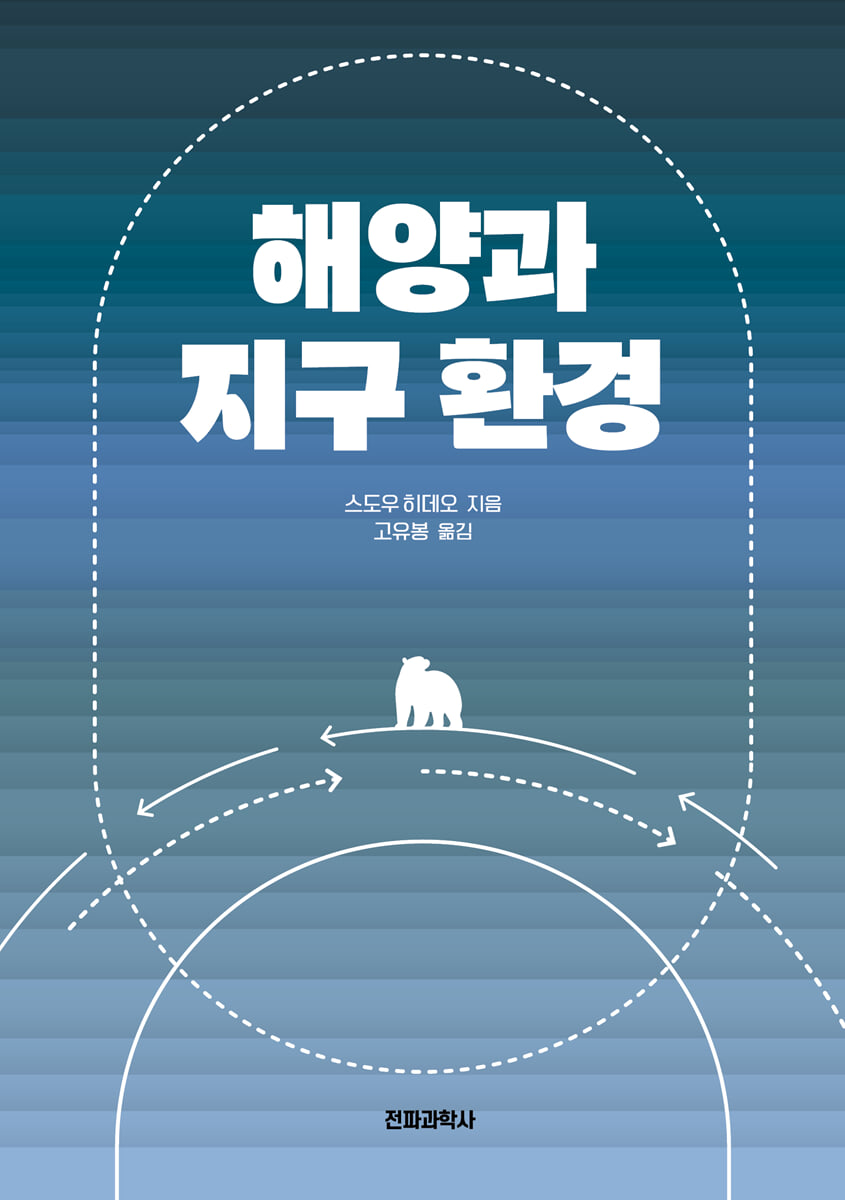
"The Ocean and the Earth's Environment" is a scientific study of the relationship between the ocean and the Earth's environment, detailing the impact of the ocean on climate change and the importance of the marine ecosystem.
The author vividly conveys the importance of the ocean and its impact on the global environment by analyzing the movements of ocean currents, changes in marine resources, and the impact of human activities on the ocean.
This book, which attracted attention when it was published in 2003, has even more important implications today.
As environmental crises such as climate change, ocean acidification, and polar ice cap decline become increasingly real, understanding the role the ocean plays in the climate system is essential.
"Ocean and Global Environment" examines current issues based on past research and explores sustainable solutions for the future.
Based on scientific facts and objective analysis, this book will continue to provide valuable insights for readers seeking a deeper understanding of environmental issues.
"The Ocean and the Earth's Environment" is a scientific study of the relationship between the ocean and the Earth's environment, detailing the impact of the ocean on climate change and the importance of the marine ecosystem.
The author vividly conveys the importance of the ocean and its impact on the global environment by analyzing the movements of ocean currents, changes in marine resources, and the impact of human activities on the ocean.
This book, which attracted attention when it was published in 2003, has even more important implications today.
As environmental crises such as climate change, ocean acidification, and polar ice cap decline become increasingly real, understanding the role the ocean plays in the climate system is essential.
"Ocean and Global Environment" examines current issues based on past research and explores sustainable solutions for the future.
Based on scientific facts and objective analysis, this book will continue to provide valuable insights for readers seeking a deeper understanding of environmental issues.
index
preface
Translator's Note
Chapter 1: Global-Scale Ocean Water Distribution
1.1 Water film on the Earth's surface - the ocean
1.2 Large-scale movement of surface water
1.3 Characteristics of seawater in three dimensions
1.4 Heat and water from the ocean
1.5 Three-dimensional flow of ocean water surrounding the Earth
1.6 Global-scale ocean changes
1.7 Supplement
Chapter 2: The Water Cycle and Material Transport
2.1 Distribution and circulation of water on Earth
2.2 River flow
2.3 Composition and transport of suspended solids in rivers
2.4 Dissolved chemical composition of rivers
2.5 Land erosion by water
2.6 Chemical composition of seawater and behavior of elements
2.7 Problems that human activities affect the natural world
Chapter 3 Marine Environment and Biological Activities
3.1 Marine ecosystem and environment
3.2 Human activities and the marine environment
Chapter 4: Fishery Environment and Its Changes on a Global Scale
4.1 Towards the 21st Century
4.2 Fishing ground environment and resource environment
4.3 Large-scale fluctuations in fishing conditions
4.4 Long-term changes in fishery resources and fish species replacement
4.5 Changes in fishing conditions due to global abnormal weather
4.6 Long-term water temperature fluctuations and their factors
4.7 Global warming
4.8 Outlook
Chapter 5: Global Marine Pollution
5.1 Organochlorine compounds as environmental pollutants
5.2 Physicochemical properties of DDT, HCH, and PCB
5.3 HCH in Mashuko
5.4 Global distribution of DDT and HCH in the open ocean atmosphere and surface waters
5.5 Distribution of PCBs on Earth
5.6 Bioaccumulation of organochlorine compounds in the ocean
5.7 Future Tasks
Chapter 6: Geology of the Seabed
6.1 Topography of the seafloor
6.2 Sediments on the seabed
6.3 Mineral resources of the seabed
6.4 The Temptation of Undersea Geology
Chapter 7: Global-Scale Ocean Observations
7.1 Earth's Oceans
7.2 Large-scale changes in the Earth's environment and the oceans
7.3 Ocean observations
7.4 Observations of the ocean surface from space
References
Translator's Note
Chapter 1: Global-Scale Ocean Water Distribution
1.1 Water film on the Earth's surface - the ocean
1.2 Large-scale movement of surface water
1.3 Characteristics of seawater in three dimensions
1.4 Heat and water from the ocean
1.5 Three-dimensional flow of ocean water surrounding the Earth
1.6 Global-scale ocean changes
1.7 Supplement
Chapter 2: The Water Cycle and Material Transport
2.1 Distribution and circulation of water on Earth
2.2 River flow
2.3 Composition and transport of suspended solids in rivers
2.4 Dissolved chemical composition of rivers
2.5 Land erosion by water
2.6 Chemical composition of seawater and behavior of elements
2.7 Problems that human activities affect the natural world
Chapter 3 Marine Environment and Biological Activities
3.1 Marine ecosystem and environment
3.2 Human activities and the marine environment
Chapter 4: Fishery Environment and Its Changes on a Global Scale
4.1 Towards the 21st Century
4.2 Fishing ground environment and resource environment
4.3 Large-scale fluctuations in fishing conditions
4.4 Long-term changes in fishery resources and fish species replacement
4.5 Changes in fishing conditions due to global abnormal weather
4.6 Long-term water temperature fluctuations and their factors
4.7 Global warming
4.8 Outlook
Chapter 5: Global Marine Pollution
5.1 Organochlorine compounds as environmental pollutants
5.2 Physicochemical properties of DDT, HCH, and PCB
5.3 HCH in Mashuko
5.4 Global distribution of DDT and HCH in the open ocean atmosphere and surface waters
5.5 Distribution of PCBs on Earth
5.6 Bioaccumulation of organochlorine compounds in the ocean
5.7 Future Tasks
Chapter 6: Geology of the Seabed
6.1 Topography of the seafloor
6.2 Sediments on the seabed
6.3 Mineral resources of the seabed
6.4 The Temptation of Undersea Geology
Chapter 7: Global-Scale Ocean Observations
7.1 Earth's Oceans
7.2 Large-scale changes in the Earth's environment and the oceans
7.3 Ocean observations
7.4 Observations of the ocean surface from space
References
Detailed image

Into the book
"What makes the ocean so different from land is that it is the only one on Earth.
In other words, all ocean waters on Earth are connected.
Even though there is a distinction between the three oceans, if you look around Antarctica on Earth, you will see that there is only one world ocean.
In other words, we can think of the entire ocean as one, constantly moving over the Earth's surface."
--- p.19
"On May 27, 1990, 21 containers loaded on a cargo ship from Korea to North America fell into the water.
Four of them contained 80,000 Nike sneakers.
"Over a half-year later, more than 100 of these were found drifting onto coasts from southern Oregon in the United States in the south to the Queen Charlotte Islands in Canada in the north."
--- p.29
"The amount of suspended matter in a river is governed by several factors, the important ones being ① basin area, ② basin topography (gradient), ③ basin geology, ④ water volume, ⑤ climate, and ⑥ vegetation.
These factors appear to interact in a complex manner to determine the concentration of suspended solids in rivers.
In recent years, human activities such as deforestation, agricultural land development, and dam construction have also had a significant impact."
--- p.82
"As human activities become more active, the amount of phosphorus being brought into the seawater is also rapidly increasing, causing red and blue tides in inland bays and estuaries, thereby accelerating the extent and scope of water and bottom quality deterioration.
This trend is prominent in highly enclosed sea areas with poor exchange with the open sea.
However, even in such waters, the proportion of phosphorus remaining buried in sediments is small compared to the increase in the amount being loaded, and it is an element with a strong tendency to quickly flow out of the bay, as shown in the example of Tokyo Bay.
--- p.129
"It is estimated that suspended solids loads in Asia and Oceania today are five times greater than they were before humans began farming or deforestation.
This estimate suggests that 7 billion tons of suspended solids were transported to the oceans from all the world's rivers 2,500 years ago, which is about 50% of the current value (13.5 billion tons).
--- p.133
“As described so far, nutrients are essential substances for the growth of phytoplankton. In areas with abundant supply, biological production is abundant, but if they are supplied in excess, they destroy the ecosystem.
When nutrients from household and factory wastewater flow into closed sea areas in large quantities, phytoplankton multiply in high density.
Especially in summer, stratification develops, so phytoplankton concentrate on the surface, causing a red tide, where dissolved oxygen becomes saturated due to oxygen production through photosynthesis.
Meanwhile, a large amount of debris and biological waste settles in the lower layer and is decomposed by bacteria, but oxygen is consumed during this process, and because there is a thermocline, oxygen cannot be supplied from the surface layer, so the lower layer becomes hypoxic or anoxic.
As a result, fish and shellfish cannot survive in the lower layers.”
--- p.152
“Due to the abnormal cold water caused by the abnormal weather in January 1963, a mass death of coastal fish and other fish occurred along the coast of Japan, an unprecedented phenomenon in recent years.
During the same period, there was a mass die-off of bottom fish such as halibut in the southern North Sea of Europe.
“Mass die-offs of bottom fish in the southern North Sea occurred in 1929 and 1947, but the most extensive one occurred in 1963, indicating a rare occurrence of unusually cold water.”
--- p.172
“The Earth’s ecosystem has been maintained in balance for hundreds of millions of years, but recent anthropogenic and rapid environmental loads, centered around developed countries, are causing irreversible destruction of the ecosystem.
“We need to abandon the idea of contrasting humanity with nature and trying to manipulate nature for humanity’s sake, and instead strongly grasp the realization that humanity is merely a part of the Earth’s ecosystem.”
--- p.193
“By showing a complex distribution of sediments deposited at sea level in a given era and sediments deposited during periods of rising and falling sea levels, the seemingly complex sediment distribution reveals the history of ocean invasion and retreat due to climate change and other factors.”
--- p.226
“There are two main types of remote sensing.
When the ocean is the target, there is no change in the fact that all of them receive electromagnetic waves from the ocean and try to know the state and properties of the ocean based on the information contained in the signals.
The first type is the one that receives electromagnetic waves emitted by the ocean itself.
These electromagnetic waves include those emitted from the sun and reflected from the ocean.
Sensing like this is called passive sensing.
The second type is one in which the sensor itself acts as a transmitter and receiver of electromagnetic waves, radiating electromagnetic waves toward the ocean and receiving electromagnetic waves reflected from the ocean.
This is called active sensing.”
--- p.276
“As of 1992, three types of sensors for measuring sea surface temperature, namely VTIR, AVHRR, and ATSR, are operated by NASDA in Japan, NOAA in the United States, and ESA in Europe, respectively.
Their measurement accuracy varies depending on conditions, but is generally around 0.5℃, 0.3℃, and 0.2~0.3℃ on average. ATSR is said to be equipped with two of the above-mentioned reference black bodies.
It goes without saying that sea surface temperature is a very important quantity for investigating climate change, including estimating the ocean and atmosphere heat budget.”
In other words, all ocean waters on Earth are connected.
Even though there is a distinction between the three oceans, if you look around Antarctica on Earth, you will see that there is only one world ocean.
In other words, we can think of the entire ocean as one, constantly moving over the Earth's surface."
--- p.19
"On May 27, 1990, 21 containers loaded on a cargo ship from Korea to North America fell into the water.
Four of them contained 80,000 Nike sneakers.
"Over a half-year later, more than 100 of these were found drifting onto coasts from southern Oregon in the United States in the south to the Queen Charlotte Islands in Canada in the north."
--- p.29
"The amount of suspended matter in a river is governed by several factors, the important ones being ① basin area, ② basin topography (gradient), ③ basin geology, ④ water volume, ⑤ climate, and ⑥ vegetation.
These factors appear to interact in a complex manner to determine the concentration of suspended solids in rivers.
In recent years, human activities such as deforestation, agricultural land development, and dam construction have also had a significant impact."
--- p.82
"As human activities become more active, the amount of phosphorus being brought into the seawater is also rapidly increasing, causing red and blue tides in inland bays and estuaries, thereby accelerating the extent and scope of water and bottom quality deterioration.
This trend is prominent in highly enclosed sea areas with poor exchange with the open sea.
However, even in such waters, the proportion of phosphorus remaining buried in sediments is small compared to the increase in the amount being loaded, and it is an element with a strong tendency to quickly flow out of the bay, as shown in the example of Tokyo Bay.
--- p.129
"It is estimated that suspended solids loads in Asia and Oceania today are five times greater than they were before humans began farming or deforestation.
This estimate suggests that 7 billion tons of suspended solids were transported to the oceans from all the world's rivers 2,500 years ago, which is about 50% of the current value (13.5 billion tons).
--- p.133
“As described so far, nutrients are essential substances for the growth of phytoplankton. In areas with abundant supply, biological production is abundant, but if they are supplied in excess, they destroy the ecosystem.
When nutrients from household and factory wastewater flow into closed sea areas in large quantities, phytoplankton multiply in high density.
Especially in summer, stratification develops, so phytoplankton concentrate on the surface, causing a red tide, where dissolved oxygen becomes saturated due to oxygen production through photosynthesis.
Meanwhile, a large amount of debris and biological waste settles in the lower layer and is decomposed by bacteria, but oxygen is consumed during this process, and because there is a thermocline, oxygen cannot be supplied from the surface layer, so the lower layer becomes hypoxic or anoxic.
As a result, fish and shellfish cannot survive in the lower layers.”
--- p.152
“Due to the abnormal cold water caused by the abnormal weather in January 1963, a mass death of coastal fish and other fish occurred along the coast of Japan, an unprecedented phenomenon in recent years.
During the same period, there was a mass die-off of bottom fish such as halibut in the southern North Sea of Europe.
“Mass die-offs of bottom fish in the southern North Sea occurred in 1929 and 1947, but the most extensive one occurred in 1963, indicating a rare occurrence of unusually cold water.”
--- p.172
“The Earth’s ecosystem has been maintained in balance for hundreds of millions of years, but recent anthropogenic and rapid environmental loads, centered around developed countries, are causing irreversible destruction of the ecosystem.
“We need to abandon the idea of contrasting humanity with nature and trying to manipulate nature for humanity’s sake, and instead strongly grasp the realization that humanity is merely a part of the Earth’s ecosystem.”
--- p.193
“By showing a complex distribution of sediments deposited at sea level in a given era and sediments deposited during periods of rising and falling sea levels, the seemingly complex sediment distribution reveals the history of ocean invasion and retreat due to climate change and other factors.”
--- p.226
“There are two main types of remote sensing.
When the ocean is the target, there is no change in the fact that all of them receive electromagnetic waves from the ocean and try to know the state and properties of the ocean based on the information contained in the signals.
The first type is the one that receives electromagnetic waves emitted by the ocean itself.
These electromagnetic waves include those emitted from the sun and reflected from the ocean.
Sensing like this is called passive sensing.
The second type is one in which the sensor itself acts as a transmitter and receiver of electromagnetic waves, radiating electromagnetic waves toward the ocean and receiving electromagnetic waves reflected from the ocean.
This is called active sensing.”
--- p.276
“As of 1992, three types of sensors for measuring sea surface temperature, namely VTIR, AVHRR, and ATSR, are operated by NASDA in Japan, NOAA in the United States, and ESA in Europe, respectively.
Their measurement accuracy varies depending on conditions, but is generally around 0.5℃, 0.3℃, and 0.2~0.3℃ on average. ATSR is said to be equipped with two of the above-mentioned reference black bodies.
It goes without saying that sea surface temperature is a very important quantity for investigating climate change, including estimating the ocean and atmosphere heat budget.”
--- p.288
Publisher's Review
A must-read that stimulates scientific curiosity and raises awareness of the need for ocean conservation.
『Ocean and Earth Environment』
The environmental challenges we face, such as climate change, rising sea levels, and the destruction of marine ecosystems, are inextricably linked to the ocean.
This book shows how scientific facts and predictions discovered decades ago have been deepened and realized today, while also reminding us of the preciousness of the ocean.
Although scientific understanding of oceanography and climate change has advanced significantly in the decades since the book's publication, the author's proposed link between the ocean and the global environment remains a crucial scientific foundation.
It will provide a valuable reading experience for students, researchers, and general readers interested in the environment.
『Ocean and Earth Environment』
The environmental challenges we face, such as climate change, rising sea levels, and the destruction of marine ecosystems, are inextricably linked to the ocean.
This book shows how scientific facts and predictions discovered decades ago have been deepened and realized today, while also reminding us of the preciousness of the ocean.
Although scientific understanding of oceanography and climate change has advanced significantly in the decades since the book's publication, the author's proposed link between the ocean and the global environment remains a crucial scientific foundation.
It will provide a valuable reading experience for students, researchers, and general readers interested in the environment.
GOODS SPECIFICS
- Date of issue: March 25, 2025
- Page count, weight, size: 304 pages | 148*210*30mm
- ISBN13: 9788970446998
- ISBN10: 8970446990
You may also like
카테고리
korean


korean

![GQ KOREA Mark (Monthly): December [2025]](http://librairie.coreenne.fr/cdn/shop/files/8ef265dbbfbf186523ed75ba7319009d.jpg?v=1765340328&width=3840)


