

Modern Paris
 |
Description
Book Introduction
- A word from MD
- [How the Exhibition Began] From artists creating their own venues to showcase their work to transforming exhibitions into experiential spaces, the story of twelve exhibitions held in Paris, the capital of the avant-garde.
It presents a new perspective on exhibitions along with the trends and changes in contemporary art.
- Ahn Hyun-jae, art producer
From Impressionism to Surrealism,
Stories from twelve exhibitions held in Paris, the capital of the avant-garde.
All artworks are on display at the exhibition.
When the exhibition is over, the work remains in the museum and the artist remains in art history.
But where will the exhibition go?
Art galleries on holidays are crowded with people coming to see popular exhibitions.
Exhibitions on a variety of topics, including cultural assets, classic paintings, modern art, and crafts, are held across the country, and when news comes that collections from renowned foreign museums are being displayed in Korea, many people pay attention.
Exhibition halls have now become entertainment spaces where people go beyond simply viewing works of art and experience new things through indirect experiences.
Exhibitions are a venue for communication where artworks, artists, audiences, and critics all come together, and they are important events where new art is born and introduced to the public.
How did this exhibition come about?
"Modern Paris" tells the story of twelve exhibitions held in Paris, the capital of avant-garde art.
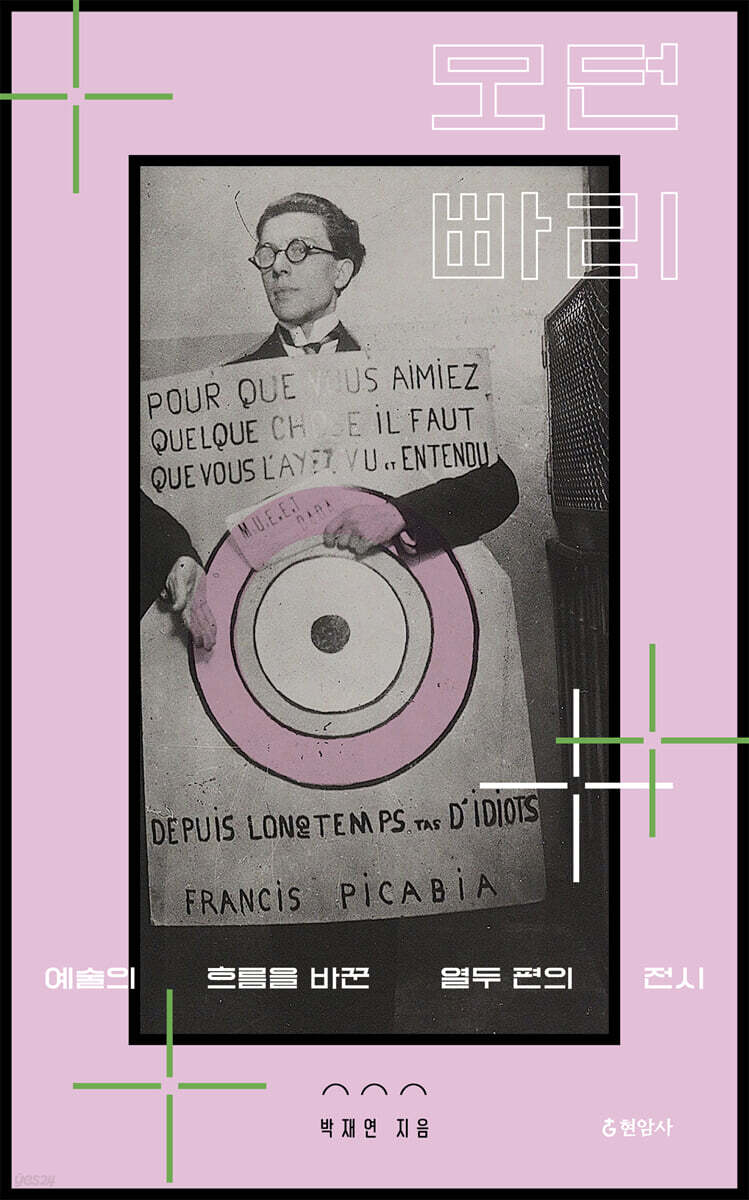
Exhibitions that attempted new things, such as the "Independant Exhibition" which eliminated the judging system and provided an opportunity for diverse works to be showcased, the "Hundred People Exhibition" which gave posters artistic value and turned them into objects of collection, the "Salon Dada" which combined performance and exhibition, and the "International Surrealist Exhibition" which was an immersive experience exhibition, gradually broadened the horizons of art.
These exhibitions were a challenge to tradition and authority, and an adventure toward new art.
Sometimes ignored and sometimes criticized, it ultimately remained in history and shaped the art of today.
The history of exhibitions is the history of art.
Readers will be able to see the flow and changes of modern art more vividly through the history of the exhibition.
Stories from twelve exhibitions held in Paris, the capital of the avant-garde.
All artworks are on display at the exhibition.
When the exhibition is over, the work remains in the museum and the artist remains in art history.
But where will the exhibition go?
Art galleries on holidays are crowded with people coming to see popular exhibitions.
Exhibitions on a variety of topics, including cultural assets, classic paintings, modern art, and crafts, are held across the country, and when news comes that collections from renowned foreign museums are being displayed in Korea, many people pay attention.
Exhibition halls have now become entertainment spaces where people go beyond simply viewing works of art and experience new things through indirect experiences.
Exhibitions are a venue for communication where artworks, artists, audiences, and critics all come together, and they are important events where new art is born and introduced to the public.
How did this exhibition come about?
"Modern Paris" tells the story of twelve exhibitions held in Paris, the capital of avant-garde art.
Exhibitions that attempted new things, such as the "Independant Exhibition" which eliminated the judging system and provided an opportunity for diverse works to be showcased, the "Hundred People Exhibition" which gave posters artistic value and turned them into objects of collection, the "Salon Dada" which combined performance and exhibition, and the "International Surrealist Exhibition" which was an immersive experience exhibition, gradually broadened the horizons of art.
These exhibitions were a challenge to tradition and authority, and an adventure toward new art.
Sometimes ignored and sometimes criticized, it ultimately remained in history and shaped the art of today.
The history of exhibitions is the history of art.
Readers will be able to see the flow and changes of modern art more vividly through the history of the exhibition.
- You can preview some of the book's contents.
Preview
index
Introduction: Beyond the visible, the exhibition
1.
Impression, get a name: 1874.04.15.-05.15.
《The 1st Exhibition of the Painters, Sculptors, and Printmakers Limited Liability Cooperative》
2.
Capturing the changing face of Paris: 1877.04.04.-04.30.
《The 3rd Impressionist Exhibition》
3.
Calling for independence from the judges' evaluation: 1884.12.10.-1885.01.17.
《The 1st Indepandang Exhibition》
4.
The Uninvited Gauguin's Choice: June 8-10, 1889? 《Volpini Exhibition》
5.
Posters that became art: 1894.02.01.
The First Baek In-jeon
6.
A new attempt at art: 1895.11.-12.
Paul Cézanne Retrospective
7.
Donatello among the wild beasts: October 18-November 20, 1905.
《3rd Salon Doton》
8.
The story of the supporting actors who introduced Cubism: 1911.04.21.-06.13.
《27th Independant Exhibition》
9.
The Golden Ratio: The Beauty of Mathematics: October 10, 1912 - October 30, 1912
《Sechon d'Or Exhibition》
10.
Seeking Freedom and Meaninglessness through Destruction: June 6, 1921 - June 30, 1921.
Salon Dada
11.
Everything is Design: 1925.4.28-11.30.
International Exhibition of Decorative and Industrial Arts
12.
Exhibition, from seeing to experiencing: January 17-February 24, 1938.
International Surrealist Exhibition
Outgoing Text: The Politics and Poetics of Exhibition
References
Biographical Index
1.
Impression, get a name: 1874.04.15.-05.15.
《The 1st Exhibition of the Painters, Sculptors, and Printmakers Limited Liability Cooperative》
2.
Capturing the changing face of Paris: 1877.04.04.-04.30.
《The 3rd Impressionist Exhibition》
3.
Calling for independence from the judges' evaluation: 1884.12.10.-1885.01.17.
《The 1st Indepandang Exhibition》
4.
The Uninvited Gauguin's Choice: June 8-10, 1889? 《Volpini Exhibition》
5.
Posters that became art: 1894.02.01.
The First Baek In-jeon
6.
A new attempt at art: 1895.11.-12.
Paul Cézanne Retrospective
7.
Donatello among the wild beasts: October 18-November 20, 1905.
《3rd Salon Doton》
8.
The story of the supporting actors who introduced Cubism: 1911.04.21.-06.13.
《27th Independant Exhibition》
9.
The Golden Ratio: The Beauty of Mathematics: October 10, 1912 - October 30, 1912
《Sechon d'Or Exhibition》
10.
Seeking Freedom and Meaninglessness through Destruction: June 6, 1921 - June 30, 1921.
Salon Dada
11.
Everything is Design: 1925.4.28-11.30.
International Exhibition of Decorative and Industrial Arts
12.
Exhibition, from seeing to experiencing: January 17-February 24, 1938.
International Surrealist Exhibition
Outgoing Text: The Politics and Poetics of Exhibition
References
Biographical Index
Detailed image

Into the book
The history of exhibitions is a history of encounters and relationships.
Author and work, work and audience, audience and critic, critic and author.
There are many stories hidden in the 'avant-garde' scenes full of encounters.
The stories about what to exhibit, whether to charge admission, and how to handle public criticism are familiar to us today.
--- p.13, from “Introduction”
Although sales did not reach the expected level, some artists succeeded in making a name for themselves.
Claude Monet became the biggest beneficiary of this near-tumultuous experiment.
Monet submitted a total of five works to the first exhibition in 1874, and one of them, “Impression, Sunrise,” gave birth to a new group called the “Impressionists.”
--- p.28~30, 「1.
From "Getting an impression, getting a name"
Fauvism has been called 'the first modern art movement to benefit from scandal.'
Regardless of one's personal preferences about the label "fauvism," artists realized that public interest was good in any form, even scandalous.
The bright and vivid colors of Fauvism were chosen by the fashion industry, which was leading the trend.
--- p.176, 「7.
From "Donatello Among the Wild Beasts"
In fact, Exhibition Room 41 was a shock to everyone.
There was no one who did not feel the power that Cubist works radiated.
It stimulated the imagination of the viewer, proving that a painting can evoke surprise and anguish even without understanding the content.
Cubist works were met with wrath and ridicule from many critics and the public.
Many audiences at the time were unfamiliar with this new and radical style of art, and some viewed their work as an attack on tradition.
--- p.194~195, 「8.
From "Stories of the supporting actors who introduced Cubism"
As the atmosphere became somewhat boring, Chara called a man named Jolly Boa up on stage.
This good man sang a popular opera, little dreaming that his performance would be the highlight of the evening.
Jolibois, who took this performance seriously, was a ceramic repairman working in Paris.
Some cheered and others booed at the few notes that were out of place.
Jolly Boa enjoyed the attention without even knowing what was going on.
--- p.243, 「10.
From “Pursuing Freedom and Meaninglessness through Destruction”
On the evening of the opening night, Ray's lighting fixtures, which allowed light to stream through the eaves, were not working properly, forcing visitors to use flashlights distributed by the organizers.
Ray later remarked that the audience's "flashlights were shining on other people's faces rather than on the work," which is quite interesting.
People wanted to know who was around the artwork before appreciating it.
Author and work, work and audience, audience and critic, critic and author.
There are many stories hidden in the 'avant-garde' scenes full of encounters.
The stories about what to exhibit, whether to charge admission, and how to handle public criticism are familiar to us today.
--- p.13, from “Introduction”
Although sales did not reach the expected level, some artists succeeded in making a name for themselves.
Claude Monet became the biggest beneficiary of this near-tumultuous experiment.
Monet submitted a total of five works to the first exhibition in 1874, and one of them, “Impression, Sunrise,” gave birth to a new group called the “Impressionists.”
--- p.28~30, 「1.
From "Getting an impression, getting a name"
Fauvism has been called 'the first modern art movement to benefit from scandal.'
Regardless of one's personal preferences about the label "fauvism," artists realized that public interest was good in any form, even scandalous.
The bright and vivid colors of Fauvism were chosen by the fashion industry, which was leading the trend.
--- p.176, 「7.
From "Donatello Among the Wild Beasts"
In fact, Exhibition Room 41 was a shock to everyone.
There was no one who did not feel the power that Cubist works radiated.
It stimulated the imagination of the viewer, proving that a painting can evoke surprise and anguish even without understanding the content.
Cubist works were met with wrath and ridicule from many critics and the public.
Many audiences at the time were unfamiliar with this new and radical style of art, and some viewed their work as an attack on tradition.
--- p.194~195, 「8.
From "Stories of the supporting actors who introduced Cubism"
As the atmosphere became somewhat boring, Chara called a man named Jolly Boa up on stage.
This good man sang a popular opera, little dreaming that his performance would be the highlight of the evening.
Jolibois, who took this performance seriously, was a ceramic repairman working in Paris.
Some cheered and others booed at the few notes that were out of place.
Jolly Boa enjoyed the attention without even knowing what was going on.
--- p.243, 「10.
From “Pursuing Freedom and Meaninglessness through Destruction”
On the evening of the opening night, Ray's lighting fixtures, which allowed light to stream through the eaves, were not working properly, forcing visitors to use flashlights distributed by the organizers.
Ray later remarked that the audience's "flashlights were shining on other people's faces rather than on the work," which is quite interesting.
People wanted to know who was around the artwork before appreciating it.
--- p.289, 「12.
From “Exhibition, Beyond Seeing, to Experiencing”
From “Exhibition, Beyond Seeing, to Experiencing”
Publisher's Review
Exhibitions held in Paris, the forefront of modern art
In mid-19th century France, art exhibitions were government-sponsored events, and works that failed the screening process were not given a chance to be shown to the public.
In a time when only artists with a specific style were highly regarded, artists who were eliminated from the judging process sought to create their own venues to showcase their work.
Painters including Monet participated in the exhibition that was held in that way, and because of the critic's criticism of Monet's "Impression, Sunrise," those who presented a new painting style were labeled as "Impressionists."
That's how impressionism was born.
The "Artists' Cooperative Exhibition," which was held without government review, became the starting point of an art movement that would continue in Paris.
The late 19th century and mid-20th century were a time of upheaval.
As industrialization and urbanization progressed, people flocked to cities, and new means of transportation such as railways, automobiles, and airplanes emerged, connecting various parts of Europe.
World War I shattered lives, and those who lived through the tragedy either rejected the old order or dreamed of rebuilding it.
During this period, Paris was the forefront of avant-garde art, and artists from all over the world flocked to Paris.
Artists developed and experimented with new theories through discussion and collaboration, and wanted to present the results through exhibitions.
In Paris, numerous exhibitions were held and numerous art movements emerged, including Neo-Impressionism, Symbolism, Fauvism, Cubism, Dadaism, and Surrealism.
"Modern Paris" is a book that depicts twelve scenes from exhibitions that created modern art.
Why did the curator choose to hold this exhibition? What format did it take, and what kind of evaluations did it receive? What impact did it have on other artists who saw it? From the 1874 "Artists' Cooperative Exhibition," which gave birth to Impressionism, to the 1938 "International Surrealist Exhibition," which made the exhibition itself into a work of art and an experience, this book examines the flow and transformation of modern art through the lens of exhibitions.
“Exhibitions are always about politics and capital.”
The dictionary definition of exhibition is 'to display various items in one place,' but exhibition has a much greater meaning.
An exhibition is an event that shows what the curator wants to show according to the curator's intention, and it is a place for exchange between the artist and the work, the work and the audience, the audience and the critic, and the critic and the artist.
Artworks are presented to the public and evaluated in exhibitions.
The works displayed at the exhibition become part of an art museum or someone's collection, and the artist's name remains in art history.
But where will the exhibition that started it all go? Will it simply disappear?
It is not easy to find out exactly what the exhibition looked like after it ended.
As the author says, “Exhibitions are always about politics and capital,” international politics, political situations, technological advancements, and changes in markets and buyers all affect exhibitions.
To properly portray the exhibition landscape, it is necessary to examine the political and social circumstances surrounding art at the time, as well as to understand the evaluations of the media and the public, as well as subsequent artistic trends.
The exhibition is a work of art and a project in itself.
Because works of art are placed within a cultural and political context within an exhibition, the significance of the work can be accurately understood only when that context is understood.
After learning about the history of exhibitions through 『Modern Paris』, you will see the works and exhibitions from a new perspective.
Exhibitions are always about politics and capital.
No writer can create alone, and no work can exist alone.
If you cultivate greater curiosity and interest in the history of exhibitions, examine past art, and experience the current exhibition, the exhibition itself and the works within it will take on a new meaning.
_p.299 Outgoing text
In mid-19th century France, art exhibitions were government-sponsored events, and works that failed the screening process were not given a chance to be shown to the public.
In a time when only artists with a specific style were highly regarded, artists who were eliminated from the judging process sought to create their own venues to showcase their work.
Painters including Monet participated in the exhibition that was held in that way, and because of the critic's criticism of Monet's "Impression, Sunrise," those who presented a new painting style were labeled as "Impressionists."
That's how impressionism was born.
The "Artists' Cooperative Exhibition," which was held without government review, became the starting point of an art movement that would continue in Paris.
The late 19th century and mid-20th century were a time of upheaval.
As industrialization and urbanization progressed, people flocked to cities, and new means of transportation such as railways, automobiles, and airplanes emerged, connecting various parts of Europe.
World War I shattered lives, and those who lived through the tragedy either rejected the old order or dreamed of rebuilding it.
During this period, Paris was the forefront of avant-garde art, and artists from all over the world flocked to Paris.
Artists developed and experimented with new theories through discussion and collaboration, and wanted to present the results through exhibitions.
In Paris, numerous exhibitions were held and numerous art movements emerged, including Neo-Impressionism, Symbolism, Fauvism, Cubism, Dadaism, and Surrealism.
"Modern Paris" is a book that depicts twelve scenes from exhibitions that created modern art.
Why did the curator choose to hold this exhibition? What format did it take, and what kind of evaluations did it receive? What impact did it have on other artists who saw it? From the 1874 "Artists' Cooperative Exhibition," which gave birth to Impressionism, to the 1938 "International Surrealist Exhibition," which made the exhibition itself into a work of art and an experience, this book examines the flow and transformation of modern art through the lens of exhibitions.
“Exhibitions are always about politics and capital.”
The dictionary definition of exhibition is 'to display various items in one place,' but exhibition has a much greater meaning.
An exhibition is an event that shows what the curator wants to show according to the curator's intention, and it is a place for exchange between the artist and the work, the work and the audience, the audience and the critic, and the critic and the artist.
Artworks are presented to the public and evaluated in exhibitions.
The works displayed at the exhibition become part of an art museum or someone's collection, and the artist's name remains in art history.
But where will the exhibition that started it all go? Will it simply disappear?
It is not easy to find out exactly what the exhibition looked like after it ended.
As the author says, “Exhibitions are always about politics and capital,” international politics, political situations, technological advancements, and changes in markets and buyers all affect exhibitions.
To properly portray the exhibition landscape, it is necessary to examine the political and social circumstances surrounding art at the time, as well as to understand the evaluations of the media and the public, as well as subsequent artistic trends.
The exhibition is a work of art and a project in itself.
Because works of art are placed within a cultural and political context within an exhibition, the significance of the work can be accurately understood only when that context is understood.
After learning about the history of exhibitions through 『Modern Paris』, you will see the works and exhibitions from a new perspective.
Exhibitions are always about politics and capital.
No writer can create alone, and no work can exist alone.
If you cultivate greater curiosity and interest in the history of exhibitions, examine past art, and experience the current exhibition, the exhibition itself and the works within it will take on a new meaning.
_p.299 Outgoing text
GOODS SPECIFICS
- Date of issue: May 30, 2024
- Page count, weight, size: 328 pages | 414g | 128*205*18mm
- ISBN13: 9788932323640
You may also like
카테고리
korean


korean

![GQ KOREA Mark (Monthly): December [2025]](http://librairie.coreenne.fr/cdn/shop/files/8ef265dbbfbf186523ed75ba7319009d.jpg?v=1765340328&width=3840)


