

Transformer
 |
Description
Book Introduction
The prototype of the shaper and designer
"Transformers? The Principles of Creating Isotype Diagrams" is a revised edition of the Korean version published in 2013 as the first book by Studio Ghost under the title "Transformers."
Designer Choi Seul-gi, who translated 『Transformers』, refined the entire translation, starting with the title, and Seul-gi and Min redesigned the front of the book.
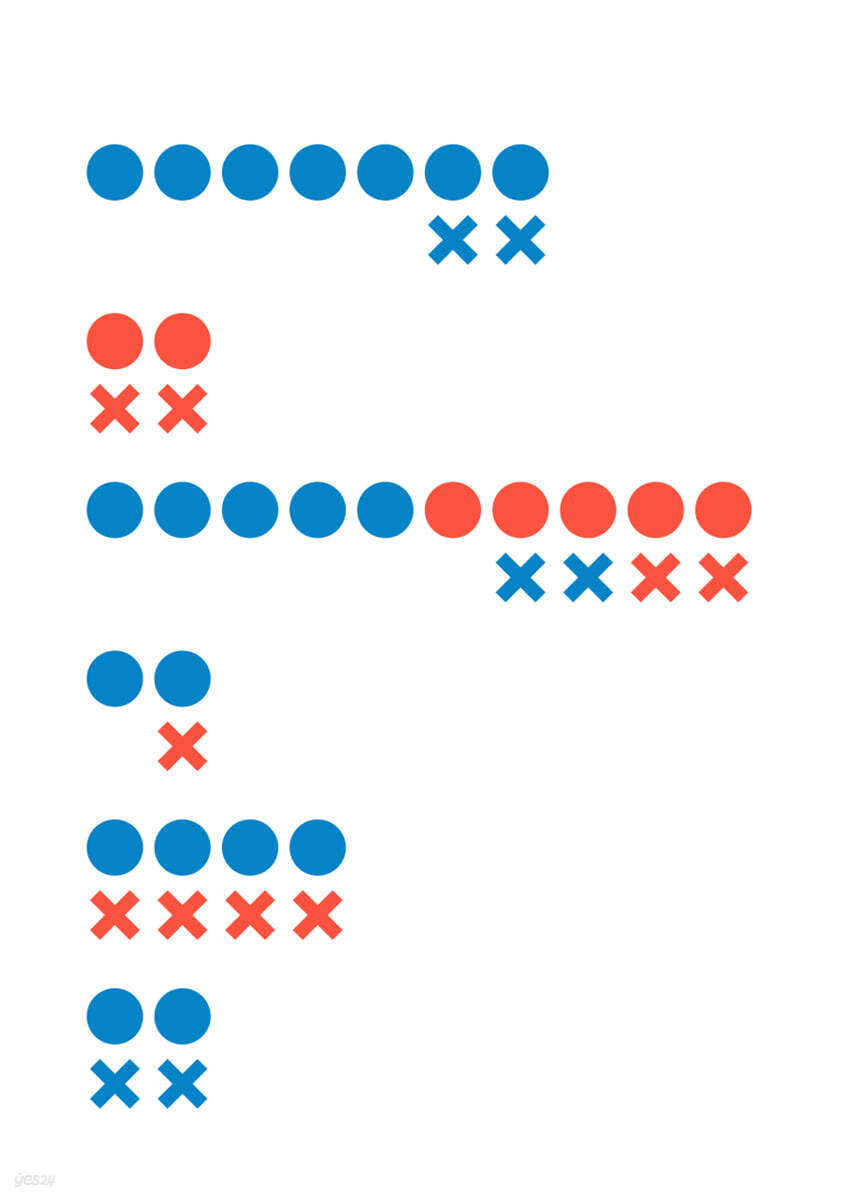
The cover of the revised edition is a designer's modification of the diagram on page 39 of the book. Reflecting the fact that 『The Transformer』 is a book that focuses on the principles of organization rather than the pictograms that usually come to mind when one thinks of 'Isotype,' the pictograms were omitted from the diagram and only the principles were abstracted.
『The Transformer』 traces the path of the 'grammar' of 'transformation', the core of design, and reveals the way designers think.
"Transformers? The Principles of Creating Isotype Diagrams" is a revised edition of the Korean version published in 2013 as the first book by Studio Ghost under the title "Transformers."
Designer Choi Seul-gi, who translated 『Transformers』, refined the entire translation, starting with the title, and Seul-gi and Min redesigned the front of the book.
The cover of the revised edition is a designer's modification of the diagram on page 39 of the book. Reflecting the fact that 『The Transformer』 is a book that focuses on the principles of organization rather than the pictograms that usually come to mind when one thinks of 'Isotype,' the pictograms were omitted from the diagram and only the principles were abstracted.
『The Transformer』 traces the path of the 'grammar' of 'transformation', the core of design, and reveals the way designers think.
- You can preview some of the book's contents.
Preview
index
preface
Acknowledgements
The Empty Statistical Projection and Isotype - Learning and Collaborating with Otto Neurath
What a transformer does
Lessons from Isotype
Marie Neurath, 1898–1986
References
References
Translator's Note
index
Acknowledgements
The Empty Statistical Projection and Isotype - Learning and Collaborating with Otto Neurath
What a transformer does
Lessons from Isotype
Marie Neurath, 1898–1986
References
References
Translator's Note
index
Into the book
“While producing two basic English books, we also needed a new name for our statistical methods, and the coinage ‘BASIC’ (British American Scientific International Commercial) proved helpful.
One afternoon, after much thought, I came up with the International System of Teaching in Pictures, or Isotip, but I didn't like it much except for the first syllable.
And then, 'Isotype' came to mind.
However, we never found a usable explanation, so we continued to use the less than satisfactory 'International System of Typographic Picture Education'.
Neurath, who returned from a meeting in Amsterdam that evening, liked the new name and the next day asked Arntz to create a symbol to represent it.
All new names and symbols were first introduced in the International Language of Shapes.”
--- p.49
“We learned how difficult it is to write basic English and how easy it is to read it.
But that was also true of our geometric language.
In another way, we all felt like one family in our commitment to international communication.
Whether it was helping travelers find their way abroad or laying the foundation for sharing knowledge, the goal was the same.
Here, Neurath explained the characteristics of figural language in relation to oral language.
He described Isotype as a language that helps language.
Any diagram needs a few words.
“Creating a language made up of only symbols like Chinese characters was not what we were trying to do.”
--- p.51
In Isotype terms, Marie was a 'transformer'.
This means that he was a creator of visual expressions, a professional intellectual, a producer of the final product, and—in some ways, most importantly—a key figure who connected with the general public.
Otto and Marie never used the word 'designer' (either in English or in their German equivalent).
However, it is only recently that the word 'designer' has come to mean a professional who gives material form to content and plans it.
In Reading, when we used the term "transformer" to mean "designer," Marie would look at us with suspicion.
He thought that a designer was a decorator who changed the shape of an object according to the fashion of each season.
(Unfortunately, there is some basis for this belief.) Conversely, as the name suggests, Isotype was intended to be a standard.
If, after countless inventions and experiments, you finally arrive at a satisfactory symbol or arrangement, is there any need to change it?
--- p.128
If the other work examples presented in this article share a similar mindset to Isotype, it will become clear that Isotype can find a place in the broad and fertile ground of 'design for meaning.'
Designers who follow this approach (in the broadest sense) understand the meaning of the material and allow the material to find its own good order, both for the material itself and for the people who will read and use it.
The two dimensions—data and users—become inseparable.
Looking at the work of Otto Neurath and his colleagues from this perspective can provide some relief.
One afternoon, after much thought, I came up with the International System of Teaching in Pictures, or Isotip, but I didn't like it much except for the first syllable.
And then, 'Isotype' came to mind.
However, we never found a usable explanation, so we continued to use the less than satisfactory 'International System of Typographic Picture Education'.
Neurath, who returned from a meeting in Amsterdam that evening, liked the new name and the next day asked Arntz to create a symbol to represent it.
All new names and symbols were first introduced in the International Language of Shapes.”
--- p.49
“We learned how difficult it is to write basic English and how easy it is to read it.
But that was also true of our geometric language.
In another way, we all felt like one family in our commitment to international communication.
Whether it was helping travelers find their way abroad or laying the foundation for sharing knowledge, the goal was the same.
Here, Neurath explained the characteristics of figural language in relation to oral language.
He described Isotype as a language that helps language.
Any diagram needs a few words.
“Creating a language made up of only symbols like Chinese characters was not what we were trying to do.”
--- p.51
In Isotype terms, Marie was a 'transformer'.
This means that he was a creator of visual expressions, a professional intellectual, a producer of the final product, and—in some ways, most importantly—a key figure who connected with the general public.
Otto and Marie never used the word 'designer' (either in English or in their German equivalent).
However, it is only recently that the word 'designer' has come to mean a professional who gives material form to content and plans it.
In Reading, when we used the term "transformer" to mean "designer," Marie would look at us with suspicion.
He thought that a designer was a decorator who changed the shape of an object according to the fashion of each season.
(Unfortunately, there is some basis for this belief.) Conversely, as the name suggests, Isotype was intended to be a standard.
If, after countless inventions and experiments, you finally arrive at a satisfactory symbol or arrangement, is there any need to change it?
--- p.128
If the other work examples presented in this article share a similar mindset to Isotype, it will become clear that Isotype can find a place in the broad and fertile ground of 'design for meaning.'
Designers who follow this approach (in the broadest sense) understand the meaning of the material and allow the material to find its own good order, both for the material itself and for the people who will read and use it.
The two dimensions—data and users—become inseparable.
Looking at the work of Otto Neurath and his colleagues from this perspective can provide some relief.
--- p.123
Publisher's Review
Isotype, the basic grammar of information design
As interest in information design has grown, research on its basic grammar, the 'Isotype' statistical projection, has also become active.
Isotype is an international pictorial language system that arose from efforts to systematically visualize knowledge.
It is a method of visually and directly representing information, data, concepts, meaning, etc. by combining shapes or symbols instead of letters and numbers.
Otto Neurath, who proposed Isotype in the early 20th century, created and popularized a visual dictionary and symbol grammar to make simplified shapes internationally acceptable.
The Transformer explains the principles of creating isotype diagrams.
Contrary to popular belief, isotype does not simply mean pictogram.
Because Isotype has its roots in the history of statistical graphics, it is important that each symbol represents a certain quantity.
Furthermore, because it draws on the human tradition of communicating information through various visual means such as pictures, diagrams, and maps, the symbols in Isotype diagrams must be read across time and space.
The core principle of Isotype is 'transformation', that is, converting information into visual form.
And the 'transformers' (German for 'transformers') are the ones who perform these visual transformations.
This book examines the fundamental concepts of 'transformation' and 'transformers', who are called design and designers today, through Isotype.
“I had to find a way to extract key facts from the text and numerical data and transform them into graphics.
It is the responsibility of the "transformer" to understand the material, obtain all the necessary information from experts, decide what is worth disseminating to the public, and decide how to present it and connect it to common knowledge or other diagrams.
In that sense, the transformer is an agent of the public.” -Marie Neurath (p. 82)
“Isotype is recognized for its many values, including its statistics that do not distort facts, its unified symbol system, and its effective placement of visual elements. However, it is also significant in that it proposed a system for communicating different problem-solving processes.
They even gave the title of 'transformer' to the person who was mainly in charge of such communication.
However, if we summarize the explanation in this book, we can see that the role of the transformer is very similar to the work of a modern designer.
This is because the work of understanding the given data, editing the necessary information, translating it into visual elements, finding appropriate composition and arrangement methods, and examining the production process is, in other words, design.
That is why this book can provide useful advice to those who are currently involved in design.” - From “Translator’s Note”
Extensibility of Isotypes
Otto Neurath (1882-1945), the creator of Isotype, was a philosopher of science and sociologist from Vienna, Austria, and an encyclopedic figure sensitive to the various aspects of urban life.
His interests and inclinations shone through in the Vienna Museum of Social and Economic Studies, particularly in his visual studies of isotypes.
The author of this book, Marie Neurath (1898-1986), was Otto Neurath's partner and a key modifier throughout the world during times of revolution, war, and exile, devoted herself to Isotype research, and after Otto Neurath's death, worked to ensure that Isotypes are still used in statistical charts and textbooks to this day.
According to Robin Kinross, the author, editor, and designer who created this book with Marie Neurath, Isotype was “a technique for visually expressing what needed to be said” (p. 127).
It covered information worth presenting, and the viewer learned not only facts but also historical and social relationships.
Isotype was not just a technique for converting numbers into statistical graphs.
Rather, the best isotype diagrams were intellectual visual languages based on some implicit principles, but which had to be developed anew each time.
In this respect, it is repeatedly confirmed that Isotype is fundamentally identical to the act we call 'design' today.
The activity of analyzing, selecting, organizing, and visualizing information, data, concepts, and meaning.
Robin Kinross also brings adjacent fields into the discussion of the Isotype case.
By linking Isotype to the London Underground diagram, Jan Tschichold's commentary on new typography, and Max Bill's drawings of the Ulm University of Design building, he demonstrates that Isotype, which has survived for nearly a century, has infinite potential for expansion.
"The Transformers" thus highlights the key achievements of Isotype, both within and beyond the visual work of Otto and Marie Neurath, that can be of help to any designer today, and the value of Isotype revealed in the process of visually arranging materials.
“I see Isotype not as a finished and fixed system or method, but as a general design approach that can still be applied in all design fields, not just in creating statistical graphs or presenting information.
Ultimately, Isotype is a way of thinking.” -Robin Kinross (pp. 7-8)
As interest in information design has grown, research on its basic grammar, the 'Isotype' statistical projection, has also become active.
Isotype is an international pictorial language system that arose from efforts to systematically visualize knowledge.
It is a method of visually and directly representing information, data, concepts, meaning, etc. by combining shapes or symbols instead of letters and numbers.
Otto Neurath, who proposed Isotype in the early 20th century, created and popularized a visual dictionary and symbol grammar to make simplified shapes internationally acceptable.
The Transformer explains the principles of creating isotype diagrams.
Contrary to popular belief, isotype does not simply mean pictogram.
Because Isotype has its roots in the history of statistical graphics, it is important that each symbol represents a certain quantity.
Furthermore, because it draws on the human tradition of communicating information through various visual means such as pictures, diagrams, and maps, the symbols in Isotype diagrams must be read across time and space.
The core principle of Isotype is 'transformation', that is, converting information into visual form.
And the 'transformers' (German for 'transformers') are the ones who perform these visual transformations.
This book examines the fundamental concepts of 'transformation' and 'transformers', who are called design and designers today, through Isotype.
“I had to find a way to extract key facts from the text and numerical data and transform them into graphics.
It is the responsibility of the "transformer" to understand the material, obtain all the necessary information from experts, decide what is worth disseminating to the public, and decide how to present it and connect it to common knowledge or other diagrams.
In that sense, the transformer is an agent of the public.” -Marie Neurath (p. 82)
“Isotype is recognized for its many values, including its statistics that do not distort facts, its unified symbol system, and its effective placement of visual elements. However, it is also significant in that it proposed a system for communicating different problem-solving processes.
They even gave the title of 'transformer' to the person who was mainly in charge of such communication.
However, if we summarize the explanation in this book, we can see that the role of the transformer is very similar to the work of a modern designer.
This is because the work of understanding the given data, editing the necessary information, translating it into visual elements, finding appropriate composition and arrangement methods, and examining the production process is, in other words, design.
That is why this book can provide useful advice to those who are currently involved in design.” - From “Translator’s Note”
Extensibility of Isotypes
Otto Neurath (1882-1945), the creator of Isotype, was a philosopher of science and sociologist from Vienna, Austria, and an encyclopedic figure sensitive to the various aspects of urban life.
His interests and inclinations shone through in the Vienna Museum of Social and Economic Studies, particularly in his visual studies of isotypes.
The author of this book, Marie Neurath (1898-1986), was Otto Neurath's partner and a key modifier throughout the world during times of revolution, war, and exile, devoted herself to Isotype research, and after Otto Neurath's death, worked to ensure that Isotypes are still used in statistical charts and textbooks to this day.
According to Robin Kinross, the author, editor, and designer who created this book with Marie Neurath, Isotype was “a technique for visually expressing what needed to be said” (p. 127).
It covered information worth presenting, and the viewer learned not only facts but also historical and social relationships.
Isotype was not just a technique for converting numbers into statistical graphs.
Rather, the best isotype diagrams were intellectual visual languages based on some implicit principles, but which had to be developed anew each time.
In this respect, it is repeatedly confirmed that Isotype is fundamentally identical to the act we call 'design' today.
The activity of analyzing, selecting, organizing, and visualizing information, data, concepts, and meaning.
Robin Kinross also brings adjacent fields into the discussion of the Isotype case.
By linking Isotype to the London Underground diagram, Jan Tschichold's commentary on new typography, and Max Bill's drawings of the Ulm University of Design building, he demonstrates that Isotype, which has survived for nearly a century, has infinite potential for expansion.
"The Transformers" thus highlights the key achievements of Isotype, both within and beyond the visual work of Otto and Marie Neurath, that can be of help to any designer today, and the value of Isotype revealed in the process of visually arranging materials.
“I see Isotype not as a finished and fixed system or method, but as a general design approach that can still be applied in all design fields, not just in creating statistical graphs or presenting information.
Ultimately, Isotype is a way of thinking.” -Robin Kinross (pp. 7-8)
GOODS SPECIFICS
- Date of issue: July 31, 2022
- Page count, weight, size: 144 pages | 312g | 150*210*14mm
- ISBN13: 9791189356750
- ISBN10: 1189356759
You may also like
카테고리
korean


korean

![GQ KOREA Mark (Monthly): December [2025]](http://librairie.coreenne.fr/cdn/shop/files/8ef265dbbfbf186523ed75ba7319009d.jpg?v=1765340328&width=3840)


