

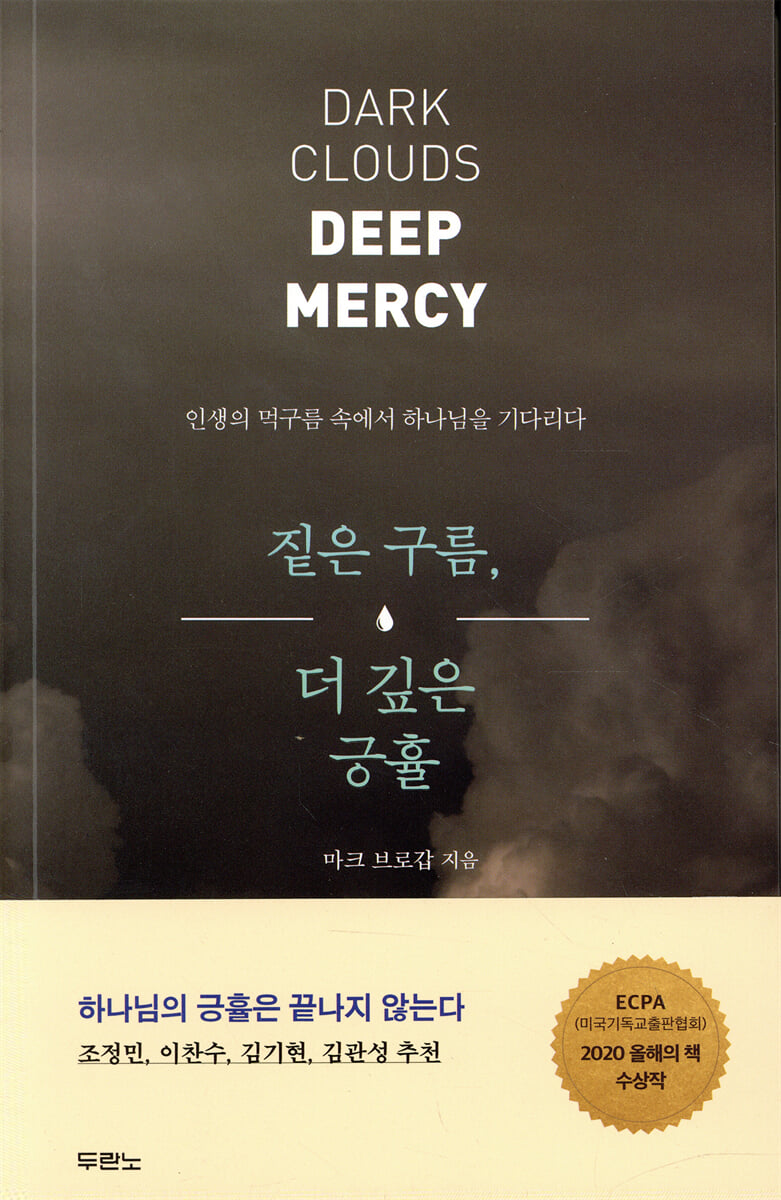
Dark clouds, deeper compassion
 |
Description
Book Introduction
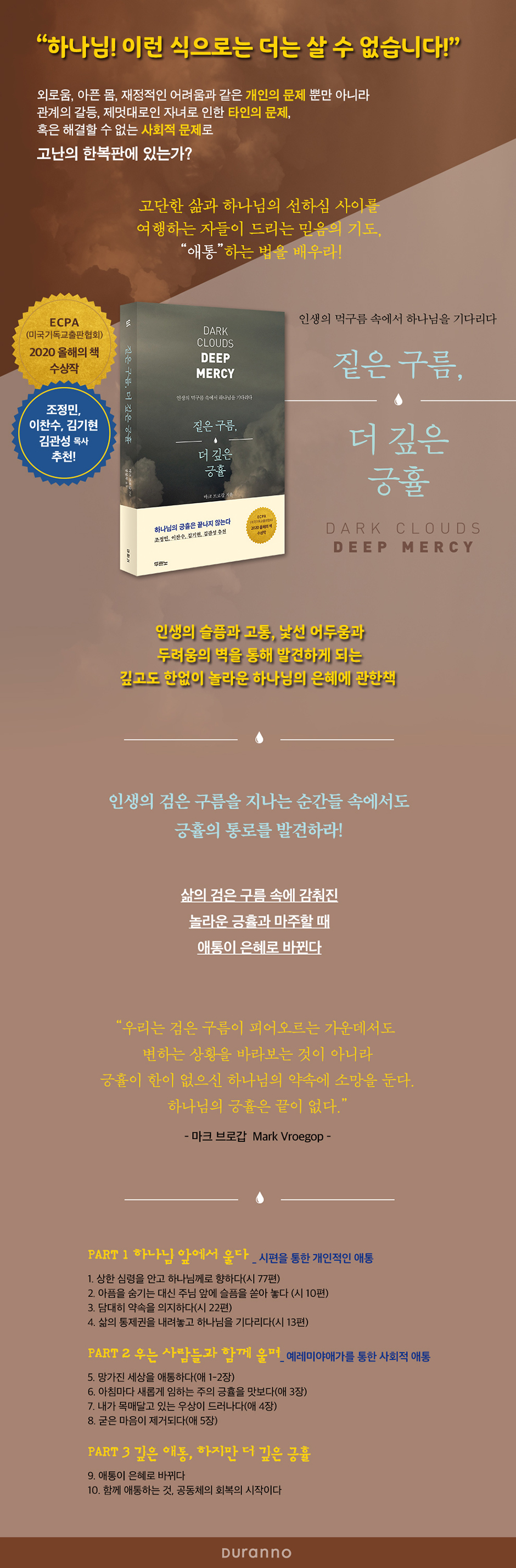
Selected as ECPA's 2020 'Best Book of the Year' Recommended by Pastors Jo Jeong-min, Lee Chan-su, Kim Ki-hyeon, and Kim Gwan-seong Life is full of all kinds of suffering. Pain comes in many forms. All sorrows, big or small, bring sorrow. Unfulfilled desires, loneliness, sick bodies, and unfair bosses make us sad. Job loss, financial difficulties, broken engagements, and ongoing marital conflicts can also cause grief. Our hearts groan under the weight of infertility, cancer, failed adoptions, infidelity, and wayward children. We must choose to cry out to God for help in the midst of the pain of life. Lament is a journey of faith that walks between harsh reality and God's sovereignty. Through the walls of life's sorrow and pain, the unfamiliar darkness and fear A book about the profound and infinitely surprising grace of God that we discover. Every life has its moments when it feels like there are dark clouds hanging over it. Whether it's your own problems, problems caused by others, or social issues, it's common to encounter dark clouds on the road of life. Just imagining the moments passing through the dark clouds is enough to take your breath away. But Christians must be able to find a path of mercy amidst the dark clouds of life. The author of this book says that the passage is 'sorrow'. When you discover that passage, your eyes and mind can brighten, as if you found an emergency exit in a maze. The author discovered grief through the grief of losing a child during his wife's pregnancy and childbirth. Even in the midst of shock and sadness that seemed impossible to overcome, God led him to a place of grace through His Word. Even amidst the rising dark clouds, Rather than looking at the changing situation We place our hope in the promises of God, whose mercy is boundless. God's mercy is endless. Through the Psalms of Lament and the Lamentations of Jeremiah, we are shown our true faces as we face suffering and invited into an arena of honest spiritual wrestling. In this world, plunged into incomprehensible difficulties due to COVID-19, and in life's path that seems to have no exit, we learn how to overcome hardship through the sorrows of the Bible. |
- You can preview some of the book's contents.
Preview
index
Praise for this book
A Letter of Recommendation: Grace Found in the Midst of Suffering
Prologue When Hope Is Broken
PART 1 Weeping Before God
1.
Turning to God with a Broken Heart (Psalm 77)
2.
Instead of hiding your pain, pour out your sorrow before the Lord (Psalm 10)
3.
Boldly Relying on the Promise (Psalm 22)
4.
Letting Go of Control of Your Life and Waiting on God (Psalm 13)
PART 2 Weeping with those who weep
5.
Lamenting a Broken World (Lamentations 1-2)
6.
Taste the Lord's mercy, new every morning (Lamentations 3)
7.
The Idol I Hanged on Is Revealed (Lamentations 4)
8.
The Stubborn Heart is Removed (Lamentations 5)
PART 3 Deep sorrow, but even deeper compassion
9.
Sorrow turns into grace
10.
Mourning together is the beginning of community restoration.
Epilogue: God's Mercy Never Ends
A Letter of Gratitude: The People and Love I Met When Unspeakable Sorrow Came
Appendix 1.
Questions for Sharing
Appendix 2.
20 complaints
Appendix 3.
Psalms of Lament
Appendix 4.
Learning Grief Practice Sheet
Appendix 5.
The Turning Point in the Psalms: From Complaining to Thanksgiving
main
References
A Letter of Recommendation: Grace Found in the Midst of Suffering
Prologue When Hope Is Broken
PART 1 Weeping Before God
1.
Turning to God with a Broken Heart (Psalm 77)
2.
Instead of hiding your pain, pour out your sorrow before the Lord (Psalm 10)
3.
Boldly Relying on the Promise (Psalm 22)
4.
Letting Go of Control of Your Life and Waiting on God (Psalm 13)
PART 2 Weeping with those who weep
5.
Lamenting a Broken World (Lamentations 1-2)
6.
Taste the Lord's mercy, new every morning (Lamentations 3)
7.
The Idol I Hanged on Is Revealed (Lamentations 4)
8.
The Stubborn Heart is Removed (Lamentations 5)
PART 3 Deep sorrow, but even deeper compassion
9.
Sorrow turns into grace
10.
Mourning together is the beginning of community restoration.
Epilogue: God's Mercy Never Ends
A Letter of Gratitude: The People and Love I Met When Unspeakable Sorrow Came
Appendix 1.
Questions for Sharing
Appendix 2.
20 complaints
Appendix 3.
Psalms of Lament
Appendix 4.
Learning Grief Practice Sheet
Appendix 5.
The Turning Point in the Psalms: From Complaining to Thanksgiving
main
References
Detailed image
Into the book
To wait on God means to place our hope in Him.
It is a confession that we believe that God is the one who can save us.
We must place all our hope in God.
We must wait for God because we are not God.
Why is waiting so hard? Because it feels like time spent doing nothing.
But this is precisely the point of waiting.
Waiting is when we do nothing and instead expect God to do everything.
Waiting is one of the greatest proofs of faith.
Waiting is an expression of faith and hope in God and the assurance that He is in control of all things.
Of course, waiting is an uncomfortable time when you cannot control your own life.
But do you remember the "active patience" I mentioned in Chapter 4? God uses waiting to bring about the greatest growth.
However, waiting is never easy.
It can be frustrating not knowing what will happen.
You may have many different thoughts.
There may be many nights when you can't sleep because of all kinds of confusing thoughts.
Waiting is hard because you don't know what will happen.
If you just wait without doing anything, you may feel helpless.
We want to know the answer.
I want to know what's going on.
We want answers to the questions, "Why does this happen? Why doesn't life go as planned?"
Don't resist the waiting period, but use it as an opportunity to learn important lessons.
This is one of the reasons why verse 27 says that it is good for a man to bear the yoke in his youth.
It is a truly precious gift to realize the value of waiting early.
As you wait, read Lamentations and continually remind yourself that waiting is not a waste of time.
In your grief, let go of control of your life and confess:
“God, I don’t know what you’re doing or why, but I will trust you completely, remembering that you are God and I am not.”
Always remember that if God allows you to wait, good things can come to you during this time.
God wants to give us many lessons, and those lessons often come slowly.
The lessons come when we break completely, stop the sinful habit of trying to do things by our own strength, and follow God's leading.
Are you in the midst of hardship? Remember, waiting on God is not a waste of time.
--- From “Chapter 6: Taste the Lord’s Mercy That Comes Newly Every Morning”
My journey to learn to mourn began with a cry: “No, Lord! This is absolutely not possible!”
But thankfully, by God's grace, my story didn't end there.
The immense pain raised questions within me.
But eventually I learned to rest in God's character.
Discovering the grace of sorrow was part of this pilgrimage.
I hope you too will discover this grace.
Lament is the song we sing in the gap between our pain and God's promise.
This song is a path that passes between the two pillars of hard reality and faith in God's goodness.
Grief helps us accept that while suffering is hard, it doesn't necessarily mean that hardship is a bad thing.
The historically minor song of lament expresses suffering and leads us toward God-centered worship.
Lament is an act of turning to God, pouring out one's complaints, asking Him to keep His promises, and reaffirming one's faith in Him.
Grief is not just tears and wailing.
To weep is human, but to mourn is Christian.
Grief opens the way to hope.
Grief gives us a voice to express our pain.
When we practice mourning, we discover that there are lessons to be learned.
Grief allows us to see the truth behind our lives and the world.
This awareness of loss goes beyond personal suffering and pain to reveal the broken reality of life, the source of hope, and the object of false beliefs.
Furthermore, it makes us realize that it is the mission of Christians to guide others safely through the dark valley of sorrow.
Grief opens the way to truth.
It is a confession that we believe that God is the one who can save us.
We must place all our hope in God.
We must wait for God because we are not God.
Why is waiting so hard? Because it feels like time spent doing nothing.
But this is precisely the point of waiting.
Waiting is when we do nothing and instead expect God to do everything.
Waiting is one of the greatest proofs of faith.
Waiting is an expression of faith and hope in God and the assurance that He is in control of all things.
Of course, waiting is an uncomfortable time when you cannot control your own life.
But do you remember the "active patience" I mentioned in Chapter 4? God uses waiting to bring about the greatest growth.
However, waiting is never easy.
It can be frustrating not knowing what will happen.
You may have many different thoughts.
There may be many nights when you can't sleep because of all kinds of confusing thoughts.
Waiting is hard because you don't know what will happen.
If you just wait without doing anything, you may feel helpless.
We want to know the answer.
I want to know what's going on.
We want answers to the questions, "Why does this happen? Why doesn't life go as planned?"
Don't resist the waiting period, but use it as an opportunity to learn important lessons.
This is one of the reasons why verse 27 says that it is good for a man to bear the yoke in his youth.
It is a truly precious gift to realize the value of waiting early.
As you wait, read Lamentations and continually remind yourself that waiting is not a waste of time.
In your grief, let go of control of your life and confess:
“God, I don’t know what you’re doing or why, but I will trust you completely, remembering that you are God and I am not.”
Always remember that if God allows you to wait, good things can come to you during this time.
God wants to give us many lessons, and those lessons often come slowly.
The lessons come when we break completely, stop the sinful habit of trying to do things by our own strength, and follow God's leading.
Are you in the midst of hardship? Remember, waiting on God is not a waste of time.
--- From “Chapter 6: Taste the Lord’s Mercy That Comes Newly Every Morning”
My journey to learn to mourn began with a cry: “No, Lord! This is absolutely not possible!”
But thankfully, by God's grace, my story didn't end there.
The immense pain raised questions within me.
But eventually I learned to rest in God's character.
Discovering the grace of sorrow was part of this pilgrimage.
I hope you too will discover this grace.
Lament is the song we sing in the gap between our pain and God's promise.
This song is a path that passes between the two pillars of hard reality and faith in God's goodness.
Grief helps us accept that while suffering is hard, it doesn't necessarily mean that hardship is a bad thing.
The historically minor song of lament expresses suffering and leads us toward God-centered worship.
Lament is an act of turning to God, pouring out one's complaints, asking Him to keep His promises, and reaffirming one's faith in Him.
Grief is not just tears and wailing.
To weep is human, but to mourn is Christian.
Grief opens the way to hope.
Grief gives us a voice to express our pain.
When we practice mourning, we discover that there are lessons to be learned.
Grief allows us to see the truth behind our lives and the world.
This awareness of loss goes beyond personal suffering and pain to reveal the broken reality of life, the source of hope, and the object of false beliefs.
Furthermore, it makes us realize that it is the mission of Christians to guide others safely through the dark valley of sorrow.
Grief opens the way to truth.
--- From "Epilogue: God's Mercy Never Ends"
GOODS SPECIFICS
- Publication date: November 25, 2020
- Page count, weight, size: 324 pages | 372g | 130*200*30mm
- ISBN13: 9788953138995
- ISBN10: 895313899X
You may also like
카테고리
korean


korean

![GQ KOREA Mark (Monthly): December [2025]](http://librairie.coreenne.fr/cdn/shop/files/8ef265dbbfbf186523ed75ba7319009d.jpg?v=1765340328&width=3840)


