

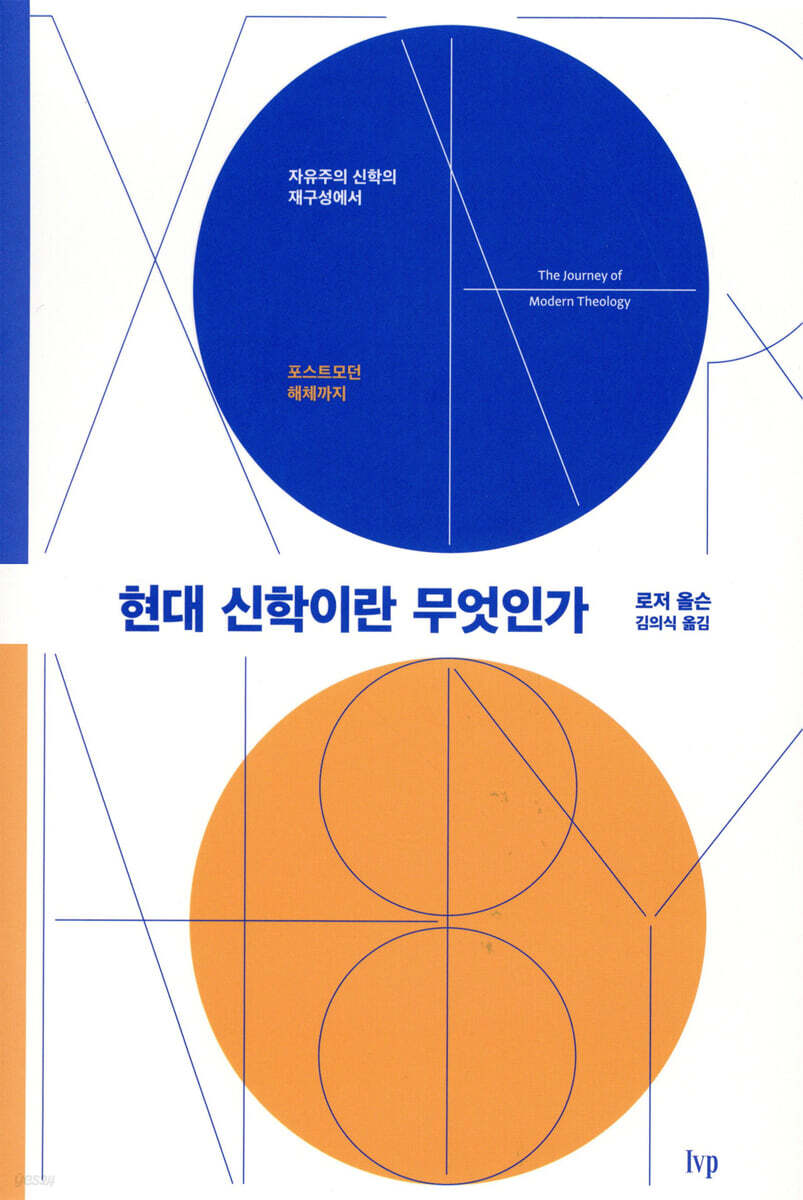
What is Modern Theology?
 |
Description
Book Introduction
The history, representative theologians, and significance of modern Christian theology
A standard textbook that will help you understand everything at a glance!
This is a new modern theology textbook written by Roger Olson, a leading evangelical theologian of our time.
The modern era has been an era of revolution in politics, science, industry, and philosophy, and theology has not been able to escape the revolutionary changes of the modern era.
This is because, in the midst of changing times, Christians have attempted to understand their faith in light of the cultural upheaval around them.
Roger Olson guides us on a grand journey through modern theology, exploring the origins of modern theological movements, exploring key ideas and texts, and considering their enduring relevance for the church.
In this way, he traces the conflict between theologies that reject or adapt to the context of the modern age, from the 'reconstruction' of liberal theology originating from Schleiermacher to the postmodern 'deconstruction' that continues today, and discovers grounds for finding a future-oriented path that goes beyond the limitations of the binary choice of either ignoring or blindly following modernity.
“This book examines how some of the most influential Western theologians have integrated the gospel with modernity—or not.
Some people opposed and rejected modernity, but even those who opposed and rejected modernity were influenced by it.
Contemporary theology is not just the theology of yesterday and today.
“Modern theology is theology formed within the context of the cultural spirit of modernity.” _From the introduction
A standard textbook that will help you understand everything at a glance!
This is a new modern theology textbook written by Roger Olson, a leading evangelical theologian of our time.
The modern era has been an era of revolution in politics, science, industry, and philosophy, and theology has not been able to escape the revolutionary changes of the modern era.
This is because, in the midst of changing times, Christians have attempted to understand their faith in light of the cultural upheaval around them.
Roger Olson guides us on a grand journey through modern theology, exploring the origins of modern theological movements, exploring key ideas and texts, and considering their enduring relevance for the church.
In this way, he traces the conflict between theologies that reject or adapt to the context of the modern age, from the 'reconstruction' of liberal theology originating from Schleiermacher to the postmodern 'deconstruction' that continues today, and discovers grounds for finding a future-oriented path that goes beyond the limitations of the binary choice of either ignoring or blindly following modernity.
“This book examines how some of the most influential Western theologians have integrated the gospel with modernity—or not.
Some people opposed and rejected modernity, but even those who opposed and rejected modernity were influenced by it.
Contemporary theology is not just the theology of yesterday and today.
“Modern theology is theology formed within the context of the cultural spirit of modernity.” _From the introduction
- You can preview some of the book's contents.
Preview
index
introduction
Note to readers, especially professors and researchers
Introduction: The Cultural Context of Contemporary Theology
1 Modernity Challenges Traditional Theology: The Context of Early Modern Theology
1.a.
Science Changes the Sky
1.b.
Philosophers lay new foundations for knowledge
1.c.
Deists Create a New Nature Religion
1.d.
Critical philosophers place religion within the limits of reason.
1.e.
Realists, Romantics, and Existentialists Respond
2 Liberal theologies reconstruct Christianity in light of modernity
2.a.
Friedrich Schleiermacher initiates the Copernican revolution in theology.
2.b.
Albrecht Ritschl and his disciples adapt to modernity
2.c.
Ernst Troeltsch relativizes Christianity
2.d.
Catholic Modernists Attempt to Adapt Roman Catholicism to the Times
3 Conservative Protestant Theology Defends Orthodoxy in a Modern Way
4 Mediation Theologies Bridge the Line between Orthodoxy and Liberalism
4.a.
Isaac August Dorner Bridges the Difference Between Liberalism and Orthodoxy
4.b.
Horace Bushnell's Search for Progressive Orthodoxy
5 Neo-Orthodox/Dialectical/Kerygmatic Theology Revives the Reformation in a Modern Context
5.a.
Karl Barth Drops a Bomb on the Theologians' Playground
5.b.
Rudolf Bultmann Existentializes and Demythologizes Christianity
5.c.
Reinhold Niebuhr rediscovers original sin and develops Christian realism.
6. Moderated liberal theologies resume and revise their dialogue with modernity.
6.a.
Paul Tillich describes God as the ground of being, “God beyond God.”
6.b.
Process Theology Brings God Down to Earth
7 Dietrich Bonhoeffer and Radical Theologians Envision a Christianity Without Religion
8 Theologians Look to the Future with Hope
8.a.
Jürgen Moltmann Renews Confidence in God's Final Victory
8.b.
Wolfhard Pannenberg revitalizes rational faith in the God of history.
9 Liberation Theologies Fight Injustice and Oppression
10 Catholic Theologians Engage with Modernity
10.a.
Karl Rahner Discovers God in Human Experience
10.b.
Hans Küng advocates a new paradigm for Catholic theology.
10.c.
Hans Urs von Balthasar grounds Christian truth in beauty.
11 Evangelical Theology Comes of Age and Grapples with Modernity
12 Postmodern Theologians Revolt Against Modernity
12.a.
Postliberal theologians and Stanley Hauerwas develop the Third Way.
12.b.
John Caputo Dismantles Religion as the Kingdom of God
conclusion
Search
Note to readers, especially professors and researchers
Introduction: The Cultural Context of Contemporary Theology
1 Modernity Challenges Traditional Theology: The Context of Early Modern Theology
1.a.
Science Changes the Sky
1.b.
Philosophers lay new foundations for knowledge
1.c.
Deists Create a New Nature Religion
1.d.
Critical philosophers place religion within the limits of reason.
1.e.
Realists, Romantics, and Existentialists Respond
2 Liberal theologies reconstruct Christianity in light of modernity
2.a.
Friedrich Schleiermacher initiates the Copernican revolution in theology.
2.b.
Albrecht Ritschl and his disciples adapt to modernity
2.c.
Ernst Troeltsch relativizes Christianity
2.d.
Catholic Modernists Attempt to Adapt Roman Catholicism to the Times
3 Conservative Protestant Theology Defends Orthodoxy in a Modern Way
4 Mediation Theologies Bridge the Line between Orthodoxy and Liberalism
4.a.
Isaac August Dorner Bridges the Difference Between Liberalism and Orthodoxy
4.b.
Horace Bushnell's Search for Progressive Orthodoxy
5 Neo-Orthodox/Dialectical/Kerygmatic Theology Revives the Reformation in a Modern Context
5.a.
Karl Barth Drops a Bomb on the Theologians' Playground
5.b.
Rudolf Bultmann Existentializes and Demythologizes Christianity
5.c.
Reinhold Niebuhr rediscovers original sin and develops Christian realism.
6. Moderated liberal theologies resume and revise their dialogue with modernity.
6.a.
Paul Tillich describes God as the ground of being, “God beyond God.”
6.b.
Process Theology Brings God Down to Earth
7 Dietrich Bonhoeffer and Radical Theologians Envision a Christianity Without Religion
8 Theologians Look to the Future with Hope
8.a.
Jürgen Moltmann Renews Confidence in God's Final Victory
8.b.
Wolfhard Pannenberg revitalizes rational faith in the God of history.
9 Liberation Theologies Fight Injustice and Oppression
10 Catholic Theologians Engage with Modernity
10.a.
Karl Rahner Discovers God in Human Experience
10.b.
Hans Küng advocates a new paradigm for Catholic theology.
10.c.
Hans Urs von Balthasar grounds Christian truth in beauty.
11 Evangelical Theology Comes of Age and Grapples with Modernity
12 Postmodern Theologians Revolt Against Modernity
12.a.
Postliberal theologians and Stanley Hauerwas develop the Third Way.
12.b.
John Caputo Dismantles Religion as the Kingdom of God
conclusion
Search
Detailed image
Into the book
Everyone talks about contextualizing the gospel, but usually it means integrating the gospel into non-Western cultures.
This book examines how the most influential Western theologians (including Latin American ones) have, or have not, integrated the Gospel into modernity.
That is, some people opposed and rejected modernity.
But even those who opposed and rejected modernity were influenced by it.… Modern theology is not simply the theology of yesterday and today.
Contemporary theology is theology formed within the context of the cultural spirit of modernity.
The theologians described, analyzed, and evaluated in this book all have one thing in common, beyond being at least nominally Christian: they all wrestled with modernity, a cultural context born of the Enlightenment and the Scientific Revolution.
--- From the "Preface"
One day in 1802, French Emperor Napoleon Bonaparte asked astronomer Pierre-Simon Laplace (1749-1827) to explain his cosmology.
At the time, Laplace caused controversy by writing a book about the universe based on the laws of nature discovered by Isaac Newton.
The emperor asked Laplace about the place of God in his explanation of the universe, its origin and its operation.
According to reports at the time, the astronomer replied:
“Your Majesty, I have no need for such hypotheses.”
--- From "Chapter 1: Modernity Challenges Traditional Theology"
Liberal theology can best be defined as “the greatest possible recognition of the claims of modern thought” within Christian theology.
Liberal theology began as a movement and type of theology within Protestantism in Europe, but later expanded into some areas of Catholic theology, where it was traditionally called modernism.
In other words, liberal theology is not a simple revision of traditional doctrines, but a revision and restructuring of Christian doctrines in light of modernity.
To this end, it uses “the best of modern thought” as a source and norm for doctrinal criticism and construction.
This is what was new.
--- Chapter 2: Liberal Theologies Reconstruct Christianity in the Light of Modernity
So why should Haji be included in this book on modern theology? Many people make the mistake of equating "modern" with "liberal."
In fact, early fundamentalists contributed to this phenomenon by labeling their opponents, liberal theologians, as modernists.
But “modern” is not necessarily limited to “liberalism.”
As we will see later, Haji clearly used modern methods in his commentary and defense of conservative Protestant theology.
Moreover, as Kierkegaard's example shows, it may also meet the requirements of a modern theologian because it opposes modernity.
Princeton theologians may not have considered themselves modern, but they certainly stand in a modern space, with a modern, if not modernist, attitude.
This is not to say that he embraced all of modernity… It is safe to say that he was not a modernist, but in many ways he was modern.
He was a fundamentalist, but his fundamentalism was fundamentalism before it degenerated into what one leading evangelical scholar called “orthodoxy turned into a fanatic group.”
--- From "Chapter 3: Conservative Protestant Theology Defends Orthodoxy in a Modern Way"
There was absolutely no similarity between Dorner and Bushnell.
But for that very reason, they may represent different types of mediation theology.
What they had in common was the influence of Schleiermacher (with whom they did not all entirely agree), an attempt to bridge the perceived gap between the subjective and objective poles of Christian faith and thought, a desire to combine aspects of liberal Protestantism and Protestant orthodoxy, and a goal of reconciling modern culture and church life as much as possible.
Furthermore, while both took modernity into account in their reconstruction of Christian doctrines, they did not use it as a source or standard for the content of their theology.
--- From “Chapter 4 Mediation Theologies Bridge the Line between Orthodoxy and Liberalism”
But kerygmatic theologians were not interested in wasting time and energy fighting modernity.
In their view, it was a fundamentalist mistake.
Fundamentalism has become a slave to modernity by defining a fundamentalist form of Christianity in contrast to modernity.
Liberalism and fundamentalism are dissimilar twins, both obsessed with modernity.
It is a belligerent response to modernity, either by adapting Christianity to modernity in order to make it credible to modern people, or by making Christianity distinct in a separatist way.
--- From “Chapter 5: Neo-Orthodox/Dialectical/Kerygmatic Theology Revives the Reformation in a Modern Context”
Most scholars writing on liberal theology, while acknowledging the differences, tend to lump Tillich and process theology into the liberal category along with Schleiermacher, Ritschl, Harnack, Rauschenbusch, and Troeltsch.
On the other hand, some place these two in completely different categories based on their different views on evil.
In such a case, the number of theologians classified as liberal would be very small.
While I acknowledge important differences between old-liberal and neoliberal theologies, I also see significant continuities between them.
However, it must be acknowledged that Tillich distanced himself from liberal theology on the basis of his own tragic sense of existence and history, which he shared with Niebuhr.
However, all neo-orthodox theologians distanced themselves from Tillich because of his lack of emphasis on kerygma.
While process theologians are often willing to accept the label “liberal,” they carefully distance themselves from older liberal theologies that tended to reduce Christianity to social morality.
They have no qualms about taking an interest in metaphysics, something that both old liberals and neo-orthodoxies despised.
--- From "Chapter 6: Relaxed Liberal Theologies Reopen and Revise Dialogue with Modernity"
Placing Bonhoeffer in the same category as the radical and secular theologians of the 1960s does not mean treating him on the same level as them.
Unlike Altizer and Hamilton, he was not a Christian atheist, nor was he an advocate of secular Christianity in the way Cox was.
But his reflections in letters from prison seemed to indicate that he had gone much further in certain directions than he had actually done or intended to do.
But it is unknown how far he was willing to go with them.
--- From “Chapter 7: Dietrich Bonhoeffer and Radical Theologians Envision a Christianity Without Religion”
Although Moltmann and Pannenberg had been colleagues for a short time in Wuppertal before going their separate ways, each continued to explore eschatology in his own way through his theological journey, and thus saw it as a way to renew Christian theology in a late modern world of increasing secularization and catastrophe.
God seemed distant, even absent.
Theologians of hope and eschatology did not want to return to the god of the gaps that Bonhoeffer and radical and secular theologians so persuasively rejected.
Nor could they see God as a providential ruler of history, as depicted in traditional Christian theology.
Both wanted to restore the meaning of God's transcendence, but felt that modern theological attempts to do so had reached a dead end.
As Tillich and later John Robinson emphasized, the concept of God that had existed until then no longer had much meaning.
So, Moltmann and Pannenberg, each in their own way, relied on “God before us,” “God of promise,” and “God as the Lord to come” to describe God’s transcendence.
God's relationship to the world is like the future's relationship to the present.
Perhaps the most striking aspect of their common perspective is their eschatological ontology.
That is, the idea that the future determines the present, an idea they borrowed from Bloch and also believed to be biblical.
The advantage of this idea is that God is neither the author of all sin, evil, and innocent suffering in history, nor is he so powerless as to be unable to do anything about them, as process theology would have it.
The reason God appears to be absent from this world is because of the “not yet” of the Kingdom of God, which is to invade from the future and is already invading.
--- From “Chapter 8: Theologians Look to the Future with Hope”
The reason liberation theology is difficult for some people to understand is because they approach it with expectations based on traditional theological methods.
Liberation theology is different.
Many types of liberation theology do not follow the familiar paths of orthodox or liberal theology.
Liberation theology offers a new approach to theology.
But liberation theologians were all influenced by previous theologians.
Cone borrowed heavily from Barthes.
Gutiérrez was influenced by European political theologies, particularly Johann Baptist Metz (1928-2019).
Luther was influenced by Tillich and process theology.
But liberation theology begins with alternative purposes and intentions, and moves forward using non-traditional sources and criteria.
All three forms of liberation theology share much in common, particularly as new paradigms for doing theology.
--- From “Chapter 9 Liberation Theologies Resist Injustice and Oppression”
Gradually, over the course of the 20th century, a new type of Catholic theology developed that did not fit into either the “modernist” or (traditional) “integralist” categories.
It has been called 'nouvelle theologie' ("new theology") because it originated in France and its main formalizer was the French Catholic theologian Henri de Lubac (1896-1991).… 'Nouvelle theologie' is a broad category that encompasses many progressive Catholic theologians.
This theology gave rise to a renewed interest in the theology of Thomas Aquinas, the medieval “Angelic Doctor,” which for centuries was considered the official theology of the Roman Catholic Church.
This theology also sought to discover ways in which the best modern scholarship could interact with Catholic biblical studies and theology.
But 'Nouvelle Theology' was not modernist in the same sense as the theology of Loisy and Tyrrell, which even its defenders saw as overly adapted to modernity.
--- From "Chapter 10: Catholic Theologians Engage with Modernity"
What is most significant about this story of modern theology is that all theologians associated with this new evangelical movement, now well over half a century old, reject modernity not entirely, as fundamentalists tend to do, but rather its more extreme claims.
Specifically, evangelicals reject naturalism, positivism (an extreme form of rationalism that excludes revelation and faith), historicism, skepticism, and secularism.
But most leaders in this movement value higher education, critical biblical study (minus naturalistic presuppositions), liberal arts and science courses, dialogue and collaboration with non-evangelicals (something fundamentalists do not do), and science (excluding naturalism).
Evangelicals oppose liberal theology, including neoliberalism, and are wary of neo-orthodoxy and dialectical theology.
While evangelicals appear to be little different from fundamentalists to liberal and neo-orthodox Protestants, fundamentalists appear to be little different from liberals.
Evangelicals themselves pride themselves on a middle ground between the extremes of absolute rejection of modernity and maximum adaptation.
--- From "Chapter 11: Evangelical Theology Comes of Age and Grapples with Modernity"
Two broad groups of Christian theologians have thoroughly engaged in the task of critical dialogue with postmodern philosophy, shaping their theological methods and projects around it.
They are postliberals and deconstructionists.
(Deconstructionism exists in other disciplines, but the term will be used here to describe one specific approach to postmodern theology.) Postliberalism is inherently as critiqued as postmodernism itself.
It is never a clear and distinct idea, nor is it a movement.
It is a certain spirit or general approach to doing theology.
It is a conversation among somewhat like-minded Christian theologians who seek to use narrative, tradition, and community to move beyond the liberalism of their teachers and the spectrum of modern theology—left-center-right—and to focus on Christian practices that seek to break free from the shackles of modernism and dream anew of Christianity.
Deconstructionism is a style of Christian theology that focuses on a commitment to the “Other” and a critical exposure of violent tendencies within all systems of thought, in order to move theology away from ideological idolatry and toward openness to the new, the different, and the unexpected.
The similarity between postliberalism and deconstructionism lies in their rejection of modernism as a necessary context for theological creativity.
Their difference lies in their attitude and approach to the Christian community and the church.
While postliberals place a high value on the church, deconstructionists are characterized by a suspicion of all community life, especially institutions.
--- From "Chapter 12: Postmodern Theologians Revolt Against Modernity"
A study of modern theology can lead someone caught in what the poet Wallace Stevens called a “holy wrath against order” to Eastern Orthodoxy, a type of Christianity largely untouched by the Enlightenment and modernity.
But most of us in the West and many in the so-called young churches of the Global South cannot escape modernity.
Even postmodern people still swim in the waters of modern culture, which they criticize as polluted and dirty.
For the past two or three hundred years, Christians have found themselves in the same situation as Christians in the Roman Empire during the first two or three centuries of the church.
“What has Athens to do with Jerusalem?” was their question.
Our question is, “What have Wittenberg or Rome to do with Königsberg [Kant]?”… The problem is that people are still following the paths of these and other modern theological pioneers, sometimes without even knowing their names.
Christians today would do well to know about those who have gone before them.
Otherwise, you'll end up stuck in the same rut and wasting time going around in circles.
As you learn about them, you will understand the predicament you find yourself in and discover surprising signs pointing you forward so you can get out of it.
This book examines how the most influential Western theologians (including Latin American ones) have, or have not, integrated the Gospel into modernity.
That is, some people opposed and rejected modernity.
But even those who opposed and rejected modernity were influenced by it.… Modern theology is not simply the theology of yesterday and today.
Contemporary theology is theology formed within the context of the cultural spirit of modernity.
The theologians described, analyzed, and evaluated in this book all have one thing in common, beyond being at least nominally Christian: they all wrestled with modernity, a cultural context born of the Enlightenment and the Scientific Revolution.
--- From the "Preface"
One day in 1802, French Emperor Napoleon Bonaparte asked astronomer Pierre-Simon Laplace (1749-1827) to explain his cosmology.
At the time, Laplace caused controversy by writing a book about the universe based on the laws of nature discovered by Isaac Newton.
The emperor asked Laplace about the place of God in his explanation of the universe, its origin and its operation.
According to reports at the time, the astronomer replied:
“Your Majesty, I have no need for such hypotheses.”
--- From "Chapter 1: Modernity Challenges Traditional Theology"
Liberal theology can best be defined as “the greatest possible recognition of the claims of modern thought” within Christian theology.
Liberal theology began as a movement and type of theology within Protestantism in Europe, but later expanded into some areas of Catholic theology, where it was traditionally called modernism.
In other words, liberal theology is not a simple revision of traditional doctrines, but a revision and restructuring of Christian doctrines in light of modernity.
To this end, it uses “the best of modern thought” as a source and norm for doctrinal criticism and construction.
This is what was new.
--- Chapter 2: Liberal Theologies Reconstruct Christianity in the Light of Modernity
So why should Haji be included in this book on modern theology? Many people make the mistake of equating "modern" with "liberal."
In fact, early fundamentalists contributed to this phenomenon by labeling their opponents, liberal theologians, as modernists.
But “modern” is not necessarily limited to “liberalism.”
As we will see later, Haji clearly used modern methods in his commentary and defense of conservative Protestant theology.
Moreover, as Kierkegaard's example shows, it may also meet the requirements of a modern theologian because it opposes modernity.
Princeton theologians may not have considered themselves modern, but they certainly stand in a modern space, with a modern, if not modernist, attitude.
This is not to say that he embraced all of modernity… It is safe to say that he was not a modernist, but in many ways he was modern.
He was a fundamentalist, but his fundamentalism was fundamentalism before it degenerated into what one leading evangelical scholar called “orthodoxy turned into a fanatic group.”
--- From "Chapter 3: Conservative Protestant Theology Defends Orthodoxy in a Modern Way"
There was absolutely no similarity between Dorner and Bushnell.
But for that very reason, they may represent different types of mediation theology.
What they had in common was the influence of Schleiermacher (with whom they did not all entirely agree), an attempt to bridge the perceived gap between the subjective and objective poles of Christian faith and thought, a desire to combine aspects of liberal Protestantism and Protestant orthodoxy, and a goal of reconciling modern culture and church life as much as possible.
Furthermore, while both took modernity into account in their reconstruction of Christian doctrines, they did not use it as a source or standard for the content of their theology.
--- From “Chapter 4 Mediation Theologies Bridge the Line between Orthodoxy and Liberalism”
But kerygmatic theologians were not interested in wasting time and energy fighting modernity.
In their view, it was a fundamentalist mistake.
Fundamentalism has become a slave to modernity by defining a fundamentalist form of Christianity in contrast to modernity.
Liberalism and fundamentalism are dissimilar twins, both obsessed with modernity.
It is a belligerent response to modernity, either by adapting Christianity to modernity in order to make it credible to modern people, or by making Christianity distinct in a separatist way.
--- From “Chapter 5: Neo-Orthodox/Dialectical/Kerygmatic Theology Revives the Reformation in a Modern Context”
Most scholars writing on liberal theology, while acknowledging the differences, tend to lump Tillich and process theology into the liberal category along with Schleiermacher, Ritschl, Harnack, Rauschenbusch, and Troeltsch.
On the other hand, some place these two in completely different categories based on their different views on evil.
In such a case, the number of theologians classified as liberal would be very small.
While I acknowledge important differences between old-liberal and neoliberal theologies, I also see significant continuities between them.
However, it must be acknowledged that Tillich distanced himself from liberal theology on the basis of his own tragic sense of existence and history, which he shared with Niebuhr.
However, all neo-orthodox theologians distanced themselves from Tillich because of his lack of emphasis on kerygma.
While process theologians are often willing to accept the label “liberal,” they carefully distance themselves from older liberal theologies that tended to reduce Christianity to social morality.
They have no qualms about taking an interest in metaphysics, something that both old liberals and neo-orthodoxies despised.
--- From "Chapter 6: Relaxed Liberal Theologies Reopen and Revise Dialogue with Modernity"
Placing Bonhoeffer in the same category as the radical and secular theologians of the 1960s does not mean treating him on the same level as them.
Unlike Altizer and Hamilton, he was not a Christian atheist, nor was he an advocate of secular Christianity in the way Cox was.
But his reflections in letters from prison seemed to indicate that he had gone much further in certain directions than he had actually done or intended to do.
But it is unknown how far he was willing to go with them.
--- From “Chapter 7: Dietrich Bonhoeffer and Radical Theologians Envision a Christianity Without Religion”
Although Moltmann and Pannenberg had been colleagues for a short time in Wuppertal before going their separate ways, each continued to explore eschatology in his own way through his theological journey, and thus saw it as a way to renew Christian theology in a late modern world of increasing secularization and catastrophe.
God seemed distant, even absent.
Theologians of hope and eschatology did not want to return to the god of the gaps that Bonhoeffer and radical and secular theologians so persuasively rejected.
Nor could they see God as a providential ruler of history, as depicted in traditional Christian theology.
Both wanted to restore the meaning of God's transcendence, but felt that modern theological attempts to do so had reached a dead end.
As Tillich and later John Robinson emphasized, the concept of God that had existed until then no longer had much meaning.
So, Moltmann and Pannenberg, each in their own way, relied on “God before us,” “God of promise,” and “God as the Lord to come” to describe God’s transcendence.
God's relationship to the world is like the future's relationship to the present.
Perhaps the most striking aspect of their common perspective is their eschatological ontology.
That is, the idea that the future determines the present, an idea they borrowed from Bloch and also believed to be biblical.
The advantage of this idea is that God is neither the author of all sin, evil, and innocent suffering in history, nor is he so powerless as to be unable to do anything about them, as process theology would have it.
The reason God appears to be absent from this world is because of the “not yet” of the Kingdom of God, which is to invade from the future and is already invading.
--- From “Chapter 8: Theologians Look to the Future with Hope”
The reason liberation theology is difficult for some people to understand is because they approach it with expectations based on traditional theological methods.
Liberation theology is different.
Many types of liberation theology do not follow the familiar paths of orthodox or liberal theology.
Liberation theology offers a new approach to theology.
But liberation theologians were all influenced by previous theologians.
Cone borrowed heavily from Barthes.
Gutiérrez was influenced by European political theologies, particularly Johann Baptist Metz (1928-2019).
Luther was influenced by Tillich and process theology.
But liberation theology begins with alternative purposes and intentions, and moves forward using non-traditional sources and criteria.
All three forms of liberation theology share much in common, particularly as new paradigms for doing theology.
--- From “Chapter 9 Liberation Theologies Resist Injustice and Oppression”
Gradually, over the course of the 20th century, a new type of Catholic theology developed that did not fit into either the “modernist” or (traditional) “integralist” categories.
It has been called 'nouvelle theologie' ("new theology") because it originated in France and its main formalizer was the French Catholic theologian Henri de Lubac (1896-1991).… 'Nouvelle theologie' is a broad category that encompasses many progressive Catholic theologians.
This theology gave rise to a renewed interest in the theology of Thomas Aquinas, the medieval “Angelic Doctor,” which for centuries was considered the official theology of the Roman Catholic Church.
This theology also sought to discover ways in which the best modern scholarship could interact with Catholic biblical studies and theology.
But 'Nouvelle Theology' was not modernist in the same sense as the theology of Loisy and Tyrrell, which even its defenders saw as overly adapted to modernity.
--- From "Chapter 10: Catholic Theologians Engage with Modernity"
What is most significant about this story of modern theology is that all theologians associated with this new evangelical movement, now well over half a century old, reject modernity not entirely, as fundamentalists tend to do, but rather its more extreme claims.
Specifically, evangelicals reject naturalism, positivism (an extreme form of rationalism that excludes revelation and faith), historicism, skepticism, and secularism.
But most leaders in this movement value higher education, critical biblical study (minus naturalistic presuppositions), liberal arts and science courses, dialogue and collaboration with non-evangelicals (something fundamentalists do not do), and science (excluding naturalism).
Evangelicals oppose liberal theology, including neoliberalism, and are wary of neo-orthodoxy and dialectical theology.
While evangelicals appear to be little different from fundamentalists to liberal and neo-orthodox Protestants, fundamentalists appear to be little different from liberals.
Evangelicals themselves pride themselves on a middle ground between the extremes of absolute rejection of modernity and maximum adaptation.
--- From "Chapter 11: Evangelical Theology Comes of Age and Grapples with Modernity"
Two broad groups of Christian theologians have thoroughly engaged in the task of critical dialogue with postmodern philosophy, shaping their theological methods and projects around it.
They are postliberals and deconstructionists.
(Deconstructionism exists in other disciplines, but the term will be used here to describe one specific approach to postmodern theology.) Postliberalism is inherently as critiqued as postmodernism itself.
It is never a clear and distinct idea, nor is it a movement.
It is a certain spirit or general approach to doing theology.
It is a conversation among somewhat like-minded Christian theologians who seek to use narrative, tradition, and community to move beyond the liberalism of their teachers and the spectrum of modern theology—left-center-right—and to focus on Christian practices that seek to break free from the shackles of modernism and dream anew of Christianity.
Deconstructionism is a style of Christian theology that focuses on a commitment to the “Other” and a critical exposure of violent tendencies within all systems of thought, in order to move theology away from ideological idolatry and toward openness to the new, the different, and the unexpected.
The similarity between postliberalism and deconstructionism lies in their rejection of modernism as a necessary context for theological creativity.
Their difference lies in their attitude and approach to the Christian community and the church.
While postliberals place a high value on the church, deconstructionists are characterized by a suspicion of all community life, especially institutions.
--- From "Chapter 12: Postmodern Theologians Revolt Against Modernity"
A study of modern theology can lead someone caught in what the poet Wallace Stevens called a “holy wrath against order” to Eastern Orthodoxy, a type of Christianity largely untouched by the Enlightenment and modernity.
But most of us in the West and many in the so-called young churches of the Global South cannot escape modernity.
Even postmodern people still swim in the waters of modern culture, which they criticize as polluted and dirty.
For the past two or three hundred years, Christians have found themselves in the same situation as Christians in the Roman Empire during the first two or three centuries of the church.
“What has Athens to do with Jerusalem?” was their question.
Our question is, “What have Wittenberg or Rome to do with Königsberg [Kant]?”… The problem is that people are still following the paths of these and other modern theological pioneers, sometimes without even knowing their names.
Christians today would do well to know about those who have gone before them.
Otherwise, you'll end up stuck in the same rut and wasting time going around in circles.
As you learn about them, you will understand the predicament you find yourself in and discover surprising signs pointing you forward so you can get out of it.
--- From "Conclusion"
Publisher's Review
The colorful forms and ideas expressed by Christian theology in the context of modernity and post-modernity
A modern theological travel guide that guides you to a deeper, richer understanding!
What is the relationship between Christian theology and modernity? What kind of dialogue has the Zeitgeist and theology had?
The modern era brought about by the Scientific Revolution and the Enlightenment changed the very framework through which humans perceive the world.
The changes that began in science have had a profound impact on all fields, and Christian faith and theology are no exception.
This book begins with a discussion of the “cultural context of modern theology,” then provides an accessible explanation of the scientific revolution (Copernicus’ heliocentric theory and Galileo’s proof) and the shift in philosophical perception (after Descartes), describing the impact of such epochal changes on the church and theology.
The book's balanced perspective is evident in the diversity of its technical subjects.
The author pays attention to the wide spectrum of philosophers' views and comprehensively covers various theologies.
It also introduces various Catholic theologies, including liberal theology and new liberal theology, conservative Protestant theology and mediation theology, radical theologians and liberation theologians, evangelical theology, and postmodern theologians, as well as Catholic modernists who developed Catholic theology from the perspective of modernity and “nouvelle theologie” (“new theology”) that attempted to deal with modernity from a Catholic standpoint.
The ultimate introductory theological textbook, focusing on the rich diversity of Western contemporary Christian theology!
This book does not simply list various theological trends and theologians.
Expressions such as “liberal theologies,” “mediation theologies,” “liberation theologies,” “Catholic theologians,” and “postmodern theologians” found in the titles of each chapter guide readers to understand the theologies and theologians described in each chapter not as limited to specific people or ideas, but as a stream attempting to move in the same direction but from various aspects.
Furthermore, while not losing sight of the Global South, also known as the Third World, the discussion itself focuses thoroughly on Europe, North America, and South America.
By focusing on Western Christian theology, where modernity and its influence are directly evident, without being overly ambitious, the author allows us to grasp the flow of ideas that are independent yet simultaneously connected.
And these discussions, as the author of this book hopes, can serve as both a teacher and a counter-teacher for non-Western theology today, opening up new perspectives.
A textbook that offers unique contributions and insights into contemporary theological studies!
Roger Olson's Twentieth Century Theology (IVP) with Stanley Grenz was an effort by two young scholars to consistently describe modern theology in terms of transcendence and immanence.
Compared to that book, the advantage of this new book, written by Roger Olson with the perspective of a mature scholar, is not only that it is overwhelmingly richer in length.
Rather, this book's contribution stands out not only in Twentieth Century Theology but also in comparison with other contemporary theology textbooks today because of the new or more detailed content it covers.
“Introduction: The Cultural Context of Modern Theology” provides a background that helps us understand individual theologies and theologians within the larger context, and Chapter 2 deals with liberal theologies and Catholic modernists together.
Chapter 3 clearly shows that conservative Protestant theology criticized modernity while also conducting theology in a modern way, and Chapter 4 describes the mediation theologies of Dorner and Bushnell (originally the mediation theology (Vermittlungstheologie) attempted by German theologians and later the mediation tendency theology that existed in the United States).
Chapter 10, in particular, addresses the engagement of non-liberal Catholic theologians with modernity, adding a recent focus on Hans Urs von Balthasar.
Chapter 11, which deals with evangelical theology, features a third case study, Stanley Grenz, a former co-author.
Chapter 12 presents various attempts at postmodern theology by dealing with postliberal theologians, Stanley Hauerwas, and John Caputo.
Throughout the book, personal conversations and anecdotes between the subjects of the study and the author, Roger Olson, are presented as background information. These parts go beyond the mere content of the book and breathe life and a three-dimensional sense into modern theology.
So what should theology of our time be like? Where is the future of theology headed?
Roger Olson not only richly portrays the historical diversity of modern theology, but also presents even the most recent theology within the context of modern theology, helping us understand that “modern theology” is not only a theology of the past but also a theology that continues into the future.
Readers of this book will realize that the theologies presented here are not mere displays of others' accomplishments. Building on the past experiences this book so kindly describes, they will be able to engage in new and creative theological reflections that delve into the essentials while also envisioning the church of our time as a model of religious maturity.
Main Readers
- Seminary students and pastors looking for up-to-date textbooks on modern theology
- Readers curious about Christian theological responses to the spirit of the times, science, and philosophy.
- Readers who wish to examine Christian theologies that have influenced modernity and post-modernity in a historical context.
- Readers seeking a broad theological path that seriously addresses both the essence of Christian faith and the questions facing people living today.
A modern theological travel guide that guides you to a deeper, richer understanding!
What is the relationship between Christian theology and modernity? What kind of dialogue has the Zeitgeist and theology had?
The modern era brought about by the Scientific Revolution and the Enlightenment changed the very framework through which humans perceive the world.
The changes that began in science have had a profound impact on all fields, and Christian faith and theology are no exception.
This book begins with a discussion of the “cultural context of modern theology,” then provides an accessible explanation of the scientific revolution (Copernicus’ heliocentric theory and Galileo’s proof) and the shift in philosophical perception (after Descartes), describing the impact of such epochal changes on the church and theology.
The book's balanced perspective is evident in the diversity of its technical subjects.
The author pays attention to the wide spectrum of philosophers' views and comprehensively covers various theologies.
It also introduces various Catholic theologies, including liberal theology and new liberal theology, conservative Protestant theology and mediation theology, radical theologians and liberation theologians, evangelical theology, and postmodern theologians, as well as Catholic modernists who developed Catholic theology from the perspective of modernity and “nouvelle theologie” (“new theology”) that attempted to deal with modernity from a Catholic standpoint.
The ultimate introductory theological textbook, focusing on the rich diversity of Western contemporary Christian theology!
This book does not simply list various theological trends and theologians.
Expressions such as “liberal theologies,” “mediation theologies,” “liberation theologies,” “Catholic theologians,” and “postmodern theologians” found in the titles of each chapter guide readers to understand the theologies and theologians described in each chapter not as limited to specific people or ideas, but as a stream attempting to move in the same direction but from various aspects.
Furthermore, while not losing sight of the Global South, also known as the Third World, the discussion itself focuses thoroughly on Europe, North America, and South America.
By focusing on Western Christian theology, where modernity and its influence are directly evident, without being overly ambitious, the author allows us to grasp the flow of ideas that are independent yet simultaneously connected.
And these discussions, as the author of this book hopes, can serve as both a teacher and a counter-teacher for non-Western theology today, opening up new perspectives.
A textbook that offers unique contributions and insights into contemporary theological studies!
Roger Olson's Twentieth Century Theology (IVP) with Stanley Grenz was an effort by two young scholars to consistently describe modern theology in terms of transcendence and immanence.
Compared to that book, the advantage of this new book, written by Roger Olson with the perspective of a mature scholar, is not only that it is overwhelmingly richer in length.
Rather, this book's contribution stands out not only in Twentieth Century Theology but also in comparison with other contemporary theology textbooks today because of the new or more detailed content it covers.
“Introduction: The Cultural Context of Modern Theology” provides a background that helps us understand individual theologies and theologians within the larger context, and Chapter 2 deals with liberal theologies and Catholic modernists together.
Chapter 3 clearly shows that conservative Protestant theology criticized modernity while also conducting theology in a modern way, and Chapter 4 describes the mediation theologies of Dorner and Bushnell (originally the mediation theology (Vermittlungstheologie) attempted by German theologians and later the mediation tendency theology that existed in the United States).
Chapter 10, in particular, addresses the engagement of non-liberal Catholic theologians with modernity, adding a recent focus on Hans Urs von Balthasar.
Chapter 11, which deals with evangelical theology, features a third case study, Stanley Grenz, a former co-author.
Chapter 12 presents various attempts at postmodern theology by dealing with postliberal theologians, Stanley Hauerwas, and John Caputo.
Throughout the book, personal conversations and anecdotes between the subjects of the study and the author, Roger Olson, are presented as background information. These parts go beyond the mere content of the book and breathe life and a three-dimensional sense into modern theology.
So what should theology of our time be like? Where is the future of theology headed?
Roger Olson not only richly portrays the historical diversity of modern theology, but also presents even the most recent theology within the context of modern theology, helping us understand that “modern theology” is not only a theology of the past but also a theology that continues into the future.
Readers of this book will realize that the theologies presented here are not mere displays of others' accomplishments. Building on the past experiences this book so kindly describes, they will be able to engage in new and creative theological reflections that delve into the essentials while also envisioning the church of our time as a model of religious maturity.
Main Readers
- Seminary students and pastors looking for up-to-date textbooks on modern theology
- Readers curious about Christian theological responses to the spirit of the times, science, and philosophy.
- Readers who wish to examine Christian theologies that have influenced modernity and post-modernity in a historical context.
- Readers seeking a broad theological path that seriously addresses both the essence of Christian faith and the questions facing people living today.
GOODS SPECIFICS
- Date of issue: January 21, 2021
- Format: Hardcover book binding method guide
- Page count, weight, size: 968 pages | 1,452g | 153*224*40mm
- ISBN13: 9788932818085
- ISBN10: 8932818088
You may also like
카테고리
korean


korean

![GQ KOREA Mark (Monthly): December [2025]](http://librairie.coreenne.fr/cdn/shop/files/8ef265dbbfbf186523ed75ba7319009d.jpg?v=1765340328&width=3840)


