

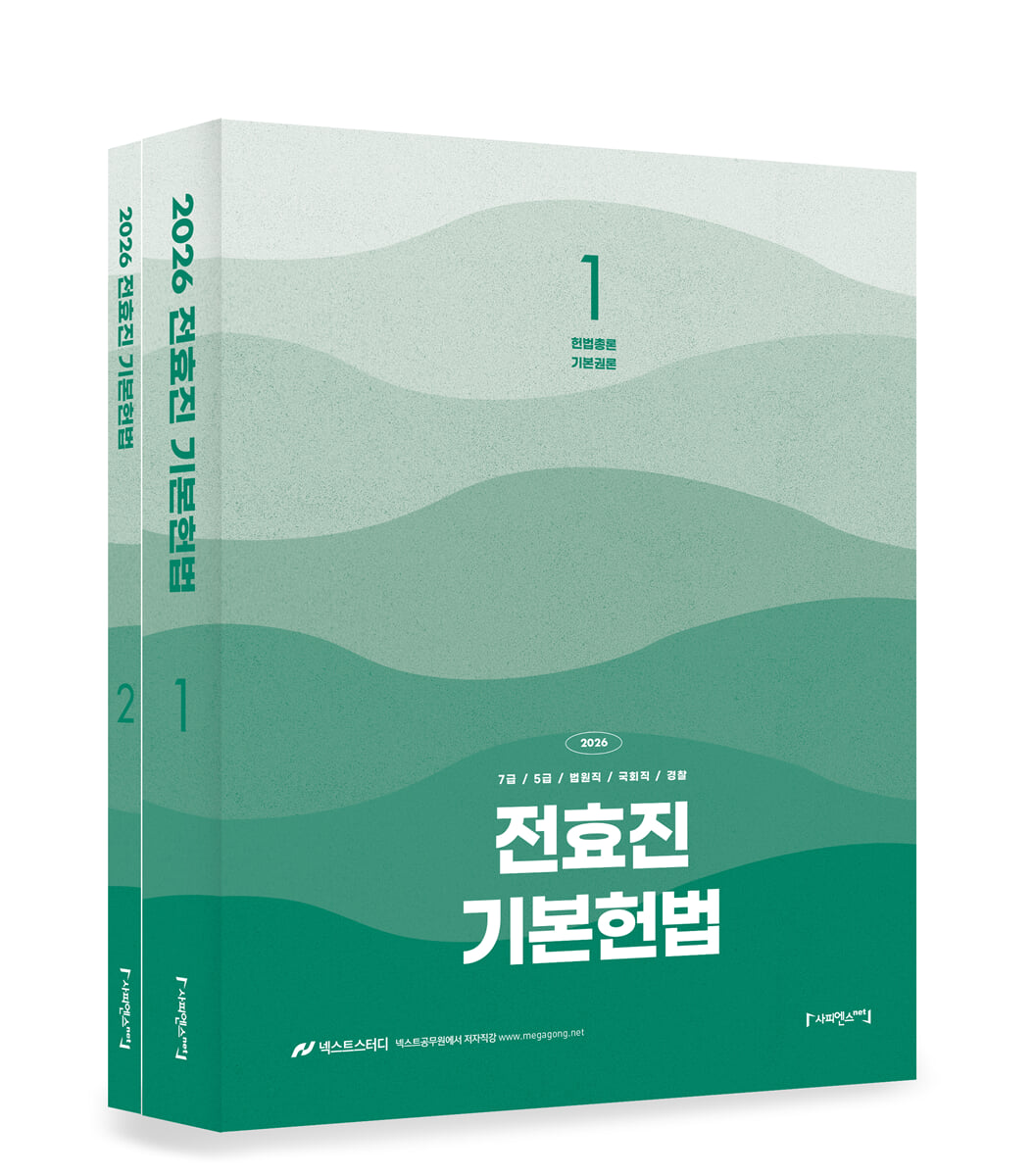
2026 Jeon Hyo-jin Basic Constitution
 |
Description
Book Introduction
"2026 Jeon Hyo-jin Basic Constitution" meticulously analyzes various constitutional questions from the past 20 years to concisely cover the key points likely to appear on the exam, yet meticulously includes enough to ensure a passing score.
We thoroughly analyzed even the most recent past exam questions to ensure you don't miss out on the latest issues.
In addition, we have carefully arranged the articles, theories, precedents, and even past exam questions so that they can be organically organized easily. In particular, we have put a lot of effort into arranging the Constitutional Court's decisions so that the vast amount of precedents can be grouped by similar cases or types, and cases that violate the Constitution can be distinguished at a glance by whether they do or do not.
Furthermore, Constitutional Court decisions that require in-depth understanding to understand socially controversial precedents or related issues are organized to enable comprehensive and in-depth understanding by presenting the facts through key precedents and showing the overall issues of the case.
The Constitution is fundamentally a subject that requires a more exam-ready approach than any other, as it is constantly updated with the latest issues, including extensive case law and revisions to subsidiary laws. I want to emphasize that you shouldn't memorize the parts that can be naturally understood, or postpone the parts that need to be memorized until later.
We thoroughly analyzed even the most recent past exam questions to ensure you don't miss out on the latest issues.
In addition, we have carefully arranged the articles, theories, precedents, and even past exam questions so that they can be organically organized easily. In particular, we have put a lot of effort into arranging the Constitutional Court's decisions so that the vast amount of precedents can be grouped by similar cases or types, and cases that violate the Constitution can be distinguished at a glance by whether they do or do not.
Furthermore, Constitutional Court decisions that require in-depth understanding to understand socially controversial precedents or related issues are organized to enable comprehensive and in-depth understanding by presenting the facts through key precedents and showing the overall issues of the case.
The Constitution is fundamentally a subject that requires a more exam-ready approach than any other, as it is constantly updated with the latest issues, including extensive case law and revisions to subsidiary laws. I want to emphasize that you shouldn't memorize the parts that can be naturally understood, or postpone the parts that need to be memorized until later.
- You can preview some of the book's contents.
Preview
index
[Volume 1]
Part 1: General Provisions of the Constitution
Chapter 1 General Theory of the Constitution
Section 1 Constitution and Constitutional Court
01 Basic understanding of the concept of the Constitution
02 Constitutional Court
Section 2 Interpretation of the Constitution
01 Interpretation of the Constitution
02 Constitutional interpretation of law (constitutional interpretation of law, constitutional interpretation of law)
Section 3: Enactment, Amendment, and Change of the Constitution
01 Establishment of the Constitution
02 Amendment of the Constitution
03 Constitutional Change
Section 4 Protection of the Constitution
01 General Theory of Constitutional Protection
02 Right to Resistance
03 Defensive Democracy (= combative democracy, combative democracy)
Chapter 2 Constitution of the Republic of Korea
Section 1 Constitutional History of the Republic of Korea
Section 2. State form and components of the Republic of Korea
01 National form of the Republic of Korea
02 Components of the Republic of Korea
03 International Order
Section 3 Basic Principles of the Constitution of the Republic of Korea
01 Meaning
02 Preamble to the Constitution of the Republic of Korea
03 Principle of popular sovereignty
04 Democratic Principles (Liberal Democratic Basic Order)
05 Social State Principles
06 Principle of the Rule of Law
07 Principles of a Cultural State
Section 4 Basic Order of the Constitution of the Republic of Korea
01 Economic Order
Section 5 Basic System of the Constitution of the Republic of Korea
01 Institutional Guarantee
02 Political party system
03 Electoral System
04 Civil Service System
05 Local Autonomy System
06 Guarantee of marriage and family life
07 Military System
Part 2: Fundamental Rights
Chapter 1 General Introduction to Fundamental Rights
Section 1 Establishment of Fundamental Rights
01 Basic understanding of fundamental rights
02 Classification of basic rights by type
03 Overview of Basic Rights in Our Constitutional Order
Section 2 Subjects of Fundamental Rights
01 Capacity to possess and exercise fundamental rights
02 Citizens' fundamental rights and subjectivity
03 Subjectivity of basic rights of foreigners
04 The fundamental rights of a corporation
05 Fundamental rights of special subjects
Section 3. Validity and Legal Character of Fundamental Rights
01 Effect of basic rights
02 Legal nature of fundamental rights
Section 4 Conflicts between fundamental rights
01 Competition of fundamental rights
02 Conflict of fundamental rights
Section 5 Scope of Protection, Restrictions and Limitations of Fundamental Rights
01 Scope of protection of fundamental rights
02 Restrictions on fundamental rights
03 Limits to Restrictions on Fundamental Rights - Prohibition of Infringement on Essential Content
Section 6 Violation of Fundamental Rights and Remedies
01 Type-by-Type Review of Violations of Fundamental Rights and Remedies
02 Relief of fundamental rights by the National Human Rights Commission
Section 7. The State's Duty to Protect Fundamental Rights
01 The State's Duty to Protect Fundamental Rights
02 Contents of the State's Duty to Protect Fundamental Rights
Chapter 2: Fundamental Rights
Section 1 Comprehensive Fundamental Rights
01 Human dignity and value
02 Right to pursue happiness
03 Equality before the law
Section 2 Fundamental Rights of Liberty
01 Right to freedom of body
02 Social and economic freedoms
03 Mental Freedom
04 Property Rights
05 Consumer Rights
Section 3 Political Fundamental Rights
Section 4 Fundamental Rights of Claim
01 Fundamental rights to claim
02 Petition Rights
03 Right to claim trial
04 Right to claim criminal compensation
05 Claim for State Compensation
06 Crime Victim Relief Claims
Section 5: Basic Social Rights
01 Social Basic Rights
02 The right to a human life
03 Right to Education
04 Right to Work
05 Labor Rights 3
06 Environmental Rights
07 Right to maternal protection and right to health
Section 6. Citizens' Constitutional Duties
01 Classical Duty
02 Modern Obligations
[Volume 2]
Part 3: Governing Structure
Chapter 1: Establishing the Governing Structure
Section 1. Principles of the Governing Structure
01 Representative principle
02 Principle of Separation of Powers
Section 2 Form of Governing Structure
01 Establishment of government type
02 Presidential vs. Parliamentary Systems
03 Two-member government system
04 The form of government of our country under the current constitution
Chapter 2 Legislative Branch
Section 1 Composition and Organization of the National Assembly
01 Composition of the National Assembly
02 Organization of the National Assembly
Section 2 Operation and Procedure of the National Assembly
01 Operation of the National Assembly
02 National Assembly procedures and voting
Section 3 Powers of the National Assembly
01 Legislative power
02 Authority over finances
03 Authority to establish constitutional institutions
04 Authority over state control
05 Autonomy of the National Assembly
Section 4 Members of the National Assembly
01 Status and position of National Assembly members
02 Privileges of National Assembly Members
03 General Powers of Members of the National Assembly
04 Duties of National Assembly Members
Chapter 3 Executive Branch
Section 1 President
01 Constitutional status of the President
02 Election, inauguration, term of office, and performance of powers of the President
03 Presidential Powers
04 Methods of exercising and controlling the President's powers
05 Presidential Advisory Body
Section 2 Government
01 Prime Minister
02 State Council Member
03 Administrative Departments
04 State Council Meeting
05 Board of Audit and Inspection
Section 3 Election Management Committee
Chapter 4 Judiciary
Section 1 Establishment of the Judiciary
01 The significance of judicial power
02 Independence of the judiciary
03 Limits of Judicial Power
Section 2 Court
01 Composition and organization of the court
02 Procedure and operation of the judiciary
03 Court's authority
Chapter 5 Constitutional Court
Section 1 Constitutional Court and Constitutional Court
01 Constitutional Court System
02 Status of the Constitutional Court
03 Composition and Organization of the Constitutional Court
04 Constitutional Court adjudication procedures
Section 2 Special Procedures for Constitutional Court Tribunals
01 Constitutional Court Review
02 Authority Dispute Tribunal
03 Constitutional Appeal Trial
Part 1: General Provisions of the Constitution
Chapter 1 General Theory of the Constitution
Section 1 Constitution and Constitutional Court
01 Basic understanding of the concept of the Constitution
02 Constitutional Court
Section 2 Interpretation of the Constitution
01 Interpretation of the Constitution
02 Constitutional interpretation of law (constitutional interpretation of law, constitutional interpretation of law)
Section 3: Enactment, Amendment, and Change of the Constitution
01 Establishment of the Constitution
02 Amendment of the Constitution
03 Constitutional Change
Section 4 Protection of the Constitution
01 General Theory of Constitutional Protection
02 Right to Resistance
03 Defensive Democracy (= combative democracy, combative democracy)
Chapter 2 Constitution of the Republic of Korea
Section 1 Constitutional History of the Republic of Korea
Section 2. State form and components of the Republic of Korea
01 National form of the Republic of Korea
02 Components of the Republic of Korea
03 International Order
Section 3 Basic Principles of the Constitution of the Republic of Korea
01 Meaning
02 Preamble to the Constitution of the Republic of Korea
03 Principle of popular sovereignty
04 Democratic Principles (Liberal Democratic Basic Order)
05 Social State Principles
06 Principle of the Rule of Law
07 Principles of a Cultural State
Section 4 Basic Order of the Constitution of the Republic of Korea
01 Economic Order
Section 5 Basic System of the Constitution of the Republic of Korea
01 Institutional Guarantee
02 Political party system
03 Electoral System
04 Civil Service System
05 Local Autonomy System
06 Guarantee of marriage and family life
07 Military System
Part 2: Fundamental Rights
Chapter 1 General Introduction to Fundamental Rights
Section 1 Establishment of Fundamental Rights
01 Basic understanding of fundamental rights
02 Classification of basic rights by type
03 Overview of Basic Rights in Our Constitutional Order
Section 2 Subjects of Fundamental Rights
01 Capacity to possess and exercise fundamental rights
02 Citizens' fundamental rights and subjectivity
03 Subjectivity of basic rights of foreigners
04 The fundamental rights of a corporation
05 Fundamental rights of special subjects
Section 3. Validity and Legal Character of Fundamental Rights
01 Effect of basic rights
02 Legal nature of fundamental rights
Section 4 Conflicts between fundamental rights
01 Competition of fundamental rights
02 Conflict of fundamental rights
Section 5 Scope of Protection, Restrictions and Limitations of Fundamental Rights
01 Scope of protection of fundamental rights
02 Restrictions on fundamental rights
03 Limits to Restrictions on Fundamental Rights - Prohibition of Infringement on Essential Content
Section 6 Violation of Fundamental Rights and Remedies
01 Type-by-Type Review of Violations of Fundamental Rights and Remedies
02 Relief of fundamental rights by the National Human Rights Commission
Section 7. The State's Duty to Protect Fundamental Rights
01 The State's Duty to Protect Fundamental Rights
02 Contents of the State's Duty to Protect Fundamental Rights
Chapter 2: Fundamental Rights
Section 1 Comprehensive Fundamental Rights
01 Human dignity and value
02 Right to pursue happiness
03 Equality before the law
Section 2 Fundamental Rights of Liberty
01 Right to freedom of body
02 Social and economic freedoms
03 Mental Freedom
04 Property Rights
05 Consumer Rights
Section 3 Political Fundamental Rights
Section 4 Fundamental Rights of Claim
01 Fundamental rights to claim
02 Petition Rights
03 Right to claim trial
04 Right to claim criminal compensation
05 Claim for State Compensation
06 Crime Victim Relief Claims
Section 5: Basic Social Rights
01 Social Basic Rights
02 The right to a human life
03 Right to Education
04 Right to Work
05 Labor Rights 3
06 Environmental Rights
07 Right to maternal protection and right to health
Section 6. Citizens' Constitutional Duties
01 Classical Duty
02 Modern Obligations
[Volume 2]
Part 3: Governing Structure
Chapter 1: Establishing the Governing Structure
Section 1. Principles of the Governing Structure
01 Representative principle
02 Principle of Separation of Powers
Section 2 Form of Governing Structure
01 Establishment of government type
02 Presidential vs. Parliamentary Systems
03 Two-member government system
04 The form of government of our country under the current constitution
Chapter 2 Legislative Branch
Section 1 Composition and Organization of the National Assembly
01 Composition of the National Assembly
02 Organization of the National Assembly
Section 2 Operation and Procedure of the National Assembly
01 Operation of the National Assembly
02 National Assembly procedures and voting
Section 3 Powers of the National Assembly
01 Legislative power
02 Authority over finances
03 Authority to establish constitutional institutions
04 Authority over state control
05 Autonomy of the National Assembly
Section 4 Members of the National Assembly
01 Status and position of National Assembly members
02 Privileges of National Assembly Members
03 General Powers of Members of the National Assembly
04 Duties of National Assembly Members
Chapter 3 Executive Branch
Section 1 President
01 Constitutional status of the President
02 Election, inauguration, term of office, and performance of powers of the President
03 Presidential Powers
04 Methods of exercising and controlling the President's powers
05 Presidential Advisory Body
Section 2 Government
01 Prime Minister
02 State Council Member
03 Administrative Departments
04 State Council Meeting
05 Board of Audit and Inspection
Section 3 Election Management Committee
Chapter 4 Judiciary
Section 1 Establishment of the Judiciary
01 The significance of judicial power
02 Independence of the judiciary
03 Limits of Judicial Power
Section 2 Court
01 Composition and organization of the court
02 Procedure and operation of the judiciary
03 Court's authority
Chapter 5 Constitutional Court
Section 1 Constitutional Court and Constitutional Court
01 Constitutional Court System
02 Status of the Constitutional Court
03 Composition and Organization of the Constitutional Court
04 Constitutional Court adjudication procedures
Section 2 Special Procedures for Constitutional Court Tribunals
01 Constitutional Court Review
02 Authority Dispute Tribunal
03 Constitutional Appeal Trial
Publisher's Review
The 『2026 Jeon Hyo-jin Basic Constitution』 is structured as follows.
1.
Preview showing the big picture
We show a preview for each topic so that you can understand the structure in a big picture first and then study the sub-units.
This helps you understand the phases of seemingly complex concepts and memorize them more easily.
2.
Detailed, easy-to-understand text
The concepts and content are explained in a way that is easy to understand even for first-time constitutional law beginners, and this text is also organized so that it can be applied immediately in actual exams by utilizing previously tested passages.
3.
CHECK POINTS that summarize specific topics
We've organized frequently asked specific topics into CHECK POINTS so you can check the content and the format of the questions.
These topics are summarized at a glance and also help you memorize them visually.
4.
Past papers showing the latest trends
To help you understand the text, case law, and legal text, we have included actual passages from recent civil service exams, along with true or false answers, so you can grasp the latest question types and trends.
5.
Includes articles of the Constitution and subsidiary laws
In addition to the Constitution, various subsidiary laws covered in this subject are placed in appropriate locations to help readers understand and understand the connection between their contents and the Constitution.
It reflects the most recent revisions.
6.
Organizing to aid visual understanding and memorization
Content that is difficult to memorize or understand in simple text has been organized into tables to make it easier to learn visually.
When you recall the content in your head, you will be able to recall the content at once through the table.
7.
Summary of case law that collects the expected issues to be discussed
We have summarized the core points of various case laws that cover major issues that have appeared or are expected to appear in the exam, and have organized them so that you can judge the importance of studying them by considering important and related case laws.
8.
Key precedents requiring a general understanding
Case law requires understanding not only the gist of the case law but also the overall logic and flow of the decision. This book includes a detailed overview of the case, the reasons for the decision, etc. to aid learning.
1.
Preview showing the big picture
We show a preview for each topic so that you can understand the structure in a big picture first and then study the sub-units.
This helps you understand the phases of seemingly complex concepts and memorize them more easily.
2.
Detailed, easy-to-understand text
The concepts and content are explained in a way that is easy to understand even for first-time constitutional law beginners, and this text is also organized so that it can be applied immediately in actual exams by utilizing previously tested passages.
3.
CHECK POINTS that summarize specific topics
We've organized frequently asked specific topics into CHECK POINTS so you can check the content and the format of the questions.
These topics are summarized at a glance and also help you memorize them visually.
4.
Past papers showing the latest trends
To help you understand the text, case law, and legal text, we have included actual passages from recent civil service exams, along with true or false answers, so you can grasp the latest question types and trends.
5.
Includes articles of the Constitution and subsidiary laws
In addition to the Constitution, various subsidiary laws covered in this subject are placed in appropriate locations to help readers understand and understand the connection between their contents and the Constitution.
It reflects the most recent revisions.
6.
Organizing to aid visual understanding and memorization
Content that is difficult to memorize or understand in simple text has been organized into tables to make it easier to learn visually.
When you recall the content in your head, you will be able to recall the content at once through the table.
7.
Summary of case law that collects the expected issues to be discussed
We have summarized the core points of various case laws that cover major issues that have appeared or are expected to appear in the exam, and have organized them so that you can judge the importance of studying them by considering important and related case laws.
8.
Key precedents requiring a general understanding
Case law requires understanding not only the gist of the case law but also the overall logic and flow of the decision. This book includes a detailed overview of the case, the reasons for the decision, etc. to aid learning.
GOODS SPECIFICS
- Date of issue: November 25, 2025
- Page count, weight, size: 1,136 pages | 205*260*60mm
- ISBN13: 9791167932129
- ISBN10: 1167932129
You may also like
카테고리
korean


korean

![ELLE 엘르 스페셜 에디션 A형 : 12월 [2025]](http://librairie.coreenne.fr/cdn/shop/files/b8e27a3de6c9538896439686c6b0e8fb.jpg?v=1766436872&width=3840)


