

Animals and Plants in the Bible
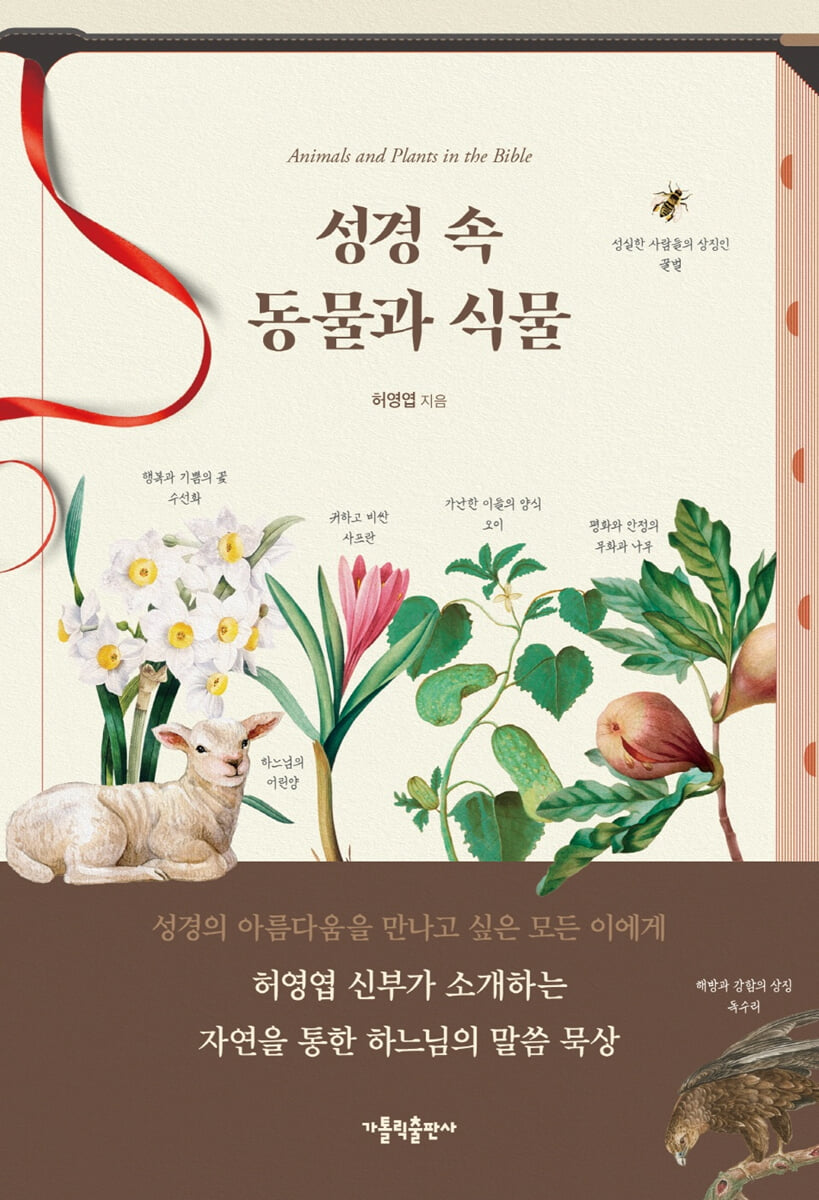 |
Description
Book Introduction
Through animals and plants in the Bible
Unraveling God's providence and love
How often do we sense God's love and providence as we gaze at the blooming flowers in the fields and the birds flying in the sky? Perhaps the plants and animals around us are so familiar that we easily overlook them.
But even in each of those small creatures, God's order of creation is embedded.
What greater joy could there be for Christians than discovering God's message through other beings who live alongside us?
Father Heo Yeong-yeop invites readers to find such joy in life in the Bible through “Animals and Plants in the Bible.”
This book introduces animals and plants that appear in the Old and New Testaments, adding to the fun of 'reading the Bible.'
There are 78 species of plants and animals in this book alone, including lambs, lions, doves, mosquitoes, dragons, and camels, which frequently appear as metaphors and symbols in the Bible.
As you read this book, you will be surprised and ask yourself, "Is this even in the Bible?"
Father Heo Yeong-yeop explains the historical background and cultural context surrounding each plant and animal, and then explains in an interesting way how they appear in the Bible.
Readers will be able to examine the socio-cultural background of the biblical era and easily understand the meanings contained in the plants and animals mentioned in the Bible.
"Animals and Plants in the Bible" is a recommended book for believers who want to understand the Bible more deeply, those who want to find spiritual meaning in nature, parents who want to teach the Bible to their children, and anyone interested in Catholic culture.
Beyond mere biblical knowledge, this guide will help you discover God's wisdom and love within nature, and learn lessons about the order of creation from the small creatures we encounter in our daily lives.
Genesis tells us that God created the heavens and the earth, the sun and the moon, animals and plants, and everything else humans need, and then he formed man from the dust of the ground.
In this way, plants and animals are deeply connected to our human lives.
How much more can we learn if we carefully examine the ecology of plants and animals living faithfully within God's created order?
- From 'In commemoration of the republication'
Unraveling God's providence and love
How often do we sense God's love and providence as we gaze at the blooming flowers in the fields and the birds flying in the sky? Perhaps the plants and animals around us are so familiar that we easily overlook them.
But even in each of those small creatures, God's order of creation is embedded.
What greater joy could there be for Christians than discovering God's message through other beings who live alongside us?
Father Heo Yeong-yeop invites readers to find such joy in life in the Bible through “Animals and Plants in the Bible.”
This book introduces animals and plants that appear in the Old and New Testaments, adding to the fun of 'reading the Bible.'
There are 78 species of plants and animals in this book alone, including lambs, lions, doves, mosquitoes, dragons, and camels, which frequently appear as metaphors and symbols in the Bible.
As you read this book, you will be surprised and ask yourself, "Is this even in the Bible?"
Father Heo Yeong-yeop explains the historical background and cultural context surrounding each plant and animal, and then explains in an interesting way how they appear in the Bible.
Readers will be able to examine the socio-cultural background of the biblical era and easily understand the meanings contained in the plants and animals mentioned in the Bible.
"Animals and Plants in the Bible" is a recommended book for believers who want to understand the Bible more deeply, those who want to find spiritual meaning in nature, parents who want to teach the Bible to their children, and anyone interested in Catholic culture.
Beyond mere biblical knowledge, this guide will help you discover God's wisdom and love within nature, and learn lessons about the order of creation from the small creatures we encounter in our daily lives.
Genesis tells us that God created the heavens and the earth, the sun and the moon, animals and plants, and everything else humans need, and then he formed man from the dust of the ground.
In this way, plants and animals are deeply connected to our human lives.
How much more can we learn if we carefully examine the ecology of plants and animals living faithfully within God's created order?
- From 'In commemoration of the republication'
- You can preview some of the book's contents.
Preview
index
Recommendation 4
To commemorate the re-publication, 7
Chapter 1: Stories of Living, Breathing Animals in the Word
Imaginary Animals Dragon 15
Snake, a symbol of death and life 19
Dove, a symbol of love and peace 23
Camel crossing the desert 26
30 cows like family
Lion 33, symbolizing God's righteous judgment
The wolf symbolizes the false prophet, 37
God's Plague Frogs 41
God's Warning to Mosquitoes 46
Locusts Sweeping the Fields 49
Fish, a symbol of faith in the early church 53
Lamb of God 57
Brave and Sacred Words 61
Eagle 64, a symbol of liberation and strength
Donkey 68, representing humility and foolishness
Dolphins Offered to God 72
Pig 77, symbolizing foreigners
The Raven Who Became God's Servant 80
84. A hawk expressing disgust
The Foolish and Stupid Ostrich 87
The Precious and Intimate Stork 91
Crickets, the insects that call autumn home 94
Unclean Animal Rat 97
Goat 101: A Close Friend to Jewish Life
The noble and dignified deer 106
Quail Provided by God 110
The buffalo symbolizing Christ 113
Bear 117, a symbol of strength and ferocity
Flea 122, a small and tiny creature
Lucky Bird Peacock 125
Dogs Likened to Strangers 128
The Cunning Fox 131
The swift and nimble leopard 135
Hyenas Revealing Greed 138
Swallows Returning Home 141
Slow but Hardworking Snail 144
Ants, the wise and diligent creatures 148
Hedgehog 151, symbolizing devastation
Spider Urging Righteousness 154
Bee, a symbol of honest people 157
Gentle and Intelligent Elephant 161
Rooster, a symbol of repentance 164
Scorpion 167, representing heresy and the devil
Chapter 2: Plants: A Story of the Plants That Filled God's Garden
Fig Tree of Peace and Stability 175
Grapes, a symbol of peace and blessings 178
Sacred Oak 182
Wheat, the Source of Blessings 186
Evergreen Ezel 191
Nutritious Red Beans and Beans 194
Love Potion Combination 198
Almond tree symbolizing resurrection 201
The Legendary Tree of Silver Poplar 205
Plants blessed by God, probably 208
Holy Incense Frankincense 211
Hyssop used in purification ceremonies 214
218 Coriander used as a medicinal herb
Holy Tree Acacia 221
Olive tree, symbolizing victory and peace 224
Pomegranate 228, representing beauty and holiness
Willow, a symbol of vitality 232
Barley for the Poor 235
Garlic, the Food the Israelites Crave in the Desert 238
Cucumbers for the Poor 241
Watermelon 245 to reduce swelling and fever
The strong and beautiful cedar tree 248
Shade-producing pine tree 252
Reeds Revealing God's Mercy 256
Zacchaeus Climbed the Sycamore-Fig Tree 260
Myrrh, a symbol of eternal life for humans 264
The thorn tree used in the crown of thorns 267
Flower of Love Henna 271
Daffodils, the flower of happiness and joy 275
Precious and Expensive Saffron 278
Walnut Tree, a Symbol of Life and Immortality 281
Nettle of Darkness 284
The Mustard Seed as a Parable to the Kingdom of God 288
Peppermint 291: A History Throughout Humanity
294 Ivy used in foreign festivals
To commemorate the re-publication, 7
Chapter 1: Stories of Living, Breathing Animals in the Word
Imaginary Animals Dragon 15
Snake, a symbol of death and life 19
Dove, a symbol of love and peace 23
Camel crossing the desert 26
30 cows like family
Lion 33, symbolizing God's righteous judgment
The wolf symbolizes the false prophet, 37
God's Plague Frogs 41
God's Warning to Mosquitoes 46
Locusts Sweeping the Fields 49
Fish, a symbol of faith in the early church 53
Lamb of God 57
Brave and Sacred Words 61
Eagle 64, a symbol of liberation and strength
Donkey 68, representing humility and foolishness
Dolphins Offered to God 72
Pig 77, symbolizing foreigners
The Raven Who Became God's Servant 80
84. A hawk expressing disgust
The Foolish and Stupid Ostrich 87
The Precious and Intimate Stork 91
Crickets, the insects that call autumn home 94
Unclean Animal Rat 97
Goat 101: A Close Friend to Jewish Life
The noble and dignified deer 106
Quail Provided by God 110
The buffalo symbolizing Christ 113
Bear 117, a symbol of strength and ferocity
Flea 122, a small and tiny creature
Lucky Bird Peacock 125
Dogs Likened to Strangers 128
The Cunning Fox 131
The swift and nimble leopard 135
Hyenas Revealing Greed 138
Swallows Returning Home 141
Slow but Hardworking Snail 144
Ants, the wise and diligent creatures 148
Hedgehog 151, symbolizing devastation
Spider Urging Righteousness 154
Bee, a symbol of honest people 157
Gentle and Intelligent Elephant 161
Rooster, a symbol of repentance 164
Scorpion 167, representing heresy and the devil
Chapter 2: Plants: A Story of the Plants That Filled God's Garden
Fig Tree of Peace and Stability 175
Grapes, a symbol of peace and blessings 178
Sacred Oak 182
Wheat, the Source of Blessings 186
Evergreen Ezel 191
Nutritious Red Beans and Beans 194
Love Potion Combination 198
Almond tree symbolizing resurrection 201
The Legendary Tree of Silver Poplar 205
Plants blessed by God, probably 208
Holy Incense Frankincense 211
Hyssop used in purification ceremonies 214
218 Coriander used as a medicinal herb
Holy Tree Acacia 221
Olive tree, symbolizing victory and peace 224
Pomegranate 228, representing beauty and holiness
Willow, a symbol of vitality 232
Barley for the Poor 235
Garlic, the Food the Israelites Crave in the Desert 238
Cucumbers for the Poor 241
Watermelon 245 to reduce swelling and fever
The strong and beautiful cedar tree 248
Shade-producing pine tree 252
Reeds Revealing God's Mercy 256
Zacchaeus Climbed the Sycamore-Fig Tree 260
Myrrh, a symbol of eternal life for humans 264
The thorn tree used in the crown of thorns 267
Flower of Love Henna 271
Daffodils, the flower of happiness and joy 275
Precious and Expensive Saffron 278
Walnut Tree, a Symbol of Life and Immortality 281
Nettle of Darkness 284
The Mustard Seed as a Parable to the Kingdom of God 288
Peppermint 291: A History Throughout Humanity
294 Ivy used in foreign festivals
Detailed image

Into the book
Given the importance of sheep to the nomadic and agricultural life of the Hebrews, it is natural that sheep and shepherds appear in the Bible as metaphors for spiritual truth.
Sheep were once central to the Israelite economy (see Genesis 4:2) and played an important role in sacrificial offerings in the Old Testament.
In particular, the fragility of sheep was used to illustrate the care and mercy of the Good Shepherd.
--- From "The Lamb of God"
It is said that bears lived in abundance in the Palestine region during the Old Testament era.
In the Bible, the leopard symbolizes speed, the bear's paws symbolize strength, and the lion's mouth symbolizes ferocious aggression.
Bears appear several times in the Bible, usually portrayed as fierce and violent figures with great strength.
There is a story about how, on the way up to Bethel, the prophet Elisha was mocked by children who came out of the town and said, “Go up, you baldhead!” Then, two bears came out of the forest and killed 42 children (see 2 Kings 2:23-24).
There is also a story about David, who was tending sheep in his pasture when he saw a bear goring a sheep, chased after the bear, killed it, and rescued the sheep (see 1 Samuel 17:34-35).
This allows us to see the bear's great strength and ferocity.
--- From "The Bear, a Symbol of Strong Power and Cruelty"
Flax was synonymous with purity, and linen clothing was the fabric of the rich and noble.
Pharaoh sat Joseph down on the altar, took his signet ring from his hand, put it on Joseph's hand, dressed him in linen clothes, and put a gold chain around his neck (see Genesis 41:42).
Rahab hid the Israelite spies who came to spy out Jericho in the stalks of flax she had spread on her roof (see Joshua 2:6).
Even at that time, we can see that fibers were collected from flax and woven into cloth.
The ropes that bound Samson were also made of flax (see Judges 15:14).
The cloth that wrapped Jesus' body and the first thing that allowed us to confirm the resurrection of Jesus were linen.
--- From "Among the gifts blessed by God"
In the New Testament, Jesus compared the mustard seed to the kingdom of heaven and faith.
“The kingdom of heaven is like a mustard seed.
A man took it and sowed it in his field.
“A mustard seed is the smallest of all seeds, but when it grows, it is larger than the garden plants and becomes a tree, so that the birds of the air come and nest in its branches.” (Matthew 13:31-32) This verse emphasizes that even if faith seems small, it contains tremendous power and potential.
Jesus said that the kingdom of God is like a mustard seed that a man took and sowed in his field.
Here, the seed refers to the word, and just as the seed falls to the ground and grows, so too does the word of God grow and appear within us.
Sheep were once central to the Israelite economy (see Genesis 4:2) and played an important role in sacrificial offerings in the Old Testament.
In particular, the fragility of sheep was used to illustrate the care and mercy of the Good Shepherd.
--- From "The Lamb of God"
It is said that bears lived in abundance in the Palestine region during the Old Testament era.
In the Bible, the leopard symbolizes speed, the bear's paws symbolize strength, and the lion's mouth symbolizes ferocious aggression.
Bears appear several times in the Bible, usually portrayed as fierce and violent figures with great strength.
There is a story about how, on the way up to Bethel, the prophet Elisha was mocked by children who came out of the town and said, “Go up, you baldhead!” Then, two bears came out of the forest and killed 42 children (see 2 Kings 2:23-24).
There is also a story about David, who was tending sheep in his pasture when he saw a bear goring a sheep, chased after the bear, killed it, and rescued the sheep (see 1 Samuel 17:34-35).
This allows us to see the bear's great strength and ferocity.
--- From "The Bear, a Symbol of Strong Power and Cruelty"
Flax was synonymous with purity, and linen clothing was the fabric of the rich and noble.
Pharaoh sat Joseph down on the altar, took his signet ring from his hand, put it on Joseph's hand, dressed him in linen clothes, and put a gold chain around his neck (see Genesis 41:42).
Rahab hid the Israelite spies who came to spy out Jericho in the stalks of flax she had spread on her roof (see Joshua 2:6).
Even at that time, we can see that fibers were collected from flax and woven into cloth.
The ropes that bound Samson were also made of flax (see Judges 15:14).
The cloth that wrapped Jesus' body and the first thing that allowed us to confirm the resurrection of Jesus were linen.
--- From "Among the gifts blessed by God"
In the New Testament, Jesus compared the mustard seed to the kingdom of heaven and faith.
“The kingdom of heaven is like a mustard seed.
A man took it and sowed it in his field.
“A mustard seed is the smallest of all seeds, but when it grows, it is larger than the garden plants and becomes a tree, so that the birds of the air come and nest in its branches.” (Matthew 13:31-32) This verse emphasizes that even if faith seems small, it contains tremendous power and potential.
Jesus said that the kingdom of God is like a mustard seed that a man took and sowed in his field.
Here, the seed refers to the word, and just as the seed falls to the ground and grows, so too does the word of God grow and appear within us.
--- From "The Mustard Seed as a Parable to the Kingdom of God"
Publisher's Review
Contained in one volume
Stories of Animals and Plants in the Bible
"Animals and Plants in the Bible" rediscovers the symbolic meaning of the plants and animals in the Bible and helps us understand God's message through them.
From familiar plants like grapes, olives, and figs to animals with special meanings like eagles, pigs, and doves, this book is nothing short of a "mini dictionary of the flora and fauna of the Bible."
It features over 70 species of plants and animals, including a rooster associated with Peter's repentance, a goat used as a sin offering, and a mustard seed symbolized as a metaphor for faith.
If you look at the grapevines in this book, they are not just fruit trees.
It was a kind of symbol showing how abundantly God had blessed Israel.
This interpretation makes us realize how closely the lives and faith of the Israelites were connected to the vine.
It also introduces Bible verses related to grapevines, reaffirming God's mercy and promise of salvation.
The story of a pig, an animal familiar to us, is also interesting.
The pig was a symbol of uncleanness to the Jews, but this was not simply for hygienic reasons, but also in connection with pagan customs.
Moreover, the Bible's message that even a single bee or a single daffodil is under God's meticulous care provides deep comfort to us living today.
"Animals and Plants in the Bible" is a revised edition presented after 16 years, based on a column serialized in the Catholic Peace Newspaper for three years under the title "Animals and Plants in the Bible."
The author said, “It is meaningful to publish a book that is easy for readers to read according to the flow of the Bible,” and emphasized that the symbolism of the parables in the Bible must be read carefully.
Cardinal Yeom Soo-jung said in his recommendation, “Father Heo Yeong-yeop introduces the culture and environment surrounding the Bible well in an easy-to-understand style.”
In fact, Father Heo has been working hard to help readers interpret the Bible more enjoyably through previous series such as “Curiosity in the Bible,” “Symbols in the Bible,” and “Bible Pilgrimage.”
Each chapter in this book is designed to be read independently, so it's a good idea to start by looking up topics that interest you.
Through vivid stories and illustrations of plants and animals presented alongside the text, readers will gain the strength to read the Bible more enjoyably, and it will also provide an opportunity to feel closer to God through nature and reflect on our lives.
Stories of Animals and Plants in the Bible
"Animals and Plants in the Bible" rediscovers the symbolic meaning of the plants and animals in the Bible and helps us understand God's message through them.
From familiar plants like grapes, olives, and figs to animals with special meanings like eagles, pigs, and doves, this book is nothing short of a "mini dictionary of the flora and fauna of the Bible."
It features over 70 species of plants and animals, including a rooster associated with Peter's repentance, a goat used as a sin offering, and a mustard seed symbolized as a metaphor for faith.
If you look at the grapevines in this book, they are not just fruit trees.
It was a kind of symbol showing how abundantly God had blessed Israel.
This interpretation makes us realize how closely the lives and faith of the Israelites were connected to the vine.
It also introduces Bible verses related to grapevines, reaffirming God's mercy and promise of salvation.
The story of a pig, an animal familiar to us, is also interesting.
The pig was a symbol of uncleanness to the Jews, but this was not simply for hygienic reasons, but also in connection with pagan customs.
Moreover, the Bible's message that even a single bee or a single daffodil is under God's meticulous care provides deep comfort to us living today.
"Animals and Plants in the Bible" is a revised edition presented after 16 years, based on a column serialized in the Catholic Peace Newspaper for three years under the title "Animals and Plants in the Bible."
The author said, “It is meaningful to publish a book that is easy for readers to read according to the flow of the Bible,” and emphasized that the symbolism of the parables in the Bible must be read carefully.
Cardinal Yeom Soo-jung said in his recommendation, “Father Heo Yeong-yeop introduces the culture and environment surrounding the Bible well in an easy-to-understand style.”
In fact, Father Heo has been working hard to help readers interpret the Bible more enjoyably through previous series such as “Curiosity in the Bible,” “Symbols in the Bible,” and “Bible Pilgrimage.”
Each chapter in this book is designed to be read independently, so it's a good idea to start by looking up topics that interest you.
Through vivid stories and illustrations of plants and animals presented alongside the text, readers will gain the strength to read the Bible more enjoyably, and it will also provide an opportunity to feel closer to God through nature and reflect on our lives.
GOODS SPECIFICS
- Date of issue: August 31, 2025
- Page count, weight, size: 296 pages | 406g | 141*205*18mm
- ISBN13: 9788932119748
- ISBN10: 8932119740
You may also like
카테고리
korean


korean

![GQ KOREA Mark (Monthly): December [2025]](http://librairie.coreenne.fr/cdn/shop/files/8ef265dbbfbf186523ed75ba7319009d.jpg?v=1765340328&width=3840)


