

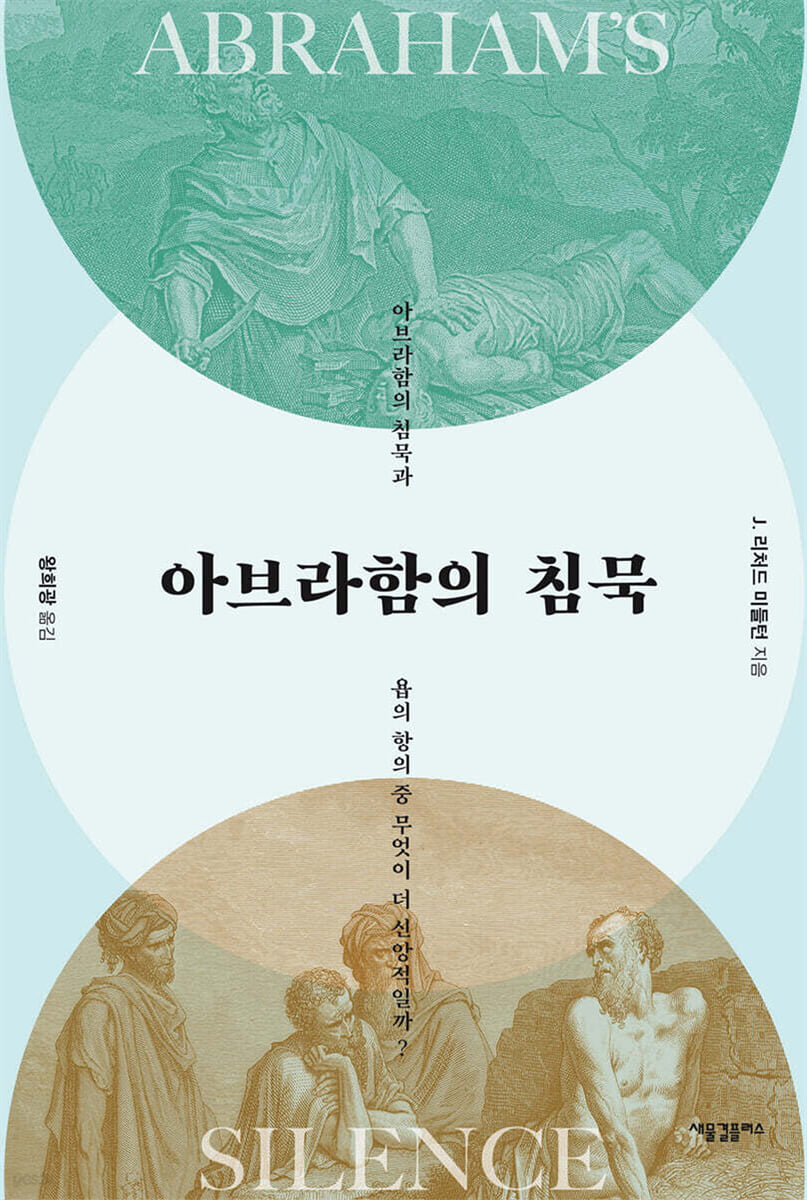
Abraham's Silence
 |
Description
Book Introduction
“Can Abraham’s silent obedience to God’s command to sacrifice his son truly be considered an example of true faith?” “Was Job’s protesting and complaining to God in the midst of his suffering evidence of unbelief and impiety?”
Richard Middleton challenges the traditional Jewish and Christian model answers to these questions, offering a radically new interpretation of Abraham's silence in the "binding of Isaac" episode of Genesis 22 that overturns conventional understandings.
While traditional interpretations defend and affirm Abraham's silence in utter obedience to God's incomprehensible command, the author argues that a mature faith is one that trusts in God's just and merciful nature and seeks to debate with Him, rather than one-sidedly and passively submitting to Him.
In particular, the author compares Abraham's attitude toward God regarding Sodom and Lot in Genesis 18 with his attitude toward the incident of his son's burnt offering in Genesis 22, and interprets Abraham's silence in Genesis 22 as a regression in his faith.
In this context, the author positively evaluates figures who wrestled with God, such as Moses, Job, and the prophets, and emphasizes that “questions and protests” are also expressions of true faith.
The author, particularly through a three-dimensional comparative analysis of Abraham and Job, makes the provocative argument that the purpose of writing the Book of Job was to be a profound theological work created to overcome and transcend Abraham's religious retreat.
The author's analysis and argumentation are brimming with creativity and, at times, are thrillingly gripping.
Richard Middleton challenges the traditional Jewish and Christian model answers to these questions, offering a radically new interpretation of Abraham's silence in the "binding of Isaac" episode of Genesis 22 that overturns conventional understandings.
While traditional interpretations defend and affirm Abraham's silence in utter obedience to God's incomprehensible command, the author argues that a mature faith is one that trusts in God's just and merciful nature and seeks to debate with Him, rather than one-sidedly and passively submitting to Him.
In particular, the author compares Abraham's attitude toward God regarding Sodom and Lot in Genesis 18 with his attitude toward the incident of his son's burnt offering in Genesis 22, and interprets Abraham's silence in Genesis 22 as a regression in his faith.
In this context, the author positively evaluates figures who wrestled with God, such as Moses, Job, and the prophets, and emphasizes that “questions and protests” are also expressions of true faith.
The author, particularly through a three-dimensional comparative analysis of Abraham and Job, makes the provocative argument that the purpose of writing the Book of Job was to be a profound theological work created to overcome and transcend Abraham's religious retreat.
The author's analysis and argumentation are brimming with creativity and, at times, are thrillingly gripping.
- You can preview some of the book's contents.
Preview
index
Acknowledgements
Abbreviation table
Introduction: Is Abraham's Silence a Problem?
Part 1: A Biblical Model of Fervent Prayer
Chapter 1: A Voice That Sharpens the Blades
Chapter 2 God's Loyal Opponent
Part 2: Understanding the Book of Job
Chapter 3: Were Job's words appropriate?
Chapter 4 Did God Come to Bury Job or to Praise Him?
Part 3: Freeing the Story of Isaac's Binding from the Shackles of Tradition
Chapter 5 Is it permissible to criticize Abraham or God?
Chapter 6: Reading Rhetorical Signs in the Story of Isaac's Binding and the Book of Job
Chapter 7 Did Abraham Pass the Test?
Conclusion: The Spirituality of Rough and Strong Lament
References
Bible Verse Index
Biographical Index
Subject Index
Abbreviation table
Introduction: Is Abraham's Silence a Problem?
Part 1: A Biblical Model of Fervent Prayer
Chapter 1: A Voice That Sharpens the Blades
Chapter 2 God's Loyal Opponent
Part 2: Understanding the Book of Job
Chapter 3: Were Job's words appropriate?
Chapter 4 Did God Come to Bury Job or to Praise Him?
Part 3: Freeing the Story of Isaac's Binding from the Shackles of Tradition
Chapter 5 Is it permissible to criticize Abraham or God?
Chapter 6: Reading Rhetorical Signs in the Story of Isaac's Binding and the Book of Job
Chapter 7 Did Abraham Pass the Test?
Conclusion: The Spirituality of Rough and Strong Lament
References
Bible Verse Index
Biographical Index
Subject Index
Into the book
How can we discern whether the reality we face is a painful situation that cannot be changed without wrestling with God? A more important question is: how can we maintain our relationship with God if we remain silent?
I can testify that my own silence actually caused my relationship with God to become strained, and that it was only when I began to pray (fervently) again that I was able to revive that relationship.
--- 「Introduction.
Is Abraham's Silence a Problem?
But if the church takes the lament psalms seriously as a model for community life and appropriately addresses the suffering of its members in public worship, it could convey a rather radical message that God takes our suffering seriously.
Suffering was such an important issue that Jesus endured it himself on the tree.
--- 「Chapter 1.
From "A Voice That Sharpened the Rough Edge"
These diagrams all converge on the paradox that “true piety allows challenging God in His name,” a paradox rooted in the fact that God Himself desires boldness from His servants.
Whether in the psalms of lament, the prophetic intercessions, or Job's desperate pleas for his suffering, the Bible reveals in various ways that the God of Abraham actively seeks passionate conversation partners.
It may be a psalm of lament, a prophetic intercession, or Job's desperate plea for his suffering.
--- 「Chapter 2.
From "God's Loyal Opponents"
But there is a more productive way to approach the book of Job: by paying attention to the accuser's "words."
The accuser's challenge to God is not simply, "Will Job remain faithful to God?" but rather, "Will he curse God to his face?" (1:11; 2:5).
The question raised by the accuser was not simply whether one would remain faithful to God in the face of suffering, but what kind of words that suffering would produce.
--- Chapter 3.
From "Were Job's words appropriate?"
I do not expect this chapter to definitively determine the meaning of God's discourse or Job's response to it (the text of Job is inherently multifaceted and will undoubtedly challenge commentators for thousands of years to come).
There is also no reason to maintain the traditional interpretation that portrays God as a sadistic tyrant trying to silence Job (which is not “correct” because it represents the view taken by Job’s friends).
Conversely, it is much more revealing of the text's meaning to conclude that God did not come to bury Job, but rather to praise him.
--- 「Chapter 4.
Did God come to bury Job or to praise him?
A rare example of criticism of Abraham in the early Christian tradition can be found in the Latin text of Pseudo-Hegesippus (late 4th century AD).
He adapted or freely paraphrased Josephus's The Jewish War, adding his own commentary; his name, Hegesippus, may be a corruption of Josephus's Latinized form, Iosippus.
In this Latin text, the author comments on Josephus's description of Abraham as a devoted priest of God:
“I do not condemn his devotion, but I question his faith.… What kind of human being would consider killing a human being a religious act, and what kind of priest would do such a thing?”
--- Chapter 5.
Is it permissible to criticize Abraham or God?
This is the intuition I instinctively get from the relationship between the Book of Job and the story of the binding of Isaac.
Job's loud complaint to God serves as an implicit criticism of Abraham's failure to protest on behalf of Isaac in Genesis 22.
Therefore, the Book of Job presents an alternative response model to “silent obedience” when faced with dire circumstances.
As I began working on this book, I wondered whether Job's implicit criticism of Abraham meant that the author of Job disagreed with the view in Genesis 22 that God approved of Abraham.
Does the author of Job disagree with what the messenger of Yahweh has explained? If so, the perspectives of the book of Job and the story of the binding of Isaac would conflict.
However, after examining Genesis 22 in the context of the broader Abraham narrative, I began to suspect that I may have misunderstood the point of the story of Isaac's binding (including the approval of the angel of Yahweh).
--- 「Chapter 6.
From "Reading Rhetorical Signals in the Story of Isaac's Binding and the Book of Job"
I argue that it would have been a superior choice for Abraham to protest (against God's command) and intercede (for his son).
Had he done so, Abraham would have gained deeper discernment, demonstrating his understanding of God's merciful nature, and it would have had the beneficial effect of proving and deepening his love for his only remaining son.
What would have happened if Isaac had witnessed God's positive response to his father's plea for his life? Would he have come down the mountain with Abraham? Would he have been able to tell his son Jacob about God's other nature, not "fear"?
I can testify that my own silence actually caused my relationship with God to become strained, and that it was only when I began to pray (fervently) again that I was able to revive that relationship.
--- 「Introduction.
Is Abraham's Silence a Problem?
But if the church takes the lament psalms seriously as a model for community life and appropriately addresses the suffering of its members in public worship, it could convey a rather radical message that God takes our suffering seriously.
Suffering was such an important issue that Jesus endured it himself on the tree.
--- 「Chapter 1.
From "A Voice That Sharpened the Rough Edge"
These diagrams all converge on the paradox that “true piety allows challenging God in His name,” a paradox rooted in the fact that God Himself desires boldness from His servants.
Whether in the psalms of lament, the prophetic intercessions, or Job's desperate pleas for his suffering, the Bible reveals in various ways that the God of Abraham actively seeks passionate conversation partners.
It may be a psalm of lament, a prophetic intercession, or Job's desperate plea for his suffering.
--- 「Chapter 2.
From "God's Loyal Opponents"
But there is a more productive way to approach the book of Job: by paying attention to the accuser's "words."
The accuser's challenge to God is not simply, "Will Job remain faithful to God?" but rather, "Will he curse God to his face?" (1:11; 2:5).
The question raised by the accuser was not simply whether one would remain faithful to God in the face of suffering, but what kind of words that suffering would produce.
--- Chapter 3.
From "Were Job's words appropriate?"
I do not expect this chapter to definitively determine the meaning of God's discourse or Job's response to it (the text of Job is inherently multifaceted and will undoubtedly challenge commentators for thousands of years to come).
There is also no reason to maintain the traditional interpretation that portrays God as a sadistic tyrant trying to silence Job (which is not “correct” because it represents the view taken by Job’s friends).
Conversely, it is much more revealing of the text's meaning to conclude that God did not come to bury Job, but rather to praise him.
--- 「Chapter 4.
Did God come to bury Job or to praise him?
A rare example of criticism of Abraham in the early Christian tradition can be found in the Latin text of Pseudo-Hegesippus (late 4th century AD).
He adapted or freely paraphrased Josephus's The Jewish War, adding his own commentary; his name, Hegesippus, may be a corruption of Josephus's Latinized form, Iosippus.
In this Latin text, the author comments on Josephus's description of Abraham as a devoted priest of God:
“I do not condemn his devotion, but I question his faith.… What kind of human being would consider killing a human being a religious act, and what kind of priest would do such a thing?”
--- Chapter 5.
Is it permissible to criticize Abraham or God?
This is the intuition I instinctively get from the relationship between the Book of Job and the story of the binding of Isaac.
Job's loud complaint to God serves as an implicit criticism of Abraham's failure to protest on behalf of Isaac in Genesis 22.
Therefore, the Book of Job presents an alternative response model to “silent obedience” when faced with dire circumstances.
As I began working on this book, I wondered whether Job's implicit criticism of Abraham meant that the author of Job disagreed with the view in Genesis 22 that God approved of Abraham.
Does the author of Job disagree with what the messenger of Yahweh has explained? If so, the perspectives of the book of Job and the story of the binding of Isaac would conflict.
However, after examining Genesis 22 in the context of the broader Abraham narrative, I began to suspect that I may have misunderstood the point of the story of Isaac's binding (including the approval of the angel of Yahweh).
--- 「Chapter 6.
From "Reading Rhetorical Signals in the Story of Isaac's Binding and the Book of Job"
I argue that it would have been a superior choice for Abraham to protest (against God's command) and intercede (for his son).
Had he done so, Abraham would have gained deeper discernment, demonstrating his understanding of God's merciful nature, and it would have had the beneficial effect of proving and deepening his love for his only remaining son.
What would have happened if Isaac had witnessed God's positive response to his father's plea for his life? Would he have come down the mountain with Abraham? Would he have been able to tell his son Jacob about God's other nature, not "fear"?
--- Chapter 7.
From "Did Abraham Pass the Test?"
From "Did Abraham Pass the Test?"
Publisher's Review
This book is divided into three parts.
Part 1, “Biblical Models of Fervent Prayer,” discusses the psalms of lament and prophetic intercession.
Chapter 1, “A Voice Sharpened with Rough Edges,” introduces the psalms of lament as a resource for addressing the problem of suffering while anticipating restoration and hope in God, showing how lament prayers fit into the normative patterns of biblical narrative, particularly the Exodus, the Crucifixion, and the end times.
Chapter 2, “God’s Loyal Opponent,” focuses on Moses as the archetype of the prophet, who interceded with God on behalf of the Israelites after they worshipped the golden calf at Mount Sinai, and later, at Kadesh Barnea, cited the precedent of the golden calf incident as a reason why God should again forgive the Israelites.
Certainly, Moses was the greatest man of faith in that he confronted God head-on in a crisis and ultimately brought out God's merciful nature.
Part 2, “Understanding the Book of Job,” explores the meaning of the book and highlights Job as a biblical figure who demonstrated the value of fervent prayer.
Chapter 3, “Were Job’s Speeches Appropriate?” examines the book of Job as a thought experiment on wisdom, with the central question being, “What should a wise and righteous person say (about or to God) when faced with dire suffering?”
Chapter 4, “Did God Come to Bury Job or to Praise him?” addresses the question of “right speech” raised in the Book of Job by examining the meaning of Yahweh’s discourse given in the midst of the storm as a response to Job.
Part 3, “Freeing the Story of the Binding of Isaac from the Shackles of Tradition,” focuses on the question of whether it is legitimate to interpret Genesis 22 without the shackles of tradition, that is, without heroizing Abraham.
Chapter 5, “Is It Permissible to Criticize Abraham or God?” grapples with the nuances of John Levenson and Walter Moberly’s standard interpretation of the “Binding of Isaac” story.
Chapter 6, “Reading Rhetorical Signals in the Binding of Isaac and the Book of Job,” begins by exploring various rhetorical devices that signal to the reader that something is amiss in the text of Genesis 22.
These clues raise serious questions about whether Abraham should be accepted as the normative figure in this particular case.
The author emphasizes various thematic and contextual connections between the Abrahamic narrative and the book of Job, arguing that the latter is a “subversive sequel” that seeks to resolve the riddle contained in the story of the binding of Isaac.
Chapter 7, “Did Abraham Pass the Test?” re-evaluates Abraham’s response to God by reading the story of Isaac’s binding within the context of Abraham’s changing understanding of God and his re-established relationship with his family.
This interpretation effectively refutes the common view that Abraham's response to God was exemplary.
(Abraham's unconditional obedience leads his household to become a "dysfunctional family.")
Finally, the conclusion (“The Spirituality of Rough and Strong Lamentation”) deals with the theme of “unyielding spiritual lamentation.”
After examining the purpose of God's testing of Abraham in Genesis 22 in relation to the Book of Job, the Psalms of Lament, and other prayers of protest in the Bible, this book concludes by exploring the dialectical nature of "submission and resistance" embedded in these texts.
"Abraham's Silence" reminds us that faith is sometimes a matter of fierce debate and wrestling with God, and leads us to deep reflection on what the "right/appropriate words" are that we should speak before God, especially when we are experiencing suffering.
Moreover, this book will provide important theological stimulation and reflection to the Korean church, which has been glorifying or enforcing unilateral silence even in difficult situations in the name of piety and obedience.
After reading this book, readers will never again be able to read the story of "The Binding of Isaac" the same way again, and they will gain a new perspective on their prayer life and their relationship with God.
This book will be a valuable guide, offering warm encouragement and profound challenge to all who ponder the true meaning of faith.
Part 1, “Biblical Models of Fervent Prayer,” discusses the psalms of lament and prophetic intercession.
Chapter 1, “A Voice Sharpened with Rough Edges,” introduces the psalms of lament as a resource for addressing the problem of suffering while anticipating restoration and hope in God, showing how lament prayers fit into the normative patterns of biblical narrative, particularly the Exodus, the Crucifixion, and the end times.
Chapter 2, “God’s Loyal Opponent,” focuses on Moses as the archetype of the prophet, who interceded with God on behalf of the Israelites after they worshipped the golden calf at Mount Sinai, and later, at Kadesh Barnea, cited the precedent of the golden calf incident as a reason why God should again forgive the Israelites.
Certainly, Moses was the greatest man of faith in that he confronted God head-on in a crisis and ultimately brought out God's merciful nature.
Part 2, “Understanding the Book of Job,” explores the meaning of the book and highlights Job as a biblical figure who demonstrated the value of fervent prayer.
Chapter 3, “Were Job’s Speeches Appropriate?” examines the book of Job as a thought experiment on wisdom, with the central question being, “What should a wise and righteous person say (about or to God) when faced with dire suffering?”
Chapter 4, “Did God Come to Bury Job or to Praise him?” addresses the question of “right speech” raised in the Book of Job by examining the meaning of Yahweh’s discourse given in the midst of the storm as a response to Job.
Part 3, “Freeing the Story of the Binding of Isaac from the Shackles of Tradition,” focuses on the question of whether it is legitimate to interpret Genesis 22 without the shackles of tradition, that is, without heroizing Abraham.
Chapter 5, “Is It Permissible to Criticize Abraham or God?” grapples with the nuances of John Levenson and Walter Moberly’s standard interpretation of the “Binding of Isaac” story.
Chapter 6, “Reading Rhetorical Signals in the Binding of Isaac and the Book of Job,” begins by exploring various rhetorical devices that signal to the reader that something is amiss in the text of Genesis 22.
These clues raise serious questions about whether Abraham should be accepted as the normative figure in this particular case.
The author emphasizes various thematic and contextual connections between the Abrahamic narrative and the book of Job, arguing that the latter is a “subversive sequel” that seeks to resolve the riddle contained in the story of the binding of Isaac.
Chapter 7, “Did Abraham Pass the Test?” re-evaluates Abraham’s response to God by reading the story of Isaac’s binding within the context of Abraham’s changing understanding of God and his re-established relationship with his family.
This interpretation effectively refutes the common view that Abraham's response to God was exemplary.
(Abraham's unconditional obedience leads his household to become a "dysfunctional family.")
Finally, the conclusion (“The Spirituality of Rough and Strong Lamentation”) deals with the theme of “unyielding spiritual lamentation.”
After examining the purpose of God's testing of Abraham in Genesis 22 in relation to the Book of Job, the Psalms of Lament, and other prayers of protest in the Bible, this book concludes by exploring the dialectical nature of "submission and resistance" embedded in these texts.
"Abraham's Silence" reminds us that faith is sometimes a matter of fierce debate and wrestling with God, and leads us to deep reflection on what the "right/appropriate words" are that we should speak before God, especially when we are experiencing suffering.
Moreover, this book will provide important theological stimulation and reflection to the Korean church, which has been glorifying or enforcing unilateral silence even in difficult situations in the name of piety and obedience.
After reading this book, readers will never again be able to read the story of "The Binding of Isaac" the same way again, and they will gain a new perspective on their prayer life and their relationship with God.
This book will be a valuable guide, offering warm encouragement and profound challenge to all who ponder the true meaning of faith.
GOODS SPECIFICS
- Date of issue: August 14, 2025
- Page count, weight, size: 502 pages | 152*225*35mm
- ISBN13: 9791161293042
- ISBN10: 1161293043
You may also like
카테고리
korean


korean

![GQ KOREA Mark (Monthly): December [2025]](http://librairie.coreenne.fr/cdn/shop/files/8ef265dbbfbf186523ed75ba7319009d.jpg?v=1765340328&width=3840)


