

Ajahn Chah's hut
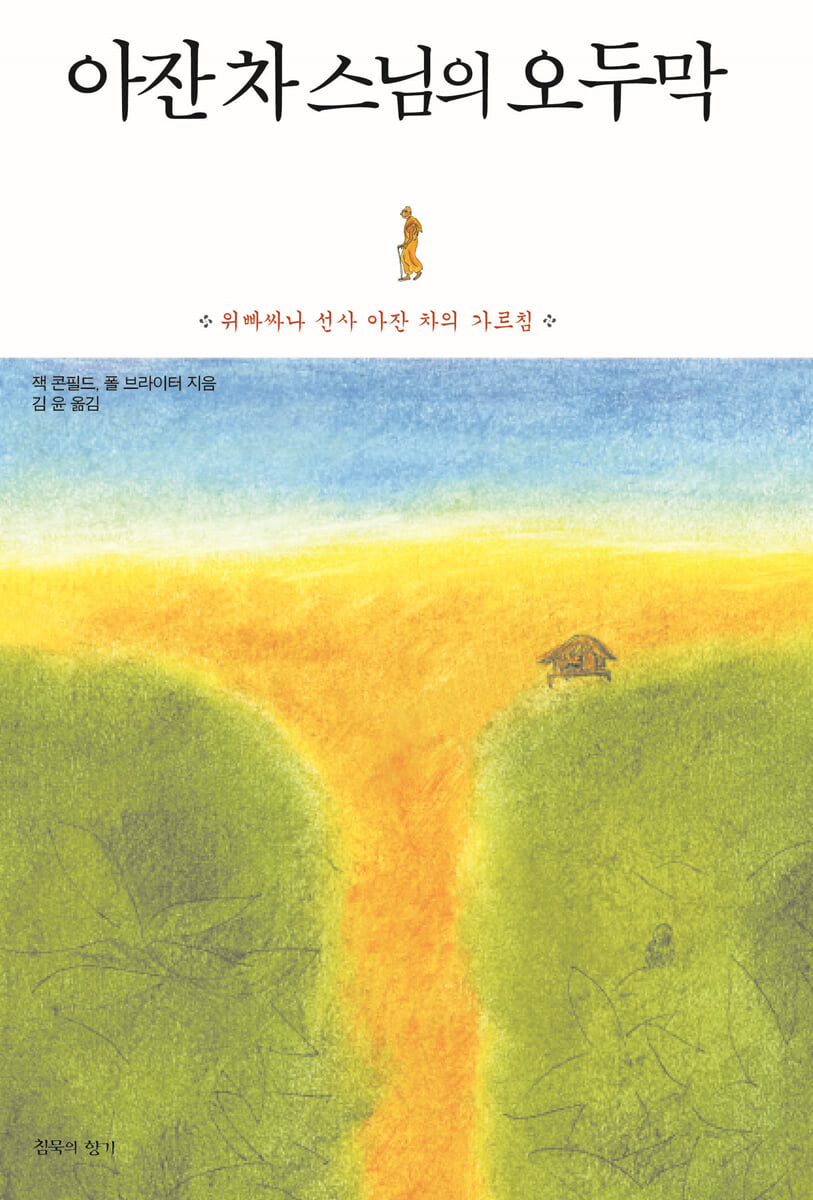 |
Description
Book Introduction
A book loved by the Buddhist monk Beopjeong and recommended by the Buddhist monk Seungsahn!
The practice of seeing everything as it is and letting it go
Ajahn Chah, a monk who is already well known in Korea, is a Thai monk and one of the representative monks of Theravada Buddhism.
Jack Kornfield, who practiced under Venerable Ajahn Chah and is widely known both domestically and internationally as an author of books on Buddhism and meditation, has compiled the Venerable Ajahn Chah's teachings and various anecdotes with Paul Brighter.
Unusually for a Zen master of Seon Buddhism, the preface was written and recommended by Monk Seung Sahn.
Ajahn Chah's teachings are simple and easy.
It is easy to understand because it does not use difficult technical terms and uses examples from everyday life.
The core of Vipassana, as the monk says, is 'letting everything be as it is.'
It's about seeing everything as it is and letting it go.
First, observe your breathing to calm your mind, and then watch your mind to understand the nature of the phenomenal world, which is impermanence, suffering, and non-self, and let it all go.
Unlike other dry, instruction-oriented books, this book, in which Jack Kornfield's writing skills are fully demonstrated, incorporates the warm and leisurely atmosphere of the South, the monk's humor, and the simple life into the sermons and anecdotes, making you feel as if you were actually in a forest monastery in Thailand while reading the book.
The practice of seeing everything as it is and letting it go
Ajahn Chah, a monk who is already well known in Korea, is a Thai monk and one of the representative monks of Theravada Buddhism.
Jack Kornfield, who practiced under Venerable Ajahn Chah and is widely known both domestically and internationally as an author of books on Buddhism and meditation, has compiled the Venerable Ajahn Chah's teachings and various anecdotes with Paul Brighter.
Unusually for a Zen master of Seon Buddhism, the preface was written and recommended by Monk Seung Sahn.
Ajahn Chah's teachings are simple and easy.
It is easy to understand because it does not use difficult technical terms and uses examples from everyday life.
The core of Vipassana, as the monk says, is 'letting everything be as it is.'
It's about seeing everything as it is and letting it go.
First, observe your breathing to calm your mind, and then watch your mind to understand the nature of the phenomenal world, which is impermanence, suffering, and non-self, and let it all go.
Unlike other dry, instruction-oriented books, this book, in which Jack Kornfield's writing skills are fully demonstrated, incorporates the warm and leisurely atmosphere of the South, the monk's humor, and the simple life into the sermons and anecdotes, making you feel as if you were actually in a forest monastery in Thailand while reading the book.
- You can preview some of the book's contents.
Preview
index
introduction
preface
Part 1: Understanding the Buddha's Teachings
Simple way
Moderate
How to End Doubt
See for yourself beyond words
Buddhist psychology
Studying cannot replace experience.
A person who picks up chicken droppings
Thieves in your heart
Part 2: Correcting the Perspective
wrong way
Correct understanding
Starve your worries
Happiness and pain
Discerning mind
How to tame your mind
Problems of the world
Only that much
Follow the teacher
Trust your heart
Why do you perform?
Let the tree grow on its own
Even if it's good at first
Part 3: Life is a Practice
Always stay awake
Don't grab the snake by the tail
virtue
Virtue, concentration, and wisdom are one.
What is natural?
resection
Rely on yourself
Don't imitate
Know yourself and know others.
Leave others alone
true love
Learn from life
Face your heart
Let go
Part 4 Meditation and Practice
Awareness
The Essence of Vipassana: Watch the Mind
walking meditation
Who is sick?
concentration
Practice consistently
You can achieve enlightenment in just 7 days.
Reading sutras is also a practice
Don't mind the time
Some tips for performing
Observe everything
Leaves always fall
Lessons from the Forest Part 5
The Life of a Monk
continence
The precepts are a means
Go left, go right
To control a restless mind
The deep meaning of chanting
Even chores have their own rules
In harmony with others
A monk does not speak useless words.
Fight your lust
Even if the environment changes, the heart remains the same.
Where can I run away?
In search of Buddha
Rely on yourself
Simplify the teachings
Learn how to teach
Learn while teaching
Great food
Ajahn Chah's hut
Holy rituals and hot weather
What is true supernatural power?
Practice for Lay Buddhists
Part 6: A Conversation with the Master
Part 7: Enlightenment
Selflessness
Short and clear
underground water
Buddha's Joy
Picking mangoes
Buddha Outside of Time
Vipassana and Zen
A gong that doesn't ring
There's nothing special
There is nothing in you, truly nothing
Come here
Glossary
About the editor
preface
Part 1: Understanding the Buddha's Teachings
Simple way
Moderate
How to End Doubt
See for yourself beyond words
Buddhist psychology
Studying cannot replace experience.
A person who picks up chicken droppings
Thieves in your heart
Part 2: Correcting the Perspective
wrong way
Correct understanding
Starve your worries
Happiness and pain
Discerning mind
How to tame your mind
Problems of the world
Only that much
Follow the teacher
Trust your heart
Why do you perform?
Let the tree grow on its own
Even if it's good at first
Part 3: Life is a Practice
Always stay awake
Don't grab the snake by the tail
virtue
Virtue, concentration, and wisdom are one.
What is natural?
resection
Rely on yourself
Don't imitate
Know yourself and know others.
Leave others alone
true love
Learn from life
Face your heart
Let go
Part 4 Meditation and Practice
Awareness
The Essence of Vipassana: Watch the Mind
walking meditation
Who is sick?
concentration
Practice consistently
You can achieve enlightenment in just 7 days.
Reading sutras is also a practice
Don't mind the time
Some tips for performing
Observe everything
Leaves always fall
Lessons from the Forest Part 5
The Life of a Monk
continence
The precepts are a means
Go left, go right
To control a restless mind
The deep meaning of chanting
Even chores have their own rules
In harmony with others
A monk does not speak useless words.
Fight your lust
Even if the environment changes, the heart remains the same.
Where can I run away?
In search of Buddha
Rely on yourself
Simplify the teachings
Learn how to teach
Learn while teaching
Great food
Ajahn Chah's hut
Holy rituals and hot weather
What is true supernatural power?
Practice for Lay Buddhists
Part 6: A Conversation with the Master
Part 7: Enlightenment
Selflessness
Short and clear
underground water
Buddha's Joy
Picking mangoes
Buddha Outside of Time
Vipassana and Zen
A gong that doesn't ring
There's nothing special
There is nothing in you, truly nothing
Come here
Glossary
About the editor
Into the book
Always try to be aware.
Let things flow naturally.
Then your mind will be calm in any environment.
Like a clear pond in the forest… … .
All kinds of wonderful and rare animals will come to the pond to drink, and you will see clearly the nature of all things.
You will see countless strange and wonderful things come and go.
But you will be quiet.
This is the happiness of Buddha.
--- p.250
Practice is like walking on a path.
You will encounter obstacles from time to time.
When you encounter afflictions, simply notice them and let them go to overcome them.
Don't think about obstacles you've already overcome, and don't worry about obstacles you haven't seen yet.
Stay in the present.
Don't wonder how much further you have to go to reach your destination.
Everything is always changing.
Whatever you meet, don't hold on to it.
Eventually, the mind will reach a natural balance point, and the practice will happen automatically.
Everything will come and go on its own.
--- p.251
Try to keep your mind solely in the present.
Whatever comes up in your mind, just watch and let it go.
Don't wish for your thoughts to disappear.
Then the mind will return to its natural state.
Do not discriminate between good and bad, hot and cold, fast and slow.
There is no me, no you, no self, only what is now.
--- p.251
Wherever you look, there is law.
Building a building, walking down the street, doing your business in the bathroom, or sitting here in this meditation room, all of these are dharma.
If you look with the right eyes, there is nothing in the world that is not lawful.
But we must understand it correctly.
Happiness and unhappiness, pleasure and pain are always with us.
When you understand that nature, the Buddha and the Dharma are right there.
If you can see clearly, everything you experience moment by moment is the law.
--- p.236
The Buddha said there are two ways of practicing.
Liberation through wisdom and liberation through concentration are the two.
Those who attain liberation through wisdom begin to realize the Dharma as soon as they hear it.
They begin to let go naturally without much effort or intensive practice, because they know that the core of all teachings is to let go, to let things be as they are.
Through this simple practice, you can finally reach that place beyond the self where there is no letting go and no one to hold on to.
On the other hand, others require much more intensive practice, although to varying degrees depending on their background.
It must be done in a rigorous manner over a long period of time.
After that, if you use your focused mind appropriately, you will be able to gain deep insight.
Let things flow naturally.
Then your mind will be calm in any environment.
Like a clear pond in the forest… … .
All kinds of wonderful and rare animals will come to the pond to drink, and you will see clearly the nature of all things.
You will see countless strange and wonderful things come and go.
But you will be quiet.
This is the happiness of Buddha.
--- p.250
Practice is like walking on a path.
You will encounter obstacles from time to time.
When you encounter afflictions, simply notice them and let them go to overcome them.
Don't think about obstacles you've already overcome, and don't worry about obstacles you haven't seen yet.
Stay in the present.
Don't wonder how much further you have to go to reach your destination.
Everything is always changing.
Whatever you meet, don't hold on to it.
Eventually, the mind will reach a natural balance point, and the practice will happen automatically.
Everything will come and go on its own.
--- p.251
Try to keep your mind solely in the present.
Whatever comes up in your mind, just watch and let it go.
Don't wish for your thoughts to disappear.
Then the mind will return to its natural state.
Do not discriminate between good and bad, hot and cold, fast and slow.
There is no me, no you, no self, only what is now.
--- p.251
Wherever you look, there is law.
Building a building, walking down the street, doing your business in the bathroom, or sitting here in this meditation room, all of these are dharma.
If you look with the right eyes, there is nothing in the world that is not lawful.
But we must understand it correctly.
Happiness and unhappiness, pleasure and pain are always with us.
When you understand that nature, the Buddha and the Dharma are right there.
If you can see clearly, everything you experience moment by moment is the law.
--- p.236
The Buddha said there are two ways of practicing.
Liberation through wisdom and liberation through concentration are the two.
Those who attain liberation through wisdom begin to realize the Dharma as soon as they hear it.
They begin to let go naturally without much effort or intensive practice, because they know that the core of all teachings is to let go, to let things be as they are.
Through this simple practice, you can finally reach that place beyond the self where there is no letting go and no one to hold on to.
On the other hand, others require much more intensive practice, although to varying degrees depending on their background.
It must be done in a rigorous manner over a long period of time.
After that, if you use your focused mind appropriately, you will be able to gain deep insight.
--- p.239
Publisher's Review
A book loved by the Buddhist monk Beopjeong and recommended by the Buddhist monk Seungsahn!
The practice of seeing everything as it is and letting it go
The Vipassana meditation method taught by Venerable Ajahn Chah is simple.
The key is to 'let everything be as it is'.
It tells us not to hold on to anything, not even to try to realize it.
He tells us to neither cling nor reject, but to walk the middle path.
But it's not easy to do this from the beginning.
So, it is usually recommended to observe your breathing for the first three months or so.
Once your mind has become somewhat calm, you can then continue to practice mindfulness.
It teaches us to observe all desires, likes and dislikes, pleasures and pains that arise in the mind, and to let them all go, realizing that they are all temporary (impermanence), unsatisfactory (dukkha), and without self (anatta).
Ultimately, the point is to see everything as it is and let it go.
The core and method are simple, but when you actually practice it, you are bound to encounter various misunderstandings, difficulties, and problems.
The monk's rich sermons in this book help solve these problems.
In particular, the '6th Conversation with the Master' contains Q&A sessions with practitioners, and the content is universally applicable not only to Buddhism but also to those who follow other paths of practice.
Meanwhile, what Ajahn Chah emphasizes in his practice is to continue steadily.
He emphasizes the importance of patience and persistence in practice, both for beginners and long-time practitioners.
Perhaps because Ajahn Chah did not receive much education, his teachings are simple and easy compared to other monks.
It rarely uses specialized Buddhist terminology and provides easy-to-understand explanations using examples from everyday life.
Examples of this include comparing the mind to a water buffalo and practice to caring for a water buffalo, or teaching that a person obsessed with Buddhist theory is like "a person who raises chickens but only collects chicken droppings instead of eggs."
The monk teaches that life is practice, so practice in life.
Meditation while sitting is not the only practice. Even the little things we do in our daily lives, such as walking, washing dishes, and cleaning, can be practiced by being mindful of them. He says to continue to be mindful of whatever we are doing.
This is because there is nothing in the world that is not law, and law exists everywhere.
The monk is completely open.
The monk's open mind and insight into the underlying identity of different forms can be seen in anecdotes such as the one where he suggested to Thai monks and villagers, who were displeased with the Christmas celebrations of some Western monks, that they should celebrate Christmas together by calling it "Christian Buddha Mas," or the episode where he said it was okay to call Christianity "Christian Buddhism."
Ajahn Chah was born on June 17, 1918, in a small rural village in northeastern Thailand.
After finishing elementary school, he became a monk for three years according to custom, and upon returning, he helped with the farm work at home before becoming a monk at the age of twenty.
At the age of twenty-four, his father's death triggered a deep contemplation on the true purpose of life. He wandered around practicing asceticism until he met and received teachings from Venerable Ajahn Mun.
For the next seven years, he practiced in the forest according to the tradition of meditation, and in 1954, he was invited by his hometown villagers to live in a forest area near his hometown. Disciples came to him one by one, and a monastery called Wat Ba Pong was started.
After that, Ajahn Chah became known as a representative great monk of Theravada Buddhism, and after teaching numerous disciples in the East and the West for a long time, he entered nirvana on January 16, 1992.
The practice of seeing everything as it is and letting it go
The Vipassana meditation method taught by Venerable Ajahn Chah is simple.
The key is to 'let everything be as it is'.
It tells us not to hold on to anything, not even to try to realize it.
He tells us to neither cling nor reject, but to walk the middle path.
But it's not easy to do this from the beginning.
So, it is usually recommended to observe your breathing for the first three months or so.
Once your mind has become somewhat calm, you can then continue to practice mindfulness.
It teaches us to observe all desires, likes and dislikes, pleasures and pains that arise in the mind, and to let them all go, realizing that they are all temporary (impermanence), unsatisfactory (dukkha), and without self (anatta).
Ultimately, the point is to see everything as it is and let it go.
The core and method are simple, but when you actually practice it, you are bound to encounter various misunderstandings, difficulties, and problems.
The monk's rich sermons in this book help solve these problems.
In particular, the '6th Conversation with the Master' contains Q&A sessions with practitioners, and the content is universally applicable not only to Buddhism but also to those who follow other paths of practice.
Meanwhile, what Ajahn Chah emphasizes in his practice is to continue steadily.
He emphasizes the importance of patience and persistence in practice, both for beginners and long-time practitioners.
Perhaps because Ajahn Chah did not receive much education, his teachings are simple and easy compared to other monks.
It rarely uses specialized Buddhist terminology and provides easy-to-understand explanations using examples from everyday life.
Examples of this include comparing the mind to a water buffalo and practice to caring for a water buffalo, or teaching that a person obsessed with Buddhist theory is like "a person who raises chickens but only collects chicken droppings instead of eggs."
The monk teaches that life is practice, so practice in life.
Meditation while sitting is not the only practice. Even the little things we do in our daily lives, such as walking, washing dishes, and cleaning, can be practiced by being mindful of them. He says to continue to be mindful of whatever we are doing.
This is because there is nothing in the world that is not law, and law exists everywhere.
The monk is completely open.
The monk's open mind and insight into the underlying identity of different forms can be seen in anecdotes such as the one where he suggested to Thai monks and villagers, who were displeased with the Christmas celebrations of some Western monks, that they should celebrate Christmas together by calling it "Christian Buddha Mas," or the episode where he said it was okay to call Christianity "Christian Buddhism."
Ajahn Chah was born on June 17, 1918, in a small rural village in northeastern Thailand.
After finishing elementary school, he became a monk for three years according to custom, and upon returning, he helped with the farm work at home before becoming a monk at the age of twenty.
At the age of twenty-four, his father's death triggered a deep contemplation on the true purpose of life. He wandered around practicing asceticism until he met and received teachings from Venerable Ajahn Mun.
For the next seven years, he practiced in the forest according to the tradition of meditation, and in 1954, he was invited by his hometown villagers to live in a forest area near his hometown. Disciples came to him one by one, and a monastery called Wat Ba Pong was started.
After that, Ajahn Chah became known as a representative great monk of Theravada Buddhism, and after teaching numerous disciples in the East and the West for a long time, he entered nirvana on January 16, 1992.
GOODS SPECIFICS
- Date of issue: December 10, 2024
- Page count, weight, size: 295 pages | 444g | 152*225*14mm
- ISBN13: 9791198675682
- ISBN10: 1198675683
You may also like
카테고리
korean


korean

![GQ KOREA Mark (Monthly): December [2025]](http://librairie.coreenne.fr/cdn/shop/files/8ef265dbbfbf186523ed75ba7319009d.jpg?v=1765340328&width=3840)


