

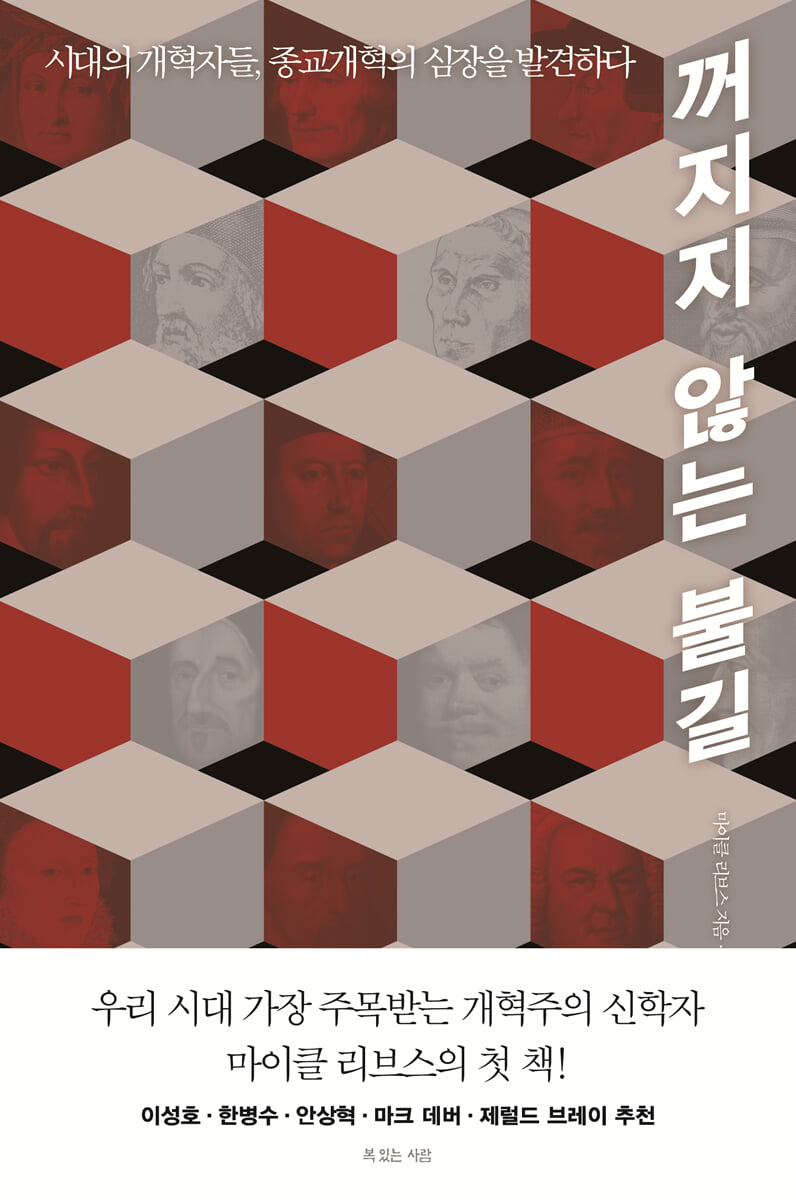
unquenchable flame
 |
Description
Book Introduction
This book has been around for a while,
This will be the best introductory book on the history of the Reformation!
“The first book by Michael Reeves, the most notable Reformed theologian of our time!”
- Recommended by Lee Seong-ho, Han Byeong-su, Ahn Sang-hyeok, Mark Dever, and Gerald Bray
The Reformation was not simply a question of the authority of the Bible.
As Luther observed, what sinners need most of all is a savior.
Above all, the Bible contains a message of salvation.
Christ and the righteousness he gave as a gift were the very heart of true reformation.
Justification was a doctrine that brought comfort and joy to those who accepted that God freely declared sinners righteous.
The Reformation was not, above all, a movement of denial, that is, a movement to break away from Rome.
The Reformation was a movement of affirmation, a movement to advance toward the gospel.
Unfortunately for modern people, who are obsessed with innovation, we cannot simply include the Reformation in the cause of "moving forward."
In fact, the reformers did not move forward, but backward.
Their intention was to reveal to the world the original Christianity, the old Christianity, which had been buried in human tradition for a long time.
In this book, Michael Reeves revives the colorful figures and sects that led the Reformation in the 16th and 17th centuries, unfolding their thoughts and actions.
As a scholar faithful to the theology and history of the Reformation, he accurately identifies the characteristics of the major figures and factions of this period and weaves them into a single story.
However, rather than simply describing the Reformation as a historical story, it reveals the theological foundations that led to the Protestant Reformation from Catholicism.
“Salvation through faith in Christ alone!” He emphasizes the identity of Protestantism, declaring that this is still the motto of the Reformation that is valid today.
The Reformation, which seeks the essence of the gospel, is not yet over.
This will be the best introductory book on the history of the Reformation!
“The first book by Michael Reeves, the most notable Reformed theologian of our time!”
- Recommended by Lee Seong-ho, Han Byeong-su, Ahn Sang-hyeok, Mark Dever, and Gerald Bray
The Reformation was not simply a question of the authority of the Bible.
As Luther observed, what sinners need most of all is a savior.
Above all, the Bible contains a message of salvation.
Christ and the righteousness he gave as a gift were the very heart of true reformation.
Justification was a doctrine that brought comfort and joy to those who accepted that God freely declared sinners righteous.
The Reformation was not, above all, a movement of denial, that is, a movement to break away from Rome.
The Reformation was a movement of affirmation, a movement to advance toward the gospel.
Unfortunately for modern people, who are obsessed with innovation, we cannot simply include the Reformation in the cause of "moving forward."
In fact, the reformers did not move forward, but backward.
Their intention was to reveal to the world the original Christianity, the old Christianity, which had been buried in human tradition for a long time.
In this book, Michael Reeves revives the colorful figures and sects that led the Reformation in the 16th and 17th centuries, unfolding their thoughts and actions.
As a scholar faithful to the theology and history of the Reformation, he accurately identifies the characteristics of the major figures and factions of this period and weaves them into a single story.
However, rather than simply describing the Reformation as a historical story, it reveals the theological foundations that led to the Protestant Reformation from Catholicism.
“Salvation through faith in Christ alone!” He emphasizes the identity of Protestantism, declaring that this is still the motto of the Reformation that is valid today.
The Reformation, which seeks the essence of the gospel, is not yet over.
index
Prologue: Here I Stand
Chapter 1.
The Religious Situation in the Middle Ages: Background to the Reformation
Popes, Priests, and Purgatory | A Dynamic Age or a Sick Age? | Signs of the End | The Morning Star of the Reformation | Books, Dangerous Books
Chapter 2.
God's Volcano: Martin Luther
"When the coin clatters into the coffer, the soul leaps from purgatory" | From son of Rome to heretic | Entering paradise through open doors | "Sunlight drives away the night" | Kidnapped | How to reform the church | Katharina von Bora | What is this Reformation? | Passing the Reformation on to posterity
Chapter 3.
Soldiers, Sausages, and Revolution: Ulrich Zwingli and the Radical Reformers
Strange New World | The Gentle Soldier | Zurich Restored | Taking Up the Sword for God | Becoming Radical | Twin Whirlwinds: Müntzer and Münster | Sausage Gate | What Should You Believe: The Bible? The Holy Spirit? Reason?
Chapter 4.
Light Comes After Darkness: John Calvin
Renaissance | France in flames | "They were wandering, persecuted, and wronged" | Finding hope | Returning to the battlefield | The tide turns | "To this day, no one knows where his grave is."
Chapter 5.
Burning Passion: The Reformation in Britain
Dynasty: A Melodrama | King Josiah of England | Bloody Mary: A Disgusting Cocktail | "This is the Lord's doing; it is marvelous in our eyes" | North of the Border | Politics and Theology
Chapter 6.
Reform the Reformation: The Puritans
Who Were the Puritans? | Righteous But Unpalatable? | Eliminating 'Roman Catholicism' | The Smartest Fool in Christendom | Driven to the Brink | "A New and Great Era" | The Pleasant Monarch
Chapter 7.
Is the Reformation Over?
"The most important and sensitive topic of debate between us" | 400 years later | "O pale Erasmus! You have conquered, your breath has turned the world gray" | We have the Bible, but not the Gospel | Back to the Future
main
Recommended books
Search
Chapter 1.
The Religious Situation in the Middle Ages: Background to the Reformation
Popes, Priests, and Purgatory | A Dynamic Age or a Sick Age? | Signs of the End | The Morning Star of the Reformation | Books, Dangerous Books
Chapter 2.
God's Volcano: Martin Luther
"When the coin clatters into the coffer, the soul leaps from purgatory" | From son of Rome to heretic | Entering paradise through open doors | "Sunlight drives away the night" | Kidnapped | How to reform the church | Katharina von Bora | What is this Reformation? | Passing the Reformation on to posterity
Chapter 3.
Soldiers, Sausages, and Revolution: Ulrich Zwingli and the Radical Reformers
Strange New World | The Gentle Soldier | Zurich Restored | Taking Up the Sword for God | Becoming Radical | Twin Whirlwinds: Müntzer and Münster | Sausage Gate | What Should You Believe: The Bible? The Holy Spirit? Reason?
Chapter 4.
Light Comes After Darkness: John Calvin
Renaissance | France in flames | "They were wandering, persecuted, and wronged" | Finding hope | Returning to the battlefield | The tide turns | "To this day, no one knows where his grave is."
Chapter 5.
Burning Passion: The Reformation in Britain
Dynasty: A Melodrama | King Josiah of England | Bloody Mary: A Disgusting Cocktail | "This is the Lord's doing; it is marvelous in our eyes" | North of the Border | Politics and Theology
Chapter 6.
Reform the Reformation: The Puritans
Who Were the Puritans? | Righteous But Unpalatable? | Eliminating 'Roman Catholicism' | The Smartest Fool in Christendom | Driven to the Brink | "A New and Great Era" | The Pleasant Monarch
Chapter 7.
Is the Reformation Over?
"The most important and sensitive topic of debate between us" | 400 years later | "O pale Erasmus! You have conquered, your breath has turned the world gray" | We have the Bible, but not the Gospel | Back to the Future
main
Recommended books
Search
Into the book
“In fact, if everyone had longed for the kind of change that the Reformation brought about, it would have been nothing more than a natural social movement or moral purification.
The reformers always denied this.
The Reformation was not a moral reform brought about by the masses.
It was a challenge to the very core of Christianity.
The Reformers argued that God's Word penetrates the world and changes it.
It was an event that no one could have predicted, and it was truly against human nature.
“It was not a human act, but a bomb thrown by God.”
---「Chapter 1.
From “The Religious Situation in the Middle Ages: The Background of the Reformation”
“In this ‘tower experience,’ Luther discovered a completely different God, a God who relates to us in a completely different way.
God's righteousness, God's glory, God's wisdom—all of these did not separate us from God.
God owns these things and shares them with us.
Here Luther first saw the truly good news of a merciful and generous God.
This God is the one who gives his own righteousness as a gift to sinners.
If so, the Christian life cannot be the struggle of a sinner trying to achieve a worthless human righteousness.
Rather, that life was an acceptance of God’s perfect righteousness, which only He possesses.”
---「Chapter 2.
From "God's Volcano: Martin Luther"
“Calvin devoted much time to preaching and teaching.
He lectured three times a week, preached twice every Sunday, and did so on every other weekday.
He considered this to be the core of the Reformation, as did Luther and Zwingli.
Calvin also wrote commentaries on nearly every book of the Bible to help preachers elsewhere.
These commentaries were of a completely different kind from those known to Europe before.
The goal of Calvin's commentary was to be 'easy, concise, and unambiguous'.
Through a sudden conversion, Calvin became convinced that God gives life, but only through His Word, and this became the essence of his life's work.
---「Chapter 4.
From "Light Comes After Darkness: John Calvin"
“Eventually, the church’s wrath reached Tyndale.
However, by this time Tyndale had translated a significant portion of the Old Testament, and there were about 6,000 copies of his translation smuggled into England.
It was an incredible feat in a time when as many as 2.5 million people were illiterate.
Tyndale was captured in 1535 and publicly strangled and burned at the stake near Brussels the following October.
As he lay dying, he shouted his last words that would never fade away.
“Lord, open the eyes of the King of England!”
---「Chapter 5.
From "Burning Passion: The Reformation in Britain"
"Who were the Puritans? John Milton called them 'the reformers of the Reformation,' and perhaps his definition is the best.
Because that was the goal that all Puritans unanimously pursued.
The Puritans did not consider themselves pure.
But they wanted to purify what was not yet purified within the church and within themselves.
They wanted reform.
They had quite different ideas about what the Reformation should look like, but they wanted to apply the Reformation to everything it had not yet reached.”
The reformers always denied this.
The Reformation was not a moral reform brought about by the masses.
It was a challenge to the very core of Christianity.
The Reformers argued that God's Word penetrates the world and changes it.
It was an event that no one could have predicted, and it was truly against human nature.
“It was not a human act, but a bomb thrown by God.”
---「Chapter 1.
From “The Religious Situation in the Middle Ages: The Background of the Reformation”
“In this ‘tower experience,’ Luther discovered a completely different God, a God who relates to us in a completely different way.
God's righteousness, God's glory, God's wisdom—all of these did not separate us from God.
God owns these things and shares them with us.
Here Luther first saw the truly good news of a merciful and generous God.
This God is the one who gives his own righteousness as a gift to sinners.
If so, the Christian life cannot be the struggle of a sinner trying to achieve a worthless human righteousness.
Rather, that life was an acceptance of God’s perfect righteousness, which only He possesses.”
---「Chapter 2.
From "God's Volcano: Martin Luther"
“Calvin devoted much time to preaching and teaching.
He lectured three times a week, preached twice every Sunday, and did so on every other weekday.
He considered this to be the core of the Reformation, as did Luther and Zwingli.
Calvin also wrote commentaries on nearly every book of the Bible to help preachers elsewhere.
These commentaries were of a completely different kind from those known to Europe before.
The goal of Calvin's commentary was to be 'easy, concise, and unambiguous'.
Through a sudden conversion, Calvin became convinced that God gives life, but only through His Word, and this became the essence of his life's work.
---「Chapter 4.
From "Light Comes After Darkness: John Calvin"
“Eventually, the church’s wrath reached Tyndale.
However, by this time Tyndale had translated a significant portion of the Old Testament, and there were about 6,000 copies of his translation smuggled into England.
It was an incredible feat in a time when as many as 2.5 million people were illiterate.
Tyndale was captured in 1535 and publicly strangled and burned at the stake near Brussels the following October.
As he lay dying, he shouted his last words that would never fade away.
“Lord, open the eyes of the King of England!”
---「Chapter 5.
From "Burning Passion: The Reformation in Britain"
"Who were the Puritans? John Milton called them 'the reformers of the Reformation,' and perhaps his definition is the best.
Because that was the goal that all Puritans unanimously pursued.
The Puritans did not consider themselves pure.
But they wanted to purify what was not yet purified within the church and within themselves.
They wanted reform.
They had quite different ideas about what the Reformation should look like, but they wanted to apply the Reformation to everything it had not yet reached.”
---「Chapter 6.
From "Reform the Reformation: The Puritans"
From "Reform the Reformation: The Puritans"
Publisher's Review
characteristic
- The first book in Korea by Michael Reeves, a prominent reformed theologian.
- A masterpiece that captures the background, characters, and characteristics of the religious reformation through a story.
- A perspective-based account of church history that clearly reveals the identity of the Reformation.
For readers
- Christians who are curious about the Reformation and the identity of Protestantism
- Readers looking for an easy and fun introduction to the history of the Reformation
- Pastors and seminarians who learn and teach the Word
Recommendation
Now, I no longer have to hesitate when students ask me to recommend just one good book on the history of the Reformation.
I am confident that "The Unquenchable Flame" will remain the definitive introductory text on the history of the Reformation for some time to come.
As the subtitle of this book, “Reformers of the Age, Discovering the Heart of the Reformation,” suggests, this book effectively conveys the meaning of the Reformation to readers by focusing on the core issues of the time.
After reading this book, you will feel confident enough to tackle more detailed specialized books on the Reformation.
Lee Seong-ho, Professor of Historical Theology at Korea Theological Seminary
Michael Reeves is a theologian with the passionate heart of a pastor, the high sensitivity of a writer, and a delicious writing style.
With the sad diagnosis that today's professional theologians are generally not preachers and that preachers lack theological knowledge, Reeves, who took up his writing pen, advocates for the ongoing reform of Christianity and introduces the groundbreaking reform of the 16th century, when doctrine and life were one, as a model for the reform that is still needed today.
In particular, this book does not dryly list the history of the Reformation, but rather revives the vividness of that era with a novelistic tone.
I would like to recommend this book to all believers, including seminarians and pastors.
Han Byeong-su, Professor of Systematic Theology at Asia United Theological University
"The Unquenchable Flame" is a very useful and valuable book.
The author concisely summarizes the major events, themes, and issues related to the Reformation of Luther, Zwingli, the Anabaptists, Calvin, and the Puritans, focusing on the core theology of the Reformation.
I am happy to recommend this book to readers looking for an accessible, engaging, yet concise introduction to the Reformation.
Sang-hyeok Ahn, Professor of Historical Theology at the Joint Graduate School of Theology
Michael Reeves combines the mature scholarship of a scholar with the exquisite storyteller's skill to create one of the simplest yet most compelling introductions to the Reformation I've ever read.
If you're looking for a book to help you understand the Reformation or to begin your study of church history, this book will bring that history to life.
Mark Dever, Senior Pastor, Capital Hall Baptist Church
This book vividly explains this pivotal event in Christian history with a contemporary focus, and will stir our hearts, renew our souls, and guide our minds toward a deeper understanding of faith.
Gerald Bray, Professor of Historical Theology, Beeson Theological Seminary
- The first book in Korea by Michael Reeves, a prominent reformed theologian.
- A masterpiece that captures the background, characters, and characteristics of the religious reformation through a story.
- A perspective-based account of church history that clearly reveals the identity of the Reformation.
For readers
- Christians who are curious about the Reformation and the identity of Protestantism
- Readers looking for an easy and fun introduction to the history of the Reformation
- Pastors and seminarians who learn and teach the Word
Recommendation
Now, I no longer have to hesitate when students ask me to recommend just one good book on the history of the Reformation.
I am confident that "The Unquenchable Flame" will remain the definitive introductory text on the history of the Reformation for some time to come.
As the subtitle of this book, “Reformers of the Age, Discovering the Heart of the Reformation,” suggests, this book effectively conveys the meaning of the Reformation to readers by focusing on the core issues of the time.
After reading this book, you will feel confident enough to tackle more detailed specialized books on the Reformation.
Lee Seong-ho, Professor of Historical Theology at Korea Theological Seminary
Michael Reeves is a theologian with the passionate heart of a pastor, the high sensitivity of a writer, and a delicious writing style.
With the sad diagnosis that today's professional theologians are generally not preachers and that preachers lack theological knowledge, Reeves, who took up his writing pen, advocates for the ongoing reform of Christianity and introduces the groundbreaking reform of the 16th century, when doctrine and life were one, as a model for the reform that is still needed today.
In particular, this book does not dryly list the history of the Reformation, but rather revives the vividness of that era with a novelistic tone.
I would like to recommend this book to all believers, including seminarians and pastors.
Han Byeong-su, Professor of Systematic Theology at Asia United Theological University
"The Unquenchable Flame" is a very useful and valuable book.
The author concisely summarizes the major events, themes, and issues related to the Reformation of Luther, Zwingli, the Anabaptists, Calvin, and the Puritans, focusing on the core theology of the Reformation.
I am happy to recommend this book to readers looking for an accessible, engaging, yet concise introduction to the Reformation.
Sang-hyeok Ahn, Professor of Historical Theology at the Joint Graduate School of Theology
Michael Reeves combines the mature scholarship of a scholar with the exquisite storyteller's skill to create one of the simplest yet most compelling introductions to the Reformation I've ever read.
If you're looking for a book to help you understand the Reformation or to begin your study of church history, this book will bring that history to life.
Mark Dever, Senior Pastor, Capital Hall Baptist Church
This book vividly explains this pivotal event in Christian history with a contemporary focus, and will stir our hearts, renew our souls, and guide our minds toward a deeper understanding of faith.
Gerald Bray, Professor of Historical Theology, Beeson Theological Seminary
GOODS SPECIFICS
- Date of publication: March 16, 2016
- Page count, weight, size: 204 pages | 420g | 142*214*20mm
- ISBN13: 9791170830450
- ISBN10: 1170830455
You may also like
카테고리
korean


korean

![GQ KOREA Mark (Monthly): December [2025]](http://librairie.coreenne.fr/cdn/shop/files/8ef265dbbfbf186523ed75ba7319009d.jpg?v=1765340328&width=3840)


