

Bible Buildup
 |
Description
Book Introduction
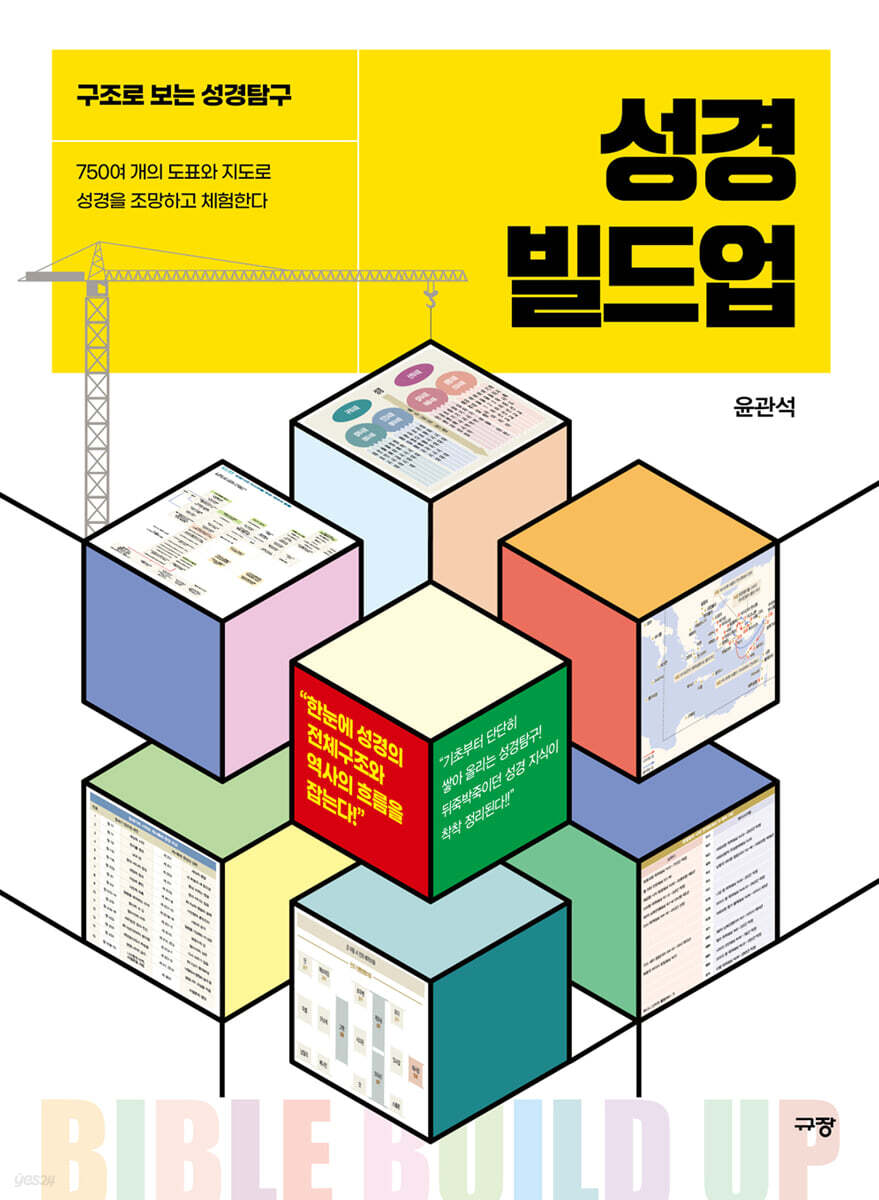
“Grab the entire structure and flow of history of the Bible at a glance!” A Bible exploration that builds a solid foundation from the ground up! Your jumbled Bible knowledge will be organized! Explore and experience the Bible with over 750 charts and maps. Organize and understand the Bible clearly by structuring it into 24 periods in the four parts of the Old and New Testaments. Studying the Bible through Structure: "Bible Buildup" allows you to see the entire mountain of the Bible's structure at a glance. The flow of biblical history is organized chronologically. The revelational meaning, which is the essence of the Bible, is illuminated, giving us confidence in the history of redemption. Indirectly experience and remember the contents and activities of the Bible. |
- You can preview some of the book's contents.
Preview
index
prolog
Note
Orientation 1
Ⅰ The Age of the Father (Age of Creation)
Chapter 1: The Beginning
Lecture 2: The Era of the Chosen People
Lesson 3: The Exodus
Lecture 4: The Wilderness Age
Chapter 5: The Age of Conquest
Lecture 6: The Settlement Era
Ⅱ Human Age (Kingdom Age)
Chapter 7: The Unified Kingdom Era
Chapter 8: The Age of the Divided Kingdom
Lesson 9: The Kingdom of Judah
Lesson 10: The Age of Captivity
Lesson 11: The Age of Return
Lecture 12: The Silent Age
Orientation 2
Ⅲ Age of the Saints (Era of the Gospel)
Lesson 13: Birth and Growth
Lesson 14: The Beginning of Coexistence
Lesson 15: Early Ministry
Lesson 16: The Midterm Mission
Lesson 17: The Last Ministry
Lesson 18: Cross? Resurrection? Ascension
Special Lecture on the Four Gospels
Ⅳ The Age of the Holy Spirit (The Age of Missions)
Lesson 19: Missions to Jerusalem, Judea, and Samaria
Lesson 20: Paul's First Missionary Journey
Lesson 21: Paul's Second Missionary Journey
Lesson 22: Paul's Third Missionary Journey
Lesson 23: Paul's Prison Mission
Lesson 24: Other Apostles and Revelation
Epilogue
supplement
Note
Orientation 1
Ⅰ The Age of the Father (Age of Creation)
Chapter 1: The Beginning
Lecture 2: The Era of the Chosen People
Lesson 3: The Exodus
Lecture 4: The Wilderness Age
Chapter 5: The Age of Conquest
Lecture 6: The Settlement Era
Ⅱ Human Age (Kingdom Age)
Chapter 7: The Unified Kingdom Era
Chapter 8: The Age of the Divided Kingdom
Lesson 9: The Kingdom of Judah
Lesson 10: The Age of Captivity
Lesson 11: The Age of Return
Lecture 12: The Silent Age
Orientation 2
Ⅲ Age of the Saints (Era of the Gospel)
Lesson 13: Birth and Growth
Lesson 14: The Beginning of Coexistence
Lesson 15: Early Ministry
Lesson 16: The Midterm Mission
Lesson 17: The Last Ministry
Lesson 18: Cross? Resurrection? Ascension
Special Lecture on the Four Gospels
Ⅳ The Age of the Holy Spirit (The Age of Missions)
Lesson 19: Missions to Jerusalem, Judea, and Samaria
Lesson 20: Paul's First Missionary Journey
Lesson 21: Paul's Second Missionary Journey
Lesson 22: Paul's Third Missionary Journey
Lesson 23: Paul's Prison Mission
Lesson 24: Other Apostles and Revelation
Epilogue
supplement
Detailed image

Into the book
There is a parable we often use: a man who was studying a mountain studied every tree, rock, and bush on the mountain, but did not know anything about the mountain itself.
But that's how I was.
Even though I studied hard, I couldn't immediately recall what I had studied and explain it with concrete knowledge. So, I always had this feeling of regret: "How can I understand the Bible more clearly and remember what I've studied for a long time?"
--- p.4
If we do not understand the essential meaning of God's creation and providence, we may gain lifeless literary knowledge, but we will miss the spiritual lessons that are the way, the truth, and the life, and ultimately we will not understand the meaning of the world and human existence.
If the revelatory meaning, which is the essence of the Bible, is not illuminated in our hearts, no matter how much we grasp its structure, how much we know about its chronology, its events, and all its knowledge, we are nothing and will benefit us nothing.
--- p.18
This is precisely why those who study the Bible diligently find it difficult and frustrating.
However, if you know the precise structural framework of the Bible you are studying, the Bible's historical position and flow will be clearly understood and remembered, just as a bird's eye view reveals the interior of a building.
Therefore, it is very important to study the Bible by knowing its structure and framework.
《Bible Buildup》 will clearly establish this structure and framework that serves as the central point of Bible study.
--- p.23
This is merely a conceptual classification for better remembering the Bible, and does not refer to the individual ministries of each person of the Trinity.
That is, it should not be understood as, 'In the age of the Father, only God the Father worked, and in the age of the Son, neither God the Father nor God the Holy Spirit worked.'
--- p.26
Genesis, the first book of the Bible, and Revelation, the last book, are the introduction and conclusion of the Bible, the great book that records God's redemptive history.
What began in Genesis is fulfilled and concluded in Revelation.
The two books are connected and contrast sharply with each other.
There are countless other fulfillments of Genesis in Revelation, beyond those recorded in the following chart.
In this chart, we can examine the results of several significant symbolic events that began in Genesis, the origin of the world, and were fulfilled in Revelation, which records the last days.
--- p.43
These two purposes proclaimed in Genesis were presented in Leviticus after Adam's sin through the way to approach God (chapters 1-17) and the way to live with God (chapters 18-27).
In the New Testament era, Jesus called twelve disciples, and the purpose was to have them stay with him and send them out to preach.
But that's how I was.
Even though I studied hard, I couldn't immediately recall what I had studied and explain it with concrete knowledge. So, I always had this feeling of regret: "How can I understand the Bible more clearly and remember what I've studied for a long time?"
--- p.4
If we do not understand the essential meaning of God's creation and providence, we may gain lifeless literary knowledge, but we will miss the spiritual lessons that are the way, the truth, and the life, and ultimately we will not understand the meaning of the world and human existence.
If the revelatory meaning, which is the essence of the Bible, is not illuminated in our hearts, no matter how much we grasp its structure, how much we know about its chronology, its events, and all its knowledge, we are nothing and will benefit us nothing.
--- p.18
This is precisely why those who study the Bible diligently find it difficult and frustrating.
However, if you know the precise structural framework of the Bible you are studying, the Bible's historical position and flow will be clearly understood and remembered, just as a bird's eye view reveals the interior of a building.
Therefore, it is very important to study the Bible by knowing its structure and framework.
《Bible Buildup》 will clearly establish this structure and framework that serves as the central point of Bible study.
--- p.23
This is merely a conceptual classification for better remembering the Bible, and does not refer to the individual ministries of each person of the Trinity.
That is, it should not be understood as, 'In the age of the Father, only God the Father worked, and in the age of the Son, neither God the Father nor God the Holy Spirit worked.'
--- p.26
Genesis, the first book of the Bible, and Revelation, the last book, are the introduction and conclusion of the Bible, the great book that records God's redemptive history.
What began in Genesis is fulfilled and concluded in Revelation.
The two books are connected and contrast sharply with each other.
There are countless other fulfillments of Genesis in Revelation, beyond those recorded in the following chart.
In this chart, we can examine the results of several significant symbolic events that began in Genesis, the origin of the world, and were fulfilled in Revelation, which records the last days.
--- p.43
These two purposes proclaimed in Genesis were presented in Leviticus after Adam's sin through the way to approach God (chapters 1-17) and the way to live with God (chapters 18-27).
In the New Testament era, Jesus called twelve disciples, and the purpose was to have them stay with him and send them out to preach.
--- p.342
Publisher's Review
A Bible study guide that lays out the Bible's framework and traverses its flow through structure.
“Why does the more diligently I study the Bible, the more confusing it becomes?”
Does Abraham come first, or Moses? Where in the Bible should I turn to find the story of Elijah? Who was the king of Israel who was bewildered when Naaman came to see the prophet? Do I understand the Bible verses I memorize in their correct context? Where does the book of Romans fit in the book of Acts, and which of Paul's missionary journeys is it related to? I study the Bible with passion, out of a love for the Word, but no matter how hard I study, answers to Bible questions seem elusive. Paradoxically, as my knowledge of the Bible grows, I become increasingly confused and my memory becomes less and less, leading to a loss of motivation.
Because we only saw the trees and not the whole forest (the whole structure of the Bible).
I understand the position of the time period I am studying within the overall structure of the Bible and approach the details.
Having studied and taught the Bible for 25 years in workplace fellowships and missionary organizations, the author, who felt this limitation, pondered how to experience and remember the Bible as an unforgettable testimony, experimenting with various methods. By studying practically and reflecting on feedback in various small Bible study groups, he established a structured approach to exploring the Bible.
This method structures the Bible into 24 eras in the four parts of the Old and New Testaments, giving an overview of the whole, and then gradually delving into the details of each era.
Here, we organize the content of one chapter, related content across multiple chapters or multiple Bibles, and related content spanning the Old and New Testaments in a diagram, organize history in a chronological order, and organize the actions of people by drawing along a map.
The 66 books and 1,189 chapters of the Bible are fully summarized and organized with over 700 charts and 50 maps, and a wealth of supplementary materials are included, ensuring a thorough and enriching Bible study.
I highly recommend this book to anyone who wants to study the Bible properly, anyone who feels they have many gaps in their Bible knowledge, lay leaders, seminarians, and pastors who lead lay Bible studies.
“Why does the more diligently I study the Bible, the more confusing it becomes?”
Does Abraham come first, or Moses? Where in the Bible should I turn to find the story of Elijah? Who was the king of Israel who was bewildered when Naaman came to see the prophet? Do I understand the Bible verses I memorize in their correct context? Where does the book of Romans fit in the book of Acts, and which of Paul's missionary journeys is it related to? I study the Bible with passion, out of a love for the Word, but no matter how hard I study, answers to Bible questions seem elusive. Paradoxically, as my knowledge of the Bible grows, I become increasingly confused and my memory becomes less and less, leading to a loss of motivation.
Because we only saw the trees and not the whole forest (the whole structure of the Bible).
I understand the position of the time period I am studying within the overall structure of the Bible and approach the details.
Having studied and taught the Bible for 25 years in workplace fellowships and missionary organizations, the author, who felt this limitation, pondered how to experience and remember the Bible as an unforgettable testimony, experimenting with various methods. By studying practically and reflecting on feedback in various small Bible study groups, he established a structured approach to exploring the Bible.
This method structures the Bible into 24 eras in the four parts of the Old and New Testaments, giving an overview of the whole, and then gradually delving into the details of each era.
Here, we organize the content of one chapter, related content across multiple chapters or multiple Bibles, and related content spanning the Old and New Testaments in a diagram, organize history in a chronological order, and organize the actions of people by drawing along a map.
The 66 books and 1,189 chapters of the Bible are fully summarized and organized with over 700 charts and 50 maps, and a wealth of supplementary materials are included, ensuring a thorough and enriching Bible study.
I highly recommend this book to anyone who wants to study the Bible properly, anyone who feels they have many gaps in their Bible knowledge, lay leaders, seminarians, and pastors who lead lay Bible studies.
GOODS SPECIFICS
- Date of issue: February 21, 2023
- Page count, weight, size: 584 pages | 1,158g | 188*257*28mm
- ISBN13: 9791165044138
- ISBN10: 1165044137
You may also like
카테고리
korean


korean

![GQ KOREA Mark (Monthly): December [2025]](http://librairie.coreenne.fr/cdn/shop/files/8ef265dbbfbf186523ed75ba7319009d.jpg?v=1765340328&width=3840)


