

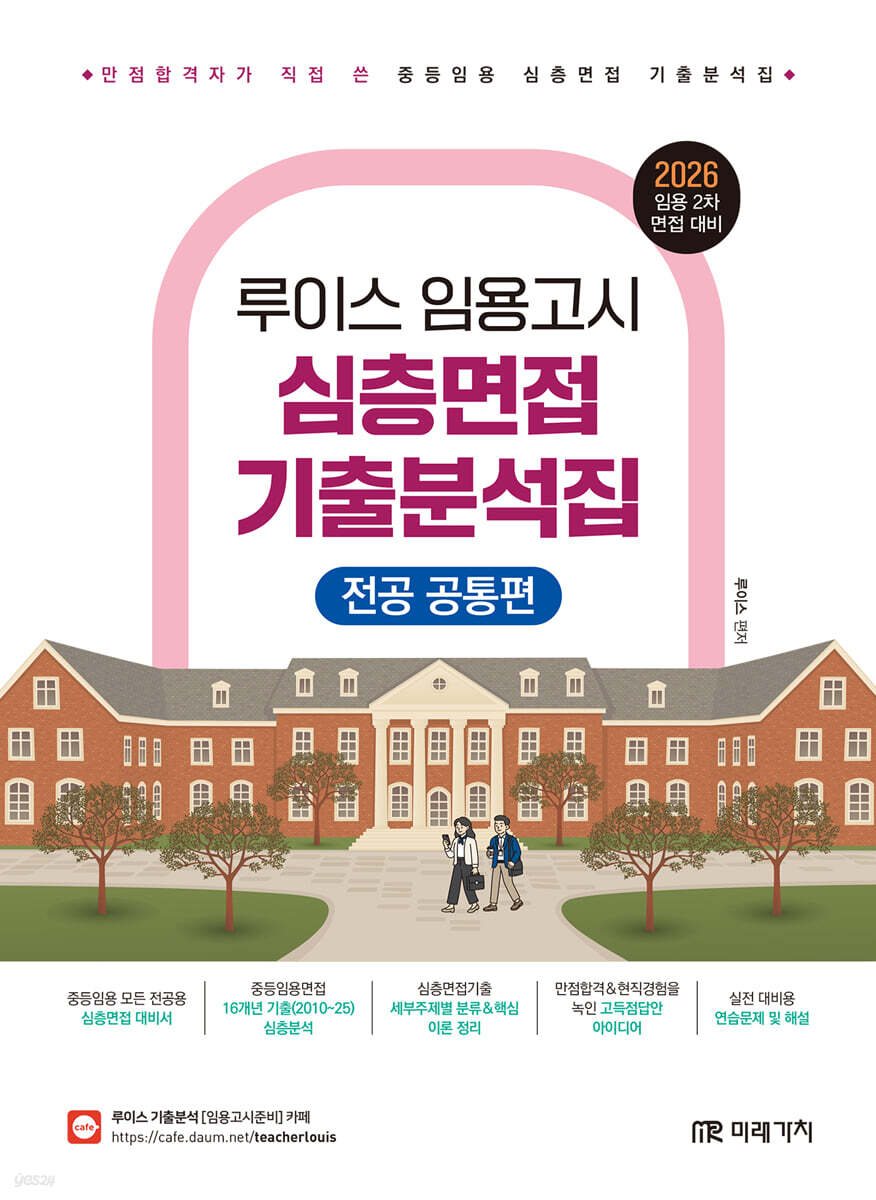
2026 Lewis Civil Service Exam In-Depth Interview Analysis Collection (Common Major)
 |
Description
Book Introduction
1.
In-depth interview preparation guide for all majors for secondary school teacher certification
2.
In-depth analysis of 16 years of secondary school teacher interview questions (2010-2025)
3.
In-depth interview questions categorized by topic and summarized by key theories
4.
Perfect Pass & High-Score Answer Ideas Incorporating Current Work Experience
5.
Practice questions and answers for the actual exam
In-depth interview preparation guide for all majors for secondary school teacher certification
2.
In-depth analysis of 16 years of secondary school teacher interview questions (2010-2025)
3.
In-depth interview questions categorized by topic and summarized by key theories
4.
Perfect Pass & High-Score Answer Ideas Incorporating Current Work Experience
5.
Practice questions and answers for the actual exam
- You can preview some of the book's contents.
Preview
index
Part 1 School Operations
1.
Recent school operation direction
Chapter 1 Future Education
Category 1.
The direction of school education in the future society
Category 2.
The competencies and roles of teachers and students in the future society
Category 3.
Green Smart School
Chapter 2 High School Credit System
Category 1.
Understanding the concept and system of the high school credit system
Category 2.
Solving the High School Credit System Problems (Subject Selection, Structural Operational Issues)
Chapter 3 Community-Linked Education (Village Education Community)
Chapter 4: Democratic Citizenship Education/Digital and Media Literacy Education/Student Autonomy
Category 1.
Democratic Citizenship Education Plan
Category 2.
Digital Citizenship and Digital Media Literacy Education
Category 3.
Student self-government activities, democratic school operation, school autonomy
Chapter 5 Clubs/Creative Experiences/School Programs
Category 1.
Operation of on-campus programs such as clubs and festivals
Category 2.
End-of-year program/autonomous education course
2.
Required education
Chapter 6 Environmental Education/Ecological Education
Chapter 7 Reading Education
Category 1.
Curriculum-linked reading education
Category 2.
Reading education program, club operation
Chapter 8 Character Education
Chapter 9 Career Education
Category 1.
Career education plan (program), career guidance capacity, career counseling
Category 2.
Curriculum-linked, regionally-linked career guidance
Part 2 Classes/Assessments
1.
Classes, teaching skills development
Chapter 1: EdTech and AI-Based Classes
Category 1.
EdTech-based classes
Category 2.
Online classes and online class troubleshooting
Chapter 2: Cooperative Learning, Integrated Classes, and Discussion Classes
Category 1.
Problem solving in cooperative learning
Category 2.
Fusion classes
Category 3.
Discussion class
Chapter 3: Improving Teaching Ability/Teaching Competency
Category 1.
Student-centered teaching skills
Category 2.
Ability to increase student participation and understanding in class, reflecting on class
2.
evaluation
Chapter 4: Assessment, IB Curriculum
Category 1.
Process-centered evaluation, integration of curriculum, classes, and evaluation
Category 2. IB Curriculum
Category 3.
Principles of evaluation, problem solving, and performance evaluation operation
Part 3: Life Guidance/Class Management
1.
Guidance for students who are maladjusted to school
Chapter 1: Guidance of Multicultural and Special Needs Students
Category 1.
Multicultural Student Guidance
Category 2.
Special education student guidance
Chapter 2: Guiding Apathetic and Depressed Students
Chapter 3: Guidance for Basic Academic Abilities/Learning Motivation/Literacy
Category 1.
Basic academic guidance, guidance for students lacking motivation to learn
Category 2.
Guidance for students with literacy deficiencies
Chapter 4: Guidance for Students at Risk (Self-harm, Suicide, and Dropout Risk)
Category 1.
Guidance for students showing signs of self-harm or suicide
Category 2.
Student guidance during the academic suspension period (withdrawal)
2.
Guidance for individual student problem behavior
Chapter 5: Class Disruption and Maladjustment
Chapter 6: School Violence/Student Fights/Aggressive Behavior/Bullying Guidance
Category 1.
Guiding Students with Aggressive Behavior
Category 2.
School violence, student fights, bullying
Category 3.
Resolving student disputes
Category 4.
cyberbullying
Chapter 7 Restorative Life Guidance/Relationship-Centered Life Guidance
Chapter 8 Safety Guidance/Safety Education
Category 1.
Safety education plan, safety accident response plan
Chapter 9 Other Life Guidance
Category 1.
Internet/smartphone addiction
Category 2.
Theft Behavior Guidance, Penalty Point Guidance
Category 3.
School group activities/program life guidance
3.
Class management
Chapter 10 Classroom Management Program/Classroom Management Philosophy
Category 1.
Class management with others
Category 2.
Class management that follows rules
Category 3.
Class activities at the beginning of the semester
Chapter 11 Student Counseling
Part 4: Teaching Philosophy/Educational Philosophy/Teacher's Attitude
1.
Teacher's attitude and educational philosophy
Chapter 1: Teaching Philosophy/Educational Philosophy/Teacher's Attitude
Category 1.
educational philosophy, educational beliefs
Category 2.
Student Award, Student Growth
Category 3.
Building relationships with students
Category 4.
Teacher's life, teacher's growth, and restoration of teacher's authority
Chapter 2 Teachers' Duties/Services
Chapter 3: Educational Equality/Educational Society
2.
Relationships with colleagues/parents, teacher community
Chapter 4: Relationships with Fellow Teachers and the Teacher Community
Category 1.
If you receive an unreasonable/difficult request from a colleague
Category 2.
Communication problems with fellow teachers
Category 3.
Conflict/collaboration issues with fellow teachers
Category 4.
Professional Learning Community/Teacher Community
Chapter 5 Relationship with Parents
Part 5: In-depth Interview Regional Past Questions & Practice Questions
Chapter 1: In-depth Interview Regional Past Questions
1.
Evaluation Institute past exam questions
2.
Seoul past exam questions
3.
Gyeonggi past exam questions
4.
Daegu past exam questions
Chapter 2: In-Depth Interview Practice Questions (21 questions total)
Chapter 3 Practice Problems - Sample Answers
Chapter 4 Final Idea Summary Notes
1.
Recent school operation direction
Chapter 1 Future Education
Category 1.
The direction of school education in the future society
Category 2.
The competencies and roles of teachers and students in the future society
Category 3.
Green Smart School
Chapter 2 High School Credit System
Category 1.
Understanding the concept and system of the high school credit system
Category 2.
Solving the High School Credit System Problems (Subject Selection, Structural Operational Issues)
Chapter 3 Community-Linked Education (Village Education Community)
Chapter 4: Democratic Citizenship Education/Digital and Media Literacy Education/Student Autonomy
Category 1.
Democratic Citizenship Education Plan
Category 2.
Digital Citizenship and Digital Media Literacy Education
Category 3.
Student self-government activities, democratic school operation, school autonomy
Chapter 5 Clubs/Creative Experiences/School Programs
Category 1.
Operation of on-campus programs such as clubs and festivals
Category 2.
End-of-year program/autonomous education course
2.
Required education
Chapter 6 Environmental Education/Ecological Education
Chapter 7 Reading Education
Category 1.
Curriculum-linked reading education
Category 2.
Reading education program, club operation
Chapter 8 Character Education
Chapter 9 Career Education
Category 1.
Career education plan (program), career guidance capacity, career counseling
Category 2.
Curriculum-linked, regionally-linked career guidance
Part 2 Classes/Assessments
1.
Classes, teaching skills development
Chapter 1: EdTech and AI-Based Classes
Category 1.
EdTech-based classes
Category 2.
Online classes and online class troubleshooting
Chapter 2: Cooperative Learning, Integrated Classes, and Discussion Classes
Category 1.
Problem solving in cooperative learning
Category 2.
Fusion classes
Category 3.
Discussion class
Chapter 3: Improving Teaching Ability/Teaching Competency
Category 1.
Student-centered teaching skills
Category 2.
Ability to increase student participation and understanding in class, reflecting on class
2.
evaluation
Chapter 4: Assessment, IB Curriculum
Category 1.
Process-centered evaluation, integration of curriculum, classes, and evaluation
Category 2. IB Curriculum
Category 3.
Principles of evaluation, problem solving, and performance evaluation operation
Part 3: Life Guidance/Class Management
1.
Guidance for students who are maladjusted to school
Chapter 1: Guidance of Multicultural and Special Needs Students
Category 1.
Multicultural Student Guidance
Category 2.
Special education student guidance
Chapter 2: Guiding Apathetic and Depressed Students
Chapter 3: Guidance for Basic Academic Abilities/Learning Motivation/Literacy
Category 1.
Basic academic guidance, guidance for students lacking motivation to learn
Category 2.
Guidance for students with literacy deficiencies
Chapter 4: Guidance for Students at Risk (Self-harm, Suicide, and Dropout Risk)
Category 1.
Guidance for students showing signs of self-harm or suicide
Category 2.
Student guidance during the academic suspension period (withdrawal)
2.
Guidance for individual student problem behavior
Chapter 5: Class Disruption and Maladjustment
Chapter 6: School Violence/Student Fights/Aggressive Behavior/Bullying Guidance
Category 1.
Guiding Students with Aggressive Behavior
Category 2.
School violence, student fights, bullying
Category 3.
Resolving student disputes
Category 4.
cyberbullying
Chapter 7 Restorative Life Guidance/Relationship-Centered Life Guidance
Chapter 8 Safety Guidance/Safety Education
Category 1.
Safety education plan, safety accident response plan
Chapter 9 Other Life Guidance
Category 1.
Internet/smartphone addiction
Category 2.
Theft Behavior Guidance, Penalty Point Guidance
Category 3.
School group activities/program life guidance
3.
Class management
Chapter 10 Classroom Management Program/Classroom Management Philosophy
Category 1.
Class management with others
Category 2.
Class management that follows rules
Category 3.
Class activities at the beginning of the semester
Chapter 11 Student Counseling
Part 4: Teaching Philosophy/Educational Philosophy/Teacher's Attitude
1.
Teacher's attitude and educational philosophy
Chapter 1: Teaching Philosophy/Educational Philosophy/Teacher's Attitude
Category 1.
educational philosophy, educational beliefs
Category 2.
Student Award, Student Growth
Category 3.
Building relationships with students
Category 4.
Teacher's life, teacher's growth, and restoration of teacher's authority
Chapter 2 Teachers' Duties/Services
Chapter 3: Educational Equality/Educational Society
2.
Relationships with colleagues/parents, teacher community
Chapter 4: Relationships with Fellow Teachers and the Teacher Community
Category 1.
If you receive an unreasonable/difficult request from a colleague
Category 2.
Communication problems with fellow teachers
Category 3.
Conflict/collaboration issues with fellow teachers
Category 4.
Professional Learning Community/Teacher Community
Chapter 5 Relationship with Parents
Part 5: In-depth Interview Regional Past Questions & Practice Questions
Chapter 1: In-depth Interview Regional Past Questions
1.
Evaluation Institute past exam questions
2.
Seoul past exam questions
3.
Gyeonggi past exam questions
4.
Daegu past exam questions
Chapter 2: In-Depth Interview Practice Questions (21 questions total)
Chapter 3 Practice Problems - Sample Answers
Chapter 4 Final Idea Summary Notes
GOODS SPECIFICS
- Date of issue: November 21, 2025
- Page count, weight, size: 648 pages | 190*260*35mm
- ISBN13: 9791167736222
- ISBN10: 1167736222
You may also like
카테고리
korean


korean

![ELLE 엘르 스페셜 에디션 A형 : 12월 [2025]](http://librairie.coreenne.fr/cdn/shop/files/b8e27a3de6c9538896439686c6b0e8fb.jpg?v=1766436872&width=3840)


