

Kim Hwan-ki
 |
Description
Book Introduction
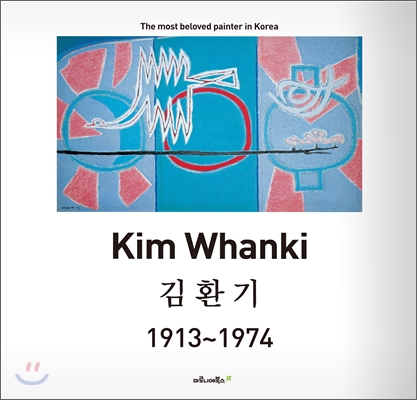
Kim Hwan-ki, a Korean Western painter, is considered a pioneer in the abstract direction of modern Korean painting, using the pointillism technique of arranging dots in a continuous square space instead of specific images.
His representative work is “Where and in What Form Will We Meet Again,” which was inspired by the last verse of Kim Gwang-seop’s poem “In the Evening.”
『Kim Hwan-ki』, the exhibition catalog of the master of Korean modern art, praised as the Picasso of Korea.
Kim Hwan-ki, who encountered modernism while studying in Japan in the 1930s, has since been called a member of the first generation of modernism.
He encountered 'world art' through the São Paulo Biennale in 1963, where he participated as an artist, and later developed his own style of painting called 'abstract abstraction'. He did not live a dramatic life like Lee Jung-seob or experience political trials like Lee Ungno.
However, he was more sincere than anyone else in his paintings and captured warm elegance on canvas.
It's a feeling that's hard to find in an artist who has lived through turbulent times.
Kim Hwan-ki is considered a painter of significant value in two aspects.
He was a painter who best understood and loved Korean things, that is, Korean beauty, and he created the value of Korean things into something truly global in his own way.
There was a time when the catchphrase, "The most Korean thing is the most global thing," excited the entire nation, but to advance to the global level, we need a spirit of freedom that is not limited to what is "Korean."
Kim Hwan-ki became a world-class painter in the sense that he succeeded in creating his own work freely without being obsessed with the system.
His representative work is “Where and in What Form Will We Meet Again,” which was inspired by the last verse of Kim Gwang-seop’s poem “In the Evening.”
『Kim Hwan-ki』, the exhibition catalog of the master of Korean modern art, praised as the Picasso of Korea.
Kim Hwan-ki, who encountered modernism while studying in Japan in the 1930s, has since been called a member of the first generation of modernism.
He encountered 'world art' through the São Paulo Biennale in 1963, where he participated as an artist, and later developed his own style of painting called 'abstract abstraction'. He did not live a dramatic life like Lee Jung-seob or experience political trials like Lee Ungno.
However, he was more sincere than anyone else in his paintings and captured warm elegance on canvas.
It's a feeling that's hard to find in an artist who has lived through turbulent times.
Kim Hwan-ki is considered a painter of significant value in two aspects.
He was a painter who best understood and loved Korean things, that is, Korean beauty, and he created the value of Korean things into something truly global in his own way.
There was a time when the catchphrase, "The most Korean thing is the most global thing," excited the entire nation, but to advance to the global level, we need a spirit of freedom that is not limited to what is "Korean."
Kim Hwan-ki became a world-class painter in the sense that he succeeded in creating his own work freely without being obsessed with the system.
- You can preview some of the book's contents.
Preview
index
Suwha
Choi Sun-u | Archaeologist & Art Historian
Sign language
Choi Sun-woo | Archaeologist and Art Historian
In-between Poetry and Painting
Byung-Kwan Chung | Art Historian
Between poetry and painting
Jeong Byeong-gwan | Art historian
Kim Whanki: Formalization of Nature and
Stylization of Sentiment
Oh Gwangsu | Art Critic
Kim Hwan-ki: The Formation of Nature and the Stylization of Emotion
Oh Kwang-soo | Art critic
Modern Literary Painter Who Sang about Nature
Yun Nanjie | Professor at Ewha Women's University
A modern literati painter who sang of nature
Yun Nan-ji | Professor, Ewha Womans University
Pursuing Nature and Singing of Immortality
- Kim Whanki's Art and Life
Park Meejung | Director of the Whanki Museum
Pursuing nature and singing of eternity
- Kim Hwan-ki's life and art
Park Mi-jeong | Director of the Hwanki Art Museum
Where, in What Form, Shall We Meet Again
Kim Whanki
Where and in what form will we meet again?
Kim Hwan-ki
Biography
Author's biography
List of Works
List of works
Choi Sun-u | Archaeologist & Art Historian
Sign language
Choi Sun-woo | Archaeologist and Art Historian
In-between Poetry and Painting
Byung-Kwan Chung | Art Historian
Between poetry and painting
Jeong Byeong-gwan | Art historian
Kim Whanki: Formalization of Nature and
Stylization of Sentiment
Oh Gwangsu | Art Critic
Kim Hwan-ki: The Formation of Nature and the Stylization of Emotion
Oh Kwang-soo | Art critic
Modern Literary Painter Who Sang about Nature
Yun Nanjie | Professor at Ewha Women's University
A modern literati painter who sang of nature
Yun Nan-ji | Professor, Ewha Womans University
Pursuing Nature and Singing of Immortality
- Kim Whanki's Art and Life
Park Meejung | Director of the Whanki Museum
Pursuing nature and singing of eternity
- Kim Hwan-ki's life and art
Park Mi-jeong | Director of the Hwanki Art Museum
Where, in What Form, Shall We Meet Again
Kim Whanki
Where and in what form will we meet again?
Kim Hwan-ki
Biography
Author's biography
List of Works
List of works
Publisher's Review
Kim Hwan-ki, a master of Korean modern art
Sign language
Whenever the characteristics of Korean beauty are discussed, the world of 'style' is always broadly discussed.
Many scholars and poets have presented profound theories about this style to the world, but the world of style is something that seems understandable yet vague, something that seems tangible yet intangible.
This is perhaps the coolness of our style.
Our style is vibrantly expressed in art, literature, music, and dance, but we often feel it in the human condition as we live in the world.
Even when I heard that Kim Hwan-ki, the sign language artist, was very popular in this country, I first felt a sense of emptiness, thinking that "style" was dead, that "the cool guy" was gone.
In Su-hwa's paintings, the Korean style in a small way and the Eastern style in a large way flowed through, but he was a person whose personality and life itself were steeped in style.
His essays were beautiful prose poems, from their unique and concise sentences to their content.
In other words, he was a truly precious artist who broadly created Korean style and lived in the world with style.
The reason I don't necessarily call him a painter is because his range of thought and artistry is so vast.
It would be too vulgar to call him a dandy, and it would be too awkward to call him a 'fashionable' person, but he was a truly beautiful and charming person.
Choi Sun-woo, former director of the National Museum of Korea
Between poetry and painting
Suhwa is interpreted as having inherited the tradition of Korean painting while producing unique works in modernist Western painting - semi-abstract, abstract, and dot abstract painting.
The abstract paintings he created during his time studying in Japan in the 1930s can be seen as either derivatives of Western paintings or something he learned from a Japanese professor.
Sign language's own paintings can be seen to have begun in the 1950s.
The common saying that an artist's art begins when he or she has forgotten everything he or she learned in art school also applies to sign language.
They say that after graduating from art school, you find your own thing in 10 years, but it took me about 20 years to learn sign language.
This is because the political situation in Korea did not allow for an environment in which to work as an artist for about 10 years.
Sign language belongs to the generation that believes that 'art is beauty'.
20th century aesthetics can be seen as a period in which the first half was largely devoted to the question, "What is beauty?", and the second half was a period in which constant questioning was asked, "What is art?"
All of Su-hwa's paintings are paintings that pursue beautiful colors and shapes.
Today's young postmodern artists are busy grappling with issues other than beauty.
Su-hwa was a modernist who lived and died as the last 'literal artist'.
The postmodern position is not to add anything to modernism, but rather to see that modernism has something to learn from among other things.
Although we cannot say that Signhwa's painting "Where and in What Form Will We Meet Again" is a masterpiece of Signhwa, we can guess that the genius artist was unable to escape from endless sorrow.
-Art historian Jeong Byeong-gwan
Sign language
Whenever the characteristics of Korean beauty are discussed, the world of 'style' is always broadly discussed.
Many scholars and poets have presented profound theories about this style to the world, but the world of style is something that seems understandable yet vague, something that seems tangible yet intangible.
This is perhaps the coolness of our style.
Our style is vibrantly expressed in art, literature, music, and dance, but we often feel it in the human condition as we live in the world.
Even when I heard that Kim Hwan-ki, the sign language artist, was very popular in this country, I first felt a sense of emptiness, thinking that "style" was dead, that "the cool guy" was gone.
In Su-hwa's paintings, the Korean style in a small way and the Eastern style in a large way flowed through, but he was a person whose personality and life itself were steeped in style.
His essays were beautiful prose poems, from their unique and concise sentences to their content.
In other words, he was a truly precious artist who broadly created Korean style and lived in the world with style.
The reason I don't necessarily call him a painter is because his range of thought and artistry is so vast.
It would be too vulgar to call him a dandy, and it would be too awkward to call him a 'fashionable' person, but he was a truly beautiful and charming person.
Choi Sun-woo, former director of the National Museum of Korea
Between poetry and painting
Suhwa is interpreted as having inherited the tradition of Korean painting while producing unique works in modernist Western painting - semi-abstract, abstract, and dot abstract painting.
The abstract paintings he created during his time studying in Japan in the 1930s can be seen as either derivatives of Western paintings or something he learned from a Japanese professor.
Sign language's own paintings can be seen to have begun in the 1950s.
The common saying that an artist's art begins when he or she has forgotten everything he or she learned in art school also applies to sign language.
They say that after graduating from art school, you find your own thing in 10 years, but it took me about 20 years to learn sign language.
This is because the political situation in Korea did not allow for an environment in which to work as an artist for about 10 years.
Sign language belongs to the generation that believes that 'art is beauty'.
20th century aesthetics can be seen as a period in which the first half was largely devoted to the question, "What is beauty?", and the second half was a period in which constant questioning was asked, "What is art?"
All of Su-hwa's paintings are paintings that pursue beautiful colors and shapes.
Today's young postmodern artists are busy grappling with issues other than beauty.
Su-hwa was a modernist who lived and died as the last 'literal artist'.
The postmodern position is not to add anything to modernism, but rather to see that modernism has something to learn from among other things.
Although we cannot say that Signhwa's painting "Where and in What Form Will We Meet Again" is a masterpiece of Signhwa, we can guess that the genius artist was unable to escape from endless sorrow.
-Art historian Jeong Byeong-gwan
GOODS SPECIFICS
- Date of issue: January 5, 2012
- Page count, weight, size: 360 pages | 2,174g | 280*280*30mm
- ISBN13: 9788960532267
- ISBN10: 8960532266
You may also like
카테고리
korean


korean

![GQ KOREA Mark (Monthly): December [2025]](http://librairie.coreenne.fr/cdn/shop/files/8ef265dbbfbf186523ed75ba7319009d.jpg?v=1765340328&width=3840)


