

Tin Drum 1
 |
Description
Book Introduction
A masterpiece by Günter Grass, winner of the 1999 Nobel Prize in Literature
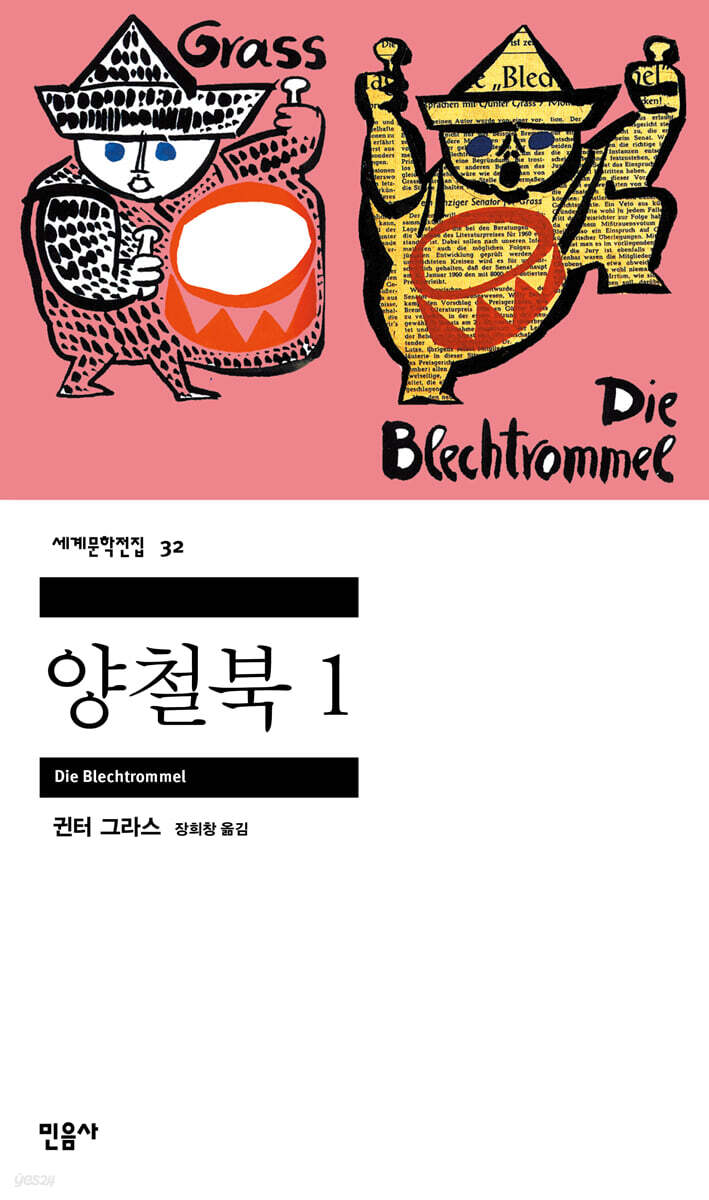
A narrative full of strong language, suggestive imagery, irony, paradox, and satire. The first complete translation in Korea, based on the latest edition from 1996 The only Korean version with an exclusive contract with Steidl of Germany Includes a rich color pictorial featuring illustrations by Gunter Grass. The only Korean version translated from the original German version In 1999, Nobel Prize winner for Literature Günter Grass's masterpiece, The Tin Drum, was published. Although The Tin Book has been translated several times in paperback and other forms, this is the first time a complete translation has been published based on the original German edition (Steidl, 1996). In announcing this year's Nobel Prize in Literature, the Swedish Academy said that Grass's The Tin Drum "will remain one of the greatest works of the 20th century." The Hanrimwon also explained its significance by saying, “Through The Tin Drum, Grass successfully portrayed the lies that humans wanted to shake off, and the forgotten faces of history, such as victims and losers, in a fairy tale full of playful black humor.” The Tin Book, first published in 1959, was a work that created a buzz even before its publication. Grass, who debuted as a poet, joined the 'Group 47', which represented post-war youth literature in Germany at the time, in 1954. In 1958, the unfinished draft of "The Tin Drum" was read by the 47 Group, and Grass won the '47 Group Literary Award' that same year for this reading alone. From this point on, the work attracted worldwide attention to post-war German literature, especially West German literature, which was practically barren at the time, and swept prestigious literary awards such as the Georg Büchner Prize, the Fontane Prize, and the Theodor Heuss Prize. |
- You can preview some of the book's contents.
Preview
index
1.
Part 1
wide skirt
Under the raft
Moth and Friends
album
glass, glass, glass shards
timetable
Rasputin and ABC
A song echoing from the stock tower
platform
Show window
There are no miracles
Good Friday Meal
A tube that becomes narrower towards the toes
Herbert Truczynski's back
Niobe on wood
Faith, Hope, Love
2.
Part 2 (Part 1)
pile of scrap metal
Polish Post Office
House made of trump cards
Fall asleep in Jasper
Maria
Non-climbing mountain
Temporary news
Take that lethargy to Mrs. Greff
Part 1
wide skirt
Under the raft
Moth and Friends
album
glass, glass, glass shards
timetable
Rasputin and ABC
A song echoing from the stock tower
platform
Show window
There are no miracles
Good Friday Meal
A tube that becomes narrower towards the toes
Herbert Truczynski's back
Niobe on wood
Faith, Hope, Love
2.
Part 2 (Part 1)
pile of scrap metal
Polish Post Office
House made of trump cards
Fall asleep in Jasper
Maria
Non-climbing mountain
Temporary news
Take that lethargy to Mrs. Greff
Into the book
Have you ever seen the back of a podium before? Everyone—though this is only a suggestion—should fully see the scene behind the podium before gathering in front of it.
Those who have observed the podium from the back early on will become immune from that point on, and will not be shaken by any magic performed on the podium, regardless of the difference in form.
The same can be said of the scene behind the church altar.
Those who have observed the podium from the back early on will become immune from that point on, and will not be shaken by any magic performed on the podium, regardless of the difference in form.
The same can be said of the scene behind the church altar.
--- pp.180-181
Publisher's Review
The work's virtues include its extraordinary and powerful use of language, suggestive imagery, and narrative expression filled with irony, paradox, and satire.
At the time of its release, it was met with resistance due to its depiction of the church, blasphemy, and sexually suggestive content. However, the criticisms of pornography and blasphemy were judged to be nothing more than a superficial acceptance of this great work.
Enzensberger, who evaluated this work as a masterpiece of German realism, highly praised its literary value, saying that the novel is “Wilhelm Meister beating the tin drum” and “a legend of the free city of Danzig.”
This novel does not record the hero's development.
The novel is set in Danzig, its subjects are timid and ordinary citizens, and its protagonist is Oscar, who is imprisoned in a mental hospital and reminisces about his past.
And in Oscar's memoirs, written in the traditional realist style, memories of things that once abstracted individuals, such as Catholicism, war, and sex, are vividly restored.
This traditional narrative model of Oskar was intended to counter the “crisis of the novel” often referred to as the “runaway imagination and linguistic power,” and critics have rightly evaluated this narrative style of Günter Grass as the grotesque, a genuine means of poetic realism.
That is, contrary to the claim that the absurdity of his narrative was not very successful, he said more about the reality of the world than realist poetry could.
The awarding of the Nobel Prize in Literature to him in 1999 was interesting in many ways.
It is a literary choice to remember the great classic, The Tin Drum, but it also leaves the impression of consideration for the writer who remained in the political sphere throughout the 20th century and appealed for political conscience.
The reason why each of his works published after 『The Tin Drum』 has attracted the attention of people around the world is because of the controversial nature of his works, and the global interest in his recently published new work 『My Century』 also has this background.
“My story begins long before I was born.”
"The Tin Drum" is told in the form of Oscar Matzerath, a dwarf incarcerated in a mental hospital, recalling his past.
The present-day setting of the mental hospital and the German history of 1899-1954, reminiscent of Oskar's drumming, intersect and intertwine.
Part 1 begins with the story of the birth of Oscar's mother, Agnes, and covers Oscar's birth and childhood, up to the political catastrophe of the Kristallnacht incident in Danzig.
Part 2 depicts the war period, which began with the defense of the Polish Post Office in Danzig, and the escape of Maria and Oskar, former lovers and now stepmothers, from Danzig, which was occupied by the Russian army, with their stepson (or his son), Kurt.
Part 3 is set in the post-war era and continues with the personal fate of Oscar, who comes to Düsseldorf, and the anonymous incident that directly leads to his imprisonment in a mental hospital.
"The Tin Drum" is the most expansive narrative bildungsroman of postwar German novels, detailing the various events that unfolded around Danzig and the social changes that followed the flow of time through the eyes of the protagonist, Oskar.
Author Günter Grass uses Oskar, a disabled man with stunted growth, as his narrator, to portray the Nazis as a demonic figure and, in response, to acknowledge the value of the small truths inherent in the lives of ordinary citizens.
This work, considered a great achievement of post-war German literature, is considered an example of critical humanism and practical writing in our time.
At the time of its release, it was met with resistance due to its depiction of the church, blasphemy, and sexually suggestive content. However, the criticisms of pornography and blasphemy were judged to be nothing more than a superficial acceptance of this great work.
Enzensberger, who evaluated this work as a masterpiece of German realism, highly praised its literary value, saying that the novel is “Wilhelm Meister beating the tin drum” and “a legend of the free city of Danzig.”
This novel does not record the hero's development.
The novel is set in Danzig, its subjects are timid and ordinary citizens, and its protagonist is Oscar, who is imprisoned in a mental hospital and reminisces about his past.
And in Oscar's memoirs, written in the traditional realist style, memories of things that once abstracted individuals, such as Catholicism, war, and sex, are vividly restored.
This traditional narrative model of Oskar was intended to counter the “crisis of the novel” often referred to as the “runaway imagination and linguistic power,” and critics have rightly evaluated this narrative style of Günter Grass as the grotesque, a genuine means of poetic realism.
That is, contrary to the claim that the absurdity of his narrative was not very successful, he said more about the reality of the world than realist poetry could.
The awarding of the Nobel Prize in Literature to him in 1999 was interesting in many ways.
It is a literary choice to remember the great classic, The Tin Drum, but it also leaves the impression of consideration for the writer who remained in the political sphere throughout the 20th century and appealed for political conscience.
The reason why each of his works published after 『The Tin Drum』 has attracted the attention of people around the world is because of the controversial nature of his works, and the global interest in his recently published new work 『My Century』 also has this background.
“My story begins long before I was born.”
"The Tin Drum" is told in the form of Oscar Matzerath, a dwarf incarcerated in a mental hospital, recalling his past.
The present-day setting of the mental hospital and the German history of 1899-1954, reminiscent of Oskar's drumming, intersect and intertwine.
Part 1 begins with the story of the birth of Oscar's mother, Agnes, and covers Oscar's birth and childhood, up to the political catastrophe of the Kristallnacht incident in Danzig.
Part 2 depicts the war period, which began with the defense of the Polish Post Office in Danzig, and the escape of Maria and Oskar, former lovers and now stepmothers, from Danzig, which was occupied by the Russian army, with their stepson (or his son), Kurt.
Part 3 is set in the post-war era and continues with the personal fate of Oscar, who comes to Düsseldorf, and the anonymous incident that directly leads to his imprisonment in a mental hospital.
"The Tin Drum" is the most expansive narrative bildungsroman of postwar German novels, detailing the various events that unfolded around Danzig and the social changes that followed the flow of time through the eyes of the protagonist, Oskar.
Author Günter Grass uses Oskar, a disabled man with stunted growth, as his narrator, to portray the Nazis as a demonic figure and, in response, to acknowledge the value of the small truths inherent in the lives of ordinary citizens.
This work, considered a great achievement of post-war German literature, is considered an example of critical humanism and practical writing in our time.
GOODS SPECIFICS
- Date of issue: October 31, 1999
- Page count, weight, size: 480 pages | 640g | 132*225*30mm
- ISBN13: 9788937460326
- ISBN10: 8937460327
You may also like
카테고리
korean


korean

![GQ KOREA Mark (Monthly): December [2025]](http://librairie.coreenne.fr/cdn/shop/files/8ef265dbbfbf186523ed75ba7319009d.jpg?v=1765340328&width=3840)


