

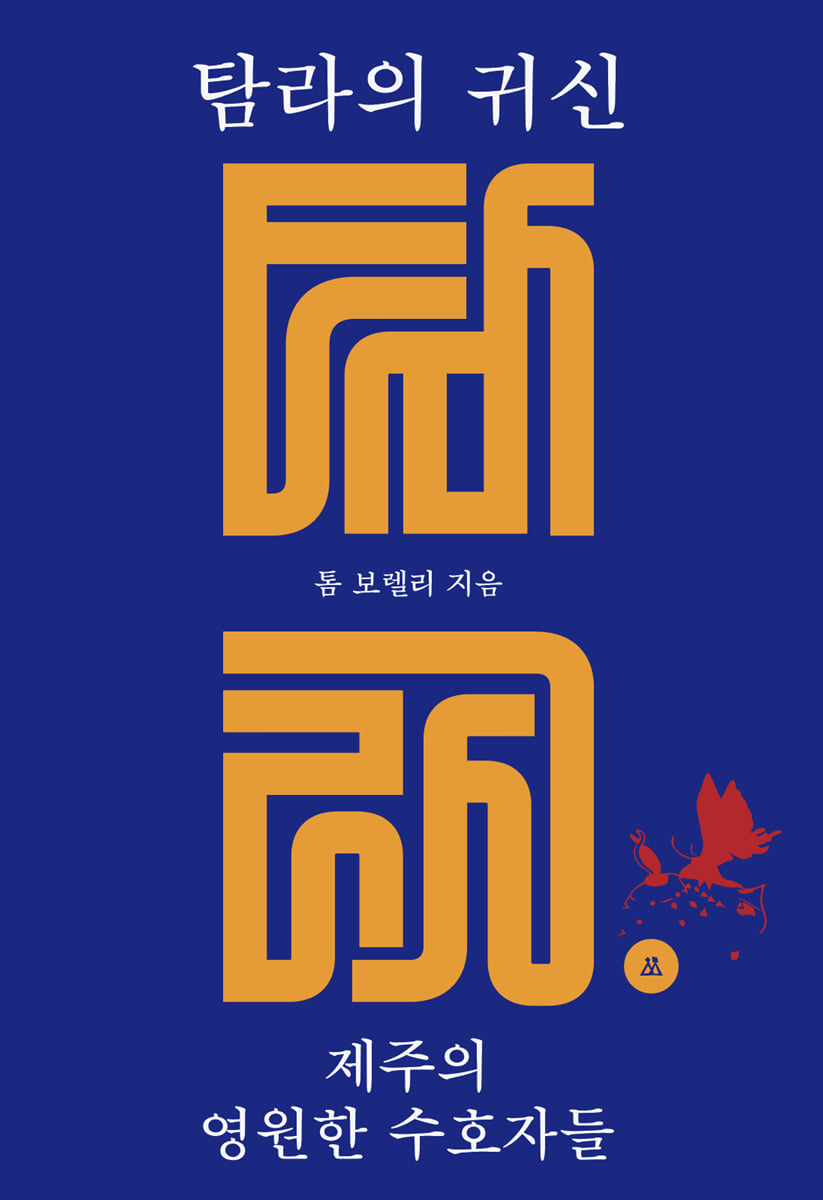
Ghosts of Tamna: Jeju's Eternal Guardians
 |
Description
Book Introduction
Ghosts and Gods of Jeju, written and illustrated by British author Tom Borrelli.
A story about Jeju's ghosts and myths, seen through the eyes of a British man steeped in Korean history and traditional beliefs.
Jeju is often called the 'Island of Three Abundances' because it is said to be rich in rocks, wind, and women.
However, Jeju's true charm lies in its invisible spiritual side rather than its visible abundance.
Jeju is also an island of ‘three disasters.’
The poor soil makes it impossible to grow rice, and there are countless disasters caused by strong winds.
Even though they were invaded by foreign powers, they did not receive as much attention as the mainland Korean Peninsula, and at times they suffered economic exploitation and cultural oppression from fellow Koreans on the mainland.
The Jeju mythology that blossomed in this environment was different from Korean mythology.
In the meantime, Korean mythology has been passed down mainly as stories centered on kings and the ruling class, and as myths of the nation's founding, through the Confucian cultural sphere.
In comparison, Jeju's mythology stands out for its human aspects.
In Jeju, there are said to be about 250 shrines, 400 shamans, 500 shaman songs, and 18,000 gods.
The gods of Jeju are filled with joy and sorrow.
What makes Korean ghosts different from those in other East Asian countries is that they do not distinguish between good and evil, and that is what makes Jeju ghosts even more attractive.
A story about Jeju's ghosts and myths, seen through the eyes of a British man steeped in Korean history and traditional beliefs.
Jeju is often called the 'Island of Three Abundances' because it is said to be rich in rocks, wind, and women.
However, Jeju's true charm lies in its invisible spiritual side rather than its visible abundance.
Jeju is also an island of ‘three disasters.’
The poor soil makes it impossible to grow rice, and there are countless disasters caused by strong winds.
Even though they were invaded by foreign powers, they did not receive as much attention as the mainland Korean Peninsula, and at times they suffered economic exploitation and cultural oppression from fellow Koreans on the mainland.
The Jeju mythology that blossomed in this environment was different from Korean mythology.
In the meantime, Korean mythology has been passed down mainly as stories centered on kings and the ruling class, and as myths of the nation's founding, through the Confucian cultural sphere.
In comparison, Jeju's mythology stands out for its human aspects.
In Jeju, there are said to be about 250 shrines, 400 shamans, 500 shaman songs, and 18,000 gods.
The gods of Jeju are filled with joy and sorrow.
What makes Korean ghosts different from those in other East Asian countries is that they do not distinguish between good and evil, and that is what makes Jeju ghosts even more attractive.
- You can preview some of the book's contents.
Preview
index
Chapter 1.
Grave and Spirit Cards
Chapter 2.
Shaman card
Chapter 3.
Scholar Pastor Card
Chapter 4.
Snake God Card
Chapter 5.
Gashin card
Chapter 6.
God of Death card
Chapter 7.
Village God Card
Chapter 8.
Jeju Guardian and Attacker God Cards
Chapter 9.
God of Fertility Card
Chapter 10.
God of Farming Card
Chapter 11.
Every God Card
Chapter 12.
Goblin Card
Jeju, the island of coexistence
index
Chapter One.
Tomb & Ghost Cards
Chapter Two.
Shaman Cards
Chapter Three.
Confucian Magistrate Cards
Chapter Four.
Snake God Cards
Chapter Five.
Household God Cards
Chapter Six.
Death God Cards
Chapter Seven.
Village God Cards
Chapter Eight.
Jeju Protecting & Attacking God Cards
Chapter Nine.
Fertility God Cards
Chapter Ten.
Farming God Cards
Chapter Eleven.
Sea God Cards
Chapter Twelve.
Dokkaebi Cards
Jeju: The Island of Coexistence
Index
Grave and Spirit Cards
Chapter 2.
Shaman card
Chapter 3.
Scholar Pastor Card
Chapter 4.
Snake God Card
Chapter 5.
Gashin card
Chapter 6.
God of Death card
Chapter 7.
Village God Card
Chapter 8.
Jeju Guardian and Attacker God Cards
Chapter 9.
God of Fertility Card
Chapter 10.
God of Farming Card
Chapter 11.
Every God Card
Chapter 12.
Goblin Card
Jeju, the island of coexistence
index
Chapter One.
Tomb & Ghost Cards
Chapter Two.
Shaman Cards
Chapter Three.
Confucian Magistrate Cards
Chapter Four.
Snake God Cards
Chapter Five.
Household God Cards
Chapter Six.
Death God Cards
Chapter Seven.
Village God Cards
Chapter Eight.
Jeju Protecting & Attacking God Cards
Chapter Nine.
Fertility God Cards
Chapter Ten.
Farming God Cards
Chapter Eleven.
Sea God Cards
Chapter Twelve.
Dokkaebi Cards
Jeju: The Island of Coexistence
Index
Into the book
In order to study Korean history and tradition, what I had to overcome was not a geographical boundary, but a linguistic one.
There have been books in English on this topic, but most of them are superficial.
The books focused on Buddhism and Confucianism, which were introduced from foreign countries, rather than on Korea's own traditional beliefs.
But I was more interested in Korea's unique traditional beliefs.
--- p.7
The Korea depicted in the book was a place filled with ghosts and gods as much as people.
Gods were in charge of each room of the mountains and seas, villages and houses, and ghosts were present not only in animals but also in plants and even in everyday objects.
As I read the book, I realized that Korea also has a world as boundless as ancient Greek and Roman mythology, and that they are still with us.
Although today there are fewer traditional houses and villages, and the gods who reside there, they are still passed down through shamans.
--- p.8
Jeju has 250 shrines, 400 shamans, 500 shaman songs, and over 18,000 gods.
However, the entire island is not covered only with magnificent temples and shrines.
The resting places of Jeju gods are generally small and blend in with their surroundings.
The sacred boundary is nothing more than a simple stone wall, and a sturdy bongnang (Jeju dialect for pine tree) that covers the shrine serves as a roof.
This simplicity, far from denying its divinity, makes it even more evident.
The shrine is not separate from the beautiful surrounding scenery, but rather blends in with it.
Once you know about the shrine, the entire island feels like it's filled with a mystical energy.
The Dragon King protects the coast, and the breath of the wind goddess Yeongdeung Halmang caresses the sea.
At the top of the rugged volcanic hill, 'Oreum', there is a shrine dedicated to the 'Sanshin', and in the volcano at the center of the island is the final resting place of 'Seolmundae Halmang', the goddess who created the island.
--- p.16
The instruments of the atrium play an important role from the beginning to the end of the ritual.
This tool is called a 'gime'.
One interesting example of a gime is 'Yeongjip'.
A spirit house is a place where souls come and stay, and is a place of rest and comfort for lost souls.
It is often used in ‘Muhon Gut’.
Muhongut is a ritual to send off those who drowned at sea so that they can safely go to the afterlife.
Those who have no one to conduct the funeral have many regrets.
When performing a shaman ritual, a doll symbolizing the deceased is dressed in the deceased's clothes, covered with a blanket, and placed in a folding screen.
Sprinkle buckwheat or rice flour on top and cover with a sesame seed.
Once the necessary utensils and offerings are prepared, the ancestral rites are held to pray for the deceased to be freed from his previous life and reincarnated.
After the ritual is over, the spirit house is removed and the powder inside is examined.
If the soul is reincarnated, a symbol like a bird's footprint will appear in the powder, and if it has turned into a butterfly, a symbol like a butterfly's wing will appear.
--- p.37~38
There is another goddess, 'Jacheongbi', who knows a lot about the Seocheon Flower Garden.
Among the goddesses of Jeju, Jacheongbi is the most versatile and three-dimensional character.
In the 'Segyeongbonpuri', which contains the story of the origin of Jacheongbi, Jacheongbi is described as a genius, a hunter, a tailor, a monk, a general, a devoted wife, and even a devoted husband.
--- p.
112
Among the goblins who returned to Jeju, there was a notorious 'badger' who was promiscuous.
The badger and his six brothers were such troublemakers that they were banished from their hometown of Seoul.
The youngest bastard, the badger, was tall and handsome, but he was the worst of the lot.
For him, who had traveled all over the country and had been to every corner of Joseon's eight provinces, there was only one destination left: Jeju.
--- p.135~136
Although many of the stories we have examined deal with conflict, the main theme that explains Jeju mythology can be said to be 'coexistence.'
After the commotion died down, the defeated attackers took on new roles, living their lives helping the world they had once devastated.
There have been books in English on this topic, but most of them are superficial.
The books focused on Buddhism and Confucianism, which were introduced from foreign countries, rather than on Korea's own traditional beliefs.
But I was more interested in Korea's unique traditional beliefs.
--- p.7
The Korea depicted in the book was a place filled with ghosts and gods as much as people.
Gods were in charge of each room of the mountains and seas, villages and houses, and ghosts were present not only in animals but also in plants and even in everyday objects.
As I read the book, I realized that Korea also has a world as boundless as ancient Greek and Roman mythology, and that they are still with us.
Although today there are fewer traditional houses and villages, and the gods who reside there, they are still passed down through shamans.
--- p.8
Jeju has 250 shrines, 400 shamans, 500 shaman songs, and over 18,000 gods.
However, the entire island is not covered only with magnificent temples and shrines.
The resting places of Jeju gods are generally small and blend in with their surroundings.
The sacred boundary is nothing more than a simple stone wall, and a sturdy bongnang (Jeju dialect for pine tree) that covers the shrine serves as a roof.
This simplicity, far from denying its divinity, makes it even more evident.
The shrine is not separate from the beautiful surrounding scenery, but rather blends in with it.
Once you know about the shrine, the entire island feels like it's filled with a mystical energy.
The Dragon King protects the coast, and the breath of the wind goddess Yeongdeung Halmang caresses the sea.
At the top of the rugged volcanic hill, 'Oreum', there is a shrine dedicated to the 'Sanshin', and in the volcano at the center of the island is the final resting place of 'Seolmundae Halmang', the goddess who created the island.
--- p.16
The instruments of the atrium play an important role from the beginning to the end of the ritual.
This tool is called a 'gime'.
One interesting example of a gime is 'Yeongjip'.
A spirit house is a place where souls come and stay, and is a place of rest and comfort for lost souls.
It is often used in ‘Muhon Gut’.
Muhongut is a ritual to send off those who drowned at sea so that they can safely go to the afterlife.
Those who have no one to conduct the funeral have many regrets.
When performing a shaman ritual, a doll symbolizing the deceased is dressed in the deceased's clothes, covered with a blanket, and placed in a folding screen.
Sprinkle buckwheat or rice flour on top and cover with a sesame seed.
Once the necessary utensils and offerings are prepared, the ancestral rites are held to pray for the deceased to be freed from his previous life and reincarnated.
After the ritual is over, the spirit house is removed and the powder inside is examined.
If the soul is reincarnated, a symbol like a bird's footprint will appear in the powder, and if it has turned into a butterfly, a symbol like a butterfly's wing will appear.
--- p.37~38
There is another goddess, 'Jacheongbi', who knows a lot about the Seocheon Flower Garden.
Among the goddesses of Jeju, Jacheongbi is the most versatile and three-dimensional character.
In the 'Segyeongbonpuri', which contains the story of the origin of Jacheongbi, Jacheongbi is described as a genius, a hunter, a tailor, a monk, a general, a devoted wife, and even a devoted husband.
--- p.
112
Among the goblins who returned to Jeju, there was a notorious 'badger' who was promiscuous.
The badger and his six brothers were such troublemakers that they were banished from their hometown of Seoul.
The youngest bastard, the badger, was tall and handsome, but he was the worst of the lot.
For him, who had traveled all over the country and had been to every corner of Joseon's eight provinces, there was only one destination left: Jeju.
--- p.135~136
Although many of the stories we have examined deal with conflict, the main theme that explains Jeju mythology can be said to be 'coexistence.'
After the commotion died down, the defeated attackers took on new roles, living their lives helping the world they had once devastated.
--- p.142
Publisher's Review
Yeongdeung Halmang, the sea goddess who protects fishermen on the northern coast
One-eyed giant who eats people, 'One-eyed Giant'
'Holeomyeongdol', a ghost shaped like a giant volcanic rock
The notorious promiscuous ghost of Jeju, 'Osorijabnom'
Although I have traveled to Jeju Island many times, I have never thought of visiting Jeju's Shindang.
Author Tom Borelli lives in Jeju, where he not only writes and draws, but also takes photographs of Jeju's shrines.
Most of the shrines in Jeju were shabby sights that you would just pass by if you didn't know about them.
We look at the stories of Jeju gods, which have remained vivid because they have not received much attention for a long time, from the perspective of an outsider.
Here, the foreigner refers to the British author himself, but it could also refer to Koreans who are still unaware of many aspects of Jeju.
It is written in both Korean and English so that Koreans, foreigners, and foreigners learning Korean can read it.
One-eyed giant who eats people, 'One-eyed Giant'
'Holeomyeongdol', a ghost shaped like a giant volcanic rock
The notorious promiscuous ghost of Jeju, 'Osorijabnom'
Although I have traveled to Jeju Island many times, I have never thought of visiting Jeju's Shindang.
Author Tom Borelli lives in Jeju, where he not only writes and draws, but also takes photographs of Jeju's shrines.
Most of the shrines in Jeju were shabby sights that you would just pass by if you didn't know about them.
We look at the stories of Jeju gods, which have remained vivid because they have not received much attention for a long time, from the perspective of an outsider.
Here, the foreigner refers to the British author himself, but it could also refer to Koreans who are still unaware of many aspects of Jeju.
It is written in both Korean and English so that Koreans, foreigners, and foreigners learning Korean can read it.
GOODS SPECIFICS
- Date of issue: November 15, 2024
- Page count, weight, size: 352 pages | 128*188*30mm
- ISBN13: 9791198020420
- ISBN10: 1198020423
You may also like
카테고리
korean


korean

![GQ KOREA Mark (Monthly): December [2025]](http://librairie.coreenne.fr/cdn/shop/files/8ef265dbbfbf186523ed75ba7319009d.jpg?v=1765340328&width=3840)


